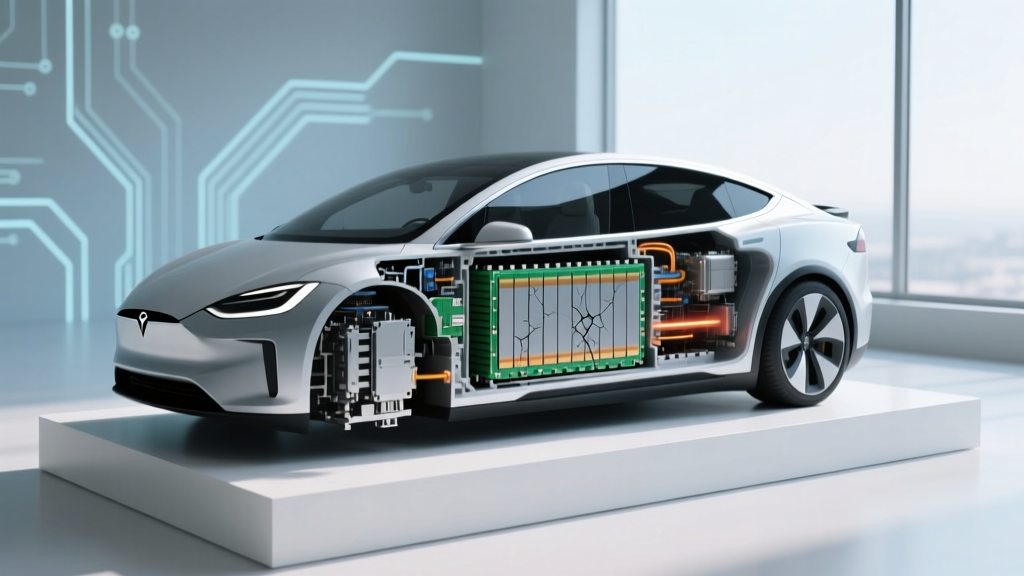
The global aircraft battery market is accelerating toward lithium-ion and solid-state adoption for eVTOLs, regional electric aircraft, and auxiliary power systems — and that shift has direct consequences for what you'll find under the floor of your next EV. Aviation-grade cells demand extreme energy density and safety margins, pushing R&D that eventually trickles into automotive packs. This guide breaks down EV battery chemistry, real-world degradation data, warranty coverage, replacement costs, and the emerging tech pipeline that both industries share.
LFP vs NMC vs NCA: Which Chemistry Powers Your EV?
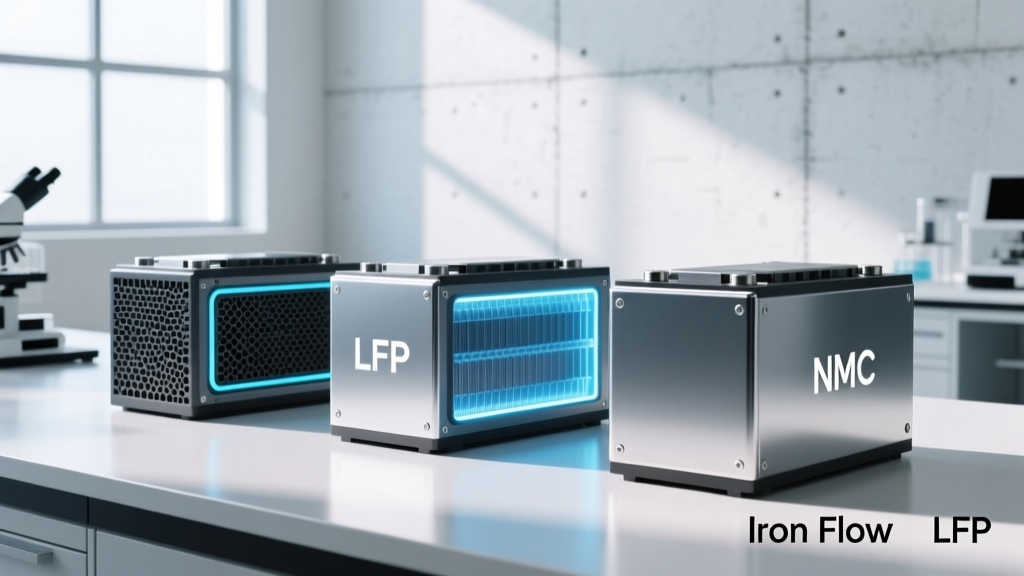
Every modern EV battery pack uses one of three dominant lithium-ion chemistries: LFP (lithium iron phosphate), NMC (nickel manganese cobalt), or NCA (nickel cobalt aluminum). The aircraft battery market overwhelmingly favors NMC and NCA for their superior energy density — a critical requirement when every kilogram counts at altitude. EVs have more flexibility, which is why LFP has surged in market share for standard-range models.
| Attribute | LFP (LiFePO₄) | NMC / NCA |
|---|---|---|
| Energy Density (cell-level) | 160–180 Wh/kg | 220–300 Wh/kg |
| Typical Cycle Life | 3,000–6,000+ cycles | 1,000–2,500 cycles |
| Cold-Weather Performance | Moderate (15–25% range loss at 20°F) | Better (10–20% loss at 20°F) |
| Thermal Stability | Excellent — very low thermal-runaway risk | Good — requires robust BMS |
| Cost per kWh (pack-level) | ~$90–$110 | ~$120–$150 |
| Common EV Applications | Tesla Model 3 RWD, BYD, Ford Mustang Mach-E Select | Tesla Long Range, Hyundai Ioniq 5, BMW iX |
| Aircraft Battery Market Use | Limited (ground support, trainers) | Dominant (eVTOL, regional electric) |
Which is better for you? If you commute under 150 miles daily, want maximum longevity, and don't mind slightly reduced cold-weather range, LFP is the smart pick — Tesla and BYD back this with robust warranties. If you need maximum range per charge (300+ miles), frequent road-trip, or live in a cold climate, NMC/NCA delivers the energy density you need. The aircraft battery market's preference for NMC/NCA is purely a weight-to-energy calculation; your EV doesn't face that constraint.
How Long Do EV Batteries Actually Last?
The short answer: most EV batteries outlast the vehicles they're installed in. Data from fleet operators, manufacturer reports, and independent testing consistently show modern packs retaining 85–95% of original capacity after 100,000 miles.
- Tesla Model 3/Y (NMC/LFP): ~5% capacity loss at 100,000 miles, plateauing to ~8–12% loss by 200,000 miles (Tesla 2025 Impact Report)
- Hyundai/Kia E-GMP platform (Ioniq 5, EV6): ~4–7% loss at 80,000 miles in fleet data; LFP variants showing even slower fade
- Nissan Leaf (passive-cooled NMC, older gen): 15–25% loss at 80,000 miles — a cautionary tale highlighting why active thermal management matters
- Chevrolet Bolt EV/EUV (NMC, liquid-cooled): ~6–9% loss at 100,000 miles per fueleconomy.gov owner data
Most degradation occurs in the first 20,000–40,000 miles (the "break-in" phase), then the curve flattens significantly. A 2026-model EV with active liquid cooling and a modern BMS should reasonably deliver 200,000+ miles before approaching the 70% capacity threshold that triggers a warranty claim.
What Does the EV Battery Warranty Cover?
Federal law mandates a minimum 8-year/100,000-mile warranty on EV battery packs for emissions-related components, and most manufacturers exceed this. Here's how major 2026 warranties stack up:
| Manufacturer | Coverage Period | Mileage Limit | Capacity Retention Threshold |
|---|---|---|---|
| Tesla (Model 3/Y LFP) | 8 years | 120,000 mi | 70% |
| Tesla (Long Range/Performance) | 8 years | 120,000 mi | 70% |
| Hyundai / Kia | 10 years | 100,000 mi | 70% |
| Ford (Mustang Mach-E, F-150 Lightning) | 8 years | 100,000 mi | 70% |
| GM (Ultium platform) | 8 years | 100,000 mi | 70% |
| BMW | 8 years | 100,000 mi | 70% |
| Rivian | 8 years | 175,000 mi | 70% |
What triggers a claim: If your battery's State of Health (SoH) drops below the stated threshold (typically 70% of original capacity) within the warranty window, the manufacturer will repair or replace modules — or the full pack — at no cost. This covers defect-driven degradation and abnormal capacity loss. It does not cover physical damage from collisions, flooding, or unauthorized modifications.
Aircraft battery market note: Aviation battery warranties operate under entirely different FAA-mandated airworthiness frameworks, with mandatory replacement intervals regardless of measured capacity. EV owners face no such calendar-based mandates — your pack is warranted on performance, not age alone.
How Much Does an EV Battery Replacement Cost?
This is the number that generates the most anxiety — and the most misinformation. Here are actual replacement cost ranges for 2026-model vehicles, based on manufacturer service bulletins and independent shop data:
| Vehicle | Battery Size (kWh) | Full Pack Replacement | Module-Level Repair | Typical Need Timeline |
|---|---|---|---|---|
| Tesla Model 3 (LFP, ~60 kWh) | 60 | $8,000–$12,000 | $1,500–$3,000 per module | 200,000+ mi |
| Tesla Model Y LR (NMC, ~82 kWh) | 82 | $12,000–$16,000 | $2,000–$4,000 per module | 180,000+ mi |
| Hyundai Ioniq 5 (77.4 kWh) | 77.4 | $10,000–$15,000 | $1,800–$3,500 per module | 200,000+ mi |
| Ford F-150 Lightning Ext. Range (131 kWh) | 131 | $18,000–$28,000 | $2,500–$5,000 per module | 180,000+ mi |
| Chevrolet Equinox EV (85 kWh) | 85 | $11,000–$16,000 | $2,000–$3,500 per module | 200,000+ mi |
| Rivian R1T (Large, ~129 kWh) | 129 | $17,000–$25,000 | $2,500–$4,500 per module | 175,000+ mi |
Context that matters: Most EV batteries never need full replacement. Module-level repairs (replacing only degraded sections of the pack) are increasingly common and dramatically cheaper. Pack prices have fallen roughly 10–15% per year since 2022, driven partly by the aircraft battery market's investment in high-volume NMC cell production. By the time your pack might actually need replacing (15–20 years out for most owners), costs will likely be a fraction of today's figures.
The aircraft battery market faces far steeper replacement economics — aviation packs cost $50,000–$500,000+ depending on airframe and carry mandatory overhaul schedules. EV battery economics are dramatically more favorable by comparison.
Factors That Accelerate (or Preserve) Battery Life
Not all miles are equal when it comes to degradation. These factors have the largest measurable impact on your battery's State of Health over time:
- Avoid chronic DC fast charging: Occasional road-trip fast charging is fine, but daily use of 150+ kW DC chargers accelerates degradation by an estimated 1–3% over 100,000 miles vs. Level 2 home charging. The sustained heat and high C-rates stress cell chemistry.
- Keep State of Charge between 20–80% for daily use: Sitting at 100% SoC for extended periods (days/weeks) stresses NMC/NCA cells. LFP is more tolerant of 100% holds — Tesla actually recommends periodic 100% charges for LFP packs to calibrate the BMS.
- Precondition before fast charging: Battery preconditioning (automatic in Tesla, Hyundai E-GMP, and most 2026 EVs) warms the pack to optimal temperature, reducing lithium plating risk and improving charge acceptance. Always navigate to a charger via the car's built-in nav to trigger this.
- Minimize extreme-temperature exposure: Parking in shade during 100°F+ summers and in a garage during sub-zero winters reduces calendar degradation. Active thermal management helps, but it can't fully compensate for sustained extreme ambient temps.
- Don't store at 0% or 100% for weeks: If leaving your EV for an extended trip, set charge limit to ~50% and leave it plugged in with a scheduled departure or maintenance mode if available.
- Use regenerative braking wisely: Aggressive regen in cold weather (below 40°F) can stress a cold battery. Many 2026 models automatically reduce regen intensity when the pack is cold — let the car manage this.
How to Check Your Battery's State of Health (SoH)
State of Health (SoH) is the percentage of original capacity your battery currently holds. A new EV starts at 100% SoH; warranty thresholds typically trigger at 70%. Here's how to monitor it:
Built-In Vehicle Displays
Most 2026 EVs display estimated range and some form of battery health indicator in the settings menu. Tesla shows degradation graphs in the Energy app. Hyundai/Kia provides a battery health percentage in the EV settings menu. BMW's iDrive includes a battery condition report.
OBD-II Diagnostic Tools
Third-party tools like OBDLink MX+ paired with apps such as LeafSpy (Nissan), TeslaFi, or Car Scanner can read detailed SoH data, cell voltage variance, and pack temperature directly from the BMS. A $40–$60 OBD-II dongle gives you dealership-level data.
Dealer Diagnostics
Any authorized service center can pull a full battery health report. Request one during routine service visits — it takes minutes and gives you a documented SoH reading useful for resale value and warranty tracking.
Third-Party Battery Reports
Services like Geotab and fleet management platforms now offer battery health certificates based on telematics data. When buying a used EV, ask for a battery health report — it's as important as a vehicle history report.
Solid-State, Silicon Anode & Beyond: What's Coming
The aircraft battery market is one of the primary drivers of next-generation battery investment. eVTOL manufacturers like Joby Aviation and Archer require energy densities above 350 Wh/kg — beyond what current NMC cells deliver — which is pulling solid-state and silicon-anode technology toward commercialization faster than automotive demand alone would.
Solid-state batteries replace the liquid electrolyte with a solid ceramic, polymer, or sulfide layer, enabling lithium-metal anodes and dramatically higher energy density (400–500 Wh/kg projected). Toyota has announced a 2027–2028 production timeline for solid-state EVs with ~750 km (466 mi) range. Samsung SDI targets 2027. QuantumScape continues testing with Volkswagen. These are announced timelines — no solid-state EV is currently available for purchase.
Silicon-anode batteries (from companies like Sila Nanotechnologies and Group14) replace graphite anodes with silicon composites, boosting energy density 20–40% without the manufacturing challenges of full solid-state. These are closer to market — expect to see them in premium 2027–2028 model-year EVs first, with the aircraft battery market as an early adopter.
Sodium-ion batteries from CATL and BYD offer lower energy density (~140 Wh/kg) but dramatically lower cost and no lithium, cobalt, or nickel. These target budget EVs and grid storage, not aviation. Expect them in sub-$25,000 EVs by 2028–2029.
Realistic timeline: Solid-state will likely debut in limited-production premium EVs by 2028–2030 and reach mainstream volumes by 2032+. The aircraft battery market may see certified solid-state packs in eVTOLs slightly earlier (2027–2028) due to smaller pack sizes and willingness to pay premium costs per kWh.
Frequently Asked Questions
How long do EV batteries last in years and miles?
Modern liquid-cooled EV batteries (2024–2026 models) are engineered to last 15–20 years or 200,000+ miles before approaching the 70% capacity retention threshold. Fleet data from Tesla, Hyundai, and GM shows most packs retaining 85–92% capacity at 100,000 miles. Calendar aging matters too — even a low-mileage EV will see ~1–2% annual loss from chemical processes alone.
How much does it cost to replace an EV battery?
Full pack replacement ranges from $8,000 (compact LFP packs) to $28,000 (large NMC packs like the F-150 Lightning Extended Range). However, most replacements are module-level repairs at $1,500–$5,000. The vast majority of EV batteries never need replacement during original ownership — they outlast the vehicle. Costs continue declining ~10–15% annually.
What does the EV battery warranty actually cover?
Standard warranties cover 8 years/100,000 miles (Hyundai/Kia: 10 years/100,000) against capacity loss below 70% of original. This includes defect-driven degradation and abnormal cell failure. It does not cover collision damage, water submersion, or unauthorized modifications. If your SoH drops below the threshold within the warranty window, the manufacturer repairs or replaces the pack at no cost.
LFP vs NMC — which should I choose?
Choose LFP if: you drive under 200 miles daily, prioritize maximum cycle life (3,000–6,000+ cycles), want lower replacement cost, and value thermal safety. Choose NMC/NCA if: you need 300+ mile range, live in a cold climate (better low-temp performance), road-trip frequently, or tow. Neither is universally "better" — it's a use-case decision.
Does fast charging damage my EV battery?
Occasional DC fast charging has minimal impact. However, daily reliance on 150+ kW chargers can accelerate degradation by 1–3% over 100,000 miles compared to primarily Level 2 (7–19 kW) home charging. Modern BMS systems and preconditioning mitigate this significantly. For daily charging, a home Level 2 setup remains the best practice for long-term battery health.
How does the aircraft battery market affect EV battery prices?
Aviation's demand for high-energy-density NMC and solid-state cells drives R&D investment and manufacturing scale that benefits EV buyers. Companies like CATL, Samsung SDI, and LG Energy Solution supply both markets. As aviation certification standards push cell quality higher and production volumes up, automotive packs benefit from improved reliability and declining per-kWh costs.
Sources: fueleconomy.gov (EPA efficiency and range data), IRS §30D clean vehicle credit rules, manufacturer warranty documentation (Tesla, Hyundai, Ford, GM).