Why EV Owners Search for AGM Battery Chargers — and What They Actually Need
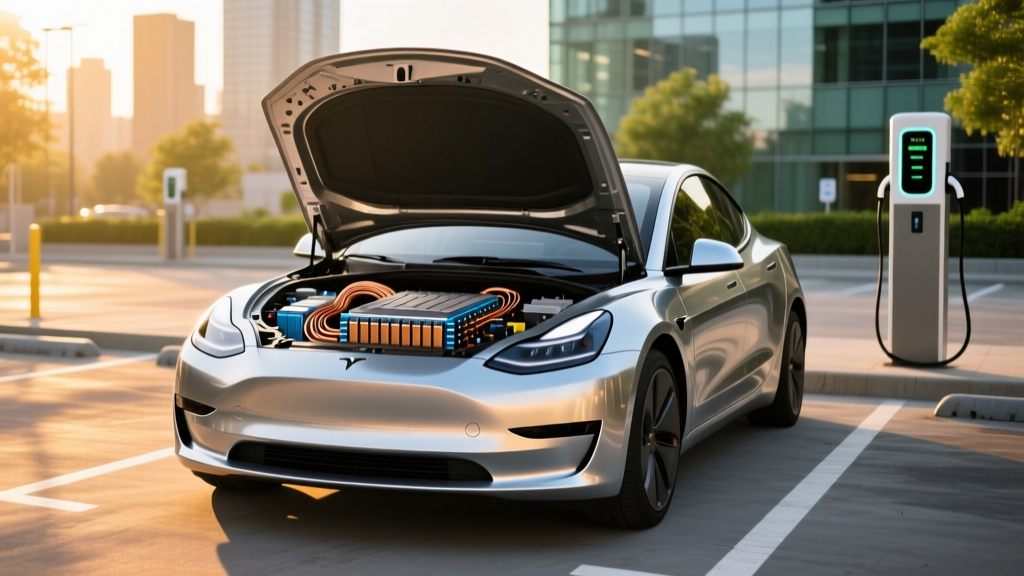
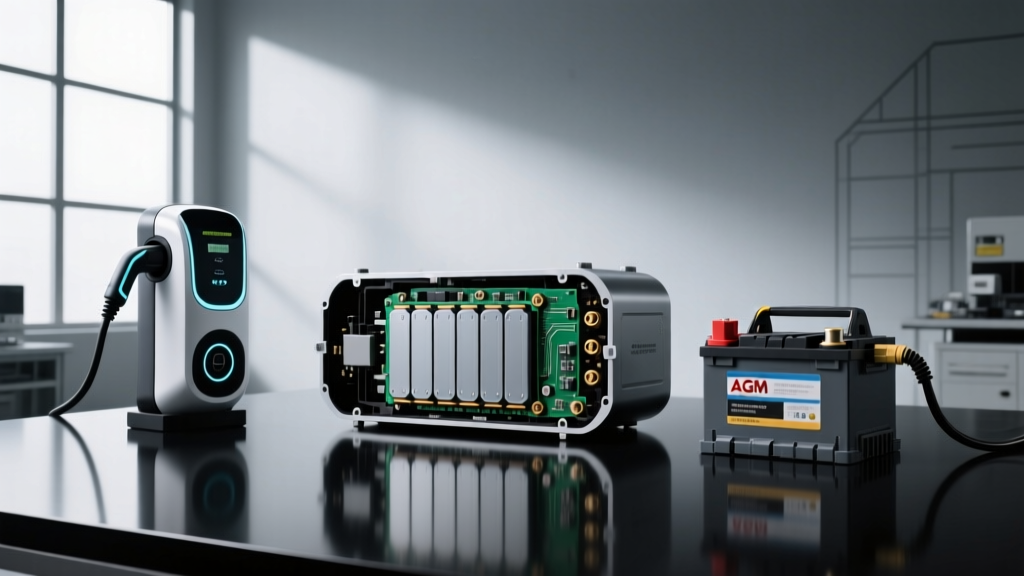
If you've searched for AGM battery chargers while owning or shopping for an electric vehicle, you're not alone — but you may be looking at the wrong piece of equipment. AGM (Absorbent Glass Mat) battery chargers are designed for the 12-volt auxiliary batteries found in conventional cars, motorcycles, and yes, the small 12V battery that still lives under the hood of most EVs. They have nothing to do with charging or maintaining the high-voltage traction battery that actually propels your vehicle.
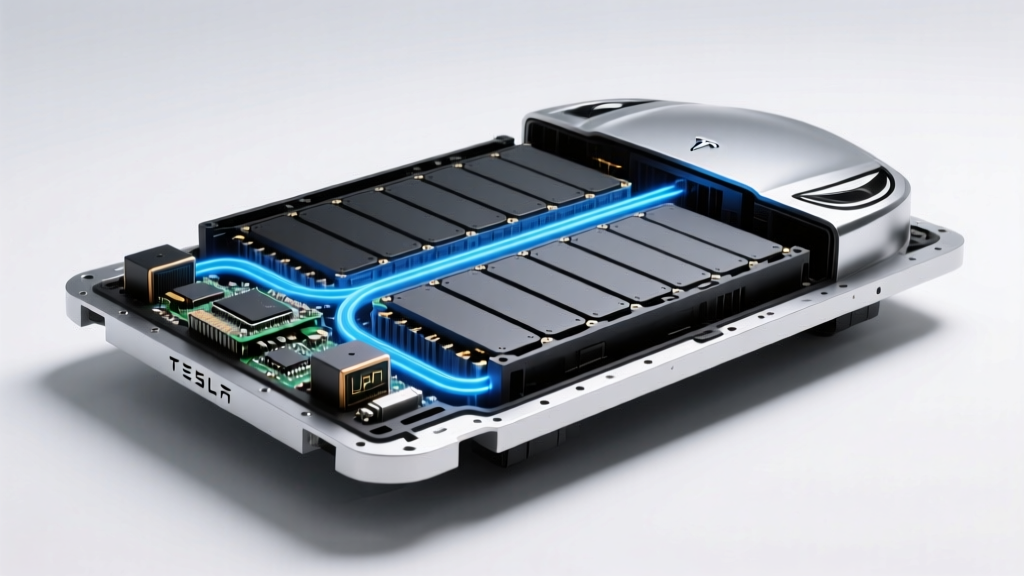
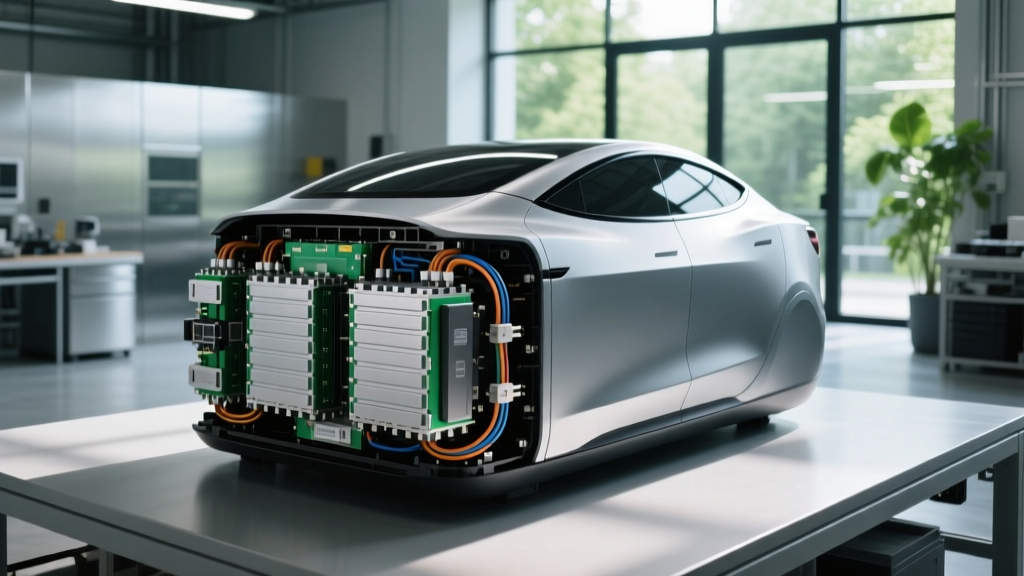
This guide clarifies the critical distinction between your EV's two battery systems, then dives deep into what actually matters for the traction battery: chemistry (LFP vs. NMC/NCA), real-world degradation data, warranty coverage, replacement costs, and the emerging technologies reshaping battery longevity by 2028 and beyond.
LFP vs. NMC/NCA: The Chemistry Decision That Shapes Your EV's Life
The two dominant lithium-ion chemistries in 2026 EV traction batteries are LFP (lithium iron phosphate) and NMC/NCA (nickel manganese cobalt / nickel cobalt aluminum). Each carries distinct trade-offs that affect range, longevity, charging behavior, and cost.
| Attribute | LFP (LiFePO₄) | NMC / NCA |
|---|---|---|
| Energy density | ~160–180 Wh/kg (cell level) | ~220–280 Wh/kg (cell level) |
| Typical cycle life | 3,000–5,000+ cycles to 80% SoH | 1,000–2,000 cycles to 80% SoH |
| Cold-weather performance | Weaker; ~30–40% range loss below 20°F without heat pump | Better; ~20–30% range loss below 20°F |
| Recommended daily SoC | 100% (periodic full charge recommended for BMS calibration) | 80% daily; 100% only for trips |
| Thermal stability | Excellent; higher thermal runaway threshold (~270°C) | Good; lower threshold (~210°C), requires robust cooling |
| Cost per kWh (pack level, 2026) | ~$95–$115/kWh | ~$120–$145/kWh |
| Notable 2026 applications | Tesla Model 3/Y RWD, Ford Mustang Mach-E Select (base), BYD Atto 3, Rivian Standard | Tesla Long Range/Performance, Hyundai Ioniq 5/6, Kia EV6/EV9, BMW iX, Lucid Air |
Which is better? It depends on your ownership profile. LFP wins for owners who plan to keep their EV 8+ years, charge at home daily, and live in moderate climates. The cycle-life advantage is massive — a 3,000-cycle LFP pack in a 250-mile-range EV translates to roughly 750,000 miles before hitting 80% capacity. NMC/NCA is the choice when maximum range per charge matters (road trips, cold climates, towing) because the higher energy density fits more kWh into the same physical space.
How Long Do EV Batteries Actually Last? Real-World Degradation Data
The fear that EV batteries need replacement every few years is not supported by fleet data. According to fueleconomy.gov and long-term fleet analyses, the average modern EV traction battery loses approximately 1.5% to 2.5% of capacity per year under typical use — meaning after 8 years, most owners retain 82–90% of original capacity.
- Year 1: ~2–3% loss (initial formation period — steeper drop is normal)
- Years 2–5: ~1.5–2% per year (linear phase)
- Years 6–10: ~1–1.5% per year (plateau phase)
- Expected capacity at 100,000 miles: 88–93%
- Expected capacity at 200,000 miles: 80–88%
Sources: Recurrent Auto fleet data (2025 report), Geotab battery health study, Tesla Impact Report 2025.
LFP batteries show even shallower curves in comparable fleets, often retaining 92–95% at 100,000 miles. However, LFP packs in cold-clatitude regions without garage parking can see accelerated calendar degradation due to repeated cold-soak cycles.
Factors that accelerate degradation:
- Frequent DC fast charging above 150 kW — daily use of 250–350 kW chargers can add 1–2% extra annual loss vs. primarily Level 2 home charging
- Sustained high SoC in NMC packs — storing at 100% for days or weeks stresses cathode structure
- Extreme heat exposure — prolonged ambient temps above 95°F without active thermal management
- Deep discharge cycles — regularly running below 10% SoC
- High C-rate discharges — repeated hard acceleration and track use generate internal heat
What Does the EV Battery Warranty Actually Cover?
Federal law mandates a minimum 8-year/100,000-mile warranty on EV traction batteries for emissions-related compliance, but most manufacturers exceed this baseline. The critical detail is the capacity retention threshold — the point at which the manufacturer will repair or replace the pack.
| Manufacturer | Coverage Period | Capacity Threshold | Notes |
|---|---|---|---|
| Tesla | 8 yr / 120,000 mi (LR/AWD); 8 yr / 100,000 mi (RWD) | 70% | Module-level replacement when possible |
| Hyundai / Kia | 10 yr / 100,000 mi | 70% | Best-in-class duration for 2026 |
| Ford | 8 yr / 100,000 mi | 70% | Covers battery and electric powertrain components |
| GM (Chevy/Blazer/Cadillac) | 8 yr / 100,000 mi | 70% (60% on some commercial) | Ultium packs designed for module serviceability |
| Rivian | 8 yr / 175,000 mi | 70% | Highest mileage cap in segment |
| BMW | 8 yr / 100,000 mi | 70% | Gen5 eDrive packs; module-level repair |
The 70% threshold is industry standard. In practical terms, a 75 kWh pack at 70% capacity still delivers ~52.5 usable kWh — enough for roughly 180–210 miles depending on efficiency. Most batteries never reach this threshold within the warranty period under normal use.
EV Battery Replacement Cost: What the Numbers Actually Look Like
Full traction battery replacement remains rare — Recurrent Auto's 2025 fleet study found fewer than 1.5% of EVs required out-of-warranty battery replacement through 200,000 miles. When it does happen, costs vary significantly by pack size and chemistry.
| Vehicle / Pack Size | Chemistry | Parts Cost | Labor (est.) | Total Range |
|---|---|---|---|---|
| Tesla Model 3 RWD (~57 kWh) | LFP | $8,000–$11,000 | $1,500–$2,500 | $9,500–$13,500 |
| Tesla Model Y LR (~82 kWh) | NMC | $12,000–$16,000 | $1,500–$2,500 | $13,500–$18,500 |
| Hyundai Ioniq 5 (~77.4 kWh) | NMC | $11,000–$14,000 | $2,000–$3,000 | $13,000–$17,000 |
| Ford F-150 Lightning Ext. (~131 kWh) | NMC | $18,000–$25,000 | $2,500–$4,000 | $20,500–$29,000 |
| Chevy Equinox EV (~85 kWh) | NMC (Ultium) | $10,000–$14,000 | $2,000–$3,000 | $12,000–$17,000 |
Two important notes: first, module-level repair is increasingly available, where a single degraded module is replaced for $2,000–$5,000 rather than the entire pack. Second, pack costs have fallen roughly 50% since 2020 and continue declining ~8–10% annually. By the time most 2026 EVs actually need a replacement (2034–2038), equivalent packs will likely cost 30–40% less than today's figures.
Maximizing Battery Health: A Practical Care Checklist
- ☐ NMC owners: Set daily charge limit to 80%; charge to 100% only before long trips and drive away promptly after reaching full.
- ☐ LFP owners: Charge to 100% at least once per week to allow the BMS to recalibrate cell balancing — LFP's flat voltage curve makes SoC estimation difficult without periodic full charges.
- ☐ Minimize DC fast charging to road trips; daily Level 2 home charging (7–11.5 kW) is gentler on cells and significantly cheaper ($0.03–$0.05/mi vs. $0.10–$0.20/mi on public DCFC).
- ☐ Use preconditioning — activate your EV's battery preconditioning feature 15–30 minutes before arriving at a DC fast charger. This warms the pack to optimal temperature (~95°F), enabling peak charge rates and reducing lithium plating risk.
- ☐ Avoid prolonged storage at extreme SoC. If storing for 2+ weeks, leave NMC packs at ~50% SoC; LFP at ~60%. Enable the vehicle's scheduled departure or storage mode if available.
- ☐ Garage park when possible in hot climates. Sustained pack temperatures above 104°F accelerate calendar degradation regardless of SoC.
- ☐ Don't obsess over the last 1%. Occasional 100% charges or low-SoC events won't meaningfully hurt the pack — it's sustained patterns over months that matter.
Monitoring Your Battery's State of Health (SoH)
State of Health (SoH) represents the current maximum capacity of your battery as a percentage of its original, as-new capacity. In 2026, most EVs provide SoH data through one or more channels:
- In-vehicle display: Tesla (Service menu → Battery Health), Hyundai/Kia (EV battery health screen), BMW iDrive battery info panel
- Manufacturer app: Most brands now show estimated range vs. original range, from which SoH can be derived
- OBD-II + third-party tools: Apps like Scan My Tesla, LeafSpy (Nissan), or ABRP (A Better Route Planner) can read BMS data directly via OBD-II dongles, showing cell-level voltage spread, internal resistance, and precise SoH percentage
- Dealer diagnostic: Request a battery health report at any scheduled service — this is the most authoritative source and is required for warranty claims
For the 12V auxiliary battery (the one AGM chargers actually service), most EVs monitor its voltage and will display a warning if it drops below ~12.0V. Some 2026 models, including newer Teslas and Rivians, have switched to lithium 12V batteries that last longer and weigh less than traditional AGM units.
Where AGM Battery Chargers Actually Fit Into EV Ownership
To close the loop on the original search intent: if you own an EV with a traditional 12V AGM auxiliary battery (most pre-2025 models do), a quality AGM-compatible smart charger like a NOCO Genius or CTEK MXS 5.0 can be useful for:
- Maintaining the 12V battery during extended storage (30+ days without driving)
- Recovering a deeply discharged 12V battery that has prevented the vehicle from "waking up" — a dead 12V battery can immobilize an EV even when the traction battery is fully charged
- Topping off the 12V in cold climates where parasitic drain from battery thermal management systems is higher
These chargers typically output 4–10 amps at 12V and cost $40–$120. They have no interaction with the high-voltage traction battery, which is managed exclusively by the vehicle's BMS and charged through the J1772/NACS/CCS charge port.
Emerging Battery Technologies: What's Realistic for 2027–2030
Several next-generation battery technologies are in advanced development, but none are broadly available in production EVs as of 2026:
- Solid-state batteries: Toyota has announced limited production in select 2027–2028 models targeting 750+ km (465+ mi) range with 10-minute fast charging. Samsung SDI and QuantumScape are also in pilot production. Expect initial availability only in premium/flagship trims with volume scaling post-2030. Solid-state replaces the liquid electrolyte with a solid ceramic or polymer, enabling lithium-metal anodes for ~40% higher energy density.
- Silicon-dominant anodes: Companies like Sila Nanotechnologies and Group14 are supplying silicon-carbon composite anodes to manufacturers including Mercedes-Benz and Porsche. These increase anode capacity by 20–40% vs. graphite. First appearing in the 2026 Mercedes G-Class EV and select Porsche models, with broader adoption expected by 2028.
- Sodium-ion batteries: CATL and BYD have begun deploying sodium-ion packs in Chinese-market city cars. Lower energy density (~120–140 Wh/kg) but extremely low cost and excellent cold performance. Unlikely to reach US-market vehicles before 2028–2029 due to supply chain and regulatory timelines.
- LFP improvements: CATL's second-generation LFP (Shenxing Ultra) achieves faster 4C charging rates while maintaining LFP's longevity advantages, narrowing the charging-speed gap with NMC.
For buyers in 2026, today's LFP and NMC chemistries are mature, well-understood, and backed by substantial warranty coverage. Waiting for solid-state is only rational if you're not buying for 3+ years and are targeting a premium vehicle segment.
Frequently Asked Questions
How long do EV batteries last in years and miles?
Based on fleet data through 2025, the average modern EV traction battery retains 82–90% capacity after 8 years and 80–88% after 200,000 miles. LFP chemistries often outperform these averages. Most EV batteries outlast the vehicle's useful economic life — full replacement before 200,000 miles is uncommon (under 1.5% of fleet vehicles per Recurrent Auto).
How much does it cost to replace an EV battery?
Full pack replacement ranges from approximately $9,500 for a compact LFP pack (Tesla Model 3 RWD) to $29,000 for a large NMC pack (F-150 Lightning Extended Range), including parts and labor. However, module-level repairs are increasingly available for $2,000–$5,000, and pack costs continue declining 8–10% annually. Most replacements occur under the manufacturer's 8-year/100,000-mile warranty at no cost to the owner.
What does the EV battery warranty cover?
Standard coverage is 8 years/100,000 miles (Hyundai/Kia offer 10 years). The warranty guarantees the battery will retain at least 70% of its original capacity. If capacity drops below this threshold under normal use, the manufacturer will repair or replace the pack. Warranties typically exclude damage from accidents, flooding, or unauthorized modifications but do cover natural degradation beyond the threshold.
How do I check my EV battery's State of Health?
Check SoH through your vehicle's infotainment battery health screen, the manufacturer's mobile app, or a dealer diagnostic report. For granular data (cell voltage spread, internal resistance), use an OBD-II dongle with apps like Scan My Tesla or LeafSpy. Monitor SoH quarterly — a sudden drop of more than 2% in a single month warrants a dealer visit.
LFP vs. NMC — which battery chemistry should I choose?
Choose LFP if you plan to own your EV 8+ years, charge primarily at home, live in a moderate climate, and value maximum cycle life and lower cost. Choose NMC/NCA if you need maximum range per charge, frequently drive in cold weather, tow heavy loads, or take regular road trips where energy density matters. Both chemistries are reliable — the right choice depends on your driving pattern and ownership timeline.
Can I use an AGM battery charger on my EV's traction battery?
No. AGM battery chargers are designed for 12V lead-acid auxiliary batteries only. The high-voltage traction battery (400V–800V) is charged exclusively through the vehicle's charge port using Level 1 (120V AC), Level 2 (240V AC), or DC fast charging (50–350 kW DC). The traction battery's charging is managed entirely by the vehicle's onboard Battery Management System.
Sources cited: U.S. DOE / fueleconomy.gov — EV Technology, IRS §30D Clean Vehicle Credit, Recurrent Auto Battery Research. Battery costs and degradation figures reflect 2025–2026 industry data and may vary by model, climate, and usage patterns.