The Real Cost to Replace Electric Car Batteries in 2026
For most EV shoppers, the single biggest fear isn't range or charging speed — it's the battery. Specifically: what happens if it fails, and how much will a replacement cost? It's a fair question. The high-voltage traction battery is the most expensive single component in any electric vehicle, and unlike a gas car's engine, you can't just pick up a remanufactured unit at any auto parts store.
Here's the reality check upfront: the vast majority of EV owners will never pay for a battery replacement. Modern lithium-ion traction batteries are engineered to outlast the useful life of the vehicle itself. But understanding the cost structure, degradation patterns, and warranty protections is essential for making an informed purchase — whether you're buying new, shopping used, or planning long-term ownership.
This guide breaks down exact replacement costs by model, real-world degradation data from high-mileage fleets, federal warranty mandates, and the chemistry differences that affect longevity. All figures reflect 2026 pricing and current model-year vehicles.
Battery Chemistry 101: LFP vs NMC and What It Means for Lifespan
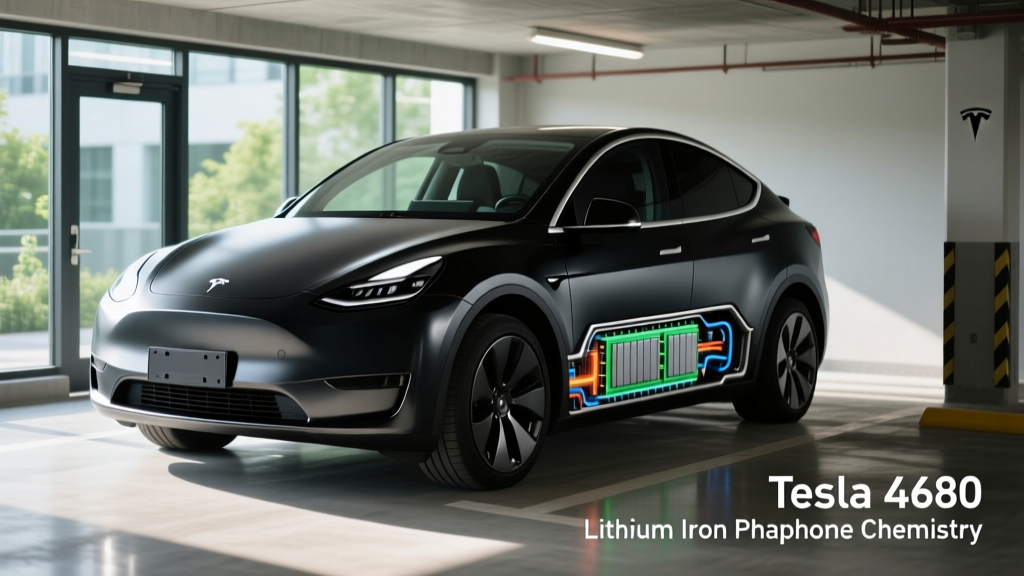
Not all EV batteries are built the same. The two dominant chemistries in the 2026 market — Lithium Iron Phosphate (LFP) and Nickel Manganese Cobalt (NMC) — have fundamentally different characteristics that influence cost, longevity, and daily usability.
| Attribute | LFP (Lithium Iron Phosphate) | NMC / NCA (Nickel-based) |
|---|---|---|
| Energy Density | Lower (~160-180 Wh/kg cell-level) | Higher (~220-260 Wh/kg cell-level) |
| Cycle Life | 3,000-5,000+ cycles to 80% SoH | 1,000-2,000 cycles to 80% SoH |
| Cold-Weather Performance | Weaker — more range loss below 32°F | Better — less cold-weather range penalty |
| Cost per kWh | Lower (~$90-110/kWh pack-level) | Higher (~$120-145/kWh pack-level) |
| Thermal Stability | Excellent — very low thermal runaway risk | Good — requires more active thermal management |
| Charging to 100% SoC | Recommended periodically for BMS calibration | Avoid frequent 100% charges; 80% daily preferred |
| Typical Applications (2026) | Tesla Model 3/Y RWD, Ford Mustang Mach-E Select, BYD models | Long-range/AWD trims, Hyundai Ioniq 5/6, Rivian, GM Ultium vehicles |
The longevity takeaway: LFP cells can endure significantly more charge-discharge cycles before degrading to 80% of original capacity. If you plan to keep a vehicle for 200,000+ miles, an LFP-equipped model has a structural longevity advantage. However, NMC's higher energy density means more range per pound — critical for larger vehicles and long-range trims.
LFP also handles daily charging to 100% State of Charge (SoC) better than NMC, simplifying ownership habits. NMC owners should target 20-80% SoC for daily driving and reserve full charges for road trips.
How Long Do EV Batteries Actually Last?
The short answer: far longer than most buyers assume. Data from high-mileage fleet operators, manufacturer testing, and independent analysis consistently shows that modern EV batteries retain usable capacity well beyond typical vehicle lifespans.
Typical Degradation Curve: Real-World Data Points
Based on aggregated fleet data and manufacturer disclosures, here's what degradation looks like across common ownership timelines:
| Timeframe / Mileage | Typical Capacity Retained | Notes |
|---|---|---|
| Year 1 / ~12,000 mi | 97-99% | Initial "break-in" loss; mostly calendar aging |
| Year 3 / ~36,000 mi | 94-97% | Gradual linear decline phase begins |
| Year 5 / ~60,000 mi | 90-95% | Most vehicles still well within warranty |
| Year 8 / ~100,000 mi | 85-92% | Federal warranty minimum threshold period |
| Year 12 / ~150,000 mi | 80-88% | Approaching end-of-warranty; still drivable |
| Year 15+ / 200,000+ mi | 75-85% | Many packs still functional; some module replacement possible |
Sources: Geotab fleet analysis, Tesla Impact Reports, Recurrent Auto battery health data.
A critical nuance: degradation is not linear. Most batteries experience a steeper drop in the first 1-2 years (roughly 2-5%), then settle into a slow, gradual decline. This "hockey stick" pattern means a battery that has retained 92% capacity at year 5 is very likely to retain 85%+ at year 10.
For context, the average American driver covers roughly 13,500 miles per year according to the Federal Highway Administration. At that rate, reaching 150,000 miles takes over 11 years — and most batteries will still hold 80%+ of their original capacity at that point.
How Much Does It Cost to Replace an Electric Car Battery?
If your battery does fall below usable capacity — or suffers a catastrophic cell failure outside warranty — replacement costs vary dramatically by vehicle, battery size, and chemistry. Below is a breakdown of current replacement pricing for popular 2025-2026 models.
| Vehicle | Battery Size (kWh usable) | Chemistry | Estimated Replacement Cost |
|---|---|---|---|
| Tesla Model 3 RWD | 57.5 kWh | LFP | $12,000 - $16,000 |
| Tesla Model Y Long Range | 75 kWh | NMC | $16,000 - $22,000 |
| Hyundai Ioniq 5 (Long Range) | 77.4 kWh | NMC | $18,000 - $24,000 |
| Ford Mustang Mach-E Extended Range | 91 kWh | NMC | $20,000 - $28,000 |
| Chevrolet Equinox EV | 85 kWh | NMC (Ultium) | $17,000 - $23,000 |
| Rivian R1T (Large Pack) | 128.9 kWh | NMC | $28,000 - $38,000 |
| GMC Hummer EV | 212.7 kWh | NMC (Ultium) | $40,000 - $55,000 |
Important context on these numbers:
- These are full-pack replacement costs including parts and labor at OEM service centers. Independent EV shops may offer 15-25% savings.
- Module-level repair is increasingly available. Many packs allow individual module replacement for $2,000-$6,000 rather than a full swap.
- Remainufactured and refurbished packs are entering the market for older models, typically at 40-60% of new-pack cost.
- Battery pack prices have declined roughly 8-12% per year over the past decade. A replacement in 2030 will likely cost significantly less than today's figures.
The critical question isn't just the replacement cost — it's whether you'll ever need to pay it. Given that most batteries retain 80%+ capacity at 150,000 miles, and most vehicles are scrapped or traded before reaching that mileage, the probability of an out-of-pocket replacement remains low for single-owner vehicles.
What Does the EV Battery Warranty Actually Cover?
Federal law mandates that all EV batteries sold in the United States carry a minimum warranty of 8 years or 100,000 miles (whichever comes first). In California Air Resources Board (CARB) states — which include California, New York, Massachusetts, Washington, Oregon, Colorado, and several others — that mandate extends to 10 years or 150,000 miles.
| Manufacturer | Warranty Term | Capacity Retention Threshold | What Triggers a Claim |
|---|---|---|---|
| Tesla (Model 3/Y) | 8 yr / 120,000 mi (LR/AWD); 8 yr / 100,000 mi (RWD) | 70% | Capacity falls below 70% as measured by Tesla diagnostics |
| Hyundai / Kia | 10 yr / 100,000 mi | 70% | SoH below 70% confirmed by dealer scan tool |
| General Motors (Ultium) | 8 yr / 100,000 mi | 70% | Capacity below 70% or defect-related failure |
| Ford | 8 yr / 100,000 mi | 70% | Capacity below 70% or manufacturing defect |
| Rivian | 8 yr / 175,000 mi | 70% | Capacity below 70% as determined by Rivian service |
| BMW | 8 yr / 100,000 mi | 70% | Capacity below 70% confirmed by BMW diagnostic |
Key warranty details buyers often miss:
- The 70% threshold means significant degradation is required before a claim is valid. A battery at 75% capacity — which still provides meaningful daily range — will not trigger warranty coverage.
- Warranties cover defects and excessive degradation, not normal wear. If your battery slowly loses capacity at a rate the manufacturer considers normal, it may not qualify even if it's below the threshold.
- Transferability varies. Some warranties transfer to second owners (Tesla, Hyundai); others may not. Always verify before buying used.
- Opening the pack voids the warranty. Third-party repairs or modifications to the battery management system (BMS) will almost certainly nullify coverage.
For the full federal warranty requirements, see the EPA's guidance on EV battery warranties.
Factors That Accelerate (or Preserve) Battery Health
Battery degradation isn't purely a function of time and miles. How you charge, drive, and store your EV has a measurable impact on long-term State of Health (SoH). Here's what the data shows:
Battery Care Best Practices
- Avoid frequent DC fast charging. Occasional road-trip fast charging is fine, but daily use of 150+ kW DCFC accelerates degradation by an estimated 1-3% over the battery's life due to sustained high temperatures and lithium plating risk. Level 2 home charging at 7-11 kW is the healthiest daily method.
- Manage State of Charge (SoC) range. For NMC batteries, keeping daily SoC between 20-80% significantly reduces stress on cells. LFP batteries tolerate 100% SoC better but still benefit from avoiding prolonged storage at full charge.
- Precondition before fast charging. Most modern EVs automatically precondition the battery when a DCFC station is entered in navigation. This warms the cells to optimal charging temperature (roughly 77-95°F / 25-35°C), reducing lithium plating risk and improving charge speed.
- Avoid extreme temperature storage. Parking in 100°F+ heat for extended periods with a full battery accelerates calendar aging. In cold climates, plugging in (even to Level 1) allows the thermal management system to maintain battery temperature.
- Don't let the battery sit at 0% or 100%. Extended storage at either extreme accelerates degradation. If storing for weeks, target 50-60% SoC.
- Use regenerative braking wisely. Aggressive regen settings in cold weather can stress cells. Many EVs automatically reduce regen when the battery is cold — this is a protective feature, not a malfunction.
What has the biggest impact? Research from the National Renewable Energy Laboratory (NREL) and fleet data from Geotab suggest that temperature exposure and sustained high SoC have a larger effect on long-term degradation than charging speed alone. A garage-kept EV in a moderate climate that charges daily to 80% on Level 2 will typically outlast a vehicle in Phoenix that fast-charges daily to 100%.
How to Check Your EV's Battery State of Health (SoH)
Monitoring your battery's health isn't as straightforward as checking your tire pressure, but several methods exist:
Built-In Vehicle Displays
Some manufacturers provide a battery health indicator directly in the infotainment system. Hyundai and Kia, for example, display a battery health percentage in the EV settings menu on models like the Ioniq 5 and EV6. Tesla does not natively display SoH percentage, though it shows estimated range which can serve as a proxy.
OBD-II Diagnostic Tools
Third-party OBD-II dongles paired with apps like EV Health, Leaf Spy (Nissan Leaf), or Scan My Tesla can read the battery management system's reported SoH, cell voltage variance, and pack temperature. These tools typically cost $30-$120 for the hardware plus a subscription or one-time app fee.
Dealer Diagnostics
Any authorized dealer can run a full battery health report. This is the most authoritative method and the one used for warranty claims. Request this report when buying a used EV — it provides the definitive SoH reading the manufacturer uses.
Third-Party Battery Health Certificates
Companies like Recurrent Auto provide battery health reports based on connected-car telemetry. Some used-EV marketplaces now include these reports in listings. If you're shopping used, a verified SoH reading is worth more than any seller's verbal assurance.
Looking Ahead: Solid-State Batteries and What They Mean for Replacement Costs
Next-generation battery technologies are advancing, but it's important to separate laboratory progress from showroom reality.
Solid-state batteries — which replace the liquid electrolyte with a solid conductor — promise higher energy density (potentially 400+ Wh/kg at the cell level), faster charging, improved safety, and longer cycle life. Toyota, Samsung SDI, and QuantumScape are among the companies targeting limited production between 2027 and 2030. However, manufacturing scalability and cost remain significant hurdles.
Silicon-anode batteries — which increase the silicon content in the anode to boost energy density — are closer to market. Companies like Sila Nanotechnologies and Group14 are supplying silicon-dominant anode materials to battery manufacturers, with early commercial deployments expected in 2026-2027 model-year vehicles.
What this means for replacement costs: As battery manufacturing scales and chemistry improves, replacement pack costs are on a downward trajectory. The industry average pack-level cost has fallen from over $400/kWh in 2015 to roughly $110-130/kWh in 2026. If that trend continues, a 75 kWh replacement pack that costs $18,000 today could cost $10,000-$12,000 by the early 2030s — making out-of-warranty replacement far more palatable for second and third owners.
These timelines are forward-looking estimates based on current manufacturer announcements and should not be treated as guaranteed availability dates.
Frequently Asked Questions
How long do electric car batteries last in years and miles?
Most modern EV batteries are designed to retain 70-85% of their original capacity after 150,000-200,000 miles (roughly 12-15 years of average driving). Fleet data shows many packs still functioning at 200,000+ miles with 75%+ capacity retention. Complete failure is rare; gradual capacity loss is the norm.
Is the 12V battery the same as the main EV battery?
No. EVs have two batteries: the high-voltage traction battery (50-200+ kWh) that powers the motor, and a conventional 12V auxiliary battery that runs electronics, lights, and the computer systems. The 12V battery costs $150-$400 to replace and has a typical lifespan of 3-5 years — identical to a gas car's battery. This guide covers only the high-voltage traction battery.
Will my EV battery need replacing before the car is paid off?
Statistically, this is unlikely. Most EV loans run 5-7 years, and degradation data shows batteries typically retain 90-95% capacity at the 5-year mark. Unless you experience a rare manufacturing defect (which would be covered under warranty), you will almost certainly not face a battery replacement during a standard loan term.
Does the federal EV tax credit affect battery replacement?
No. The IRS §30D clean vehicle credit applies only to the initial purchase or lease of a qualifying new EV. It does not cover battery replacements. However, if you purchase a replacement battery as part of a qualifying repair, some state incentive programs may offer partial rebates — check your state energy office for current programs.
Can I upgrade to a larger battery when replacing?
In most cases, no. EV battery packs are engineered for specific vehicle platforms with precise physical dimensions, cooling requirements, and software calibration. Swapping in a larger pack is not a plug-and-play upgrade. The exception is some Tesla models where larger packs from higher trims have been successfully retrofitted by specialized shops, but this is expensive and voids any remaining warranty.
What's the cheapest EV battery to replace?
Among current-production models, smaller LFP packs are the least expensive to replace. The Tesla Model 3 RWD with its ~57.5 kWh LFP battery sits at the lower end at roughly $12,000-$16,000. Older, discontinued models with smaller packs (like the early Nissan Leaf with 24-30 kWh) can see replacement costs as low as $6,000-$9,000 through refurbished pack programs.
LFP vs NMC — which battery chemistry is better for longevity?
For pure cycle life and calendar longevity, LFP has the edge. LFP cells can endure 3,000-5,000+ full cycles before reaching 80% SoH, compared to 1,000-2,000 cycles for NMC. However, NMC offers higher energy density (more range in a smaller, lighter pack) and better cold-weather performance. The "better" chemistry depends on your priorities: maximum lifespan and lower cost (LFP) or maximum range and cold-climate capability (NMC).