Why Buyers Still Search for a 2005 Honda Accord Battery — and What It Reveals About EVs
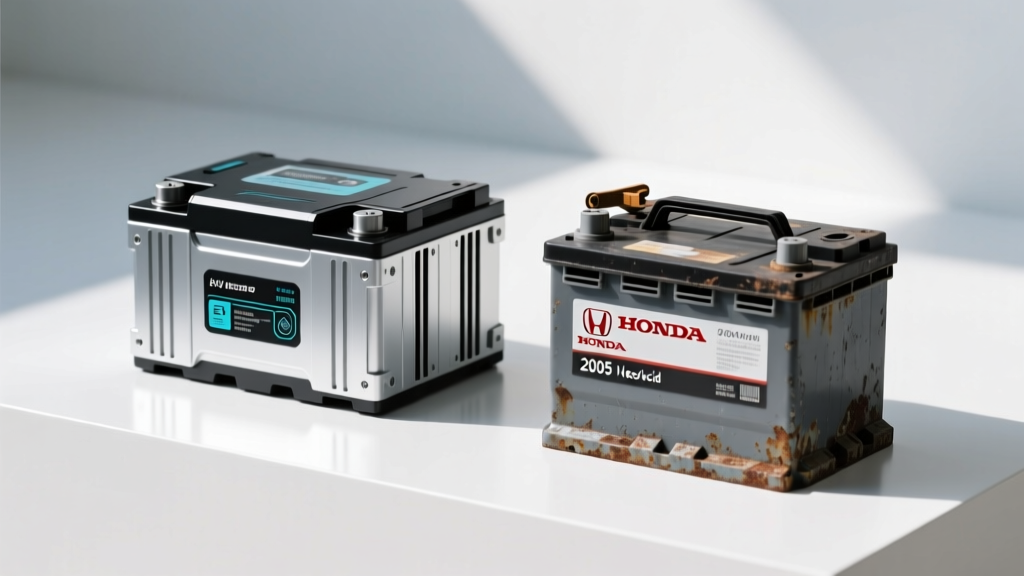
Every month, thousands of shoppers search for a 2005 Honda Accord battery — a testament to how long these mid-2000s sedans stay on the road. The Accord from that era typically uses a Group 24F or 35 lead-acid 12V starter battery that costs $120–$180 at an auto-parts store and lasts three to five years. That's a simple, cheap, well-understood replacement cycle.
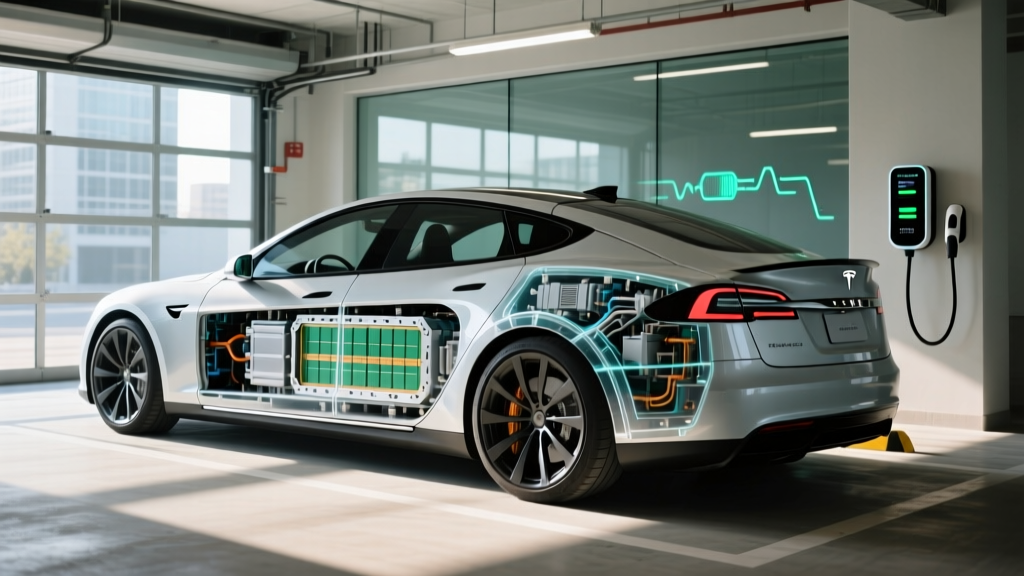
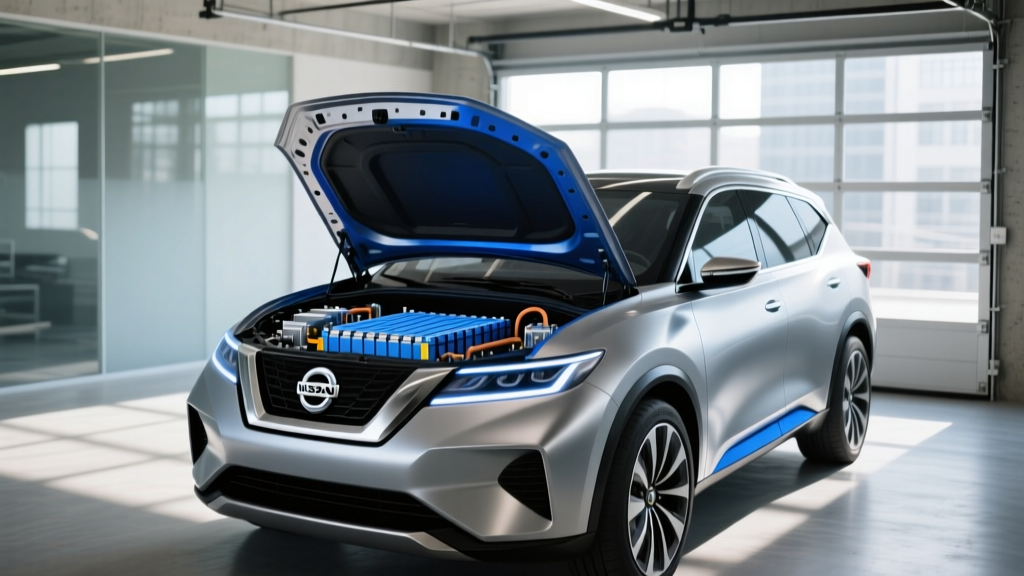
When those same shoppers start considering an electric vehicle, the word "battery" triggers a very different set of questions. An EV's high-voltage traction battery is a multi-thousand-dollar lithium-ion pack that powers the drivetrain — not the small 12V auxiliary battery that runs the infotainment and lights. Understanding the difference, the chemistry, the degradation curve, and the real replacement economics is the single most important piece of EV homework a buyer can do.
This guide breaks down everything current and prospective EV owners need to know about traction-battery longevity, cost, and care — using real data, not marketing claims.
LFP vs NMC: The Two Chemistries Powering Today's EVs
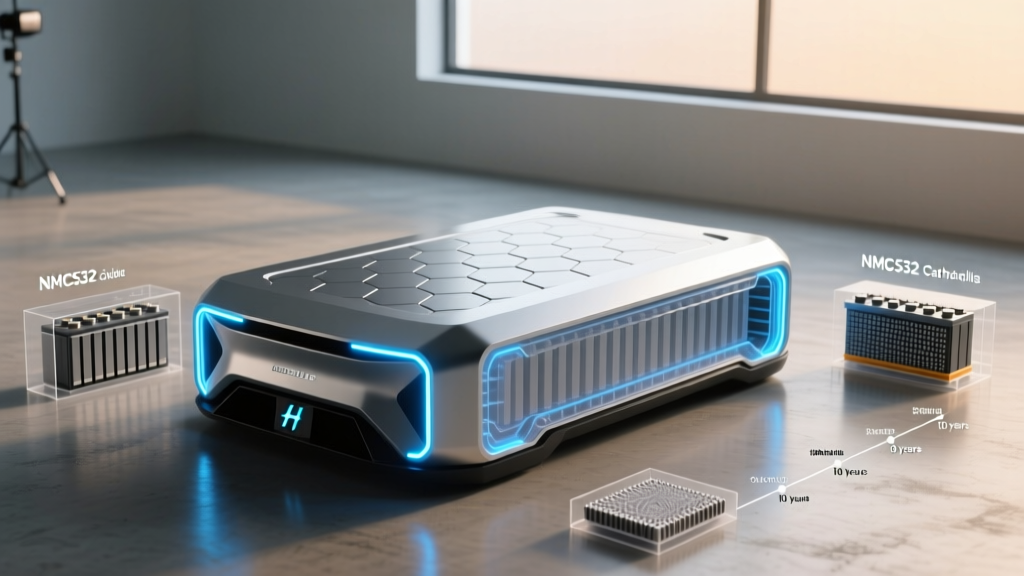
Not all lithium-ion batteries are the same. The two dominant chemistries in 2026 EVs are LFP (lithium iron phosphate) and NMC/NCA (nickel manganese cobalt / nickel cobalt aluminum). Each has distinct trade-offs that affect range, longevity, cold-weather behavior, and price.
| Attribute | LFP (LiFePO₄) | NMC / NCA |
|---|---|---|
| Energy density | ~160–180 Wh/kg (lower) | ~220–300 Wh/kg (higher) |
| Typical cycle life | 3,000–5,000+ cycles | 1,000–2,000 cycles |
| Cold-weather performance | Greater range loss below 32°F; slower DC charging when cold | Better low-temp conductivity |
| Cost per kWh | ~$80–$100 (lower) | ~$110–$140 (higher) |
| Recommended SoC for daily use | 100% OK — manufacturers encourage full charges | 80% preferred for daily; 100% for trips |
| Cobalt content | Zero | Contains cobalt (supply-chain/ethical concern) |
| Example 2026 models | Tesla Model 3 RWD, Model Y RWD, Ford Mustang Mach-E Select (LFP option) | Hyundai Ioniq 5, BMW i4, Rivian R1S, Chevrolet Silverado EV |
Which is better? It depends on your use case. LFP wins on longevity and cost — ideal for commuters who charge at home daily and want a pack that could outlast the car itself. NMC wins on energy density and cold-weather usability — better for long-range models and buyers in northern climates. Neither chemistry is universally superior; the right choice maps to your driving pattern.
How Long Do EV Batteries Actually Last? (Degradation Data)
The short answer: far longer than most buyers fear. Data from fleet operators, manufacturer reports, and independent testing consistently show that modern EV traction batteries lose roughly 5–10% of original capacity over the first 100,000 miles, with the degradation curve flattening significantly after the initial break-in period.
Typical degradation trajectory (fleet-averaged data):
- Year 1 / 15,000 mi: ~2–4% capacity loss (initial formation loss)
- Year 3 / 45,000 mi: ~5–7% total loss
- Year 5 / 75,000 mi: ~7–9% total loss
- Year 8 / 120,000 mi: ~9–12% total loss
- Year 10 / 150,000 mi: ~10–15% total loss (model-dependent)
Sources: Geotab fleet battery health study; Tesla 2024 Impact Report (Model S/X data showing ~12% average degradation at 200,000 miles).
For context, a 2026 Tesla Model Y Long Range with an EPA-rated 330 miles of range and 10% degradation after five years still delivers roughly 297 usable miles — more than adequate for 95% of daily driving. The car will likely reach end-of-life from other mechanical or economic factors before the battery becomes unusable.
Compare this to the 2005 Honda Accord battery cycle: that $150 lead-acid 12V unit will need replacement every 3–5 years regardless of driving habits. Over a 15-year ownership span, an Accord owner might buy three or four starter batteries. An EV owner, in most cases, will never need to replace the traction battery at all.
What Does the Battery Warranty Actually Cover?
Federal law mandates a minimum EV battery warranty of 8 years / 100,000 miles for emissions-related components, and most manufacturers apply this standard to the traction battery. California and states that follow CARB rules extend this to 10 years / 150,000 miles.
| Manufacturer | Warranty Term | Capacity Retention Threshold |
|---|---|---|
| Tesla (Model 3/Y LFP) | 8 yr / 100,000 mi | 70% of original capacity |
| Tesla (Model 3/Y Long Range, S, X) | 8 yr / 120,000 mi | 70% |
| Hyundai / Kia | 10 yr / 100,000 mi | 70% |
| Ford (Mach-E, F-150 Lightning) | 8 yr / 100,000 mi | 70% |
| GM (Ultium platform) | 8 yr / 100,000 mi | 70% (some models 60% for specific modules) |
| BMW | 8 yr / 100,000 mi | 70% |
| Rivian | 8 yr / 120,000 mi | 70% |
The warranty triggers a free replacement (or module repair) only if the battery falls below the stated threshold within the term. A pack retaining 72% at year 8 is not a warranty claim — and at 72% capacity, a 330-mile EPA vehicle still offers ~237 miles of range. That's still more than the average American's weekly driving.
EV Battery Replacement Cost: What the Numbers Actually Say
This is where fear-mongering peaks, so precision matters. Full traction-battery replacement costs vary enormously by pack size, chemistry, and whether you need a new OEM unit, a remanufactured pack, or individual module service.
| Vehicle / Pack Size | New OEM Pack (parts + labor) | Remanufactured / Module Repair | Typical Replacement Timeline |
|---|---|---|---|
| Tesla Model 3 RWD (~57 kWh LFP) | $12,000–$14,000 | $7,000–$9,000 | Rarely needed within vehicle life |
| Tesla Model Y LR (~81 kWh NMC) | $14,000–$18,000 | $9,000–$12,000 | Rarely needed within vehicle life |
| Hyundai Ioniq 5 (~77.4 kWh NMC) | $14,000–$17,000 | $8,000–$11,000 | Rarely needed within vehicle life |
| Ford F-150 Lightning Ext. Range (~131 kWh) | $20,000–$28,000 | $12,000–$18,000 | Rarely needed within vehicle life |
| Chevrolet Bolt EV/EUV (~65 kWh NMC) | $14,000–$16,000 (recall-era replacements trending lower) | $7,000–$10,000 | Earlier Bolt packs had recall-related replacements |
| Rivian R1S/R1T (~128 kWh) | $20,000–$25,000 | $12,000–$16,000 | Rarely needed within vehicle life |
Key context: the vast majority of EV batteries never need full replacement. When issues arise, they are often isolated to a single module or the battery management system (BMS), and module-level repairs run $2,000–$5,000 — not the catastrophic five-figure bill that anti-EV narratives suggest.
For perspective, a 2005 Honda Accord owner might spend $3,000–$5,000 on a transmission rebuild or $4,000–$6,000 on a head-gasket job around 150,000 miles. Major mechanical failures in aging ICE vehicles are common and expected; major EV battery failures are statistically rare.
What Kills an EV Battery Faster — and How to Maximize Health
Lithium-ion degradation is driven by electrochemical stress. The following factors accelerate capacity loss:
Factors that accelerate degradation:
- Frequent DC fast charging above 150 kW — sustained high-C-rate charging generates heat that stresses cell chemistry. Occasional road-trip fast charging is fine; daily 350 kW sessions are not.
- Prolonged storage at 100% SoC — especially in hot climates. Sitting at full charge at 95°F+ accelerates electrolyte decomposition.
- Deep discharges to 0% — regularly draining the pack below 10% stresses the anode. Keep the floor around 10–15%.
- Extreme heat exposure — sustained ambient temps above 100°F with no active thermal management (parking in shade or a garage helps).
- Aggressive acceleration habits — constant high-current draws generate internal heat, though this is a minor factor compared to charging and SoC habits.
Practices that maximize battery life:
- Daily charging to 80% (NMC) or 100% (LFP) — follow the manufacturer's recommendation for your chemistry.
- Home Level 2 charging (7–11 kW) as your primary method — gentler on cells than repeated DC fast charging.
- Preconditioning before DC fast charging — warming the battery to optimal temperature (~70–95°F internal) enables the car to accept peak kW safely, reducing time at high stress.
- Keeping SoC between 20–80% for NMC daily driving; LFP owners can charge to 100% regularly without harm.
- Using scheduled departure / timed charging to avoid sitting at high SoC for extended periods.
How to Check Your EV's Battery Health (State of Health)
State of Health (SoH) is a percentage representing current maximum capacity relative to the battery's original capacity. A new pack is 100% SoH; a pack with 90% SoH holds 90% of its original kWh.
Built-in methods:
- Tesla: The service menu (accessible via the software screen) displays estimated range at 100%, which you can compare to the original EPA figure. Third-party apps like Tessie or Stats pull detailed SoH data from the vehicle's API.
- Hyundai / Kia: The infotainment system's EV menu shows battery state and available range. Dealership diagnostic tools provide granular SoH readings.
- Ford: FordPass displays battery health indicators. A dealership OBD-II scan gives precise module-level data.
- Universal OBD-II tools: Devices like the OBDLink SX paired with apps such as EVNotify or LeafSpy (Nissan) can read SoH, cell voltage variance, and temperature data from most EVs.
If you're buying a used EV, a pre-purchase SoH check is essential. A 2022 Model 3 showing 94% SoH at 35,000 miles is healthy and typical. One showing 82% at the same mileage may indicate heavy fast-charging use or a defective module — and that's a negotiation point or a walk-away.
What's Next: Solid-State and Silicon-Anode Batteries
Two technologies dominate the "next generation" conversation — and both warrant cautious, realistic timelines:
Solid-state batteries replace the liquid electrolyte with a solid conductor, promising higher energy density (potentially 400+ Wh/kg), faster charging, and improved safety. Toyota, Samsung SDI, and QuantumScape have all announced prototypes. However, mass production for consumer vehicles is not expected before 2028–2030 at the earliest, with initial deployment likely limited to premium models. Manufacturing yield and cost remain unsolved at scale.
Silicon-anode batteries (from companies like Sila Nanotechnologies and Group14) replace graphite anodes with silicon-dominant materials, boosting energy density by 20–40%. These are closer to market — expected in select 2026–2028 models — and offer incremental but meaningful range gains without the manufacturing challenges of solid-state.
Neither technology is available in a production EV you can buy today. Any article or advertisement suggesting otherwise is ahead of reality. Current LFP and NMC chemistries, properly managed, already deliver 150,000–300,000+ miles of usable service life.
Frequently Asked Questions
How long do EV batteries last in years and miles?
Based on fleet data from Geotab and manufacturer reports, modern EV batteries typically retain 85–90% capacity at 100,000 miles and 80–88% at 150,000 miles. In years, that translates to 10–15+ years of usable service for most owners. Many packs will outlast the vehicle's economic life.
How much does it cost to replace an EV battery?
Full OEM replacement ranges from ~$12,000 for a ~57 kWh LFP pack (Tesla Model 3 RWD) to ~$28,000 for a ~131 kWh pack (F-150 Lightning Extended Range). Remanufactured packs and module-level repairs run 40–60% less. In practice, the vast majority of EV owners never need a full replacement — the battery outlives the car.
What does the EV battery warranty cover?
Most manufacturers warrant the traction battery for 8 years / 100,000 miles (10 yr / 150,000 mi in CARB states) against falling below 70% of original capacity. If the pack degrades past that threshold within the warranty period, the manufacturer replaces or repairs it at no cost. The warranty does not cover damage from accidents, modifications, or improper charging equipment.
How do I check my EV battery's State of Health?
Use the vehicle's built-in range estimator at 100% charge and compare it to the original EPA figure. For detailed data, use OBD-II diagnostic tools (OBDLink, LeafSpy) or third-party apps (Tessie for Tesla, EVNotify for others). A pre-purchase SoH check is essential for used EV buyers.
LFP vs NMC — which battery chemistry should I choose?
Choose LFP if you prioritize longevity (3,000–5,000+ cycle life), lower cost, and cobalt-free sourcing, and you primarily charge at home with moderate range needs. Choose NMC if you need maximum range per charge, better cold-weather performance, or drive in northern climates. Both chemistries are proven and reliable — the choice depends on your driving pattern, not on one being objectively "better."
Is an EV battery like the 12V battery in a 2005 Honda Accord?
No. The 2005 Honda Accord battery is a 12V lead-acid starter battery that costs ~$150 and lasts 3–5 years. An EV has two batteries: a similar 12V auxiliary battery (which also needs periodic replacement) and a high-voltage lithium-ion traction battery (typically 50–130+ kWh) that powers the drivetrain and is designed to last the life of the vehicle. The traction battery is covered by an 8–10 year warranty and, based on current data, rarely needs replacement.