From a 12V Lead-Acid to a 100 kWh Traction Pack: Why This Comparison Matters
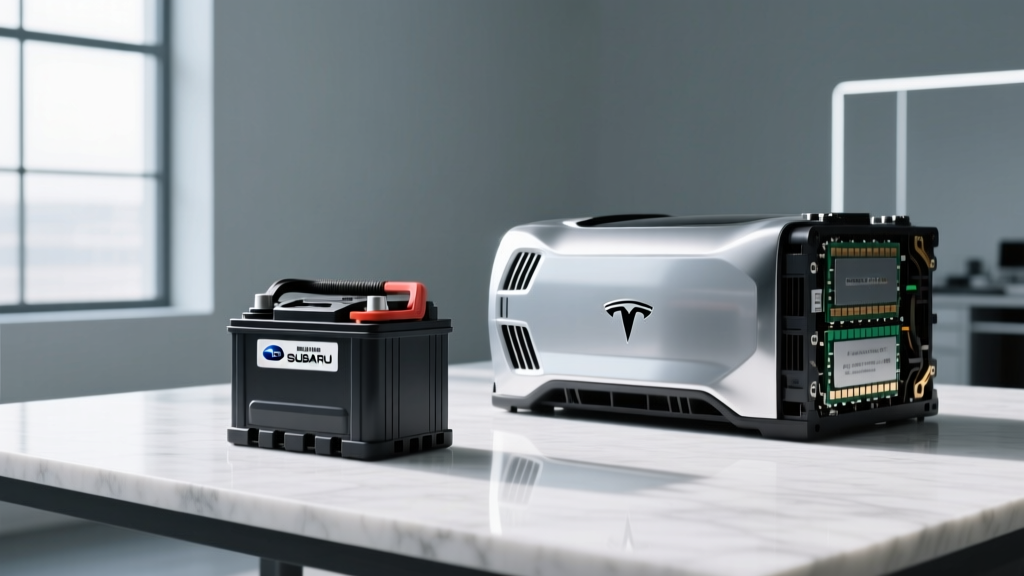
If you've ever searched for a 2002 Buick LeSabre battery, you were almost certainly looking for a standard 12-volt lead-acid starter battery — a Group 78 or Group 34 unit costing roughly $120–$180 at any auto parts store, weighing about 40 pounds, and designed to crank a 3.8L V6 engine in cold weather. That battery stored roughly 0.7 kWh of energy and had a typical lifespan of 3–5 years.
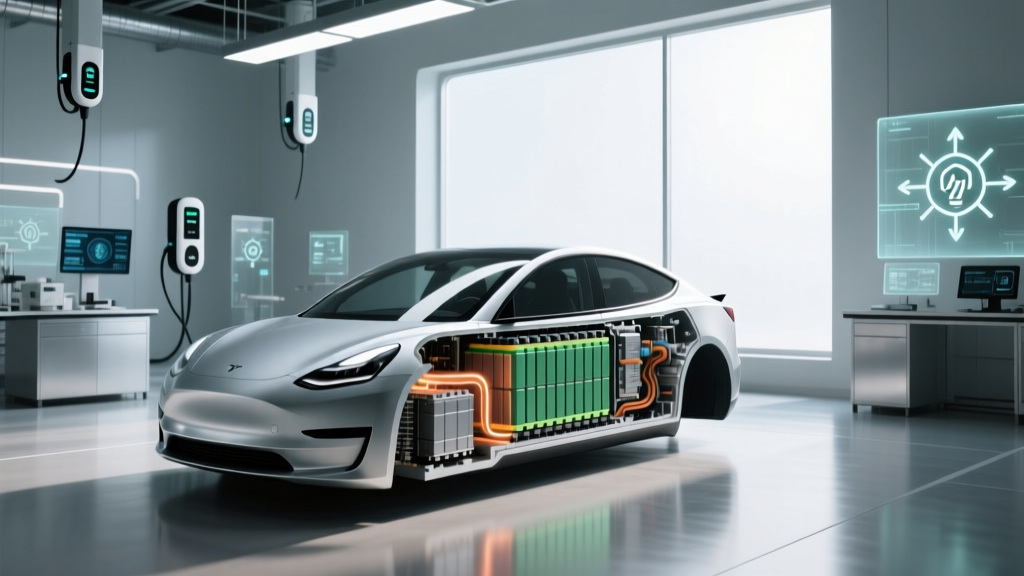
Fast-forward to 2026, and a modern electric vehicle's high-voltage traction battery stores between 60 and 120 kWh — roughly 100 times the energy of that lead-acid unit — and is engineered to last the life of the car. Understanding how EV batteries work, how they degrade, what they cost to replace, and how to care for them is essential for anyone shopping for an EV today. Let's break it all down with hard numbers.
Key Distinction: A 2002 Buick LeSabre battery (12V auxiliary) and an EV traction battery (400V–800V high-voltage) serve entirely different functions. EVs also carry a small 12V or 16V auxiliary battery to power accessories and computers — but when we discuss "EV battery" in this guide, we mean the large lithium-ion traction pack that propels the vehicle.
LFP vs NMC vs NCA: EV Battery Chemistry Explained
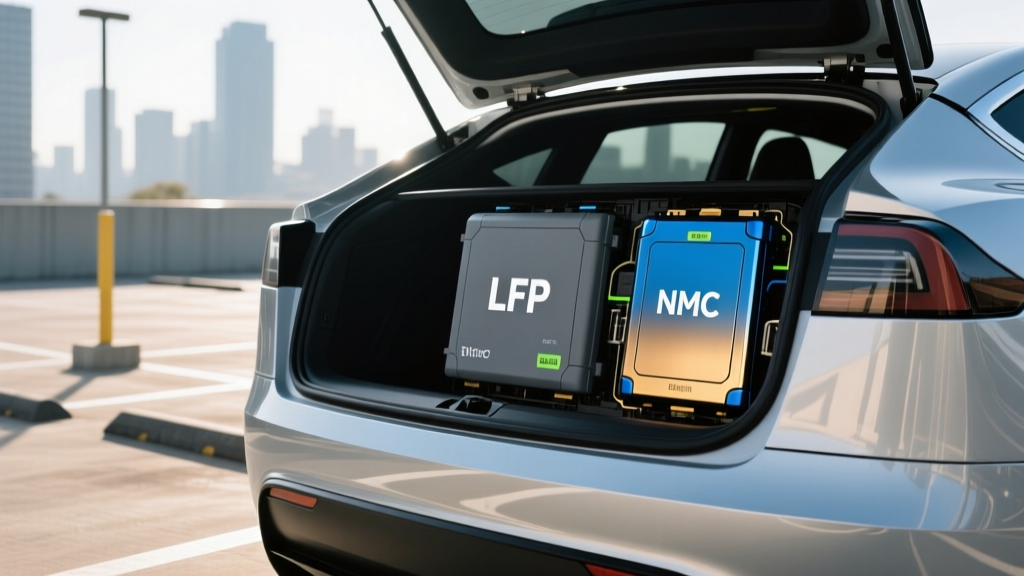
Modern EV batteries use lithium-ion cells, but not all lithium-ion chemistry is the same. The two dominant chemistries in 2026 are LFP (lithium iron phosphate) and NMC/NCA (nickel manganese cobalt / nickel cobalt aluminum). Each has distinct trade-offs in energy density, cycle life, cold-weather performance, and cost.
| Attribute | LFP (Lithium Iron Phosphate) | NMC / NCA (Nickel-Based) |
|---|---|---|
| Energy Density | ~160–180 Wh/kg (lower) | ~220–300 Wh/kg (higher) |
| Typical Cycle Life | 3,000–5,000+ cycles | 1,000–2,500 cycles |
| Cold-Weather Performance | Reduced — greater range loss below 32°F | Better low-temp discharge capability |
| Cost per kWh (2026) | ~$80–$100 | ~$110–$140 |
| Thermal Stability | Excellent — lower thermal runaway risk | Good — requires more active cooling |
| Recommended Daily SoC | Can charge to 100% regularly | Best kept at 80% for daily use |
| Common Vehicles (2026) | Tesla Model 3 RWD, BYD models, Ford Mustang Mach-E Select (LFP option) | Hyundai Ioniq 5, Kia EV6, Tesla Long Range, Rivian, Lucid |
| Cobalt Content | None | Varies — some low-cobalt formulations |
Which is better? It depends on your use case. LFP is ideal for daily commuters who can charge at home and don't need maximum range — it's cheaper, lasts longer, and can be charged to 100% without degradation concerns. NMC/NCA is better for drivers who need maximum range per charge, frequently road-trip, or live in very cold climates where energy density and cold performance matter more. Neither is universally superior; the choice depends on your driving profile.
How Long Do EV Batteries Last? Degradation Data by the Numbers
The single most common concern among prospective EV buyers is battery longevity. The data is reassuring: the vast majority of EV batteries outlast the vehicle they're installed in.
Typical EV Battery Degradation Curve (Aggregate Fleet Data):
- Year 1 / 15,000 miles: ~2–3% capacity loss (initial formation loss)
- Year 3 / 45,000 miles: ~5–7% total loss
- Year 5 / 75,000 miles: ~7–10% total loss
- Year 8 / 120,000 miles: ~10–15% total loss
- Year 10 / 150,000 miles: ~12–18% total loss (most packs still above 80% SoH)
- Year 15 / 200,000+ miles: ~18–25% total loss (some packs reach end-of-automotive-life)
Sources: Geotab fleet analysis, Recurrent Auto battery health reports, manufacturer warranty thresholds.
Real-world examples bear this out. Tesla's 2025 Impact Report noted that Model S/X batteries retained an average of ~88% capacity at 150,000 miles. Hyundai/Kia's 8-year, 100,000-mile warranty guarantees 70% capacity retention — a conservative floor, as most packs significantly outperform that threshold. Early Nissan Leaf models (which lacked active thermal management) showed more degradation, underscoring the importance of battery cooling systems.
To contextualize: a 2026 Hyundai Ioniq 5 with a 77.4 kWh (usable) NMC battery and an EPA range of 305 miles would likely still deliver ~260–275 miles of range at 120,000 miles — more than adequate for most drivers' daily needs.
What Does the EV Battery Warranty Actually Cover?
Federal law in the United States mandates that EV batteries carry a minimum warranty of 8 years or 100,000 miles (whichever comes first). In California Air Resources Board (CARB) states — which include California, Colorado, Connecticut, Maine, Maryland, Massachusetts, New Jersey, New York, Oregon, Rhode Island, Vermont, Virginia, and Washington — the requirement extends to 10 years or 150,000 miles for certain emissions-related components, though battery warranty specifics vary by manufacturer.
| Manufacturer | Warranty Period | Mileage Limit | Capacity Retention Threshold |
|---|---|---|---|
| Tesla (Model 3/Y RWD — LFP) | 8 years | 100,000 miles | 70% |
| Tesla (Long Range / Performance) | 8 years | 120,000 miles | 70% |
| Hyundai / Kia | 8 years | 100,000 miles | 70% |
| Ford (Mustang Mach-E, F-150 Lightning) | 8 years | 100,000 miles | 70% |
| Chevrolet (Equinox EV, Blazer EV) | 8 years | 100,000 miles | 70% (estimated) |
| Rivian | 8 years | 120,000 miles | 70% |
| BMW | 8 years | 100,000 miles | 70% |
What triggers a warranty claim? If your battery's State of Health (SoH) drops below the stated threshold (typically 70%) within the warranty period, the manufacturer will repair or replace the pack — or individual modules, depending on the design — at no cost to you. The warranty covers defects and abnormal degradation, not damage from accidents, flooding, or improper modifications.
Importantly, fueleconomy.gov notes that battery degradation is a gradual process, and the 70% threshold represents a significant loss that most owners won't experience within the warranty window under normal use.
EV Battery Replacement Cost: What to Expect in 2026
Battery replacement costs have dropped significantly over the past decade, but they remain a major expense if needed outside of warranty. Here's a realistic breakdown based on 2026 pricing:
| Vehicle Class | Battery Size (Usable kWh) | Parts Cost | Labor | Total Estimated Cost |
|---|---|---|---|---|
| Compact EV (e.g., Chevy Bolt, Nissan Leaf) | 60–65 kWh | $5,500–$8,000 | $1,500–$2,500 | $7,000–$10,500 |
| Midsize Crossover (e.g., Ioniq 5, Model Y) | 75–82 kWh | $7,500–$11,000 | $2,000–$3,000 | $9,500–$14,000 |
| Large SUV / Truck (e.g., F-150 Lightning, Rivian) | 98–135 kWh | $10,000–$16,000 | $2,500–$4,000 | $12,500–$20,000 |
| Luxury / Performance (e.g., Lucid, Taycan) | 90–118 kWh | $12,000–$20,000 | $3,000–$5,000 | $15,000–$25,000 |
When is replacement typically needed? For most EVs, the answer is: rarely during normal ownership. Battery replacement is most common in vehicles that are 12–15+ years old with 180,000+ miles, or in early-generation EVs with passive (air-cooled) thermal management systems. For the vast majority of 2026 EV buyers who plan to own their vehicle for 5–10 years, battery replacement is not a realistic financial concern.
It's worth noting that individual module replacement — rather than a full pack swap — is increasingly common and significantly cheaper. Many modern packs are modular, allowing technicians to replace only the degraded cells. A single module replacement might cost $1,000–$3,000 depending on the vehicle.
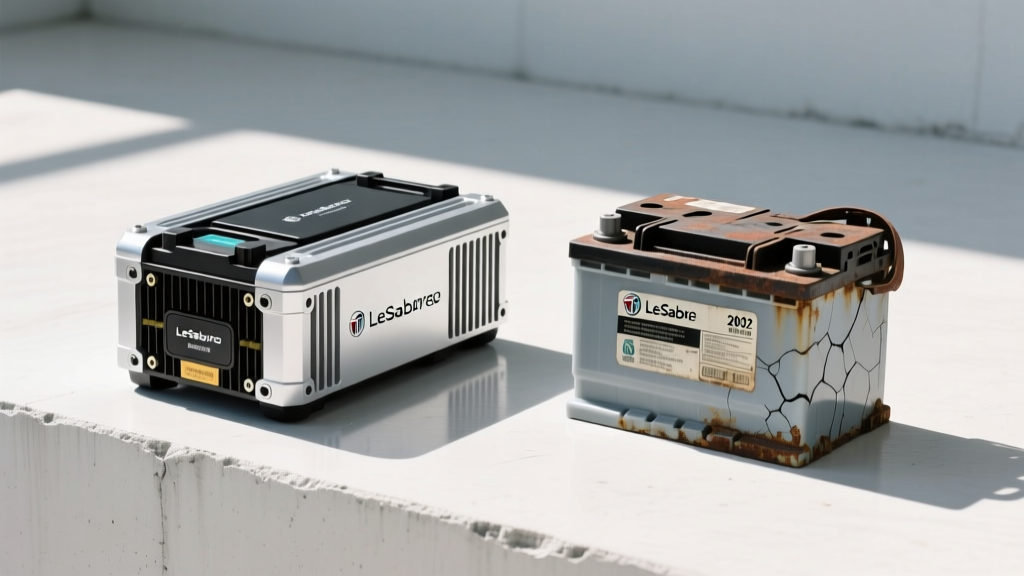
Compare this to the 2002 Buick LeSabre battery replacement: a $130 lead-acid unit swapped in 15 minutes. The EV equivalent is more complex and costly, but it's also designed to last 3–5 times longer and power the entire vehicle rather than just start an engine.
Factors That Affect EV Battery Life (And How to Minimize Them)
Battery degradation is inevitable, but the rate at which it occurs is heavily influenced by how you charge, drive, and store your EV. Here are the primary factors and actionable strategies:
Battery Care Checklist for Maximum Longevity
- Avoid frequent DC fast charging: Occasional road-trip fast charging is fine, but daily use of 150+ kW DC chargers accelerates degradation due to sustained high temperatures. Use Level 2 home charging as your primary method.
- Manage State of Charge (SoC): For NMC/NCA batteries, set your daily charge limit to 80%. Reserve 100% charges for road trips. LFP batteries are more tolerant of 100% SoC — manufacturers like Tesla and BYD actually recommend periodic full charges for LFP to maintain cell balancing.
- Avoid extreme heat exposure: Parking in direct sunlight in 100°F+ weather with a high SoC stresses cells. Use shaded or covered parking when possible. Vehicles with active thermal management (liquid cooling) handle this better than passively cooled packs.
- Precondition in cold weather: Using your EV's preconditioning feature (warming the battery while plugged in) before driving or fast charging in freezing temperatures reduces stress and improves charge acceptance. Most 2026 EVs offer scheduled preconditioning via their apps.
- Don't store at extreme SoC: If your EV will sit unused for weeks, aim for ~50% SoC. Storing at 100% or near 0% for extended periods accelerates calendar degradation.
- Use regenerative braking wisely: Moderate regen settings generate less heat in the battery pack than aggressive one-pedal driving in stop-and-go traffic, though the difference is marginal.
How to Check Your EV Battery's State of Health (SoH)
State of Health (SoH) is a percentage indicating your battery's current maximum capacity relative to its original capacity when new. A brand-new battery has 100% SoH; a battery that can only hold 85 kWh of its original 100 kWh has 85% SoH.
Methods for checking SoH in 2026:
- In-vehicle display: Many EVs (Tesla, Hyundai, BMW, Rivian) provide a battery health indicator in the settings menu or service screen. This is often the simplest method, though some manufacturers limit the granularity of this display.
- Manufacturer app: Tesla, Ford, and BMW apps include battery health or estimated range comparisons that can indicate degradation over time.
- OBD-II diagnostic tools: Third-party tools like OBDLink paired with apps such as EV Health or Car Scanner can read battery management system (BMS) data, including SoH, cell voltage variance, and temperature history.
- Dealer diagnostic check: A service center can run a full battery health report. This is recommended before purchasing a used EV and is often provided free during warranty inspections.
- Third-party services: Companies like Recurrent Auto offer free battery health reports that compare your pack's degradation against a fleet of identical vehicles, providing context for whether your battery is degrading normally or abnormally.
For used-EV buyers, verifying SoH is as critical as checking a gas car's compression test. A 2022 model with 45,000 miles showing 94% SoH is in excellent shape; one showing 82% SoH may warrant a warranty claim or price negotiation.
Emerging Battery Technology: Solid-State, Silicon Anode, and Beyond
While today's lithium-ion batteries are mature and reliable, next-generation chemistries are in development that promise significant improvements. It's important to separate announced milestones from production reality.
Solid-state batteries replace the liquid electrolyte with a solid material (ceramic, sulfide, or polymer), offering potentially 2–3x the energy density, faster charging, and improved safety. Toyota has announced a solid-state battery targeting 2027–2028 production with a claimed 750 km (~465 mile) range, but as of early 2026, no mass-produced vehicle uses a solid-state pack. Samsung SDI, QuantumScape, and Solid Power are also pursuing this technology with pilot-line production underway.
Silicon anode batteries replace or supplement the graphite anode with silicon, which can store roughly 10x more lithium ions per unit mass. Companies like Sila Nanotechnologies and Group14 Technologies have begun supplying silicon-dominant anode materials for limited production applications. The Mercedes-AMG EQG (G-Wagen EV) has been announced with a silicon anode option, though availability remains limited.
Sodium-ion batteries use abundant sodium instead of lithium, offering lower cost and good cold-weather performance at the expense of lower energy density. CATL and BYD have begun deploying sodium-ion packs in smaller, budget EVs in China, with potential US-market applications still several years away.
Realistic timeline: Expect incremental improvements in existing lithium-ion chemistry (higher nickel content, silicon-blend anodes, dry electrode manufacturing) through the late 2020s. True solid-state batteries in mainstream, affordable EVs are most likely a 2029–2032 reality. None of these technologies should factor into a 2026 purchasing decision — today's batteries are already excellent and will serve most owners well for 15+ years.
Frequently Asked Questions
How long do EV batteries last in years and miles?
Most modern EV batteries are designed to retain at least 70–80% of their original capacity after 150,000–200,000 miles or 10–15 years. Fleet data from Geotab and Recurrent Auto shows average degradation of roughly 1.5–2% per year under normal use. Many early Tesla Model S vehicles have exceeded 200,000 miles on their original packs with 80%+ capacity remaining.
How much does an EV battery cost to replace?
In 2026, a full traction battery replacement costs between $7,000 and $25,000 depending on the vehicle and battery size. Compact EVs like the Chevrolet Bolt typically fall in the $7,000–$10,500 range; midsize crossovers like the Hyundai Ioniq 5 or Tesla Model Y run $9,500–$14,000; large trucks like the F-150 Lightning can reach $12,500–$20,000. However, most EVs never need a battery replacement during typical ownership, and modular repairs are often much cheaper than full pack swaps.
What does the EV battery warranty cover?
Federal law requires a minimum of 8 years / 100,000 miles of battery warranty coverage. Most manufacturers guarantee the battery will retain at least 70% of its original capacity during this period. If degradation exceeds that threshold, the manufacturer covers repair or replacement. The warranty does not cover damage from accidents, misuse, or unauthorized modifications. See the warranty table above for manufacturer-specific terms.
How do I check and maximize my EV battery health?
Check your SoH via the in-vehicle display, manufacturer app, OBD-II diagnostic tool, or a dealer service visit. To maximize longevity: charge primarily on Level 2, set NMC daily limits to 80%, avoid frequent DC fast charging, precondition in cold weather, and don't store the vehicle at 100% or near 0% SoC for extended periods. LFP batteries are more forgiving and can be charged to 100% regularly.
LFP vs NMC — which battery chemistry is better?
Neither is universally better. LFP offers longer cycle life (3,000–5,000+ cycles), lower cost (~$80–$100/kWh), no cobalt, and the ability to charge to 100% daily — making it ideal for commuters and daily drivers. NMC offers higher energy density (~220–300 Wh/kg), better cold-weather performance, and more range per charge — making it better for road trippers and cold-climate drivers. Choose LFP for affordability and longevity; choose NMC for maximum range and cold performance.
Can I still buy a 2002 Buick LeSabre battery at an auto parts store?
Yes — a 12V Group 78 lead-acid battery for a 2002 Buick LeSabre is still widely available at AutoZone, Advance Auto Parts, and similar retailers for roughly $130–$180. This is an auxiliary starter battery and has nothing in common with the high-voltage lithium-ion traction batteries that power modern EVs. If you're transitioning from a legacy ICE vehicle like the LeSabre to an EV, the maintenance paradigm shifts dramatically: no starter battery swaps, no alternator replacements, and far fewer consumable components overall.
For official EV efficiency and range data, visit fueleconomy.gov. For federal tax credit rules that may affect your EV purchase economics, see IRS.gov §30D clean vehicle credits. Battery specifications and warranty terms are sourced from manufacturer press sites and verified against EPA filings.