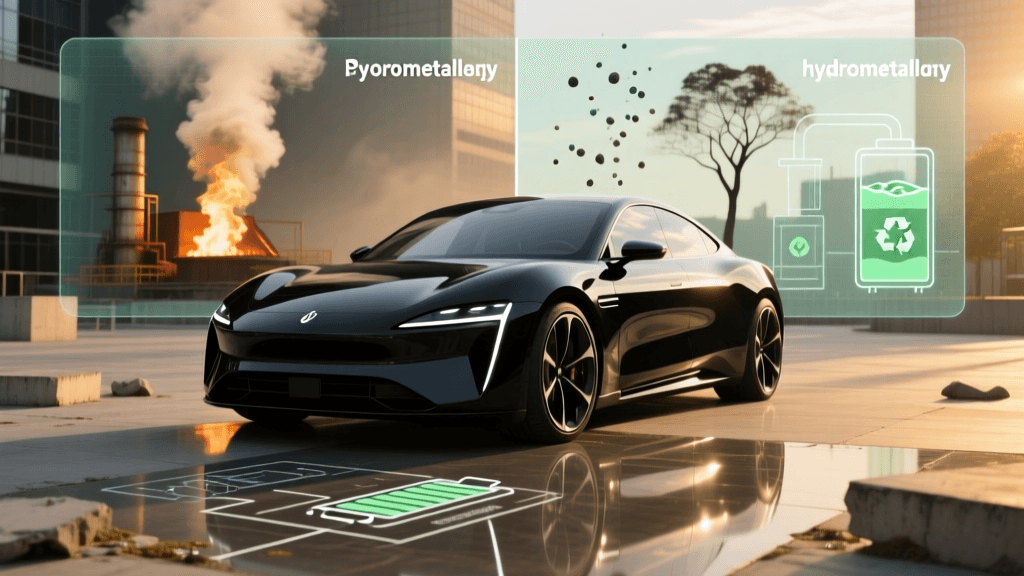
The Looming EV Battery End-of-Life Wave
As the global transition to electric vehicles accelerates, a secondary challenge is rapidly approaching the automotive industry: the end-of-life (EOL) management of lithium-ion battery packs. According to data from the International Energy Agency (IEA), the demand for EV batteries is scaling exponentially, which means a massive wave of retired battery packs will hit the recycling infrastructure between 2030 and 2040. Understanding the EV battery recycling process is no longer just an environmental footnote; it is a critical component of the sustainable mobility ecosystem.
When an EV battery degrades to 70% or 80% of its original state of health (SoH), it is typically retired from vehicular use. However, the valuable materials inside—lithium, cobalt, nickel, manganese, and copper—retain immense economic and functional value. Extracting these materials efficiently requires advanced metallurgical techniques that balance economic yield with ecological preservation.
Deconstructing the EV Battery Recycling Process
The modern EV battery recycling process generally involves three primary methodologies, each with distinct chemical, thermal, and environmental profiles. Before any specific recycling method is applied, batteries undergo a crucial pre-treatment phase: discharging, mechanical shredding, and separation to produce a powder known as "black mass."
1. Pyrometallurgy (Smelting)
Pyrometallurgy is the oldest and most commercially mature recycling method. It involves feeding the black mass into a high-temperature furnace (often exceeding 1,500°C). The intense heat melts the metals, separating them into an alloy phase (containing cobalt, nickel, and copper) and a slag phase (containing lithium, aluminum, and manganese).
Pros: Highly tolerant of mixed battery chemistries and impurities; requires minimal pre-sorting and can process entire battery modules without extensive disassembly.
Cons: Extremely energy-intensive. It also burns off the electrolytes and plastics, generating toxic off-gases that require expensive scrubbing systems. Most importantly, traditional pyrometallurgy struggles to economically recover lithium, often trapping it in the unusable slag.
2. Hydrometallurgy (Chemical Leaching)
Hydrometallurgy relies on aqueous chemistry rather than extreme heat. The black mass is subjected to chemical leaching using strong acids (like sulfuric or hydrochloric acid) combined with reducing agents (like hydrogen peroxide). This dissolves the target metals into a liquid solution. The resulting solution undergoes a series of pH adjustments and solvent extractions. For instance, cobalt and nickel are often extracted using organophosphorus extractants, while lithium is precipitated out as lithium carbonate or lithium hydroxide using sodium carbonate. This level of chemical precision ensures the output materials meet the strict 99.9% purity requirements of modern battery gigafactories.
Pros: Operates at much lower temperatures than smelting, resulting in a lower carbon footprint. It boasts exceptionally high recovery rates (often >95%) for all critical metals, including lithium.
Cons: Generates large volumes of toxic, corrosive wastewater that must be meticulously treated. The process is also highly sensitive to the specific chemistry of the input black mass, requiring rigorous sorting.
3. Direct Recycling (Cathode Healing)
Direct recycling represents the cutting edge of battery circularity. Instead of breaking the cathode materials down to their elemental base, direct recycling aims to preserve the crystalline structure of the cathode powder. As highlighted by researchers at the Argonne National Laboratory, this process involves extracting the cathode black mass, analyzing its lithium deficiency, and then undergoing a "relithiation" process. The material is treated with lithium salts and annealed, restoring it to battery-grade quality without destroying the molecular architecture.
Pros: Lowest environmental impact and energy consumption. It bypasses the need to synthesize new cathode precursors from scratch, preserving the manufacturing value added during the original battery production.
Cons: Still largely in the pilot and early commercialization stages. It requires pristine, highly sorted input materials and struggles with heavily degraded or mixed-chemistry cells.
Technology Comparison: Recycling Methods
| Methodology | Energy Intensity | Lithium Recovery | Transition Metal Recovery | Commercial Maturity |
|---|---|---|---|---|
| Pyrometallurgy | Very High | Low (trapped in slag) | High (Co, Ni, Cu) | High (Industry Standard) |
| Hydrometallurgy | Moderate | Very High (>95%) | Very High (>95%) | Medium-High (Scaling rapidly) |
| Direct Recycling | Low | Restored via Relithiation | Preserved in Structure | Low (Pilot/Early Commercial) |
Environmental Impact: Virgin Mining vs. Recycling
The environmental argument for recycling hinges on the staggering ecological cost of virgin mineral extraction. Mining lithium, particularly from brine operations in South America's "Lithium Triangle," is incredibly water-intensive. Extracting a single ton of virgin lithium can require up to 500,000 gallons of water, severely impacting local aquifers and agricultural communities. Conversely, recycling lithium via hydrometallurgy uses a fraction of that water and eliminates the need for brine evaporation ponds.
Furthermore, the carbon footprint of virgin nickel extraction—particularly from laterite ores processed via high-pressure acid leaching (HPAL)—is immense, often generating over 10 kg of CO2 equivalent per kg of nickel. Recycling nickel from black mass can reduce this carbon intensity by up to 70%, making it a cornerstone strategy for automakers striving to meet net-zero manufacturing targets by 2040.
Similarly, cobalt mining in the Democratic Republic of Congo (DRC) is fraught with severe environmental and human rights issues, including toxic runoff and unsafe artisanal mining conditions. By establishing a closed-loop domestic supply chain, recycling mitigates the geopolitical and ethical risks associated with virgin cobalt extraction.
According to the U.S. Environmental Protection Agency (EPA), proper recycling of lithium-ion batteries prevents hazardous materials from entering landfills, where they can leach toxic electrolytes and heavy metals into the soil and groundwater. Life-cycle analyses consistently show that producing cathode materials from recycled black mass generates significantly fewer greenhouse gas emissions compared to refining virgin ores.
Actionable Guide: Managing Your EV Battery's End-of-Life
As an EV owner or fleet manager, you play a vital role in ensuring batteries enter the proper recycling stream. Here is how you can manage your battery's EOL responsibly:
- Leverage OEM Take-Back Programs: Major automakers like Tesla, Ford, and Nissan have established closed-loop partnerships with recyclers like Redwood Materials and Li-Cycle. If your battery fails under warranty or reaches EOL, the dealership is legally and logistically equipped to route the pack to a certified recycler.
- Explore Second-Life Applications: Before recycling, an EV battery with 75% SoH is perfect for stationary energy storage. Companies are increasingly repurposing retired EV modules for residential solar storage or grid-level frequency regulation, extending the battery's useful life by another 10 to 15 years.
- Use Certified Drop-Off Networks: If you are dealing with an aftermarket replacement or an out-of-warranty pack, never dispose of it in municipal waste. Utilize certified networks like Call2Recycle to find specialized drop-off locations that handle high-voltage lithium-ion safety protocols.
- Safe Storage Protocols: Always store a degraded or damaged battery in a cool, dry environment away from direct sunlight while awaiting transport. If the battery casing is punctured or swelling, it poses a severe thermal runaway risk and must be handled exclusively by hazardous materials (HAZMAT) certified professionals using specialized fire-retardant transport bins.
- Request a Certificate of Recycling: For commercial fleets, demand a Certificate of Recycling (CoR) from your disposal partner. This ensures compliance with environmental regulations and provides verifiable data for your corporate ESG (Environmental, Social, and Governance) reporting.
The Regulatory Push: EU Battery Passports and the US IRA
The economic viability of the EV battery recycling process is being heavily shaped by new government regulations. In the United States, the Inflation Reduction Act (IRA) offers substantial tax credits for EVs, but strictly mandates that a growing percentage of battery minerals must be sourced domestically or from free-trade partners. Recycled materials processed in the US count toward these domestic content thresholds, creating a massive financial incentive for localized hydrometallurgy and direct recycling plants.
Meanwhile, the European Union is implementing the "Battery Passport" regulation. By 2027, every industrial and EV battery sold in the EU must feature a digital twin containing comprehensive data on its chemistry, carbon footprint, and recycled content. This digital traceability will force automakers to design batteries specifically for easy disassembly and direct recycling, effectively closing the loop on the EV battery lifecycle.
Conclusion
The transition to electric mobility is only as green as its supply chain. As pyrometallurgy gives way to advanced hydrometallurgy and direct recycling, the EV battery recycling process is evolving from a hazardous waste management problem into a highly lucrative, environmentally critical mining operation. By understanding these technologies and adhering to proper EOL protocols, consumers and manufacturers alike can ensure that the EV revolution remains truly sustainable.