If you've been researching your next electric vehicle purchase, you've likely encountered the term LFP — lithium iron phosphate, also known chemically as LiFePO4. Once confined to Chinese-market EVs and industrial energy storage, LFP cells now power some of the most popular electric vehicles sold in the United States. Tesla equips its Standard Range Model 3 and Model Y with LFP packs. Ford fits LFP batteries into the Mustang Mach-E Select. Rivian offers LFP in its Standard battery package for the R1S and R1T. The chemistry has arrived in the mainstream, but it is not a universal upgrade over nickel-based alternatives. Understanding the trade-offs is essential before you buy.
This guide examines exactly what an EV with LiFePO4 battery technology delivers in 2026 — from energy density and cold-weather performance to cycle life and real-world degradation data. We'll also cover replacement economics, warranty coverage, and how to monitor long-term battery health.
LFP vs NMC vs NCA: How EV Battery Chemistries Compare
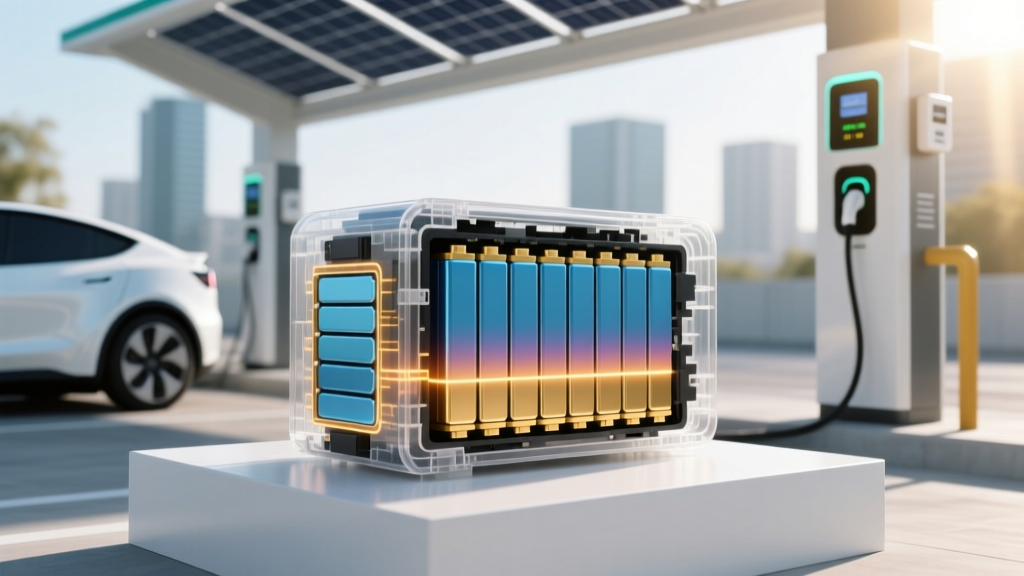
Modern EV traction batteries use lithium-ion cells, but the cathode chemistry varies significantly. The three dominant types in the US market are:
- LFP (LiFePO4 — Lithium Iron Phosphate): No nickel or cobalt. Lower energy density but exceptional cycle life and thermal stability.
- NMC (Nickel Manganese Cobalt): Higher energy density, widely used across Hyundai, Kia, GM, VW, and BMW EVs.
- NCA (Nickel Cobalt Aluminum): Used primarily by Tesla in Long Range and Performance variants. Highest energy density of the three.
Here is how they stack up on the metrics that matter most to owners:
| Attribute | LFP (LiFePO4) | NMC 811 | NCA |
|---|---|---|---|
| Energy Density (cell-level) | 160–180 Wh/kg | 220–260 Wh/kg | 250–290 Wh/kg |
| Typical Cycle Life (to 80% SoH) | 3,000–5,000+ cycles | 1,000–2,000 cycles | 1,000–1,500 cycles |
| Thermal Runaway Onset | ~270°C (very stable) | ~210°C | ~150°C |
| Cold Performance (at -10°C / 14°F) | Noticeable range loss (~30–40%) | Moderate loss (~20–30%) | Moderate loss (~20–30%) |
| Recommended Daily SoC | 100% (no penalty) | 80% (for longevity) | 80% (for longevity) |
| Critical Mineral Dependency | None (iron, phosphate) | Cobalt, nickel | Cobalt, nickel |
| Cell Cost (approx. $/kWh, 2026) | $55–$75 | $85–$110 | $90–$120 |
The headline trade-off: LFP sacrifices roughly 25–35% of energy density compared to NMC/NCA. That means an LFP pack must be physically larger and heavier to store the same kWh. For a compact sedan, this translates to a smaller battery and therefore less EPA range — which is why LFP typically appears in base/standard-range trims. But in exchange, you gain dramatically longer cycle life, the ability to charge to 100% daily without accelerated degradation, superior thermal safety, and a lower upfront cost.
Which 2026 EVs Use LFP Batteries?
The roster of US-market EVs equipped with LFP packs has expanded considerably. Here are key 2026 models using LiFePO4 chemistry:
| Model | Trim / Battery | Usable kWh | EPA Range | Base MSRP |
|---|---|---|---|---|
| Tesla Model 3 | Standard Range RWD | ~60 kWh | 272 mi | $38,990 |
| Tesla Model Y | Standard Range RWD | ~60 kWh | 268 mi | $44,990 |
| Ford Mustang Mach-E | Select (Standard Battery) | ~72 kWh | 250 mi | $42,995 |
| Rivian R1S / R1T | Standard Battery | ~92 kWh | ~270 mi (R1T) | $69,900 (R1T) |
Note that higher trims from these same manufacturers — Tesla Long Range, Mach-E Extended Range, Rivian Max — use NMC or NCA packs to maximize range. Check fueleconomy.gov for exact EPA figures by trim, as battery chemistry directly affects the range number on the window sticker.
Real-World Degradation: What the Data Shows
Battery degradation — the gradual loss of total usable capacity over time — is the single biggest long-term ownership concern. The good news: modern EV batteries, LFP included, are degrading far more slowly than early-generation packs.
LFP Degradation Curve (Typical)
Based on aggregated fleet data from Tesla Model 3 Standard Range owners and independent testing by sources like Recurrent Auto, LFP packs exhibit the following capacity retention pattern:
- Year 1 / ~15,000 miles: 2–4% capacity loss (initial formation loss, common to all Li-ion)
- Year 3 / ~45,000 miles: 4–7% total loss
- Year 5 / ~75,000 miles: 6–9% total loss
- Year 8 / ~120,000 miles: 8–12% total loss (still above 88% SoH)
- Projected Year 10 / ~150,000 miles: 10–15% total loss
Compare this to NMC packs from the same era, which typically show 8–12% loss by Year 5 and 12–18% by Year 8 under similar use patterns. LFP's flatter degradation curve means the battery retains more of its original range in the second half of its life.
One LFP-specific quirk: the battery management system (BMS) can struggle to estimate state of charge accurately because LFP cells have a very flat voltage curve between 20% and 80% SoC. This is why Tesla and other manufacturers recommend charging to 100% at least once per week — it gives the BMS a full-voltage reference point to recalibrate. Without periodic 100% charges, the displayed range estimate may drift from reality, even though the cells themselves are fine.
Battery Warranty Coverage: What's Protected and for How Long
Federal law mandates that EV battery warranties cover a minimum of 8 years or 100,000 miles (whichever comes first). In California Air Resources Board (CARB) states, the requirement extends to 10 years or 150,000 miles. Most manufacturers meet or exceed these minimums.
| Manufacturer | Warranty Period | Mileage Limit | Capacity Threshold |
|---|---|---|---|
| Tesla (Model 3/Y Standard Range) | 8 years | 100,000 miles | 70% retention |
| Ford (Mach-E Standard Battery) | 8 years | 100,000 miles | 70% retention |
| Rivian (Standard Battery) | 8 years | 175,000 miles | 70% retention |
The critical detail is the capacity retention threshold. A warranty guaranteeing 70% retention means the manufacturer will replace or repair the battery only if its usable capacity drops below 70% of its original value within the warranty period. Given that LFP packs typically retain 88–92% capacity at Year 8 based on current data, hitting the 70% threshold under normal use is statistically unlikely. If you drive 15,000 miles annually, a battery warranty effectively covers the first 6.5+ years of ownership for most buyers.
Battery Replacement Cost: What It Takes and When
This is where fear-mongering runs rampant, so let's anchor the discussion in actual numbers. Full traction battery replacement is rare — most EV batteries outlast the vehicles they're installed in — but understanding the cost ceiling is prudent.
| Battery Size | Chemistry | Replacement Cost (Parts + Labor) | Example Models |
|---|---|---|---|
| ~60 kWh | LFP | $8,000–$12,000 | Tesla Model 3 SR |
| ~72 kWh | LFP | $10,000–$15,000 | Ford Mach-E Select |
| ~92 kWh | LFP | $14,000–$19,000 | Rivian R1T Standard |
| ~82 kWh | NMC/NCA | $13,000–$20,000 | Tesla Model 3 LR |
| ~77.4 kWh | NMC | $12,000–$18,000 | Hyundai Ioniq 5 |
LFP replacement packs cost less per kWh than NMC/NCA equivalents because the raw materials (iron, phosphate) are cheaper than nickel and cobalt. However, labor rates for high-voltage battery removal and installation are substantial regardless of chemistry — typically $1,500–$3,000 in labor alone.
When is replacement actually needed? Based on current degradation trajectories, a full replacement due to capacity loss alone is unlikely before 200,000+ miles for LFP packs. More common reasons for out-of-warranty service include individual module failures, coolant leaks into the pack, or physical damage from road debris. Many manufacturers now offer module-level repair (replacing a few defective cells rather than the entire pack), which can cut costs by 50–70%.
Maximizing Battery Lifespan: Care Habits That Matter
Battery longevity is not purely a function of chemistry — your habits play a measurable role. Here are the factors with the strongest evidence behind them:
Battery Care Checklist for LFP Owners
- Charge to 100% weekly: Unlike NMC/NCA, LFP cells tolerate — and actually benefit from — regular full charges. Tesla specifically recommends 100% daily for LFP vehicles. This also keeps the BMS calibration accurate.
- Minimize DC fast charging to road trips: Frequent use of 150+ kW DC fast chargers generates heat that accelerates degradation over thousands of cycles. For daily use, Level 2 home charging at 7–11 kW is ideal.
- Precondition before fast charging: LFP cells charge slower in cold temperatures. Use your vehicle's navigation-based preconditioning (available in Tesla, Rivian) to warm the pack before arriving at a DC charger. This improves charge speed and reduces stress on the cells.
- Avoid prolonged storage at 0% SoC: While LFP is more tolerant of high SoC than NMC, storing the vehicle with a near-empty battery for weeks can cause cell imbalance. If storing for 30+ days, leave the car plugged in with a charge limit of 50–70%.
- Park in shade or a garage when possible: Sustained high ambient temperatures (above 95°F / 35°C) accelerate calendar aging. A garage or shaded spot measurably slows degradation in hot climates like Arizona or Texas.
- Don't obsess over avoiding 0%: LFP's deep-cycle tolerance is excellent. Occasional near-depletion followed by a full recharge will not meaningfully harm the pack. Just avoid leaving it at 0% for extended periods.
Monitoring Battery Health: How to Check SoH
State of Health (SoH) is a percentage representing your battery's current maximum capacity relative to its original capacity when new. A SoH of 93% means your pack holds 93% of the kWh it did on day one.
Here are the primary ways EV owners monitor SoH:
1. In-Vehicle Displays
Some vehicles display estimated degradation directly. Tesla's service menu (accessible through the touchscreen) shows battery health metrics. Rivian provides range comparison data that lets you infer SoH by comparing current full-charge range to the original EPA figure.
2. Third-Party Apps and OBD-II Tools
Apps like TeslaFi, Stats (for Tesla), and OBD-II dongles paired with ABRP (A Better Routeplanner) or Scan My Tesla can log charge sessions and calculate SoH by comparing energy added during a known SoC window to the expected kWh for that range. For non-Tesla EVs, services like Recurrent Auto offer SoH reports by connecting to your vehicle's telematics data.
3. Dealer Diagnostics
During scheduled service visits, dealerships can run a full battery health report that measures individual module voltages, internal resistance, and total capacity. This is the most authoritative method, though it requires a service appointment. Request this report annually or before a warranty claim.
4. The Manual Calculation
Charge your vehicle from a known SoC (say 10%) to 100% on a Level 2 charger that displays total kWh delivered. If charging from 10% to 100% on a 60 kWh (usable) LFP pack delivers 52 kWh from the charger, and you account for ~5% charging losses, your battery holds approximately 49.4 kWh — or about 82% SoH. This method is imprecise but useful for spotting trends over time.
Emerging Battery Tech: What's Next After LFP
While LFP dominates the cost-optimized EV segment today, several next-generation technologies are in development. It's important to understand their realistic timelines — none of these are available in production vehicles as of 2026:
- Solid-state batteries: Companies like Toyota, QuantumScape, and Samsung SDI are targeting commercial production between 2027–2030. Promised benefits include 2x energy density, faster charging, and improved safety. However, manufacturing cost and scale remain significant barriers. Expect initial deployment in premium vehicles at high price points.
- Silicon-dominant anodes: Replacing graphite anodes with silicon can boost energy density by 20–40%. Startups like Sila Nanotechnologies and Group14 are supplying early-production silicon anode materials, but widespread EV adoption is projected for 2027–2029.
- Sodium-ion batteries: CATL and BYD have begun producing sodium-ion cells for low-cost, short-range EVs in China. Energy density is lower than even LFP (~120–150 Wh/kg), but raw materials are abundant and cheap. US-market availability is uncertain and likely post-2028.
- LFP with silicon-enhanced anodes: A more near-term evolution — pairing LFP cathodes with partial silicon anodes to close the energy density gap with NMC while retaining LFP's cost and safety advantages. Expected in 2026–2028 model-year vehicles.
For buyers shopping today, these technologies are forward-looking context, not purchase factors. LFP is a mature, proven chemistry shipping in hundreds of thousands of vehicles annually. Waiting for solid-state means waiting years and likely paying a premium when it first arrives.
LFP vs NMC: The Decision Framework
Choose an EV with LiFePO4 battery if:
- You can charge at home and don't need maximum EPA range
- You want to charge to 100% daily without worrying about long-term degradation
- You plan to own the vehicle for 8+ years and value cycle life
- You prioritize lower purchase price (LFP trims are typically $3,000–$8,000 cheaper than NMC equivalents)
- You live in a moderate climate (not extreme cold for extended periods)
- You value supply-chain ethics — LFP uses no cobalt or nickel
Choose an NMC/NCA EV if:
- You need maximum range per charge (300+ miles EPA)
- You regularly drive in sub-freezing temperatures where LFP's cold-weather losses are more pronounced
- You take frequent long road trips and want the largest possible battery in the smallest package
- You tow heavy loads (the higher energy density matters when every pound counts)
Frequently Asked Questions
How long do LFP EV batteries last in years and miles?
Based on current fleet data, LFP batteries retain 85–92% of their original capacity at 8 years / 120,000 miles. At the 3,000+ cycle-life rating, an LFP pack could theoretically endure 450,000+ miles of driving before reaching 80% SoH — far beyond the typical vehicle lifespan. In practice, most LFP batteries will outlast the cars they're installed in.
How much does an EV battery cost to replace?
Full replacement costs range from approximately $8,000 to $19,000 for LFP packs depending on capacity (60–92 kWh), plus $1,500–$3,000 in labor. NMC/NCA replacements run $12,000–$20,000+. However, module-level repairs can reduce costs by 50–70%, and full replacements due to degradation alone are extremely rare before 200,000 miles.
What does the battery warranty actually cover?
EV battery warranties cover capacity loss below a specified threshold (typically 70% of original capacity) for 8 years/100,000 miles (10 years/150,000 miles in CARB states). This covers manufacturing defects and premature degradation. It does not cover physical damage from accidents, flooding, or road debris — those fall under comprehensive insurance. IRS §30D tax credit rules also require battery sourcing compliance, which is separate from warranty coverage.
How do I check my EV battery's State of Health?
Use your vehicle's built-in battery health display (if available), third-party apps like TeslaFi or Recurrent Auto that analyze charge data, or request a dealer diagnostic report during service. The most reliable method is a dealer-run capacity test that measures actual kWh delivered from a known SoC window.
Is LFP better than NMC — which should I choose?
Neither chemistry is universally "better." LFP excels in cycle life (3,000–5,000 cycles vs 1,000–2,000 for NMC), thermal safety, cost ($55–75/kWh vs $85–110/kWh), and daily charging convenience (100% SoC is fine). NMC wins on energy density (220–260 Wh/kg vs 160–180 Wh/kg), cold-weather performance, and suitability for long-range and heavy-duty applications. Your choice depends on your driving patterns, climate, and how long you plan to keep the vehicle.
Does fast charging damage an LFP battery?
Occasional DC fast charging (road trips) has minimal impact on LFP longevity. However, daily use of 150+ kW chargers does accelerate degradation compared to Level 2 home charging. LFP cells charge slower in cold weather due to their chemistry, so preconditioning is especially important. For optimal lifespan, rely on Level 2 home charging for daily needs and reserve DC fast charging for trips where you genuinely need it.
Can I get the federal tax credit on an EV with an LFP battery?
Eligibility for the §30D federal tax credit depends on the vehicle's MSRP (caps: $55,000 for sedans, $80,000 for SUVs/trucks), your income limits, and battery component/critical mineral sourcing requirements — not on battery chemistry specifically. Because LFP contains no cobalt or nickel, some LFP vehicles face challenges meeting the critical minerals requirement if sourced from non-FTA countries. Always verify current-year eligibility on IRS.gov or consult a tax professional, as rules change frequently.