The Real Cost of Heating and Cooling: HVAC's Toll on Your EV Battery
Every EV owner notices it: crank up the cabin heat on a 30°F morning and watch the range estimator drop 15-30% faster than in mild weather. The HVAC system is the single largest parasitic load on an electric vehicle's high-voltage traction battery — pulling anywhere from 2 kW on a mild day to over 6 kW in extreme cold when the heat pump and resistive heater work in tandem. That energy doesn't come from thin air; it comes directly from the same lithium-ion cells that propel the car, meaning HVAC usage affects not just your daily range but, over years, the cumulative cycle wear on your battery pack.
This guide dissects the intersection of HVAC demand and battery health. We'll cover the chemistry inside your pack, real-world degradation data, what the warranty actually protects, what a replacement costs in 2026, and the habits that maximize longevity — all through the lens of the thermal loads your battery endures every time you adjust the cabin temperature.
How HVAC Loads Affect the High-Voltage Traction Battery
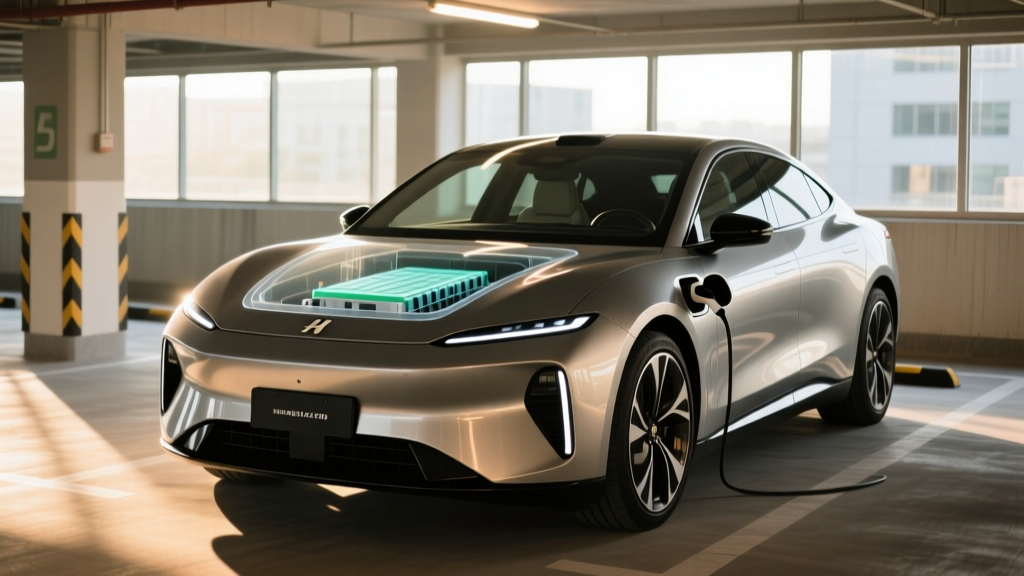
First, a critical distinction: when we say "EV battery," we mean the high-voltage traction battery (typically 400V or 800V architecture, 50-120 kWh capacity). This is entirely separate from the 12V auxiliary battery that powers lights, infotainment, and computers. The HVAC compressor, resistive PTC heater, and heat pump all draw from the traction pack.
Here's what HVAC actually pulls from your battery in real driving:
- Mild weather (60-75°F), fan only: 0.5-1.5 kW continuous
- Hot weather (90°F+), A/C cooling: 2-4 kW continuous
- Cold weather (30°F), heat pump active: 2-4 kW continuous
- Extreme cold (below 15°F), PTC resistive heat: 4-7 kW continuous
- Battery thermal management (preconditioning): 2-6 kW during warm-up cycles
On a vehicle with a 75 kWh usable battery, running the heater at 5 kW for a 2-hour winter highway trip consumes roughly 10 kWh — about 13% of total capacity — purely for cabin warmth. That's 30-40 miles of lost range on top of the cold-weather efficiency hit to the drivetrain itself. According to fueleconomy.gov, cold temperatures can reduce EV range by 20-40% depending on conditions, with HVAC being the dominant variable.
The battery's thermal management system also works harder in extreme temperatures, cycling coolant through the pack to keep cells in their optimal 20-40°C window. This thermal conditioning is protective — it prevents accelerated degradation — but it consumes additional energy that owners rarely see itemized on the dash.
Battery Chemistry: LFP vs NMC and HVAC Sensitivity
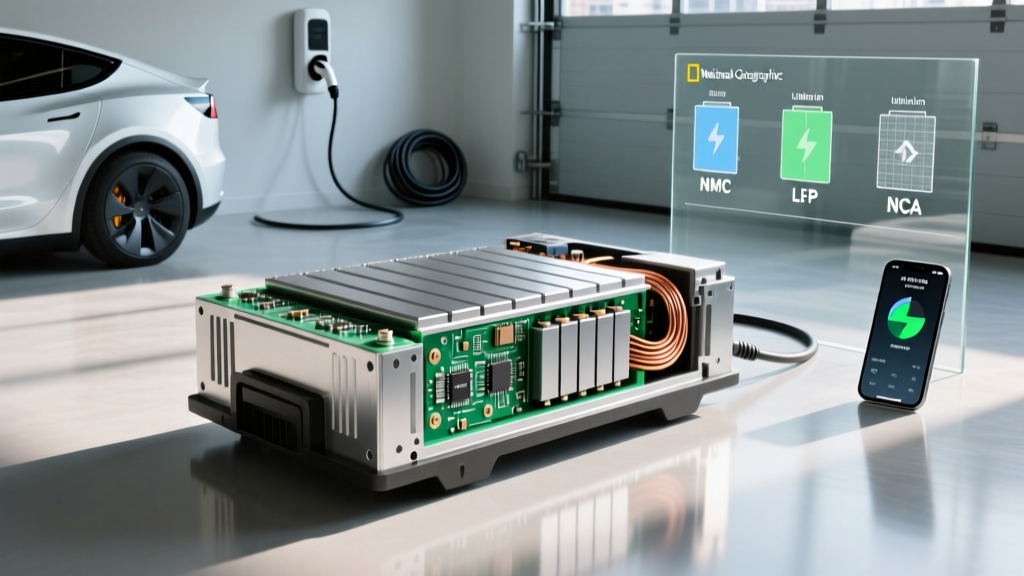
Not all EV batteries respond to thermal stress equally. The two dominant chemistries in 2026 passenger EVs — Lithium Iron Phosphate (LFP) and Nickel Manganese Cobalt (NMC/NCA) — have fundamentally different characteristics when it comes to energy density, cold-weather behavior, and cycle life under heavy HVAC-related thermal cycling.
| Attribute | LFP (LiFePO4) | NMC/NCA |
|---|---|---|
| Energy Density (cell-level) | 160-180 Wh/kg | 220-300 Wh/kg |
| Typical Cycle Life | 3,000-5,000+ cycles | 1,000-2,000 cycles |
| Cold Performance (below 0°C) | Reduced; slower charge acceptance | Better low-temp discharge, still impaired charging |
| Thermal Stability | Excellent; higher runaway threshold (~270°C) | Good; lower thermal runaway threshold (~210°C) |
| Cost (per kWh, 2026) | ~$80-100 | ~$110-140 |
| State of Charge Recommendation | Can charge to 100% daily | 80% daily recommended; 100% for trips only |
| Common in (2026 models) | Tesla Model 3 RWD, Model Y RWD, Ford Mustang Mach-E Select (base) | Hyundai Ioniq 5/6, Kia EV6/EV9, BMW i4/iX, Rivian, Lucid |
HVAC relevance: LFP's lower energy density means packs are physically larger for the same kWh, adding weight that compounds the range hit from HVAC use. However, LFP's superior cycle life means the pack tolerates the extra charge-discharge cycles caused by HVAC parasitic drain far better over 10+ years. NMC packs deliver more range per kWh, partially offsetting HVAC losses, but degrade faster under repeated deep cycling and high-temperature exposure — both conditions that heavy HVAC use in extreme climates can exacerbate.
Real-World Degradation: What the Data Shows
Battery degradation is measured as capacity loss — the percentage of original kWh the pack can still hold. A battery hasn't "failed" at 80% capacity; it simply holds less energy, reducing range proportionally. Most modern EVs use a buffer (typically 2-5 kWh hidden above and below the displayed 0-100%) to protect cells from extreme states that accelerate wear.
Aggregated fleet data and owner-reported measurements paint a consistent picture:
- Year 1-2: 2-5% capacity loss (initial settling, steepest part of the curve)
- Year 3-5: Additional 1-2% per year (linear slow degradation)
- Year 6-10: Roughly 1% per year if well-maintained
- Typical 8-year/100,000-mile expectation: 85-92% state of health (SoH)
Real-world data points from large-sample studies and telematics:
- Tesla Model 3/Y (NMC, 2019-2022 cohorts): ~88-92% SoH at 100k miles per Tesla's 2024 Impact Report and independent aggregators like Recurrent Auto
- Chevrolet Bolt EV/EUV (NMC, 65 kWh): Post-recall replacement packs showing >95% SoH at 50k miles; original packs averaged ~90% at 80k miles before recall
- Nissan Leaf (passively cooled, older generations): Higher degradation — some 2013-2017 24/30 kWh packs at 65-75% SoH by year 8, underscoring the importance of active thermal management
- LFP-equipped Tesla Model 3 RWD: Early data (2022-2024 cohorts) suggests >93% SoH at 60k miles, consistent with LFP's cycle-life advantage
HVAC-specific degradation factor: Frequent extreme-temperature operation forces the thermal management system to work harder, increasing cell temperature variance. Cells that repeatedly cycle between 10°C and 45°C (common in cold-climate commutes with aggressive cabin preheating) experience slightly faster calendar aging than cells kept in a stable 20-30°C band. The effect is modest — perhaps an additional 1-3% loss over 8 years — but measurable in fleet data from Recurrent Auto, which tracks over 15,000 EVs across climate zones.
What the Battery Warranty Actually Covers
Federal law mandates a minimum 8-year/100,000-mile battery warranty for EVs sold in the US (10 years/150,000 miles in California Air Resources Board states). But the details matter enormously — and most owners misunderstand what triggers a warranty claim.
| Manufacturer | Warranty Period | Capacity Threshold | Notes |
|---|---|---|---|
| Tesla (Model 3/Y) | 8 yr / 120,000 mi (Long Range, AWD); 8 yr / 100,000 mi (RWD) | 70% retention | Covers defects + capacity below threshold |
| Hyundai/Kia | 10 yr / 100,000 mi | 70% retention | Among the longest in the industry |
| Ford (Mach-E, F-150 Lightning) | 8 yr / 100,000 mi | 70% retention | Covers battery components and capacity |
| GM (Ultium platform) | 8 yr / 100,000 mi | 70% retention (some models 60% for Bolt-era) | Module-level replacement capability |
| Rivian | 8 yr / 175,000 mi (R1T/R1S) | 70% retention | Higher mileage cap for truck platform |
| BMW | 8 yr / 100,000 mi | 70% retention | Includes thermal management system |
Key points owners miss:
- The warranty covers capacity dropping below the threshold (typically 70%), not any degradation above it. A pack at 72% SoH at year 7 is functioning "within spec."
- Warranty replacements may use refurbished or remanufactured modules, not brand-new packs — which is standard practice and not a disadvantage.
- Damage from accidents, flooding, or unauthorized modifications voids coverage.
- The thermal management system is typically included — if a coolant pump failure causes battery overheating and degradation, that's a warranty claim.
EV Battery Replacement Costs: 2026 Reality
This is the question that generates the most anxiety — and the most misinformation. Let's establish the baseline fact first: the vast majority of EV batteries outlast the vehicle itself. Based on current degradation curves, a modern liquid-cooled pack will retain 80-90% capacity at 150,000-200,000 miles. Full replacement is rare and usually tied to manufacturing defects, physical damage, or extreme edge cases.
When replacement is needed, here's what it costs in 2026:
| Vehicle | Battery Size | Chemistry | Full Pack Replacement (parts + labor) | Module-Level Repair |
|---|---|---|---|---|
| Tesla Model 3 (RWD, LFP) | ~60 kWh | LFP | $10,000-$13,000 | Not typically modular |
| Tesla Model Y (Long Range) | ~75 kWh | NMC | $13,000-$16,000 | Not typically modular |
| Hyundai Ioniq 5 | 77.4 kWh | NMC | $14,000-$18,000 | Module replacement possible (~$3,000-$5,000 per module) |
| Ford F-150 Lightning (Extended) | ~131 kWh | NMC | $22,000-$30,000 | Under evaluation |
| Chevrolet Equinox EV | ~85 kWh | NMC (Ultium) | $14,000-$17,000 | Module-level designed |
| Nissan Ariya | ~91 kWh | NMC | $16,000-$20,000 | Limited module service |
Important context: Cell prices have dropped roughly 80% since 2013 (from ~$400/kWh to ~$100-140/kWh at the pack level in 2026, per BloombergNEF data). Module-level repair — replacing only the degraded or faulty cell groups rather than the entire pack — is becoming standard practice on platforms designed for it (GM Ultium, Hyundai E-GMP). This can reduce out-of-warranty costs to $3,000-$8,000 for targeted repairs.
For perspective, a conventional vehicle's transmission replacement averages $4,000-$8,000, and engine replacements run $5,000-$10,000+. EV battery costs are in a similar range and far less likely to be needed within the typical ownership period.
Maximizing Battery Life: Habits That Matter
Battery degradation is driven by three primary factors: temperature extremes, state-of-charge stress, and charge-discharge cycle count. HVAC usage intersects with all three. Here's an evidence-based care framework:
Battery Longevity Checklist
- Precondition while plugged in: Use scheduled departure or app-based preconditioning to warm or cool the cabin and battery on grid power before driving. This eliminates the initial high-draw HVAC spike from the battery and brings cells to optimal temperature before discharge begins.
- Use seat heaters and steering wheel heaters: These draw 50-100W versus 2,000-5,000W for cabin air heating. In moderate cold (35-50°F), contact heating plus a light cabin temperature setting can cut HVAC energy use by 60-70%.
- Limit DC fast charging to road trips: Frequent 150-350 kW DC charging accelerates degradation. Studies show vehicles that DC fast-charge more than 3 times per month degrade 1-3% faster over 5 years than those primarily using Level 2. Use Level 2 (7-11 kW) at home as your daily charging method.
- Avoid sustained 100% or 0% state of charge: For NMC packs, set daily charge limits to 80%. LFP packs can be charged to 100% regularly (in fact, Tesla recommends periodic 100% charges for LFP to calibrate the BMS). Never leave any pack sitting at 100% or below 5% for extended periods (days+).
- Park in shade or a garage when possible: Prolonged exposure to ambient temperatures above 95°F accelerates calendar aging. A garage that stays 70-80°F in summer is materially better for long-term SoH than an unshaded driveway at 110°F.
- Don't skip software updates: OTA updates frequently refine thermal management algorithms, charge curves, and buffer strategies. Tesla, Ford, Hyundai, and GM have all shipped updates that measurably improve battery longevity.
Monitoring Battery Health: Checking Your State of Health
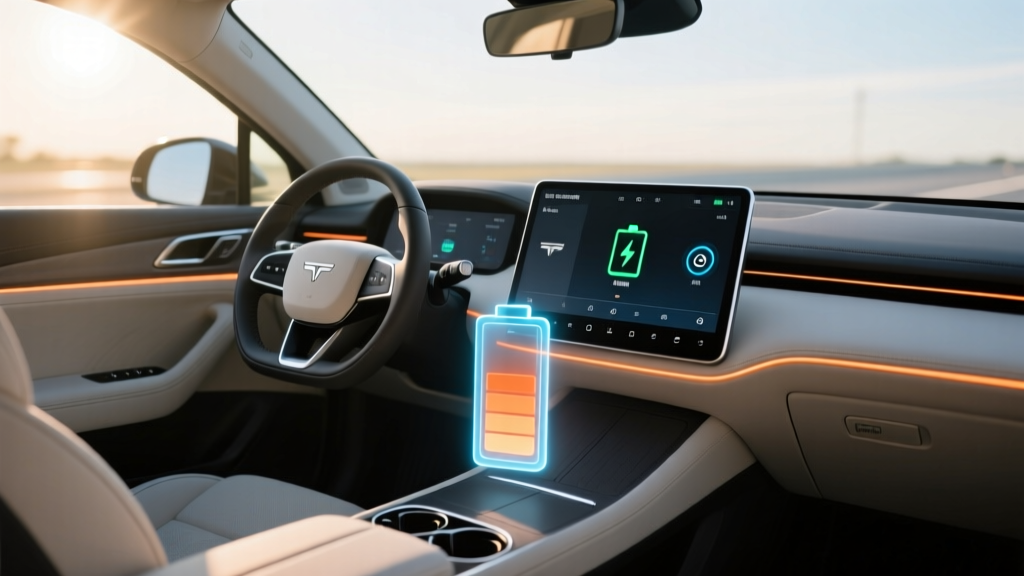
State of Health (SoH) is the percentage of original capacity your battery retains. A new 75 kWh pack at 95% SoH holds approximately 71.25 kWh. Monitoring this number helps you track degradation trends and anticipate warranty claims.
How to check SoH by brand:
- Tesla: No native SoH display in the app or car. Use third-party tools like TeslaFi, Tessie, or the Scan My Tesla OBD app to read BMS-reported nominal full-pack energy. Compare to original spec.
- Hyundai/Kia: Some models display SoH in the EV settings menu or via the dealer diagnostic tool. The Carista or Car Scanner ELM OBD apps can read SoH via OBD-II on E-GMP vehicles.
- Ford: The FordPass app and in-car diagnostics provide limited battery health info. Full SoH requires a dealer visit or an OBD reader with FORScan software.
- GM (Ultium): myChevrolet/myCadillac apps provide basic range and efficiency data. Full SoH diagnostics available via dealer GDS tool.
- Universal method: An OBD-II Bluetooth dongle ($30-$50) paired with apps like Car Scanner, ABRP (with OBD), or LeafSpy (Nissan) can read the BMS-reported nominal capacity on most EVs. Divide current nominal kWh by original usable kWh for a SoH percentage.
Check SoH every 3-6 months and log the trend. A sudden drop (more than 2-3% in a single quarter) warrants a dealer diagnostic visit — it may indicate a weak cell module that's dragging down the pack.
Looking Ahead: Solid-State and Silicon Anode Batteries
Next-generation battery technologies promise to change the HVAC-versus-range equation significantly, but realistic timelines matter.
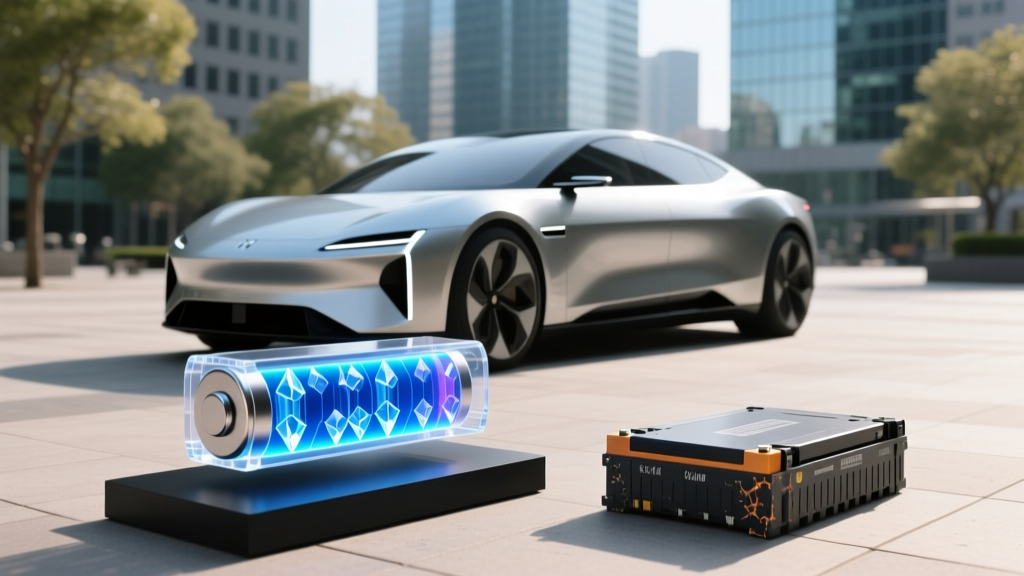
Solid-state batteries replace the liquid electrolyte with a solid ceramic, polymer, or sulfide material. Projected advantages include 30-50% higher energy density (meaning more range to absorb HVAC losses), faster charging (potentially 10-80% in under 10 minutes), and improved cold-weather performance. Toyota has announced solid-state-equipped vehicles for 2027-2028, initially in limited production and likely in premium models first. Samsung SDI, QuantumScape (with Volkswagen), and Nissan are targeting 2028-2030 for broader availability. These remain announced and developmental — not available in any 2026 production vehicle.
Silicon anode technology (used by companies like Sila Nanotechnologies and Group14) replaces graphite anodes with silicon-dominant materials, boosting energy density 10-25% without a full chemistry overhaul. Mercedes-Benz's next-generation EQ models and select 2026-2027 vehicles from partnerships with Sila are expected to incorporate partial silicon anodes. This is closer to market than solid-state but still in early production ramp.
Sodium-ion batteries are emerging as a low-cost alternative for entry-level EVs, with CATL and BYD producing cells at under $50/kWh. Energy density is lower (~140-160 Wh/kg), but cycle life and cold performance are competitive with LFP. Expect these in budget-oriented models by 2027-2028.
For buyers in 2026, current LFP and NMC chemistries with active thermal management are mature, well-understood, and backed by comprehensive warranties. Waiting for solid-state means waiting 2-4 years at minimum, with early availability likely restricted to high-end models at premium pricing.
Frequently Asked Questions
How long do EV batteries last in years and miles?
Modern liquid-cooled EV batteries typically retain 85-92% of original capacity at 8 years and 100,000 miles. Many packs reach 150,000-200,000 miles before dropping to the 70-80% threshold. The battery doesn't "die" at a specific point — it gradually holds less energy, reducing range. With proper care, the pack should outlast most owners' time with the vehicle.
How much does an EV battery cost to replace?
Full pack replacement ranges from $10,000-$16,000 for sedans and crossovers (60-85 kWh) to $22,000-$30,000 for large trucks and SUVs (100-131 kWh). Module-level repairs on platforms designed for it (GM Ultium, Hyundai E-GMP) can cost $3,000-$8,000. These costs have declined roughly 80% since 2013 and continue to fall. Most batteries never need replacement under normal ownership.
What does the EV battery warranty cover?
Federal minimum is 8 years/100,000 miles (10 years/150,000 miles in CARB states). Coverage includes manufacturing defects and capacity loss below a threshold — typically 70% of original capacity. The thermal management system is generally included. Warranty does not cover accident damage, flood damage, or modifications. Replacement packs under warranty may be refurbished units meeting the same capacity threshold.
How do I check and maximize my EV battery health?
Monitor State of Health (SoH) every 3-6 months using OBD-II tools or brand-specific apps. To maximize longevity: precondition while plugged in, use Level 2 charging for daily needs, limit DC fast charging, keep NMC packs between 20-80% SoC for daily use (LFP can charge to 100%), avoid prolonged exposure to extreme heat, and install all OTA updates. Contact heaters (seats, steering wheel) are far more efficient than cabin air heating for battery preservation in cold weather.
LFP vs NMC — which is better for my situation?
Choose LFP if: you plan to own the vehicle 8+ years, you charge at home daily and can charge to 100%, you prioritize longevity over maximum range, and you live in a moderate or warm climate. Choose NMC if: you need maximum range per kWh (longer trips, less frequent charging), you live in a very cold climate (better low-temperature discharge), or you're buying a larger vehicle where energy density matters for weight and packaging. Neither is universally "better" — it's a trade-off between cycle life and energy density.
Does using the heater in winter damage my battery?
No. Normal HVAC use does not damage the battery. The thermal management system protects cells from operating outside safe temperature ranges. What does cause accelerated wear is repeatedly fast-charging a cold-soaked battery without preconditioning, or consistently leaving the vehicle at extreme states of charge in hot weather. Using the heater is fine — preconditioning while plugged in simply makes it more efficient.