Buyers considering a Toyota RAV4 Hybrid, Honda CR-V Hybrid, or a plug-in hybrid like the Toyota RAV4 Prime often ask one question before signing: how long do the batteries last in hybrid cars? The short answer, backed by over two decades of real-world data, is that modern hybrid traction batteries routinely outlast 150,000–200,000 miles and 12–15 years of service. Many original batteries in 2004–2010 Toyota Prius models are still on the road today.
But "last" means different things to different owners. A battery doesn't simply die — it gradually loses capacity. A PHEV that delivered 42 miles of electric-only range when new might deliver 35 miles after eight years. An HEV's smaller battery may show less noticeable change because the gasoline engine seamlessly compensates. Understanding the degradation curve, warranty protections, and replacement economics is what separates an informed hybrid buyer from an anxious one.
HEV vs PHEV Batteries: Size, Chemistry, and Stress Profiles
Hybrid electric vehicles (HEVs) and plug-in hybrid electric vehicles (PHEVs) use fundamentally different battery strategies, and those differences directly affect longevity.
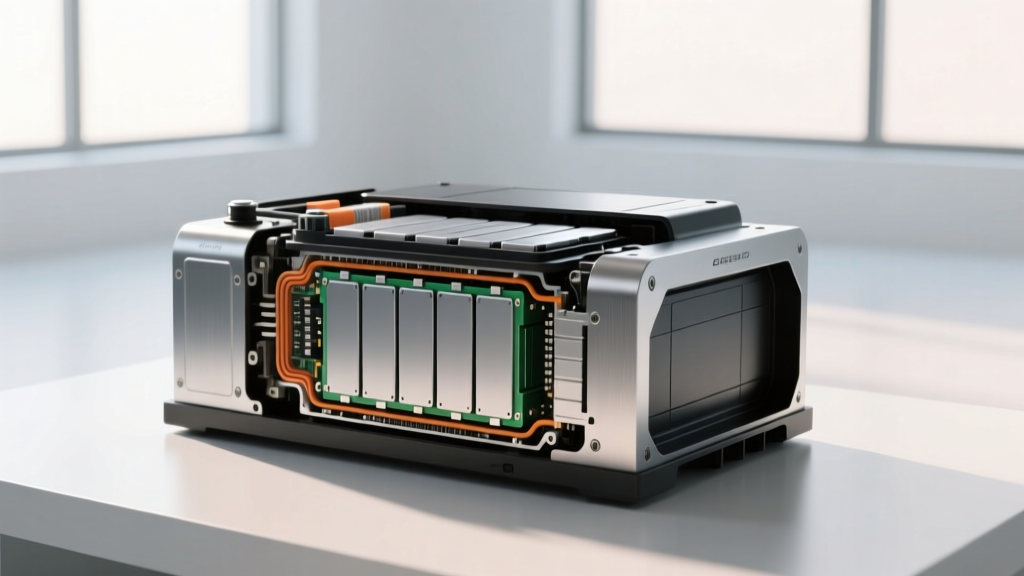
HEV batteries (Toyota RAV4 Hybrid, Honda Accord Hybrid, Hyundai Tucson Hybrid) are small — typically 1.0–2.0 kWh of usable capacity. They buffer energy between regenerative braking and acceleration assist. The gasoline engine does most of the work, and the battery operates in a narrow state-of-charge (SoC) window, usually between 40% and 80%. This shallow cycling is remarkably gentle on battery cells.
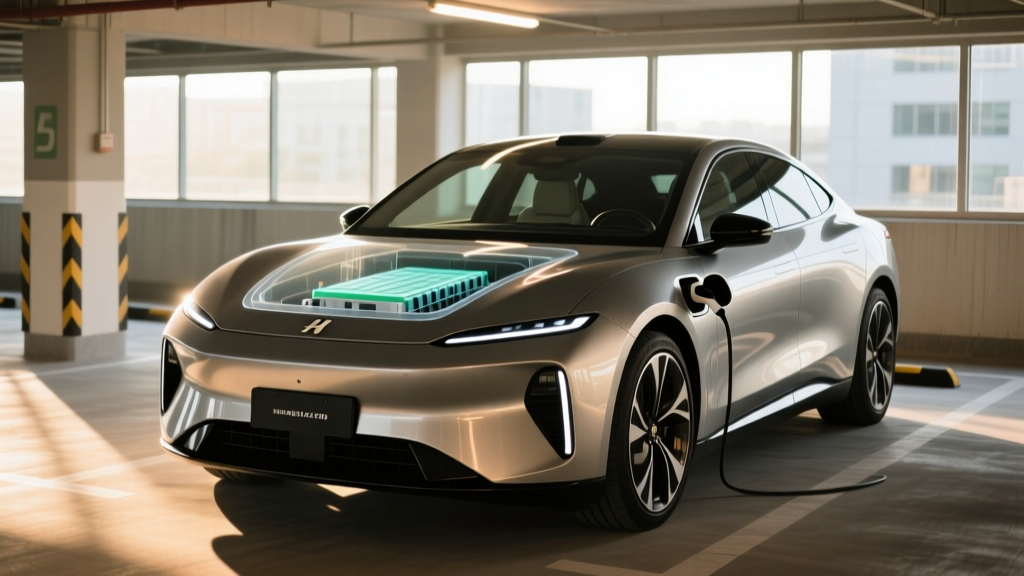
PHEV batteries (Toyota RAV4 Prime, Jeep Wrangler 4xe, Hyundai Tucson PHEV) are much larger — typically 13–20 kWh usable. They must deliver 30–45 miles of pure electric driving before the engine engages. This means deeper discharge cycles, more frequent full charge-discharge events, and exposure to DC fast charging on some models. PHEV batteries work harder, but their larger size provides a buffer: even with 15% degradation, a PHEV originally rated for 42 EV miles still delivers ~36 miles.
| Attribute | NMC / NCA (Most PHEVs) | NiMH (Legacy HEVs) | LFP (Emerging in PHEVs) |
|---|---|---|---|
| Energy Density | High (200–260 Wh/kg cell-level) | Low (60–80 Wh/kg) | Moderate (150–180 Wh/kg) |
| Cycle Life | 1,000–2,000 full cycles to 80% SoH | 500–1,000 cycles (but shallow use extends this greatly) | 2,500–4,000+ cycles to 80% SoH |
| Cold Performance | Good; ~10–15% range loss at 20°F | Moderate; internal resistance rises in cold | Poor below freezing without active thermal management |
| Cost per kWh | $120–$160 (2026 pack-level) | $100–$130 (mature, low-cost) | $90–$120 (lowest per kWh) |
| Typical Application | PHEVs needing compact, high-energy packs | HEVs with shallow cycling (e.g., older Prius) | Next-gen PHEVs prioritizing longevity over range density |
Most 2026-model PHEVs use nickel-manganese-cobalt (NMC) lithium-ion cells because energy density matters when you're packaging 18 kWh into a crossover floor. HEVs are split: Toyota still uses nickel-metal hydride (NiMH) in some hybrid models, while others have moved to lithium-ion. BYD and a few Chinese-market PHEVs have adopted lithium iron phosphate (LFP) cells, and that trend is slowly reaching global models as of 2025–2026.
Real-World Degradation: What the Data Shows
Battery degradation in hybrids is not linear. The steepest capacity loss occurs in the first 1–2 years (typically 2–5%), after which the curve flattens considerably. Here is what aggregated fleet and owner-reported data indicates for common hybrid platforms:
| Vehicle Type | Year 1–2 | Year 5 | Year 8–10 | Year 12–15 |
|---|---|---|---|---|
| HEV (e.g., RAV4 Hybrid, Accord Hybrid) | ~2–3% loss | ~5–8% loss | ~8–12% loss | ~12–18% loss |
| PHEV (e.g., RAV4 Prime, Tucson PHEV) | ~3–5% loss | ~8–12% loss | ~12–18% loss | ~18–25% loss |
A few important notes on interpreting these numbers:
- HEVs mask degradation well. Because the gas engine fills in seamlessly, a 12% loss in a 1.6 kWh HEV battery is essentially invisible to the driver. Fuel economy might drop by 1–2 MPG over a decade.
- PHEV degradation is more noticeable because electric-only range is the headline feature. A RAV4 Prime rated at 42 EV miles when new (per fueleconomy.gov) might show 35–37 miles on a full charge after eight years — still very usable.
- Toyota's hybrid battery track record is exceptional. Taxi fleets running Prius hybrids have logged 300,000+ miles on original NiMH packs. The shallow-cycling strategy is the single biggest longevity factor.
Geotab's large-scale EV battery health study, which includes PHEV data alongside BEVs, found that electrified vehicle batteries lose an average of 2.3% capacity per year across all chemistries — but hybrid batteries, with their managed SoC windows, tend to cluster on the lower end of that range.
Federal Warranty Mandates: What's Guaranteed
U.S. federal law requires that hybrid and EV traction batteries carry a minimum warranty of 8 years / 100,000 miles (10 years / 150,000 miles in California Air Resources Board states, which include CA, CO, CT, ME, MD, MA, NJ, NY, OR, RI, VT, and WA). This is a capacity retention warranty — the manufacturer guarantees the battery will hold above a specified percentage of its original capacity, typically 70%.
| Manufacturer / Model | Type | Warranty (Federal) | Warranty (CARB States) | Capacity Threshold |
|---|---|---|---|---|
| Toyota RAV4 Hybrid / Prime | HEV / PHEV | 10 yr / 150,000 mi | 10 yr / 150,000 mi | Not publicly specified; case-by-case |
| Honda CR-V Hybrid / Accord Hybrid | HEV | 8 yr / 100,000 mi | 10 yr / 150,000 mi | ~70% retention |
| Hyundai Tucson Hybrid / PHEV | HEV / PHEV | 10 yr / 100,000 mi | 10 yr / 150,000 mi | ~70% retention |
| Ford Escape PHEV | PHEV | 8 yr / 100,000 mi | 10 yr / 150,000 mi | ~70% retention |
| Jeep Wrangler 4xe | PHEV | 8 yr / 100,000 mi | 10 yr / 150,000 mi | ~70% retention |
Toyota's 10-year/150,000-mile hybrid battery warranty (extended from 8/100k starting with 2020 models) is the strongest in the segment. Hyundai matches with 10 years but at 100,000 miles federally. If your PHEV's electric range drops below the threshold within the warranty period, the manufacturer is obligated to repair or replace the battery at no cost. In practice, most warranty claims involve individual module or cell replacements rather than full pack swaps.
Replacement Costs: What to Budget If You're Out of Warranty
This is where anxiety peaks — and where context matters most. Yes, a full hybrid battery replacement is a significant expense. But the vast majority of hybrid owners never face it. Most hybrids are sold, traded, or retired before the battery needs replacement.
| Vehicle | Battery Type | Approx. Capacity | New OEM Pack | Refurbished / Aftermarket | Typical Replacement Age |
|---|---|---|---|---|---|
| Toyota Prius (2016–2025) | NiMH (HEV) | ~1.3 kWh | $2,500–$3,500 | $1,200–$1,800 | 12–18 years / 180k+ mi |
| Toyota RAV4 Hybrid | NiMH / Li-ion (HEV) | ~1.6 kWh | $3,000–$4,500 | $1,500–$2,500 | 12–15 years / 160k+ mi |
| Toyota RAV4 Prime | NMC Li-ion (PHEV) | ~14.9 kWh usable | $7,000–$10,000 | $4,500–$6,500 | 10–15 years (rarely needed) |
| Honda CR-V Hybrid | Li-ion (HEV) | ~1.1 kWh | $2,500–$4,000 | $1,200–$2,000 | 12–15 years / 160k+ mi |
| Jeep Wrangler 4xe | NMC Li-ion (PHEV) | ~14.3 kWh usable | $8,000–$12,000 | $5,000–$7,500 | 10–14 years (rarely needed) |
| Ford Escape PHEV | NMC Li-ion (PHEV) | ~11.2 kWh usable | $6,000–$9,000 | $4,000–$6,000 | 10–14 years (rarely needed) |
Key context for these figures:
- HEV battery replacements are relatively affordable because the packs are small. A Prius NiMH replacement at $2,500–$3,500 is comparable to a transmission rebuild on a conventional vehicle.
- PHEV packs are more expensive because they're 10–15× larger. However, PHEV batteries also experience less stress per cycle than full EV batteries because the gasoline engine shares the load.
- Refurbished and aftermarket options have matured significantly. Companies like Green Bean Battery and Dorman offer reconditioned hybrid packs with 2–5 year warranties at 40–60% of OEM cost.
- Individual module replacement is increasingly viable. A single degraded cell module in a Prius pack can be replaced for $200–$500, restoring the pack to functional health without a full swap.
What Kills Hybrid Batteries Early: 5 Degradation Factors
While most hybrid batteries are engineered for longevity, certain habits and conditions accelerate capacity loss. Understanding these lets you protect your investment.
1. Extreme Heat Exposure
Battery chemistry degrades faster at elevated temperatures. Prolonged exposure to ambient temperatures above 95°F — especially when the vehicle is parked at full charge — accelerates electrolyte decomposition. PHEV owners in Arizona, Texas, and the Southeast should park in shade or garages when possible and avoid leaving the battery at 100% SoC for extended periods in summer.
2. Frequent Deep Discharges (PHEVs)
Running a PHEV battery to near-zero every day before the engine kicks in stresses cells more than partial cycling. HEVs avoid this naturally by keeping SoC in a 40–80% band. PHEV owners who can plug in mid-day to top up rather than fully depleting the pack will see slower degradation over 10+ years.
3. Exclusive DC Fast Charging (PHEVs)
Most PHEVs don't support DC fast charging, but those that do (like the Mitsubishi Outlander PHEV and some newer models) should use it sparingly. Repeated high-power DC charging generates heat within cells, accelerating wear. Level 2 home charging at 3.3–6.6 kW is ideal for daily PHEV use.
4. Long-Term Storage at Extreme SoC
Leaving any hybrid parked for weeks at 100% or near-0% SoC stresses the battery. If storing a PHEV for more than two weeks, aim for ~50–60% charge. HEVs self-manage this better, but even they benefit from being driven at least once every two weeks to keep the battery management system active.
5. Ignoring Thermal Management Warnings
Some PHEVs display battery temperature warnings on the dash. Dismissing these and continuing to demand high-power electric driving when the pack is overheated can cause permanent cell damage. If you see a temperature warning, let the vehicle cool down or switch to hybrid mode to reduce battery load.
Monitoring Battery Health: How to Check State of Health (SoH)
Unlike full EVs, which increasingly offer in-dash battery health readouts, most hybrids don't surface a clear SoH percentage to the driver. Here are your options:
- Dealer diagnostic scan: Any OEM service department can pull a battery health report using their proprietary scan tool. Ask specifically for a "traction battery health check" during routine service. Toyota, Honda, and Hyundai dealers can report individual module voltage variance, which reveals weak cells before they fail.
- OBD-II scanners with hybrid support: Tools like the OBDLink MX+ paired with apps such as Dr. Prius (for Toyota hybrids) or Torque Pro can read battery module voltages and estimate SoH. This is a $50–$120 investment that pays for itself with one informed service visit.
- Range tracking (PHEVs): The simplest method. Track your electric-only range on a full charge over time. If your RAV4 Prime consistently delivers 38 miles instead of the original 42, that's roughly 10% degradation — well within normal parameters and warranty coverage thresholds.
- Fuel economy monitoring (HEVs): For non-plug-in hybrids, a gradual drop of 2–4 MPG over several years may indicate battery aging, though tire condition, air filter status, and driving pattern changes are more common culprits.
Emerging Battery Technology: What's Next for Hybrids
The hybrid battery landscape is evolving, though not as rapidly as the full-EV space. Here's what's on the horizon — with realistic timelines:
LFP adoption in PHEVs (2025–2027): BYD's Seal U DM-i and several Chinese-market PHEVs already use LFP blade batteries, trading some energy density for dramatically longer cycle life (4,000+ cycles vs ~1,500 for NMC). Expect LFP to appear in globally sold PHEVs from Stellantis and Hyundai by 2027, adding 30–50% more cycle life at slightly lower electric-only range.
Silicon-dominant anodes (2027–2030): Companies like Sila Nanotechnologies and Group14 are commercializing silicon-carbon anode materials that increase energy density by 20–40% without sacrificing cycle life. For PHEVs, this could mean 50+ miles of electric range in the same physical battery footprint. This technology is currently in limited production for consumer electronics and is expected to reach automotive scale by 2028–2030.
Solid-state batteries (2030+): Toyota, Samsung SDI, and QuantumScape are all pursuing solid-state cells that promise higher energy density, faster charging, and improved safety. Toyota has announced a 2027–2028 production target for initial BEV applications, but hybrid adoption would follow later given the cost premium. Realistic timeline for solid-state in mainstream hybrids: 2032 or beyond. These are not available in any production vehicle today.
For buyers shopping now, current NMC and NiMH hybrid batteries are mature, well-understood technologies with decades of reliability data. Waiting for next-generation chemistry is not a sound purchasing strategy when today's batteries already outlast most ownership periods.
Frequently Asked Questions
How long do the batteries last in hybrid cars on average?
Based on fleet data and owner reports, HEV batteries typically last 150,000–200,000+ miles and 12–18 years before needing replacement. PHEV batteries, which cycle more deeply, typically last 120,000–180,000 miles and 10–15 years before capacity loss becomes noticeable. In both cases, the battery usually outlasts the vehicle's economic life. The federal warranty mandates a minimum of 8 years / 100,000 miles, and Toyota extends that to 10 years / 150,000 miles.
How much does a hybrid car battery cost to replace?
HEV battery replacement costs range from $2,500–$4,500 for a new OEM pack (e.g., Prius, RAV4 Hybrid, CR-V Hybrid). PHEV battery replacements range from $6,000–$12,000 due to the larger pack size (e.g., RAV4 Prime, Wrangler 4xe). Refurbished and aftermarket options reduce these costs by 40–60%. Most hybrid owners never need a replacement because the battery outlasts the vehicle.
What does the hybrid battery warranty actually cover?
The warranty covers capacity loss below a specified threshold (typically 70% of original capacity) due to normal use. If your PHEV's battery degrades below that level within the warranty period (8 yr / 100k mi federally; 10 yr / 150k mi in CARB states), the manufacturer must repair or replace it at no cost. The warranty does not cover damage from accidents, flooding, or unauthorized modifications. Check your specific owner's manual for exact terms.
How do I check my hybrid's battery health?
For PHEVs, the simplest method is tracking electric-only range over time — compare your current full-charge range to the original EPA rating. For a more detailed view, ask your dealer for a traction battery diagnostic during service, or use an OBD-II scanner with hybrid-compatible software (e.g., Dr. Prius for Toyota models). HEV owners should monitor fuel economy trends and request a battery health scan at major service intervals.
Is LFP or NMC better for a hybrid battery?
It depends on priorities. NMC offers higher energy density, which translates to more electric-only range in a PHEV with limited under-floor space. LFP offers significantly longer cycle life (2–3× more cycles to 80% SoH), lower cost, and better thermal stability, but weighs more for the same energy. If you plan to keep a PHEV for 12+ years and prioritize longevity over maximum EV range, LFP is the better chemistry. Most 2026 PHEVs still use NMC, but LFP adoption is growing.
Does fast charging damage a PHEV battery?
Occasional DC fast charging won't cause meaningful harm, but making it your daily routine will accelerate degradation compared to Level 2 charging at 3.3–6.6 kW. The heat generated during high-power DC charging stresses cell chemistry over time. Most PHEV owners charge at home overnight on Level 2, which is the gentlest and most cost-effective method. Reserve DC fast charging for road trips when you need a quick top-up.
Can I drive a hybrid with a degraded battery?
Yes. A hybrid with a degraded battery doesn't become undrivable — it simply becomes less efficient. An HEV with 15% battery degradation might lose 1–3 MPG. A PHEV might lose 5–8 miles of electric range. The gasoline engine compensates in both cases. You'll notice reduced performance and efficiency, but the vehicle remains safe and operational. Replacement is a financial decision, not a safety one.
The data is clear: hybrid batteries are one of the most durable components in modern vehicles. The fear of a sudden $10,000 battery failure is not supported by the evidence. With proper care — moderate temperatures, avoiding extreme SoC states, and routine health checks — a hybrid battery will likely serve you for the entire time you own the car, and probably the next owner too.