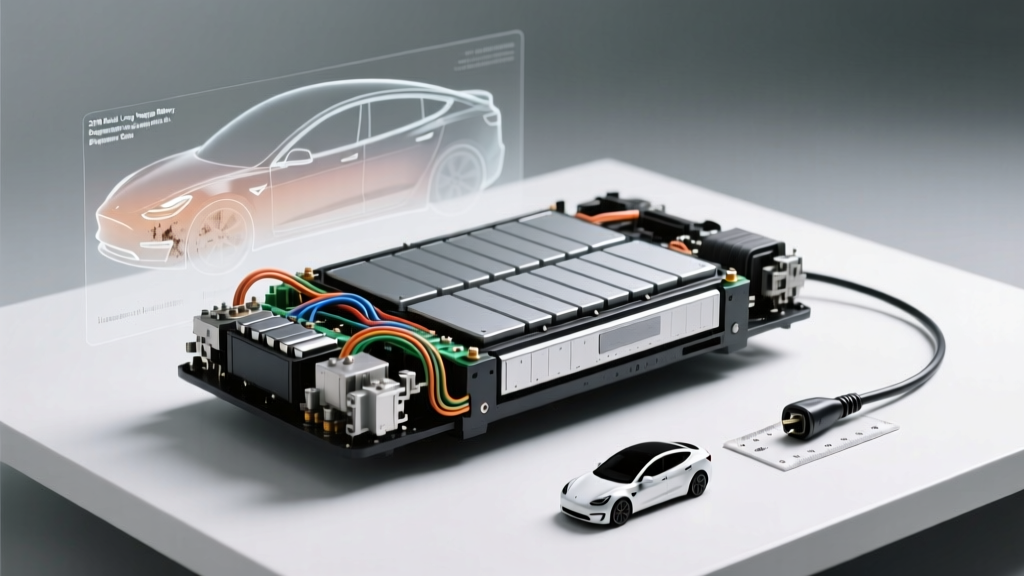
Every EV owner eventually asks the same question: how long will this charged battery actually last — not just on a single drive, but over the life of the car? It's the single biggest variable in EV ownership economics, and it's surrounded by more misinformation than any other topic in the electric-vehicle space.
This guide cuts through the noise with hard data. We'll walk through battery chemistry trade-offs (LFP vs. NMC/NCA), real degradation curves from fleets and high-mileage owners, what warranties actually cover, what a replacement costs in 2026, and the daily habits that meaningfully extend — or shorten — your pack's usable life.
LFP vs. NMC/NCA: Which Battery Chemistry Should You Choose?
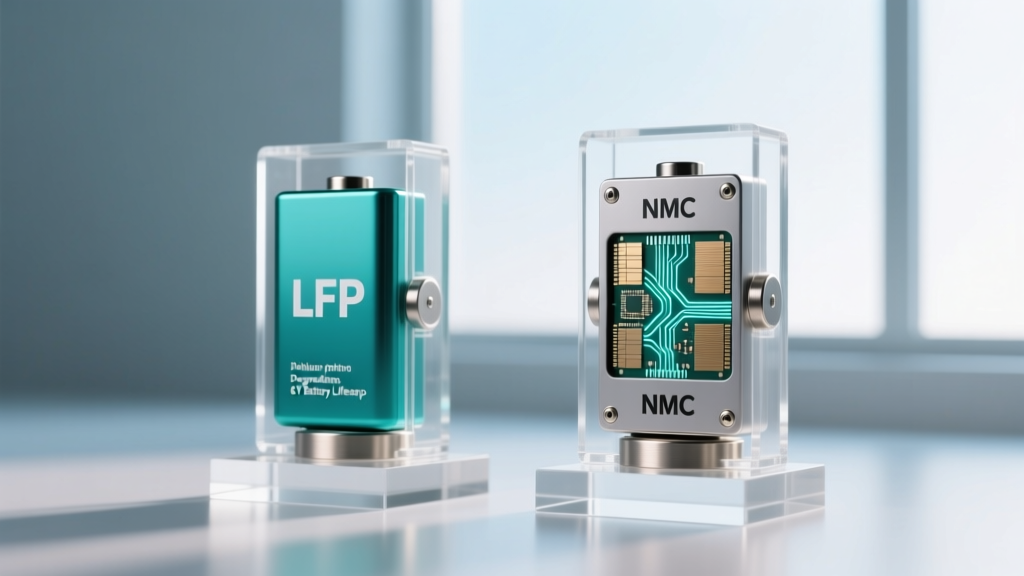
The two dominant lithium-ion chemistries in 2026 EVs are LFP (lithium iron phosphate) and NMC/NCA (nickel manganese cobalt / nickel cobalt aluminum). They behave differently in almost every way that matters to an owner: energy density, longevity, cold-weather performance, and cost.
LFP (Lithium Iron Phosphate): Used in the Tesla Model 3 RWD, standard-range BYD models, and an expanding list of affordable EVs. LFP cells tolerate deeper cycling, can be charged to 100% daily without accelerated degradation, and are cheaper to produce because they contain no nickel or cobalt. The trade-off is lower energy density (roughly 160–180 Wh/kg at the cell level vs. 250–300 Wh/kg for NMC), which means heavier packs for the same range, and noticeably worse performance in sub-freezing temperatures.
NMC/NCA (Nickel-based): Found in most long-range and performance EVs — Tesla Model Y Long Range, Hyundai Ioniq 5, Ford F-150 Lightning Extended Range, Rivian R1T. Higher energy density translates to more range in a lighter, more compact pack. NMC also handles cold weather better. However, NMC degrades faster when routinely charged to 100% or deeply discharged, and the cathode materials carry supply-chain and cost premiums.
| Attribute | LFP (LiFePO₄) | NMC / NCA |
|---|---|---|
| Energy density (cell-level) | ~160–180 Wh/kg | ~250–300 Wh/kg |
| Cycle life (to 80% SoH) | 3,000–5,000+ cycles | 1,000–2,000 cycles |
| Daily 100% charging OK? | Yes — recommended for calibration | No — 80% daily limit preferred |
| Cold-weather range loss (below 20°F) | ~35–45% loss typical | ~20–30% loss typical |
| Cost per kWh (pack-level, 2026) | ~$80–$100 | ~$110–$140 |
| Common in | Tesla Model 3 RWD, BYD, base trims | Long-range & performance trims |
| Thermal runaway risk | Very low | Low, but higher than LFP |
Which is better? There is no universal winner. If you commute short distances, charge at home nightly, and live in a mild climate, LFP's longevity and lower cost make it the pragmatic pick. If you need maximum range, tow frequently, or regularly drive in sub-freezing weather, NMC's energy density and cold-weather advantage justify the trade-offs — provided you follow the 80% daily charge guideline.
Real-World Degradation: What the Data Actually Shows
Battery degradation is not linear. Most packs lose roughly 5–8% of their original capacity in the first 50,000 miles (a period sometimes called the "break-in drop"), then settle into a much slower linear decline of about 1–2% per year or per 15,000–20,000 additional miles. This pattern holds across chemistries, though LFP's curve is flatter after the initial drop.
Typical Degradation Curve (NMC, liquid-cooled pack):
- Year 1 / 15,000 mi: ~3–5% capacity loss
- Year 3 / 45,000 mi: ~7–9% cumulative loss
- Year 5 / 75,000 mi: ~9–12% cumulative loss
- Year 8 / 120,000 mi: ~12–17% cumulative loss
- Year 10 / 150,000 mi: ~15–20% cumulative loss
Sources: Geotab fleet battery health study, Recurrent Auto battery data (2025). Individual results vary based on climate, charging habits, and pack chemistry.
For context, the average American drives roughly 14,500 miles per year according to the Federal Highway Administration. At that rate, a 250-mile EPA-range EV losing 15% over 10 years still delivers ~212 miles of range — more than adequate for the vast majority of daily driving. The fear that EV batteries "won't last" is not supported by fleet data: most modern liquid-cooled packs outlive the vehicles they're installed in.
One important caveat: these figures assume liquid-cooled thermal management. Older air-cooled packs (such as early Nissan Leaf models, now discontinued) degraded significantly faster, particularly in hot climates. Every mainstream EV sold in 2026 uses active liquid cooling.
Battery Warranty Terms: What's Actually Covered?
Federal law mandates a minimum 8-year/100,000-mile warranty on EV battery packs for emissions-related components, and every major automaker meets or exceeds this baseline. The warranty guarantees that the pack will retain a specified percentage of its original capacity — typically 70% — over the warranty period. If your battery degrades below that threshold within the covered time/mileage, the manufacturer must repair or replace it at no cost.
| Automaker | Warranty Period | Capacity Retention Guarantee |
|---|---|---|
| Tesla (Model 3/Y NMC) | 8 yr / 120,000 mi | 70% |
| Tesla (Model 3 RWD LFP) | 8 yr / 100,000 mi | 70% |
| Hyundai / Kia | 10 yr / 100,000 mi | 70% |
| Ford (F-150 Lightning) | 8 yr / 100,000 mi | 70% |
| Rivian | 8 yr / 175,000 mi | 70% |
| GM (Ultium-based) | 8 yr / 100,000 mi | 70% (some trims 60%) |
| BMW | 8 yr / 100,000 mi | 70% |
What the warranty does NOT cover: Physical damage from collisions, flooding, or road debris; degradation from ignoring manufacturer charging guidelines (though this is rarely enforced); and range loss that stays above the retention threshold. A pack at 72% capacity at year 7 is functioning within warranty specs, even though you've lost 28% of your original range.
Warranty claims for battery replacement are rare. According to data from Recurrent Auto, fewer than 2% of EVs in their study cohort of over 15,000 vehicles required a battery replacement under warranty. Most packs are lasting well beyond their guaranteed minimums.
EV Battery Replacement Cost: What to Budget For
If your battery does need replacement outside of warranty coverage — typically at 150,000–200,000+ miles or 12–15+ years — the cost depends on pack size, chemistry, and the vehicle. Prices have dropped significantly: pack-level costs fell below $140/kWh for NMC and below $100/kWh for LFP in 2026, but installed replacement costs include labor, diagnostics, coolant refills, and dealer markup.
| Vehicle / Pack Size | Battery kWh | Estimated Replacement Cost |
|---|---|---|
| Tesla Model 3 RWD (LFP) | ~60 kWh | $7,000 – $10,000 |
| Tesla Model Y Long Range (NMC) | ~75 kWh | $10,000 – $14,000 |
| Hyundai Ioniq 5 (NMC) | ~77.4 kWh | $9,000 – $13,000 |
| Ford F-150 Lightning Extended Range | ~131 kWh | $16,000 – $22,000 |
| Chevrolet Equinox EV | ~85 kWh | $10,000 – $14,000 |
| Rivian R1T (Large Pack) | ~135 kWh | $17,000 – $22,000 |
When is replacement typically needed? In practice, very few owners ever pay for one. The vast majority of EV batteries retain 75–85% of their original capacity at 150,000 miles. At that point, many vehicles are totaled in accidents, traded in, or retired for other mechanical reasons before the battery becomes the limiting factor. The "I'll need a $20,000 battery swap in five years" fear is not supported by real-world data — but it's important to know the cost exists for very high-mileage or very long-term ownership scenarios.
A growing number of shops now offer module-level repairs, replacing only the degraded cell modules rather than the entire pack. This can cut costs to $2,000–$5,000 depending on the vehicle and the number of modules replaced. Tesla, Rivian, and Hyundai service centers increasingly use this approach.
What Affects Battery Life? Five Factors You Can Control
Not all miles are created equal when it comes to battery wear. Here are the five factors with the most measurable impact on long-term State of Health (SoH):
- 1. State of Charge (SoC) habits: For NMC batteries, keeping daily SoC between 20% and 80% dramatically slows degradation. Charging to 100% occasionally for road trips is fine — it's the daily 100% habit that accelerates wear. LFP batteries are the exception: Tesla and BYD both recommend periodic 100% charges for cell-balancing accuracy.
- 2. DC fast-charging frequency: Frequent use of DC fast chargers (150+ kW) generates significant heat. Occasional road-trip fast charging has negligible impact, but daily fast-charging — especially in hot climates without preconditioning — measurably accelerates degradation. A 2024 IDTechEx analysis found that vehicles fast-charging more than three times per week showed roughly 2–4% additional degradation over 100,000 miles compared to primarily Level 2 charging.
- 3. Extreme temperatures: Sustained exposure to ambient heat above 95°F or cold below 10°F stresses cells. Garage parking and preconditioning (warming or cooling the battery while plugged in before driving) significantly reduce thermal stress. Most 2026 EVs precondition automatically when a charge session or departure time is scheduled.
- 4. Deep discharges: Regularly driving the battery below 10% SoC — or letting the car sit at 0% for days — causes copper dissolution in the anode current collector, an irreversible degradation mechanism. Plug in when you get home; don't wait until the pack is empty.
- 5. Storage SoC: If you're leaving your EV parked for weeks (vacation, seasonal use), set SoC to approximately 50%. Storing at 100% or near 0% for extended periods accelerates calendar degradation.
How to Check and Monitor Your Battery's State of Health
State of Health (SoH) is the percentage of original capacity your battery currently holds. A brand-new pack is at 100% SoH; a pack that held 75 kWh when new and now holds 67.5 kWh is at 90% SoH.
In-vehicle methods:
- Tesla: The Service menu (accessed via the car's touchscreen) displays estimated battery health. Third-party apps like Tessie or TeslaFi log SoH over time using the vehicle's API.
- Hyundai / Kia: The EV app and infotainment system show a battery health indicator. Dealers can pull detailed SoH diagnostics via the KDS (Kia Diagnostic System) or GDS (Genesis Diagnostic System) tools.
- Ford: The FordPass app includes a battery health indicator. Full diagnostics are available at dealers.
- OBD-II dongles: Devices like the OBDLink MX+ paired with apps such as ABRP (A Better Route Planner) or Car Scanner can read real-time SoH data from the battery management system (BMS) on most EVs.
Dealer diagnostics: Any authorized service center can run a full battery health report that measures individual module voltage variance, internal resistance, and total usable capacity. This is worth requesting annually or before purchasing a used EV. Expect to pay $0–$150 for this service.
DIY estimation: Charge to 100% (on an LFP pack) or a known SoC, then drive a measured distance and note the energy consumed (kWh) displayed on the trip meter. Compare to the pack's original usable capacity. This won't match dealer precision but gives a reasonable approximation.
Emerging Battery Tech: Solid-State, Silicon Anodes, and What's Real
Several next-generation battery technologies are in development, but none are available in production consumer EVs as of 2026. Here's where things stand:
Solid-state batteries: These replace the liquid electrolyte with a solid material (ceramic, sulfide, or polymer), promising higher energy density (~400–500 Wh/kg at the cell level), faster charging, and improved safety. Toyota has announced a solid-state battery targeting 2027–2028 production in limited models. Samsung SDI and QuantumScape are also in late-stage development. Realistically, solid-state packs won't reach mainstream, affordable EVs until the early 2030s at the earliest — manufacturing scale-up is the primary bottleneck.
Silicon-dominant anodes: Companies like Sila Nanotechnologies and Group14 are replacing graphite anodes with silicon composites, which can store roughly 10x more lithium ions per gram. Early implementations (Porsche's Taypan pilot, Mercedes-AMG prototypes) show 20–40% energy density gains. Expect limited production use in premium EVs by 2027–2028.
Sodium-ion batteries: CATL and BYD have begun limited production of sodium-ion packs for low-cost, short-range EVs in China. Sodium-ion is cheaper than LFP and performs well in cold weather, but its lower energy density (~120–140 Wh/kg) limits it to city cars and micro-EVs. US-market availability is not expected before 2028.
None of these technologies should factor into a 2026 purchase decision. Today's lithium-ion packs — both LFP and NMC — are mature, well-understood, and demonstrably lasting 150,000–200,000+ miles with manageable degradation.
Frequently Asked Questions
How long do EV batteries last in years and miles?
Most modern liquid-cooled EV batteries retain 75–85% of their original capacity at 150,000 miles (roughly 10–12 years of average US driving). LFP packs often exceed 200,000 miles before reaching the 70% warranty threshold. Catastrophic failure (sudden, total loss) is extremely rare — degradation is gradual and predictable.
How much does an EV battery cost to replace?
Full pack replacement runs $7,000–$22,000 depending on pack size and vehicle. Module-level repairs cost $2,000–$5,000. However, fewer than 2% of EVs have required battery replacement under warranty according to fleet data, and most packs outlast the vehicle's other components.
What does the battery warranty actually cover?
Typically 8–10 years / 100,000–175,000 miles, guaranteeing the pack retains at least 70% of its original capacity. It covers defects and excessive degradation but not physical damage from accidents, flooding, or abuse. Check your owner's manual for specific exclusions.
How do I check my EV battery's health?
Use your vehicle's built-in battery health display (Tesla Service menu, FordPass, Hyundai EV app), an OBD-II reader with EV-compatible software, or request a dealer diagnostic report. Monitoring SoH every 6–12 months is sufficient for most owners.
LFP vs. NMC — which is better for my situation?
Choose LFP if you want maximum cycle life, lower cost, and don't need extreme cold-weather range. Choose NMC if you prioritize maximum range, tow heavy loads, or live in a cold climate. Both chemistries are proven to last well beyond 150,000 miles with proper care.
Does fast charging damage my battery?
Occasional DC fast charging (road trips, a few times per month) has minimal impact on battery life. Daily fast charging — especially without preconditioning in hot weather — can add 2–4% extra degradation over 100,000 miles. For daily use, Level 2 home charging at 7–11 kW is the longevity-friendly choice.
Should I charge my EV to 100% every night?
For NMC batteries: no. Set your charge limit to 80% for daily use and only charge to 100% when you need the full range for a trip. For LFP batteries: yes — Tesla and BYD recommend regular 100% charges to keep the battery management system's state-of-charge estimate accurate.