The high-voltage traction battery is the single most expensive component in any electric vehicle — and the one buyers worry about most. Yet most of the anxiety stems from information gaps, not data. Modern EV car battery technology has matured to the point where degradation is slow, predictable, and covered by federally mandated warranties that outlast typical ownership periods.
This guide breaks down the chemistry inside today's battery packs, the real-world degradation numbers collected from fleets and long-term owners, what warranties actually cover, what a replacement would cost if you ever needed one, and the habits that maximize pack longevity. We'll also look at the next generation of solid-state and silicon-anode cells — and when (or whether) they'll reach production vehicles.
LFP vs NMC/NCA: The Two Chemistries Powering Today's EVs
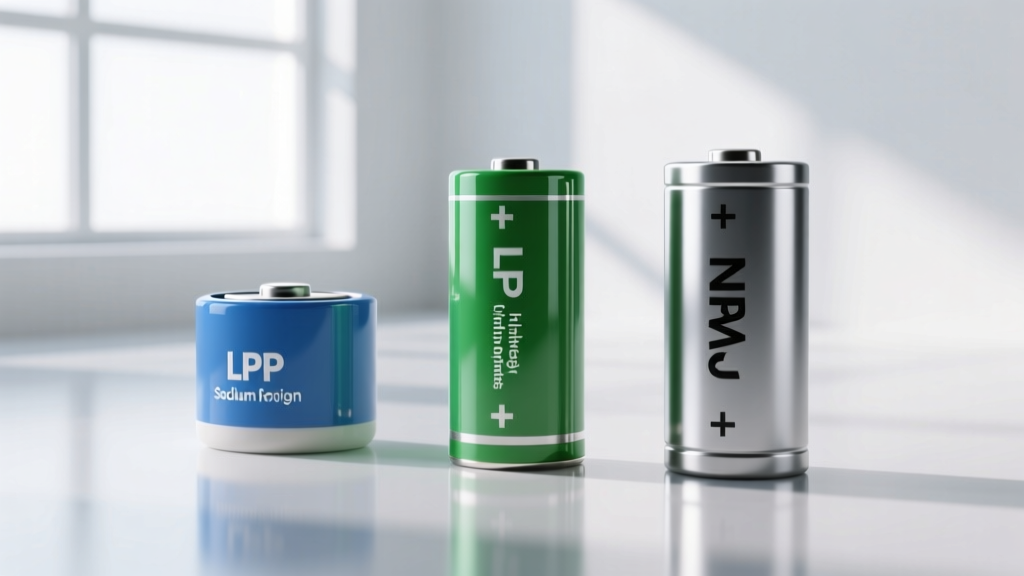
Every mainstream EV sold in the U.S. in 2026 uses one of two lithium-ion cathode chemistries: NMC (nickel-manganese-cobalt) / NCA (nickel-cobalt-aluminum), or LFP (lithium iron phosphate). The chemistry choice affects range, charging behavior, cold-weather performance, cycle life, and price — and understanding the trade-offs is essential before you buy.
| Attribute | LFP (Lithium Iron Phosphate) | NMC / NCA |
|---|---|---|
| Energy Density (cell-level) | ~160–180 Wh/kg | ~230–300 Wh/kg |
| Typical Cycle Life | 3,000–5,000+ cycles to 80% SoH | 1,000–2,000 cycles to 80% SoH |
| Cold-Weather Performance | Moderate — greater range loss below 32°F | Better low-temp discharge, but still loses 15–30% range |
| Recommended Daily SoC | 100% (no penalty) | 80% daily; 100% for trips only |
| Thermal Stability | Excellent — very low thermal runaway risk | Good — requires more active thermal management |
| Cost (per kWh, pack-level) | ~$90–$110 | ~$120–$150 |
| Cobalt Content | None | Yes (NMC) or minimal (NCA) |
| Notable 2026 Applications | Tesla Model 3/Y RWD, Ford Mustang Mach-E Select (LFP option), BYD Seal, Rivian Standard | Tesla Long Range, Hyundai Ioniq 5/6, Kia EV6/EV9, GM Ultium vehicles, BMW iX |
Which Is Better — LFP or NMC?
Neither is universally better; the right choice depends on your driving profile.
Choose LFP if: You charge at home daily, mostly drive under 250 miles between charges, want maximum cycle life, and prefer the simplicity of charging to 100% every day without degradation concern. LFP's lower energy density means slightly less range for the same pack weight, but the cycle-life advantage (3–5× more cycles) means the pack will likely outlast the vehicle's structural life.
Choose NMC/NCA if: You regularly take long road trips, need maximum EPA range from a given pack size, live in a very cold climate where every mile of range matters, or tow frequently. NMC packs deliver higher energy density and better cold-weather discharge, but you should follow the 80% daily charge guideline to preserve longevity.
How Long Do EV Batteries Actually Last?
The short answer: far longer than most buyers assume. Data aggregated from Tesla fleet reports, Recurrent Auto's database of over 15,000 EVs, and Geotab's analysis of 6,300 fleet vehicles consistently show that modern liquid-cooled battery packs lose an average of 1.5% to 2.5% of total capacity per year under typical use — with most of that loss occurring in the first 12–18 months before the degradation curve flattens significantly.
| Age / Mileage | Average Capacity Retained | Notes |
|---|---|---|
| Year 1 / ~12,000 mi | 96–98% | Initial "break-in" loss; steepest part of the curve |
| Year 3 / ~36,000 mi | 93–96% | Curve flattens; loss slows to ~1% per year |
| Year 5 / ~60,000 mi | 90–94% | Still well above warranty threshold |
| Year 8 / ~100,000 mi | 85–91% | Typical warranty boundary; most packs exceed 70% threshold |
| Year 10+ / 150,000+ mi | 80–88% | Based on Tesla Model S/X and early LEAF data (passive-cooled LEAF degrades faster) |
A critical distinction: Nissan's early LEAF (2011–2017, passively air-cooled 24–30 kWh packs) showed significantly worse degradation — sometimes 20–30% loss within five years — because the pack lacked active liquid cooling. Every mainstream EV sold since 2019 uses liquid thermal management, which is the single biggest factor in improved longevity. If you're buying a modern EV, the LEAF-era degradation fears don't apply.
According to Recurrent Auto's long-term battery research, the median 2020 Tesla Model 3 retained approximately 92% of its original range at 60,000 miles. Hyundai/Kia's E-GMP vehicles (Ioniq 5, EV6) show similar trajectories in early fleet data.
What the Battery Warranty Actually Covers
Federal law (EPA emissions warranty requirements interpreted for EVs under California's ZEV mandate and adopted by CARB states) effectively sets a floor: 8 years / 100,000 miles with a capacity-retention threshold, typically 70% of original capacity. In California and states that follow CARB rules, the warranty extends to 10 years / 150,000 miles for vehicles classified as PZEV/TZEV. Manufacturers often exceed these minimums.
| Manufacturer | Warranty Period | Mileage Limit | Capacity Threshold | Notes |
|---|---|---|---|---|
| Tesla (Model 3/Y RWD — LFP) | 8 years | 100,000 mi | 70% | Module-level replacement possible |
| Tesla (Model 3/Y LR, S, X — NMC/NCA) | 8 years | 120,000 mi (3/Y) or 150,000 mi (S/X) | 70% | Longer mileage on S/X |
| Hyundai / Kia (E-GMP) | 10 years | 100,000 mi | 70% | Among the longest coverage periods |
| GM (Ultium — Cadillac, Chevy, GMC) | 8 years | 100,000 mi | 70% (some trims 60% for commercial) | Module-replaceable architecture |
| Ford (Mach-E, F-150 Lightning) | 8 years | 100,000 mi | 70% | Standard across BEV lineup |
| Rivian (R1T, R1S) | 8 years | 175,000 mi | 70% | Highest mileage cap in the segment |
| BMW (i4, iX, i7) | 8 years | 100,000 mi | 70% | Includes buffer management |
What triggers a warranty claim? If your pack's State of Health (SoH) drops below the stated threshold within the warranty window, the manufacturer will repair or replace the battery — either with a new or remanufactured unit — at no cost. The key phrase is "capacity retention": the warranty covers degradation beyond the threshold, not a specific range number, since range is affected by driving conditions, tire pressure, and climate.
Some manufacturers (notably GM with Ultium and Tesla) design packs with individually replaceable modules. A single degraded module can be swapped without replacing the entire pack, reducing both cost and downtime. This modular architecture is becoming the industry standard for new platforms.
EV Battery Replacement Cost: What You'd Actually Pay
Here's the number that drives headlines — and fear. Out-of-warranty battery replacement costs in 2026 range from roughly $5,000 to $22,000 depending on pack size, chemistry, and whether the manufacturer supports module-level repair. But context matters enormously:
- Most EV batteries never need replacement during typical ownership. The average American keeps a car 8.4 years and drives ~13,500 miles per year (per DOT data). That's ~113,000 miles — well within the period where degradation stays above warranty thresholds.
- Module-level repair is increasingly common. Instead of a $15,000 full-pack swap, a technician replaces one or two degraded modules for $2,000–$5,000.
- Pack costs have dropped ~85% since 2010. BloombergNEF reports average pack prices fell from $1,200/kWh in 2010 to roughly $115/kWh in 2025, and continue declining.
| Vehicle / Pack Size | Chemistry | Full Pack Replacement (Parts + Labor) | Module Repair (if available) |
|---|---|---|---|
| Tesla Model 3 RWD (~60 kWh) | LFP | $7,000–$9,000 | $2,000–$3,500 |
| Tesla Model Y LR (~75 kWh) | NMC | $10,000–$14,000 | $3,000–$5,000 |
| Hyundai Ioniq 5 (~77.4 kWh) | NMC | $11,000–$15,000 | $2,500–$4,500 |
| Ford F-150 Lightning Ext. Range (~131 kWh) | NMC | $18,000–$22,000 | $4,000–$7,000 |
| Chevrolet Equinox EV (~85 kWh) | NMC (Ultium) | $12,000–$16,000 | $3,000–$5,500 |
| Rivian R1T Dual Motor (~128 kWh) | NMC | $16,000–$20,000 | $4,500–$6,500 |
These figures include the battery assembly and dealer/installer labor. Independent EV shops are emerging as a lower-cost alternative to OEM dealerships, often offering remanufactured packs at 30–40% below new-pack pricing. According to IRS §30D guidelines, a battery replacement that qualifies as a new component may be eligible for certain tax treatments, though you should consult a tax professional for specifics.
Five Factors That Accelerate (or Preserve) Battery Life
Battery degradation is not a single-variable equation. Five factors dominate the longevity picture, and understanding each one lets you optimize your pack's lifespan — whether you're running an LFP or NMC chemistry.
1. State of Charge (SoC) Habits
Lithium-ion cells experience the most chemical stress at the extremes — above 90% and below 10% SoC. For NMC/NCA packs, the best practice is to set your daily charge limit to 80% and only charge to 100% when you're about to take a long trip. LFP packs are an exception: manufacturers like Tesla and BYD recommend charging to 100% at least once a week because LFP's flat voltage curve makes SoC estimation difficult without periodic full calibration.
2. DC Fast-Charging Frequency
Occasional DC fast charging (1–2 sessions per week) has minimal measurable impact on modern liquid-cooled packs. However, daily reliance on high-power DC charging (150+ kW) does accelerate degradation slightly — studies from the Idaho National Laboratory showed approximately 0.3% additional annual loss for vehicles that exclusively DC fast-charged versus Level 2 charging. The practical takeaway: use Level 2 at home for daily needs and save DC fast charging for road trips.
3. Extreme Temperature Exposure
Heat is the primary enemy of lithium-ion longevity. Packs regularly exposed to ambient temperatures above 95°F without adequate cooling will degrade faster. Conversely, charging an NMC pack to 100% and leaving it parked in hot sun is the single worst thing you can do. Cold weather reduces range temporarily (15–30% loss below 32°F) but doesn't cause permanent damage — the battery management system (BMS) limits charging power when cells are cold to prevent lithium plating.
4. Depth of Discharge (DoD)
Shallow cycles (e.g., charging from 40% to 80%) cause less wear than deep cycles (10% to 100%). You don't need to obsess over this — the BMS manages buffer zones at the top and bottom of the pack — but avoiding routinely draining below 15% extends cell life.
5. Calendar Aging
Even a parked EV battery degrades over time, a process called calendar aging. Storing a pack at ~50% SoC in moderate temperatures minimizes this effect. If you're leaving your EV unused for weeks, set the charge limit to 50% and plug into Level 1 or Level 2 so the BMS can maintain thermal management.
Battery Care Best-Practice Checklist
- NMC/NCA daily charge limit: Set to 80%. Charge to 100% only for trips.
- LFP daily charge limit: 100% is fine; charge to 100% at least weekly for BMS calibration.
- Home charging: Use Level 2 (7–11.5 kW) as your primary daily charging method.
- DC fast charging: Use freely on road trips; avoid as your sole daily charging method.
- Hot weather parking: Avoid 100% SoC + high heat. Park in shade or a garage when possible.
- Cold weather: Precondition the battery before DC fast charging (most EVs do this automatically when a charger is set as your navigation destination).
- Long-term storage: Set SoC to ~50%, keep plugged in for BMS thermal management.
- Tire pressure: Maintain recommended PSI — underinflated tires increase energy draw, which doesn't harm the battery but wastes range.
How to Monitor Your Battery's State of Health (SoH)
State of Health (SoH) is the percentage of original capacity your pack can still hold. A new battery is 100% SoH; a pack that held 75 kWh when new and now holds 67.5 kWh is at 90% SoH. Monitoring SoH is easier than most owners realize:
In-Vehicle Displays
Most 2024+ EVs include a battery health screen in the infotainment or driver display. Tesla shows estimated range at 100% charge, which you can compare to the original EPA figure. Hyundai/Kia's E-GMP vehicles display a degradation percentage directly. Rivian shows SoH in the service menu.
Third-Party Apps and OBD-II Tools
Apps like Tessie (Tesla-specific), ABRP (A Better Route Planner), and OBD-II dongles paired with tools like Scan My Tesla or Car Scanner ELM OBD2 can read the BMS-reported SoH value directly. These tools pull the same data the service center sees.
Dealer and Independent Diagnostics
Any authorized service center can run a full battery health report. Some independent EV shops offer this as a low-cost service ($50–$100), which is especially useful when buying a used EV. Request a printout showing SoH percentage, cell voltage variance, and any flagged modules.
The Manual Range Test
If you want a rough SoH estimate without tools: charge to 100%, note the displayed range, and compare it to the EPA-rated range when new. A 2023 Ioniq 5 with an EPA rating of 303 miles that now shows 278 miles at 100% has approximately 92% SoH. This method is approximate because displayed range estimates vary with recent driving patterns, but it provides a reasonable sanity check.
Emerging Battery Technology: Solid-State and Beyond
Next-generation battery chemistries promise transformative improvements — but it's important to separate laboratory milestones from production timelines. Here's where the major emerging technologies stand as of 2026:
Solid-State Batteries
Solid-state cells replace the liquid electrolyte with a solid ceramic, polymer, or sulfide separator, enabling lithium-metal anodes that could theoretically double energy density (400–500 Wh/kg at the cell level) and charge in under 10 minutes. Toyota has announced a solid-state battery for a limited-production EV expected in 2027–2028, with initial capacity constrained to a few thousand vehicles. Samsung SDI and QuantumScape are also targeting 2027–2029 pilot production. Widespread, cost-competitive solid-state packs for mainstream vehicles remain a 2030+ prospect based on current manufacturing scale-up timelines.
Silicon-Anode Cells
Replacing graphite anodes with silicon (or silicon-carbon composites) can increase energy density by 20–40%. Companies like Sila Nanotechnologies and Group14 are already shipping silicon-anode cells in limited applications. Expect silicon-dominant anodes to appear in premium EVs by 2027–2028, with broader adoption following as manufacturing costs decline. This is an incremental improvement rather than a revolution — but a meaningful one for range and charge speed.
Sodium-Ion Batteries
Sodium-ion cells eliminate lithium entirely, using abundant sodium instead. They offer lower energy density (~120–160 Wh/kg) but dramatically lower cost and excellent cycle life. CATL and BYD have begun production for stationary storage and low-range city EVs in China. U.S. availability in passenger EVs is not expected before 2028–2029, and likely only in entry-level or urban-focused models where range is less critical.
The practical advice: today's lithium-ion packs (both LFP and NMC) are mature, reliable, and continuously improving in cost and energy density. Waiting for solid-state is not a sound purchasing strategy unless your timeline extends well into the next decade.
EV Battery Technology FAQ
How long do EV batteries last in years and miles?
Modern liquid-cooled EV battery packs typically retain 85–91% of original capacity at 8 years / 100,000 miles under average use. Based on fleet data from Geotab's analysis of 6,300 electric vehicles, many packs will function well beyond 200,000 miles before reaching the 70% capacity threshold that triggers a warranty claim. Most EV batteries will outlast the vehicle's structural and mechanical life.
How much does it cost to replace an EV battery?
Full pack replacement costs range from approximately $7,000 for a Tesla Model 3 RWD (LFP, ~60 kWh) to $22,000 for a Ford F-150 Lightning Extended Range (~131 kWh). However, module-level repair — replacing only the degraded segments — typically costs $2,000–$7,000 and is increasingly available on modular architectures like GM Ultium and Tesla's 4680 packs. Most owners will never need an out-of-warranty replacement.
What does the EV battery warranty cover?
Standard warranties cover capacity loss below a specified threshold (typically 70% of original capacity) for 8 years / 100,000 miles (10 years / 150,000 miles in CARB states). The warranty covers defects and abnormal degradation — not damage from accidents, flooding, or unauthorized modifications. If your SoH drops below the threshold within the warranty period, the manufacturer replaces or repairs the pack at no cost.
Is LFP better than NMC for battery longevity?
For pure cycle life, yes — LFP cells can endure 3,000–5,000+ charge cycles before reaching 80% SoH, compared to 1,000–2,000 cycles for NMC. However, NMC offers higher energy density (more range per pound) and better cold-weather performance. The "better" chemistry depends on your use case: LFP excels for daily commuting and home-charging routines; NMC is preferable for long-range driving and cold climates.
Does fast charging damage my EV battery?
Occasional DC fast charging has negligible impact on modern liquid-cooled packs. Idaho National Laboratory testing found approximately 0.3% additional annual degradation for vehicles that exclusively DC fast-charged versus Level 2. The BMS actively manages cell temperature and charge rate to protect the pack. Use Level 2 at home for daily charging and DC fast charging freely on road trips.
How do I check my EV battery health at home?
Three methods: (1) Check the battery health screen in your vehicle's infotainment or service menu. (2) Use an OBD-II dongle with apps like Tessie (Tesla) or Car Scanner to read BMS-reported SoH. (3) Charge to 100%, note the displayed range, and compare it to the original EPA rating — the ratio gives an approximate SoH percentage. For a definitive reading, request a battery health report from your service center.
Will solid-state batteries make current EVs obsolete?
Not in the near term. Solid-state production remains limited to pilot lines, with Toyota targeting small-scale vehicle integration in 2027–2028 and mass production not expected before 2030. Current lithium-ion technology continues to improve incrementally — 2026 model-year packs offer 10–15% more energy density than 2022 equivalents at lower cost. Buying a current-generation EV is not a risk of near-term obsolescence.