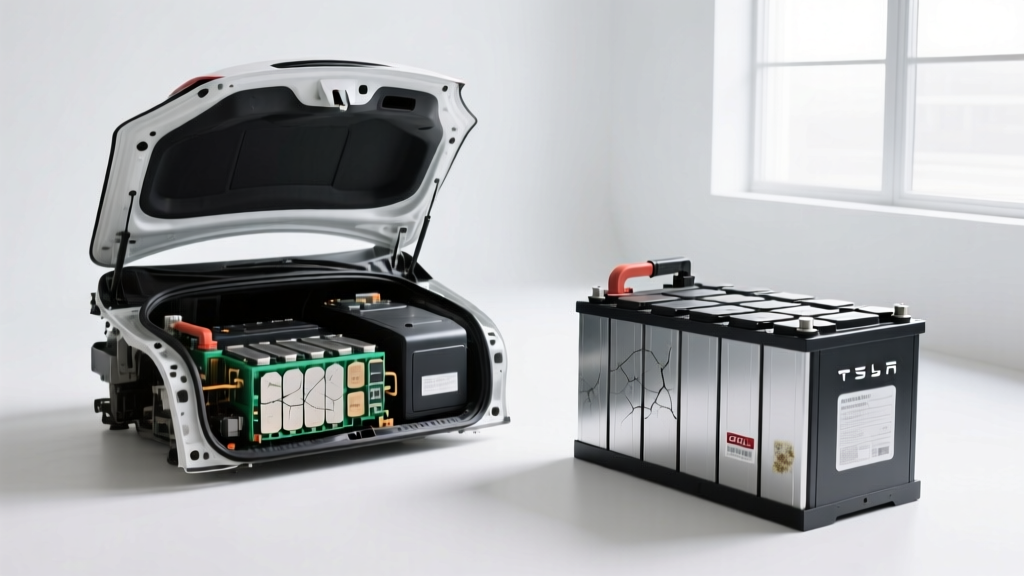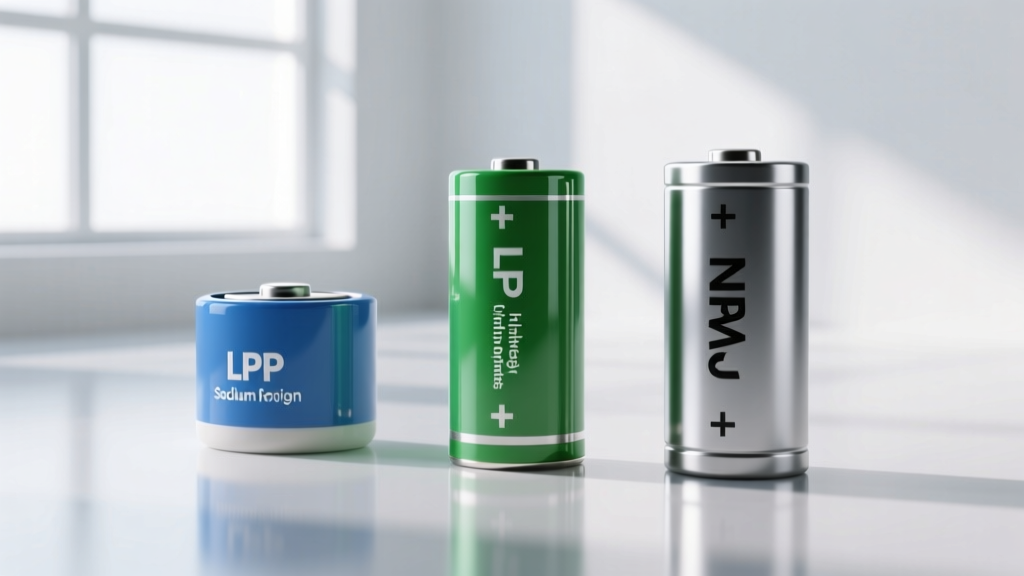
The phrase "salt and battery" sounds like a chemistry-class joke, but it points to one of the most consequential shifts in electric-vehicle energy storage: sodium-ion (Na-ion) batteries, which use abundant sodium salts instead of lithium. Meanwhile, today's EVs run on two dominant lithium-ion chemistries — LFP (lithium iron phosphate) and NMC/NCA (nickel manganese cobalt / nickel cobalt aluminum). Each formulation trades off energy density, longevity, cost, and cold-weather behavior in ways that directly affect your range, charging speed, and wallet.
This guide dissects all three chemistries with real degradation data, warranty terms, replacement cost ranges, and care practices that extend pack life. We'll also address where sodium-ion actually stands in 2026 — and why it matters even if you can't buy one yet.
LFP vs NMC vs Sodium-Ion: Chemistry Trade-Offs
Before comparing, a quick primer: kWh (kilowatt-hours) measures how much energy a battery stores — think of it as the tank size. kW (kilowatts) measures how fast energy flows in or out — the charge or discharge rate. Chemistry determines how densely those kWh can be packed, how quickly they can accept kW, and how many cycles the pack survives.
| Attribute | LFP (LiFePO₄) | NMC / NCA | Sodium-Ion (Na-ion) |
|---|---|---|---|
| Energy Density (cell-level) | 160–180 Wh/kg | 230–300 Wh/kg | 140–160 Wh/kg |
| Cycle Life (to 80% SoH) | 3,000–5,000+ | 1,000–2,500 | 3,000–5,000+ (lab) |
| Cold Performance (-10°C) | Moderate loss (~20–30%) | Better retention (~15–25% loss) | Strong retention (~10–15% loss claimed) |
| Raw Material Cost | Low (no Ni/Co) | High (Ni, Co) | Very low (abundant Na, no Li) |
| Thermal Stability | Excellent | Good (requires robust BMS) | Excellent |
| Typical 2026 Application | Tesla Model 3 RWD, BYD, base trims | Long-range / performance trims | Announced / limited China-market EVs |
| Max Charge Rate (typical) | 170–250 kW peak | 200–350 kW peak | ~150–200 kW peak (estimated) |
LFP wins on longevity and cost. Tesla's Model 3 Rear-Wheel Drive uses an LFP pack (around 60 kWh usable) with an EPA range of 272 miles. BYD's Blade Battery, also LFP, powers models like the Atto 3 and Seal. The trade-off: lower energy density means heavier packs for the same range, and LFP cells lose more range in deep cold.
NMC/NCA dominates long-range and performance vehicles. The Hyundai Ioniq 5 Long Range (84 kWh usable, NMC) achieves 303 miles EPA; the Tesla Model Y Long Range uses NCA cells for 320+ miles EPA. Higher energy density keeps weight manageable, and cold-weather range loss is somewhat less severe. The cost: nickel and cobalt are expensive, and cycle life is shorter — though still far exceeding typical ownership spans.
Sodium-ion is the "salt" in our story. CATL began limited production of Na-ion cells in 2024–2025, initially targeting Chinese-market micro-EVs and energy storage. Sodium is roughly 1,000× more abundant than lithium, eliminating supply-chain bottlenecks. However, lower energy density means Na-ion is best suited for smaller, urban-range vehicles. As of early 2026, no sodium-ion EV is sold in the US market — CATL and HiNA have announced production ramps, but US availability remains 2027+ at the earliest.
How Long Do EV Batteries Last? Real Degradation Data
The short answer: most EV traction batteries outlast the cars they're installed in. The long answer requires looking at actual fleet data rather than marketing claims.
Degradation means the battery's usable capacity shrinks over time and charge cycles. A pack that stored 80 kWh when new might hold 72 kWh after several years — that's 10% degradation, or 90% State of Health (SoH).
| Vehicle / Chemistry | Timeframe | Average Degradation | Source |
|---|---|---|---|
| Tesla Model 3/Y (NCA/NMC) | 100,000 miles | ~8–12% loss | Tesla Impact Report 2024 |
| Tesla Model 3 RWD (LFP) | 100,000 miles | ~5–8% loss | Owner fleet aggregations |
| Nissan Leaf (NMC, passive cooling) | 80,000 miles | ~15–22% loss | fueleconomy.gov / owner reports |
| Hyundai/Kia E-GMP (NMC, liquid-cooled) | 60,000 miles | ~5–8% loss | Owner community data |
| Chevrolet Bolt EV (NMC) | 80,000 miles | ~7–10% loss | Recurrent Auto fleet study |
Several patterns emerge. Liquid-cooled packs (Tesla, Hyundai E-GMP, GM Ultium) degrade significantly slower than passively cooled designs (older Nissan Leaf). LFP cells show measurably less degradation at high mileages. And nearly all modern packs retain well above 80% capacity at the 100,000-mile mark — far exceeding the typical fear narrative.
For context, the average American drives about 13,500 miles per year (FHWA data). A battery retaining 85% SoH at 150,000 miles still provides usable daily range for most drivers, even 11+ years into ownership.
Battery Warranty Terms: What's Actually Covered
Federal law mandates a minimum 8-year / 100,000-mile warranty on EV battery packs (10 years / 150,000 miles in California and states adopting CARB rules). But the details matter — specifically, what capacity threshold triggers a replacement.
| Manufacturer / Model | Warranty Term | Capacity Threshold | Notes |
|---|---|---|---|
| Tesla Model 3 RWD (LFP) | 8 yr / 100,000 mi | 70% retention | LFP expected to exceed threshold easily |
| Tesla Model Y LR (NCA) | 8 yr / 120,000 mi | 70% retention | Longer mileage on LR/AWD |
| Hyundai Ioniq 5 | 10 yr / 100,000 mi | 70% retention | Industry-leading term length |
| Ford Mustang Mach-E | 8 yr / 100,000 mi | 70% retention | Liquid-cooled NMC pack |
| Chevrolet Equinox EV | 8 yr / 100,000 mi | 60% retention (Ultium) | Lower threshold — read fine print |
| BMW i4 / iX | 8 yr / 100,000 mi | 70% retention | Includes thermal management defects |
Critical nuance: these warranties cover defects and excessive degradation — not damage from accidents, flooding, or unauthorized modifications. If your pack drops below the stated retention threshold within the warranty window, the manufacturer replaces or refurbishes it at no cost. In practice, warranty claims for degradation remain rare for liquid-cooled packs.
EV Battery Replacement Cost: Numbers and Context
This is where fear-mongering runs rampant, so let's anchor with actual figures — and the crucial context that most packs never need replacement during a vehicle's useful life.
| Vehicle | Pack Size (usable) | Chemistry | Replacement Cost Range |
|---|---|---|---|
| Tesla Model 3 RWD | ~60 kWh | LFP | $8,000 – $12,000 |
| Tesla Model Y LR | ~75 kWh | NCA | $12,000 – $16,000 |
| Hyundai Ioniq 5 | ~77.4 kWh | NMC | $11,000 – $15,000 |
| Ford F-150 Lightning Ext. Range | ~131 kWh | NMC | $20,000 – $28,000 |
| Chevrolet Bolt EV (older) | ~65 kWh | NMC | $9,000 – $14,000 |
| Nissan Leaf 62 kWh | ~62 kWh | NMC | $8,000 – $11,000 |
These costs include the pack and labor but vary by region, dealer vs. independent shop, and whether a refurbished pack is used. Costs have been declining roughly 8–12% annually as cell prices fall. For perspective, a $14,000 battery swap at 180,000 miles on a vehicle you bought for $45,000 still represents a lower total cost per mile than many gas vehicles' cumulative fuel and maintenance spend over the same distance.
When is replacement actually needed? Typically only when SoH falls below 60–65%, which renders the vehicle impractical for daily use. For most modern liquid-cooled packs, that threshold arrives well past 200,000 miles — if it arrives at all before the car is retired for other reasons.
Factors That Accelerate (or Preserve) Battery Life
Battery degradation isn't purely a function of time — your habits matter. Here's what actually moves the needle, ranked by impact:
- State of Charge (SoC) habits: Regularly charging to 100% and leaving the car sitting accelerates degradation, especially for NMC. LFP is more tolerant — Tesla actually recommends periodic 100% charges for LFP to recalibrate the BMS. For NMC, daily charging to 80% and keeping the pack between 20–80% for routine use is ideal.
- DC fast charging frequency: Occasional fast charging (road trips) causes negligible extra wear. Daily DC fast charging at 150+ kW, especially without preconditioning, adds cumulative stress. Studies from Recurrent Auto show that vehicles fast-charging 90%+ of the time degrade roughly 2–4% more over 100,000 miles vs. primarily Level 2 charging.
- Extreme temperatures: Sustained exposure to heat above 95°F (35°C) is more damaging than cold. Parking in shade or a garage in hot climates matters. Cold temporarily reduces range but doesn't cause permanent damage — the battery recovers capacity when it warms. Preconditioning the pack before fast charging in cold weather protects cells and improves charge speed.
- Depth of discharge: Shallow cycles (e.g., 30% → 70%) are gentler than deep cycles (5% → 95%). You don't need to baby your EV, but avoiding habitual near-zero SoC extends life.
- Storage: If storing an EV for weeks, leave it at ~50% SoC in a cool location. Storing at 100% or near 0% for extended periods causes accelerated calendar aging.
How to Check and Monitor Battery Health (SoH)
State of Health (SoH) is the percentage of original capacity your pack still holds. A new battery is 100% SoH; at 80% SoH, a 75 kWh pack effectively stores 60 kWh.
OBD-II diagnostic tools: Apps like LeafSpy (Nissan), Tessie or Stats (Tesla), and Car Scanner (general OBD-II) read the battery management system (BMS) directly. They report SoH, cell voltage variance, and pack temperature. This is the most accurate method available to owners.
Manufacturer apps: Some brands (BMW, Mercedes, Hyundai) display battery health metrics in their companion apps. Tesla's in-car UI doesn't show SoH directly, but the rated range at 100% SoC compared to the original EPA figure gives a rough proxy.
Range-based estimation: Charge to 100%, note the displayed range, and compare to the original EPA sticker. A Model 3 LR that showed 358 miles new but now shows 320 at full charge has roughly 89% SoH (adjusting for the fact that displayed range is an estimate, not a precision instrument).
Third-party inspections: Companies like Recurrent provide battery health reports that factor into used-EV valuations. If buying a used EV, requesting a BMS readout is as essential as checking a Carfax.
Emerging Battery Tech: Solid-State, Silicon Anode, and Sodium-Ion Timelines
Multiple next-generation technologies are in development, but separating announcements from production reality is essential.
Solid-state batteries replace the liquid electrolyte with a solid material, promising higher energy density (potentially 400+ Wh/kg at cell level), faster charging, and improved safety. Toyota has announced a 2027–2028 production target for a limited-run solid-state EV, initially in Japan. Samsung SDI and QuantumScape are supplying prototype cells to OEMs. However, manufacturing scale-up remains the bottleneck — expect solid-state to reach meaningful US market volume no earlier than 2029–2030.
Silicon anode cells (used by startups like Sila Nanotechnologies and Group14) replace graphite anodes with silicon-dominant materials, boosting energy density 20–40%. These are closer to market: Mercedes has tested silicon-anode cells in the EQG prototype, and limited production applications are expected in 2026–2027 high-performance models.
Sodium-ion batteries — our "salt" chemistry — are furthest along in terms of actual production, just not for US-market EVs yet. CATL's first-generation Na-ion cells power the Chery QQ Ice Cream EV (a China-only microcar). The real promise is in grid storage and budget EVs under $25,000, where low cost matters more than range. US-market Na-ion EVs remain a 2028+ prospect at the earliest.
None of these technologies are reasons to delay a current EV purchase. Today's LFP and NMC packs already deliver 200,000+ mile lifespans with manageable degradation. Future chemistries will improve cost and density, but the fundamental ownership equation already favors electrification for most drivers.
Frequently Asked Questions
How long do EV batteries last in years and miles?
Modern liquid-cooled EV batteries (LFP or NMC) typically retain 80–90% of their original capacity at 100,000–150,000 miles. In years, that translates to 10–15+ years of normal driving before degradation meaningfully affects daily usability. Many packs will outlast the vehicle's body and interior.
How much does an EV battery cost to replace?
Out-of-warranty replacement costs range from roughly $8,000 for a smaller pack (Nissan Leaf, Tesla Model 3 RWD) to $20,000–$28,000 for large packs (Ford F-150 Lightning Extended Range). However, the vast majority of EV batteries never require replacement during normal ownership — degradation data shows most packs remain above 70% SoH well past 150,000 miles.
What does the EV battery warranty cover?
Federal law requires a minimum 8-year/100,000-mile battery warranty (10 years/150,000 miles in CARB states). Coverage includes defects and capacity loss below a stated threshold — typically 70% retention, though some manufacturers set it at 60%. The warranty does not cover accident damage, flooding, or unauthorized modifications.
How do I check my EV battery health?
The most accurate method is reading the BMS via an OBD-II diagnostic tool (LeafSpy, Tessie, Car Scanner). You can also estimate SoH by comparing your vehicle's displayed range at 100% charge to the original EPA rating. For used EV purchases, request a professional battery health report.
LFP vs NMC — which battery chemistry is better?
Neither is universally better; it depends on your priorities. LFP offers longer cycle life (3,000–5,000+ cycles), lower cost, and better thermal stability, but sacrifices energy density and cold-weather range. NMC provides higher energy density (more range in a lighter pack) and better cold performance, but at higher cost and shorter cycle life. For daily commuters who charge at home, LFP is often the smarter long-term bet. For road-trippers and cold-climate drivers, NMC's density and cold retention matter more.
Is sodium-ion ("salt") battery technology available in EVs today?
Only in limited Chinese-market micro-EVs as of early 2026. CATL and HiNA produce sodium-ion cells, but no Na-ion EV is currently sold in the US. Expect first US-market applications around 2028+, likely in budget-oriented models and grid storage. The technology is real and promising for cost reduction, but not yet a purchasing factor for American EV shoppers.
Does frequent DC fast charging damage my battery?
Occasional fast charging causes negligible harm. Daily exclusive DC fast charging (especially at 150+ kW without preconditioning) adds measurable but modest extra degradation — fleet data suggests roughly 2–4% additional loss over 100,000 miles compared to primarily Level 2 home charging. If you have home Level 2 access, use it for daily charging and save DCFC for road trips.