Why EV Owners Are Searching for Backup Power Solutions
The search for a Bluetti FridgePower backup battery often starts with a practical question: what happens to my EV and home when the grid goes down? Whether you drive a Tesla Model Y, a Ford F-150 Lightning, or a Hyundai Ioniq 5, your vehicle's high-voltage traction battery stores enough energy to power a home for days — but tapping it requires understanding the fundamental differences between automotive-grade battery packs and portable power stations. This guide breaks down the chemistry, degradation science, warranty protections, and real-world longevity data that every EV owner needs before investing in backup power or worrying about battery replacement.
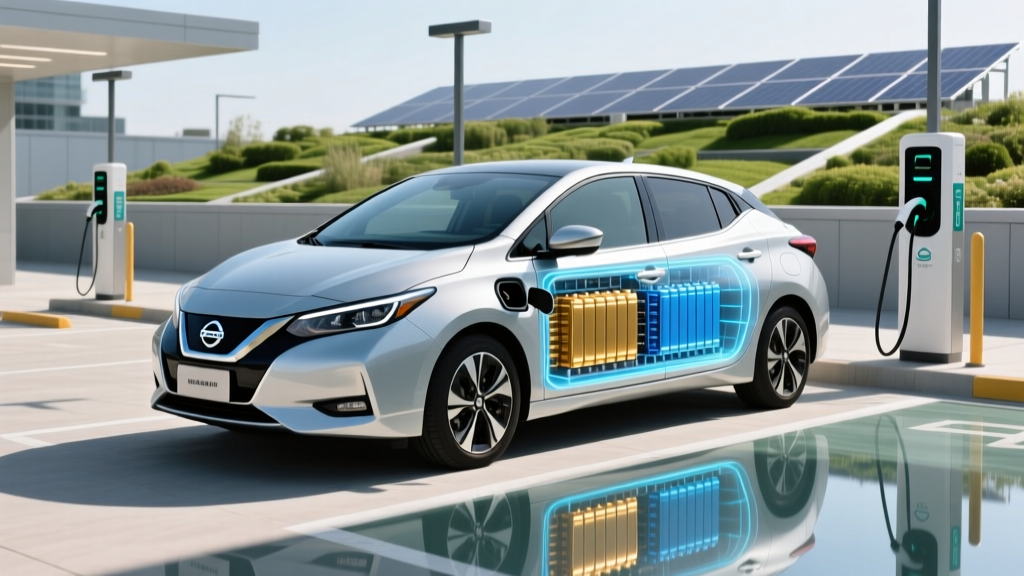
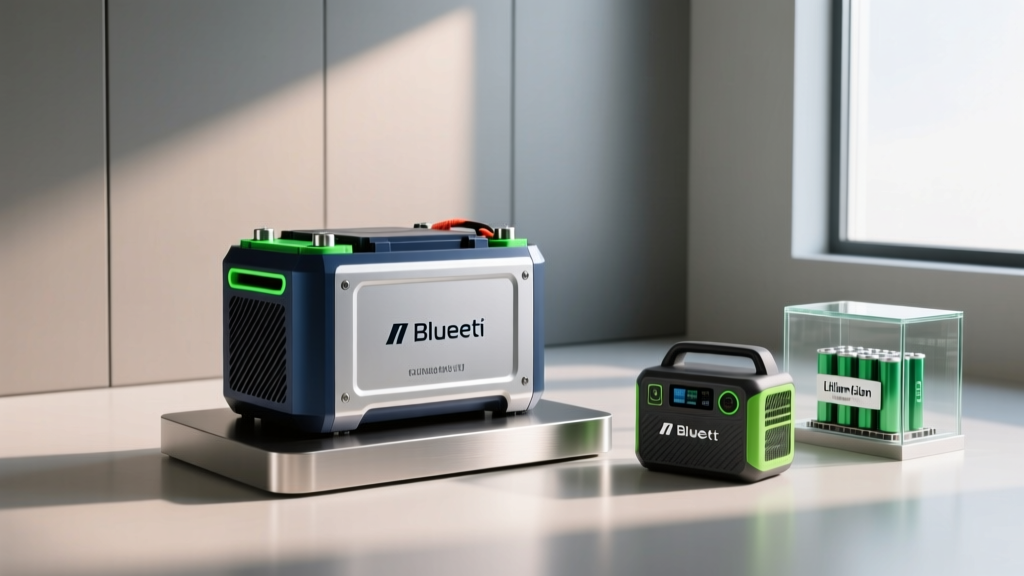
Let's be clear about scope: your EV's traction battery (typically 60–130 kWh, operating at 400V or 800V) is a fundamentally different system from a portable Bluetti FridgePower unit (typically 1–5 kWh at 12–48V). Both use lithium-based cells, but their design priorities, chemistries, and lifespans diverge significantly. Understanding these differences helps you make smarter decisions about both.
LFP vs NMC/NCA: The Chemistry That Defines Your EV Battery
Every EV battery pack uses one of two dominant lithium-ion chemistries: LFP (lithium iron phosphate, LiFePO4) or NMC/NCA (nickel manganese cobalt / nickel cobalt aluminum). The choice affects your range, charging habits, longevity, and even your backup-power strategy.
| Attribute | LFP (Lithium Iron Phosphate) | NMC/NCA (Nickel-Based) |
|---|---|---|
| Energy Density | ~160–180 Wh/kg (lower) | ~250–300 Wh/kg (higher) |
| Cycle Life | 3,000–6,000+ cycles to 80% SoH | 1,000–2,500 cycles to 80% SoH |
| Cold Performance | Moderate — slower charging below 32°F | Better low-temp charge acceptance |
| Thermal Stability | Excellent — lower runaway risk | Good — requires robust BMS |
| Cost per kWh | ~$80–100/kWh (2026 pack-level) | ~$110–140/kWh (2026 pack-level) |
| Recommended SoC | Can charge to 100% daily | Best kept 20–80% for daily use |
| Common EV Applications | Tesla Model 3/Y RWD, Ford Mustang Mach-E Select (2025+), BYD models | Tesla Long Range, Hyundai Ioniq 5/6, Kia EV6/EV9, Rivian, GM Ultium |
| Portable Backup Use | Bluetti, EcoFlow premium models | Lighter weight portable stations |
What This Means for You
If your EV has an LFP pack (check your owner's manual or window sticker), you can charge to 100% regularly without accelerating degradation — a significant advantage if you plan to use your vehicle as a backup power source via V2H (vehicle-to-home) or V2L (vehicle-to-load). NMC/NCA owners should maintain a 20–80% daily window and only charge to full before long trips or anticipated outages.
Portable units like the Bluetti FridgePower series typically use LFP cells in their 2025–2026 models, prioritizing cycle life and safety over weight — the same trade-off automakers make for standard-range EV trims. According to Bluetti's official specifications, their LFP-based power stations are rated for 3,500+ cycles to 80% capacity, aligning closely with automotive LFP longevity profiles.
How Long Do EV Batteries Actually Last?
The short answer: most EV traction batteries outlast the vehicles they're installed in. The long answer requires looking at real degradation data across chemistries, climates, and usage patterns.
Real-World Degradation Data Points
Based on fleet data, owner surveys, and manufacturer reports compiled through 2025–2026:
- Tesla Model 3/Y (NMC, 2019–2023): Average ~5–7% capacity loss at 100,000 miles; ~10–12% at 200,000 miles. Tesla's 2025 Impact Report states their fleet averages less than 10% degradation at 200,000 miles.
- Chevrolet Bolt EV/EUV (NMC, 2017–2023): ~6–8% loss at 80,000 miles under typical use. Some early 2017 models with frequent DC fast charging showed 10–12% loss.
- Hyundai Ioniq 5 (NMC, 2022–2026): Early fleet data suggests ~3–4% loss at 50,000 miles with mixed Level 2 and DCFC use.
- Tesla Model 3 RWD (LFP, 2022–2026): Projected <4% loss at 100,000 miles based on LFP cycle-life data; long-term fleet data still maturing.
- Ford F-150 Lightning (NMC, 2022–2026): ~4–5% loss reported at 60,000 miles in fleet applications.
- Nissan Leaf (LMO/NMC, 2011–2025): Earlier passively-cooled packs showed 15–25% loss at 80,000 miles in hot climates — a cautionary tale that drove the industry toward active thermal management.
The data consistently shows that modern, actively-cooled battery packs (2020 and later) degrade at roughly 1.5–2.5% per year or 3–5% per 50,000 miles under normal conditions. LFP packs trend toward the lower end of that range; NMC toward the higher end, particularly if frequently charged above 90% or exposed to sustained heat.
What Does the EV Battery Warranty Actually Cover?
Federal law mandates a minimum 8-year/100,000-mile warranty on EV battery packs for emissions-related compliance, and most manufacturers exceed this. Here's how the major warranties compare as of 2026:
| Manufacturer | Warranty Term | Capacity Retention Threshold | Notes |
|---|---|---|---|
| Tesla (Model 3/Y RWD, LFP) | 8 yr / 100,000 mi | 70% | Covers defects + capacity below threshold |
| Tesla (Long Range/Performance, NMC) | 8 yr / 120,000 mi | 70% | Higher mileage threshold |
| Hyundai / Kia (E-GMP platform) | 10 yr / 100,000 mi | 70% | Among the longest terms in the industry |
| GM (Ultium — Cadillac, Chevy, GMC) | 8 yr / 100,000 mi | 70% (some trims 65%) | Varies by model; check specific warranty booklet |
| Ford (Mustang Mach-E, F-150 Lightning) | 8 yr / 100,000 mi | 70% | Includes high-voltage components beyond cells |
| Rivian (R1T, R1S) | 8 yr / 175,000 mi | 70% | Highest mileage threshold among major OEMs |
| BMW (i4, iX, i7) | 8 yr / 100,000 mi | 70% | Includes battery management system |
Critical nuance: These warranties cover defects and capacity loss below the stated threshold. Gradual, normal degradation (say, losing 8% over 5 years) is not a warranty claim — it's expected behavior. A warranty replacement is triggered only when the pack falls below ~70% of original capacity or develops a fault. For the vast majority of owners, this threshold is never reached during the warranty period.
EV Battery Replacement Cost: What to Expect in 2026
Battery replacement is the single biggest fear among prospective EV buyers. Here's the reality: it's expensive, but increasingly rare, and costs continue to decline.
| Vehicle / Pack Size | Estimated Replacement Cost (Parts + Labor) | Typical Replacement Timeline |
|---|---|---|
| Tesla Model 3 RWD (60 kWh LFP) | $8,000–$12,000 | Rarely needed before 300,000+ mi |
| Tesla Model Y Long Range (82 kWh NMC) | $12,000–$16,000 | 200,000–300,000 mi if needed |
| Hyundai Ioniq 5 (77.4 kWh NMC) | $10,000–$15,000 | 200,000+ mi; covered under 10-yr warranty |
| Ford F-150 Lightning Extended (131 kWh NMC) | $18,000–$25,000 | 200,000+ mi; largest consumer pack on market |
| Chevrolet Bolt EV (65 kWh NMC) | $9,000–$14,000 | Recall-replaced packs have reset timelines |
| Rivian R1T (135 kWh Max Pack) | $20,000–$28,000 | Very limited data; modular design may allow partial replacement |
For context, a conventional vehicle's engine or transmission replacement runs $4,000–$8,000 and is far more likely to be needed within 150,000 miles. The U.S. Department of Energy's fueleconomy.gov resource notes that EV drivetrain components generally require less maintenance than internal combustion equivalents, partially offsetting the higher potential battery cost.
The key insight: most EV batteries will never need replacement during original ownership. Data from Tesla, Hyundai, and GM indicates that fewer than 1–2% of packs are replaced under warranty for capacity loss. The majority of replacements are due to manufacturing defects caught early, not end-of-life degradation.
How This Compares to Portable Backup Batteries
A Bluetti FridgePower or comparable LFP portable station (2–5 kWh) costs $1,500–$4,000 to purchase outright. Its cells are not user-replaceable in most models. However, with 3,500+ cycle ratings, a daily-cycled unit would last 9–10 years before hitting 80% capacity — and unlike an EV battery, the replacement is a simple purchase, not a service-center procedure.
Factors That Accelerate (or Protect) Battery Health
Battery longevity isn't just about time and miles — it's about how you treat the cells. Here's what the electrochemistry actually rewards and punishes:
Battery Care Checklist for Maximum Longevity
- Limit DC fast charging to road trips: Frequent 150+ kW charging generates sustained heat. If you DCFC daily, expect 1–2% additional annual degradation vs. Level 2 home charging. Occasional fast charging has negligible impact.
- Avoid prolonged 100% SoC (NMC/NCA): Storing an NMC pack at full charge, especially in heat, accelerates electrolyte decomposition. Set your daily charge limit to 80% and only go to 100% when you'll drive immediately. LFP owners: 100% daily is fine and actually recommended for BMS calibration.
- Don't let it sit at 0%: Deep discharge stresses cells. If storing your EV for weeks, set SoC to ~50%. Most modern EVs have a buffer (typically 2–5 kWh hidden above and below the displayed range) to protect against true 0% and 100%.
- Precondition before fast charging: Use your EV's navigation-to-charger feature (Tesla, Hyundai/Kia, GM all offer this) to warm the battery to optimal charging temperature (~77–95°F). Cold batteries charge slower and experience lithium plating at high charge rates.
- Park in shade/garage when possible: Sustained ambient temperatures above 95°F accelerate calendar aging. A garage in Phoenix can add years to pack life vs. outdoor parking.
- Use Level 2 (7–11 kW) for daily charging: This is the sweet spot — fast enough for overnight replenishment, gentle enough to minimize heat generation.
Monitoring Your Battery's State of Health (SoH)
State of Health (SoH) is the percentage of your battery's original capacity that remains usable. A new pack is 100% SoH; a pack that can only hold 77 kWh of its original 82 kWh is at ~94% SoH.
How to Check SoH in Your EV
Most manufacturers don't expose a direct SoH percentage in the vehicle UI, but there are several reliable methods:
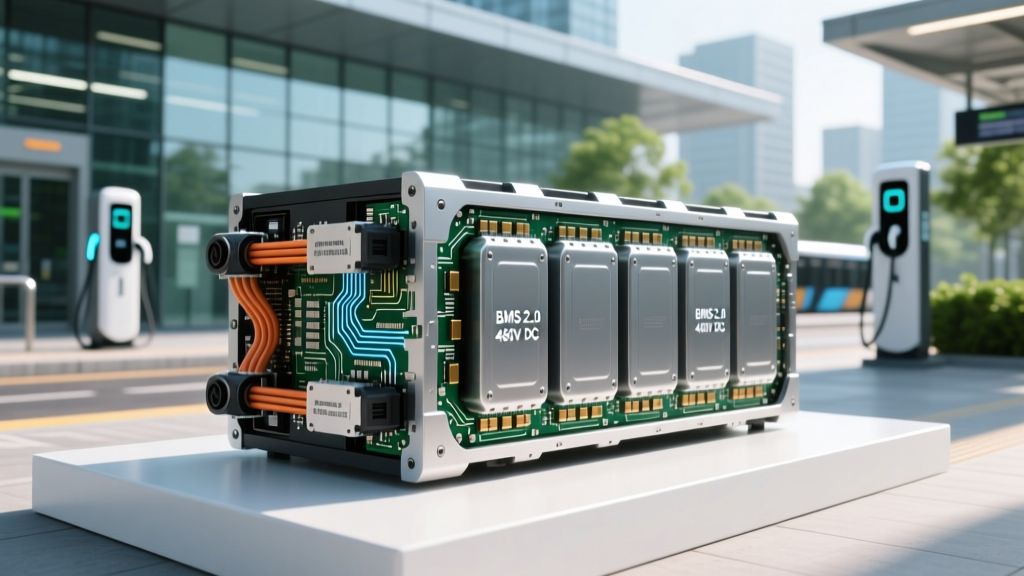
- OBD-II dongle + app: Tools like OBDeleven (VW/Hyundai/Kia), Scan My Tesla (Tesla), or Leaf Spy (Nissan) read the BMS (Battery Management System) directly and display SoH, cell voltages, and pack temperature. Cost: $30–$60 for the dongle.
- Dealer diagnostic: Request a battery health report during service visits. Most OEMs can pull a detailed SoH printout.
- Manual calculation: Charge to 100%, note the displayed range, and compare to the original EPA-rated range (adjusting for temperature). If your Ioniq 5 originally showed 303 miles at 100% and now shows 280, you're at roughly 92% SoH. This method is approximate — displayed range varies with recent driving efficiency.
- Third-party services: Companies like Recurrent Auto offer free battery health reports by connecting to your EV's telematics data, providing fleet-comparison benchmarks.
For portable backup batteries like the Bluetti FridgePower, SoH is typically displayed in the companion app, and LFP chemistry's flat voltage curve makes capacity estimation more accurate than with NMC cells.
Emerging Battery Technologies: Solid-State and Silicon Anode
Looking ahead — and this is explicitly forward-looking, not available today — two technologies promise to reshape EV batteries:
Solid-state batteries replace the liquid electrolyte with a solid ceramic, polymer, or sulfide conductor. Benefits include higher energy density (potentially 400+ Wh/kg), faster charging, and improved safety. Toyota has announced a 2027–2028 production timeline for solid-state EVs with ~750 km (466 mi) range and 10-minute 10–80% charging. Samsung SDI and QuantumScape are targeting similar timelines. However, manufacturing scale-up remains the primary obstacle; as of early 2026, no mass-produced EV uses a solid-state pack.
Silicon anode technology replaces graphite anodes with silicon-dominant materials, boosting energy density by 20–40%. Companies like Sila Nanotechnologies and Group14 are supplying silicon anode materials to battery manufacturers, with incremental adoption in 2025–2026 model-year vehicles. This is an evolution, not a revolution — expect gradual range improvements rather than a step-change.
Neither technology changes the fundamental advice in this guide: today's LFP and NMC packs are proven, well-warrantied, and long-lasting. Buy based on current specs, not future promises.
EV Traction Battery vs. Bluetti FridgePower: Practical Comparison
If you're researching the Bluetti FridgePower backup battery as an EV owner, you're likely weighing two power-security strategies:
| Factor | EV Traction Battery (V2H/V2L) | Bluetti FridgePower (Portable LFP) |
|---|---|---|
| Usable Capacity | 60–131 kWh (massive) | 2–5 kWh (limited) |
| Home Backup Duration | 3–7 days for average home | 12–48 hours for essential loads |
| Requires V2H Equipment | Yes — bidirectional charger ($3,000–$7,000 installed) | No — plug and play |
| Vehicle Availability During Outage | Cannot drive while powering home | Independent of vehicle |
| Battery Degradation Impact | Uses vehicle cycle life | Dedicated cycle life |
| Upfront Cost | Already in your EV + V2H hardware | $1,500–$4,000 |
| Portability | None — tied to vehicle | High — take camping, use in apartment |
The practical answer: if your EV supports V2H (the Ford F-150 Lightning and Hyundai Ioniq 5 with the right equipment are leaders here as of 2026), your traction battery is the most powerful backup source you'll ever own. A Bluetti FridgePower complements it for smaller, portable needs — keeping a refrigerator running during a brief outage, powering devices during travel, or serving locations where your EV isn't present.
Frequently Asked Questions
How long do EV batteries last in years and miles?
Modern, actively-cooled EV batteries (2020+) are designed to last 15–20 years or 200,000–300,000+ miles before reaching 70–80% of original capacity. LFP packs trend toward the longer end of this range. Most EV batteries will outlast the vehicle's body, suspension, and interior.
How much does an EV battery cost to replace in 2026?
Replacement costs range from approximately $8,000 for a smaller LFP pack (Tesla Model 3 RWD) to $25,000+ for a large NMC pack (F-150 Lightning Extended Range, Rivian Max Pack). However, fewer than 2% of EV batteries require replacement for capacity loss — most outlive the car. Pack-level pricing continues to decline, with BloombergNEF reporting average pack prices below $110/kWh in 2025.
What does the EV battery warranty cover?
Standard warranties cover manufacturing defects and capacity loss below a stated threshold (typically 70% of original capacity) for 8 years/100,000 miles minimum, with Hyundai/Kia and Rivian offering extended terms. Normal gradual degradation above the threshold is not covered. Check your specific warranty booklet — terms vary by model and trim.
How do I check and maximize my EV battery health?
Check SoH using an OBD-II reader app (Scan My Tesla, OBDeleven, Leaf Spy), dealer diagnostics, or services like Recurrent Auto. Maximize longevity by favoring Level 2 charging, limiting NMC packs to 20–80% daily SoC, preconditioning before DC fast charging, and avoiding prolonged exposure to extreme heat.
LFP vs NMC — which is better for my needs?
Choose LFP if you prioritize longevity, lower cost, daily 100% charging flexibility, and plan to keep the vehicle 10+ years. Choose NMC/NCA if you need maximum range per charge, better cold-weather charging performance, or are buying a long-range or performance trim. Neither is universally "better" — they serve different use cases.
Can I use my EV battery as a home backup instead of buying a Bluetti?
Yes, if your vehicle and electrical setup support V2H (vehicle-to-home). The Ford F-150 Lightning with Ford Charge Station Pro and a compatible transfer switch can power an average home for 3+ days. However, this requires $3,000–$7,000 in bidirectional charging equipment and electrical work. A portable Bluetti FridgePower offers simpler, immediate backup for critical loads without the installation.
Sources: fueleconomy.gov (U.S. DOE), manufacturer warranty documentation (Tesla, Hyundai, Ford, GM, Rivian), IRS.gov (for EV tax credit context affecting total ownership cost).