If you've ever replaced the 12V battery in a 2013 Subaru Impreza, you know the drill: a $150–$250 lead-acid or AGM group 35 battery that lasts roughly 3–5 years before sulfation and cold cranking amps (CCA) drop below spec. That experience shapes expectations — so when EV shoppers hear "battery replacement," they assume a similarly routine, moderately priced swap. The reality of high-voltage EV traction batteries is entirely different, and understanding the gap matters whether you're cross-shopping a used Impreza against a new EV or simply trying to understand what's under the floor of a modern electric car.
This guide breaks down EV battery chemistry, degradation data, warranty coverage, replacement economics, and care practices — with direct context for anyone whose frame of reference is a conventional car like the 2013 Subaru Impreza.
The 2013 Subaru Impreza Battery vs. an EV Traction Battery
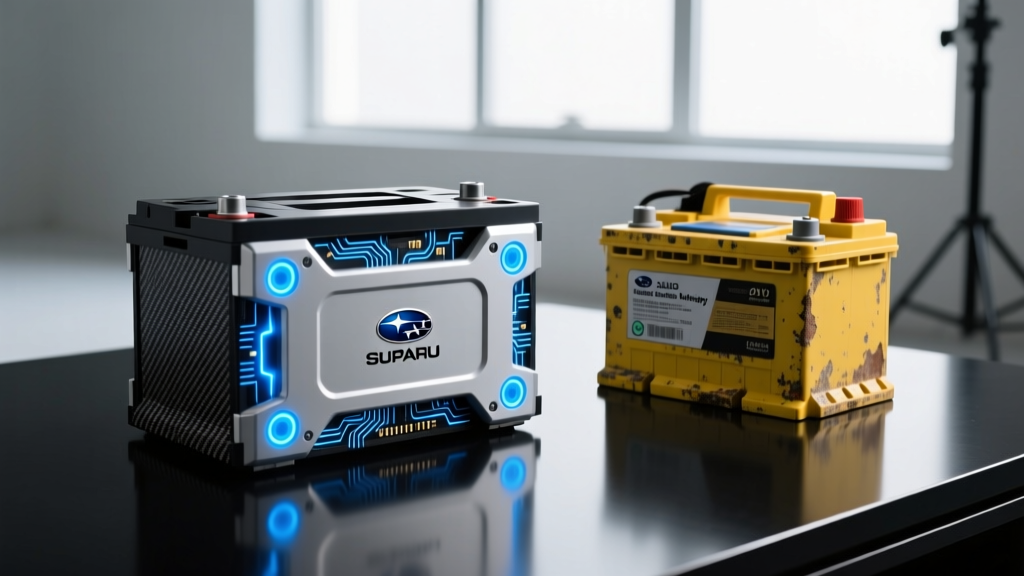
The 2013 Subaru Impreza battery is a 12-volt, lead-acid (or optionally AGM) starting battery rated around 500–600 CCA with roughly 0.5–0.7 kWh of total energy storage. Its sole job is cranking the engine and running accessories when the alternator isn't spinning. It weighs about 30–35 lbs, costs $130–$250 at an auto parts store, and typically needs replacement every 3–5 years depending on climate and parasitic draw.
An EV traction battery, by contrast, is a high-voltage lithium-ion pack storing 50–130+ kWh of usable energy — enough to propel a 4,000-lb vehicle 250–400+ miles. It weighs 800–1,500 lbs, costs $5,000–$25,000+ to replace out of warranty, and is engineered to last 15–20 years or 200,000+ miles before reaching end-of-automotive-life (typically defined as 70% remaining capacity). These are fundamentally different components serving fundamentally different roles.
Battery Chemistry Explained: LFP vs. NMC vs. NCA
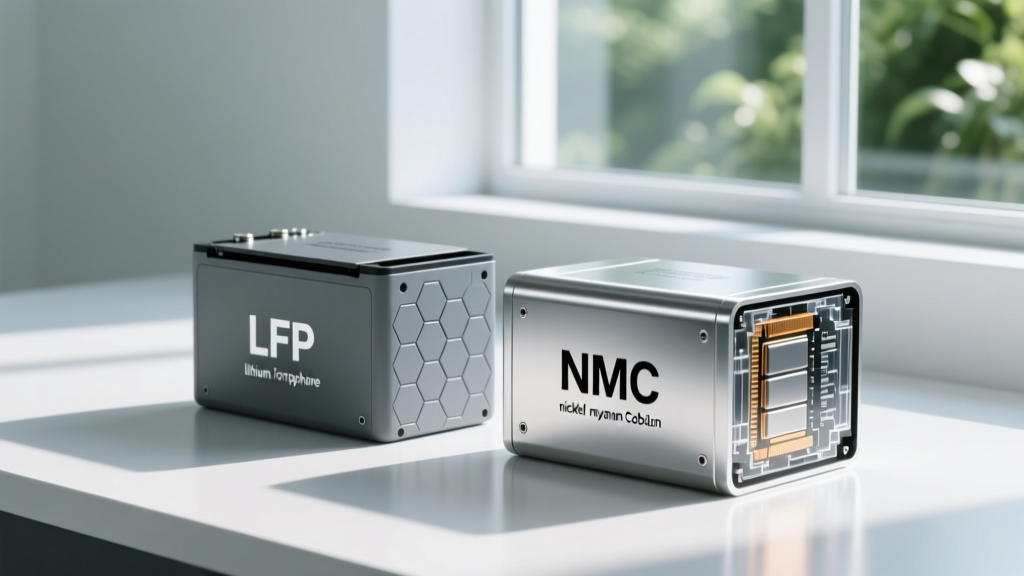
Modern EV traction batteries use one of two dominant lithium-ion chemistries: LFP (lithium iron phosphate) or NMC/NCA (nickel manganese cobalt / nickel cobalt aluminum). The chemistry determines energy density, cycle life, thermal stability, cold-weather behavior, and cost — and automakers choose based on vehicle positioning.
| Attribute | LFP (LiFePO₄) | NMC / NCA |
|---|---|---|
| Energy density | 160–200 Wh/kg (cell level) | 220–300 Wh/kg (cell level) |
| Cycle life | 3,000–6,000+ cycles to 80% SoH | 1,000–2,500 cycles to 80% SoH |
| Cold performance | Reduced charge acceptance below 32°F; ~15–25% range loss in freezing | Better low-temp charge acceptance; ~10–20% range loss in freezing |
| Thermal stability | Excellent — higher runaway onset temp (~518°F) | Good — lower runaway onset (~410°F); requires robust BMS |
| Cost (2026 cell-level) | ~$70–$90/kWh | ~$95–$130/kWh |
| Recommended daily SoC | 100% OK (no calendar degradation penalty) | 80% daily; 100% only for trips |
| Example vehicles (2026) | Tesla Model 3 RWD, Model Y RWD, Ford Mustang Mach-E Select (LFP option) | Hyundai Ioniq 5, Chevy Equinox EV, BMW iX, Tesla Model 3 LR/AWD |
Which is better? Neither is universally superior. LFP wins on longevity, cost, and safety — ideal for standard-range, daily-driver EVs where you can charge to 100% without worry. NMC/NCA wins on energy density — essential for long-range models where packing 80–100 kWh into a manageable weight matters. If you live in a cold climate and prioritize range, NMC/NCA's better low-temperature performance may tip the scales. If you plan to own the car 10+ years and want minimal degradation anxiety, LFP's 3,000+ cycle life is compelling.
How Long Do EV Batteries Actually Last? Degradation Data
The fear that EV batteries "need replacing every few years" — like the 12V battery in your 2013 Impreza — is the single biggest misconception in EV ownership. Real-world fleet data tells a different story.
- 📊 Tesla fleet (2024 Impact Report): Model S/X batteries retain ~88% capacity at 200,000 miles; Model 3/Y retain ~85% at 200,000 miles.
- 📊 Geotab fleet study (2024, 10,000+ EVs): Average annual degradation of 1.8% across all brands — meaning ~82% SoH after 10 years at typical mileage.
- 📊 Nissan Leaf (passive-cooled, older gen): Higher degradation — ~75–80% SoH at 100,000 miles in hot climates, which is why active thermal management became industry standard.
- 📊 Hyundai/Kia E-GMP platform: Early data (Ioniq 5, EV6) shows ~95–97% SoH at 30,000 miles — consistent with NMC cells and active liquid cooling.
- 📊 LFP-equipped Tesla Model 3 RWD: Anecdotal owner data shows <3% loss at 50,000 miles — consistent with LFP's superior cycle life.
The typical degradation curve is non-linear: most packs lose 2–5% in the first year (initial formation losses), then settle into a slow, linear decline of roughly 1–2% per year. A 2026 EV with a 75 kWh NMC pack and 2% annual loss will still hold ~60 kWh (80% SoH) after 10 years — enough for 200+ miles of real-world range in most models.
Compare this to the 2013 Subaru Impreza's 12V battery, which is functionally dead (won't crank the engine) after 3–5 years. The EV traction battery is engineered for a 15–20 year service life, and most will outlast the vehicle's body and suspension components.
What the Battery Warranty Covers — and What It Doesn't
Federal law (EPA emissions warranty requirements) effectively mandates that EV battery packs carry at minimum an 8-year / 100,000-mile warranty. In CARB states (California and states adopting California emissions standards), that extends to 10 years / 150,000 miles. Most automakers meet or exceed these minimums.
| Manufacturer | Duration / Mileage | Capacity Threshold | Notes |
|---|---|---|---|
| Tesla | 8 yr / 100,000–120,000 mi (varies by model) | 70% retention | Covers defects + excessive degradation |
| Hyundai / Kia | 10 yr / 100,000 mi | 70% retention | Among the longest standard coverage |
| Ford | 8 yr / 100,000 mi | 70% retention | Covers battery + hybrid/electric components |
| GM (Chevy/Cadillac) | 8 yr / 100,000 mi | 60–70% retention (varies) | Ultium platform; check specific model terms |
| BMW | 8 yr / 100,000 mi | 70% retention | Optional extended coverage available |
| Rivian | 8 yr / 175,000 mi | 70% retention | Highest mileage cap in the segment |
Critical nuance: The warranty covers degradation below the threshold (typically 70% of original capacity), not just defects. If your 75 kWh pack drops to 50 kWh (67% SoH) at year 6 and 80,000 miles, the manufacturer must repair or replace it. However, normal gradual loss — say from 100% to 85% over 8 years — is considered expected wear and isn't covered. Always read the specific warranty booklet for your model, as terms like "excessive degradation" have defined measurement procedures.
EV Battery Replacement Cost: The Real Numbers
This is where the comparison to a 2013 Subaru Impreza battery gets stark. Out-of-warranty traction battery replacement is a major expense — but context matters enormously, because most EVs never need one.
| Vehicle / Pack Size | Battery Cost (Parts) | Labor | Total Estimate |
|---|---|---|---|
| Tesla Model 3 RWD (~60 kWh LFP) | $7,000–$10,000 | $1,500–$2,500 | $8,500–$12,500 |
| Hyundai Ioniq 5 (~77 kWh NMC) | $10,000–$15,000 | $2,000–$3,000 | $12,000–$18,000 |
| Ford F-150 Lightning Ext. Range (~131 kWh) | $18,000–$25,000 | $2,500–$4,000 | $20,500–$29,000 |
| Chevrolet Equinox EV (~85 kWh) | $9,000–$14,000 | $1,500–$2,500 | $10,500–$16,500 |
| 2013 Subaru Impreza (12V, for comparison) | $130–$250 | $0–$50 (DIY/swap) | $130–$300 |
When is replacement actually needed? Based on current degradation data, most EV traction batteries won't fall below the 70% SoH threshold until 200,000–300,000 miles or 15–20 years — at which point the vehicle is typically totaled for other reasons (collision, suspension, body corrosion). The few packs that have required early replacement were usually due to manufacturing defects (covered under warranty) or physical damage (covered by insurance). Catastrophic out-of-warranty failure in normal use is rare.
For context on where costs are heading: cell-level battery pricing has fallen from ~$1,200/kWh in 2010 to roughly $80–$130/kWh in 2026, according to BloombergNEF. Pack-level pricing (including BMS, cooling, housing) runs 30–50% higher. This downward trend continues as manufacturing scales and LFP adoption grows.
Factors That Accelerate (or Preserve) Battery Life
Not all miles age a battery equally. The following factors have measurable, data-backed impacts on long-term State of Health:
- Avoid sustained 100% SoC (NMC/NCA only): Storing an NMC pack at full charge accelerates calendar degradation. Charge to 80% daily; reserve 100% for road trips. LFP owners can ignore this — charge to 100% regularly, which actually helps the BMS calibrate.
- Minimize DC fast charging when possible: Frequent 150+ kW charging generates heat and lithium plating risk. Geotab data shows vehicles that DC-fast-charge 3+ times per week degrade ~0.5% faster annually than those primarily using Level 2. Use DCFC for road trips; Level 2 at home for daily.
- Precondition before fast charging: Most modern EVs auto-precondition the battery when you navigate to a DCFC. This warms the cells to ~95–105°F for optimal charge acceptance. Charging a cold battery at high power causes lithium plating — permanent capacity loss. If your EV doesn't auto-precondition, drive 15–20 minutes before plugging into a fast charger in cold weather.
- Avoid deep discharges below 10%: Regularly running the pack to near-zero stresses the cells. Most BMS systems have a bottom buffer (typically 2–5% hidden capacity), but habitually arriving at 0% accelerates wear. Plug in when you hit 15–20%.
- Park in moderate temperatures when possible: Prolonged exposure to 100°F+ ambient heat (think Arizona summer parking lots) accelerates calendar degradation. A garage or shaded spot meaningfully extends pack life. Extreme cold is less damaging to longevity but reduces range and charge speed temporarily.
- Use scheduled charging: Set your EV to finish charging just before departure rather than sitting at high SoC for hours. This minimizes time spent at elevated voltage — the primary driver of calendar aging.
How to Check and Monitor Battery Health (SoH)
State of Health (SoH) is the percentage of original capacity your pack retains. A new 77 kWh pack at 92% SoH holds ~70.8 kWh of usable energy. Monitoring SoH helps you track degradation, plan for warranty claims, and assess used-EV value.
Manufacturer tools: Some brands display SoH directly in the vehicle settings or companion app. Hyundai/Kia's Bluelink app shows battery health percentage. Tesla does not natively display SoH, but the service menu (accessible via the software screen) shows estimated capacity. BMW's iDrive includes a battery health readout.
Third-party methods:
- OBD-II dongles + apps: Tools like OBDLink SX paired with apps such as LeafSpy (Nissan Leaf), Scan My Tesla, or Car Scanner can read the BMS-reported SoH directly from the CAN bus. This is the most accurate consumer-accessible method.
- Manual calculation: Charge to 100% (or a known SoC), record the kWh added from a known low SoC, and calculate: (kWh added ÷ SoC change) × 100 = estimated total capacity. Compare to the original spec. Example: adding 52 kWh from 15% to 85% (70% swing) suggests ~74.3 kWh total capacity on a pack originally rated at 77 kWh — roughly 96.5% SoH.
- Charging network data: Some networks (Tesla Superchargers, Electrify America) display estimated capacity after a full charge session in the session summary.
Check SoH every 6–12 months, or before purchasing a used EV. A healthy 3-year-old EV should show 90–96% SoH depending on chemistry and usage patterns.
Emerging Battery Tech: Solid-State and Silicon Anodes
Two next-generation technologies are frequently cited as "coming breakthroughs" — and both deserve realistic timelines rather than hype:
Solid-state batteries replace the liquid electrolyte with a solid ceramic, polymer, or sulfide conductor. The theoretical benefits are substantial: 40–50% higher energy density (potentially 400+ Wh/kg at cell level), faster charging (10–80% in under 10 minutes), improved safety (no flammable electrolyte), and longer cycle life. Toyota has announced solid-state prototypes targeting 2027–2028 limited production. Samsung SDI, QuantumScape (backed by Volkswagen), and Solid Power (backed by BMW/Ford) are all in pilot-line stages.
Realistic timeline: Low-volume, premium-vehicle solid-state packs may appear in 2028–2030. Mass-market, cost-competitive solid-state batteries are unlikely before 2032–2035. Manufacturing yield, solid electrolyte cost, and interface stability remain unsolved at scale.
Silicon anode batteries replace or supplement the graphite anode with silicon, which can store roughly 10× more lithium ions per unit mass. Companies like Sila Nanotechnologies (partnered with Mercedes-Benz/Panasonic) and Group14 (partnered with Porsche) are shipping early products with 20–40% energy density gains. The 2026 Mercedes G-Class EV uses a silicon-dominant anode from Sila.
Realistic timeline: Silicon anode technology is already in limited production (2025–2026) and will scale through 2028–2030 as cost decreases. Expect it to appear first in performance and luxury EVs, then mainstream models.
Neither technology invalidates buying a current-generation EV today. Today's lithium-ion packs (both LFP and NMC) are mature, well-understood, and backed by real-world data showing 15–20 year lifespans. Waiting for solid-state means waiting 5+ years for broad availability.
EV Battery FAQ
How long do EV batteries last in years and miles?
Based on fleet data from Tesla, Geotab, and manufacturer reports, modern liquid-cooled EV batteries typically last 15–20 years or 200,000–300,000 miles before reaching 70% State of Health. LFP chemistry packs may last even longer (3,000–6,000 charge cycles). This is vastly longer than the 3–5 year lifespan of a conventional 12V starting battery like the one in a 2013 Subaru Impreza.
How much does an EV battery cost to replace out of warranty?
Out-of-pocket replacement costs range from roughly $8,500 for a smaller pack (Tesla Model 3 RWD, ~60 kWh LFP) to $25,000+ for a large pack (Ford F-150 Lightning Extended Range, ~131 kWh). Labor adds $1,500–$4,000. However, the vast majority of EVs never need a traction battery replacement — most packs outlast the vehicle itself. Cell pricing continues to decline year over year.
What does the EV battery warranty actually cover?
Federal minimum is 8 years / 100,000 miles (10 years / 150,000 miles in CARB states). Coverage includes manufacturing defects and excessive degradation — typically defined as falling below 70% of original capacity. Normal gradual loss (e.g., dropping from 100% to 85% over 8 years) is considered expected wear. Check your specific warranty booklet for exact thresholds and measurement procedures.
How do I check my EV battery's State of Health?
Methods include: (1) manufacturer app or in-vehicle display (Hyundai Bluelink, BMW iDrive), (2) OBD-II scanner with EV-capable software (Scan My Tesla, LeafSpy, Car Scanner), or (3) manual calculation by tracking kWh added during a known charge session. Check every 6–12 months, and always before buying a used EV.
LFP vs. NMC — which battery chemistry should I choose?
Choose LFP if: you want maximum longevity (3,000+ cycles), lower cost, the ability to charge to 100% daily, and don't need maximum range per charge. Choose NMC/NCA if: you need long range (300+ miles), live in a very cold climate (better low-temp performance), or want a lighter pack for performance. Neither is universally better — the right choice depends on your driving patterns and climate.
Does frequent DC fast charging damage the battery?
Occasional DC fast charging (road trips, a few times per month) has negligible impact. Frequent daily DCFC use (3+ times per week at 150+ kW) accelerates degradation by roughly 0.5% per year compared to primarily Level 2 charging, per Geotab fleet data. The main risk is heat buildup and lithium plating — both mitigated by modern thermal management and preconditioning. For daily charging, Level 2 at home (7–11 kW) is optimal for longevity.
Will a replacement battery be as good as the original?
Warranty replacements may use new or remanufactured packs. A remanufactured pack will typically be restored to at least the warranty threshold (70%+ SoH) — not brand-new capacity. Some manufacturers install new packs, which may actually have higher capacity than your degraded original. Ask the service center what you're getting before authorizing the repair.
Sources: Tesla Impact Report (2024), Geotab EV Battery Degradation Study, fueleconomy.gov (EPA), manufacturer warranty documentation. Battery pricing data via BloombergNEF. All figures reflect 2025–2026 data and are subject to change.