Why a 2008 Lexus IS250 Battery Search Leads to EV Battery Questions
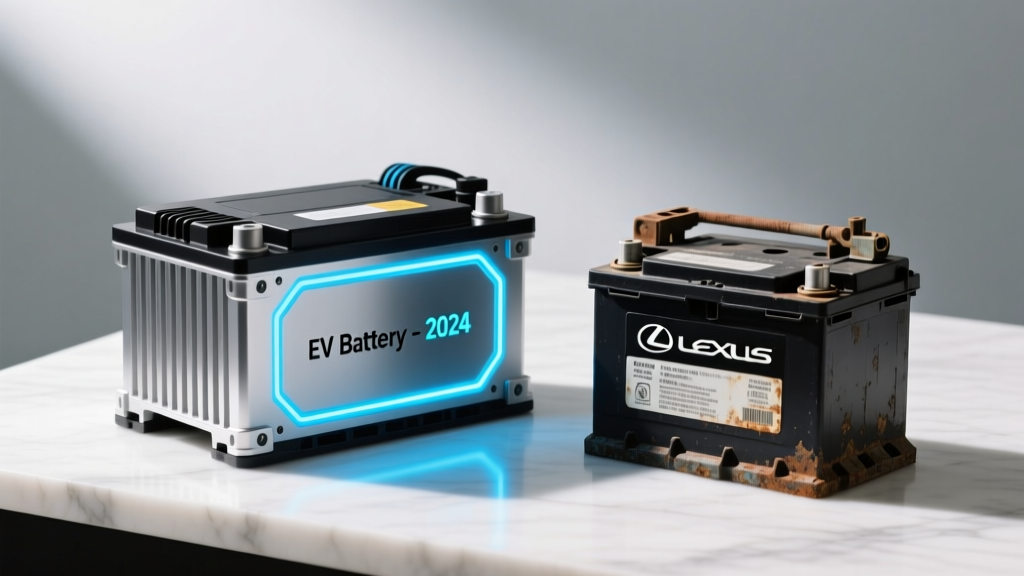
If you've searched for a 2008 Lexus IS250 battery, you likely need a replacement 12-volt lead-acid battery — typically a Group 35 or 24F unit costing around $150–$250 at an auto parts store. That small battery powers the starter motor, lights, and electronics in a conventional gas sedan. But the growing interest in that search term also surfaces a much bigger question among car shoppers: how do modern electric vehicle traction batteries compare, and should I worry about longevity or replacement costs?
The short answer is that an EV's high-voltage traction battery and the 12V battery in your Lexus IS250 serve entirely different purposes, operate on different chemistries, and carry vastly different price tags. This guide uses that contrast as a starting point to explain everything current and prospective EV owners need to know about battery chemistry, degradation, warranties, replacement costs, and care — all backed by real-world data.
EV Battery Chemistry Explained: LFP vs. NMC/NCA
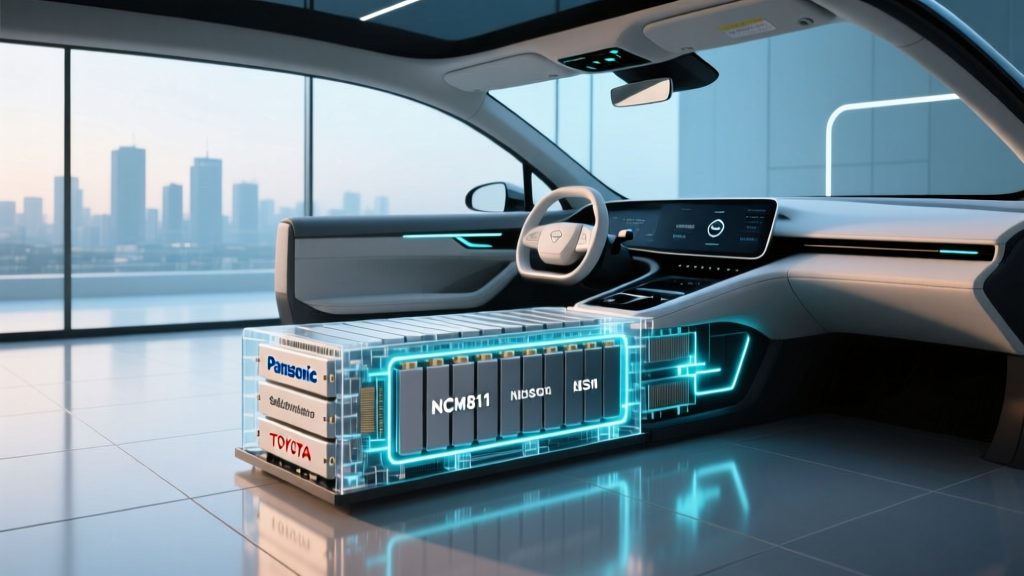
Modern EV traction batteries use lithium-ion cells, but not all lithium-ion is the same. The two dominant chemistries in 2026 are LFP (lithium iron phosphate) and NMC/NCA (nickel manganese cobalt / nickel cobalt aluminum). Each has distinct trade-offs that affect range, longevity, cold-weather performance, and price.
| Attribute | LFP (Lithium Iron Phosphate) | NMC / NCA (Nickel-based) |
|---|---|---|
| Energy Density | Lower (~160–180 Wh/kg cell-level) | Higher (~220–300 Wh/kg cell-level) |
| Cycle Life | 3,000–5,000+ cycles to 80% capacity | 1,000–2,500 cycles to 80% capacity |
| Cold Performance | More range loss in freezing temps (15–30% loss) | Better cold performance (10–20% loss) |
| Cost | Lower — no cobalt or nickel | Higher — commodity-priced metals |
| Thermal Stability | Excellent — lower thermal runaway risk | Good — requires more robust BMS/cooling |
| SoC Recommendation | Can charge to 100% daily (per Tesla, BYD) | Best kept 20–80% for daily use |
| Common In | Tesla Model 3/Y RWD, BYD, Rivian Standard | Long-range/luxury EVs, Hyundai Ioniq 5, Ford Mustang Mach-E Extended |
Which is better? It depends on your use case. If you prioritize longevity, lower cost, and mostly drive in moderate climates, LFP is the stronger pick. If you need maximum range per charge, live in a cold climate, or tow frequently, NMC/NCA's higher energy density and better cold performance justify the trade-off. Neither chemistry is universally superior — the "right" choice maps to your driving patterns.
How Long Do EV Batteries Last? Real Degradation Data
The most common fear among EV-curious buyers is that the traction battery will fail prematurely, leaving them with a five-figure repair bill. The data tells a more reassuring story.
- Year 1 / 15,000 miles: ~2–5% capacity loss (initial break-in degradation)
- Year 3 / 45,000 miles: ~6–9% total loss
- Year 5 / 75,000 miles: ~8–12% total loss
- Year 8 / 120,000 miles: ~10–15% total loss
- Year 10+ / 150,000+ miles: ~12–20% total loss
According to data aggregated by Recurrent Auto, which tracks over 15,000 EVs in real-world conditions, the median EV battery retains roughly 90–95% of its original capacity after three years and 85–92% after five years. LFP packs tend to degrade more slowly over time, though they may show a slightly steeper initial drop.
For context, a 2024 Tesla Model 3 Long Range with an 82 kWh NMC pack might see usable capacity drop from ~78 kWh (usable) to ~70 kWh after 100,000 miles — translating to an EPA range decrease from 341 miles to roughly 300–310 miles. That's noticeable but not debilitating.
Catastrophic battery failure (sudden, total loss) is rare. According to fueleconomy.gov, the vast majority of EV batteries outlast the vehicles they're installed in, and most replacements occur due to manufacturing defects covered under warranty, not wear-out.
What Does the EV Battery Warranty Actually Cover?
Federal law in the United States mandates that EV batteries carry a minimum warranty of 8 years or 100,000 miles (whichever comes first). In California and states that follow CARB (California Air Resources Board) standards, that extends to 10 years or 150,000 miles.
| Manufacturer | Warranty Term | Capacity Retention Threshold | Notes |
|---|---|---|---|
| Tesla | 8 yr / 120,000 mi (LR/AWD); 8 yr / 100,000 mi (RWD) | 70% | Covers defects + degradation below threshold |
| Hyundai / Kia | 10 yr / 100,000 mi | 70% | Among the longest terms in the industry |
| Ford | 8 yr / 100,000 mi | 70% | Covers Mustang Mach-E, F-150 Lightning |
| GM (Chevrolet, Cadillac) | 8 yr / 100,000 mi | 60–70% (varies by model) | Ultium platform packs |
| Rivian | 8 yr / 120,000 mi (R1T/R1S Standard); 8 yr / 175,000 mi (Max) | 70% | Max pack gets extended mileage coverage |
| BMW | 8 yr / 100,000 mi | 70% | Applies to i4, i5, i7, iX |
The capacity retention threshold is critical: if your battery's State of Health (SoH) drops below that percentage within the warranty window, the manufacturer must repair or replace it at no cost to you. In practice, most batteries stay well above the 70% threshold during the warranty period.
How Much Does an EV Battery Cost to Replace?
Out-of-warranty battery replacement is the number-one financial concern for EV buyers. Here's what the numbers actually look like in 2026:
| Vehicle | Battery Size | Chemistry | Estimated Replacement Cost |
|---|---|---|---|
| Tesla Model 3 RWD | 60 kWh | LFP | $8,000–$12,000 |
| Tesla Model Y Long Range | 82 kWh | NMC | $12,000–$16,000 |
| Hyundai Ioniq 5 | 77.4 kWh | NMC | $10,000–$15,000 |
| Ford F-150 Lightning Extended | 131 kWh | NMC | $18,000–$25,000+ |
| Chevrolet Bolt EV/EUV | 65 kWh | NMC | $9,000–$14,000 |
| BMW iX xDrive50 | 111.5 kWh | NMC | $20,000–$28,000 |
A few important points for context:
- Most EVs never need a full battery replacement. Based on current degradation data, the majority of packs retain 75–85% capacity at 200,000 miles — still perfectly usable for daily driving.
- Module-level repair is increasingly common. Rather than replacing the entire pack, many shops can identify and swap individual degraded modules for $1,500–$4,000.
- Costs are declining. Battery pack prices have fallen from over $1,000/kWh in 2010 to roughly $110–$140/kWh in 2026 (per BloombergNEF), and are expected to continue declining.
- Compared to a 2008 Lexus IS250: You'd replace that car's lead-acid battery 15+ times over the same period for roughly the same total outlay, plus thousands in fuel and maintenance the EV avoids.
Factors That Accelerate (or Slow) Battery Degradation
Not all EV batteries age equally. How you charge, drive, and store your EV has a measurable impact on long-term capacity retention.
Battery Care Best Practices
- Avoid frequent DC fast charging above 150 kW. Occasional road-trip fast charging is fine, but daily reliance on 250–350 kW chargers generates sustained heat that accelerates degradation. Level 2 home charging (7–11 kW) is gentler.
- Keep SoC between 20–80% for daily use (NMC/NCA). Storing a nickel-based battery at 100% for extended periods stresses the cells. LFP owners can charge to 100% daily without concern — Tesla and BYD explicitly recommend this for LFP calibration.
- Precondition before fast charging. Most modern EVs automatically precondition the battery when you navigate to a charger, warming it to the optimal temperature (~35–40°C / 95–104°F) for fast charging. This reduces lithium plating risk and improves charge speed.
- Avoid extreme SoC in extreme temperatures. Don't leave your EV sitting at 100% SoC in 100°F+ heat, or at very low SoC in sub-zero cold. If storing for weeks, aim for ~50% SoC.
- Use regenerative braking moderately in cold weather. High regen on a cold battery can cause lithium plating. Most EVs automatically reduce regen when the battery is cold.
- Keep firmware updated. OEM battery management system (BMS) updates often improve thermal management and charging algorithms.
How to Check and Monitor Your EV's Battery Health
State of Health (SoH) is the metric that tells you how much capacity your battery retains compared to when it was new. A SoH of 92% means your pack holds 92% of its original energy. Here's how to check it:
Manufacturer Apps and In-Car Displays
Some automakers display SoH directly. Hyundai/Kia EVs show battery health in the dealer diagnostic tool, and Tesla's service mode (accessible through the software menu on newer models) provides a SoH estimate. Nissan Leaf owners have long had access to the "battery health bars" on the dashboard — though this is a coarse 12-bar indicator rather than a precise percentage.
Third-Party Tools
- Recurrent Auto: Free app that tracks your battery health over time by connecting to your EV's telematics. Provides a degradation curve compared to similar vehicles.
- OBD-II dongles + apps (e.g., LeafSpy, ABRP, OBDeleven): For technically inclined owners, these pull real-time cell voltage data, SoH percentages, and individual cell balance information from the BMS.
- Dealer diagnostic reports: Any authorized service center can pull a full battery health report. Request one before purchasing a used EV — it's the EV equivalent of a compression test.
DIY Capacity Test
Charge to 100% (or your normal max), note the displayed range, then drive until near-empty and note the actual miles traveled. Compare to the EPA sticker. If your 310-mile EPA vehicle consistently delivers only 240 miles at full charge in moderate weather, that suggests roughly 77% SoH — time to check warranty coverage.
What's Next: Solid-State, Silicon Anode, and Beyond
Next-generation battery technologies are in active development, but realistic timelines matter. Here's where things stand as of 2026:
- Solid-state batteries: Promise 20–40% higher energy density, faster charging, and improved safety by replacing the liquid electrolyte with a solid material. Toyota, Samsung SDI, and QuantumScape are leading development. Toyota has announced a target of 2027–2028 for limited production, but mass-market availability is more realistically 2029–2032.
- Silicon anode batteries: Replacing graphite anodes with silicon can boost energy density by 20–30%. Companies like Sila Nanotechnologies and Group14 are in early commercial production for consumer electronics, with automotive adoption expected around 2027–2029.
- Sodium-ion batteries: Lower cost and no lithium required, but significantly lower energy density. CATL and BYD are deploying these in Chinese-market budget EVs. US/European adoption remains uncertain and likely limited to low-range urban vehicles.
None of these technologies are currently available in production EVs sold in the US market. If you're buying an EV in 2026, you're choosing between LFP and NMC/NCA — both mature, well-tested chemistries.
The 2008 Lexus IS250 Battery vs. EV Battery: A Quick Comparison
To bring this full circle, here's how the two battery worlds compare directly:
| Factor | 2008 Lexus IS250 (12V Battery) | EV Traction Battery (e.g., 2026 Tesla Model Y LR) |
|---|---|---|
| Chemistry | Lead-acid (flooded or AGM) | Lithium-ion (NMC or LFP) |
| Capacity | ~0.6 kWh | 82 kWh usable |
| Voltage | 12V nominal | ~350–400V nominal |
| Replacement Cost | $150–$250 | $12,000–$16,000 |
| Typical Lifespan | 3–5 years | 15–20+ years (to 70–80% SoH) |
| Warranty | 1–3 years (auto parts store) | 8 yr / 100,000+ mi (federally mandated min.) |
| Function | Start engine, power accessories | Propel vehicle, store all driving energy |
The Lexus IS250 battery is a simple, inexpensive, easily replaceable component — but the vehicle it powers burns through $2,000–$3,000 in gasoline annually and requires regular oil changes, transmission fluid service, and exhaust maintenance. The EV traction battery is a far more complex and expensive component, but it's engineered to last the life of the vehicle and eliminates most of those recurring costs.
Frequently Asked Questions
How long do EV batteries last in years and miles?
Based on real-world fleet data from Recurrent Auto and manufacturer testing, most modern EV batteries retain 80–90% capacity after 100,000 miles and 75–85% after 200,000 miles. In years, that translates to a functional lifespan of 15–20+ years for typical drivers covering 10,000–15,000 miles annually. Catastrophic failure is rare — gradual capacity loss is the norm.
How much does it cost to replace an EV battery?
Full pack replacement ranges from roughly $8,000 for a smaller LFP pack (e.g., Tesla Model 3 RWD, 60 kWh) to $25,000+ for a large NMC pack (e.g., Ford F-150 Lightning Extended, 131 kWh). However, most EVs never need a full replacement. Module-level repairs cost $1,500–$4,000, and the vast majority of packs outlast the vehicles they're in. Battery pack pricing continues to decline year over year.
What does the EV battery warranty cover?
By federal law, EV battery warranties must cover at minimum 8 years or 100,000 miles. This covers both manufacturing defects and capacity degradation below a stated threshold — typically 70% of original capacity. If your battery's SoH falls below that threshold within the warranty period, the manufacturer replaces or repairs it at no cost. Some brands, like Hyundai and Kia, extend coverage to 10 years/100,000 miles.
How do I check and maximize my EV battery health?
Monitor SoH through your vehicle's service mode, the Recurrent Auto app, or a dealer diagnostic report. To maximize longevity: charge to 80% daily (NMC/NCA) or 100% (LFP), minimize frequent DC fast charging, precondition before fast charging, avoid storing at extreme SoC in extreme temperatures, and keep your vehicle's firmware updated. These habits can add years and tens of thousands of miles to your battery's useful life.
LFP vs NMC — which chemistry is better for me?
Choose LFP if you want the longest cycle life (3,000–5,000+ cycles), lower cost, can charge to 100% daily without worry, and mostly drive in moderate climates. Choose NMC/NCA if you need maximum range per charge, live in a cold climate where NMC retains range better, or frequently tow heavy loads. Neither is universally "better" — the right choice depends on your driving patterns, climate, and priorities.
Does a 2008 Lexus IS250 have anything in common with an EV battery?
Both are electrochemical energy storage devices, but that's where the similarity ends. The IS250's 12V lead-acid battery stores about 0.6 kWh and costs ~$200 to replace every 3–5 years. An EV traction battery stores 50–130+ kWh, costs $8,000–$25,000 to replace, and is designed to last 15–20 years. Most EVs also carry a separate 12V auxiliary battery for accessories and safety systems — but that's a minor component compared to the traction pack.
Sources: U.S. DOE / fueleconomy.gov — EV technology overview; Recurrent Auto — real-world battery degradation data; IRS.gov — §30D clean vehicle credit rules. Battery replacement costs are estimates based on manufacturer service bulletins and third-party repair data; actual costs vary by location and model year.