What 'Battery-to-Battery' Charging Actually Means for EV Owners
When EV owners search for how to charge battery to battery, they're usually asking one of three things: how energy flows from the grid into the high-voltage traction battery, whether one EV can charge another (vehicle-to-vehicle or V2V), or how to maintain battery health during the charging process itself. This guide addresses all three, grounded in 2026 battery chemistries, real degradation data, and ownership economics.
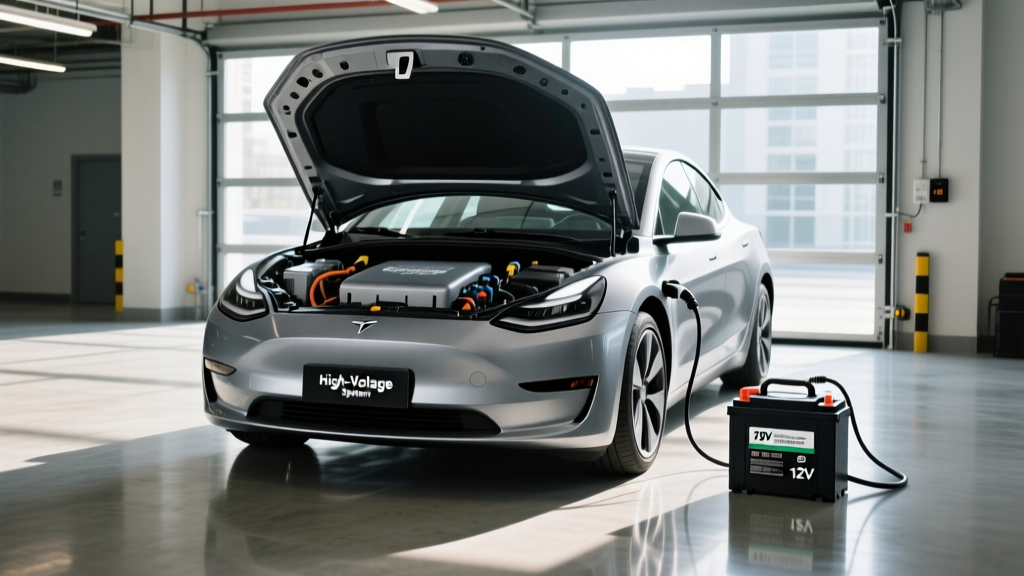
At its core, every EV charge session is a battery-to-battery energy transfer: grid-scale storage or generation feeds through a charger (Level 1, Level 2, or DC fast charger) into your vehicle's traction battery pack. The rate of that transfer (measured in kilowatts, or kW) and the total energy stored (measured in kilowatt-hours, or kWh) determine how quickly you're back on the road — and how much stress the battery endures over time.
Understanding this relationship is the single most important factor in maximizing your EV battery's lifespan, which routinely exceeds 150,000–200,000 miles when managed correctly.
LFP vs NMC: Which Battery Chemistry Should You Choose?
The two dominant lithium-ion chemistries in 2026 EVs are LFP (lithium iron phosphate) and NMC (nickel manganese cobalt), with NCA (nickel cobalt aluminum) used primarily by Tesla and a few others. Your chemistry determines range, longevity, cold-weather behavior, and even how you should charge day-to-day.
| Attribute | LFP (Lithium Iron Phosphate) | NMC / NCA (Nickel-based) |
|---|---|---|
| Energy Density | Lower (~160–180 Wh/kg cell-level) | Higher (~220–260 Wh/kg cell-level) |
| Typical Cycle Life | 3,000–5,000+ cycles to 80% SoH | 1,000–2,000 cycles to 80% SoH |
| Cold-Weather Performance | Weaker below 32°F; slower charge acceptance | Better low-temp conductivity |
| Recommended Daily SoC | 100% is fine; periodic full charges help BMS calibration | 80% daily; 100% only for trips |
| Cost (per kWh, pack-level) | ~$100–$115 | ~$125–$145 |
| Common 2026 Vehicles | Tesla Model 3/Y RWD, Ford Mustang Mach-E Select (LFP option), BYD models | Hyundai Ioniq 5/6, Chevy Equinox EV, Rivian R1S/R1T, BMW iX, Tesla Long Range/Performance |
| Thermal Stability | Excellent; higher thermal runaway threshold | Good; requires robust thermal management |
Which is better? It depends on your use case. If you commute daily, charge at home, and live in a mild climate, LFP's superior cycle life and 100% daily charging tolerance make it the longevity champion. If you need maximum range per charge, tow frequently, or regularly face sub-freezing winters, NMC/NCA's energy density and cold performance justify the trade-off. Neither is universally superior — the right choice maps to your driving pattern.
How Long Do EV Batteries Actually Last? Real Degradation Data
The fear that EV batteries need replacement every few years is not supported by fleet data. Here's what real-world degradation looks like across major platforms:
| Source / Platform | Mileage | Avg. Capacity Retained | Notes |
|---|---|---|---|
| Tesla Impact Report (2024 data) | 200,000 miles | ~85% | NMC/NCA packs; Model S/X fleet average |
| Geotab fleet study (6,300+ EVs) | 100,000 miles (~4 yrs) | ~90–92% | Cross-brand average; 2.3% avg annual loss |
| Recurrent Auto (15,000 EVs) | 80,000 miles | ~93% | Includes LFP and NMC chemistries |
| Taxi fleet Nissan Leaf (40 kWh) | 120,000 miles | ~78–82% | Air-cooled; frequent DCFC use accelerated loss |
| Hyundai Ioniq 5 (77.4 kWh NMC) | 60,000 miles (owner reports) | ~94–96% | Liquid-cooled; moderate DCFC usage |
Key takeaway: modern liquid-cooled battery packs with active thermal management lose roughly 1.5%–2.5% capacity per year under normal use. At that rate, a battery will retain 80–85% of original capacity after 150,000 miles — well above the threshold most manufacturers define as "degraded." Air-cooled packs (like older Nissan Leafs) degrade faster, especially in hot climates with frequent DC fast charging.
Battery Warranty Terms: What's Actually Covered?
Federal law mandates that EV battery warranties last a minimum of 8 years / 100,000 miles (10 years / 150,000 miles in California and states adopting CARB standards). Here's how major manufacturers structure their coverage in 2026:
| Manufacturer | Warranty Term | Capacity Threshold | Covers |
|---|---|---|---|
| Tesla | 8 yr / 120,000 mi (Model 3/Y); 8 yr / 150,000 mi (S/X) | 70% retention | Defects + excessive degradation |
| Hyundai / Kia | 10 yr / 100,000 mi | 70% retention | Defects + degradation below threshold |
| Ford | 8 yr / 100,000 mi | 70% retention | Defects + capacity loss below threshold |
| GM (Chevy/Cadillac) | 8 yr / 100,000 mi | 70% retention (60% for Bolt-era) | Defects + degradation |
| Rivian | 8 yr / 175,000 mi (R1S/R1T) | 70% retention | Defects + degradation |
| BMW | 8 yr / 100,000 mi | 70% retention | Defects + degradation |
What triggers a warranty claim? If your battery's State of Health (SoH) drops below the stated threshold within the warranty period, the manufacturer will repair or replace modules (or the full pack) to bring capacity back above that line. In practice, very few batteries hit 70% within 100,000 miles unless subjected to extreme abuse — constant DC fast charging in desert heat without preconditioning, for example. Most warranty claims involve manufacturing defects (bad cell groups, BMS faults, coolant leaks) rather than gradual degradation.
EV Battery Replacement Cost: What to Budget and When It's Needed
Out-of-warranty battery replacement is the specter that haunts EV skeptics. Here's the current cost landscape for 2026:
| Vehicle / Pack Size | Battery Cost (Parts) | Labor | Total Estimated | When Typically Needed |
|---|---|---|---|---|
| Tesla Model 3 RWD (~60 kWh LFP) | $7,000–$9,000 | $1,500–$2,500 | $8,500–$11,500 | Rarely before 250,000+ mi |
| Hyundai Ioniq 5 (77.4 kWh NMC) | $10,000–$13,000 | $2,000–$3,000 | $12,000–$16,000 | Rarely before 200,000+ mi |
| Ford F-150 Lightning Ext. Range (131 kWh NMC) | $18,000–$22,000 | $2,500–$4,000 | $20,500–$26,000 | Rarely before 180,000+ mi |
| Chevy Equinox EV (85 kWh NMC) | $11,000–$14,000 | $2,000–$3,000 | $13,000–$17,000 | Rarely before 200,000+ mi |
| Rivian R1T Dual-Motor (106 kWh NMC) | $14,000–$18,000 | $2,500–$3,500 | $16,500–$21,500 | Rarely before 180,000+ mi |
Context that matters: the vast majority of EV batteries never need full replacement during original ownership. Data from Recurrent Auto shows that fewer than 5% of EVs in their study cohort required battery replacement, and most of those were early-generation vehicles or manufacturing-defect cases covered under warranty. Pack prices have fallen from over $1,200/kWh in 2010 to roughly $110–$130/kWh in 2026, and fueleconomy.gov continues to track improving longevity metrics. Many manufacturers also offer module-level replacement (swapping only degraded cell groups rather than the entire pack), which can cut costs by 50–70%.
How to Charge Battery to Battery: Maximizing Health and Longevity
Every charge session is a battery-to-battery energy transfer, and how you charge matters as much as how often. Here's the evidence-based framework for preserving your traction battery:
Daily Charging Habits
- NMC/NCA owners: Set your charge limit to 80% for daily use. Reserve 100% for road trips, and try to charge to 100% close to departure time rather than letting the battery sit full overnight.
- LFP owners: Charge to 100% at least once per week. LFP cells have a flatter voltage curve, and the Battery Management System (BMS) needs periodic full charges to accurately estimate remaining capacity and balance cells.
- Avoid deep discharge: Try not to let SoC drop below 10–15% regularly. Occasional runs to 5% won't cause damage, but habitual deep cycling accelerates wear.
DC Fast Charging Strategy
- DC fast charging (50–350 kW) is not inherently harmful — modern thermal management keeps cell temps in check. But exclusive reliance on DCFC (never using Level 2) correlates with slightly faster degradation in fleet data.
- Use DC fast charging for road trips and when needed; rely on Level 2 home charging for daily top-ups.
- Precondition the battery before fast charging. Most EVs do this automatically when you navigate to a charger (Tesla, Hyundai, Ford, GM). Preconditioning warms the pack to ~95°F, enabling faster charge acceptance and reducing lithium plating risk in cold weather.
Temperature Management
- Extreme heat is the primary degradation accelerator. If you live in Arizona or Texas, park in shade or a garage when possible. The battery's thermal management system runs even when parked, but prolonged 110°F+ ambient exposure stresses cells.
- Extreme cold reduces range (expect 20–30% loss at 20°F) and slows charging speeds but does not cause permanent damage — the BMS restricts charge rate until cells warm up.
- Keep the vehicle plugged in during temperature extremes when possible. The grid powers the thermal management system rather than draining the battery.
Storage
- If storing the vehicle for weeks, set SoC to ~50% and leave it plugged into Level 1 or Level 2 with a charge limit. The vehicle will maintain optimal SoC and run thermal management as needed.
Monitoring Your Battery's State of Health (SoH)
State of Health (SoH) is a percentage representing your battery's current maximum capacity relative to its original capacity when new. A 77.4 kWh battery at 93% SoH can store approximately 72 kWh when fully charged.
How to Check SoH
- In-vehicle displays: Tesla shows battery health in the service menu (Software → Service → Battery Health). Hyundai/Kia provides SoH via the dealer diagnostic tool; ask during service visits. BMW iDrive displays a battery health percentage under vehicle settings.
- OBD-II dongles + apps: Tools like OBDLink SX paired with apps such as EV Notify or Car Scanner can read SoH directly from the BMS on most brands. Cost: ~$40–$60 for the adapter.
- Third-party services: Recurrent Auto (free enrollment) provides battery health reports and compares your degradation to similar vehicles in their fleet. Geotab offers fleet-level battery health analytics.
- Dealer diagnostics: Any authorized service center can pull a full battery health report during routine service. Request this annually or before a warranty claim.
What's normal? Seeing 95–97% SoH after year one, 90–94% after years two through four, and a gradual taper to 85–88% by year eight is typical for liquid-cooled packs. If your SoH drops more than 5% in a single year after the initial break-in period, contact your dealer — that may indicate a defective cell module.
Vehicle-to-Vehicle (V2V) and Vehicle-to-Home (V2H) Charging
If your "battery-to-battery" question is about using one EV to charge another or power your home, here's the 2026 landscape:
- V2L (Vehicle-to-Load): Available on Hyundai Ioniq 5/6, Kia EV6/EV9, Ford F-150 Lightning, and Rivian R1S/R1T. Provides 1.9–7.2 kW of 120V/240V AC power through an adapter. Enough to run appliances, tools, or trickle-charge another EV in an emergency — but not fast enough for practical EV-to-EV charging on the road.
- V2H (Vehicle-to-Home): Ford's Intelligent Backup Power (via the Charge Station Pro) and GM's upcoming PowerShift system let the truck power your home during outages — typically 9.6 kW continuous, enough for essential circuits for 3+ days from a 131 kWh pack.
- V2V (Vehicle-to-Vehicle): No mainstream 2026 EV supports direct high-speed DC vehicle-to-vehicle charging. You can use V2L to plug a portable Level 1 charger into one EV and connect it to another, but at ~1.4 kW, that adds roughly 4–5 miles of range per hour — strictly an emergency measure.
- V2G (Vehicle-to-Grid): Still in pilot programs in most US markets. California utilities (PG&E, SCE) are running limited V2G trials with specific models. Widespread availability is expected 2027–2029 pending utility infrastructure upgrades.
Emerging Battery Tech: Solid-State and Silicon Anodes
Looking beyond current lithium-ion, two technologies are approaching commercialization:
- Solid-state batteries: Replace the liquid electrolyte with a solid ceramic or polymer, enabling higher energy density (~400+ Wh/kg projected), faster charging, and improved safety. Toyota has announced a solid-state EV for 2027–2028 (preliminary; not yet available for purchase). Samsung SDI and QuantumScape are supplying prototype cells to automakers. Realistic mass-market availability: 2028–2030.
- Silicon anode batteries: Replacing graphite anodes with silicon increases energy density by 20–40%. Sila Nanotechnologies and Group14 are already supplying silicon-dominant anode materials for select 2025–2026 model-year vehicles (notably the Mercedes G-Class EV). Expect broader adoption by 2027.
- Sodium-ion batteries: Lower-cost alternative to lithium-ion for budget EVs and stationary storage. CATL and BYD are producing sodium-ion cells; US-market vehicles using this chemistry are anticipated in 2027–2028 for entry-level models.
These technologies are forward-looking and not yet available in most consumer EVs. Current LFP and NMC chemistries remain the practical choice for 2026 buyers and will continue to dominate through at least 2030.
Frequently Asked Questions
How long do EV batteries last in years and miles?
Most modern liquid-cooled EV batteries retain 80–85% of original capacity at 150,000–200,000 miles (roughly 12–15 years of average driving). Fleet data from Tesla, Geotab, and Recurrent Auto consistently shows annual degradation of 1.5–2.5% under normal use. Many EV batteries will outlast the vehicle's other mechanical components.
How much does an EV battery cost to replace?
Full pack replacement costs range from approximately $8,500 for a Tesla Model 3 LFP pack to $26,000 for a Ford F-150 Lightning 131 kWh pack, including labor. However, full replacements are rarely needed — most batteries outlive the car, and module-level repairs (replacing only defective cell groups) can cost 50–70% less. Warranty coverage (8 years / 100,000+ miles minimum) protects against premature degradation.
What does the EV battery warranty cover?
Federal law requires a minimum of 8 years / 100,000 miles (10 years / 150,000 miles in CARB states). Coverage includes manufacturing defects and capacity loss below a stated threshold — typically 70% of original capacity. If your battery's State of Health drops below that threshold within the warranty period, the manufacturer repairs or replaces it at no cost. Check your specific owner's manual for exact terms, as they vary by brand and model year.
How do I check and maximize my EV battery health?
Check SoH through your vehicle's service menu, an OBD-II adapter with an EV app, or a dealer diagnostic report. Maximize longevity by: charging NMC/NCA to 80% daily (100% for LFP), avoiding habitual deep discharge below 10%, using Level 2 for daily charging and reserving DCFC for trips, preconditioning before fast charging, parking in shade during extreme heat, and keeping the vehicle plugged in during temperature extremes.
LFP vs NMC — which battery chemistry is better for me?
Choose LFP if you prioritize longevity (3,000–5,000+ cycle life), want to charge to 100% daily without concern, commute in mild climates, and value lower cost. Choose NMC/NCA if you need maximum range per charge, frequently drive in sub-freezing temperatures, tow heavy loads, or need the highest energy density for long road trips. Neither chemistry is universally better — the right choice depends on your driving pattern and climate.
Can I use one EV to charge another EV's battery?
Technically yes, but practically it's limited. Vehicles with V2L capability (Hyundai Ioniq 5/6, Kia EV6/EV9, Ford F-150 Lightning) can output 120V/240V AC power through an adapter. You could plug a portable Level 1 charger into the V2L outlet and connect it to another EV, but at ~1.4 kW you'd add only about 4–5 miles of range per hour. This is an emergency measure, not a practical charging strategy.
Does frequent DC fast charging damage the battery?
Modern thermal management systems mitigate most DCFC-related stress. Fleet data shows that vehicles using DC fast charging exclusively (never Level 2) experience slightly faster degradation — roughly 0.5–1% additional annual loss compared to primarily Level 2 charging. For road trips, DCFC is perfectly fine. For daily use, Level 2 home charging is gentler and more cost-effective. Always precondition the battery before fast charging to optimize charge speed and reduce cell stress.