The Short Answer: Your EV Doesn't Need a Battery Tender — But It Does Need Smart Care
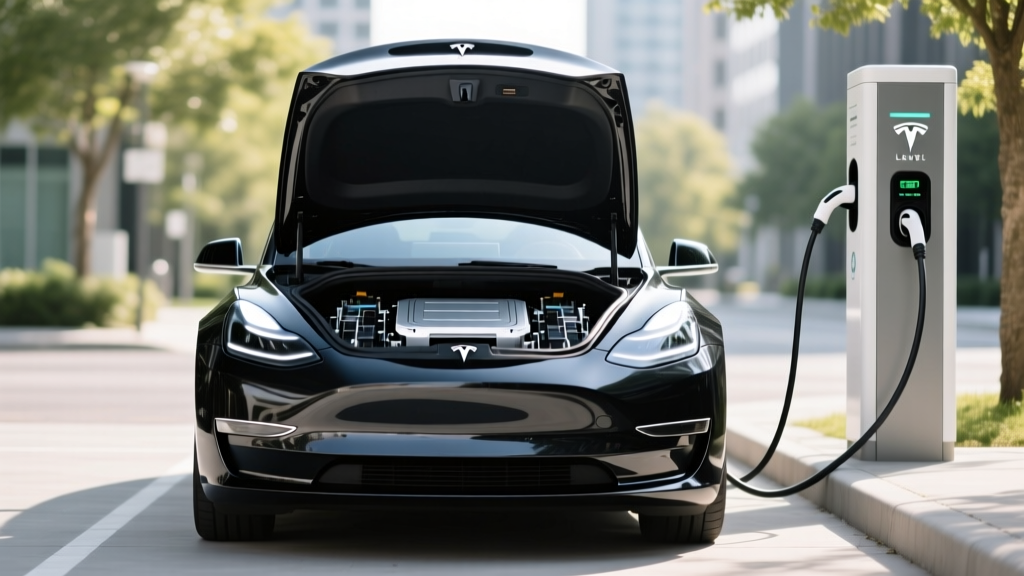
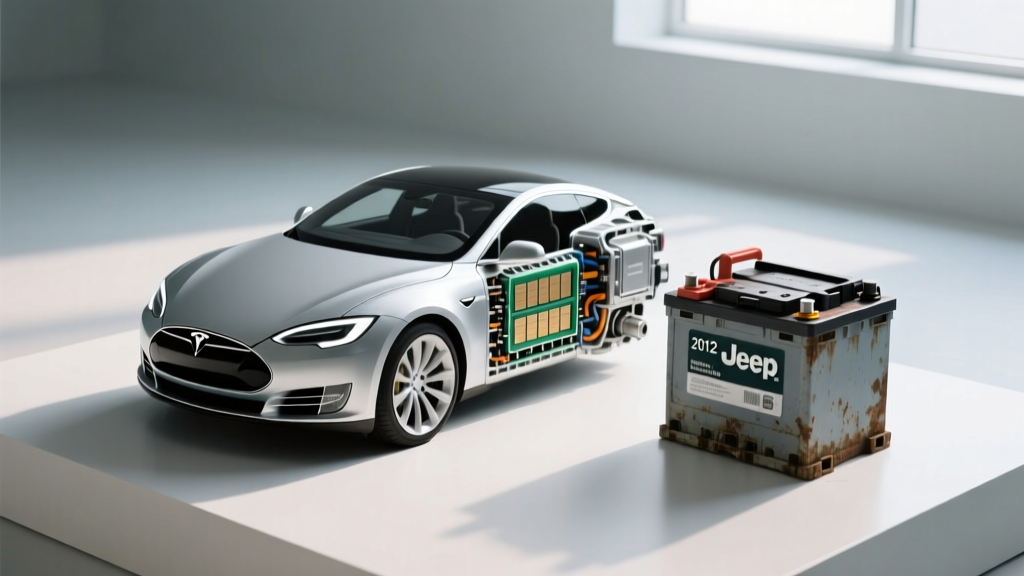
If you've owned a gas car with a seasonal storage routine, you probably know the drill: hook up a battery tender or trickle charger to keep the 12V battery alive over winter. Naturally, many new EV owners wonder whether their electric vehicle needs the same treatment for its much larger, much more expensive high-voltage traction battery.
Here's the critical distinction: a battery tender or trickle charger is designed for 12V lead-acid batteries, not for the 400V–800V lithium-ion or lithium iron phosphate (LFP) traction batteries in modern EVs. Plugging a conventional battery tender into an EV's high-voltage system is impossible, dangerous, and entirely unnecessary.
What your EV does need is proper state-of-charge management, thermal awareness, and an understanding of how your specific battery chemistry degrades over time. The traction battery in a 2026 EV is engineered to outlast the car itself — most will retain 85–90% of original capacity after 150,000 miles. But how you charge, store, and drive still matters.
This guide covers exactly what affects your EV battery's lifespan, what the warranty actually protects, what a replacement costs if you ever need one, and whether any "EV battery tender" products are worth your money.
LFP vs NMC: Which Battery Chemistry Is in Your EV?
The single most important factor in your battery's behavior is its chemistry. As of 2026, two dominant chemistries power the US EV market, and they behave differently enough that your care strategy should change accordingly.
| Attribute | LFP (Lithium Iron Phosphate) | NMC / NCA (Nickel Manganese Cobalt / Nickel Cobalt Aluminum) |
|---|---|---|
| Energy Density | Lower (~160 Wh/kg cell-level) | Higher (~250–300 Wh/kg cell-level) |
| Cycle Life | 3,000–5,000+ cycles to 80% SoH | 1,000–2,000 cycles to 80% SoH |
| Cold-Weather Performance | More range loss in freezing temps (~30–40%) | Better cold performance (~20–30% loss) |
| Optimal Daily Charge Limit | 100% recommended (Tesla, Ford, BYD) | 80% recommended for daily use |
| Cost per kWh | Lower (~$80–100/kWh pack-level) | Higher (~$110–140/kWh pack-level) |
| Thermal Stability | Excellent — less prone to thermal runaway | Good — requires more active thermal management |
| Common 2026 Applications | Tesla Model 3/Y RWD, Ford Mustang Mach-E Select (LFP variant), BYD models, Rivian Standard | Tesla Long Range/Performance, Hyundai Ioniq 5/6, BMW iX, GM Ultium-based models, Porsche Taycan |
| SoC Estimation Accuracy | Flatter voltage curve makes % harder to estimate | More linear voltage curve — more accurate gauge |
The practical takeaway: If your EV has an LFP pack, you should actually charge to 100% regularly — LFP cells benefit from periodic full charges for cell balancing and accurate state-of-charge calibration. If you have NMC/NCA, daily charging to 80% and reserving 100% for road trips extends long-term health. Check your owner's manual or the manufacturer's app — most 2026 models now specify the chemistry and recommend a charge limit.
Real EV Battery Degradation: What the Data Actually Shows
The fear of catastrophic battery failure drives a lot of EV hesitation. The data tells a far less dramatic story. Modern EV batteries degrade gradually, not suddenly, and the rate slows significantly after the first year.
Based on aggregated fleet data from sources like Geotab's long-term EV battery study and manufacturer-reported figures, here's what typical degradation looks like:
| Timeframe | Average Capacity Retained | Notes |
|---|---|---|
| Year 1 (~12,000 mi) | 95–97% | Initial drop as cells stabilize; most pronounced in first 6 months |
| Year 3 (~36,000 mi) | 91–94% | Degradation curve flattens significantly |
| Year 5 (~60,000 mi) | 88–92% | Still well above warranty threshold |
| Year 8 (~100,000 mi) | 83–89% | Approaching typical warranty expiry; most packs above 80% |
| Year 10 (~130,000 mi) | 80–86% | Range reduction noticeable but functional for most owners |
Several factors make these averages conservative. Tesla's 2024 Impact Report showed their fleet averaging less than 10% degradation at 200,000 miles. Hyundai/Kia's Ultium-competitive E-GMP packs have shown similar resilience. LFP packs in particular are tracking toward even slower degradation curves thanks to their superior cycle life.
What degradation actually feels like: A 2024 Hyundai Ioniq 5 with an EPA-estimated 303-mile range (Long Range AWD) that has lost 10% capacity by year 6 would show roughly 273 miles of range — still plenty for daily driving and most road trips with a single fast-charge stop.
What Does the Battery Warranty Actually Cover?
Federal law mandates a minimum EV battery warranty of 8 years or 100,000 miles (whichever comes first). In California Air Resources Board (CARB) states — which include California, Colorado, Connecticut, Maine, Massachusetts, New Jersey, New York, Oregon, Rhode Island, Vermont, Virginia, and Washington — that extends to 10 years or 150,000 miles.
But the details matter. Here's how major manufacturers structure their coverage as of 2026:
| Manufacturer | Warranty Period | Mileage Limit | Capacity Threshold | Notes |
|---|---|---|---|---|
| Tesla (Model 3/Y RWD — LFP) | 8 years | 120,000 mi | 70% retention | Higher mileage limit for LFP packs |
| Tesla (Model 3/Y LR/Perf, S/X) | 8 years | 120,000–150,000 mi | 70% retention | Varies by model |
| Hyundai / Kia | 10 years | 100,000 mi | 70% retention | Industry-leading term length |
| GM (Ultium-based) | 8 years | 100,000 mi | 70% retention | Covers battery and drive unit |
| Ford | 8 years | 100,000 mi | 70% retention | Includes high-voltage components |
| Rivian | 8 years | 175,000 mi | 70% retention | Higher mileage cap for adventure use |
| BMW | 8 years | 100,000 mi | 70% retention | Includes thermal management system |
Key warranty caveats:
- 70% is the magic number. Most warranties trigger only when capacity drops below 70% of original. A pack at 72% is "within spec" even if you feel the range loss.
- Warranty covers defects and abnormal degradation, not normal wear. If your pack slowly loses 25% over 8 years of heavy DC fast charging in Arizona heat, the manufacturer may argue that's expected use.
- Some warranties are transferable to second owners, which matters for resale value. Check before selling.
- Opening the pack or using unauthorized repair services can void coverage.
EV Battery Replacement Cost: When, Why, and How Much
Let's address the elephant in the room directly: most EV owners will never need a battery replacement. The pack is designed to outlast the vehicle's economic life. But if you plan to keep a car for 15+ years, buy a used EV with an already-degraded pack, or experience a manufacturing defect outside the warranty window, here's what the numbers look like.
| Vehicle | Battery Size (kWh) | Chemistry | Estimated Replacement Cost | When Typically Needed |
|---|---|---|---|---|
| Tesla Model 3 RWD | ~60 kWh | LFP | $8,000–$12,000 | Rarely; 200,000+ mi |
| Tesla Model Y Long Range | ~82 kWh | NMC | $12,000–$16,000 | Rarely; 150,000+ mi |
| Hyundai Ioniq 5 Long Range | ~77.4 kWh | NMC | $10,000–$15,000 | Rarely; 150,000+ mi |
| Ford Mustang Mach-E Extended | ~91 kWh | NMC | $14,000–$18,000 | Rarely; 150,000+ mi |
| Chevrolet Equinox EV | ~85 kWh | NMC (Ultium) | $12,000–$16,000 | Rarely; 150,000+ mi |
| Rivian R1T (Large Pack) | ~135 kWh | NMC | $18,000–$25,000 | Rarely; 175,000+ mi |
| Porsche Taycan (Performance Plus) | ~93.4 kWh | NMC | $20,000–$30,000 | Rarely; 150,000+ mi |
Important context on those numbers:
- Battery pack prices have fallen roughly 90% since 2010 and continue declining. By the time you actually need a replacement in the 2030s, costs will likely be significantly lower.
- Module-level replacement is increasingly available. Instead of replacing the entire pack, shops can swap individual degraded modules for $2,000–$5,000 depending on the vehicle.
- Third-party refurbishers and aftermarket options are emerging, though warranty implications vary.
- If you're buying a used EV, a pre-purchase battery health check (see below) is far more valuable than worrying about replacement cost.
What Actually Kills EV Batteries — and What Doesn't
Not all miles and charge cycles are created equal. Here's what genuinely accelerates degradation, ranked by impact:
High-Impact Degradation Factors
- Sustained high state of charge in NMC packs: Storing an NMC battery at 100% for days or weeks accelerates electrolyte decomposition. Charge to 80% for daily use and only hit 100% when you'll drive soon.
- Extreme heat exposure: Ambient temperatures above 95°F, especially combined with high SoC, are the single worst condition for lithium-ion longevity. Park in shade or a garage when possible. Precondition while plugged in.
- Frequent DC fast charging to high SoC: Occasional road-trip fast charging is fine. Daily reliance on 150+ kW DC charging — especially above 80% SoC where heat builds up — increases wear. The U.S. Department of Energy notes that thermal stress from high-rate charging is a primary degradation driver.
- Deep discharges to 0%: Letting any lithium-ion pack sit at or near 0% for extended periods can cause copper dissolution in the anode. Try not to drop below 10% regularly, and never store the car at 0%.
Low-Impact or Myth Factors
- Occasional DC fast charging: A few road trips per year won't meaningfully affect lifespan. Tesla's fleet data shows negligible difference between frequent Supercharger users and home-charging-only owners.
- Regenerative braking: The brief charge pulses from regen are well within the battery's design tolerance.
- Cold weather charging (with preconditioning): Modern EVs warm the pack before accepting a charge. Just make sure preconditioning is active.
- Driving in cold weather: Range loss in cold is temporary — the capacity returns when temperatures rise.
Do You Need an "EV Battery Tender" for Long-Term Storage?
If you're storing an EV for weeks or months (snowbird lifestyle, military deployment, extended travel), you do not need a battery tender for the traction battery. Instead, follow this protocol:
- Set the charge limit to 50% (or the manufacturer's recommended storage SoC — Tesla recommends 50%, GM recommends 30–50%).
- Leave the vehicle plugged into a Level 1 or Level 2 charger. The vehicle's battery management system (BMS) will maintain the pack automatically, topping up if vampire drain pulls it down.
- Disable cabin preconditioning schedules and Sentry Mode / always-on features to minimize parasitic drain.
- For the 12V auxiliary battery — yes, some EVs still use a conventional 12V lead-acid battery that can die if the car sits unplugged for too long. If your EV has a lithium 12V (increasingly common in 2026 models from Hyundai, Tesla, and Rivian), this is less of a concern. Check your owner's manual.
Products marketed as "EV battery tenders" are almost always 12V trickle chargers repackaged with EV branding. They serve the 12V system only and have zero effect on the traction battery.
How to Check Your EV Battery's State of Health (SoH)
State of Health (SoH) is the percentage of original capacity your battery can still hold. A new EV has 100% SoH; a pack at 85% SoH holds 85% of its original kWh.
Method 1: In-Vehicle Diagnostics
Some 2026 models display SoH directly in the infotainment system or app. Hyundai's Bluelink, BMW's Connected Drive, and certain Tesla software versions show battery health metrics. Check your settings under "Battery" or "Vehicle Health."
Method 2: OBD-II Scan Tools
Devices like the OBDLink SX or dedicated EV tools (such as the Carly app with a Bluetooth adapter) can read SoH data from the BMS. This works well for Hyundai/Kia, BMW, VW Group, and Nissan vehicles. Tesla owners can access detailed battery data through third-party apps like Tessie or TeslaFi.
Method 3: The Manual Calculation
Charge to 100% (on an NMC pack, do this just for the test). Note the displayed range. Compare it to the original EPA range adjusted for your typical driving conditions. For example, if your Ioniq 5 originally displayed 290 miles at 100% and now shows 255 miles, you're at roughly 88% SoH — normal for a 3-year-old pack.
Method 4: Dealer Diagnostic Report
Request a battery health report during service. Most dealerships can pull a detailed SoH reading, cell voltage balance data, and degradation curve. This is especially valuable when buying a used EV.
Beyond Lithium-Ion: Solid-State and Silicon Anode Batteries
Next-generation battery technologies promise step-change improvements, but realistic timelines matter more than press-release enthusiasm.
Solid-state batteries replace the liquid electrolyte with a solid material, offering higher energy density, faster charging, and improved safety. Toyota has announced solid-state-equipped EVs for limited production around 2027–2028, while Samsung SDI targets 2027. However, manufacturing scale-up remains the primary bottleneck. Expect solid-state to appear first in premium/low-volume applications before reaching mainstream pricing — likely not before 2030 for sub-$45,000 vehicles.
Silicon anode batteries (used in limited form by companies like Sila Nanotechnologies, supplying Mercedes-Benz and others) increase energy density by replacing graphite anodes with silicon. These are closer to market — the Mercedes G-Class 580e already uses a silicon-dominant anode. Expect broader adoption by 2027–2028 as production costs decline.
Sodium-ion batteries are emerging as a low-cost alternative for budget EVs and stationary storage. CATL and BYD are producing them at scale in China. US-market adoption for passenger vehicles remains uncertain but could appear in entry-level models by 2028.
None of these technologies are available in current 2026 US-market EVs. If you're buying now, today's LFP and NMC chemistries are mature, well-understood, and backed by robust warranty coverage.
Frequently Asked Questions
How long do EV batteries last in years and miles?
Most modern EV batteries are designed to last 15–20 years or 150,000–200,000+ miles before dropping below 80% capacity. Fleet data from Tesla, Geotab, and others consistently shows average degradation of 1–2% per year after the first year. The battery will almost certainly outlast the rest of the car's useful life. According to the National Highway Traffic Safety Administration, battery-related failures in modern EVs are statistically rare compared to powertrain failures in ICE vehicles.
How much does an EV battery cost to replace?
As of 2026, a full pack replacement ranges from roughly $8,000 for smaller LFP packs (Tesla Model 3 RWD) to $25,000–$30,000 for large premium packs (Rivian R1T, Porsche Taycan). However, most owners never need a replacement. Module-level repairs cost $2,000–$5,000, and prices continue to fall as battery manufacturing scales and recycling infrastructure matures.
What does the EV battery warranty cover?
Federal law requires at least 8 years / 100,000 miles of coverage. The warranty guarantees the battery will retain at least 70% of its original capacity. If it drops below that threshold within the warranty period, the manufacturer must repair or replace it at no cost. In CARB states, coverage extends to 10 years / 150,000 miles. The warranty typically covers the battery pack, high-voltage wiring, and associated control modules.
How do I maximize my EV battery's health?
For NMC packs: charge to 80% daily, avoid storing above 90% or below 10%, precondition before fast charging, and park in shade during extreme heat. For LFP packs: charge to 100% at least once a week for cell balancing, and follow the same temperature guidelines. For all chemistries: minimize time spent at extreme SoC levels, use home Level 2 charging as your primary method, and keep the vehicle plugged in during long storage at ~50% SoC.
LFP vs NMC — which battery is better?
Neither is universally better — it depends on your priorities. Choose LFP if you want maximum longevity (5,000+ cycle life), lower cost, better thermal safety, and don't mind slightly less range in cold weather. Choose NMC if you need maximum range, better cold-weather performance, and faster DC charging speeds. For most daily commuters, LFP's longevity and 100% charge tolerance make it the pragmatic choice. For road-trip-heavy drivers in cold climates, NMC's energy density and cold performance win.
Can I use a battery tender on my EV?
A conventional battery tender (trickle charger) only works on the 12V auxiliary battery, not the high-voltage traction battery. The traction battery is managed by the vehicle's onboard BMS and doesn't need external maintenance charging. If you're storing the EV, simply leave it plugged into a Level 1 or Level 2 charger at 50% SoC — the car handles everything else. For the 12V battery in older EVs with lead-acid 12V systems, a standard battery tender is fine and sometimes recommended for long storage.
Does fast charging damage my EV battery?
Occasional DC fast charging does not meaningfully degrade your battery. Tesla's fleet data shows negligible capacity difference between frequent Supercharger users and home-only chargers. However, daily reliance on high-power DC charging (especially 250+ kW) in hot climates, combined with charging to high SoC, does accelerate wear. The heat generated at high charge rates is the issue — not the charging itself. Use DC fast charging for road trips and stick to Level 2 at home for daily needs.