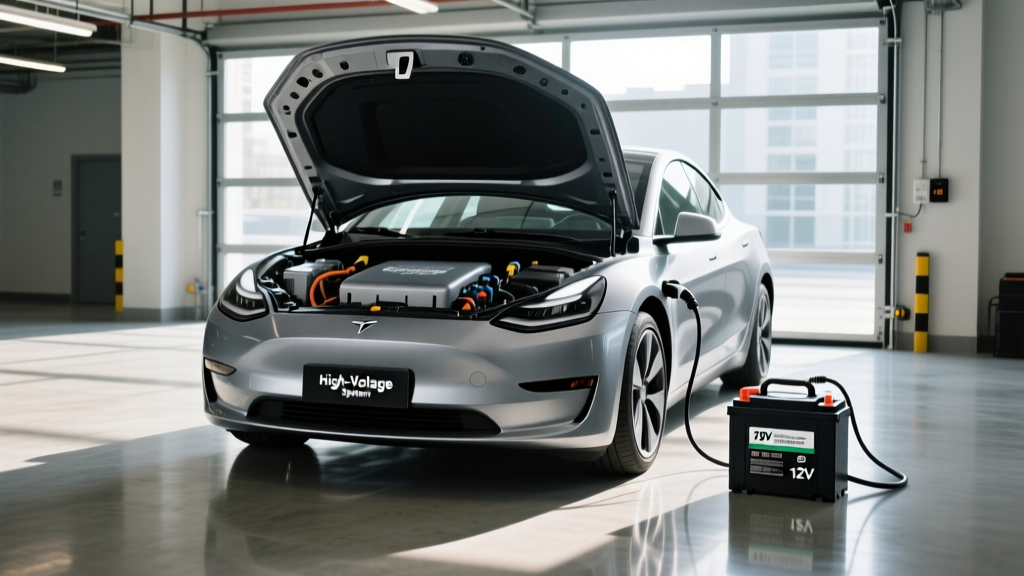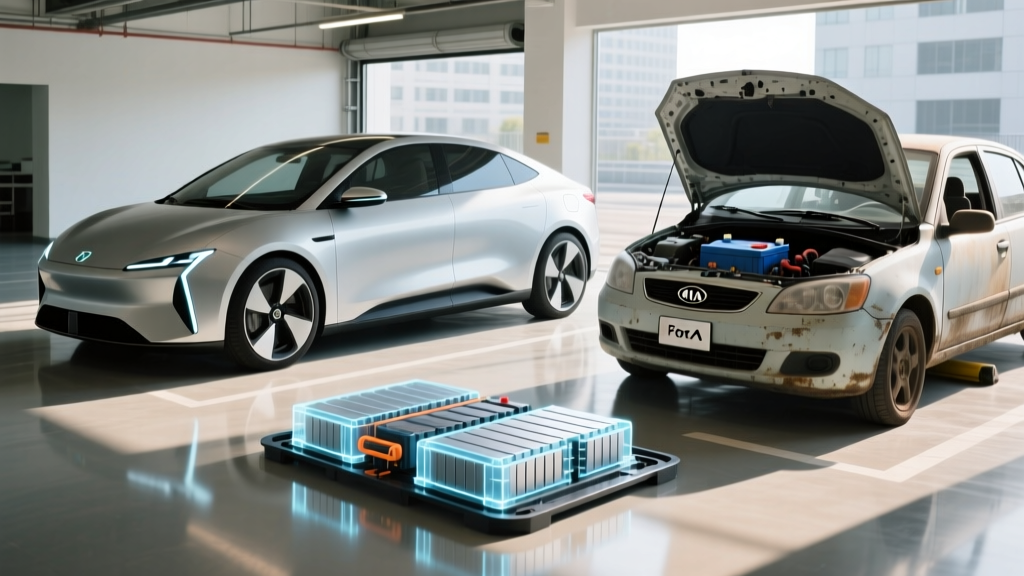
If you've searched for a 2010 Kia Forte battery, you're likely dealing with a straightforward 12V lead-acid replacement — a $120 to $180 part that takes ten minutes to swap. But that search also surfaces a useful contrast: the gap between a conventional car's simple electrical system and a modern electric vehicle's high-voltage traction battery. Understanding that gap is essential for anyone shopping for an EV in 2026 or trying to maximize the lifespan of one they already own.
This guide covers everything current and prospective EV owners need to know about battery chemistry, degradation, warranties, replacement costs, and care — with hard data, not marketing spin.
The 2010 Kia Forte Battery vs. an EV Traction Battery
The 2010 Kia Forte uses a 12V lead-acid battery (Group 121R or 47, depending on trim) that powers the starter motor, lights, and accessories. It typically lasts 3–5 years and costs $120–$180 to replace. It has nothing in common with the 60–100+ kWh lithium-ion traction batteries that propel modern EVs.
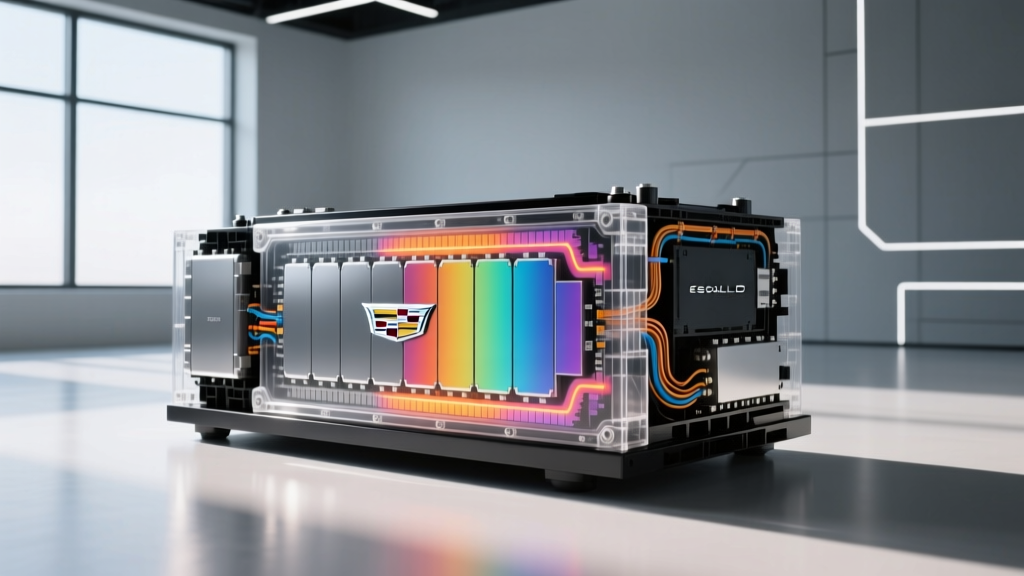
An EV's traction battery is the single most expensive component in the vehicle, stores enough energy to drive 250–400 miles, and is engineered to last the lifetime of the car. But the terminology overlap causes real confusion. When EV owners talk about "battery replacement," they mean a multi-thousand-dollar high-voltage pack — not the $150 auxiliary 12V battery that EVs also carry for accessories.
Battery Chemistry in 2026: LFP vs NMC vs NCA
The two dominant lithium-ion chemistries in 2026 EVs are LFP (Lithium Iron Phosphate) and NMC/NCA (Nickel Manganese Cobalt / Nickel Cobalt Aluminum). Each has distinct trade-offs that affect range, longevity, cold-weather performance, and price.
| Attribute | LFP (Lithium Iron Phosphate) | NMC/NCA (Nickel-based) |
|---|---|---|
| Energy density | ~160–180 Wh/kg (lower — heavier pack for same range) | ~220–260 Wh/kg (higher — lighter, more range per kg) |
| Cycle life | 3,000–5,000+ cycles to 80% capacity | 1,000–2,000 cycles to 80% capacity |
| Cold performance | Weaker — ~25–35% range loss below 20°F | Better — ~20–30% range loss below 20°F |
| Fast-charge tolerance | Excellent — handles frequent DCFC well | Good — but frequent DCFC accelerates degradation |
| Recommended SoC | Can charge to 100% daily (no upper-limit stress) | Best kept at 80% daily; 100% only for trips |
| Cost | ~$100–$120/kWh at pack level (cheaper) | ~$130–$160/kWh at pack level (pricier) |
| Common in (2026) | Tesla Model 3/Y RWD, BYD models, Ford Mustang Mach-E Select | Hyundai Ioniq 5/6, Tesla Long Range, Rivian, BMW iX |
Which is better? There is no universal winner. LFP is the better choice if you want maximum longevity, plan to keep the car 10+ years, charge at home daily, and live in a moderate climate. NMC is better if you need maximum range per charge, live in a cold climate, or prioritize lighter vehicle weight. Both chemistries are proven and reliable — the right choice depends on your driving pattern.
How Long Do EV Batteries Actually Last?
The short answer: most EV batteries outlast the car they're installed in. But "outlast" doesn't mean zero degradation. Here's what the data shows.
- Tesla Model 3/Y (NMC, 2018–2022): Average ~10–12% capacity loss at 150,000 miles, per Tesla's 2024 Impact Report and aggregated fleet data from Recurrent Auto.
- Chevrolet Bolt EV/EUV (NMC, 2017–2023): Average ~8–10% loss at 100,000 miles. Some early 2017 models experienced higher degradation linked to thermal management, addressed under recall.
- Hyundai Ioniq 5 (NMC, 2022–2025): Early fleet data shows ~5–7% loss at 60,000 miles with typical home-charging patterns.
- Tesla Model 3 RWD (LFP, 2022–2025): Projected <5% loss at 100,000 miles based on LFP cycle-life characteristics and early fleet data.
- Nissan Leaf (passive air cooling, 2011–2017): Notorious for 20–30%+ loss at 80,000–100,000 miles due to lack of active thermal management. A cautionary example of why cooling matters.
Most modern EVs with active liquid thermal management (virtually all 2020+ models) degrade at a rate of roughly 1.5–2.5% per year under normal use. The steepest drop occurs in the first year or two (often 3–5%), after which degradation slows to a gradual linear decline. A 2026 EV with a 300-mile EPA range should still deliver 255–275 miles of range at 150,000 miles — well within usable territory.
What Does the Battery Warranty Cover?
Federal law mandates that EV batteries carry a minimum warranty of 8 years / 100,000 miles (10 years / 150,000 miles in California and states that follow CARB emissions rules). But the details matter.
| Vehicle | Warranty Term | Capacity Threshold | Notes |
|---|---|---|---|
| Tesla Model 3/Y | 8 yr / 120,000 mi (LR/AWD) or 100,000 mi (RWD) | 70% retention | Covers defects and excessive degradation below 70% |
| Hyundai Ioniq 5/6 | 10 yr / 100,000 mi | 70% retention | Among the longest terms in the industry |
| Ford Mustang Mach-E | 8 yr / 100,000 mi | 70% retention | Standard across Ford EV lineup |
| Chevrolet Equinox EV | 8 yr / 100,000 mi | 60% retention | Lower threshold — note the 60% vs 70% |
| Rivian R1T/R1S | 8 yr / 175,000 mi | 70% retention | Higher mileage cap reflects truck use case |
What "70% retention" means: If your 80 kWh battery (with ~300 miles of range) degrades to below 56 kWh usable capacity within the warranty period, the manufacturer must repair or replace it — typically by swapping in a refurbished pack that meets the threshold. In practice, very few modern EVs hit this threshold under normal use. The warranty is a safety net, not a prediction.
EV Battery Replacement Cost: What to Expect
This is the question that drives the most anxiety, and it deserves honest numbers rather than fear-mongering headlines.
| Vehicle / Pack Size | New Pack Cost | Refurbished Pack Cost | Typical Replacement Timeline |
|---|---|---|---|
| Tesla Model 3 RWD (60 kWh LFP) | $12,000–$16,000 | $8,000–$11,000 | Rarely needed before 250,000+ mi |
| Hyundai Ioniq 5 (77.4 kWh NMC) | $15,000–$20,000 | $10,000–$14,000 | Rarely needed before 200,000+ mi |
| Ford F-150 Lightning (131 kWh Extended) | $22,000–$30,000 | $15,000–$20,000 | Too early for fleet data (launched 2022) |
| Chevrolet Bolt EV (65 kWh NMC) | $14,000–$16,000 | $9,000–$12,000 | Rarely needed; early recalls addressed defect risk |
| Nissan Leaf (40/62 kWh, passive cooling) | $6,500–$9,000 | $4,500–$6,500 | More common at 100,000–150,000 mi due to thermal design |
Context that matters: Pack-level battery prices have fallen from over $1,000/kWh in 2010 to roughly $110–$140/kWh in 2026, per BloombergNEF tracking. They're projected to drop below $100/kWh as LFP adoption grows and manufacturing scales. Most EV batteries never need replacement — data from Recurrent Auto, which tracks over 15,000 EVs, shows that the vast majority retain above 85% capacity at 100,000 miles. The cars are typically totaled, traded, or scrapped before the battery fails.
Factors That Accelerate (or Slow) Battery Degradation
Not all miles are equal when it comes to battery wear. Here's what actually moves the needle on degradation, ranked by impact:
- ✅ Do: Charge mostly at Level 2 (home/work). Slow charging generates less heat and stress. This is the single best habit for longevity.
- ✅ Do: Keep NMC batteries between 20–80% SoC for daily use. Charge to 100% only when you need the full range for a trip. LFP batteries can be charged to 100% regularly — their chemistry tolerates it.
- ✅ Do: Precondition your battery before DC fast charging. Most EVs do this automatically when you navigate to a charger. A warm battery charges faster and with less stress.
- ✅ Do: Use your car's scheduled charging feature to avoid sitting at high SoC for extended periods.
- ⚠️ Limit: Frequent DC fast charging. Occasional road-trip DCFC is fine. But daily DCFC at 150+ kW accelerates degradation by 1–3% over the battery's life compared to Level 2-only charging.
- ⚠️ Limit: Extended storage at 100% or below 10% SoC. If parking for weeks, aim for ~50% charge.
- ⚠️ Limit: Repeated exposure to extreme heat. Parking in direct sun in 110°F+ climates without thermal management running is stressful. Most modern EVs run cooling even when parked, but garage parking helps.
- ❌ Avoid: Letting the battery sit at 0% for extended periods. Deep discharge can damage cells irreversibly.
The biggest misconception is that fast charging "destroys" batteries. It doesn't — modern battery management systems (BMS) carefully control charge rates and temperatures. But exclusive reliance on DCFC does measurably increase degradation compared to home Level 2 charging. Think of it like highway miles vs. city miles on a gas engine: both work, but one is gentler.
How to Monitor Your Battery's State of Health (SoH)
State of Health (SoH) is the percentage of your battery's original usable capacity that remains. A new EV starts at 100% SoH; at 70% SoH, you've lost 30% of your range. Here's how to check it:
- In-car displays: Tesla shows battery health in the Service menu (software 2024.38+). Hyundai/Kia provides a battery health readout in the EV settings. Not all brands offer this natively.
- OBD-II apps: Tools like Leaf Spy (Nissan Leaf), Scan My Tesla, or Carista can read SoH from the BMS via a Bluetooth OBD-II dongle (~$30–$50 for the dongle).
- Recurrent Auto: A free service that connects to your EV's telematics and provides ongoing SoH tracking, range reports, and fleet comparisons. Available for Tesla, Chevrolet Bolt, Ford Mach-E, Hyundai/Kia, and others.
- Dealer diagnostic: Any authorized service center can run a battery health report. Ask for one during routine service — it's typically free under warranty.
For used-EV buyers, a SoH check is as essential as a compression test was for gas cars. If the seller won't provide one, that's a red flag. A healthy used EV should show 88%+ SoH at 50,000 miles and 80%+ at 100,000 miles for NMC packs; LFP packs should track higher.
What's Next: Solid-State and Silicon-Anode Batteries
The battery technology landscape is evolving, but timelines matter more than headlines.
Solid-state batteries replace the liquid electrolyte with a solid material, promising higher energy density (~400+ Wh/kg at cell level), faster charging, and improved safety. Toyota has announced a solid-state battery targeting 2027–2028 production in limited models. Samsung SDI and QuantumScape are also advancing prototypes. However, manufacturing scale-up remains the bottleneck. Realistically, solid-state batteries will appear in low-volume, premium vehicles starting in 2028–2030 and won't reach mainstream pricing until the early 2030s.
Silicon-anode batteries (used by companies like Sila Nanotechnologies and Group14) add silicon to the anode to boost energy density by 20–30% without changing the cathode chemistry. These are closer to market — Mercedes-Benz's G-Class EV (2025) uses a silicon-anode variant, and broader adoption is expected by 2027–2028.
Neither technology changes the buying decision in 2026. Today's LFP and NMC batteries are mature, proven, and improving incrementally. Waiting for solid-state is like waiting for a perfect gas engine — by the time it arrives, the current technology will have served you well for years.
Frequently Asked Questions
How long do EV batteries last in years and miles?
Most modern EV batteries (2020 and newer, with active thermal management) retain 80–90% of their original capacity at 150,000 miles and 10–12 years of age. Based on fleet data from Recurrent Auto and manufacturer reports, the typical EV battery will remain functional for 200,000–300,000+ miles before degradation makes it impractical. Many will outlast the rest of the vehicle.
How much does an EV battery cost to replace in 2026?
Out-of-warranty replacement costs range from roughly $9,000 for a smaller pack (Nissan Leaf, 40 kWh) to $30,000 for a large truck pack (Ford F-150 Lightning Extended Range, 131 kWh). Refurbished packs are 30–40% cheaper. However, most EVs never need a battery replacement — the car is retired or traded before the pack fails. The 8-year/100,000-mile federal warranty covers premature degradation.
What does the EV battery warranty actually cover?
The federal minimum is 8 years / 100,000 miles (10 years / 150,000 miles in CARB states). It covers manufacturing defects and capacity loss below a specified threshold — typically 70% of original capacity, though some manufacturers set it at 60%. If your battery drops below the threshold within the warranty period, the manufacturer repairs or replaces it at no cost. Normal gradual degradation above the threshold is not covered.
How do I check and maximize my EV battery health?
Check SoH via your car's built-in display, an OBD-II app like Leaf Spy or Scan My Tesla, a service like Recurrent Auto, or a dealer diagnostic. To maximize health: charge primarily at Level 2, keep NMC packs between 20–80% SoC for daily use (LFP can go to 100%), precondition before fast charging, avoid prolonged storage at extreme SoC levels, and minimize exclusive reliance on DC fast charging.
LFP vs NMC — which battery chemistry is better for me?
Choose LFP if you want maximum cycle life (3,000–5,000+ cycles), plan to keep your EV 10+ years, charge at home daily, and live in a moderate climate. LFP can be charged to 100% regularly without harm. Choose NMC/NCA if you need maximum range per charge, live in a cold climate (better low-temperature performance), or prioritize lighter vehicle weight. Both are proven, reliable chemistries — the best choice depends on your specific needs.
Does the 2010 Kia Forte have anything in common with EV batteries?
No. The 2010 Kia Forte uses a conventional 12V lead-acid battery (Group 121R/47) for starting and accessories — a $120–$180 part lasting 3–5 years. Modern EVs also carry a 12V auxiliary battery for accessories, but the high-voltage traction battery (60–130+ kWh, lithium-ion) is an entirely different system that powers the electric motor and costs $9,000–$30,000 to replace. The terminology overlap causes confusion, but the technologies are unrelated.
Sources: EPA Fuel Economy for vehicle specifications; Recurrent Auto fleet degradation data; manufacturer warranty documentation from Tesla, Hyundai, Ford, Chevrolet, and Rivian. Battery pricing estimates from BloombergNEF annual battery price surveys. Tax credit and warranty rules current as of 2026; verify with IRS.gov and your manufacturer for the latest terms.