If you've ever searched for a battery for a 2010 Dodge Journey, you were looking for a compact 12-volt lead-acid or AGM unit — something in the neighborhood of 700 cold cranking amps, weighing about 35 pounds, and costing under $200. That's an entirely different animal from the high-voltage traction battery pack that propels a modern electric vehicle. Yet the confusion between these two battery types is surprisingly common, and understanding the distinction is the first step toward becoming a savvy EV buyer or owner.
This guide breaks down everything you need to know about EV traction batteries in 2026 — the chemistries powering them, how they degrade, what warranties actually cover, what replacement really costs, and how emerging technologies like solid-state cells could reshape the landscape. We'll also clarify why swapping a 12V battery in an older crossover has almost nothing in common with managing the 80+ kWh energy store in a modern BEV.
The 12V Auxiliary Battery vs. the EV Traction Battery: A Critical Distinction
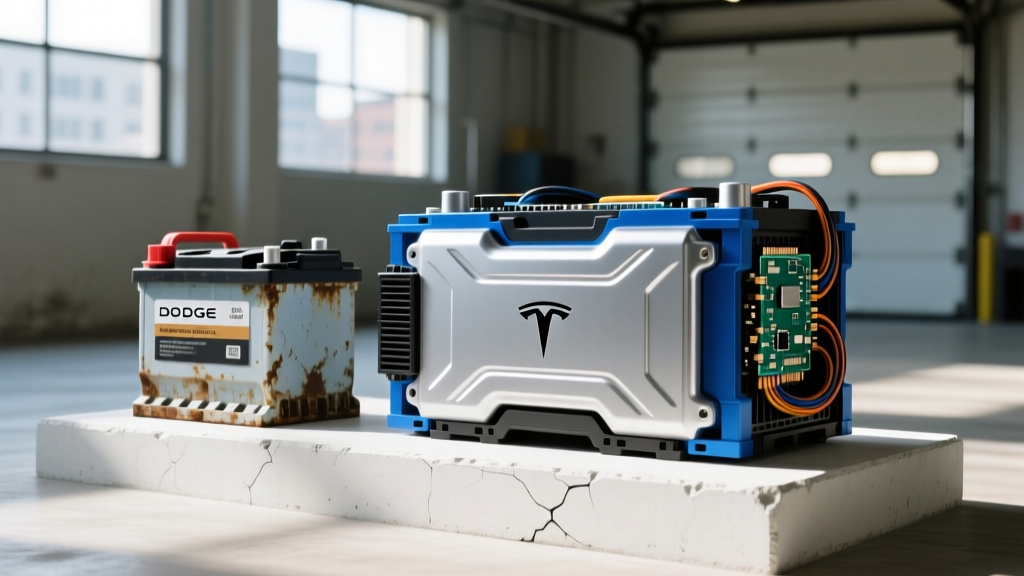
Before we get into EV battery chemistry, let's eliminate the most common source of confusion. When you buy a battery for a 2010 Dodge Journey, you're purchasing a Group 26 or Group 34 12V lead-acid/AGM battery. Its sole job is to crank a 2.4L or 3.5L internal-combustion engine and power accessories when the alternator isn't spinning. It stores roughly 0.6 to 0.8 kWh of usable energy.
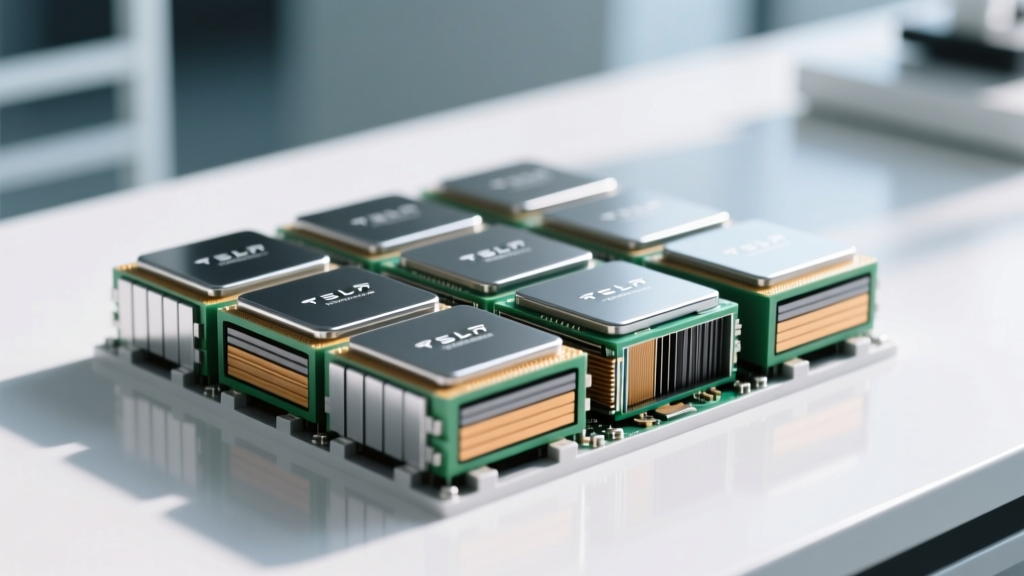
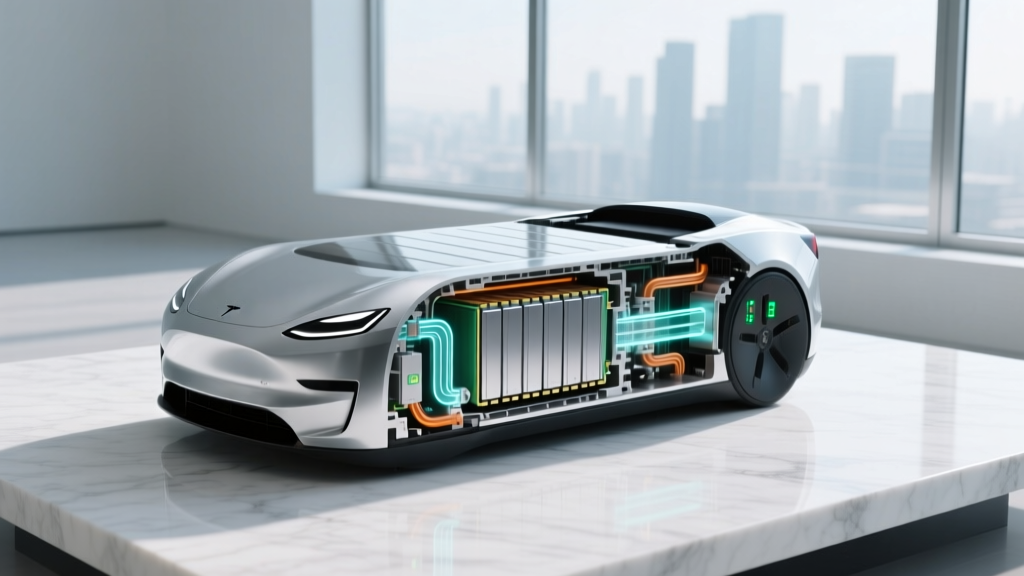
An EV traction battery, by contrast, stores between 50 and 130+ kWh of energy at voltages ranging from 400V to 800V (or even 900V on architectures like the Hyundai E-GMP and Porsche Taycan). It weighs anywhere from 750 to 1,500 pounds and costs between $7,000 and $22,000 to replace out of warranty. These packs use lithium-ion cells — either NMC/NCA or LFP chemistry — managed by sophisticated battery management systems (BMS) that actively balance cells, control temperature, and limit charge/discharge rates to maximize longevity.
Important note: EVs also have a 12V auxiliary battery (or in newer models like some Teslas and the Rivian R1T, a low-voltage lithium-iron-phosphate unit) that powers the computers, lights, and door locks. If that 12V battery dies, the car won't start — even if the traction battery is fully charged. But the 12V system is not what gives an EV its range or performance, and it's not what this guide focuses on.
LFP vs. NMC/NCA: Which EV Battery Chemistry Is Right for You?
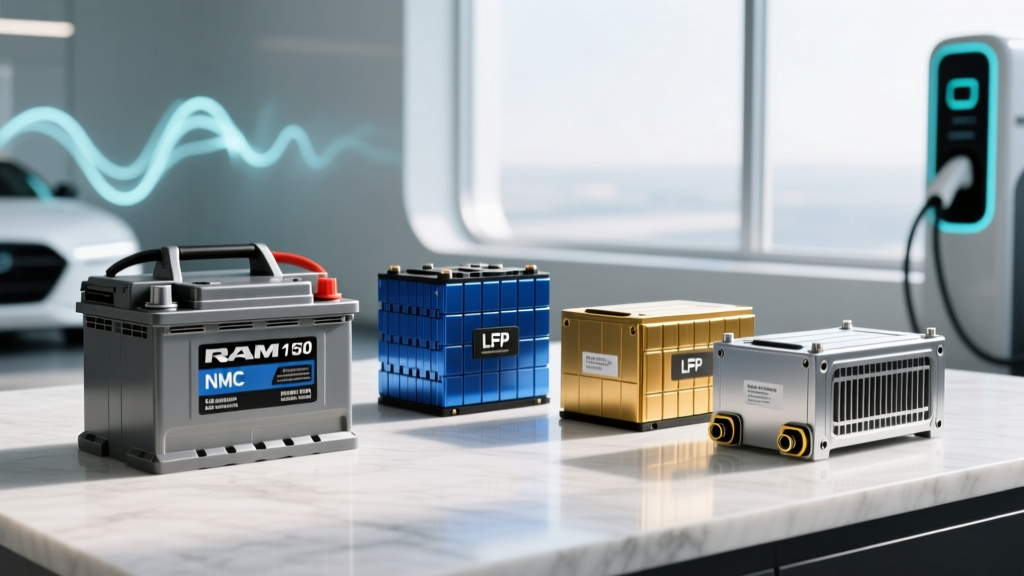
In 2026, two lithium-ion chemistries dominate the EV market: LFP (lithium iron phosphate) and NMC/NCA (nickel manganese cobalt / nickel cobalt aluminum). Each has distinct trade-offs that affect range, longevity, cold-weather performance, and cost.
| Attribute | LFP (Lithium Iron Phosphate) | NMC / NCA (Nickel-Based) |
|---|---|---|
| Energy Density | Lower (~160-180 Wh/kg cell-level) | Higher (~220-300 Wh/kg cell-level) |
| Typical Pack Size | 50-82 kWh (standard-range models) | 70-130+ kWh (long-range/performance) |
| Cycle Life | 3,000-5,000+ cycles to 80% SoH | 1,000-2,500 cycles to 80% SoH |
| Cold-Weather Performance | Weaker — more range loss below 32°F | Better low-temp conductivity |
| Charging to 100% Daily | Recommended — helps BMS calibration | Not recommended — accelerates degradation |
| Cobalt Content | None | Contains cobalt/nickel (supply-chain concerns) |
| Cost (per kWh, 2026) | ~$75-95/kWh at pack level | ~$100-135/kWh at pack level |
| Common In | Tesla Model 3/Y RWD, Ford Mustang Mach-E Select, BYD models, base Chevy Equinox EV | Tesla Long Range, Hyundai Ioniq 5/6, Rivian, Ford F-150 Lightning Extended, Porsche Taycan |
Bottom line: LFP wins on longevity and cost. If you plan to keep your EV for 10+ years, drive moderate daily miles, and live in a temperate climate, LFP is the durability champion. NMC/NCA wins on energy density — meaning more range in a lighter, smaller pack — and performs better in harsh winters. Most long-range and performance trims still use NMC or NCA because the energy-density advantage translates directly to EPA-rated miles.
How Long Do EV Batteries Actually Last? Degradation Data
The short answer: far longer than most first-time EV buyers assume. Real-world fleet data consistently shows that modern lithium-ion EV batteries lose roughly 5-10% of total capacity over the first 100,000 miles, with the rate of loss slowing considerably after the initial break-in period.
Typical EV Battery Degradation Curve (Composite Fleet Data):
- Year 1 / 15,000 mi: ~2-3% loss (initial formation loss)
- Year 3 / 45,000 mi: ~5-6% total loss
- Year 5 / 75,000 mi: ~7-9% total loss
- Year 8 / 120,000 mi: ~10-13% total loss
- Year 10 / 150,000 mi: ~12-17% total loss
Sources: Geotab fleet battery health study, Recurrent Auto battery data reports.
A 2026 Tesla Model 3 Long Range with an EPA-rated 341 miles of range, for example, might realistically deliver 300-310 miles at 100,000 miles on the odometer. That's still more range than many new gas cars get on a full tank. The key insight is that degradation is not linear — the steepest drop happens early, then the curve flattens significantly.
LFP batteries tend to show even slower long-term degradation. Tesla's own 2025 Impact Report noted that Model 3 RWD vehicles with LFP packs retained approximately 92% of original capacity at 100,000 miles. NMC packs in long-range variants retained about 88-90% over the same distance.
What Does the EV Battery Warranty Actually Cover?
Federal law in the United States mandates that EV batteries carry a minimum warranty of 8 years or 100,000 miles (whichever comes first). In California Air Resources Board (CARB) states — which include California, New York, Massachusetts, Oregon, Washington, and several others — that mandate extends to 10 years or 150,000 miles.
| Manufacturer | Battery Warranty | Capacity Threshold | Notes |
|---|---|---|---|
| Tesla (Model 3/Y RWD, LFP) | 8 yr / 100,000 mi | 70% retention | Full replacement or repair to threshold |
| Tesla (Long Range / Performance) | 8 yr / 120,000 mi | 70% retention | NMC/NCA packs, higher mile coverage |
| Hyundai / Kia | 10 yr / 100,000 mi | 70% retention | Among the longest in the industry |
| Ford (Mach-E, F-150 Lightning) | 8 yr / 100,000 mi | 70% retention | Covers battery and electric drivetrain components |
| General Motors (Ultium-based) | 8 yr / 100,000 mi | 70% retention | Modular pack allows partial module replacement |
| Rivian | 8 yr / 120,000 mi (175,000 mi for commercial) | 70% retention | Commercial fleet warranty is notably generous |
| BMW / Mercedes-Benz | 8 yr / 100,000 mi | 70% retention | Some models offer extended purchase options |
The critical detail is the capacity retention threshold — typically 70%. If your battery's State of Health drops below 70% of its original capacity within the warranty period, the manufacturer is obligated to repair or replace it. In practice, very few modern EV batteries fall below 70% within 8 years under normal use. According to data from Recurrent Auto, fewer than 1.5% of EV batteries in their tracked fleet have required warranty replacement.
EV Battery Replacement Costs: The Numbers Behind the Fear
This is the topic that generates the most anxiety among prospective EV buyers — and the most distortion in media coverage. Yes, an out-of-warranty EV battery replacement is expensive. But context matters enormously.
| Vehicle / Pack Size | Chemistry | Approx. Replacement Cost (2026) | When Typically Needed |
|---|---|---|---|
| Tesla Model 3 RWD (~60 kWh) | LFP | $8,000 - $11,000 | Rarely before 200,000+ mi |
| Tesla Model Y LR (~82 kWh) | NMC | $12,000 - $16,000 | Rarely before 180,000+ mi |
| Hyundai Ioniq 5 (~77.4 kWh) | NMC | $11,000 - $15,000 | Rarely before 170,000+ mi |
| Ford F-150 Lightning Ext. (~131 kWh) | NMC | $18,000 - $24,000 | Rarely before 150,000+ mi |
| Chevy Equinox EV (~85 kWh) | NMC (Ultium) | $10,000 - $14,000 (modular repair lower) | Rarely before 170,000+ mi |
| Rivian R1T (~128 kWh Large) | NMC | $17,000 - $22,000 | Rarely before 150,000+ mi |
Several important factors soften the sticker shock:
- Most EV batteries outlive the vehicle. The average age of a scrapped car in the US is roughly 15-16 years. Data from fueleconomy.gov and fleet operators suggests the majority of EV battery packs still function at 75-85% capacity at that age.
- Modular repair is becoming standard. GM's Ultium platform and newer Hyundai/Kia packs allow technicians to replace individual modules rather than the entire pack, reducing costs by 50-70%.
- Refurbished packs are increasingly available. Companies like Redwood Materials and OEM-certified refurbishers offer remanufactured packs at 30-50% below new-pack pricing.
- Costs are declining. Pack-level pricing has fallen from over $300/kWh in 2015 to roughly $80-135/kWh in 2026, and the trajectory continues downward.
Factors That Accelerate (or Preserve) EV Battery Life
Battery longevity isn't just about time and miles — how you use and charge your EV has a measurable impact on how quickly the pack degrades.
Battery Care Best Practices
- Avoid frequent DC fast charging above 150 kW. Occasional road-trip fast charging is fine, but daily use of 250-350 kW chargers generates sustained heat that stresses cells. For daily driving, Level 2 home charging at 7-11 kW is ideal.
- Keep State of Charge between 20-80% for NMC/NCA. Storing the battery at 100% for extended periods accelerates calendar degradation. (LFP owners should charge to 100% at least weekly for BMS calibration.)
- Precondition before fast charging. Most modern EVs do this automatically when you navigate to a charger. A warm battery (around 77-95°F / 25-35°C) accepts charge faster and with less stress. This is why preconditioning — warming the battery to optimal temperature before high-power charging — matters: it reduces lithium plating risk and shortens charge time.
- Minimize exposure to extreme heat. Parking in shade or a garage during summer months reduces calendar aging. Sustained battery temperatures above 104°F (40°C) are more damaging than cold exposure.
- Don't let the battery sit at 0% or 100% for days. If storing the vehicle, set the charge limit to ~50% and leave it plugged in so the BMS can manage thermal conditions.
- Use regenerative braking moderately in extreme cold. High regen rates on a freezing-cold battery can cause lithium plating. Many EVs automatically limit regen in cold temps — let the system do its job.
Monitoring Your Battery's State of Health (SoH)
State of Health (SoH) is the percentage of a battery's original capacity that remains usable. A new battery starts at 100% SoH; a battery at 85% SoH can store 85% of its original kWh.
In 2026, most EVs provide SoH data through one or more of these channels:
- In-vehicle display: Tesla, Hyundai, BMW, and Mercedes now include battery health indicators in the vehicle settings menu, showing estimated SoH as a percentage or bar graph.
- OEM mobile apps: The Tesla app, FordPass, Hyundai Bluelink, and myChevrolet apps display estimated range vs. original range, from which SoH can be inferred.
- Third-party diagnostics: Services like Recurrent Auto and AVILOO offer battery health reports using telematics data. Some dealerships can run a full cell-balance diagnostic during service visits.
- OBD-II dongles: For technically inclined owners, devices like the OBDLink SX paired with apps such as ABRP (A Better Route Planner) or Scan My Tesla (for Teslas) can read real-time pack voltage, cell deviation, and estimated SoH.
What should you look for? Cell voltage deviation — the difference between the highest and lowest cell in the pack — should typically stay under 50 millivolts. If it grows significantly, it may indicate a weak module that could benefit from a warranty service visit.
Emerging Battery Technologies: Solid-State, Silicon Anode, and Beyond
The next frontier in EV battery technology includes several advances that promise higher energy density, faster charging, and improved safety — but realistic timelines matter.
Solid-state batteries replace the liquid electrolyte with a solid ceramic, polymer, or sulfide material. This eliminates flammability risk, enables lithium-metal anodes, and could push energy density above 400 Wh/kg at the cell level. Toyota, Samsung SDI, and QuantumScape are leading development. Toyota has announced solid-state EVs for limited production around 2027-2028, but widespread, affordable solid-state packs in mainstream vehicles are not expected before 2030-2032. These timelines are forward-looking and subject to manufacturing scale-up challenges.
Silicon-dominant anodes (used in cells from companies like Sila Nanotechnologies and Group14) replace graphite anodes with silicon composites, boosting energy density by 15-25%. These cells are already appearing in limited applications — the Mercedes G-Class 580e uses a silicon-anode battery — and are expected to become more common in premium EVs by 2027-2028.
Sodium-ion batteries offer a lower-cost alternative to lithium-ion using abundant sodium instead of lithium. CATL has begun shipping sodium-ion packs for Chinese-market EVs. Energy density is lower (~140-160 Wh/kg), making them best suited for affordable, shorter-range city cars. US-market availability remains uncertain but is being closely watched.
None of these technologies are currently available in mainstream US-market EVs as of 2026. If you're buying today, LFP and NMC/NCA are your options — and both are mature, well-proven chemistries with extensive real-world track records.
Frequently Asked Questions
How long do EV batteries last in years and miles?
Most modern EV batteries are designed to last 15-20 years or 150,000-200,000+ miles before degrading below 70% of original capacity. Fleet data from Geotab and Recurrent Auto shows average annual degradation of roughly 1.5-2.5% per year under normal use. Many early Tesla Model S vehicles from 2013-2014 are still running on their original packs at over 200,000 miles with 75-82% SoH.
How much does an EV battery cost to replace?
Out-of-warranty replacement costs range from approximately $8,000 for a smaller LFP pack (e.g., Tesla Model 3 RWD) to $24,000 for a large NMC pack (e.g., Ford F-150 Lightning Extended Range). However, most batteries never need full replacement — modular repairs cost 50-70% less, and refurb packs offer further savings. Under warranty, replacement is free if SoH falls below the 70% threshold.
What does the EV battery warranty cover?
Federally mandated minimum coverage is 8 years / 100,000 miles (10 years / 150,000 miles in CARB states). The warranty covers defects in materials and workmanship, plus capacity loss below a specified threshold — typically 70% of original capacity. It does not cover damage from accidents, flooding, or unauthorized modifications. Always check your specific owner's manual for exact terms.
How do I check and maximize my EV battery health?
Check SoH through your vehicle's settings menu, OEM app, or a third-party diagnostic service. To maximize longevity: charge to 80% daily for NMC/NCA (100% is fine for LFP), use Level 2 home charging for daily needs, precondition before fast charging, avoid letting the battery sit at extreme SoC levels, and park in shade during hot weather. See the battery care checklist above for detailed best practices.
LFP vs NMC — which is better and why?
Neither is universally better; it depends on your priorities. Choose LFP if: you want maximum cycle life (3,000-5,000+ cycles), lower cost, cobalt-free sourcing, and plan to keep the car 10+ years. Choose NMC/NCA if: you need maximum range per charge, live in a cold climate where NMC's low-temperature performance matters, or want a performance-oriented model (NMC handles high discharge rates better). In 2026, LFP powers most standard-range and base-trim EVs, while NMC/NCA remains the choice for long-range and performance variants.
Is a battery for a 2010 Dodge Journey the same kind of battery an EV uses?
No. A battery for a 2010 Dodge Journey is a 12V lead-acid or AGM starting battery that stores less than 1 kWh of energy and costs under $200. An EV traction battery stores 50-130+ kWh at 400-900 volts, weighs over 800 pounds, and uses lithium-ion cells managed by a computerized BMS. They serve entirely different purposes and share no technology in common, though EVs do carry a separate 12V auxiliary battery for accessory power.
Sources: EPA fueleconomy.gov, IRS §30D Clean Vehicle Credit guidelines, Geotab EV Battery Degradation Study, Recurrent Auto Battery Health Reports, manufacturer warranty documentation.