Why Your EV's Battery Powers More Than Just the Motor
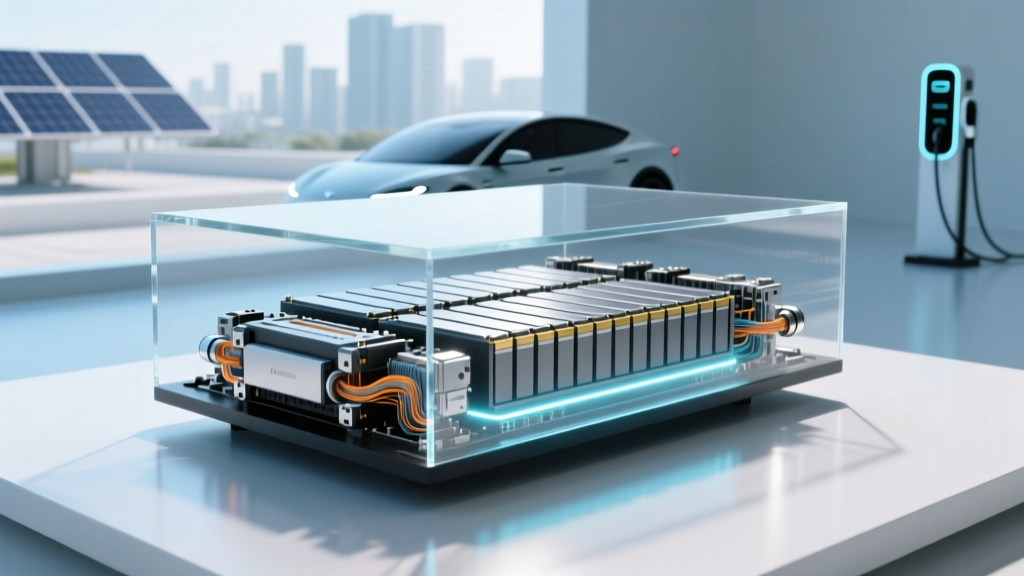
When most shoppers think about an electric vehicle's battery, they picture the massive high-voltage traction pack under the floor — the 75 kWh or 100 kWh behemoth responsible for range, acceleration, and fast charging. But modern EVs are rolling power platforms. That same electrical architecture steps down voltage to feed everything from heated seats to a 12V accessory circuit that can run a battery operated radar detector, dash cams, tire-pressure monitors, and other aftermarket electronics without ever touching a cigarette-lighter adapter.
Understanding how your EV's battery system works — from cell chemistry to degradation curves to warranty coverage — is the single most important piece of homework you can do before buying electric. This guide breaks down the chemistry trade-offs, real-world lifespan data, replacement economics, and care practices that determine how long your pack (and everything it powers) will last.
LFP vs NMC vs NCA: The Chemistry Decision
Not all lithium-ion cells are created equal. The two dominant chemistries in 2026 model-year EVs sold in the U.S. are LFP (lithium iron phosphate) and NMC/NCA (nickel manganese cobalt / nickel cobalt aluminum). Each has distinct trade-offs that affect range, longevity, cold-weather usability, and price.
| Attribute | LFP (LiFePO₄) | NMC / NCA |
|---|---|---|
| Energy density | ~160–180 Wh/kg | ~220–300 Wh/kg |
| Cycle life (to 80% SoH) | 3,000–5,000+ cycles | 1,000–2,500 cycles |
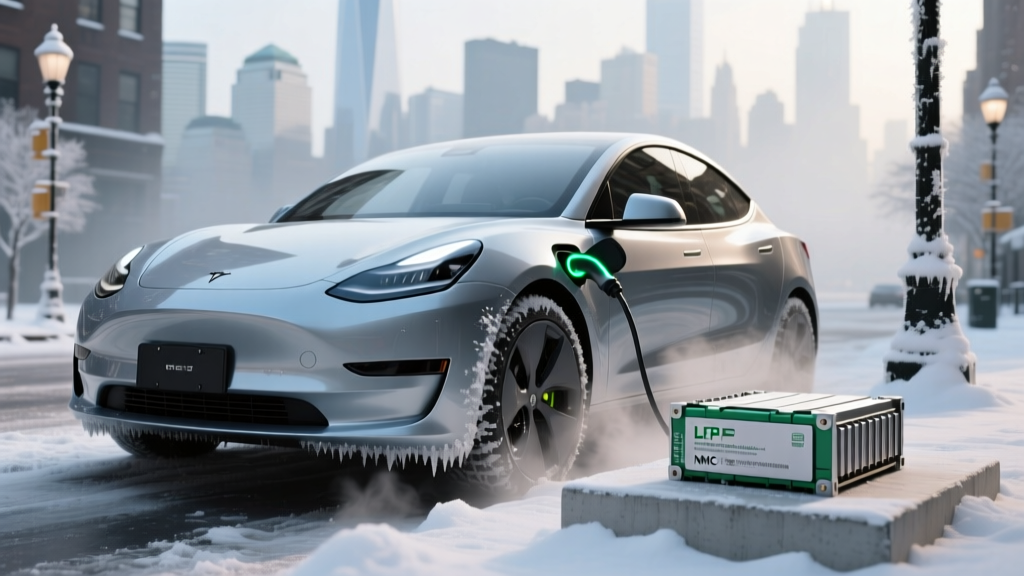
| Cold-weather performance | Moderate loss; slower charging below 32°F | Better low-temp conductivity |
| Thermal stability | Excellent — less prone to thermal runaway | Good, but requires more active cooling |
| Cost per kWh (cell-level) | ~$80–$100 | ~$110–$140 |
| Recommended daily SoC | Can charge to 100% daily | Best kept at 80% daily; 100% for trips |
| Common in (2026 models) | Tesla Model 3/Y RWD, Ford Mustang Mach-E Select, Rivian Standard | Tesla Long Range, Hyundai Ioniq 5/6, BMW iX, Porsche Taycan |
The practical takeaway: If you want maximum range per charge and don't mind managing state of charge habits, NMC/NCA delivers higher energy density in a lighter pack. If you prioritize longevity, plan to own the car 10+ years, and can accept slightly less range, LFP's superior cycle life and tolerance for 100% daily charging make it the durability champion.
For a battery operated radar detector or any 12V accessory, chemistry doesn't change how the DC-DC converter steps down high-voltage to 12V — but it does affect how much total energy buffer the car has to sustain accessories during long idle or Sentry-mode sessions without impacting driving range.
How Long Do EV Batteries Actually Last?
The short answer: far longer than most buyers fear. According to data aggregated by fueleconomy.gov and long-term fleet studies from Recurrent Auto, the average EV battery in 2026 loses approximately 5–8% of its original capacity over the first 100,000 miles, with degradation slowing significantly after the initial break-in period (roughly the first 20,000–30,000 miles).
Typical degradation curve (NMC, liquid-cooled, 2022–2026 models):
- Year 1 / 15,000 mi: ~2–3% capacity loss (initial SEI layer formation)
- Year 3 / 45,000 mi: ~5–6% total loss
- Year 5 / 75,000 mi: ~6–8% total loss
- Year 8 / 120,000 mi: ~8–12% total loss
- Year 10 / 150,000 mi: ~10–15% total loss (most packs still above 85% SoH)
LFP packs typically show 2–4% less loss at equivalent milestones due to the chemistry's inherent stability.
Real-world examples reinforce this. Tesla's 2025 Impact Report noted that Model 3/Y batteries retained an average of 88% capacity at 200,000 miles. Hyundai-Kia's 8-year data on the Kona Electric and Niro EV showed similar retention rates of 85–90% at the 100,000-mile mark under mixed driving conditions.
The critical insight: most EV batteries will outlast the vehicle's body, suspension, and interior. Catastrophic failure (sudden cell death) is exceedingly rare in liquid-cooled packs. Gradual capacity loss is the norm — and it's slow enough that most owners trade in or sell before it becomes a daily inconvenience.
Warranty Coverage: What's Protected and What Isn't
Federal law mandates that EV battery warranties cover a minimum of 8 years / 100,000 miles (10 years / 150,000 miles in CARB states including California, New York, Massachusetts, and others). But the details matter enormously.
| Manufacturer | Warranty Term | Capacity Retention Threshold | Notes |
|---|---|---|---|
| Tesla (Model 3/Y RWD — LFP) | 8 yr / 100,000 mi | 70% | Covers defects + capacity below threshold |
| Tesla (Long Range/Performance) | 8 yr / 120,000 mi | 70% | Higher mileage cap for NMC packs |
| Hyundai / Kia | 10 yr / 100,000 mi | 70% | Among the longest terms in the industry |
| Ford (Mach-E, F-150 Lightning) | 8 yr / 100,000 mi | 70% | Covers battery and electric powertrain components |
| GM (Ultium platform) | 8 yr / 100,000 mi | 70% | Includes module-level replacement capability |
| Rivian | 8 yr / 175,000 mi | 70% | Highest mileage threshold among major OEMs |
| BMW | 8 yr / 100,000 mi | 70% | Offers module-level repair at certified dealers |
What the warranty covers: Manufacturing defects, cell failures, and capacity loss that drops the pack below the stated threshold (typically 70% of original usable capacity). If your 82 kWh pack can only hold 55 kWh (67% SoH) at year 6, the manufacturer must repair or replace it.
What it doesn't cover: Damage from accidents, flooding, or modifications. Some manufacturers also exclude capacity loss from repeated DC fast charging above a stated frequency, though this is rarely enforced in practice. Always read the specific warranty booklet for your model year.
EV Battery Replacement Cost: The Numbers
This is the question that keeps prospective buyers up at night — but context matters. Battery replacement is rarely needed within the first 150,000 miles on a liquid-cooled pack, and the cost has been declining steadily.
| Battery Size | Example Models | Full Pack Replacement Cost (2026) | Module-Level Repair |
|---|---|---|---|
| 50–60 kWh | Chevy Bolt EV, Nissan Leaf, base LFP packs | $6,500–$10,000 | Available on some platforms; $1,500–$3,000 per module |
| 70–85 kWh | Tesla Model 3/Y, Ford Mach-E, Hyundai Ioniq 5 | $10,000–$16,000 | GM Ultium, BMW support module swap; $2,000–$4,500 per module |
| 90–100 kWh | Tesla Model S/X, Rivian R1T/R1S, Lucid Air | $14,000–$22,000 | Limited module repair; mostly full-pack swaps |
| 100+ kWh | GMC Hummer EV, Cadillac Escalade IQ | $18,000–$30,000 | Ultium platform supports module-level service |
These figures represent out-of-warranty costs at OEM dealerships. Independent EV shops and refurbished pack suppliers are emerging as lower-cost alternatives — typically 30–50% below dealer pricing — though availability varies by model. The key context: at current degradation rates, most original owners will never need a replacement. Second and third owners of high-mileage EVs are more likely to face this expense, but by then the vehicle's depreciated value and the declining replacement cost often make the math workable.
Factors That Accelerate (or Preserve) Battery Life
Battery degradation isn't random — it's driven by identifiable stressors. Here's what the data shows matters most:
Practices That Preserve Battery Health
- Daily SoC between 20–80% (NMC/NCA): Avoid sitting at 100% for extended periods. LFP owners can charge to 100% daily without penalty.
- Precondition before DC fast charging: Most EVs automatically warm the battery when a Supercharger or Electrify America station is set as the nav destination. This reduces lithium plating risk.
- Garage parking when possible: Extreme heat (above 95°F sustained) accelerates calendar degradation more than cold. A shaded or climate-controlled garage adds measurable life.
- Use Level 2 for daily charging: DC fast charging generates more heat per session. Reserve it for road trips; use a home Level 2 (7–11.5 kW) for routine top-ups.
- Avoid deep discharge below 10%: Letting the pack sit near 0% for days stresses cells. Charge to at least 20% if storing the vehicle.
Practices That Accelerate Degradation
- Frequent DC fast charging to 100%: The combination of high current and high SoC is the worst-case stress scenario.
- Regular exposure to extreme heat: Phoenix and Las Vegas owners see slightly faster calendar degradation than Seattle or Minneapolis owners, per Recurrent data.
- Leaving the car at 100% SoC for days: If you need a full charge, time it so you drive away shortly after charging completes.
- Aftermarket modifications to the high-voltage system: Tapping into the traction battery for accessories voids warranties. Always use the 12V system or a dedicated auxiliary battery for items like a battery operated radar detector, auxiliary lighting, or winch systems.
A note on fast-charging frequency: a 2025 study by the Idaho National Laboratory found that vehicles DC fast-charged exclusively (3+ times per week) showed approximately 3–5% more capacity loss over 100,000 miles compared to vehicles charged primarily on Level 2. The difference is real but modest — not the pack-killer that early EV forums suggested.
Monitoring Battery Health: How to Check SoH
State of Health (SoH) is the percentage of original capacity your battery can still hold. A new pack is 100% SoH; a pack that originally held 82 kWh and now holds 72 kWh is at ~88% SoH.
Built-in methods:
- Tesla: The Service menu (hold the model name on the About screen for 3 seconds, enter "service") shows a battery health test result. Alternatively, the Tesla app displays SoH on vehicles running 2025.20+ software.
- Hyundai/Kia: The EV Settings menu includes a battery conditioning status and estimated SoH readout on 2024+ models.
- GM Ultium vehicles: The myChevrolet/myCadillac app includes a battery health indicator linked to OnStar diagnostics.
- Universal OBD-II method: Apps like OBD2 Scanner for EV or ABRP (A Better Route Planner) paired with an OBDLink SX or vLinker FD dongle can read pack-level SoH, cell voltage delta, and isolation resistance on most CAN-bus EVs.
For buyers evaluating a used EV, a SoH reading is essential due diligence. Anything above 90% on a vehicle under 60,000 miles is excellent. Below 80% on any vehicle still under warranty should trigger a dealer claim.
Powering Accessories: From the Traction Pack to a Battery Operated Radar Detector
One question that surfaces frequently in EV owner communities: how do you run aftermarket accessories like a battery operated radar detector, dash cam, or portable fridge without draining the traction battery or voiding the warranty?
Modern EVs handle this through a DC-DC converter that steps the high-voltage pack (typically 350–800V) down to 12V to maintain the auxiliary battery — the same small lead-acid or lithium 12V battery that runs lights, infotainment, and accessory ports. When the car is ON (ready to drive), the DC-DC converter is actively powering the 12V system from the traction pack. A battery operated radar detector plugged into a 12V socket or hardwired to a fuse-tap draws from this system, meaning its power ultimately comes from the main battery but through the proper, warranty-safe pathway.
Key considerations for accessory power in an EV:
- Parasitic draw when parked: Unlike gas cars, many EVs keep the 12V system partially active for telematics, Sentry mode, and battery thermal management. A radar detector with a built-in battery that auto-shuts off when the ignition is off avoids parasitic drain on the 12V battery — which, if depleted, can prevent the car from starting even though the traction pack is full.
- Power consumption is negligible: A typical radar detector draws 0.5–1.5 amps at 12V (6–18 watts). That's roughly 0.01–0.03 kWh per hour of driving — effectively invisible against a 75+ kWh traction pack. You could run one for 24 hours straight and use less energy than a 5-mile drive.
- Hardwiring vs. 12V socket: Hardwiring with an add-a-fuse tap to an ignition-switched circuit is cleaner and avoids loose cables. Use a fuse rated for the accessory's draw (typically 2A–5A). Never tap the high-voltage system directly.
- V2L (Vehicle-to-Load) equipped vehicles: The Ford F-150 Lightning, Hyundai Ioniq 5, and Kia EV6 offer 120V AC outlets powered by the traction pack, making it trivially easy to power any household accessory — including charging a cordless radar detector's internal battery — without any wiring modifications.
What's Next: Solid-State and Silicon Anode Batteries
The next frontier in EV battery technology is solid-state batteries, which replace the liquid electrolyte with a solid ceramic, polymer, or sulfide conductor. The promised benefits are substantial: 40–50% higher energy density, faster charging (potentially 10–80% in under 10 minutes), improved safety (no flammable electrolyte), and longer cycle life.
However, as of 2026, solid-state batteries remain in limited pilot production. Toyota has announced a solid-state-equipped EV for limited sale in Japan in late 2027, and Samsung SDI is targeting 2028 for volume production. These are forward-looking timelines subject to manufacturing scale-up challenges and should not factor into a current purchase decision.
Silicon anode technology is closer to market. Companies like Sila Nanotechnologies and Group14 are supplying silicon-dominant anode materials that boost energy density by 15–20% over conventional graphite anodes. The Mercedes-Benz G-Class EV (2025 model year) was among the first to incorporate silicon anode cells. Expect broader adoption across premium segments through 2027–2028.
Neither technology changes the fundamental advice for today's buyers: buy the chemistry that fits your ownership timeline and driving pattern, follow the care guidelines above, and let the warranty protect you against the unlikely event of premature failure.
Frequently Asked Questions
How long do EV batteries last in years and miles?
Based on fleet data through 2026, most liquid-cooled EV batteries retain 85–92% of their original capacity at 150,000 miles (roughly 10 years of average U.S. driving). LFP chemistries tend to retain 2–4% more capacity at equivalent mileage. Catastrophic failure is rare; gradual capacity loss is the norm. Most packs will functionally outlast the vehicle they're installed in.
How much does an EV battery cost to replace?
Out-of-warranty full pack replacement ranges from approximately $6,500 for a small 50–60 kWh pack (Chevy Bolt, base LFP models) to $22,000–$30,000 for large 100+ kWh packs (Hummer EV, Lucid Air). Most mainstream models (75–85 kWh) fall in the $10,000–$16,000 range. Module-level repairs, available on GM Ultium and BMW platforms, can address isolated cell failures for $1,500–$4,500. Costs continue to decline as the supply chain matures.
What does the battery warranty actually cover?
Federal law requires a minimum of 8 years / 100,000 miles (10/150k in CARB states). Coverage includes manufacturing defects and capacity loss below a stated threshold — typically 70% of original capacity. If your battery's State of Health drops below that threshold within the warranty period, the manufacturer must repair or replace it at no cost. Damage from accidents, flooding, or unauthorized modifications is excluded.
How do I check and maximize my EV battery health?
Check SoH through your vehicle's built-in diagnostics (Tesla Service menu, Hyundai EV Settings, GM app) or via an OBD-II dongle paired with an EV-specific app. To maximize longevity: keep NMC/NCA packs between 20–80% SoC for daily use, precondition before fast charging, garage the car when possible in extreme heat, and favor Level 2 charging for routine use. LFP owners can charge to 100% daily without degradation penalty.
LFP vs NMC — which is better and why?
Neither is universally better; they optimize for different priorities. LFP wins on longevity (3,000–5,000+ cycles vs. 1,000–2,500 for NMC), cost ($80–100/kWh vs. $110–140/kWh at the cell level), thermal safety, and convenience (100% daily charging is fine). NMC wins on energy density (220–300 Wh/kg vs. 160–180), cold-weather performance, and weight — which translates to more range in a smaller, lighter pack. Choose LFP if you plan to own the car 8+ years and value durability. Choose NMC if you need maximum range and drive in cold climates frequently.
Can I run a battery operated radar detector in my EV without issues?
Yes. A battery operated radar detector draws negligible power (6–18 watts) from the 12V system, which the EV's DC-DC converter continuously replenishes from the traction pack while driving. Use a 12V socket or hardwire to an ignition-switched fuse. Never tap the high-voltage system. The energy cost is effectively zero — less than 0.03 kWh per hour of operation.