Why Aircraft Battery Standards Matter for EV Buyers
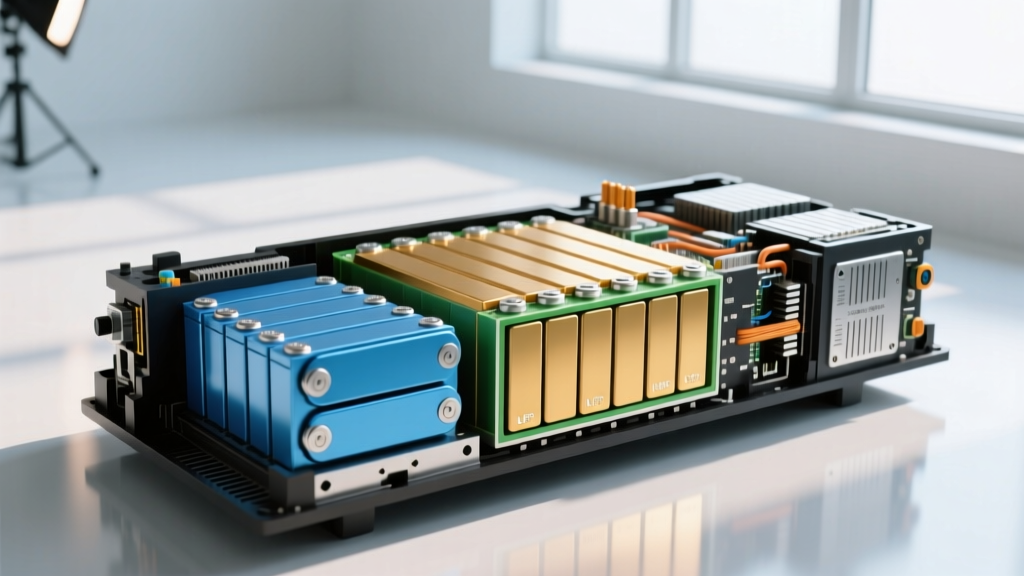
When engineers discuss batteries for aircraft, they're talking about energy storage systems held to arguably the most stringent safety and reliability standards on Earth. The FAA certifies aviation battery packs under DO-311A and RTCA guidelines that demand near-zero thermal runaway risk, extreme vibration tolerance, and redundancy architectures that would bankrupt a consumer vehicle program. Yet the underlying chemistry — lithium-ion cells built around nickel-manganese-cobalt (NMC) or lithium iron phosphate (LFP) cathodes — is fundamentally the same family of technology sitting under the floor of a Tesla Model Y or Ford F-150 Lightning.
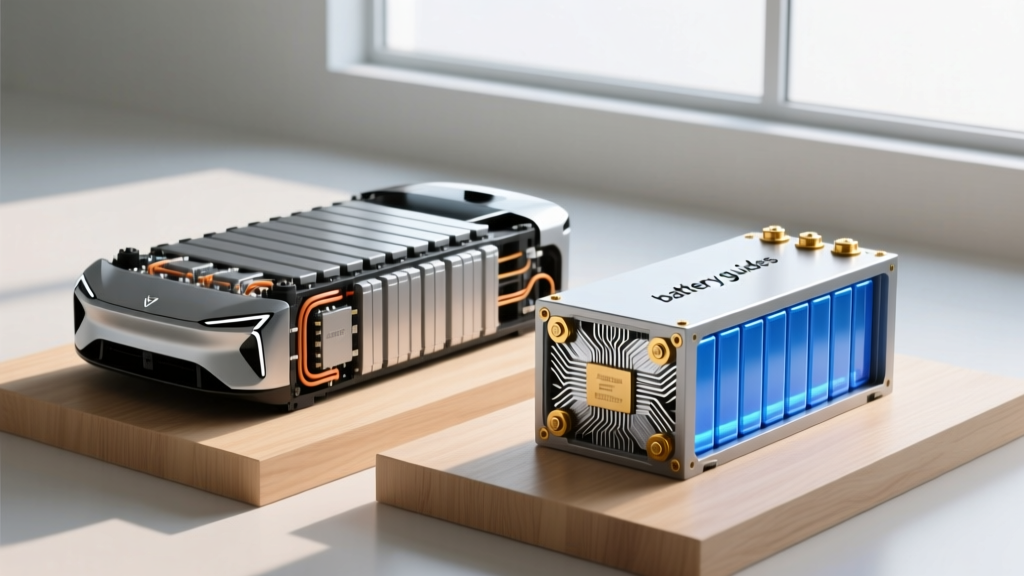
Understanding what aviation demands from its batteries illuminates exactly what your EV battery is engineered to endure, where it falls short of aerospace grade, and — most practically — how long it will last and what it will cost when it eventually needs replacement. This guide translates those engineering parallels into the numbers that matter for your purchase decision.
LFP vs NMC: The Chemistry Trade-Offs Explained
Two dominant cathode chemistries power modern EVs, and the choice between them affects range, longevity, cold-weather behavior, and price. Aviation applications overwhelmingly favor NMC (or NCA, nickel-cobalt-aluminum) for its superior energy density — every kilogram matters when you're fighting gravity. EVs have more flexibility, which is why LFP has surged in popularity for standard-range models.
| Attribute | LFP (Lithium Iron Phosphate) | NMC/NCA (Nickel-based) |
|---|---|---|
| Energy Density | ~160-180 Wh/kg (cell level) | ~220-300 Wh/kg (cell level) |
| Typical Cycle Life | 3,000-5,000+ cycles to 80% SoH | 1,000-2,000 cycles to 80% SoH |
| Cold Performance (below 32°F) | More range loss; slower charge acceptance | Better low-temp conductivity |
| Thermal Stability | Excellent — higher runaway threshold (~518°F) | Good — but lower runaway threshold (~410°F) |
| Cost per kWh | ~$80-100/kWh (2025-2026 pack level) | ~$110-140/kWh (2025-2026 pack level) |
| Recommended SoC for Daily Use | 100% is fine; BMS benefits from full calibration | 80% preferred; 100% only for trips |
| Common EV Applications | Tesla Model 3/Y RWD, Ford Mustang Mach-E Select, Rivian Standard | Tesla Long Range, Hyundai Ioniq 5/6, Chevy Equinox EV, Lucid Air |
| Aviation Use | Rare — weight penalty too high | Dominant in eVTOL and electric aviation prototypes |
Which is better? Neither is universally superior. LFP wins on longevity, safety margin, and cost — ideal if you charge at home daily and don't need maximum range. NMC wins on energy density and cold-weather performance — essential for long-range models and, tellingly, for batteries for aircraft where packing maximum kWh into minimum mass is non-negotiable. If you live in Minnesota and road-trip frequently, NMC's cold-weather advantage matters. If you commute 30 miles in Southern California and want a battery that'll outlast the car's body, LFP is the pragmatic pick.
How Long Do EV Batteries Actually Last?
The fear that EV batteries die like smartphone batteries at year three is not supported by fleet data. Real-world degradation studies from sources including Geotab's analysis of over 10,000 EVs and Recurrent Auto's dataset of 15,000+ vehicles show a consistent pattern: most modern EV batteries lose roughly 5-8% of capacity in the first two years (the initial "break-in" drop), then degrade at approximately 1-2% per year afterward.
Typical Degradation Curve (NMC Pack, Temperate Climate)
| Timeframe | Average Capacity Retained | Range Impact (on 300-mi EPA pack) |
|---|---|---|
| Year 1 / 15,000 mi | ~95-97% | ~285-291 mi effective |
| Year 3 / 45,000 mi | ~91-94% | ~273-282 mi effective |
| Year 5 / 75,000 mi | ~88-91% | ~264-273 mi effective |
| Year 8 / 120,000 mi | ~83-88% | ~249-264 mi effective |
| Year 10 / 150,000 mi | ~80-85% | ~240-255 mi effective |
Note: LFP packs generally show slower long-term degradation but may exhibit slightly steeper early loss. Extreme heat climates (Arizona, Texas) accelerate degradation by ~1-2% over these averages. Data compiled from Geotab, Recurrent Auto, and manufacturer fleet reports.
Aviation batteries are engineered for dramatically shorter service intervals — typically 4-6 years regardless of cycle count — because the FAA mandates conservative replacement timelines as a safety margin. Your EV battery has no such regulatory clock. The practical reality: most EV batteries will outlast the vehicle's economic life. A 2024 study by Consumer Reports found that battery replacement before 150,000 miles is the exception, not the rule, for liquid-cooled packs from major manufacturers.
What the Battery Warranty Actually Covers
Federal law mandates a minimum 8-year/100,000-mile warranty on EV battery packs (10 years/150,000 miles in CARB states like California, New York, and Massachusetts). But the details matter enormously — and they differ from the unconditional guarantees you might expect from aviation-grade components.
| Manufacturer | Warranty Period | Capacity Threshold | Coverage Notes |
|---|---|---|---|
| Tesla (Model 3/Y LFP) | 8 yr / 120,000 mi | 70% retention | Defect + degradation below threshold |
| Tesla (Model 3/Y LR NMC) | 8 yr / 120,000 mi | 70% retention | Same terms; Long Range/Performance |
| Hyundai / Kia | 10 yr / 100,000 mi | 70% retention | Among the longest coverage in the US |
| GM (Ultium platform) | 8 yr / 100,000 mi | 70% retention | Covers battery + electric drive components |
| Ford | 8 yr / 100,000 mi | 70% retention | Mustang Mach-E, F-150 Lightning |
| Rivian | 8 yr / 175,000 mi | 70% retention | Higher mileage cap; covers Max Pack too |
| BMW | 8 yr / 100,000 mi | 70% retention | i4, i5, iX, i7 |
The critical nuance: these warranties cover defects and degradation below the stated threshold. They do not cover gradual capacity loss that stays above 70%. If your 300-mile EPA pack drops to 215 miles at year seven, you're covered. If it drops to 220 miles, you're not — even though you've lost 80 miles of range. The 70% threshold is the line, and it's a line drawn to align with the engineering expectation that most packs will stay above it under normal use.
EV Battery Replacement Cost: What You'd Actually Pay
This is the number that generates the most anxiety, and it deserves honest context. Yes, a full pack replacement is expensive. But the probability of needing one within the first decade of ownership is low — and costs have been declining steadily.
| Vehicle / Pack Size | Battery Capacity | Estimated Replacement Cost (2025-2026) | When Typically Needed |
|---|---|---|---|
| Tesla Model 3 RWD (LFP) | ~60 kWh | $12,000 - $16,000 | Rarely before 200,000+ mi |
| Tesla Model Y LR (NMC) | ~75 kWh | $15,000 - $20,000 | Rarely before 180,000+ mi |
| Hyundai Ioniq 5 (NMC) | ~77.4 kWh | $14,000 - $19,000 | Rarely before 175,000+ mi |
| Ford F-150 Lightning Ext. Range | ~131 kWh | $25,000 - $35,000 | Rarely before 150,000+ mi |
| Chevy Equinox EV (Ultium) | ~85 kWh | $16,000 - $22,000 | Rarely before 175,000+ mi |
| Rivian R1T Max Pack | ~149 kWh | $30,000 - $40,000 | Rarely before 175,000+ mi |
| Lucid Air Grand Touring | ~112 kWh | $22,000 - $30,000 | Rarely before 150,000+ mi |
For comparison, batteries for aircraft — even small general aviation electric trainers like the Pipistrel Velis Electro — carry replacement costs of $20,000-$35,000 for packs under 35 kWh, because aviation-certified cells command a massive premium for their testing and documentation overhead. Your EV battery is expensive in absolute terms but remarkably cost-effective per kWh of certified, warrantied capacity.
Also worth noting: module-level repair is increasingly available. Rather than replacing an entire 80 kWh pack, specialized EV shops can identify and swap a single degraded module for $2,000-$5,000. This option is growing as independent EV service networks expand.
Factors That Accelerate (or Preserve) Battery Life
Your battery's lifespan isn't purely a function of time and miles. How you charge, store, and drive the vehicle shapes its State of Health (SoH) trajectory. Here's what the data shows actually matters — and what doesn't.
What Hurts Your Battery
- Frequent DC fast charging above 150 kW: Occasional road-trip fast charging is fine. Daily reliance on 250-350 kW chargers generates sustained heat that accelerates electrolyte decomposition. Studies show packs that fast-charge more than 3x/week degrade ~2-3% faster over 5 years.
- Storing at 100% SoC in heat: A fully charged NMC pack sitting in a 100°F driveway is under maximum electrochemical stress. This is the single worst thing you can do for long-term health.
- Repeated deep discharges to 0%: Dropping below 5% regularly strains the anode. The buffer protects you from true zero, but habitual near-empty driving isn't ideal.
- Extreme cold charging without preconditioning: Charging an NMC or LFP pack below 20°F without warming it first can cause lithium plating on the anode — a permanent capacity loss mechanism.
What Preserves Your Battery
- Level 2 home charging as your primary method: Slower charge rates generate less heat. A 7-11 kW Level 2 session is the battery's happy place.
- Keeping SoC between 20-80% for daily use (NMC): This is the well-established sweet spot. LFP owners can charge to 100% more freely — the chemistry tolerates it, and the BMS actually benefits from periodic full-charge calibration.
- Preconditioning before fast charging: Most modern EVs do this automatically when you navigate to a charger. It warms the pack to ~95°F for optimal charge acceptance and reduced stress.
- Garage parking in extreme climates: Keeping the pack out of 110°F Arizona sun or -20°F Minnesota nights reduces calendar aging significantly.
- Driving it regularly: Batteries prefer use to storage. A pack that cycles between 30-70% SoC daily ages more gracefully than one that sits at 80% for weeks.
How to Check Your Battery's State of Health
State of Health (SoH) is the percentage of your battery's original capacity that remains usable. A new pack is 100% SoH; a pack that held 75 kWh when new and now holds 67.5 kWh is at 90% SoH. Monitoring this metric is how you track degradation and know whether you're approaching warranty territory.
Built-in Vehicle Methods
Tesla: The Tesla app and in-car service menu display battery health metrics. Third-party tools like Tessie or TeslaFi log SoH estimates from BMS data via the vehicle's API.
Hyundai/Kia: The infotainment system's EV diagnostics page shows battery condition as a percentage. The Bluelink/Uvo connected services app also reports this.
GM Ultium vehicles: The myChevrolet/myCadillac app provides a battery health indicator, and the driver information center shows estimated max range versus original.
Ford: The FordPass app and SYNC system display battery health status. The F-150 Lightning shows estimated range at 100% SoC, which you can compare to the original EPA figure.
Third-Party Diagnostics
Services like Recurrent Auto (free enrollment) connect to your vehicle's telematics and provide ongoing SoH tracking benchmarked against similar vehicles. Geotab offers fleet-grade battery health analytics. For a one-time check, many EV-specialist shops can pull a full BMS log showing individual cell voltages, internal resistance, and calculated SoH — typically for $100-$200.
Aviation battery monitoring is far more rigorous: continuous cell-level impedance tracking, mandatory data logging, and scheduled capacity tests under load. Your EV's BMS does much of this internally but surfaces only a simplified health metric. The data is there; you just have to ask for it.
What's Next: Solid-State and Silicon-Anode Batteries
Emerging battery technologies promise step-change improvements in energy density and charge speed — and they're being watched closely by both the EV and aviation industries, since batteries for aircraft are arguably the application that benefits most from lighter, safer, denser cells.
Solid-State Batteries
Solid-state cells replace the liquid electrolyte with a solid ceramic or polymer conductor, eliminating flammability risk and enabling lithium-metal anodes that could push energy density to 400-500 Wh/kg — roughly double today's best NMC. Toyota has announced a solid-state EV for 2027-2028 with a claimed 750 km (~465 mi) range and 10-minute fast charging. Samsung SDI, QuantumScape, and Solid Power are all in pilot production phases.
Realistic timeline: Limited-production vehicles in 2027-2028. Meaningful volume and cost parity with liquid lithium-ion: 2030+. Aviation will likely adopt solid-state first, where the cost premium is more justifiable.
Silicon-Anode Batteries
Companies like Sila Nanotechnologies and Group14 are replacing graphite anodes with silicon-dominant composites, boosting energy density by 20-40% without changing the cathode. The Mercedes-AMG G-Class EV (announced) uses a silicon-anode pack from Group14. This technology is closer to mass production than solid-state and is already appearing in premium applications.
Realistic timeline: Available now in limited, premium applications. Broader EV adoption expected 2026-2028 as manufacturing scales.
Neither technology changes the advice in this guide for a vehicle you'd buy today. Current-generation LFP and NMC packs, properly cared for, will serve you well for 10-15 years and 150,000-200,000+ miles. Future chemistries will make the next generation of EVs — and electric aircraft — lighter and longer-legged, but they don't make today's batteries a bad bet.
EV Battery FAQ
How long do EV batteries last in years and miles?
Most modern liquid-cooled EV batteries retain 80-85% of their original capacity at 10 years and 150,000 miles. Many packs reach 200,000+ miles before dropping below the 70% warranty threshold. Calendar aging (time) matters as much as mileage — a 12-year-old pack with 60,000 miles will show more degradation than a 4-year-old pack with 120,000 miles.
How much does an EV battery cost to replace?
Full pack replacement ranges from approximately $12,000 for a 60 kWh LFP pack (Tesla Model 3 RWD) to $35,000-$40,000 for a 130+ kWh pack (F-150 Lightning Extended Range, Rivian Max Pack). However, most owners never need a replacement — the battery typically outlasts the vehicle's resale value. Module-level repairs cost $2,000-$5,000.
What does the battery warranty cover?
Federal minimum: 8 years / 100,000 miles against defects and capacity loss below 70% of original. CARB states extend this to 10 years / 150,000 miles. Coverage includes cell failures, BMS malfunctions, and degradation below the threshold. It does not cover normal degradation above 70%, damage from accidents, or modifications. Check your specific manufacturer's terms — Hyundai/Kia and Rivian offer above-average coverage.
How do I check and maximize my battery's health?
Check SoH through your vehicle's app (Tesla, FordPass, Bluelink) or a third-party service like Recurrent Auto. Maximize longevity by favoring Level 2 home charging, keeping NMC packs between 20-80% SoC for daily use (LFP can go to 100%), preconditioning before DC fast charging, avoiding storage at full charge in heat, and not habitually running the battery below 10%.
LFP vs NMC — which is better for me?
Choose LFP if: you charge at home, drive under 250 miles daily, live in a moderate climate, want maximum cycle life, and prefer the lower cost of standard-range trims. Choose NMC if: you need maximum EPA range (300+ mi), regularly drive in sub-freezing temperatures, take frequent road trips requiring fast charging, or tow heavy loads. Neither is objectively "better" — they're optimized for different use cases.
Why do batteries for aircraft use different standards than EV batteries?
Aviation batteries must meet FAA/EASA certification standards (DO-311A, RTCA DO-160) that require redundant containment, zero-propagation thermal runaway design, vibration and altitude testing, and mandatory replacement timelines regardless of measured health. These requirements add 3-5x cost per kWh compared to automotive cells. The underlying chemistry is similar, but the engineering envelope, testing burden, and safety margins are dramatically more conservative. EV batteries prioritize cost-effectiveness and longevity over the absolute-zero-failure standard that aviation demands.