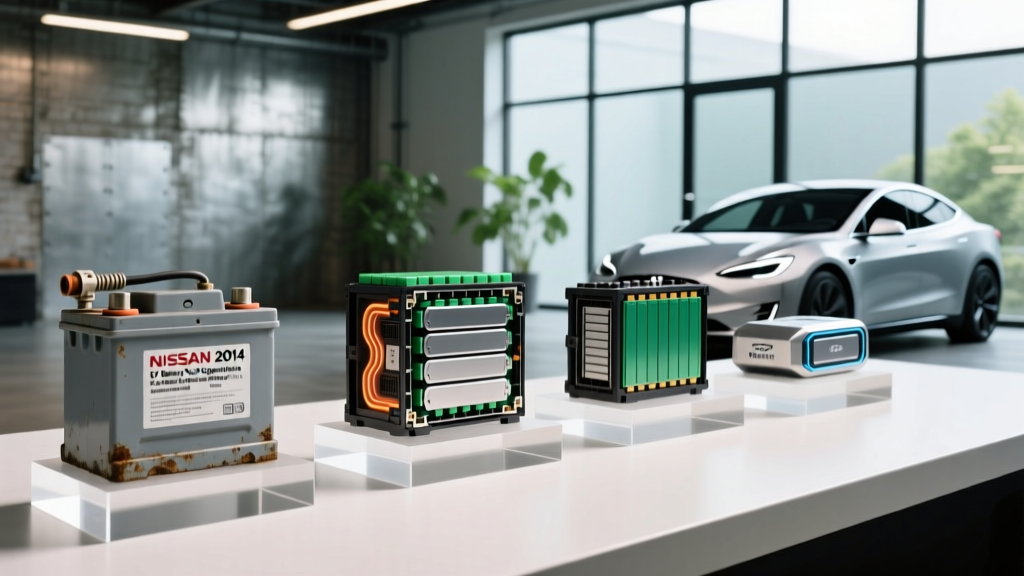
If you've ever searched for a battery for a 2014 Nissan Pathfinder, you were likely dealing with a conventional 12-volt lead-acid replacement — a $150–$250 drop-in unit that cranks a V6 engine and powers the electronics. That search tells a story about where automotive batteries were a decade ago. Today, as Nissan and every major automaker pivots to electrified platforms, the word "battery" means something vastly different: a high-voltage lithium-ion traction pack that stores 60–130+ kWh of energy, propels the vehicle for 250–400+ miles, and costs $8,000–$22,000 to replace.
This guide bridges that gap. We'll use the 2014 Pathfinder's conventional battery as a reference point, then dive deep into modern EV battery technology — chemistry trade-offs, real degradation data, warranty coverage, replacement economics, and how to maximize pack longevity. Whether you're a current EV owner or shopping for your first electric vehicle, these are the numbers that matter.
12-Volt vs. High-Voltage Traction Battery: A Critical Distinction
Before going further, let's eliminate the most common confusion in EV ownership. Every electric vehicle actually has two batteries:
- 12V auxiliary battery: A small lead-acid or lithium unit (similar to what a 2014 Pathfinder uses) that powers lights, infotainment, door locks, and the onboard computers. It does not drive the wheels.
- High-voltage traction battery: The large lithium-ion pack (typically 400V–800V architecture) that stores the energy to move the vehicle. This is what we mean when we say "EV battery" throughout this guide.
The 12V battery in an EV may need replacement every 3–5 years, just like in a gas car. The traction battery is engineered to last the life of the vehicle. The rest of this article focuses exclusively on the traction battery.
Battery Chemistry: LFP vs. NMC vs. NCA
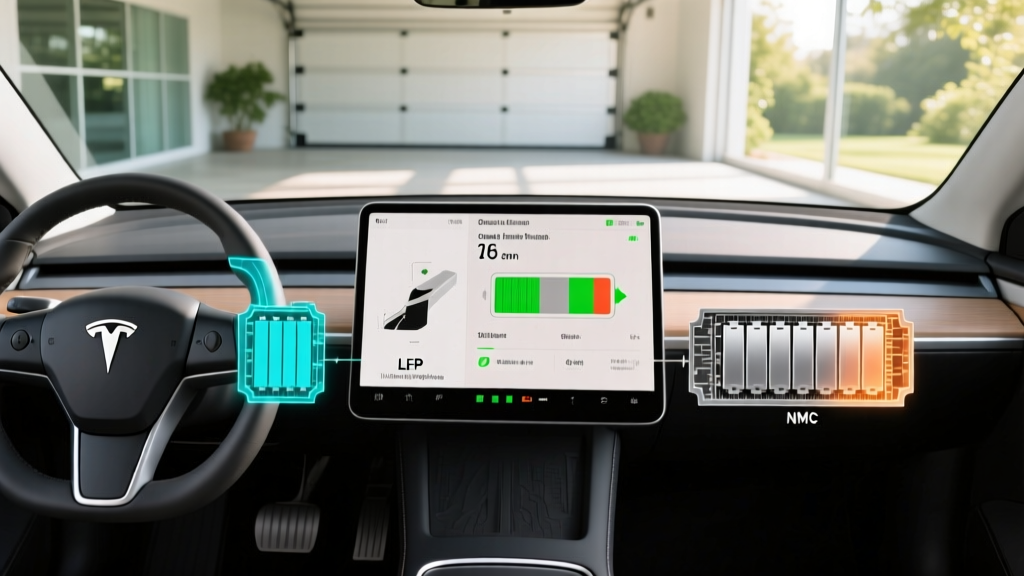
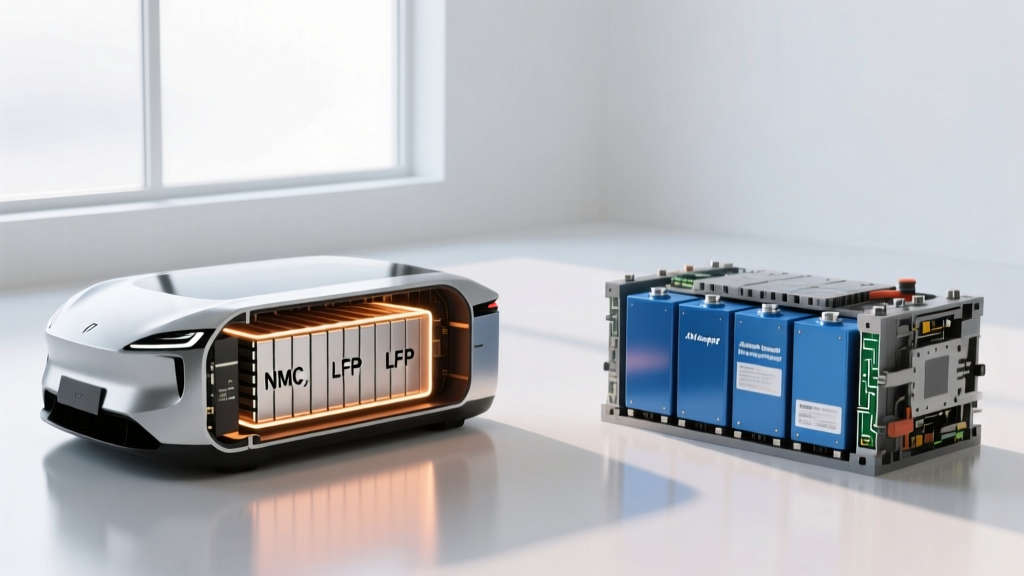
Not all lithium-ion batteries are the same. The cathode chemistry determines energy density, lifespan, cold-weather performance, and cost. In 2026, two chemistries dominate the EV market:
- NMC (Nickel Manganese Cobalt) / NCA (Nickel Cobalt Aluminum): Higher energy density, better cold-weather performance, used in most long-range and performance EVs (Tesla Model 3 Long Range, Hyundai Ioniq 5, Ford Mustang Mach-E Extended Range).
- LFP (Lithium Iron Phosphate): Lower energy density but significantly longer cycle life, lower cost, no cobalt, and can be charged to 100% daily without accelerated degradation. Used in Tesla Model 3/Y Standard Range, base Ford F-150 Lightning, and many Chinese-market EVs now entering the US.
| Attribute | LFP (Lithium Iron Phosphate) | NMC / NCA |
|---|---|---|
| Energy Density | ~160–180 Wh/kg | ~220–300 Wh/kg |
| Cycle Life (to 80% capacity) | 3,000–5,000+ cycles | 1,000–2,000 cycles |
| Cold-Weather Performance | Moderate — greater range loss below 32°F | Strong — better low-temp conductivity |
| Daily Charging to 100% | Recommended for accuracy and longevity | Not recommended — keep 20–80% for daily use |
| Cobalt Content | None | Yes (supply chain and ethical concerns) |
| Cost per kWh (2026) | ~$80–$100 | ~$110–$140 |
| Typical Use Case | Standard-range, fleet, daily commuter EVs | Long-range, performance, cold-climate EVs |
Which is better? It depends on your driving pattern. If you commute 30–50 miles daily, charge at home, and live in a moderate climate, LFP offers superior longevity and lower cost. If you need maximum range, frequently road-trip in cold weather, or tow, NMC/NCA remains the better choice. According to IEA Global EV Outlook data, LFP's global market share in passenger EVs reached roughly 40% by 2025, up from under 10% in 2020 — a clear trend toward its adoption in cost-sensitive segments.
How Long Do EV Batteries Actually Last?
The short answer: far longer than most buyers fear. Modern EV traction batteries are engineered for 150,000–300,000+ miles before reaching 70–80% of original capacity. Most will outlive the vehicle they're installed in.
Here's what real-world degradation data shows:
Typical EV Battery Degradation Curve (NMC Chemistry)
- Year 1 / ~15,000 miles: 2–5% capacity loss (initial formation loss)
- Year 3 / ~45,000 miles: 6–9% total loss
- Year 5 / ~75,000 miles: 8–12% total loss
- Year 8 / ~120,000 miles: 10–15% total loss
- Year 10 / ~150,000 miles: 12–20% total loss
Source: Aggregated fleet data from Geotab's EV Battery Health study tracking over 10,000 EVs across multiple model years.
LFP packs show even slower degradation in controlled testing — often losing only 5–8% over 100,000 miles, owing to their inherently stable cathode structure. Tesla's 2025 Impact Report noted that Model 3 Standard Range (LFP) vehicles retained an average of 92% battery capacity at 100,000 miles.
The key insight: degradation is non-linear. Most loss occurs in the first year or two, then the curve flattens significantly. A battery that retains 90% at year 3 is very likely to retain 82–85% at year 10.
EV Battery Warranty Coverage: What's Protected
Federal law mandates a minimum 8-year/100,000-mile warranty on EV battery packs for emissions-related compliance, and every major automaker meets or exceeds this baseline. California and states adopting CARB standards require 10 years / 150,000 miles.
| Manufacturer | Warranty Period | Mileage Cap | Capacity Retention Threshold |
|---|---|---|---|
| Tesla (Model 3/Y LFP) | 8 years | 120,000 miles | 70% |
| Tesla (Model S/X) | 8 years | 150,000 miles | 70% |
| Hyundai / Kia | 10 years | 100,000 miles | 70% |
| Ford (F-150 Lightning, Mach-E) | 8 years | 100,000 miles | 70% |
| General Motors (Ultium platform) | 8 years | 100,000 miles | 70% (60% for e-transit commercial) |
| Volkswagen (MEB platform) | 8 years | 100,000 miles | 70% |
| Nissan (Ariya) | 8 years | 100,000 miles | 67.5% (9 bars of 12 on gauge) |
What triggers a warranty claim? If your battery's usable capacity drops below the stated threshold (typically 70% of original) within the warranty period, the manufacturer will repair, replace, or refurbish the pack at no cost. In practice, very few owners ever hit this threshold under normal use.
What voids the warranty? Using non-approved charging equipment that damages the pack, physical damage from collisions or flooding, unauthorized modifications to the battery management system (BMS), or evidence of sustained storage at 0% or 100% SoC for extended periods in extreme temperatures.
EV Battery Replacement Cost: The Real Numbers
This is the concern that keeps prospective EV buyers up at night. Let's put it in perspective with actual figures.
| Vehicle / Pack Size | Battery Capacity | Replacement Cost (Parts + Labor) | Typical Need Timeline |
|---|---|---|---|
| Nissan Leaf (40 kWh pack) | 40 kWh | $6,500–$9,000 | Rarely before 150,000 mi |
| Tesla Model 3 SR (LFP) | ~60 kWh | $8,000–$12,000 | Rarely before 200,000 mi |
| Hyundai Ioniq 5 | 77.4 kWh | $12,000–$16,000 | Rarely before 180,000 mi |
| Ford F-150 Lightning ER | 131 kWh | $18,000–$25,000 | Rarely before 150,000 mi |
| GMC Hummer EV | ~212 kWh | $25,000–$35,000+ | Rarely before 150,000 mi |
Context matters here. Battery pack costs at the cell level have fallen from over $1,000/kWh in 2010 to approximately $100–$130/kWh in 2026, according to BloombergNEF battery price surveys. Refurbished and remanufactured packs are increasingly available at 40–60% of new-pack pricing, and module-level repair (replacing only degraded cells or modules within the pack) can reduce out-of-warranty costs to $2,000–$6,000.
The critical point: most EV batteries never need replacement during the vehicle's useful life. Data from Recurrent Auto's 2025 fleet analysis of over 15,000 EVs showed that fewer than 1.5% of vehicles required battery replacement outside of collision damage, and the majority of those were early-generation packs (pre-2018) with less sophisticated thermal management.
Compare this to the 2014 Nissan Pathfinder's era: a transmission replacement on that vehicle ran $3,500–$5,500 and was a well-documented failure point. Major powertrain repairs on ICE vehicles are far more common than EV battery replacements.
What Degrades an EV Battery — and What Doesn't
Understanding the real enemies of battery longevity helps you protect your investment. Here are the factors that matter, ranked by impact:
High-Impact Factors (Manage These)
- Sustained extreme temperatures: Repeated exposure to ambient temperatures above 95°F or below 10°F without preconditioning accelerates chemical degradation. Garage parking and thermal preconditioning help enormously.
- Frequent DC fast charging above 150 kW: Occasional road-trip fast charging is fine. Daily fast charging at peak rates (especially without preconditioning) generates excess heat and stresses cells. Limit to 1–2 sessions per week if possible.
- Prolonged storage at 100% or 0% SoC: Storing an NMC pack at full charge for weeks in hot weather is one of the fastest ways to degrade it. Store at 40–60% SoC for extended parking. LFP packs are more tolerant of 100% storage.
- Aggressive driving with high discharge rates: Repeated hard acceleration and track use generate sustained high-current discharge, heating the pack beyond optimal thermal windows.
Lower-Impact Factors (Don't Obsess)
- Normal daily Level 2 charging: Charging at 7–11 kW on a home Level 2 station is gentle on the battery. This is the ideal daily charging method.
- Moderate regen braking: Regenerative braking actually reduces mechanical brake wear and does not harm the battery in normal use.
- Mileage alone: A battery that cycles 30% daily (partial discharge) ages far slower than one that cycles 90% daily. Calendar age matters more than odometer reading.
How to Check and Monitor Battery Health (SoH)
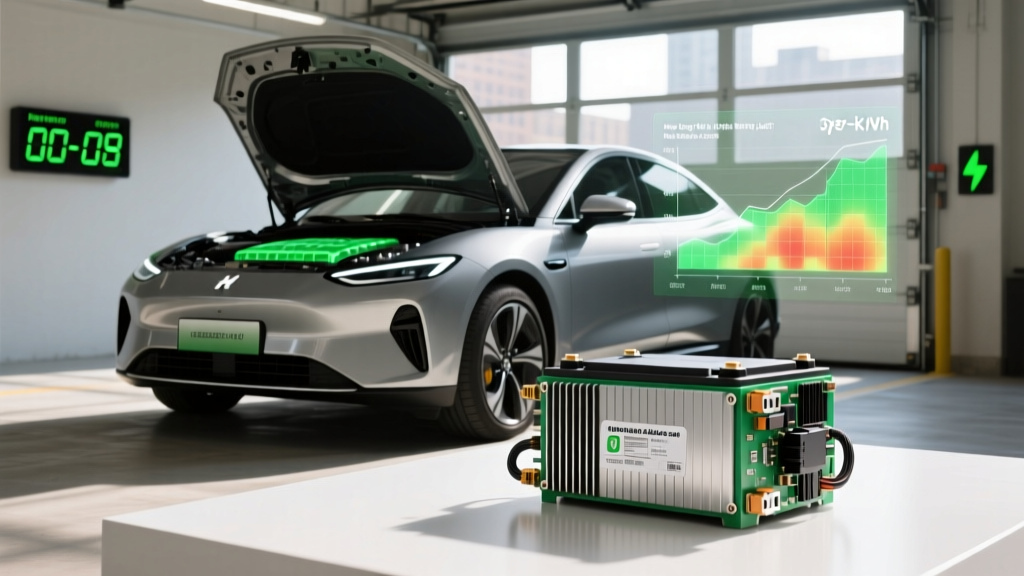
State of Health (SoH) is the percentage of original battery capacity remaining. Here's how to track it:
Built-in vehicle displays: Most modern EVs provide a battery health indicator. Tesla shows estimated range vs. original range in the service menu. The Nissan Ariya and Leaf display a 12-bar capacity gauge. Hyundai/Kia's infotainment system includes a battery condition screen. Check your owner's manual for the specific path.
OBD-II diagnostic tools: Third-party tools like LeafSpy (for Nissan), TeslaFi, or Scan My Tesla can read detailed battery telemetry including individual cell voltages, pack impedance, and precise SoH percentage. These typically cost $20–$100 for the dongle plus a free or low-cost app.
Dealer diagnostics: Any authorized service center can run a full battery health report. Request one during routine service or before purchasing a used EV. This report documents capacity, cell balance, and any flagged modules.
Real-world range tracking: The simplest method — track your actual miles driven per full charge over time. If your EV delivered 280 miles at 100% SoC when new and now delivers 255 miles under identical conditions, your SoH is approximately 91%. Control for temperature and driving style when comparing.
Emerging Battery Technology: What's Coming
The next generation of EV battery technology is advancing rapidly, but realistic timelines matter. Here's where things stand as of 2026:
Solid-state batteries: These replace the liquid electrolyte with a solid material, promising 30–50% higher energy density, faster charging, and improved safety. Toyota has announced limited solid-state EV production for 2027–2028, initially in low-volume, premium models. Samsung SDI and QuantumScape are supplying prototype cells to multiple OEMs. Mass-market availability is not expected before 2030. Do not delay an EV purchase waiting for solid-state — the technology will debut at luxury price points and take years to scale.
Silicon-dominant anodes: Replacing graphite anodes with silicon can increase energy density by 20–40%. Companies like Sila Nanotechnologies and Group14 are already supplying silicon-composite anodes for select 2025–2026 models (including the Mercedes G-Class EV). This is an incremental improvement, not a revolution, but it meaningfully extends range within existing pack sizes.
Sodium-ion batteries: CATL and other Chinese manufacturers are producing sodium-ion packs that eliminate lithium entirely, offering lower cost and excellent cold-weather performance at the trade-off of lower energy density. These are appearing in budget EVs in China and may reach US-market compact EVs by 2028–2029.
All of these technologies are forward-looking and not yet widely available in US-market vehicles. Current LFP and NMC packs represent mature, well-proven technology with extensive real-world track records.
Frequently Asked Questions
How long do EV batteries last in years and miles?
Modern EV traction batteries (2020 and newer) typically last 15–20 years or 150,000–300,000 miles before degrading to 70–80% of original capacity. LFP chemistry packs often exceed 200,000 miles with minimal loss. Most batteries outlast the vehicle's other mechanical components.
How much does it cost to replace an EV battery?
Out-of-warranty replacement costs range from $6,500 for a small pack (Nissan Leaf, 40 kWh) to $25,000+ for a large pack (Ford F-150 Lightning ER, 131 kWh). Module-level repair can reduce this to $2,000–$6,000. Under warranty, replacement is free if capacity drops below the manufacturer's threshold (typically 70%). Fewer than 2% of EVs require replacement outside of collision damage.
What does the EV battery warranty actually cover?
Federal minimum is 8 years / 100,000 miles. Hyundai and Kia offer 10 years / 100,000 miles. The warranty covers capacity loss below a stated threshold (usually 70% of original) and defects in materials or workmanship. It does not cover damage from collisions, floods, unauthorized modifications, or extreme neglect (prolonged 0% storage).
How do I check my EV's battery health?
Use the vehicle's built-in battery health screen, connect an OBD-II diagnostic tool (LeafSpy, TeslaFi, Scan My Tesla), request a dealer diagnostic report, or track your real-world range over time compared to the original EPA estimate. A consistent 10% range drop over 50,000 miles is normal; a sudden 20%+ drop warrants a service visit.
Is LFP or NMC better for daily driving?
For daily commuting under 80 miles with home charging, LFP is generally the better choice: longer cycle life (3,000–5,000 cycles vs. 1,000–2,000), lower cost, no cobalt, and you can charge to 100% daily. For long road trips, cold climates, or towing, NMC/NCA offers higher energy density and better cold-weather range retention. Neither is universally "better" — it depends on your use case.
Does fast charging damage the battery?
Occasional DC fast charging (1–2 times per week) has minimal impact on modern packs with active thermal management. Daily fast charging at peak rates (150–350 kW) without preconditioning does accelerate degradation measurably — studies show 1–3% additional capacity loss over 100,000 miles compared to Level 2 charging. Precondition the battery before fast charging and rely on Level 2 home charging for daily use.
Can I still get a battery for a 2014 Nissan Pathfinder?
Yes — the 2014 Pathfinder uses a conventional Group 35 or 24F 12V lead-acill battery (approximately $150–$250 at any auto parts store). This is entirely separate from EV traction battery technology. If you're transitioning from a 2014 Pathfinder to a modern EV like the Nissan Ariya, you'll find the Ariya's high-voltage pack requires zero routine maintenance — no fluid checks, no replacement schedule, just monitored health through the dashboard.
EV battery technology in 2026 is mature, reliable, and backed by extensive warranty coverage. The fear of a $20,000 replacement bill at 80,000 miles is a myth rooted in early-generation EVs that lacked modern thermal management and chemistry advances. Whether your pack uses LFP or NMC, the data is clear: treat it with basic care — moderate temperatures, mostly Level 2 charging, avoid prolonged extreme SoC storage — and it will outlast the rest of the car.