Why a 2007 Ford F-150 Battery Search Leads to EV Battery Truths
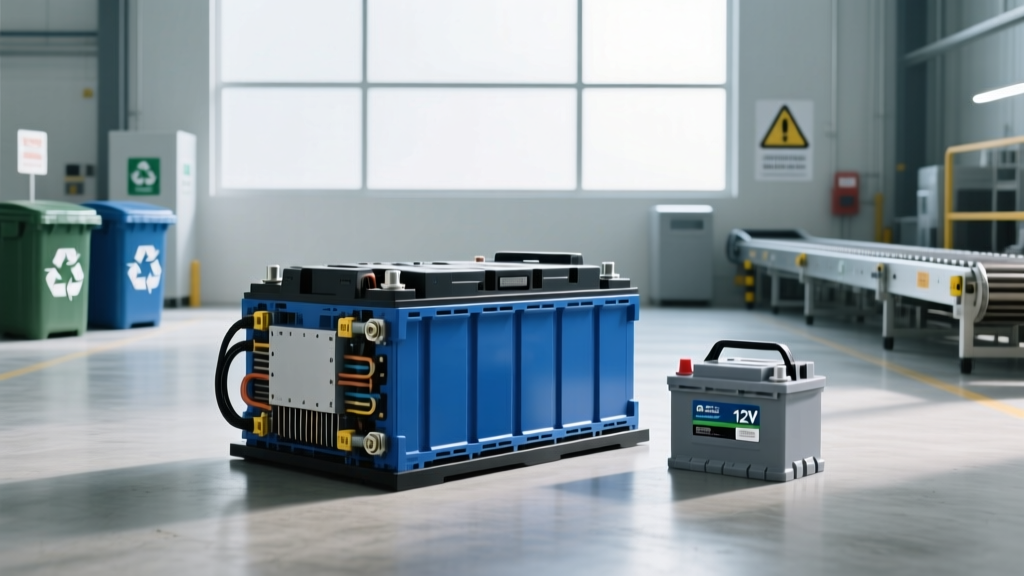
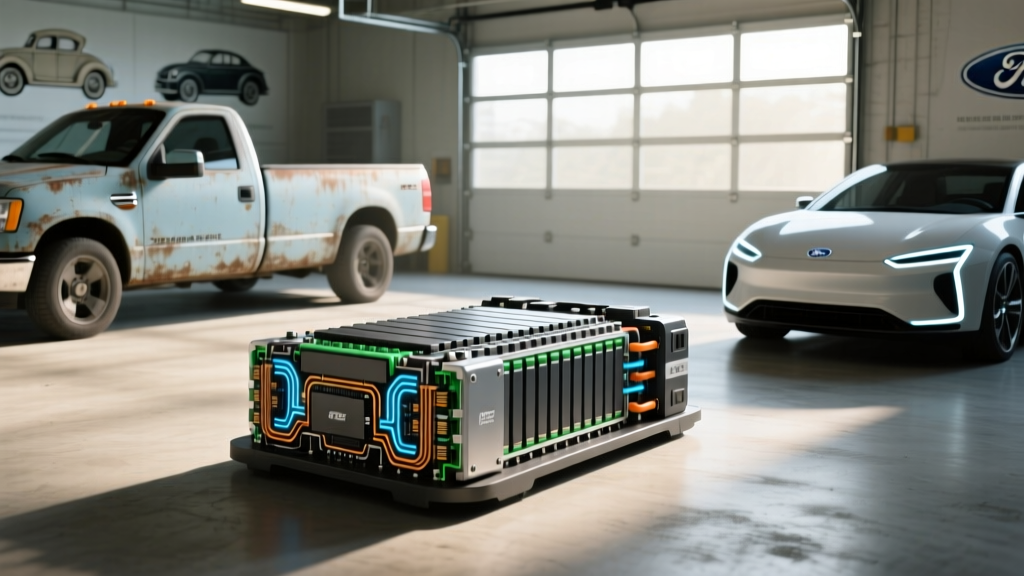
Type "2007 Ford F-150 battery" into any search engine and you'll find a flood of results for 12-volt lead-acid replacements — the kind you grab at an auto parts store for $150 to keep a gas truck's starter motor turning. That search intent is real: millions of 2007-era F-150s are still on the road, and their conventional batteries need swapping every 3–5 years. But in 2026, that same keyword sits at a fascinating crossroads. The Ford F-150 Lightning — the electric successor to that workhorse — carries a high-voltage traction battery that costs over $20,000 to replace and is engineered to outlast the truck itself.
This guide uses that contrast to walk through everything modern EV buyers and owners need to know about battery technology: chemistry trade-offs, real degradation data, warranty coverage, replacement economics, and the habits that extend pack life. Whether you're coming from a 2007 F-150 and considering an EV, or you already own one and want to maximize your battery's lifespan, the numbers below are what actually matter.
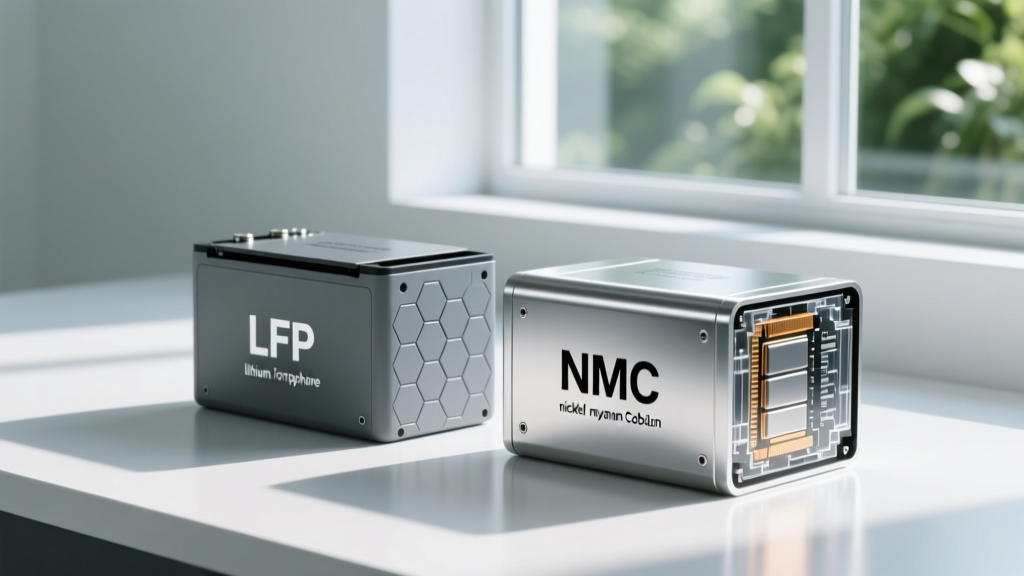
LFP vs NMC/NCA: The Chemistry Decision That Shapes Your EV
Every EV battery pack is built from lithium-ion cells, but the cathode chemistry splits into two dominant camps in 2026: LFP (lithium iron phosphate) and NMC/NCA (nickel manganese cobalt / nickel cobalt aluminum). The choice affects range, longevity, cold-weather behavior, and price.
| Attribute | LFP (Lithium Iron Phosphate) | NMC / NCA (Nickel-Based) |
|---|---|---|
| Energy Density | ~160–180 Wh/kg (lower) | ~220–300 Wh/kg (higher) |
| Cycle Life | 3,000–5,000+ cycles to 80% SoH | 1,000–2,500 cycles to 80% SoH |
| Cold Performance | More range loss below 32°F; slower cold charging | Better low-temp discharge and charge acceptance |
| Cost per kWh | ~$80–100/kWh at pack level (2026) | ~$110–140/kWh at pack level (2026) |
| Thermal Stability | Excellent — less prone to thermal runaway | Good, but requires more active thermal management |
| State of Charge Recommendation | Can be charged to 100% daily without harm | Best kept 20–80% for daily use; 100% for trips only |
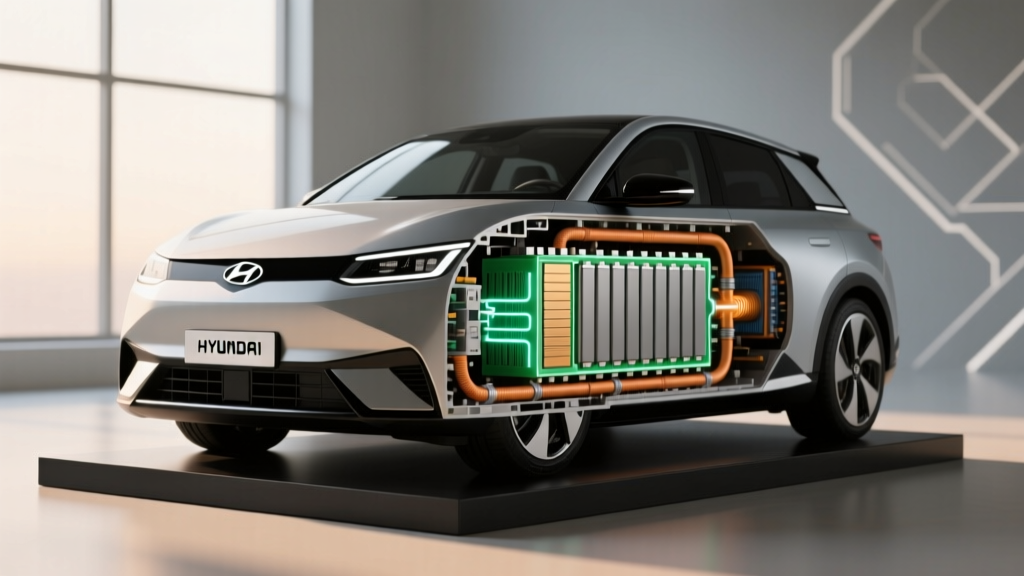
| Typical Applications (2026) | Tesla Model 3/Y RWD, Ford F-150 Lightning Standard Range, Chevy Equinox EV base trims | Long-range and performance trims, Hyundai Ioniq 5/6, Rivian, Lucid |
Which is better? Neither is universally superior. If you prioritize maximum range per charge and live in a cold climate, NMC/NCA delivers. If you want a battery that tolerates daily 100% charging, lasts longer in cycle count, and costs less upfront, LFP is the pragmatic pick. Tesla's shift to LFP in standard-range vehicles and Ford's use of LFP in the F-150 Lightning Standard Range reflect this: fleet and daily-commuter buyers value longevity and simplicity over peak range.
How Long Do EV Batteries Actually Last?
The short answer: most EV batteries outlast the vehicles they're installed in. The long answer requires looking at real degradation data rather than anecdotal fear.
Data aggregated from fleet operators, owner surveys, and manufacturer reports through 2025–2026 shows the following typical degradation trajectory for liquid-cooled lithium-ion packs:
| Timeframe / Mileage | Average Capacity Retention | Notes |
|---|---|---|
| Year 1 / ~12,000 mi | 96–98% | Initial "formation" loss; steepest early drop |
| Year 3 / ~36,000 mi | 92–95% | Degradation curve flattens significantly |
| Year 5 / ~60,000 mi | 89–93% | Most packs well above warranty threshold |
| Year 8 / ~100,000 mi | 85–91% | Warranty period ends; most still functional |
| Year 10+ / 150,000+ mi | 80–88% | Taxi/fleet data (e.g., Tesla Model 3, Chevy Bolt) shows packs still operational |
Geotab's long-term fleet study of over 10,000 EVs found an average annual degradation rate of approximately 1.8% per year across all chemistries, meaning a typical pack retains about 82% capacity after a decade. LFP packs in mild climates with Level 2 home charging often beat that average; NMC packs subjected to frequent DC fast charging in hot climates may degrade slightly faster.
The critical insight: a battery doesn't "die" at 80% capacity. It simply holds less energy, reducing your range proportionally. A 300-mile EPA range vehicle at 85% State of Health (SoH) still delivers ~255 miles — adequate for most daily driving. According to fueleconomy.gov, the average American drives 37 miles per day, meaning even a significantly degraded pack covers typical commutes for years.
Battery Warranty Terms: What's Actually Covered
Federal law mandates a minimum EV battery warranty of 8 years / 100,000 miles (10 years / 150,000 miles in California Air Resources Board states). Most manufacturers exceed this floor. Here's how major 2026 warranties compare:
| Manufacturer (2026 Models) | Battery Warranty | Capacity Retention Threshold |
|---|---|---|
| Tesla (Model 3/Y RWD — LFP) | 8 yr / 100,000 mi | 70% minimum |
| Tesla (Model 3/Y LR — NMC) | 8 yr / 120,000 mi | 70% minimum |
| Ford (F-150 Lightning) | 8 yr / 100,000 mi | 70% minimum |
| Hyundai / Kia (Ioniq 5/6, EV6) | 10 yr / 100,000 mi | 70% minimum |
| GM (Chevy Equinox EV, Blazer EV) | 8 yr / 100,000 mi | 70% minimum (Ultium packs) |
| Rivian (R1T, R1S) | 8 yr / 175,000 mi | 70% minimum |
| BMW (i4, iX) | 8 yr / 100,000 mi | 70% minimum |
What the warranty covers: If your battery's usable capacity drops below the stated threshold (typically 70%) within the warranty period, the manufacturer will repair or replace modules or the full pack at no cost. This covers abnormal degradation — not damage from accidents, flooding, or unauthorized modifications.
What it doesn't cover: Gradual range loss above the threshold. If your pack is at 75% SoH at year 7, you won't get a replacement — but you also still have a functional vehicle with reduced range. The IRS §30D tax credit rules do not directly affect warranty terms, but vehicles purchased with the credit must still comply with battery sourcing requirements that influence which chemistry and supplier your pack uses.
EV Battery Replacement Costs: The Real Numbers
This is the question that drives most battery anxiety. Let's address it with specificity rather than alarm.
| Vehicle / Battery Size | Chemistry | Estimated Replacement Cost (2026) | When Typically Needed |
|---|---|---|---|
| Chevy Bolt EV/EUV (~65 kWh) | NMC | $14,000–$16,000 | Rarely — most packs last vehicle lifetime |
| Tesla Model 3 RWD (~60 kWh) | LFP | $12,000–$15,000 | 150,000+ mi if at all |
| Tesla Model Y LR (~75 kWh) | NMC | $16,000–$20,000 | 150,000+ mi if at all |
| Ford F-150 Lightning Std (~98 kWh) | LFP | $18,000–$22,000 | Rarely under normal use |
| Ford F-150 Lightning Ext (~131 kWh) | NMC | $22,000–$28,000 | Rarely under normal use |
| Rivian R1T Large Pack (~135 kWh) | NMC | $20,000–$25,000 | Rarely — modular replacement possible |
| Hyundai Ioniq 5 (~77 kWh) | NMC | $14,000–$18,000 | 150,000+ mi if at all |
Context that matters: These costs are out-of-warranty figures. In practice, the vast majority of battery replacements occur under warranty at zero cost to the owner. Out-of-warranty failures after 100,000+ miles are uncommon — and when they do happen, many shops now offer module-level repairs (replacing individual degraded cell modules rather than the entire pack) for $2,000–$6,000.
Compare this to the 2007 Ford F-150: a replacement 12V battery runs $120–$200 every 3–5 years, plus alternator replacements ($400–$700), starter motors ($300–$500), and decades of oil changes, transmission fluid, and exhaust repairs. The EV's traction battery is a single large expense that most owners never face — while the ICE truck accumulates smaller costs relentlessly.
Factors That Accelerate (or Preserve) Battery Life
Not all miles are equal when it comes to battery wear. The following factors have the most measurable impact on long-term State of Health:
What Hurts Your Battery
- Exclusive DC fast charging: Daily use of 150+ kW DC fast chargers generates sustained heat. Data from Geotab's fleet analysis shows vehicles that fast-charge more than 3x per week degrade roughly 0.5–1% faster annually than those primarily using Level 2.
- Sitting at 100% SoC in heat: A fully charged NMC battery parked in 95°F+ ambient temperatures accelerates electrolyte decomposition. This is the single worst storage condition.
- Deep discharges to 0%: Regularly running the pack to zero stresses cell chemistry. Most manufacturers build a bottom buffer (~3–5 kWh hidden below "0%" displayed) to protect against this, but habitually arriving at 0% still adds wear.
- Extreme cold without preconditioning: Charging a cold NMC or LFP battery at high power causes lithium plating on the anode — a permanent capacity loss mechanism. Always precondition before DC fast charging in freezing weather.
What Preserves Your Battery
- Level 2 home charging as primary: Gentle 7–11 kW charging generates minimal heat and is ideal for daily use.
- 20–80% SoC window (NMC/NCA): For nickel-based packs, daily charging to 80% and avoiding drops below 20% dramatically extends cycle life. LFP owners can charge to 100% daily without concern.
- Preconditioning before fast charging: Use the vehicle's navigation-to-charger feature (Tesla, Hyundai, Ford, Rivian all offer this) to warm the battery before arriving at a DC station.
- Moderate climate storage: Garage parking in extreme heat or cold reduces thermal cycling stress.
- Software updates: Manufacturers regularly refine battery management system (BMS) algorithms via OTA updates. Keeping your vehicle current can improve charge curves and thermal management.
How to Check and Monitor Battery Health (SoH)
State of Health (SoH) is the percentage of your battery's original usable capacity that remains. At 90% SoH, a 75 kWh pack holds ~67.5 kWh. Here's how to monitor it in 2026:
Built-In Vehicle Tools
- Tesla: The mobile app and service menu display estimated range at 100% SoC. Comparing this to the original EPA range gives a rough SoH proxy. Third-party apps like Tessie or Stats for Tesla calculate SoH from charge logs.
- Hyundai/Kia: The EV app and infotainment system include a battery health indicator showing estimated capacity percentage.
- Ford (Lightning, Mach-E): The FordPass app shows estimated range at full charge; dealers can pull a detailed SoH report via the diagnostic tool.
- GM (Ultium vehicles): The myChevrolet/myCadillac app provides battery health status; OnStar diagnostics include SoH data.
OBD-II Diagnostic Tools
Devices like the OBDLink MX+ paired with apps such as ABRP (A Better Route Planner) or Car Scanner can read the BMS-reported SoH value directly from the vehicle's CAN bus. This is the most accurate method short of a dealer diagnostic session and works across most 2020+ EVs.
Dealer Diagnostics
Any authorized service center can pull a full battery health report including individual module voltage variance, internal resistance, and precise SoH. Request this before purchasing a used EV — it's the single most valuable data point for assessing remaining battery life.
Emerging Battery Technology: What's Real vs. What's Coming
The battery landscape is shifting, but timelines matter. Here's where next-generation technologies actually stand in 2026:
Silicon-Dominant Anodes
Companies like Sila Nanotechnologies and Group14 are supplying silicon-composite anode materials to production EVs in limited volumes. Silicon can theoretically store 10x more lithium than graphite, boosting energy density. In practice, 2026 production applications use silicon as a partial blend (5–15% of the anode), yielding 5–10% energy density gains. Wider adoption is expected by 2028–2030 as swelling and cycle-life challenges are resolved.
Semi-Solid-State Batteries
NIO in China has deployed a 150 kWh semi-solid-state pack (with WeLion) offering over 600 miles of range in the ET7 sedan. However, this remains a low-volume, premium offering not available in the US market. Toyota, Samsung SDI, and QuantumScape continue to announce solid-state milestones, but no mass-production solid-state EV is available for purchase in 2026. Realistic timelines for affordable, high-volume solid-state packs remain 2029–2032 based on current manufacturing ramp trajectories.
Sodium-Ion Batteries
CATL has begun shipping sodium-ion cells in Chinese-market vehicles. Sodium is abundant and cheap, making these packs attractive for budget EVs and stationary storage. Energy density is lower (~120–150 Wh/kg), so sodium-ion is positioned for city cars and fleet vehicles rather than long-range applications. US-market availability is not expected before 2028.
The practical takeaway: Today's LFP and NMC packs are mature, well-understood, and backed by real-world data spanning over a decade. Waiting for solid-state means waiting years — and current chemistry already delivers 250–400+ mile ranges with degradation rates that keep most packs above 80% capacity for 10+ years.
The 2007 F-150 to EV Transition: What Battery Ownership Really Looks Like
If you're still driving a 2007 Ford F-150 or considering the jump from that era of truck to an F-150 Lightning or competing EV, here's the ownership contrast in concrete terms:
- 2007 F-150 12V battery: $120–$200, replaced every 3–5 years, DIY-installable in 10 minutes.
- F-150 Lightning traction battery: $18,000–$28,000 out of warranty, but engineered for 200,000+ mile service life with minimal degradation. Most owners will sell the truck before needing a replacement.
- Maintenance savings: No oil changes ($40–$80 each, 2–3x/year), no transmission fluid, no spark plugs, no catalytic converter failures, no exhaust system repairs. Over 10 years and 120,000 miles, an F-150 Lightning owner saves an estimated $4,000–$7,000 in maintenance compared to a gas F-150, per Consumer Reports analysis.
- Fuel savings: At 2026 national averages ($3.40/gallon gas, $0.16/kWh electricity), driving 12,000 miles/year costs ~$2,040 in gas (17 MPG combined) versus ~$565 in home electricity (3 mi/kWh). That's ~$14,750 saved over 10 years.
The battery isn't the liability many assume. It's the component that eliminates the most recurring costs of conventional ownership — provided you understand the chemistry you're buying, charge smartly, and let the warranty do its job.
Frequently Asked Questions
How long do EV batteries last in years and miles?
Based on fleet data through 2026, most liquid-cooled EV batteries retain 80–90% of original capacity after 10 years and 150,000 miles. They don't "die" at a specific point — they gradually hold less energy, reducing range. Many packs from 2012–2015-era vehicles (Tesla Model S, Nissan Leaf with passive cooling) are still operational at 12+ years, though with more noticeable range reduction.
How much does an EV battery cost to replace?
Out-of-warranty replacement costs range from $12,000 for a smaller pack (Tesla Model 3 RWD LFP, ~60 kWh) to $28,000 for a large pack (F-150 Lightning Extended Range, ~131 kWh). However, most replacements occur under the 8-year/100,000-mile warranty at no cost. Module-level repairs cost $2,000–$6,000 and are increasingly available from independent EV shops.
What does the EV battery warranty actually cover?
Federal minimum is 8 years/100,000 miles (10 years/150,000 miles in CARB states). The warranty guarantees the battery will retain at least 70% of its original usable capacity. If it drops below that threshold within the warranty period, the manufacturer repairs or replaces it. The warranty covers abnormal degradation but not accident damage, flooding, or unauthorized modifications.
How do I check my EV's battery health?
Use your vehicle's mobile app to compare current estimated range at 100% charge to the original EPA range. For precise data, an OBD-II adapter (like OBDLink MX+) with an EV-compatible app reads the BMS-reported State of Health percentage directly. Dealers can pull detailed module-level health reports during service visits.
LFP vs NMC — which battery chemistry should I choose?
Choose LFP if you want maximum cycle life, lower cost, and the convenience of daily 100% charging — ideal for commuters and fleet use. Accept slightly lower energy density and more cold-weather range loss. Choose NMC/NCA if you need maximum range per charge, better cold-weather performance, and faster cold-temperature charging — ideal for road-trip-heavy drivers and cold-climate owners. Both chemistries are proven and will outlast most ownership periods.
Does fast charging damage my EV battery?
Occasional DC fast charging has minimal impact. Habitual exclusive fast charging (3+ times per week, every week) accelerates degradation by roughly 0.5–1% per year compared to primarily Level 2 charging, per Geotab fleet data. The biggest risk is fast charging a cold battery without preconditioning, which can cause lithium plating. Always use your vehicle's navigation-to-charger preconditioning feature in cold weather.
Is a 2007 Ford F-150 battery the same as an F-150 Lightning battery?
No. A 2007 F-150 uses a conventional 12-volt lead-acid battery (~$120–$200) for starting the engine and powering accessories. The F-150 Lightning has both a 12V auxiliary battery (for vehicle electronics) and a high-voltage lithium-ion traction battery (98 kWh or 131 kWh) that powers the electric motors. The traction battery is the expensive, long-life component covered by the 8-year/100,000-mile warranty.