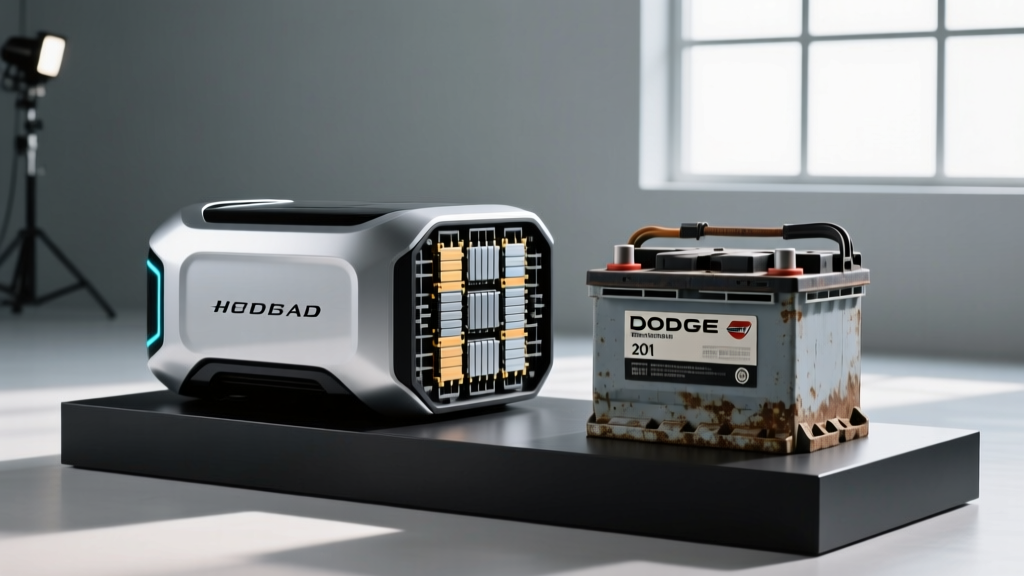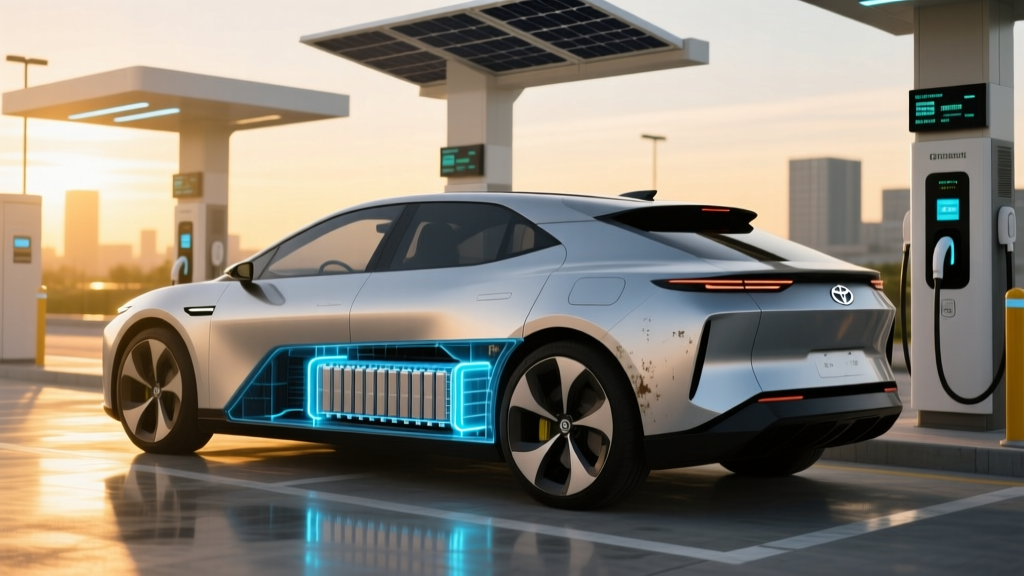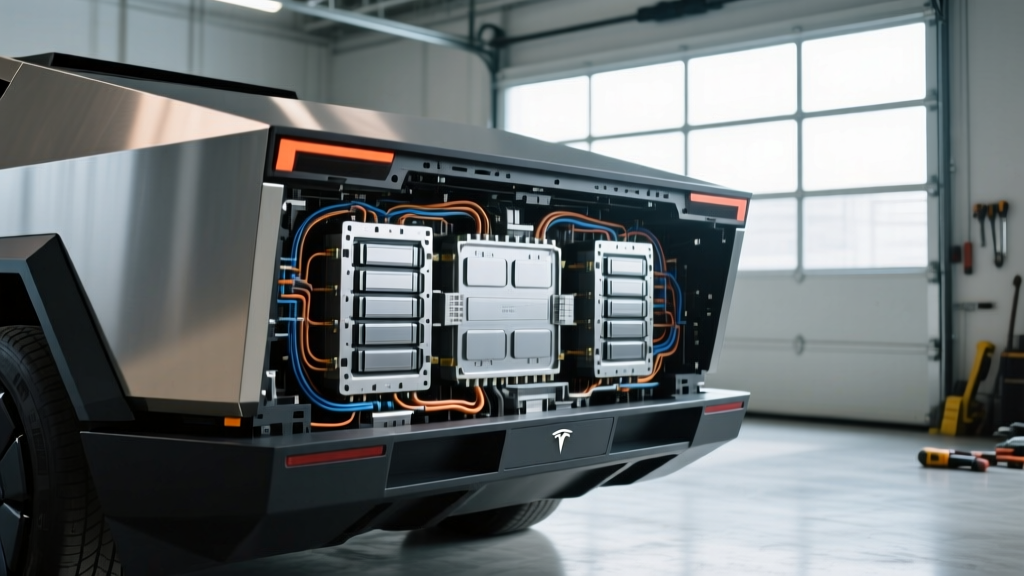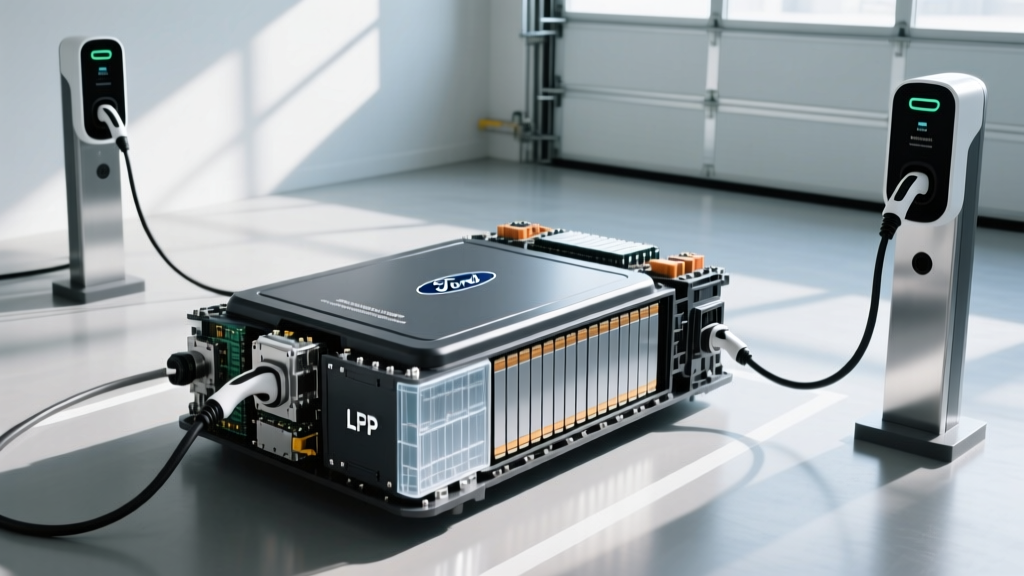
If you landed here searching for a Ford Fusion key fob battery, you're in the wrong place — that's a CR2032 coin cell for your remote, not the high-voltage traction battery powering an electric vehicle. But if you're an EV owner or shopper trying to understand what's actually inside the floor of your car, how long it lasts, and what happens when it degrades, this is the deep-dive you need.
This guide covers the lithium-ion traction batteries found in modern EVs — from the 58 kWh pack in a base Tesla Model 3 to the 131 kWh extended-range unit in the Ford F-150 Lightning. We'll break down chemistry differences, real-world degradation data, warranty coverage, replacement economics, and the care habits that actually move the needle on longevity.
LFP vs NMC: The Chemistry Decision That Shapes Your EV
Not all lithium-ion batteries are created equal. The two dominant chemistries in 2026-model EVs are LFP (lithium iron phosphate) and NMC/NCA (nickel manganese cobalt / nickel cobalt aluminum). The chemistry affects energy density, cycle life, cold-weather performance, cost, and even how you should charge daily.
| Attribute | LFP (LiFePO₄) | NMC / NCA |
|---|---|---|
| Energy Density | ~160–180 Wh/kg (lower) | ~220–260 Wh/kg (higher) |
| Cycle Life | 3,000–5,000+ cycles | 1,000–2,000 cycles |
| Cold Performance | Reduced; slower charge below 32°F | Better low-temp charge acceptance |
| Cost (per kWh) | ~$85–$100/kWh at pack level | ~$110–$135/kWh at pack level |
| Recommended Daily SoC | 100% OK (manufacturer-approved) | 80% daily; 100% for trips only |
| Thermal Stability | Excellent; higher runaway threshold | Good; requires active BMS monitoring |
| Common In (2026) | Tesla Model 3/Y RWD, Ford Mustang Mach-E Select (base), BYD models | Tesla Long Range/Performance, Hyundai Ioniq 5/6, Rivian, F-150 Lightning Ext. Range |
The practical takeaway: If you buy an LFP-equipped EV (like the 2026 Tesla Model 3 RWD with its ~60 kWh LFP pack and 272-mile EPA range), you can charge to 100% daily without accelerating degradation — a genuine convenience advantage for commuters who need every mile. NMC packs, which dominate long-range and performance trims, deliver more miles per kilogram but benefit from an 80% daily charge ceiling. Neither chemistry is universally "better"; the right choice depends on your daily mileage, climate, and whether you prioritize range or longevity.
How Long Do EV Batteries Actually Last?
The short answer: longer than most buyers assume. The high-voltage traction battery in a modern EV is engineered to outlast the vehicle's economic life in most cases. But "last" requires definition — batteries don't suddenly die; they gradually lose capacity.
Based on fleet data from Tesla's 2025 Impact Report, aggregated Tesla fleet telemetry, and independent analysis from sources like Recurrent Auto, here's what real-world degradation looks like:
Typical Capacity Retention Over Time (NMC & LFP averages across popular models):
- Year 1 / ~15,000 mi: 95–98% capacity retained (initial formation loss)
- Year 3 / ~45,000 mi: 91–95% retained
- Year 5 / ~75,000 mi: 88–93% retained
- Year 8 / ~120,000 mi: 85–90% retained
- Year 10+ / ~150,000+ mi: 80–87% retained (varies widely by care habits)
Note: LFP packs generally show slower mid-life degradation but may experience a steeper initial drop in the first 1–2% before stabilizing. NMC packs often show a more linear decline. Both chemistries tend to "plateau" — the degradation curve flattens significantly after year 4–5.
For context, a 2026 Hyundai Ioniq 5 Long Range (84 kWh usable, NMC) with an EPA range of 305 miles would realistically deliver around 260–275 miles at year 5 and ~250 miles at year 8 — still thoroughly usable for daily driving. Most EV batteries reach end-of-vehicle-life at 200,000+ miles, well past the point where other components (suspension, interior, electronics) have aged out.
What the Battery Warranty Actually Covers
Federal law mandates that EV manufacturers provide a minimum battery warranty of 8 years / 100,000 miles (10 years / 150,000 miles in CARB states like California, New York, and Massachusetts). But the details matter enormously.
| Manufacturer | Warranty Period | Mileage Cap | Capacity Threshold | Notes |
|---|---|---|---|---|
| Tesla (Model 3/Y RWD — LFP) | 8 years | 100,000 mi | 70% retention | LFP packs covered same as NMC |
| Tesla (Long Range/Performance) | 8 years | 120,000 mi | 70% retention | Higher mileage cap on LR trims |
| Hyundai / Kia | 10 years | 100,000 mi | 70% retention | Among the longest coverage |
| Ford (Mach-E, F-150 Lightning) | 8 years | 100,000 mi | 70% retention | Covers battery & hybrid/electric components |
| GM (Ultium-based: Equinox EV, Blazer EV, Silverado EV) | 8 years | 100,000 mi | 70% retention | Ultium platform standard coverage |
| Rivian | 8 years | 120,000 mi | 70% retention (175 mi range min) | Also guarantees minimum range floor |
| Volkswagen (ID.4) | 8 years | 100,000 mi | 70% retention | Standard for MEB platform |
Critical nuance: The 70% threshold means the manufacturer only owes you a replacement or repair if your battery degrades below 70% of original capacity within the warranty window. An EV that retains 72% at year 8 is functioning within spec — and that 72% battery still provides meaningful daily range. Also, warranties cover defects and excessive degradation, not damage from accidents, flooding, or improper modifications. Always check your specific owner's manual for exclusions.
EV Battery Replacement Cost: What the Numbers Actually Say
This is where misinformation runs rampant. Headlines cite $20,000 replacement costs without context. Here's the reality for 2026:
| Vehicle / Pack Size | Battery kWh (Usable) | Estimated Replacement Cost | Typical Replacement Timeline |
|---|---|---|---|
| Tesla Model 3 RWD (LFP) | ~60 kWh | $10,000–$13,000 | 15+ years / 200,000+ mi (if ever) |
| Tesla Model Y Long Range | ~75 kWh | $13,000–$16,000 | 15+ years / 200,000+ mi |
| Hyundai Ioniq 5 Long Range | ~84 kWh | $12,000–$16,000 | 15+ years |
| Ford Mustang Mach-E Extended Range | ~91 kWh | $14,000–$18,000 | 15+ years |
| Ford F-150 Lightning Ext. Range | ~131 kWh | $20,000–$28,000 | 15+ years |
| Rivian R1T / R1S (Max Pack) | ~149 kWh | $22,000–$30,000 | 15+ years |
| Chevrolet Equinox EV | ~85 kWh | $12,000–$15,000 | 15+ years |
Key context most articles omit: the vast majority of EV owners will never pay for a traction battery replacement. Batteries are outlasting the vehicles around them. When replacements do occur, they're usually covered under warranty (within 8 years/100k miles). Out-of-warranty replacements for vehicles 12–15+ years old will benefit from continued pack-cost declines — battery pack prices have fallen from ~$1,200/kWh in 2010 to roughly $100–$120/kWh in 2026, and aftermarket/refurbished packs are increasingly available.
Additionally, modular battery architectures (like GM's Ultium and some Hyundai/Kia designs) allow partial pack replacement — swapping only degraded modules rather than the entire assembly — which can cut costs by 40–60%.
5 Habits That Genuinely Affect Battery Longevity
Battery degradation is driven by physics, not superstition. Here are the factors with the strongest evidence behind them:
- Avoid sustained high State of Charge (SoC): For NMC batteries, storing at 100% for days accelerates electrolyte decomposition. Set your daily charge limit to 80% and only charge to 100% when you'll drive shortly after. LFP owners: 100% daily is fine — in fact, periodic 100% charges help the BMS recalibrate cell balance.
- Minimize DC fast charging frequency: Occasional road-trip fast charging is perfectly fine. But daily use of 150+ kW DC chargers generates sustained high heat, which is the primary degradation accelerator. If you can charge at home on Level 2 (7–11 kW) for daily needs, do it. Data from Idaho National Laboratory testing showed that vehicles fast-charged exclusively lost ~5–8% more capacity over 40,000 miles compared to Level 2-only vehicles.
- Manage extreme temperature exposure: Batteries degrade fastest when held at high SoC and high temperature simultaneously. In hot climates, avoid leaving your EV at 100% SoC in direct sunlight for extended periods. In cold climates, use preconditioning (available on virtually all modern EVs) to warm the battery before fast charging — this protects the cells and dramatically improves charge speed.
- Don't let SoC sit at 0%: Deep discharge stresses lithium-ion cells. If storing your EV for weeks, aim for 50–60% SoC. Never leave it at near-zero for extended periods.
- Use the car regularly: Lithium-ion batteries prefer moderate, regular cycling over prolonged static storage. Daily driving with regular charging is actually better for longevity than letting the car sit for weeks at a time.
How to Check Your Battery's State of Health (SoH)
State of Health (SoH) is the percentage of original capacity your battery currently retains. Here's how to monitor it:
In-Vehicle Displays
Some manufacturers surface SoH directly. Tesla's service menu (accessible through the software screen) shows battery health metrics. Hyundai/Kia's infotainment systems in 2024+ models include an EV battery health screen. Ford's SYNC 4 provides estimated range vs. original range comparisons that let you infer degradation.
OBD-II Scanners & Third-Party Apps
Devices like the OBDLink SX or Carista adapter, paired with apps like Torque Pro or brand-specific tools, can read the battery management system's (BMS) reported SoH value directly. This is the most accurate method available to consumers without a dealer visit.
Dealer Diagnostic Reports
Any authorized service center can pull a full battery health report showing individual cell group voltages, capacity test results, and SoH percentage. Request this during routine service — especially useful before a warranty claim or when buying a used EV.
Manual Tracking Method
Track your real-world range over consistent routes at similar temperatures. If your Ioniq 5 delivered 290 miles of real-world range when new and now delivers 265 miles on the same commute in similar weather, that's roughly 91% SoH — consistent with normal year-3 degradation.
Emerging Battery Tech: What's Real and What's Still Coming
The battery landscape is evolving, but it's essential to separate shipping products from lab promises:
Silicon-Dominant Anodes
Companies like Sila Nanotechnologies and Group14 are replacing graphite anodes with silicon-composite materials, boosting energy density by 15–25%. These are beginning to appear in limited production applications (notably the Mercedes G-Class electric and select Porsche models), but widespread adoption across mainstream EVs is expected in the 2027–2029 timeframe. Benefit: more range in the same physical pack size.
Solid-State Batteries
The long-promised solid-state battery — replacing liquid electrolyte with a solid conductor — offers theoretical advantages in energy density, charge speed, and safety. Toyota has announced a 2027–2028 production timeline for limited solid-state deployment, and QuantumScape is in validation phases with Volkswagen. However, no solid-state EV battery is available in any production vehicle as of 2026. Realistic mass-market availability remains 2029–2032. Be skeptical of any claim suggesting otherwise.
Sodium-Ion Batteries
CATL and BYD are deploying sodium-ion packs in select Chinese-market vehicles. These use abundant, cheap materials and perform well in cold weather but offer lower energy density than LFP. They're unlikely to appear in US-market EVs before 2028, and would likely be limited to entry-level, shorter-range models where cost matters more than range.
The honest assessment: incremental improvements in NMC and LFP chemistry (better electrolytes, silicon-anode blends, improved cell packaging like cell-to-chassis designs) will deliver more tangible benefits to 2026–2028 buyers than any breakthrough technology.
Frequently Asked Questions
How long do EV batteries last in years and miles?
Based on current fleet data, most EV traction batteries retain 80–90% of original capacity at 150,000 miles and 10 years. Many will outlast 200,000 miles before degrading below 70%. The vehicle's other components (suspension, electronics, interior) typically reach end-of-life before the battery does.
How much does an EV battery cost to replace?
Replacement costs range from ~$10,000 for a compact EV with a 60 kWh pack to $28,000+ for a large truck with a 130+ kWh pack, including labor. However, most owners never pay this — batteries typically outlast the vehicle, and failures within the first 8 years/100,000 miles are covered by warranty. Costs continue to decline as pack prices fall and refurbished options expand.
What does the EV battery warranty cover?
Federal minimum is 8 years/100,000 miles (10 years/150,000 miles in CARB states), guaranteeing the battery retains at least 70% of original capacity. Coverage includes defects and excessive degradation but excludes accident damage, flooding, and unauthorized modifications. Check your manufacturer's specific terms for exclusions.
How do I check and maximize my EV battery health?
Check SoH through your vehicle's infotainment system, an OBD-II scanner with EV-compatible apps, or a dealer diagnostic report. Maximize longevity by charging NMC batteries to 80% daily (100% for LFP), minimizing exclusive DC fast-charging reliance, avoiding prolonged storage at 0% or 100% SoC, and using preconditioning in extreme temperatures.
LFP vs NMC — which battery chemistry is better?
Neither is universally better. LFP offers superior cycle life (3,000–5,000+ cycles), lower cost, and the convenience of 100% daily charging, but has lower energy density and weaker cold-weather performance. NMC delivers higher range per kilogram and better cold-weather charging but costs more and benefits from an 80% daily charge limit. Choose LFP for commuter/daily-driver duty cycles; choose NMC when maximum range or performance is the priority.
Does fast charging damage my EV battery?
Occasional DC fast charging causes negligible additional degradation. However, exclusive reliance on DC fast charging (150+ kW daily) can accelerate capacity loss by 5–8% over 40,000 miles compared to Level 2 charging, per Idaho National Laboratory testing. Modern battery management systems actively limit charge rates when cells are cold or near full to protect the pack — preconditioning before fast charging helps both speed and longevity.
Will solid-state batteries make my current EV obsolete?
Not anytime soon. Solid-state batteries are not available in any production EV as of 2026. Realistic mass-market deployment is estimated for 2029–2032. Current LFP and NMC batteries, combined with expanding charging infrastructure, are more than adequate for the vast majority of drivers. Don't delay an EV purchase waiting for solid-state — the technology timeline remains uncertain and early deployments will be limited to premium vehicles.