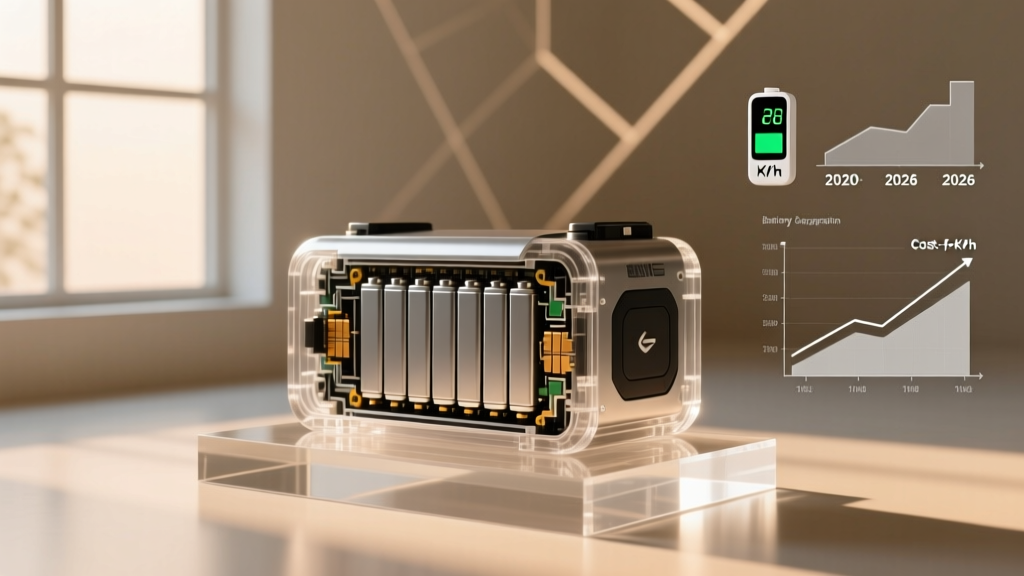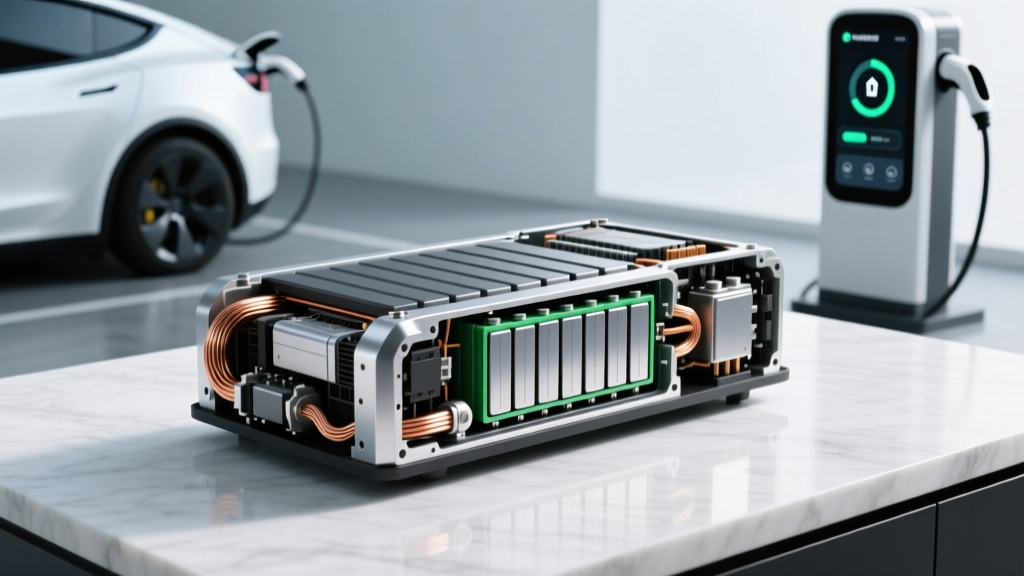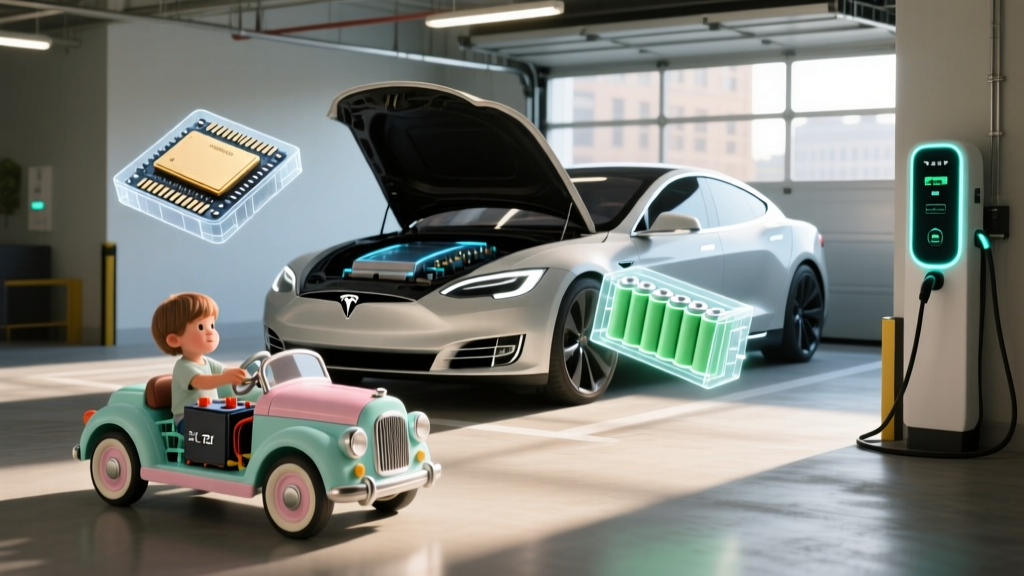
If your first experience with electric vehicles was a battery operated children's car in the driveway — a pint-sized ride-on powered by a 12-volt sealed lead-acid battery — you already understand the basic principle: stored electrical energy propels a vehicle. But the leap from those toy batteries to the 60–130 kWh lithium-ion traction packs in modern EVs is enormous. Today's EV batteries are liquid-cooled, chemically sophisticated, software-managed energy systems designed to last 15–20 years. This guide breaks down exactly how they work, how long they last, what they cost to replace, and how to maximize their lifespan.
EV Battery Chemistry: LFP vs NMC vs NCA Explained
Not all lithium-ion batteries are the same. The cathode chemistry determines energy density, cycle life, cold-weather performance, cost, and thermal stability. In 2026, two chemistries dominate the US EV market:
- LFP (Lithium Iron Phosphate, LiFePO₄): Used in standard-range Tesla Model 3/Y, Ford Mustang Mach-E Select, and many Chinese-market EVs. Iron-phosphate cathodes offer exceptional cycle life (3,000–5,000+ full cycles), superior thermal stability, lower raw-material cost, and no cobalt or nickel. The trade-off is lower energy density (roughly 15–20% less range per kg than NMC) and reduced performance in sub-freezing temperatures.
- NMC (Nickel Manganese Cobalt) / NCA (Nickel Cobalt Aluminum): Used in most long-range and performance EVs — Tesla Model S/X, Hyundai Ioniq 5/6, BMW i4/iX, Rivian R1T/R1S, and GM Ultium-based vehicles. Higher energy density means more range in a lighter, more compact pack. Cycle life is typically 1,000–2,000 full cycles before significant degradation, and the chemistry is more sensitive to sustained high state-of-charge and elevated temperatures.
| Attribute | LFP (LiFePO₄) | NMC / NCA |
|---|---|---|
| Energy Density | Moderate (~160 Wh/kg cell-level) | High (~220–260 Wh/kg cell-level) |
| Cycle Life | 3,000–5,000+ cycles | 1,000–2,000 cycles |
| Cold-Weather Performance | Reduced; more range loss below 32°F | Better low-temp discharge capability |
| Thermal Stability | Excellent; very low runaway risk | Good; requires robust BMS cooling |
| Cost (per kWh) | Lower (~$90–110/kWh in 2026) | Higher (~$120–145/kWh in 2026) |
| Critical Minerals | No cobalt or nickel | Requires cobalt and/or nickel |
| Recommended Daily SoC | 100% is acceptable | 80% for daily; 100% only for trips |
| Typical Applications | Standard-range, fleet, budget EVs | Long-range, performance, premium EVs |
Which is better? Neither is universally superior. LFP wins on longevity, cost, and safety — ideal for daily commuters who charge at home and don't need 350+ miles of range. NMC wins on range density and cold-weather usability — essential for road-trippers, cold-climate drivers, and anyone who needs maximum miles from a smaller pack. Tesla's approach of offering LFP in Standard Range trims and NMC in Long Range/Performance trims has become the industry template.
How Long Do EV Batteries Actually Last?
The short answer: far longer than most buyers assume. Based on aggregated fleet data from Tesla, Hyundai, and independent studies by Recurrent Auto, modern liquid-cooled EV batteries typically lose 5–10% of their original capacity in the first 50,000 miles, then degrade very slowly — approximately 1–2% per year or per 15,000–20,000 additional miles.
Typical Degradation Curve (NMC, liquid-cooled, average US climate):
- Year 1 / 15,000 mi: ~2–4% loss (initial formation loss)
- Year 3 / 45,000 mi: ~6–8% total loss
- Year 5 / 75,000 mi: ~8–10% total loss
- Year 8 / 120,000 mi: ~10–14% total loss
- Year 12 / 180,000 mi: ~14–18% total loss (estimated)
LFP packs generally show slower degradation, often remaining above 90% capacity at 100,000 miles in Recurrent's dataset. Tesla's 2025 Impact Report states their fleet averages less than 10% degradation at 200,000 miles — roughly the point where most vehicles are retired for non-battery reasons.
The critical takeaway: the vast majority of EV batteries will outlast the vehicle they're installed in. Catastrophic failure (sudden, total battery death) is extremely rare in liquid-cooled packs. The real concern is gradual capacity loss reducing your usable range over a decade — not a sudden $20,000 repair bill at 60,000 miles.
What Does the EV Battery Warranty Cover?
Federal law mandates a minimum 8-year / 100,000-mile battery warranty for all EVs sold in the US. California Air Resources Board (CARB) states extend this to 10 years / 150,000 miles. Most manufacturers exceed these minimums:
| Manufacturer | Warranty Period | Capacity Threshold | Notes |
|---|---|---|---|
| Tesla (Model 3/Y RWD — LFP) | 8 yr / 100,000 mi | 70% retention | Long Range/Performance: 8 yr / 120,000 mi |
| Hyundai / Kia | 10 yr / 100,000 mi | 70% retention | Among the longest standard coverage |
| GM (Ultium platform) | 8 yr / 100,000 mi | 70% retention | Covers battery and propulsion components |
| Ford (Mach-E, F-150 Lightning) | 8 yr / 100,000 mi | 70% retention | Includes battery management system |
| Rivian | 8 yr / 175,000 mi | 70% retention | Higher mileage cap for R1T/R1S |
| BMW | 8 yr / 100,000 mi | 70% retention | Transferable to subsequent owners |
What "70% retention" means: If your 82 kWh (usable) battery degrades to below 57.4 kWh of usable capacity within the warranty period, the manufacturer must repair or replace it at no cost. In practice, very few owners ever trigger a warranty claim — most packs remain well above 80% capacity at the 8-year mark. The warranty covers defects and abnormal degradation; it does not cover physical damage from collisions, flooding, or unauthorized modifications.
EV Battery Replacement Cost: What You'd Actually Pay
If your battery degrades below the warranty threshold after the warranty expires — or if it suffers physical damage not covered by insurance — here's what replacement costs look like in 2026:
| Battery Size / Vehicle Class | Typical Replacement Cost (parts + labor) | Example Models |
|---|---|---|
| 40–60 kWh (compact / standard range) | $5,000–$9,000 | Nissan Leaf, Chevy Bolt EV, base Model 3 |
| 70–90 kWh (mid-range / crossover) | $9,000–$15,000 | Model Y LR, Ioniq 5, Mustang Mach-E |
| 100–135 kWh (long-range / truck / luxury) | $15,000–$22,000 | F-150 Lightning, Model S/X, Rivian R1T, BMW iX |
These figures reflect declining cell costs — down from $20,000–$30,000 for equivalent packs a decade ago. Third-party remanufacturers like FutureRide and independent EV shops now offer refurbished packs at 30–50% below OEM pricing for older models. Module-level repair (replacing individual degraded modules rather than the entire pack) is increasingly available for $2,000–$5,000 depending on the vehicle.
When is replacement typically needed? For most owners, it isn't. The average age of a scrapped US vehicle is roughly 12 years and 150,000 miles. A well-maintained EV battery at that age will likely retain 80–85% of its original capacity — still delivering 200+ miles of range from a 300-mile-rated pack. Replacement is most commonly triggered by collision damage, manufacturing defects (covered under warranty), or extreme high-mileage fleet use (100,000+ miles of daily DC fast charging).
Factors That Accelerate (or Preserve) Battery Life
Lithium-ion degradation is driven by chemical stress. The following factors have the most measurable impact on long-term State of Health (SoH):
What Hurts Your Battery
- Frequent DC fast charging above 150 kW: High charge rates generate heat and lithium plating risk. Occasional road-trip fast charging is fine; daily reliance on 250+ kW chargers accelerates degradation by an estimated 1–3% over 5 years vs. Level 2 home charging.
- Sustained high State of Charge (NMC): Parking an NMC battery at 100% SoC for days or weeks, especially in hot weather, stresses the cathode. LFP batteries tolerate 100% SoC far better.
- Extreme heat exposure: Battery temperatures consistently above 95°F (ambient + internal heat) accelerate electrolyte decomposition. Parking in shade or a garage matters in Arizona, Texas, and Florida summers.
- Deep discharges to 0%: Dropping below 5% SoC regularly stresses the anode. The low-SoC buffer protects against this, but routinely running the battery to near-empty adds cumulative wear.
- Track use / sustained high-power discharge: Repeated hard acceleration and high-speed driving generates sustained pack heat beyond what thermal management can fully offset.
What Preserves Your Battery
- Daily Level 2 home charging (7–11 kW): Slow, moderate-rate charging generates minimal heat and is the single best practice for long-term health.
- 20–80% SoC window (NMC): For daily driving, set your charge limit to 80%. Reserve 100% for road trips. LFP owners can charge to 100% daily without concern.
- Preconditioning before fast charging: Most EVs (Tesla, Hyundai E-GMP, GM Ultium) automatically warm the battery when you navigate to a DC fast charger. This optimizes the charge curve and reduces lithium plating risk.
- Garage or shaded parking: Keeping the pack within 50–80°F when parked reduces calendar degradation, which occurs even when the car isn't driven.
- Software updates: Manufacturers periodically refine battery management algorithms. Keep your EV's firmware current — OTA updates often include improved thermal management and charge-curve optimization.
How to Check Your Battery's State of Health (SoH)
State of Health (SoH) is the percentage of your battery's original usable capacity that remains. A new 82 kWh pack at 92% SoH has ~75.4 kWh of usable capacity. Here's how to monitor it:
- In-vehicle displays: Tesla's app (Service → Battery Health), Hyundai's Bluelink, and BMW's iDrive provide estimated SoH percentages. These are manufacturer-calculated and may lag behind actual degradation.
- OBD-II diagnostic tools: Devices like the OBDLink MX+ paired with apps such as LeafSpy (Nissan), Scan My Tesla, or ABRP's battery health feature can read the BMS-reported SoH directly from the vehicle's CAN bus. This is typically more granular than the manufacturer's consumer-facing display.
- Third-party testing services: Companies like Recurrent and Geotab offer fleet-grade battery health reports that compare your pack's degradation curve against thousands of identical vehicles. Some used-EV sellers now include a Recurrent battery score in listings.
- Manual calculation: Track your kWh consumed vs. miles driven over a full charge cycle. If your 82 kWh pack (rated for 310 EPA miles) now delivers 270 miles at the same efficiency, your SoH is approximately 270/310 = ~87%. This method requires consistent driving conditions for accuracy.
For used-EV buyers, always request a battery health report before purchase. A SoH reading below 85% on a vehicle with under 80,000 miles suggests abnormal degradation or a history of heavy fast-charging — and may indicate a warranty claim is approaching.
What's Next: Solid-State, Silicon Anodes, and Realistic Timelines
Next-generation battery technologies are in active development, but buyers should separate laboratory announcements from showroom availability:
- Silicon-anode lithium-ion: Companies like Sila Nanotechnologies and Group14 are replacing graphite anodes with silicon-dominant composites, boosting energy density by 20–40%. Early commercial deployments are appearing in 2025–2026 model-year vehicles (Mercedes-Benz G-Class EV uses a silicon-anode pack from Sila). Expect broader adoption by 2028–2029.
- Solid-state batteries: These replace the liquid electrolyte with a solid ceramic or polymer separator, promising 50%+ energy density gains, faster charging, and improved safety. Toyota, Samsung SDI, and QuantumScape have demonstrated prototype cells. However, manufacturing scale-up remains the bottleneck. Toyota has announced limited solid-state EV production for 2027–2028, but widespread, cost-competitive solid-state packs are not expected before 2030–2032. Treat any claim of "solid-state EVs are here now" as premature.
- Sodium-ion batteries: CATL and other Chinese manufacturers are deploying sodium-ion packs in budget EVs (primarily in China). Lower energy density than LFP, but zero lithium, cobalt, or nickel. Possible US-market appearance in entry-level EVs post-2028 if supply-chain and IRA sourcing rules align.
For buyers shopping today: current lithium-ion technology (LFP and NMC) is mature, well-understood, and backed by extensive warranty coverage. Waiting for solid-state means waiting 4–6+ years for vehicles that will initially carry a significant price premium.
Frequently Asked Questions
How long do EV batteries last in years and miles?
Most modern liquid-cooled EV batteries retain 80–90% of their original capacity at 150,000 miles and 10–12 years. Based on fleet data from fueleconomy.gov and Recurrent Auto, the average EV battery will provide usable service for 15–20 years before degradation reduces range below practical levels. Catastrophic failure is extremely rare.
How much does it cost to replace an EV battery?
Full pack replacement ranges from $5,000 for a 40–60 kWh compact EV battery to $22,000 for a 130+ kWh long-range truck or luxury SUV pack (parts and labor, 2026 pricing). Module-level repairs cost $2,000–$5,000. However, most EV batteries never need replacement — they outlast the vehicle. Warranty coverage (8 yr / 100,000 mi minimum) protects against abnormal degradation.
What does the battery warranty actually cover?
Federal law requires a minimum 8-year / 100,000-mile warranty guaranteeing at least 70% capacity retention. If your battery falls below 70% of its original usable capacity within that period, the manufacturer must repair or replace it. The warranty covers defects and abnormal degradation but not collision damage, flood damage, or unauthorized modifications. CARB states (California, New York, and others) extend coverage to 10 years / 150,000 miles.
How do I check my EV battery health?
Use your vehicle's built-in battery health display (Tesla app, Bluelink, iDrive), an OBD-II scanner with EV-specific software (LeafSpy, Scan My Tesla), or a third-party service like Recurrent Auto. You can also estimate SoH by comparing your real-world range on a full charge to the original EPA rating. For used-EV purchases, always obtain a battery health report.
LFP vs NMC — which battery chemistry should I choose?
Choose LFP if you prioritize longevity (3,000–5,000+ cycles), lower cost, daily 100% charging convenience, and maximum thermal safety — and if standard-range (220–270 EPA miles) meets your needs. Choose NMC if you need long range (300–400+ EPA miles), better cold-weather performance, or a smaller/lighter pack for performance applications. Both chemistries are proven and well-warrantied in 2026.
Does fast charging damage my EV battery?
Occasional DC fast charging (road trips, a few times per month) has minimal impact on battery health. Daily reliance on high-power DC fast charging (150+ kW) can accelerate degradation by 1–3% over 5 years compared to Level 2 home charging. Modern battery management systems precondition the pack and manage charge-curve tapering to mitigate this. For daily use, a Level 2 home charger at 7–11 kW is the optimal strategy for long-term battery health.
Can I upgrade my EV battery to a larger one later?
In most cases, no. Battery packs are vehicle-specific in physical dimensions, voltage architecture, software calibration, and cooling-system integration. Tesla, Rivian, and a few others have explored retrofit programs, but these are rare and expensive. The practical path to more range is purchasing a vehicle with the battery size you need from the start.
Whether you grew up driving battery operated children's cars or you're researching your first full-size EV purchase, understanding battery technology is the single most important factor in a confident electric vehicle ownership experience. The chemistry, care habits, and warranty protections outlined above apply across every brand and model on the market today — and they show that modern EV batteries are among the most durable, well-engineered components in any vehicle you'll ever own.