If you landed here searching for a 2020 Ford Fusion key fob battery, you are not alone — that small CR2032 coin cell is one of the most frequently replaced batteries in the automotive world. But if you are also considering the high-voltage traction battery in a modern electric vehicle, the two power sources could not be more different in chemistry, cost, or longevity. This guide bridges that gap: we will quickly cover the Fusion key fob replacement, then spend the rest of the article on the EV traction batteries that actually propel today's electric cars.
2020 Ford Fusion Key Fob Battery: A Quick Replacement Primer
The 2020 Ford Fusion (including the Fusion Hybrid and Fusion Energi plug-in hybrid) uses a standard CR2032 3V lithium coin cell in its Intelligent Access key fob. This is a primary (non-rechargeable) lithium-manganese dioxide cell that typically lasts 2–4 years before the vehicle's dashboard displays a "Key Fob Battery Low" message.
- Battery type: CR2032 (3V lithium coin cell)
- Typical cost: $3–$8 for a two-pack at any auto parts store
- Replacement: Pry open the fob shell with a flathead screwdriver or coin, swap the cell with the positive (+) side facing up, and snap the shell closed.
- No reprogramming needed: The fob works immediately after a battery swap.
That is the easy part. Now let us turn to the battery that actually matters for electric mobility: the 60–130+ kWh high-voltage traction pack sitting under the floor of every modern EV.
How Long Do EV Batteries Actually Last?
The short answer: far longer than most buyers expect. Data aggregated from fleet operators, manufacturer warranty claims, and independent testing organizations like Recurrent shows that the median modern lithium-ion EV battery retains roughly 90–95% of its original capacity after 100,000 miles and approximately 85–92% after 200,000 miles, depending on chemistry and usage patterns.
Typical Capacity Retention by Mileage (Aggregated Fleet Data):
| Mileage | NMC/NCA Packs | LFP Packs |
|---|---|---|
| 50,000 mi | 94–97% | 96–98% |
| 100,000 mi | 90–94% | 93–96% |
| 150,000 mi | 86–91% | 90–94% |
| 200,000 mi | 82–88% | 87–92% |
| 300,000 mi | 75–83% | 82–89% |
Sources: Recurrent fleet data (2025), manufacturer warranty claim rates, Geotab longitudinal study. Individual results vary with climate, charging habits, and thermal management quality.
The critical takeaway is that most EV batteries outlast the vehicles they are installed in. The average American car is scrapped at around 200,000 miles or 12–15 years; a well-maintained EV battery will still deliver 80%+ of its original range at that point. Catastrophic, sudden failures are rare — degradation is a slow, linear decline.
LFP vs NMC vs NCA: Which Chemistry Is Right for You?
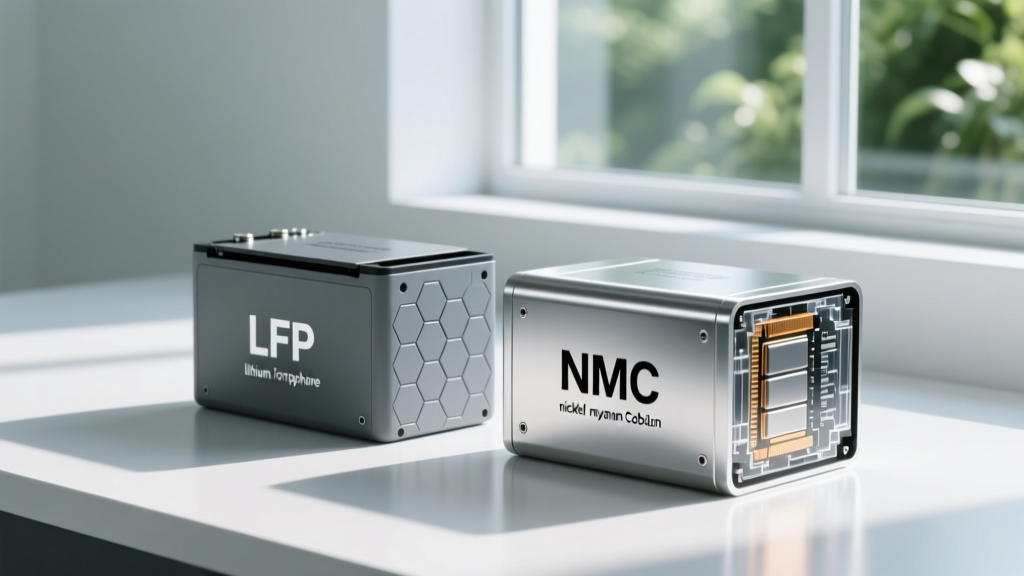
Not all lithium-ion batteries are the same. The two dominant chemistries in 2026 EVs are LFP (lithium iron phosphate) and NMC/NCA (nickel manganese cobalt / nickel cobalt aluminum). Each has distinct trade-offs.
| Attribute | LFP (LiFePO4) | NMC / NCA |
|---|---|---|
| Energy density | Lower (~160–200 Wh/kg cell-level) | Higher (~220–300 Wh/kg cell-level) |
| Range per pack weight | Shorter for same kWh | Longer for same kWh |
| Cycle life | 3,000–6,000+ cycles to 80% | 1,000–2,500 cycles to 80% |
| Cold-weather performance | More range loss in freezing temps (~30–40%) | Better cold performance (~20–30% loss) |
| Fast-charge tolerance | Handles frequent DC fast charging well | Frequent DCFC accelerates degradation |
| State of Charge flexibility | Can charge to 100% daily without harm | Best kept 20–80% for daily use |
| Cost | Lower — no cobalt or nickel | Higher — commodity-priced metals |
| Common in (2026) | Tesla Model 3/Y RWD, Ford Mustang Mach-E Select (base), BYD models, Rivian Standard | Tesla Long Range, Hyundai Ioniq 5/6 Long Range, GM Ultium packs, Porsche Taycan |
The verdict: LFP wins on longevity, cost, and daily convenience (charge to 100% freely). NMC/NCA wins on range-per-dollar and cold-weather efficiency. If you live in a mild climate and charge at home nightly, LFP is arguably the superior long-term ownership choice. If you need maximum highway range or regularly face sub-freezing winters, NMC/NCA remains the better fit.
What Does the EV Battery Warranty Actually Cover?
Federal law in the United States mandates a minimum EV battery warranty of 8 years / 100,000 miles. California Air Resources Board (CARB) states extend that to 10 years / 150,000 miles. Most major automakers meet or exceed these floors.
| Manufacturer | Battery Warranty | Capacity Threshold |
|---|---|---|
| Tesla (Model 3/Y LFP) | 8 yr / 120,000 mi | 70% retention |
| Tesla (Model 3/Y LR NMC) | 8 yr / 120,000 mi | 70% retention |
| Hyundai / Kia | 10 yr / 100,000 mi | 70% retention |
| GM (Ultium-based) | 8 yr / 100,000 mi | 70% retention |
| Ford (Mach-E, F-150 Lightning) | 8 yr / 100,000 mi | 70% retention |
| Rivian | 8 yr / 175,000 mi (Large); 8 yr / 120,000 mi (Standard) | 70% retention |
| BMW | 8 yr / 100,000 mi | 70% retention |
Note: Warranty covers capacity falling below the stated threshold under normal use. Damage from accidents, flooding, or unauthorized modifications is excluded. Always confirm current terms on the manufacturer's site before purchase.
In practice, warranty claims are uncommon. A 2024 study by Recurrent found that fewer than 1.5% of EVs required a warranty battery replacement within the first eight years. The 70% threshold is conservative — most packs retain well above that level.
How Much Does an EV Battery Replacement Cost?
This is the question that generates the most anxiety — and the most misinformation. Here are the real numbers as of 2026:
| Battery Size | Example Vehicles | Replacement Cost Range (parts + labor) |
|---|---|---|
| 40–60 kWh | Nissan Leaf, base Chevy Bolt EV | $6,500 – $10,000 |
| 60–80 kWh | Tesla Model 3 RWD/LR, Hyundai Ioniq 5, Ford Mach-E | $9,000 – $16,000 |
| 80–100 kWh | Tesla Model S/X, BMW iX, Rivian Large Pack | $13,000 – $22,000 |
| 100–135+ kWh | Ford F-150 Lightning Extended, GMC Hummer EV | $18,000 – $30,000+ |
Context matters enormously here. First, prices have been declining — pack-level costs fell below $100/kWh at the cell level in 2025 for LFP, and aftermarket/refurbished packs are increasingly available at 40–60% of new-OEM pricing. Second, most EVs will be retired or traded in before the battery needs replacement. Third, individual module replacement (rather than the full pack) is available on platforms like GM Ultium and some Hyundai/Kia packs, reducing out-of-warranty costs to $2,000–$5,000 for a single failed module.
According to fueleconomy.gov, the fuel savings of an EV over a comparable gas car typically range from $800–$1,500 per year depending on electricity and gas prices — meaning the battery replacement cost, spread over 15+ years, is largely offset by operational savings.
Factors That Affect EV Battery Life — and How to Maximize It
Battery degradation is driven by three primary stressors: heat, high state of charge, and high charge/discharge rates. Here is how each factor works and what you can do about it.
Practical Battery Care Checklist:
- Daily charging limit: For NMC/NCA packs, set your charge limit to 80% for daily driving. For LFP, charge to 100% at least once a week (the BMS needs full-charge voltage readings for accurate SoC calibration).
- DC fast charging: Occasional DCFC (road trips) is fine. Daily DCFC on an NMC pack accelerates degradation by an estimated 1–3% over 100,000 miles compared to Level 2 home charging. LFP tolerates frequent DCFC better.
- Extreme heat: Avoid leaving the car at 100% SoC in hot weather (above 95°F / 35°C) for extended periods. If parking outdoors in summer, set the charge limit to 50–60%.
- Extreme cold: Cold does not permanently damage the battery, but charging a cold battery at high power causes lithium plating. Always use preconditioning (scheduled departure or navigation to a charger) to warm the pack before fast charging in freezing weather.
- Storage: If the car will sit unused for weeks, leave it at roughly 50% SoC in a shaded or garage environment.
- Regen braking: Moderate regen settings in cold weather reduce stress on a cold pack. Most EVs automatically limit regen when the battery is cold.
How to Check and Monitor Your Battery's State of Health
State of Health (SoH) is the percentage of original capacity your battery can still hold. There are several ways to monitor it:
- In-vehicle displays: Some manufacturers (notably Hyundai/Kia, BMW, and Mercedes) expose a battery health percentage in the vehicle settings menu. Tesla does not natively display SoH but shows estimated range at full charge, which you can compare to the original EPA figure.
- OBD-II diagnostic tools: Devices like the OBDLink MX+ paired with apps such as LeafSpy (Nissan), Scan My Tesla, or Carista can read the BMS-reported SoH directly.
- Third-party services: Recurrent offers a free battery health report that connects to your vehicle's telematics and provides a degradation curve compared to the fleet average for your model.
- Manual calculation: Charge to 100%, note the displayed range, and compare it to the original EPA-rated range. A 310-mile EPA car displaying 285 miles at 100% has roughly 92% SoH (adjusted for temperature and driving conditions).
For buyers of used EVs, requesting a battery health report should be as routine as checking a Carfax. A SoH above 90% at under 80,000 miles is typical and healthy.
Emerging Battery Technology: Solid-State and Beyond
Several next-generation battery technologies are in advanced development, though none are yet in mass-market consumer EVs as of 2026:
- Solid-state batteries: Replace the liquid electrolyte with a solid ceramic or polymer, promising higher energy density (potentially 400+ Wh/kg cell-level), faster charging, and improved safety. Toyota, Samsung SDI, and QuantumScape are leading development. Realistic timeline: Limited production in premium vehicles by 2027–2028; mass-market availability not expected before 2030–2032.
- Silicon-dominant anodes: Replacing graphite anodes with silicon can boost energy density by 20–40%. Companies like Sila Nanotechnologies and Group14 are supplying early-production cells. Expect broader adoption in 2026–2028 model-year premium EVs.
- Sodium-ion batteries: CATL and BYD have begun producing sodium-ion cells for lower-cost, shorter-range EVs. Energy density is lower than LFP (~120–160 Wh/kg), but raw materials are abundant and cheap. Primarily targeting the Chinese and Southeast Asian markets initially.
These technologies are genuinely promising, but they are forward-looking. For buyers shopping today, current LFP and NMC/NCA chemistries are mature, well-understood, and backed by extensive real-world data.
Frequently Asked Questions
How long do EV batteries last in years and miles?
Most modern EV batteries retain 85–92% of their original capacity at 200,000 miles and 12–15 years of age. Catastrophic failure is rare; degradation is gradual. Many packs will outlast the vehicle itself.
How much does it cost to replace an EV battery?
Full pack replacement ranges from roughly $6,500 for a small pack (40–60 kWh) to $30,000+ for the largest packs (130+ kWh). However, most EVs never need a replacement, and module-level repairs can cost $2,000–$5,000 on platforms that support it.
What does the EV battery warranty cover?
Federal minimum is 8 years / 100,000 miles (10 yr / 150,000 mi in CARB states). The warranty guarantees the battery will retain at least 70% of its original capacity. If it drops below that threshold under normal use, the manufacturer replaces or repairs it at no cost.
How do I check my EV battery's health?
Use the vehicle's built-in battery health display (if available), an OBD-II scanner with a compatible app, a third-party service like Recurrent, or compare your full-charge displayed range to the original EPA rating.
LFP vs NMC — which chemistry is better?
LFP offers longer cycle life, lower cost, and the convenience of 100% daily charging, but has lower energy density and worse cold-weather range. NMC/NCA delivers more range per pound and better cold performance but degrades faster with frequent fast charging and high SoC storage. For mild-climate, home-charging owners, LFP is often the better long-term choice; for maximum-range or cold-climate buyers, NMC/NCA remains preferable.
What battery does a 2020 Ford Fusion key fob use?
The 2020 Ford Fusion key fob uses a standard CR2032 3V lithium coin cell. It is a $5 part available at any auto parts store, takes about two minutes to replace, and requires no reprogramming. This is the 12V accessory battery for the fob — entirely separate from the high-voltage traction battery in the Fusion Hybrid or Fusion Energi.
Does frequent DC fast charging damage the battery?
Occasional DCFC on road trips has a negligible effect. However, daily DCFC on an NMC/NCA pack can accelerate degradation by 1–3% over 100,000 miles compared to Level 2 home charging. LFP packs tolerate frequent DCFC better. Whenever possible, use Level 2 home charging for daily needs.