Why a "Battery for 2016 Dodge Dart" Search Leads to EV Battery Science
If you've searched for a battery for 2016 Dodge Dart, you're likely looking for a 12V lead-acid starter battery (Group 48 / H6, roughly $180–$260 at retail). The Dodge Dart was a conventional internal-combustion compact sedan discontinued after the 2016 model year — it never shipped with a high-voltage traction pack. But that everyday search term opens a far more consequential question for today's car buyers: how do modern EV traction batteries actually work, how long do they last, and what do they cost to replace?
This guide bridges that gap. We'll compare the simple 12V battery in a 2016 Dart to the sophisticated lithium-ion and LFP packs powering 2025–2026 EVs, then dive deep into chemistry, degradation data, warranty coverage, replacement economics, and care habits that maximize pack life.
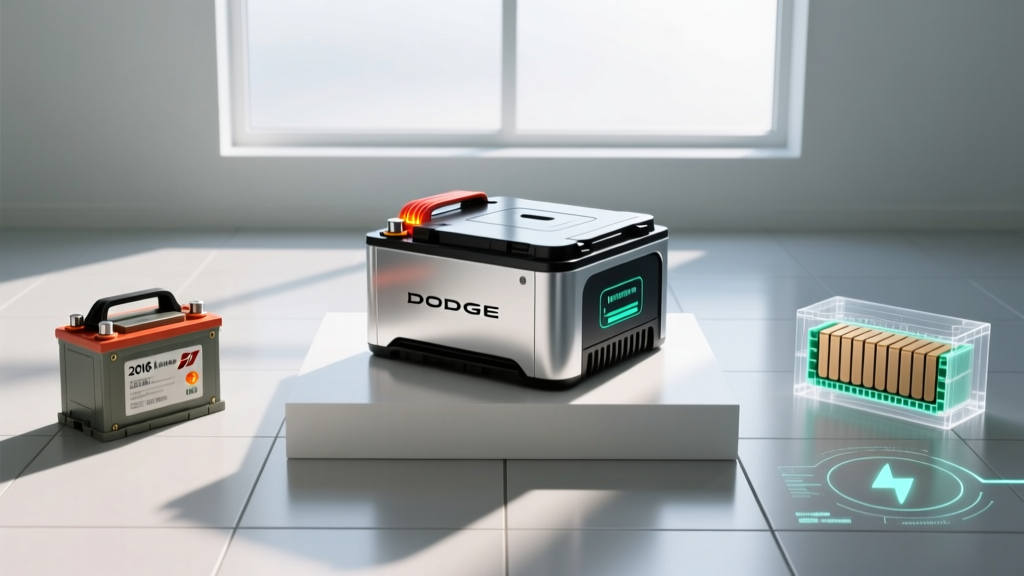
The 2016 Dodge Dart's 12V Battery vs. an EV Traction Battery
The 2016 Dodge Dart uses a conventional 12V flooded or AGM lead-acid battery to crank its 2.0L or 2.4L four-cylinder engine and run accessories. Typical specs:
- Capacity: ~60 Ah (amp-hours), ~700 CCA (cold cranking amps)
- Energy stored: ~0.72 kWh
- Weight: ~40–45 lbs
- Lifespan: 3–5 years
- Replacement cost: $180–$260
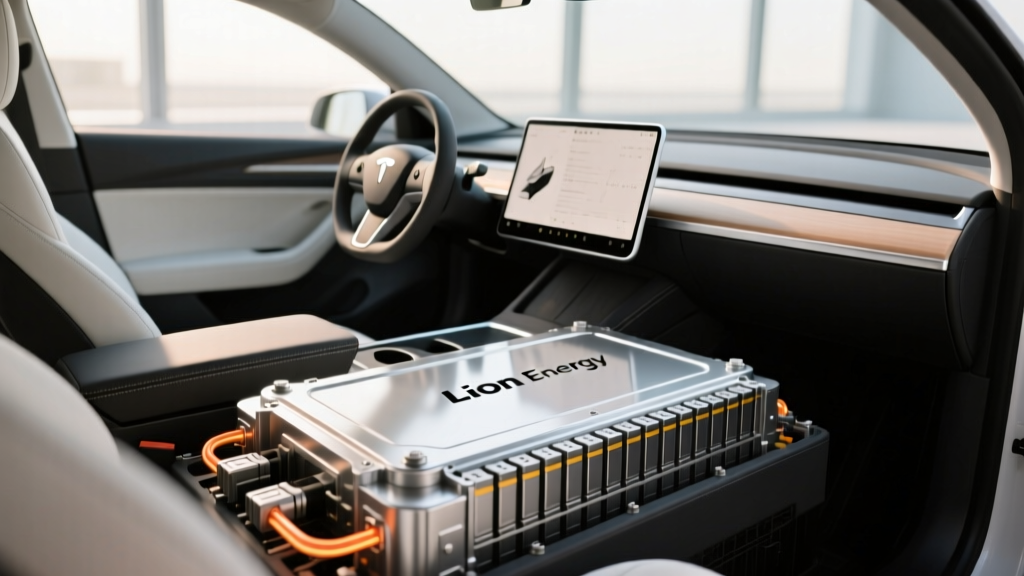
Contrast that with the high-voltage traction battery in a 2025 Tesla Model 3 Rear-Wheel Drive:
- Capacity: ~57.5 kWh usable (LFP chemistry)
- Voltage: ~350V nominal
- Weight: ~1,050 lbs
- Lifespan: Designed for 15–20+ years / 300,000+ miles
- Replacement cost: $12,000–$16,000 (though rarely needed within typical ownership)
The EV pack stores roughly 80 times more energy than the Dart's 12V battery and powers the entire drivetrain. Understanding that difference is the first step to understanding EV ownership.
Battery Chemistry: LFP vs. NMC/NCA Trade-Offs
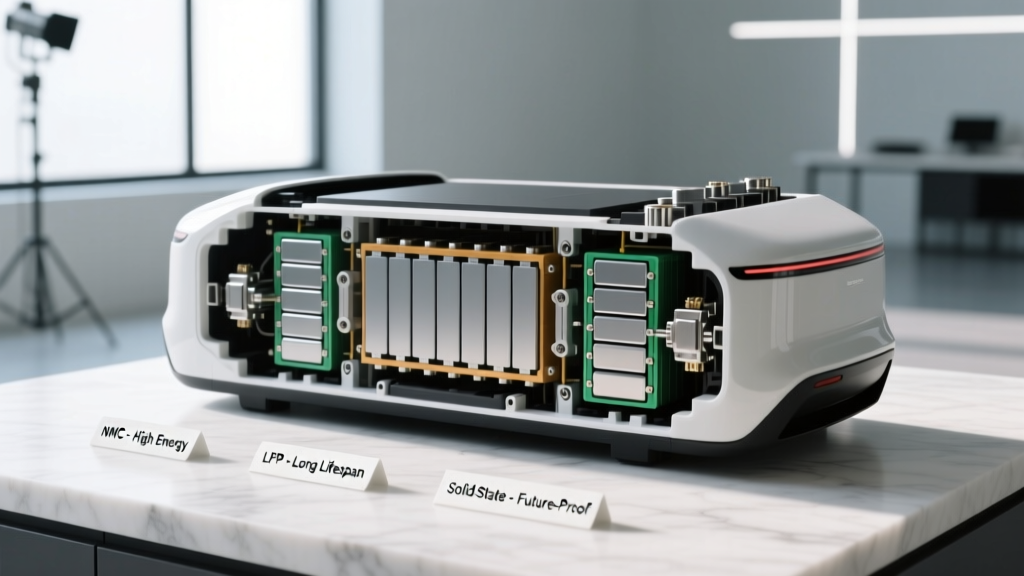
Modern EVs use one of two dominant lithium-ion chemistries. The choice affects range, longevity, cost, and how you should charge.
| Attribute | LFP (Lithium Iron Phosphate) | NMC / NCA (Nickel Manganese Cobalt / Nickel Cobalt Aluminum) |
|---|---|---|
| Energy density | Lower (~160 Wh/kg cell-level) | Higher (~250–300 Wh/kg cell-level) |
| Typical EPA range | 250–330 mi (mid-size sedan) | 300–400+ mi (mid-size sedan/SUV) |
| Cycle life | 3,000–5,000+ cycles to 80% SoH | 1,000–2,000 cycles to 80% SoH |
| Cold-weather performance | Weaker below 32°F; preconditioning critical | Better low-temp discharge and charge acceptance |
| Cost per kWh (2025) | ~$90–$110 | ~$120–$150 |
| Cobalt / ethical sourcing | Cobalt-free | Contains cobalt and nickel |
| Recommended daily SoC | 100% daily is fine (per Tesla, Ford guidance) | 80% daily; 100% for trips only |
| Notable 2025–2026 vehicles | Tesla Model 3 RWD, Ford Mustang Mach-E Select (LFP option) | Hyundai Ioniq 5, Chevy Equinox EV, Tesla Model Y Long Range |
Which is better? LFP wins on cycle life, cost, and daily charging convenience — ideal for commuters who charge at home nightly. NMC/NCA wins on energy density and cold-weather range — better for road-trippers and cold-climate buyers. Neither is universally superior; the right choice depends on your driving pattern.
How Long Do EV Batteries Actually Last? Degradation Data
The most persistent EV myth is that batteries need frequent replacement. Real-world fleet data tells a different story.
Typical Degradation Curve (Fleet Average Data)
- Year 1 / 15,000 mi: ~2–3% capacity loss (initial settling)
- Year 3 / 45,000 mi: ~5–7% total loss
- Year 5 / 75,000 mi: ~7–10% total loss
- Year 8 / 120,000 mi: ~10–15% total loss
- Year 10 / 150,000 mi: ~12–18% total loss (fleet median)
Sources: Geotab fleet study (6,300+ EVs), Recurrent Auto battery health reports.
At 15% degradation, a vehicle with an original EPA range of 300 miles still delivers ~255 miles — more than adequate for most daily driving. Degradation is not linear: the steepest drop occurs in the first year, then the curve flattens significantly. Many packs retain 85%+ State of Health (SoH) well past 150,000 miles.
Key data point: Geotab's longitudinal study of over 6,300 EVs found an average annual degradation rate of just 1.8% per year across all models and climates. At that rate, a pack would retain ~82% capacity after 10 years — consistent with manufacturer warranty thresholds.
Battery Warranty Terms: What's Covered and for How Long
Federal law mandates that EV batteries carry a minimum warranty of 8 years / 100,000 miles (10 years / 150,000 miles in California and states adopting CARB standards). Most manufacturers exceed this floor.
| Manufacturer / Model | Warranty Term | Capacity Retention Threshold |
|---|---|---|
| Tesla Model 3 RWD (LFP) | 8 yr / 100,000 mi | 70% minimum SoH |
| Tesla Model Y Long Range (NMC) | 8 yr / 120,000 mi | 70% minimum SoH |
| Hyundai Ioniq 5 | 10 yr / 100,000 mi | 70% minimum SoH |
| Chevrolet Equinox EV | 8 yr / 100,000 mi | 60% minimum SoH (GM standard) |
| Ford Mustang Mach-E | 8 yr / 100,000 mi | 70% minimum SoH |
| BMW iX | 8 yr / 100,000 mi | 70% minimum SoH |
What triggers a warranty claim? If your pack's State of Health drops below the stated threshold within the warranty period, the manufacturer will repair or replace modules (or the full pack) at no cost to restore capacity above the threshold. Note: most warranties cover capacity loss, not cosmetic damage or damage from accidents, flooding, or unauthorized modifications. Always read your specific warranty booklet — terms vary.
EV Battery Replacement Cost: When and How Much
Out-of-warranty battery replacement is the biggest fear among prospective EV buyers. Here's what the numbers actually look like in 2025–2026:
| Vehicle | Battery Size (usable kWh) | Chemistry | Estimated Replacement Cost |
|---|---|---|---|
| Tesla Model 3 RWD | ~57.5 kWh | LFP | $12,000–$14,000 |
| Tesla Model Y Long Range | ~75 kWh | NMC | $14,000–$18,000 |
| Hyundai Ioniq 5 | ~77.4 kWh | NMC | $15,000–$20,000 |
| Chevrolet Bolt EV (2023) | ~65 kWh | NMC | $14,000–$16,000 |
| Ford F-150 Lightning Ext. Range | ~131 kWh | NMC | $25,000–$32,000 |
| Nissan Leaf (40 kWh pack) | ~40 kWh | NMC | $8,000–$10,000 |
When is replacement actually needed? For the vast majority of owners, it isn't — at least not within the vehicle's useful life. Most EV batteries are designed to outlast 200,000+ miles before dropping below 70% SoH. When replacement is necessary (rare manufacturing defects, physical damage, or extreme high-mileage use), it's typically at 10–15+ years of service. By that point, battery costs per kWh have continued to decline, and refurbished or remanufactured packs offer lower-cost alternatives.
Compare this to the 2016 Dodge Dart: its 12V battery will likely be replaced 3–4 times over 15 years of ownership ($540–$1,040 cumulative), while its engine and transmission carry far greater failure risk and repair cost ($3,000–$6,000 for a transmission replacement). The EV's drivetrain has fewer moving parts and no transmission fluid, timing belt, or exhaust system to fail.
Factors That Affect EV Battery Life (and How to Maximize It)
Battery Care Checklist
- Limit DC fast charging to road trips. Frequent 150+ kW charging accelerates degradation. Use Level 2 home charging for daily needs.
- Avoid sitting at 100% SoC. For NMC packs, charge to 80% daily; set 100% only for trips. LFP packs tolerate 100% better — follow your manufacturer's guidance.
- Don't let the pack sit near 0% SoC. Prolonged storage below 10% stresses cells. If storing the vehicle, leave it at ~50% SoC.
- Precondition in cold weather. Use your EV's scheduled departure or preconditioning feature to warm the battery before driving and charging. Cold batteries charge slower and experience more stress.
- Park in shade or a garage during extreme heat. Sustained battery temperatures above 95°F accelerate chemical degradation. Active thermal management helps, but shaded parking reduces the load on the cooling system.
- Use scheduled charging. Set your charger to finish charging just before you leave — minimizing time spent at high SoC.
- Keep tire pressure optimized. Under-inflated tires increase rolling resistance, forcing the battery to work harder and generate more heat.
The single biggest factor within your control is charging habits. A 2024 study by Recurrent Auto found that EVs charged primarily on Level 2 (240V) showed statistically lower degradation than those relying heavily on DC fast charging — though the difference was modest (roughly 1–2% additional capacity retention over 3 years). The takeaway: DC fast charging is fine for road trips, but daily Level 2 home charging is gentler on the pack.
How to Check and Monitor Battery Health (SoH)
State of Health (SoH) is a percentage representing your battery's current maximum capacity relative to its original capacity. A new pack is 100% SoH; a pack with 10% degradation is at 90% SoH.
Methods to Check SoH
- In-vehicle display: Many EVs (Tesla, Hyundai/Kia, BMW) show battery health or estimated range trends in the settings menu. Tesla's app displays rated range vs. original, from which SoH can be calculated.
- OBD-II scanner + app: Devices like the OBDLink MX+ paired with apps such as EVNotify, LeafSpy (Nissan Leaf), or TeslaFi can read detailed battery telemetry including SoH, cell voltage variance, and pack temperature.
- Dealer diagnostic: A service center can run a full battery health report, typically as part of a warranty inspection or pre-purchase inspection for a used EV.
- Third-party services: Companies like Recurrent offer battery health reports based on connected vehicle data, useful for used-EV buyers.
When to be concerned: If your SoH drops more than 3% in a single year after the initial settling period, or if you notice sudden range drops, inconsistent cell voltages, or charging speed reductions, schedule a diagnostic. These can indicate a failing module rather than normal degradation.
Emerging Battery Technology: Solid-State and Silicon Anodes
The next generation of EV battery technology is under active development, but timelines remain longer than headlines suggest.
Solid-state batteries replace the liquid electrolyte with a solid material (ceramic, sulfide, or polymer), promising higher energy density (~400–500 Wh/kg), faster charging, and improved safety. Toyota has announced plans for limited solid-state EV production by 2027–2028, while Samsung SDI targets 2027. However, manufacturing scalability and cost remain significant hurdles. Expect solid-state packs to debut in premium vehicles first, with mainstream adoption likely in the 2030–2035 timeframe.
Silicon anode technology (used by companies like Sila Nanotechnologies and Group14) replaces graphite anodes with silicon-dominant composites, boosting energy density by 20–40%. This technology is already appearing in limited production — the 2025 Mercedes G-Class EV uses silicon anode cells from Sila. Wider adoption across mainstream EVs is expected by 2027–2029.
Sodium-ion batteries offer a lower-cost, cobalt-free alternative to lithium-ion, with CATL beginning production in China for smaller EVs. Energy density is lower than LFP, making sodium-ion best suited for urban runabouts and energy storage. U.S. market availability remains announced/preliminary as of 2026.
None of these technologies are currently available in mainstream U.S.-market EVs. Today's LFP and NMC packs are mature, well-understood, and backed by extensive real-world data — which is exactly what you want when making a $35,000–$60,000 purchase decision.
Frequently Asked Questions
How long do EV batteries last in years and miles?
Most modern EV batteries are engineered to last 15–20+ years and 200,000–300,000+ miles before dropping below 70% of original capacity. Fleet data from Geotab shows average degradation of ~1.8% per year, meaning a typical pack retains ~82% capacity after a decade. The battery will likely outlast other vehicle components.
How much does an EV battery cost to replace?
Out-of-warranty replacement costs range from ~$8,000 for a small pack (Nissan Leaf 40 kWh) to $25,000–$32,000 for a large pack (Ford F-150 Lightning 131 kWh). Mid-size packs (Tesla Model 3, Hyundai Ioniq 5) fall in the $12,000–$20,000 range. However, most packs never require replacement within the vehicle's useful life, and the 8-year/100,000-mile federal warranty minimum covers premature failures.
What does the EV battery warranty cover?
Federal law requires a minimum 8-year/100,000-mile warranty (10 years/150,000 miles in CARB states). Coverage applies when the pack's State of Health drops below a stated threshold — typically 70% for most brands, 60% for GM. The warranty covers capacity loss from normal use and manufacturing defects, but not damage from accidents, flooding, or unauthorized modifications. Check your specific warranty booklet for exact terms.
How do I check and maximize my EV battery health?
Monitor SoH through your vehicle's settings display, OBD-II apps (TeslaFi, LeafSpy, EVNotify), or dealer diagnostics. To maximize longevity: charge primarily on Level 2, limit DC fast charging to road trips, keep NMC packs between 20–80% SoC for daily use (LFP can charge to 100%), precondition in cold weather, and avoid prolonged storage at very low or very high SoC.
LFP vs. NMC — which battery chemistry is better for me?
Choose LFP if you charge at home nightly, want maximum cycle life (3,000–5,000+ cycles), prefer cobalt-free sourcing, and don't mind slightly lower range. Choose NMC/NCA if you need maximum range per charge, frequently drive in cold climates, take regular road trips, or want faster DC charging speeds. Both chemistries are proven and reliable — the best choice matches your driving pattern.
Does the 2016 Dodge Dart have an EV battery?
No. The 2016 Dodge Dart is a conventional gasoline-powered sedan with a 12V lead-acid starter battery (Group 48/H6). It has no high-voltage traction battery. If you're replacing the Dart's 12V battery, expect to pay $180–$260 for an AGM or flooded unit with a 2–4 year warranty from auto parts retailers.