If you’ve landed on this page searching for a battery for 2013 Mini Cooper, you’re likely dealing with a dead 12V lead-acid starter battery or an aging internal-combustion vehicle. That’s a completely different conversation—and one for a conventional auto-parts supplier. But if that search brought you here because you’re considering an EV and wondering how long modern electric-vehicle traction batteries last, how much they cost to replace, and whether you’ll face a catastrophic bill in five years, you’re in the right place.
This guide covers the state of EV battery technology in 2026: chemistry trade-offs (LFP vs NMC/NCA), real degradation data, warranty protections, replacement economics, and what’s coming next. The short version? Modern EV traction batteries routinely outlast the vehicles they power, and the “battery for 2013 Mini Cooper” anxiety—rooted in replacing $200 lead-acid cells every 3–5 years—simply doesn’t translate to today’s liquid-cooled, warrantied, chemistry-optimized EV packs.
LFP vs NMC/NCA: The Chemistry Decision That Shapes Your EV
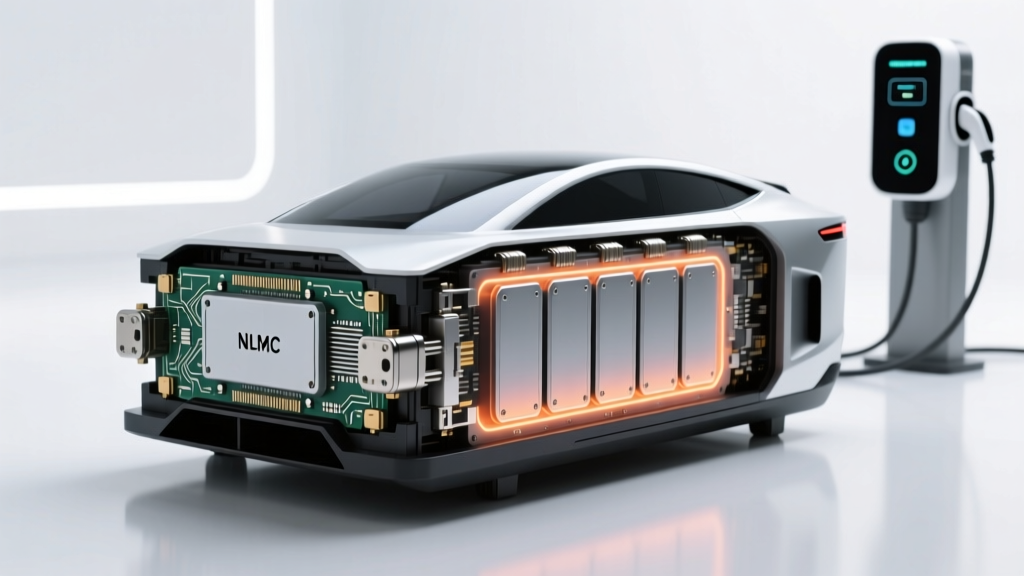
Every modern EV uses a lithium-ion traction battery, but not all lithium-ion chemistries are equal. The two dominant families in 2026 are LFP (lithium iron phosphate) and NMC/NCA (nickel manganese cobalt / nickel cobalt aluminum). Your choice of vehicle often locks you into one or the other, and each has distinct engineering trade-offs.
| Attribute | LFP (LiFePO₄) | NMC / NCA |
|---|---|---|
| Energy Density | ~160–180 Wh/kg (lower) | ~220–280 Wh/kg (higher) |
| Typical Range Impact | Slightly shorter range per kWh pack size | More range from same physical pack |
| Cycle Life | 3,000–5,000+ cycles to 80% capacity | 1,500–2,500 cycles to 80% capacity |
| Cold-Weather Performance | More range loss below 32°F; slower DC charging in cold | Better cold tolerance; faster preconditioned charging |
| Cost per kWh | ~$90–$110/kWh (2026 pack-level) | ~$120–$145/kWh (2026 pack-level) |
| Cobalt Content | None (ethical sourcing advantage) | Contains cobalt/nickel (supply-chain sensitivity) |
| Charging to 100% SoC | Recommended periodically for BMS calibration | 80% daily limit recommended for longevity |
| Common In (2026 Models) | Tesla Model 3 RWD, Ford Mustang Mach-E Select (LFP option), BYD, Rivian standard-range | Hyundai Ioniq 5/6, Kia EV6/EV9, Tesla Long Range/Performance, Lucid, BMW iX |
The practical takeaway: If you charge at home daily, drive under 250 miles between charges, and live in a moderate climate, LFP is arguably the better long-term ownership bet—you can charge to 100% without anxiety, and the cycle life is extraordinary. If you need maximum range, tow frequently, or regularly face sub-freezing winters, NMC/NCA packs deliver better energy density and cold-weather charging performance.
How Long Do EV Batteries Actually Last? Real Degradation Data
The persistent myth that EV batteries “need replacing every few years” is a carryover from consumer electronics and, yes, from 12V batteries in cars like the 2013 Mini Cooper. Modern EV traction batteries tell a very different story.
Typical Degradation Curve (Aggregated Fleet Data, 2024–2026):
- Year 1 / ~12,000 mi: 1–3% capacity loss (initial “break-in” drop)
- Year 3 / ~36,000 mi: 4–7% total loss
- Year 5 / ~60,000 mi: 7–10% total loss
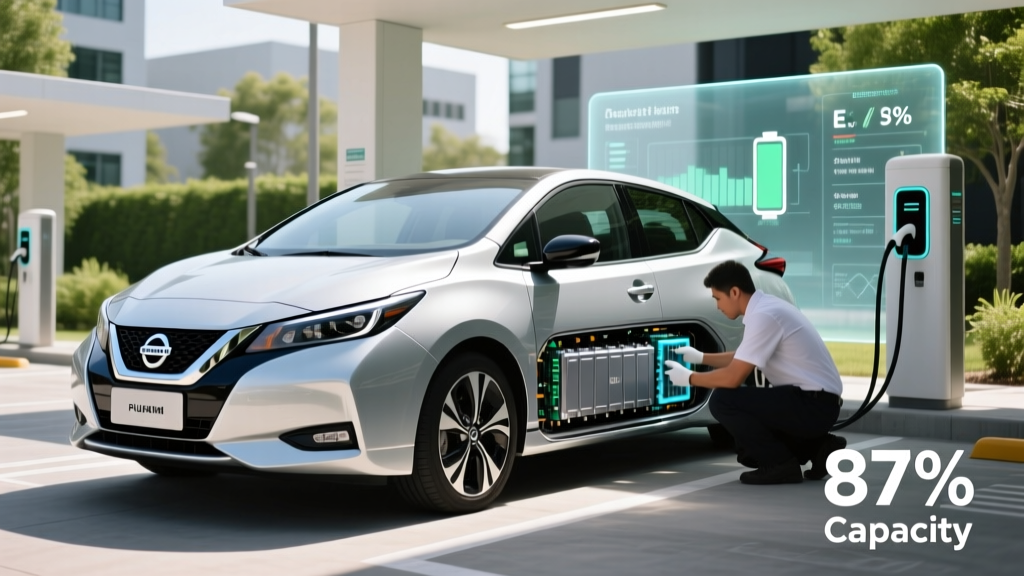
- Year 8 / ~100,000 mi: 10–15% total loss (most remain above 85% SoH)
- Year 10+ / 150,000+ mi: 15–20% total loss; pack still functional at ~80% capacity
Sources: Recurrent Auto fleet data (2025 report), Geotab longitudinal study, manufacturer warranty thresholds.
Tesla’s 2025 Impact Report noted that Model 3/Y batteries retain approximately 85% capacity at 150,000 miles. Hyundai/Kia have reported similar figures for their E-GMP platform vehicles. A 2024 Geotab study of over 10,000 EVs found average annual degradation of roughly 1.8% per year across all chemistries, with LFP packs showing even slower fade in moderate climates.
For context: a 2026 Hyundai Ioniq 5 with an EPA-estimated 305-mile range and an NMC 77.4 kWh usable pack would, at 85% State of Health (SoH) after 150,000 miles, still deliver roughly 259 miles of range. That’s more than sufficient for 95% of daily driving and most road trips.
What Does the EV Battery Warranty Actually Cover?
Federal law mandates a minimum EV battery warranty of 8 years / 100,000 miles (in California Air Resources Board states, it’s 10 years / 150,000 miles). But the details matter—especially the capacity retention threshold.
| Manufacturer | Warranty Term | Capacity Threshold | Covers |
|---|---|---|---|
| Tesla | 8 yr / 120,000 mi (LR/AWD); 8 yr / 100,000 mi (RWD) | 70% retention | Defects + excessive degradation |
| Hyundai / Kia | 10 yr / 100,000 mi | 70% retention | Defects + degradation below threshold |
| Ford | 8 yr / 100,000 mi | 70% retention | Defects + excessive capacity loss |
| GM (Ultium) | 8 yr / 100,000 mi | 70% retention (60% for Bolt-based) | Defects + degradation |
| BMW | 8 yr / 100,000 mi | 70% retention | Defects + excessive degradation |
| Rivian | 8 yr / 175,000 mi (commercial); 8 yr / 120,000 mi (consumer) | 70% retention | Defects + degradation |
What triggers a warranty claim? If your battery’s State of Health drops below the threshold (typically 70%) within the warranty period, the manufacturer must repair or replace it at no cost. In practice, warranty replacements are rare—most packs stay well above threshold. When they do occur, manufacturers often replace with a refurbished or remanufactured pack that meets the capacity threshold, not necessarily a brand-new unit.
For full warranty details and consumer protections, refer to fueleconomy.gov’s EV technology page and your vehicle’s specific warranty booklet.
EV Battery Replacement Costs: The Numbers Behind the Headlines
Headlines love to trumpet $20,000 battery replacement bills. Those figures are real—but they’re also worst-case, out-of-warranty scenarios that the vast majority of EV owners will never face. Here’s what replacement actually costs in 2026, by segment:
| Vehicle Segment / Example | Battery Size | Replacement Cost (Parts + Labor) | Typical Replacement Trigger |
|---|---|---|---|
| Compact EV (e.g., Chevy Bolt, Nissan Leaf) | 40–65 kWh | $8,000–$12,000 | Collision damage, rare cell failure post-warranty |
| Mid-size crossover (e.g., Model Y, Ioniq 5, Mach-E) | 72–84 kWh | $12,000–$18,000 | Physical damage, extreme degradation (uncommon) |
| Large SUV / truck (e.g., Rivian R1S, F-150 Lightning Ext.) | 100–135 kWh | $18,000–$28,000 | Collision, flooding, post-warranty failure |
| Luxury sedan (e.g., Lucid Air, Mercedes EQS) | 90–118 kWh | $20,000–$32,000 | Rare; typically covered under warranty |
Critical context: According to IIHS and industry collision data, the most common reason for out-of-warranty battery replacement is physical damage from an accident—not degradation. In those cases, insurance typically covers the cost. Catastrophic degradation-related failures within the warranty period are handled by the manufacturer. And packs that simply age gracefully to 75–80% SoH at 200,000+ miles remain perfectly drivable; they just offer less range.
The comparison to a battery for 2013 Mini Cooper is instructive: that car’s 12V lead-acid battery costs $150–$250 and lasts 3–5 years. Over a 15-year ownership span, you’d buy 3–5 of them. An EV traction battery, by contrast, is designed as a lifetime component—and the data bears that out.
Factors That Accelerate (or Preserve) Battery Health
Not all miles are equal when it comes to battery longevity. Here’s what actually moves the needle on degradation, ranked by impact:
High-Impact Factors
- Extreme heat exposure: Sustained ambient temperatures above 95°F accelerate chemical degradation. Garage parking and thermal preconditioning help significantly.
- Frequent DC fast charging above 150 kW: Occasional road-trip fast charging is fine, but daily use of 250–350 kW chargers generates sustained heat that stresses cells. Level 2 home charging is gentler.
- Prolonged storage at 100% or 0% SoC: Lithium-ion cells are most stressed at voltage extremes. If storing for weeks, aim for 50% SoC.
Moderate-Impact Factors
- Cold-weather fast charging without preconditioning: Charging a cold pack forces lithium plating on the anode. Always use your vehicle’s battery preconditioning feature before DC fast charging in winter.
- Aggressive driving / frequent high-C-rate discharges: Repeated hard acceleration generates internal heat. Occasional fun is fine; daily track use is not what these packs are optimized for.
Low-Impact (But Often Overstated) Factors
- Regenerative braking intensity: Regen is a gentle charge event. It does not meaningfully accelerate degradation.
- Partial vs full charge cycles: Modern battery management systems (BMS) handle partial charges effortlessly. The old “memory effect” myth from NiMH does not apply to lithium-ion.
How to Check and Monitor Your EV’s Battery Health (SoH)
State of Health (SoH) is the percentage of original capacity your battery retains. A new pack is 100% SoH; a pack at 88% SoH holds 88% of its original kWh. Here’s how to check it:
Built-In Vehicle Displays
Most 2026 EVs surface SoH or a range-confidence metric in the infotainment system. Tesla shows it under Service mode; Hyundai/Kia include it in the EV menu; Ford displays it in the FordPass app. Consult your owner’s manual for the specific path.
OBD-II Dongles and Third-Party Apps
Devices like the OBDLink SX paired with apps such as LeafSpy (Nissan), Scan My Tesla, or ABRP (A Better Route Planner) with OBD integration can read real-time cell voltage, pack temperature, and SoH estimates directly from the BMS. For pre-purchase inspections on used EVs, this is invaluable.
Dealer Diagnostic Reports
Any authorized service center can pull a full battery health report. If you’re buying a used EV, request this before purchase. A 2023 model with 40,000 miles showing 94% SoH is excellent; one at 82% SoH warrants negotiation or warranty-claim discussion.
Charging-Data Analysis
Track your kWh consumed vs miles driven over several fill-ups. If your Ioniq 5 once took 72 kWh to charge from 10–90% and now takes 65 kWh for the same session, that’s a measurable SoH decline. Apps like TezLab and Recurrent automate this tracking.
What’s Next: Solid-State, Silicon Anodes, and Realistic Timelines
Next-generation battery technology is real—but timelines matter. Here’s the honest 2026 landscape:
Silicon-Anode Lithium-Ion (Available Now, Limited)
Companies like Sila Nanotechnologies and Group14 are shipping silicon-dominant anode cells that boost energy density by 20–40% over graphite anodes. These are appearing in limited production runs (Mercedes G580 EQG, select high-performance applications). Expect broader adoption by 2028–2029 as manufacturing scales.
Semi-Solid-State (Announced / Early Production)
Toyota, Samsung SDI, and QuantumScape have demonstrated semi-solid-state cells with improved energy density and faster charging. Toyota has announced a 2027–2028 production target for vehicles using these cells, with a claimed 750 km (~465 mi) range. These are announced/preliminary—not yet in consumer vehicles.
Full Solid-State (Late 2020s–2030s)
True solid-state batteries—replacing the liquid electrolyte entirely—promise step-change improvements in energy density, charge speed, and safety. Multiple manufacturers target 2030–2032 for initial production. Cost and manufacturing challenges remain significant. This technology is not currently available in any production vehicle.
For current buyers: don’t delay an EV purchase waiting for solid-state. Today’s NMC and LFP packs are mature, well-warrantied, and demonstrably long-lasting. By the time solid-state reaches mainstream pricing, today’s EVs will have served their owners well and entered the used market at attractive prices.
Frequently Asked Questions
How long do EV batteries last in years and miles?
Based on fleet data from Recurrent Auto, Geotab, and manufacturer reports, modern EV traction batteries retain 80–90% of original capacity at 150,000–200,000 miles (roughly 10–15 years of average driving). Many will outlast the vehicle itself. The 70% warranty threshold is a floor, not a typical endpoint.
How much does an EV battery cost to replace?
Out-of-warranty replacement ranges from roughly $8,000 for a compact EV pack to $28,000+ for a large truck/SUV pack, including labor. However, most replacements are covered by warranty (degradation) or insurance (collision damage). Cash-pay degradation replacements are rare because packs degrade slowly and remain usable well below 80% SoH.
What does the EV battery warranty cover?
Federally mandated minimums are 8 years / 100,000 miles with a capacity retention threshold (typically 70%). This covers both manufacturing defects and degradation below the threshold. CARB states extend this to 10 years / 150,000 miles. Check your specific manufacturer’s terms and the IRS clean vehicle credit page for related incentive information.
How do I check and maximize my EV’s battery health?
Check SoH via your vehicle’s built-in display, an OBD-II diagnostic app, or a dealer service report. Maximize longevity by: using Level 2 home charging for daily needs, limiting DC fast charging to road trips, avoiding prolonged storage at 0% or 100% SoC, preconditioning before winter fast charging, and parking in shade/garages during extreme heat.
LFP vs NMC — which is better and why?
Neither is universally better; it depends on your use case. LFP wins on cycle life (3,000–5,000 cycles), cost (~$90–110/kWh), and the ability to charge to 100% daily without concern—ideal for commuters and home-chargers in moderate climates. NMC/NCA wins on energy density (more range per kg), cold-weather charging performance, and towing suitability—ideal for road-trippers, cold-climate drivers, and those who need maximum range. Both are proven, well-warrantied technologies.
Is a 'battery for 2013 Mini Cooper' the same as an EV battery?
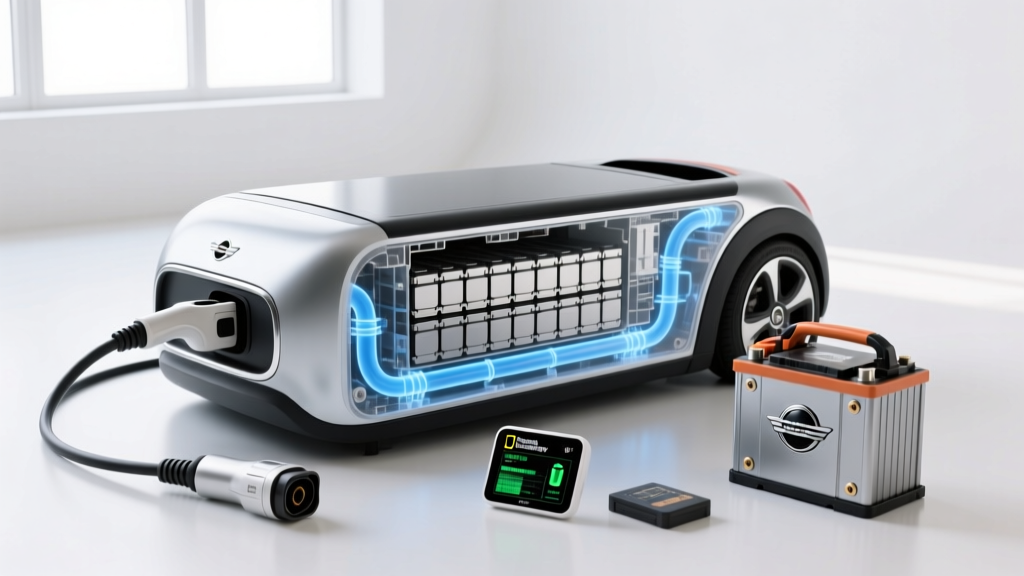
No. A 2013 Mini Cooper uses a conventional 12V lead-acid starter battery (group size H5/47, ~$150–$250). An EV traction battery is a high-voltage lithium-ion pack (typically 400V–800V, 40–135 kWh) that powers the drive motors. They serve entirely different purposes, have entirely different lifespans (3–5 years vs 15+ years), and cost entirely different amounts. If you need a 12V battery for a gas Mini, visit an auto parts retailer. If you’re researching EV battery longevity, the data above applies.
The Bottom Line: EV Batteries Are a Solved Problem
The anxiety surrounding EV battery replacement is one of the last holdovers from early EV skepticism—and it’s not supported by 2026 data. Modern traction batteries are liquid-cooled, chemically optimized, extensively warrantied, and demonstrably durable. The median EV owner will never pay for a battery replacement; the pack will outlive their ownership of the vehicle.
If you’re cross-shopping your next vehicle and a battery for 2013 Mini Cooper is on your shopping list, that tells you something: that car is entering its expensive, maintenance-heavy years. An EV with a warrantied LFP or NMC pack, by contrast, is just entering its reliable middle age. The math, increasingly, favors electrons.