That Battery Symbol on Your Dash: 12V Warning or High-Voltage Alert?
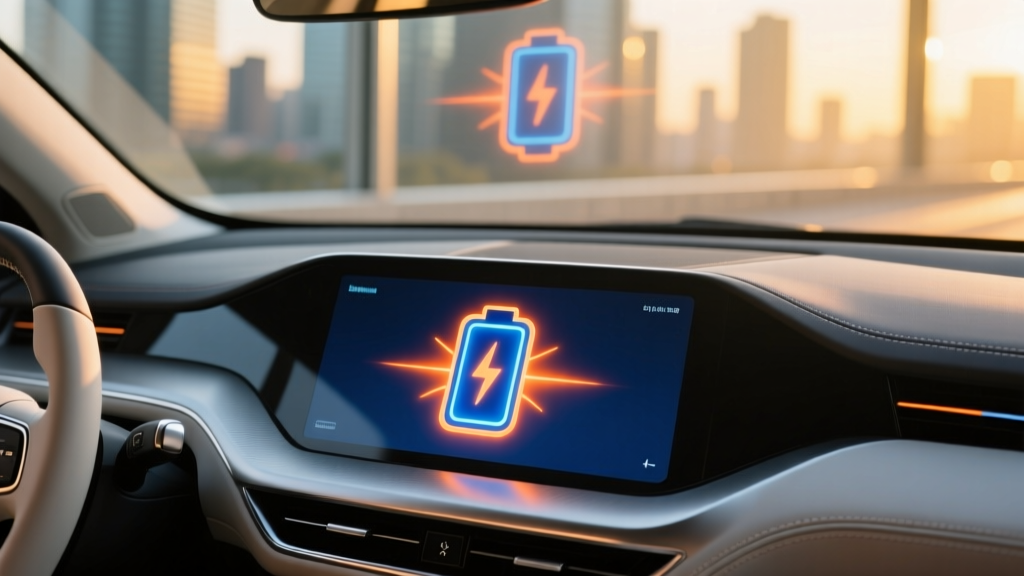
When a battery symbol illuminates on an EV dashboard, most drivers experience a moment of panic. Is the expensive high-voltage traction battery failing? In most cases, the answer is no — but understanding the distinction between your EV's two battery systems is critical for proper diagnosis and long-term ownership confidence.
Every electric vehicle carries two batteries: a conventional 12V auxiliary battery (lead-acid or lithium-ion) that powers lights, infotainment, door locks, and the computers that manage the car, and the high-voltage traction battery (typically 400V or 800V) that actually propels the vehicle. The small battery icon that appears on your dash is almost always referencing the 12V system — the same warning you'd see in a gas-powered car.
However, some EVs use specific high-voltage battery warnings. Tesla displays a "Service Battery System" alert. Hyundai and Kia may show a "Check Electric Vehicle System" message. BMW uses a "Battery System Fault" notification. These high-voltage warnings are text-based or use a distinct icon (often a battery with an exclamation mark) rather than the standard battery symbol.
With the immediate dashboard concern addressed, let's examine the real question on every EV owner's mind: how healthy is the high-voltage traction battery, and what does long-term ownership actually look like?
How Long Do EV Batteries Actually Last? Real-World Degradation Data
EV battery longevity remains one of the most researched — and most misunderstood — topics in electric mobility. The short answer, backed by millions of miles of fleet data, is that modern lithium-ion traction batteries significantly outlast the vehicles they power.
Geotab's long-term study of over 10,000 EVs found that the average battery loses approximately 2.3% of its original capacity per year under normal use. Extrapolated, that means after 10 years, a typical EV retains roughly 77-80% of its original range. A 2023 model with an EPA-rated 300-mile range would still deliver approximately 231-240 miles after a decade.
Real-world data points by manufacturer and chemistry:
| Vehicle / Source | Chemistry | Mileage / Time | Capacity Retained |
|---|---|---|---|
| Tesla Model 3/Y (fleet avg.) | NCA / NMC | 150,000 mi | ~85-88% |
| Nissan Leaf (40 kWh, air-cooled) | NMC | 100,000 mi | ~75-82% |
| Tesla Model 3 Standard Range (LFP) | LFP | 100,000 mi | ~90-93% |
| Hyundai Ioniq 5 (fleet data) | NMC | 80,000 mi | ~88-91% |
| Chevrolet Bolt EUV | NMC (LG) | 75,000 mi | ~89-92% |
Notice the pattern: liquid-cooled battery packs (Tesla, Hyundai, GM's Ultium platform) consistently outperform passively cooled designs (older Nissan Leaf). Thermal management is the single most impactful engineering decision for battery longevity.
According to fueleconomy.gov, the U.S. Department of Energy expects modern EV batteries to last between 100,000 and 200,000 miles before significant degradation occurs — and "significant" here means dropping below 70-80% of original capacity, not total failure.
LFP vs NMC/NCA: Which Battery Chemistry Is Right for You?
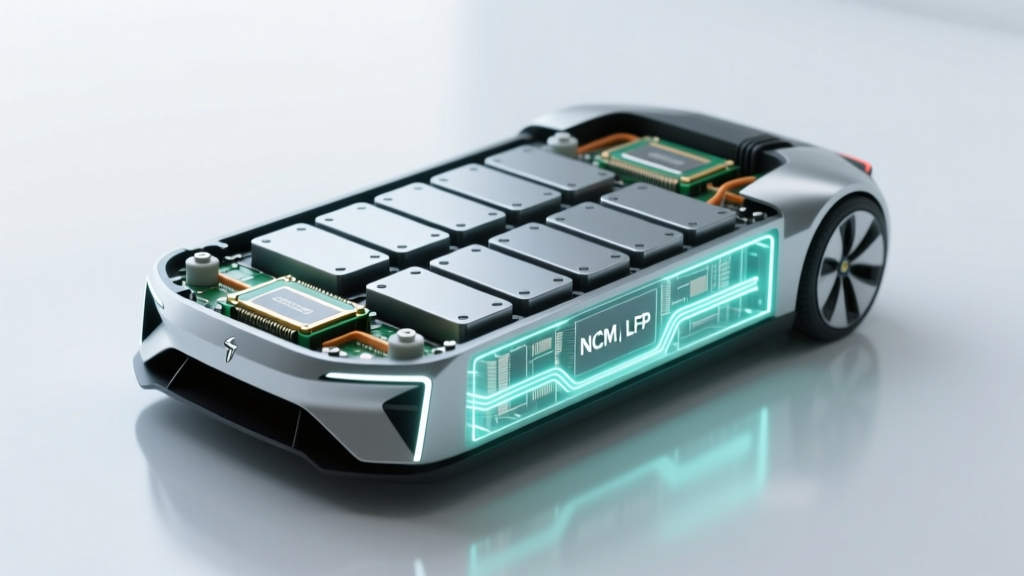
Battery chemistry determines your EV's energy density, charging behavior, lifespan, cold-weather performance, and cost. In 2026, two chemistries dominate the passenger EV market: Lithium Iron Phosphate (LFP) and Nickel Manganese Cobalt (NMC), with Nickel Cobalt Aluminum (NCA) used primarily by Tesla in performance-oriented trims.
| Attribute | LFP (LiFePO4) | NMC / NCA |
|---|---|---|
| Energy Density | Lower (~160 Wh/kg cell-level) | Higher (~220-260 Wh/kg cell-level) |
| Range per kWh | Slightly less range for same pack weight | More range per kg of battery |
| Cycle Life | 3,000-5,000+ cycles | 1,000-2,000 cycles |
| Calendar Life | 15-20+ years | 10-15 years |
| Cold Performance | Weaker below 32°F; greater range loss in winter | Better cold-weather discharge capability |
| DC Fast Charging | Generally slower peak rates; tolerates 100% SoC charging | Faster peak kW; prefers 80% daily SoC limit |
| Cost per kWh | Lower ($80-$100/kWh cell-level in 2026) | Higher ($110-$140/kWh cell-level in 2026) |
| Critical Minerals | No cobalt or nickel; less supply-chain risk | Requires cobalt, nickel — sourcing and ESG concerns |
| SoC Monitoring | Flat voltage curve makes SoC estimation harder | More linear voltage curve; accurate SoC readout |
| Typical Use | Standard-range trims (Tesla Model 3 RWD, base Chevy Equinox EV) | Long-range & performance trims (Model 3 LR, Ioniq 5 LR, Rivian) |
Choose LFP if: You prioritize battery longevity, charge mostly at home, don't regularly face sub-freezing winters, and want the lowest cost of ownership. LFP batteries tolerate daily 100% charging without significant degradation — a major practical advantage for commuters who need full range every morning.
Choose NMC/NCA if: You need maximum range per charge, live in a cold climate where winter range loss matters, frequently road-trip and need fast DC charging speeds, or want a performance-oriented vehicle. NMC/NCA packs deliver more miles per kilogram but degrade faster if routinely charged to 100%.
What Does the EV Battery Warranty Actually Cover?
Federal law mandates that EV batteries carry a minimum warranty of 8 years or 100,000 miles (whichever comes first) in most states. California Air Resources Board (CARB) states — which include California, New York, Massachusetts, and several others — extend that requirement to 10 years or 150,000 miles.
But what "battery warranty" actually means varies by automaker. Here's how major manufacturers structure coverage in 2026:
| Manufacturer | Coverage Period | Capacity Threshold | Remedy |
|---|---|---|---|
| Tesla | 8 yr / 120,000 mi (Model 3 RWD); 8 yr / 150,000 mi (LR/Performance) | 70% retention | Repair or replace to meet threshold |
| Hyundai / Kia | 10 yr / 100,000 mi | 70% retention | Repair or replace |
| GM (Ultium) | 8 yr / 100,000 mi | 70% retention (60% for Bolt legacy) | Repair or replace modules |
| Ford | 8 yr / 100,000 mi | 70% retention | Repair or replace |
| Rivian | 8 yr / 175,000 mi | 70% retention | Repair or replace |
| BMW | 8 yr / 100,000 mi | 70% retention | Repair or replace |
Key details most buyers miss:
- Capacity threshold matters. The warranty doesn't guarantee zero degradation — it guarantees the battery won't drop below 70% of original usable capacity. A 300-mile EPA-rated EV could legally deliver just 210 miles at warranty expiry and still be considered "within spec."
- Module-level replacement is standard. Most manufacturers will replace individual battery modules (not the entire pack) to bring capacity above the threshold. This is less invasive and less wasteful than a full pack swap.
- Damage exclusions apply. Flooding, collision damage, improper charging equipment, and unauthorized modifications void coverage. Read the fine print.
- Transferability varies. Some warranties transfer to second owners automatically; others require registration. Check before buying used.
How Much Does an EV Battery Replacement Cost?
This is the question that dominates EV forums and deters potential buyers. The honest answer: battery replacement is expensive, but it's rarely needed within the vehicle's useful life.
Full pack replacement costs in 2026, based on dealer and independent shop data:
| Vehicle | Battery Size | Full Pack Cost | Module Repair Cost |
|---|---|---|---|
| Tesla Model 3 (LFP, 60 kWh) | 60 kWh | $12,000 - $15,000 | $2,000 - $4,000 |
| Tesla Model Y LR (NMC, 82 kWh) | 82 kWh | $16,000 - $22,000 | $3,000 - $5,000 |
| Hyundai Ioniq 5 (77.4 kWh) | 77.4 kWh | $14,000 - $18,000 | $2,500 - $4,500 |
| Ford F-150 Lightning Ext. Range (131 kWh) | 131 kWh | $25,000 - $35,000 | $4,000 - $7,000 |
| Chevrolet Equinox EV (85 kWh) | 85 kWh | $13,000 - $17,000 | $2,500 - $4,000 |
| Rivian R1T (Large, 135 kWh) | 135 kWh | $28,000 - $38,000 | $5,000 - $8,000 |
Important context for these numbers:
- Most EVs never need a full pack replacement. The vast majority of batteries outlive the vehicle's economic life. Recurrent Auto's 2025 fleet data shows only 1.5% of EVs studied required battery replacement outside of recall campaigns.
- Module-level repairs are increasingly common. Modern packs are designed with replaceable modules. A single degraded or failed module can be swapped for $2,000-$8,000, restoring most of the pack's capacity at a fraction of full-replacement cost.
- Prices are declining. Battery cell prices have dropped from over $1,200/kWh in 2010 to roughly $90-$130/kWh in 2026, and the trend continues. A replacement pack in 2032 will cost materially less than today.
- Recalls are covered. The Hyundai/Kona and Chevrolet Bolt recalls for fire-risk cells resulted in free full-pack replacements for affected owners. If a safety defect exists, the manufacturer bears the cost.
Factors That Accelerate (or Preserve) Battery Health
Battery degradation isn't purely a function of time — it's driven by how you charge, discharge, and store the vehicle. Understanding these factors lets you actively manage your battery's State of Health (SoH).
- Daily charging limit: Set to 80% for NMC/NCA batteries. LFP batteries can be charged to 100% daily without significant harm — Tesla and Ford explicitly recommend periodic 100% charges for LFP calibration.
- Minimize DC fast charging: Occasional road-trip fast charging is fine. Daily reliance on 150+ kW DC charging accelerates degradation by an estimated 1-2% additional per year versus Level 2 charging. Use Level 2 (7-11 kW) as your primary method.
- Avoid extreme State of Charge storage: Never store an EV at 100% or below 10% SoC for more than a few days. For extended parking (vacation, seasonal), set the charge limit to 50-60%.
- Precondition before fast charging: Most EVs automatically precondition the battery when you navigate to a DC fast charger. This warms the cells to optimal temperature (~77-95°F), enabling faster charging and reducing lithium plating risk. In cold weather, preconditioning is essential.
- Garage parking helps: Batteries degrade faster at sustained high temperatures. Parking in a garage or shaded area during summer months reduces thermal stress. This is especially important for NMC chemistry.
- Don't baby it too much: Occasional 100% charges before road trips and occasional low-SoC driving won't meaningfully harm your battery. Modern BMS (Battery Management Systems) include top and bottom buffers — you never actually use 100% or 0% of the cells.
The factors that cause the most damage, ranked by impact:
- Sustained high temperatures (above 104°F / 40°C ambient, particularly with a full battery) — the leading cause of calendar degradation
- Chronic 100% SoC + high temps — the worst combination for NMC/NCA longevity
- Frequent DC fast charging from low SoC to high SoC — generates significant internal heat and stresses cell chemistry
- Deep discharge cycling (regularly driving to near 0%) — less harmful than high-SoC heat stress but still accelerates wear
- Cold-weather fast charging without preconditioning — risks lithium plating on the anode, a form of permanent damage
How to Check and Monitor Your EV's Battery Health (State of Health)
State of Health (SoH) is the percentage of original capacity your battery can still hold. A new battery is at 100% SoH; a degraded battery at 85% SoH holds only 85% of its original kWh. Monitoring SoH lets you track degradation trends, verify warranty eligibility, and assess value when buying or selling used.
Methods to check SoH in 2026:
- In-vehicle displays: Some EVs show SoH directly. Nissan Leaf has long included a battery health bar (though imprecise). The Hyundai Ioniq 5 and Kia EV6 display SoH percentage in the EV settings menu. Tesla does not show SoH natively but reports rated range, which can be used to estimate it.
- OBD-II diagnostic tools: Devices like the OBDLink SX paired with apps such as LeafSpy (Nissan), TeslaFi (Tesla), or Car Scanner (multi-brand) read the battery management system's internal SoH calculation. This is the most accurate consumer-accessible method.
- Manufacturer service check: Dealers can run a battery health report that documents current capacity vs. original. Request this before a warranty claim or when buying a used EV.
- Third-party battery reports: Services like Recurrent Auto and AVILOO offer battery health certifications based on telematics data. These are increasingly used in the used-EV market to validate seller claims.
- DIY calculation: Charge to 100% and note the displayed range. Compare to the original EPA-rated range. If your 300-mile EV now shows 258 miles at 100%, your approximate SoH is 86%. Note: this method is imprecise because displayed range estimates fluctuate with driving habits and temperature.
For buyers evaluating a used EV, a battery health check is as important as a pre-purchase inspection on a gas car. Request the SoH report before committing. A vehicle at 90%+ SoH with 50,000 miles is an excellent prospect; one at 78% SoH with the same mileage warrants caution and a warranty conversation.
Emerging Battery Technology: What's Next (and When)
The battery landscape is evolving rapidly, but it's essential to separate laboratory breakthroughs from production-ready technology. Here's what's on the horizon, with realistic timelines:
Solid-state batteries promise higher energy density (potentially 400-500 Wh/kg at the cell level), faster charging, and improved safety by replacing the liquid electrolyte with a solid material. Toyota has announced a solid-state EV for 2027-2028 with a claimed 600+ mile range and 10-minute fast charging. Samsung SDI and QuantumScape are targeting 2027-2029 production timelines. However, manufacturing scalability remains the primary barrier. Solid-state batteries are not available in any production vehicle as of 2026 and should be considered forward-looking technology.
Silicon-dominant anodes increase energy density by replacing graphite anodes with silicon, which can store roughly 10x more lithium ions per gram. Companies like Sila Nanotechnologies and Group14 Technologies are supplying silicon anode materials to automakers now. The Mercedes-AMG EQG uses a silicon anode battery from Sila. Expect broader adoption across premium EVs by 2027-2028, with gradual cost reduction enabling mainstream use by the early 2030s.
Sodium-ion batteries eliminate lithium entirely, using abundant sodium instead. CATL began volume production in 2024 for Chinese-market vehicles. Energy density is lower than LFP (~120-140 Wh/kg), making sodium-ion best suited for urban commuter vehicles and energy storage. U.S. market adoption is expected in budget EV segments by 2028-2030.
LFP improvements: CATL's second-generation LFP cells and Shenxing LFP batteries now support 4C+ charging rates (10-80% in approximately 10-12 minutes), closing the gap with NMC on charging speed while retaining LFP's longevity and cost advantages. These are entering production vehicles in 2025-2026.
For buyers today, these emerging technologies are not a reason to wait. Current lithium-ion batteries — particularly LFP and modern NMC with active thermal management — already deliver 150,000-200,000+ mile lifespans with manageable degradation. The technology you can buy now is more than adequate for real ownership.
Frequently Asked Questions
Does the battery symbol on my EV dash mean the traction battery is failing?
Almost never. The standard battery icon on an EV dashboard refers to the 12V auxiliary battery — the same small battery that powers your lights, locks, and onboard computers. If this light appears, the 12V battery may be dying, which is common in EVs that sit unused for extended periods. High-voltage traction battery warnings are typically text-based messages ("Service Battery System," "Check EV System") rather than a simple battery icon.
How long do EV batteries last in years and miles?
Fleet data from Geotab and Recurrent Auto shows modern EV batteries lose approximately 2.3% capacity per year on average. Most batteries retain 77-85% of original capacity after 10 years or 150,000 miles. LFP chemistry batteries tend to last longer — 15-20+ years of calendar life with 3,000-5,000+ charge cycles. The U.S. Department of Energy expects modern packs to last 100,000-200,000 miles before significant degradation. In practice, most EV batteries outlive the vehicles they're installed in.
How much does it cost to replace an EV battery?
Full pack replacement costs range from approximately $12,000-$15,000 for a 60 kWh pack (Tesla Model 3 LFP) to $28,000-$38,000 for a 135 kWh pack (Rivian R1T). However, full replacement is rare — most degradation issues are resolved by replacing individual battery modules at $2,000-$8,000. Only about 1.5% of EVs require any battery replacement outside of recall campaigns. Cell prices continue declining, so replacement costs in 2030 and beyond will be materially lower.
What does the EV battery warranty cover?
Federal law requires a minimum of 8 years / 100,000 miles of battery warranty coverage (10 years / 150,000 miles in CARB states). Most manufacturers guarantee the battery will retain at least 70% of its original usable capacity during the warranty period. If capacity drops below this threshold, the manufacturer will repair or replace modules (or the full pack) to restore it above 70%. Warranties do not cover damage from collisions, flooding, or unauthorized modifications.
Is LFP or NMC better for my EV?
Neither is universally better — they serve different priorities. LFP offers superior longevity (3,000-5,000+ cycles vs. 1,000-2,000 for NMC), lower cost, no cobalt or nickel, and tolerance for daily 100% charging. NMC delivers higher energy density (more range per kilogram), better cold-weather performance, and faster DC charging speeds. Choose LFP for commuter vehicles charged mostly at home in moderate climates. Choose NMC for long-range, cold-climate, or performance-oriented driving where maximum miles per charge matters.
How do I maximize my EV battery's lifespan?
Set your daily charge limit to 80% for NMC/NCA batteries (100% is fine for LFP). Use Level 2 home charging as your primary method and limit DC fast charging to road trips. Avoid storing the vehicle at 100% or below 10% SoC for extended periods. Precondition the battery before fast charging in cold weather. Park in shade or a garage during hot months. Modern battery management systems handle most protection automatically, but these habits further reduce degradation stress.
Can I check my EV battery health myself?
Yes. Some EVs (Hyundai, Kia, Nissan) display State of Health percentage in the vehicle settings. For others, an OBD-II adapter paired with brand-specific apps (LeafSpy, TeslaFi, Car Scanner) reads the BMS-reported SoH. You can also estimate SoH by charging to 100% and comparing displayed range to the original EPA rating. For the most accurate assessment, request a battery health report from your dealer — this is recommended before buying any used EV.
Sources: U.S. Department of Energy / fueleconomy.gov, IRS §30D Clean Vehicle Credit guidelines. Battery degradation data aggregated from Geotab, Recurrent Auto, and manufacturer warranty documentation. Pricing and specifications reflect 2026 model-year data and are subject to change.