The Current EV Battery Landscape: LFP, NMC, and What Comes Next
Every EV sold in the U.S. today runs on a lithium-ion traction battery, but not all lithium-ion cells are built the same. The two dominant chemistries — lithium iron phosphate (LFP) and nickel manganese cobalt (NMC) — deliver meaningfully different trade-offs in range, longevity, cold-weather behavior, and cost. Meanwhile, solid-state batteries remain the industry's most anticipated next leap, though they are not yet available in any production vehicle sold to consumers.
This guide breaks down exactly what's in your EV's battery pack today, how long it will last, what degradation actually looks like in real data, and when — or whether — you'll ever need to pay for a replacement.
LFP vs NMC: The Chemistry Decision That Shapes Your EV
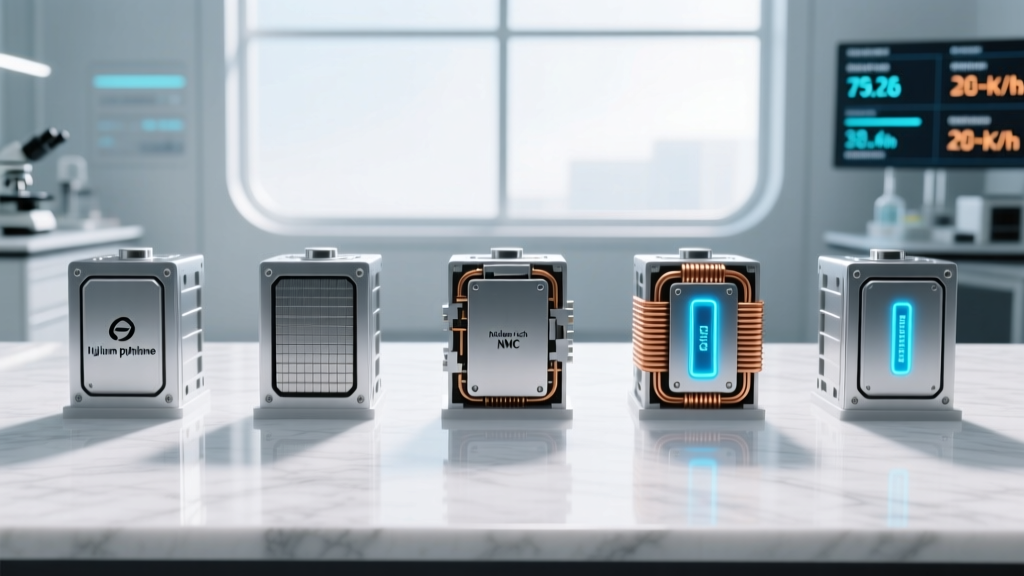
Before comparing solid-state promises to today's reality, you need to understand the chemistry you're actually buying. Most 2026 EVs use one of two cathode types:
NMC (Nickel Manganese Cobalt) / NCA (Nickel Cobalt Aluminum): Higher energy density means more range in a lighter, smaller pack. This is the chemistry in most long-range vehicles — Tesla Model 3 Long Range, Hyundai Ioniq 5, Ford F-150 Lightning Extended Range. The trade-off: higher raw material cost, faster degradation under heavy fast-charging use, and thermal sensitivity in extreme heat.
LFP (Lithium Iron Phosphate): Lower energy density but dramatically longer cycle life, lower cost (no cobalt or nickel), and superior thermal stability. Tesla uses LFP in the Model 3 and Model Y Standard Range (Rear-Wheel Drive). Ford uses LFP in the Mustang Mach-E Select and F-150 Lightning Standard Range. LFP packs tolerate repeated 100% charges without accelerated wear — a meaningful daily-ownership advantage.
| Attribute | LFP (Lithium Iron Phosphate) | NMC / NCA (Nickel-based) |
|---|---|---|
| Energy Density | Lower (~160–180 Wh/kg cell-level) | Higher (~220–260 Wh/kg cell-level) |
| Typical Use Case | Standard-range, lower-price trims | Long-range, performance trims |
| Cycle Life (to 80% capacity) | 3,000–5,000+ cycles | 1,000–2,000 cycles |
| Cold-Weather Performance | Weaker — greater range loss below freezing | Better low-temp conductivity |
| 100% SoC Charging | Recommended periodically for BMS calibration | Generally limited to 80–90% for daily use |
| Thermal Stability | Excellent — lower thermal runaway risk | Good with active thermal management |
| Cost (per kWh, pack-level) | Lower (~$100–$120/kWh) | Higher (~$130–$160/kWh) |
| Examples (2026) | Tesla Model 3 RWD, Ford Mach-E Select | Tesla Model 3 LR, Ioniq 5, Rivian R1T |
Which is better? There is no universal winner. If you need maximum range per charge and drive in cold climates, NMC is the stronger pick. If you prioritize longevity, lower purchase price, and plan to keep the vehicle 10+ years, LFP's cycle-life advantage is substantial. According to fueleconomy.gov, the 2026 Tesla Model 3 RWD (LFP, 60 kWh usable) delivers an EPA-estimated 272 miles, while the Model 3 Long Range AWD (NMC, ~82 kWh usable) achieves 363 miles — a range gap driven primarily by chemistry and pack size.
How Long Do EV Batteries Actually Last?
The short answer, backed by fleet data: most EV traction batteries outlast the vehicles they're installed in. The average American drives roughly 13,500 miles per year (per FHWA data), meaning a 150,000-mile battery lifespan represents over 11 years of typical use.
Real-world degradation data from multiple sources paints a consistent picture:
- Year 1–2: 2–5% capacity loss (initial settling, common across all lithium-ion cells)
- Year 3–5: Degradation slows to roughly 1–2% per year
- Year 8 (average): Most packs retain 85–92% of original capacity
- 150,000–200,000 miles: Typical threshold before a pack might fall below 70–80% capacity
Tesla's 2024 Impact Report (the most recent comprehensive fleet data published) showed that Model 3 and Model Y batteries retained approximately 85% of original capacity at 200,000 miles. LFP-equipped vehicles in that dataset showed slower degradation curves than NMC counterparts, though with slightly lower initial range.
A 2024 study by Recurrent Auto, which tracks over 15,000 EVs in real-world conditions, found that the median EV battery at 3 years and 45,000 miles retained 94% of its original range — significantly better than early-generation EV batteries from 2012–2017.
Battery Warranty: What's Actually Covered
Federal law mandates a minimum EV battery warranty of 8 years or 100,000 miles (whichever comes first) in most states. California Air Resources Board (CARB) states extend this to 10 years or 150,000 miles. Most manufacturers meet or exceed these minimums.
| Manufacturer | Warranty Term | Capacity Retention Threshold | CARB-State Extended? |
|---|---|---|---|
| Tesla (Model 3/Y RWD — LFP) | 8 yr / 100,000 mi | 70% | Yes — 8 yr / 120,000 mi |
| Tesla (Model 3/Y LR & Performance) | 8 yr / 120,000 mi | 70% | Yes — 8 yr / 120,000 mi |
| Hyundai / Kia | 10 yr / 100,000 mi | 70% | 10 yr / 150,000 mi |
| Ford (Mach-E, F-150 Lightning) | 8 yr / 100,000 mi | 70% | Yes — extended terms apply |
| Rivian | 8 yr / 175,000 mi | 70% | Varies by state |
| GM (Ultium-based) | 8 yr / 100,000 mi | 70% (60% for Bolt EV/EUV) | Yes — extended terms apply |
What triggers a warranty claim? If your battery's State of Health (SoH) drops below the stated threshold (typically 70% of original capacity) within the warranty period, the manufacturer must repair or replace the pack at no cost. In practice, most replacements involve swapping failed modules rather than the entire pack — a less invasive and faster process than many owners expect.
EV Battery Replacement Cost: What It Actually Takes
The fear of a $20,000 battery replacement is the single biggest barrier to EV adoption — and it's largely outdated for current-generation vehicles. Here's what the numbers actually look like in 2026:
| Vehicle | Battery Size (Usable kWh) | Chemistry | Estimated Full-Pack Replacement | Module-Level Repair |
|---|---|---|---|---|
| Tesla Model 3 RWD | ~60 kWh | LFP | $12,000–$14,000 | $2,500–$4,500 |
| Tesla Model Y Long Range | ~82 kWh | NMC | $14,000–$17,000 | $3,000–$5,000 |
| Hyundai Ioniq 5 | ~77.4 kWh | NMC | $13,000–$16,000 | $2,500–$4,000 |
| Ford F-150 Lightning Ext. Range | ~131 kWh | NMC | $22,000–$28,000 | $4,000–$7,000 |
| Chevrolet Equinox EV | ~85 kWh | NMC (Ultium) | $13,000–$16,000 | $3,000–$5,000 |
Several critical context points: pack-level replacement costs have fallen roughly 40% since 2020 as cell prices declined. Most out-of-warranty battery service involves module replacement, not full-pack swaps, keeping real costs in the $2,500–$5,000 range for most vehicles. And the vast majority of EVs will be retired, sold, or traded before the battery needs any service at all. According to IRS §30D guidelines, the battery is also a factor in federal tax credit eligibility — which can offset $3,750–$7,500 of the vehicle's purchase price depending on critical-mineral and battery-component sourcing requirements.
What Degrades an EV Battery — and How to Slow It Down
Not all miles are equal when it comes to battery wear. The five factors that most accelerate lithium-ion degradation:
- Avoid sustained 100% SoC: For NMC batteries, charge to 80–90% for daily use. Reserve 100% for road trips. (LFP batteries tolerate 100% better — Tesla recommends periodic full charges for calibration.)
- Minimize DC fast-charging frequency: Occasional Supercharging is fine; daily DC fast charging accelerates degradation by an estimated 1–3% over 5 years compared to Level 2 home charging.
- Precondition before fast charging: Battery preconditioning (available on most 2026 EVs when navigating to a charger) warms the pack to optimal temperature, improving charge speed and reducing stress.
- Avoid prolonged storage at extreme SoC: If parking for weeks, aim for 40–60% SoC — not full or empty.
- Use a heat pump or garage in cold climates: Sub-freezing temps reduce range 15–30% temporarily and slow charging. Thermal management systems mitigate long-term damage, but cold exposure still stresses cells.
- Keep software updated: OTA updates often refine battery management algorithms, improving thermal strategies and charge curves.
The data supports these practices. A 2025 study published in the journal Joule found that EVs charged primarily on Level 2 (home AC charging at 7–11 kW) showed 2–4 percentage points less degradation at 100,000 miles than those relying predominantly on DC fast charging (150+ kW). The difference is meaningful but not catastrophic — fast charging is a tool, not a battery killer, when used in moderation.
Monitoring Battery Health: How to Check Your SoH
State of Health (SoH) is the percentage of your battery's original capacity that remains usable. Here's how to track it:
In-vehicle displays: Many 2026 EVs (Tesla, Hyundai, Kia, Rivian) now include a battery health indicator in the settings menu, showing SoH as a percentage. Tesla added a more granular battery health screen via a 2025 software update.
OBD-II apps: Third-party tools like Scan My Tesla, Leaf Spy (for Nissan Leaf), and ABRP (A Better Route Planner) with OBD dongles can read detailed cell-level data, including individual module voltage variance and estimated SoH.
Dealer diagnostics: Any authorized service center can run a full battery health report. Request this during routine service — it's typically free and gives the most manufacturer-accurate reading.
Range tracking: The simplest method — if your vehicle showed 310 miles at 100% SoC when new and now shows 285 miles under identical conditions, your SoH is approximately 92%. Control for temperature and tire pressure when comparing.
Solid-State Batteries: The Next Frontier (Not Yet Here)
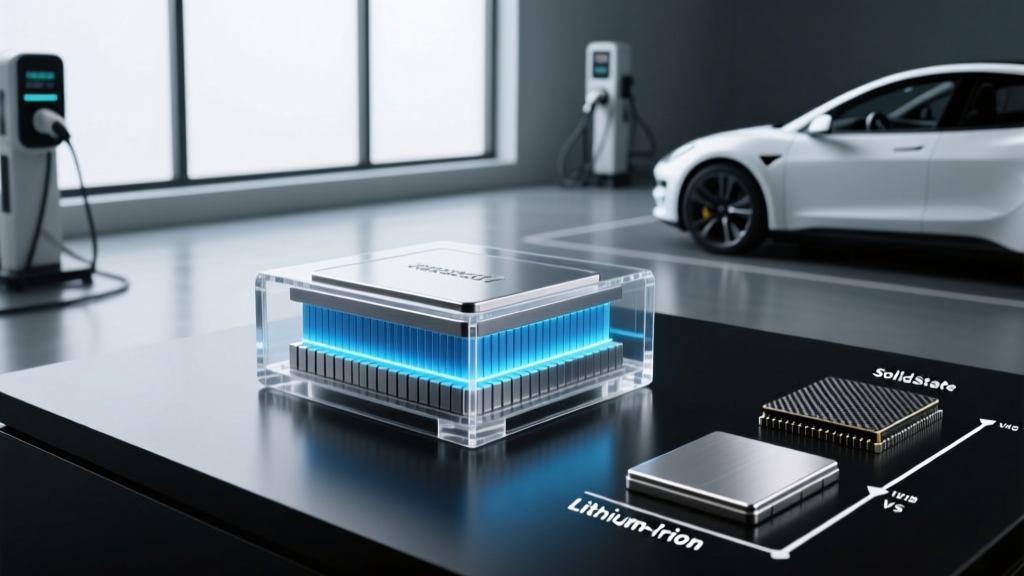
Solid-state batteries replace the liquid electrolyte in current lithium-ion cells with a solid material — ceramic, glass, or polymer. The theoretical advantages are significant:
- Higher energy density: 40–60% more energy per kilogram, enabling longer range in smaller, lighter packs
- Faster charging: Potential for 10–80% charges in under 10 minutes without degradation risk
- Safer chemistry: No flammable liquid electrolyte, dramatically reducing thermal runaway risk
- Longer cycle life: Early lab data suggests 10,000+ cycles
Where solid-state technology stands in 2026: Toyota has announced a solid-state battery for limited production in a 2027–2028 vehicle, targeting 750 km (~466 miles) of range. Samsung SDI has begun pilot-line production of all-solid-state cells for automotive customers, with volume production expected no earlier than 2028. QuantumScape, backed by Volkswagen, continues to ship prototype cells to OEM partners but has not announced a production-vehicle integration date.
No consumer vehicle sold in the U.S. as of 2026 uses a solid-state traction battery. The earliest realistic availability in a U.S.-market production vehicle is 2028–2029, likely in a limited-run or premium model. Volume production at prices competitive with today's NMC and LFP cells is not expected before 2030–2032. If you're buying an EV in the next 3–4 years, you're buying lithium-ion — and that's a mature, well-understood, and increasingly durable technology.
Other emerging technologies to watch: silicon-dominant anodes (used in limited form by companies like Sila Nanotechnologies, partnered with Mercedes-Benz for the G-Class EV) improve energy density by 10–20% within existing lithium-ion architecture. Sodium-ion batteries (CATL, BYD) are entering low-cost EV segments in China and could reach U.S. market budget models by 2028–2029, offering lower cost and better cold performance at the expense of energy density.
Frequently Asked Questions
How long do EV batteries last in years and miles?
Most current-generation EV batteries (2022 and newer) are engineered to retain 70–80% of original capacity at 150,000–200,000 miles, which translates to 11–15 years of average U.S. driving. Fleet data from Tesla and independent tracking by Recurrent Auto confirm that median degradation at 100,000 miles is approximately 8–12%.
How much does an EV battery cost to replace out of warranty?
Full pack replacement costs range from approximately $12,000 for a 60 kWh LFP pack (Tesla Model 3 RWD) to $28,000 for a 131 kWh NMC pack (F-150 Lightning Extended Range). However, most out-of-warranty service involves module-level repair at $2,500–$5,000. Complete pack failure is rare in current-generation vehicles.
What does the federal EV battery warranty cover?
By federal mandate, EV batteries carry a minimum warranty of 8 years or 100,000 miles. In CARB states, this extends to 10 years or 150,000 miles. The warranty covers capacity loss below a stated threshold — typically 70% of original capacity. If SoH falls below that mark within the warranty period, the manufacturer repairs or replaces the battery at no cost to the owner.
Is LFP or NMC better for my situation?
Choose LFP if you want maximum battery lifespan, lower purchase price, and don't need the longest possible range per charge. LFP tolerates daily 100% charging and has 2–3× the cycle life of NMC. Choose NMC if you need maximum range (300+ miles EPA), drive frequently in freezing temperatures, or want the lightest possible pack for performance applications.
Will solid-state batteries make my current EV obsolete?
Not for years. Solid-state batteries are not available in any U.S.-market consumer vehicle as of 2026. The earliest limited production is expected in 2028–2029, with broad market availability not before 2030–2032. Current lithium-ion batteries (LFP and NMC) are mature, durable, and supported by an established service and warranty infrastructure. Buying an EV today does not mean buying obsolete technology.
How do I check my EV's battery State of Health?
Check your vehicle's settings menu for a battery health display (available on most 2026 models). Use an OBD-II dongle with apps like Scan My Tesla or Leaf Spy for detailed cell-level data. Request a battery health report from your dealer during service. Or simply track your 100% SoC range estimate over time, controlling for temperature — a drop from 310 to 285 miles suggests roughly 92% SoH.