If you've owned an electric vehicle long enough, you've probably heard the advice: "Stick to a battery slow charger and your pack will last forever." There's truth to it — but the full picture involves chemistry, thermal management, state-of-charge habits, and how you actually drive. This guide cuts through the myths with real degradation data, warranty terms, replacement costs, and a practical framework for maximizing your EV battery's lifespan.
How Long Do EV Batteries Actually Last?
The short answer: far longer than most buyers expect. Modern lithium-ion traction batteries in 2025–2026 model-year EVs routinely outlast the vehicles they power. Data aggregated from fleet operators, manufacturer warranty claims, and independent testing bodies like Recurrent Auto show that most EV batteries retain 90–95% of their original capacity after 100,000 miles and 85–92% after 200,000 miles.
Here's what typical degradation looks like across real-world ownership timelines:
| Time / Mileage | Avg. Capacity Retained (NMC) | Avg. Capacity Retained (LFP) | Notes |
|---|---|---|---|
| 1 year / 15,000 mi | 97–98% | 98–99% | Initial formation loss |
| 3 years / 45,000 mi | 94–96% | 96–98% | Curve begins to flatten |
| 5 years / 75,000 mi | 91–94% | 94–97% | Noticeable but manageable |
| 8 years / 120,000 mi | 86–91% | 90–95% | Warranty threshold period |
| 10 years / 150,000 mi | 82–88% | 88–93% | Still functional for daily use |
| 15 years / 200,000+ mi | 75–84% | 82–90% | End-of-vehicle-life territory |
Sources: Recurrent Auto fleet data (2024–2025), manufacturer warranty claim aggregates. Individual results vary based on climate, charging habits, and thermal management system quality.
The degradation curve is non-linear: you'll see the steepest drop in the first 10,000–20,000 miles (formation cycle loss), then it flattens significantly. An EV with 85% battery health at 150,000 miles still delivers 85% of its original EPA-rated range — if it started at 310 miles, you're looking at roughly 263 miles, which remains practical for most drivers.
LFP vs. NMC Battery Chemistry: Which Is Better for Your Use Case?
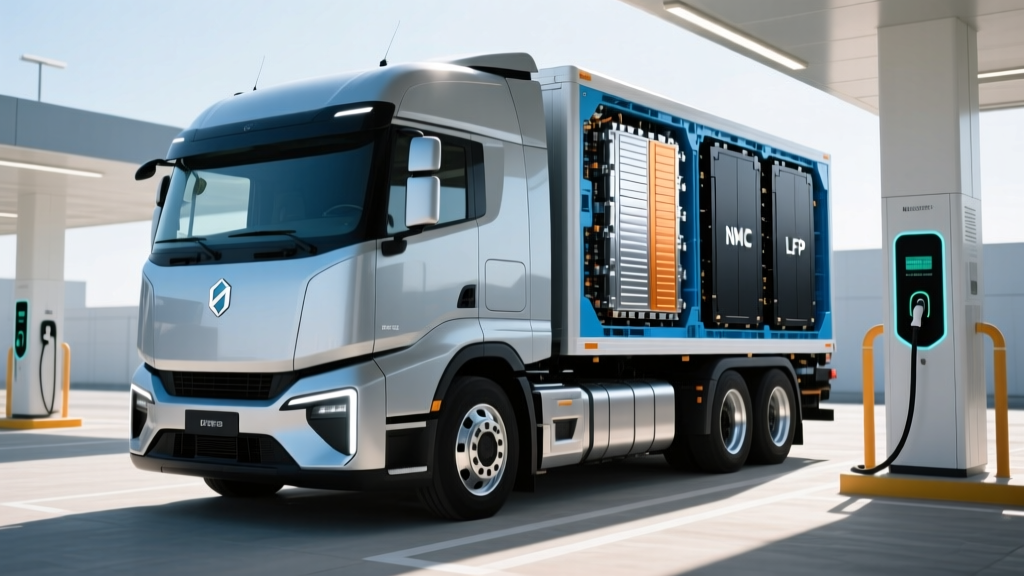
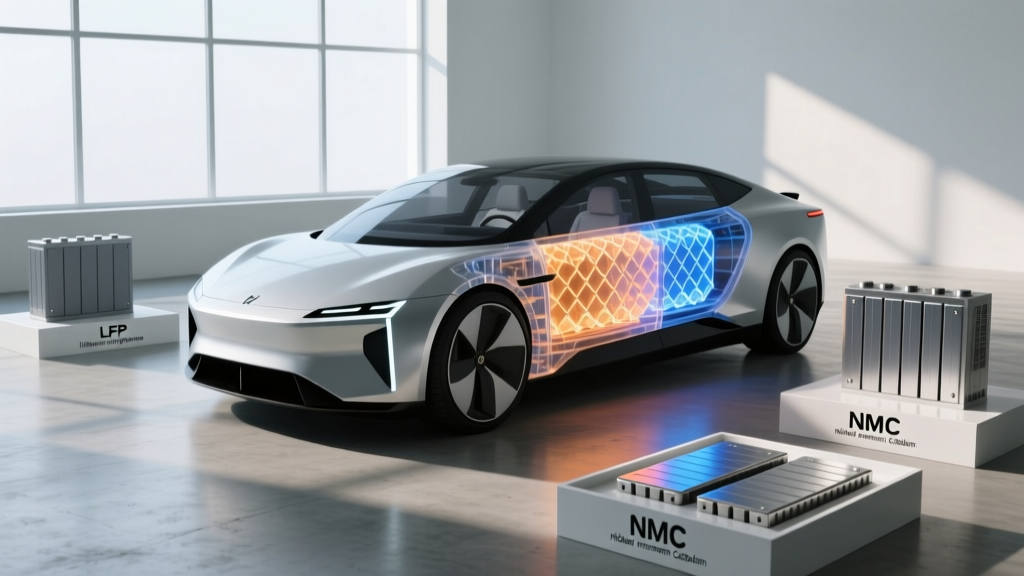
Not all EV batteries are the same. The two dominant chemistries in 2026 model-year vehicles are NMC (nickel-manganese-cobalt) and LFP (lithium iron phosphate). Your choice affects range, longevity, cold-weather behavior, and even how you should charge.
| Attribute | LFP (Lithium Iron Phosphate) | NMC/NCA (Nickel-based) |
|---|---|---|
| Energy Density | Lower (~160–180 Wh/kg cell-level) | Higher (~220–270 Wh/kg cell-level) |
| Typical EPA Range | 200–280 mi (standard-range models) | 270–400+ mi (long-range models) |
| Cycle Life | 3,000–5,000+ full cycles | 1,000–2,000 full cycles |
| Degradation Rate | Slower; more linear | Faster initial drop, then plateaus |
| Cold-Weather Performance | Weaker; more range loss below 32°F | Better low-temp discharge capability |
| Recommended Daily SoC | 100% is fine (and recommended periodically for BMS calibration) | 80% daily; 100% only for trips |
| Cost per kWh | Lower (~$80–100/kWh pack-level) | Higher (~$110–140/kWh pack-level) |
| Common In 2026 Models | Tesla Model 3/Y RWD, BYD, base Ford Mustang Mach-E, Rivian Standard | Tesla Long Range, Hyundai Ioniq 5/6, BMW iX, Porsche Taycan, Lucid Air |
| Thermal Stability | Excellent; very low thermal runaway risk | Good with active thermal management |
The practical takeaway: If you charge at home nightly with a battery slow charger (Level 1 or Level 2) and drive under 250 miles daily, LFP's longevity advantage and 100% charge tolerance make it ideal. If you need maximum range for road trips or live in a cold climate where every mile counts in winter, NMC's higher energy density is worth the trade-off — just follow the 80% daily charge rule.
Battery Slow Charger vs. DC Fast Charging: The Degradation Reality
Here's where the "battery slow charger" advice earns its reputation — but with important nuance. The mechanism isn't about the charger itself; it's about heat and lithium plating.
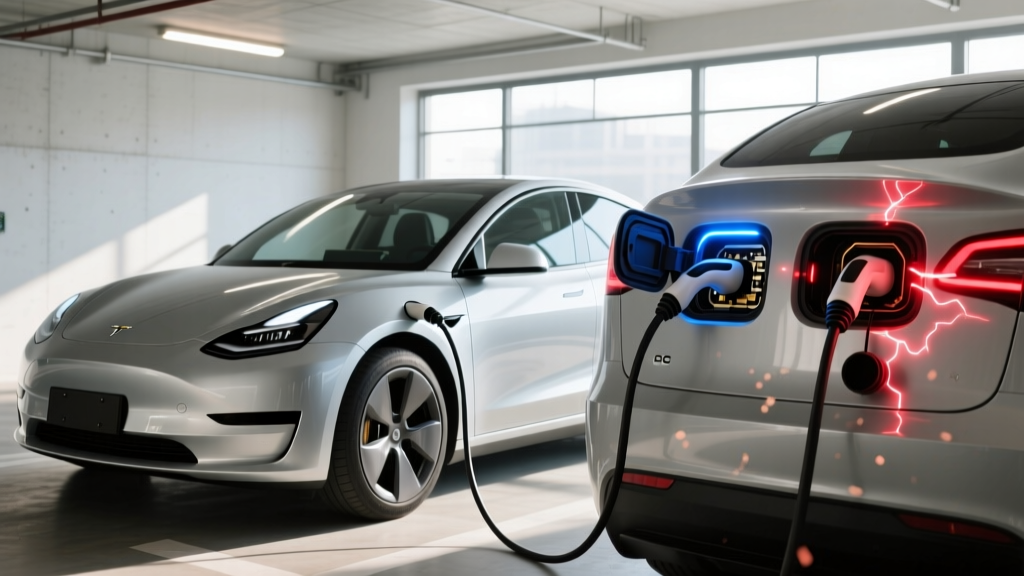
DC fast charging (Level 3, typically 50–350 kW) forces high current into cells rapidly, generating internal heat. Over time, repeated exposure to elevated cell temperatures accelerates electrolyte decomposition and can cause micro-structural damage to the anode. Studies from the Idaho National Laboratory and data from fueleconomy.gov testing confirm that vehicles charged predominantly via DC fast charging show measurably higher degradation — but the difference is smaller than you might expect.
Real-world data point: Tesla fleet data analyzed by Recurrent Auto found that Model 3 owners who fast-charged more than 90% of the time saw approximately 2–3% additional capacity loss over 100,000 miles compared to those who primarily used Level 2 home charging. That's meaningful but not catastrophic.
The hierarchy of charging impact on battery health:
- Level 1 (120V, ~1.4 kW): Slowest; negligible thermal stress. Adds ~3–5 miles of range per hour. Ideal for overnight if you drive under 40 miles daily.
- Level 2 (240V, 7–19 kW): The sweet spot. Adds 25–55 miles per hour. Minimal thermal impact. A full overnight charge from 20–80% on a 75 kWh battery takes 4–8 hours depending on kW rate.
- DC Fast Charging (50–350 kW): Necessary for road trips. Adds 100–250+ miles in 20–30 minutes. The charge curve tapers significantly above 80% SoC — a 250 kW peak rate may sustain only 10–15 minutes before dropping to 50–80 kW. Occasional use (1–2 times per week) shows negligible long-term impact.
Practical rule: Use a Level 2 battery slow charger at home for daily needs. Reserve DC fast charging for road trips or when you genuinely need a quick top-up. Preconditioning your battery before fast charging (most EVs do this automatically when you navigate to a charger) significantly reduces thermal stress.
What Does the EV Battery Warranty Actually Cover?
Federal law mandates a minimum battery warranty of 8 years / 100,000 miles for all EVs sold in the United States. California Air Resources Board (CARB) states require 10 years / 150,000 miles. Most manufacturers meet or exceed these thresholds.
| Manufacturer | Warranty Period | Mileage Limit | Capacity Retention Threshold | Notes |
|---|---|---|---|---|
| Tesla (Model 3/Y RWD, LFP) | 8 years | 100,000 mi | 70% | LFP pack; standard range |
| Tesla (Model 3/Y LR/Perf.) | 8 years | 120,000 mi | 70% | NMC/NCA pack |
| Hyundai / Kia | 10 years | 100,000 mi | 70% | Among the longest coverage |
| Ford (Mustang Mach-E) | 8 years | 100,000 mi | 70% | Both LFP and NMC trims |
| BMW (i4, iX, i7) | 8 years | 100,000 mi | 70% | NMC chemistry |
| Rivian (R1T, R1S) | 8 years | 120,000 mi | 70% | Standard and Max packs |
| GM (Ultium platform) | 8 years | 100,000 mi | 70% | Cadillac, Chevy, GMC EVs |
| Volkswagen (ID.4, ID.7) | 8 years | 100,000 mi | 70% | NMC pack |
The 70% threshold means the manufacturer will repair or replace the battery if diagnostic testing shows capacity has fallen below 70% of original within the warranty window. In practice, very few packs hit this threshold under normal use.
Key detail: Warranties cover defects and excessive degradation — not damage from accidents, flooding, or unauthorized modifications. If you're buying used, verify warranty transferability; most manufacturer battery warranties transfer to subsequent owners automatically.
EV Battery Replacement Cost: What to Expect and When
This is the question that generates the most anxiety — and the most misinformation. Let's ground it in real numbers.
| Vehicle / Pack Size | Battery Capacity | Estimated Replacement Cost | Typical Replacement Timeline |
|---|---|---|---|
| Tesla Model 3 RWD (LFP) | ~60 kWh | $10,000–$14,000 | Rarely needed; 200,000+ mi expected life |
| Tesla Model Y Long Range | ~75 kWh | $13,000–$17,000 | Rarely needed; 200,000+ mi expected life |
| Hyundai Ioniq 5 | ~77.4 kWh | $12,000–$18,000 | Rarely needed; 200,000+ mi expected life |
| Ford Mustang Mach-E ER | ~91 kWh | $15,000–$22,000 | Rarely needed; 200,000+ mi expected life |
| Chevrolet Bolt EV/EUV | ~65 kWh | $9,000–$14,000 | Recall replacements covered by GM |
| Porsche Taycan | ~93.4 kWh | $20,000–$30,000 | Rarely needed; 150,000+ mi expected life |
| Rivian R1T (Max Pack) | ~149 kWh | $25,000–$35,000 | Rarely needed; 200,000+ mi expected life |
| Lucid Air Grand Touring | ~112 kWh | $20,000–$28,000 | Rarely needed; 200,000+ mi expected life |
Costs include parts and labor at authorized service centers. Third-party refurbishment and module-level repair can reduce costs by 30–50%. Prices expected to decline 5–10% annually as pack costs fall.
The critical context: The vast majority of EV batteries never need full replacement. Unlike a timing belt or transmission in a gas car, the traction battery doesn't have a scheduled replacement interval. Packs from 2018–2020 model-year vehicles (now 6–8 years old) are overwhelmingly still in service with 85–92% capacity retention. Full replacements are typically driven by manufacturing defects (covered under warranty) or collision damage — not wear-out.
When replacements are needed outside warranty, module-level repair is increasingly common. Rather than swapping the entire pack, technicians can identify and replace individual degraded modules for $2,000–$6,000, restoring most of the lost capacity.
Factors That Accelerate Battery Degradation (and How to Avoid Them)
Battery health isn't just about slow vs. fast charging. It's a system of habits and environmental factors:
Battery Longevity Best Practices
- Avoid sustained 100% SoC (NMC packs): Store and daily-charge at 80%. Charge to 100% only when you'll drive within a few hours. LFP packs can and should be charged to 100% periodically for BMS calibration.
- Don't let SoC sit below 10% for extended periods: Deep discharge stresses cells. If storing the vehicle for weeks, set charge limit to 50–60%.
- Minimize DC fast charging in extreme heat: If ambient temps exceed 95°F and you don't need a fast charge, wait for cooler hours or use Level 2. Preconditioning helps but doesn't eliminate thermal load.
- Use preconditioning for cold-weather fast charging: Navigate to the charger via the car's nav system — this warms the battery to optimal charging temperature, reducing lithium plating risk and improving charge speed.
- Level 2 home charging is the ideal daily routine: A 48A (11.5 kW) Level 2 charger on a 240V/60A circuit adds roughly 35–45 miles per hour. An overnight session covers virtually any daily commute with minimal thermal stress.
- Park in shade or a garage when possible: Sustained battery temperatures above 104°F (40°C) accelerate calendar aging, even when the car isn't driven. Active thermal management helps, but passive avoidance is better.
- Don't obsess over it: Modern BMS (battery management systems) actively protect the pack. The difference between "perfect" and "good" charging habits is typically 2–4% capacity over 100,000 miles.
How to Check and Monitor Your Battery's State of Health
Most EVs don't display a straightforward "battery health percentage" on the dashboard, but you have several ways to assess State of Health (SoH):
In-vehicle methods:
- Range comparison: Charge to 100% (or your normal limit) and note the displayed estimated range. Compare it to the EPA sticker when the car was new. A 2023 Model Y Long Range that showed 330 miles at 100% when new and now shows 305 miles has roughly 92% SoH.
- Energy consumption tracking: Most EVs display kWh/100mi. If your efficiency has worsened significantly (e.g., from 26 to 32 kWh/100mi on the same route in the same weather), it may indicate pack degradation — though tire condition and driving style also factor in.
Third-party diagnostics:
- Dealer service scan: Authorized service centers can pull a detailed SoH report from the BMS, showing individual module voltages, internal resistance, and overall capacity percentage. Request this during routine service.
- OBD-II tools with EV support: Devices like the OBDLink MX+ paired with apps such as EVNotify or LeafSpy (for Nissan Leaf) can read battery SoH directly from the CAN bus. Tesla owners can use TeslaFi or Tessie for detailed battery analytics.
- Recurrent Auto (free enrollment): Connects to your vehicle's telematics and provides ongoing battery health reports benchmarked against similar vehicles.
Emerging Battery Technology: What's Coming and When
Several next-generation battery technologies are in development, but none are commercially available in production EVs as of 2026. Here's a realistic timeline assessment:
Solid-state batteries: Replace the liquid electrolyte with a solid material, promising higher energy density (potentially 400+ Wh/kg), faster charging, and improved safety. Toyota has announced limited solid-state production for 2027–2028, initially in low-volume models. Samsung SDI targets 2027 for mass production. Realistic availability in mainstream, affordable EVs: 2029–2032. Current challenges include manufacturing scalability, cost (estimated 2–3× current lithium-ion per kWh), and cycle-life durability at scale.
Silicon anode batteries: Replace graphite anodes with silicon, which can store roughly 10× more lithium ions per unit mass. Companies like Sila Nanotechnologies and Group14 are shipping silicon-dominant anode materials to manufacturers now. Expect initial adoption in premium EVs by 2027–2028, with energy density gains of 20–40% over current NMC cells. This is the most likely near-term improvement to reach production.
Sodium-ion batteries: Use abundant sodium instead of lithium, offering lower cost and better cold performance at the expense of energy density. CATL has begun limited production in Chinese-market vehicles. US-market availability is 2028+, likely in entry-level or fleet vehicles where cost matters more than range.
Bottom line: Current lithium-ion technology (both LFP and NMC) is mature, reliable, and improving incrementally every model year. There's no compelling reason to delay an EV purchase waiting for solid-state — today's batteries will serve you well for 15+ years.
Frequently Asked Questions
How long do EV batteries last in years and miles?
Most modern EV batteries (2020–2026 model years) last 15–20 years or 200,000+ miles before degrading to a point where range becomes impractical. Data from Recurrent Auto and fleet operators shows 85–92% capacity retention at 200,000 miles for well-maintained packs. Many batteries outlive the vehicles they're installed in.
How much does an EV battery cost to replace?
Full pack replacement ranges from $9,000 for a Chevrolet Bolt to $35,000 for a Rivian Max Pack, with most mainstream EVs falling in the $12,000–$20,000 range including labor. However, full replacements are rare — most packs never need replacement under normal ownership. Module-level repair ($2,000–$6,000) is an increasingly available alternative. Costs continue to decline as battery manufacturing scales.
What does the EV battery warranty cover?
All US-market EVs carry a minimum 8-year/100,000-mile battery warranty (10 years/150,000 miles in CARB states). The warranty covers manufacturing defects and excessive capacity degradation — typically defined as falling below 70% of original capacity. It does not cover accident damage, flood damage, or unauthorized modifications. Most warranties transfer automatically to second owners.
How do I check and maximize my EV battery health?
Check SoH by comparing your full-charge displayed range to the original EPA estimate, requesting a BMS diagnostic at your dealer, or using OBD-II tools and apps like TeslaFi or EVNotify. Maximize longevity by using Level 2 home charging as your daily routine, keeping NMC packs between 20–80% SoC for daily use, avoiding prolonged storage at very high or very low SoC, and preconditioning before DC fast charging in cold weather.
LFP vs NMC — which battery chemistry is better and why?
Neither is universally "better" — they serve different needs. LFP excels in cycle life (3,000–5,000+ cycles), cost, thermal stability, and tolerance for 100% daily charging, making it ideal for commuters with home charging and moderate range needs. NMC/NCA delivers higher energy density (more range per kWh of battery weight) and better cold-weather performance, making it the choice for long-range models and cold climates. If you drive under 250 miles daily and charge at home, LFP's longevity advantage is significant. If you regularly drive 300+ miles or live where winters are harsh, NMC's range and cold performance justify the slightly faster degradation curve.
Does using a battery slow charger really extend battery life?
Yes, but the effect is modest. Level 2 home charging (7–19 kW) generates far less heat than DC fast charging (50–350 kW), and heat is the primary accelerator of lithium-ion degradation. Fleet data shows roughly 2–3% less capacity loss over 100,000 miles for vehicles charged primarily on Level 2 versus predominantly DC fast charging. For daily use, a Level 2 battery slow charger is the optimal balance of convenience and battery care. Reserve DC fast charging for road trips.