Understanding EV Battery Size: kWh, Chemistry, and What Actually Matters
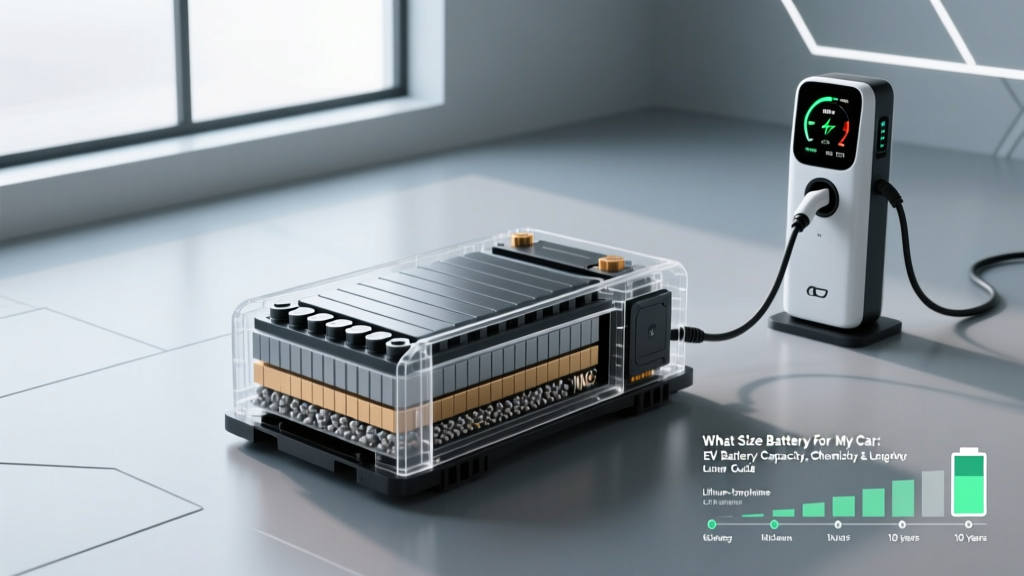
When EV shoppers ask "what size battery for my car," they're usually asking two distinct questions: how much energy capacity (measured in kilowatt-hours, or kWh) do I need for my driving habits, and what battery chemistry will serve me best over a decade of ownership? The answer depends on your daily mileage, climate, charging access, and how long you plan to keep the vehicle.
Battery capacity — the kWh figure — determines your vehicle's range. A 60 kWh battery in a compact crossover might deliver 230–250 EPA miles, while an 85–100 kWh pack in a full-size SUV pushes 300–350 miles. But capacity alone doesn't tell the full story. The chemistry inside those cells — whether lithium iron phosphate (LFP) or nickel manganese cobalt (NMC) — dictates how that capacity holds up over 150,000+ miles, how it performs in freezing weather, and how much it costs to replace if something goes wrong out of warranty.
This guide breaks down every factor that determines which battery size and type is right for your next EV, backed by manufacturer data, EPA figures, and real-world ownership patterns.
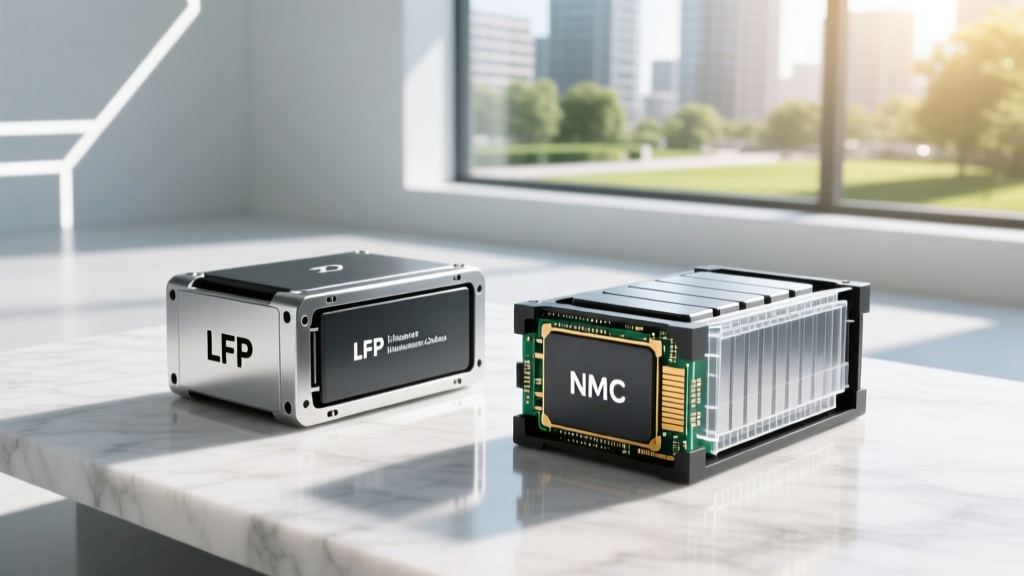
LFP vs NMC/NCA: Which Battery Chemistry Fits Your Driving Profile?
Two dominant chemistries power the 2026 EV market. Understanding the trade-offs between them is the single most consequential battery decision you'll make at purchase time.
| Attribute | LFP (Lithium Iron Phosphate) | NMC / NCA (Nickel-based) |
|---|---|---|
| Energy Density | Lower (~160 Wh/kg cell-level) | Higher (~250–300 Wh/kg cell-level) |
| Typical Cycle Life | 3,000–5,000+ full cycles | 1,000–2,000 full cycles |
| Cold-Weather Performance | Moderate — greater range loss below 20°F | Better — less capacity loss in freezing temps |
| Cost per kWh | Lower (~$90–110/kWh at pack level) | Higher (~$120–150/kWh at pack level) |
| Thermal Stability | Excellent — very low thermal runaway risk | Good — requires more robust BMS cooling |
| Optimal Daily SoC | 100% daily charging is fine | 80% daily recommended; 100% for trips only |
| Common Applications | Tesla Model 3/Y RWD, Ford Mustang Mach-E Select, BYD models | Tesla Long Range, Hyundai Ioniq 5/6, Rivian, most 300+ mi vehicles |
The practical takeaway: If you drive 40–80 miles daily, have home charging, and live in a mild-to-moderate climate, an LFP battery offers exceptional longevity at lower cost. You can charge to 100% every night without accelerated degradation — a significant convenience advantage. If you need 300+ miles of range, regularly drive in sub-freezing conditions, or want maximum performance, NMC/NCA chemistry delivers higher energy density and better cold-weather behavior, at the cost of slightly faster long-term degradation and a higher replacement price.
How Long Do EV Batteries Actually Last? Degradation Data by the Numbers
EV battery degradation is not the cliff-edge failure many new buyers fear. It's a gradual, logarithmic curve: the most capacity loss occurs in the first 1–2 years (typically 2–5%), followed by a long, slow decline of roughly 0.5–1.5% per year thereafter.
Typical EV Battery Degradation Curve (NMC Chemistry, Moderate Use):
- Year 1 / 15,000 mi: ~2–4% capacity loss (initial break-in)
- Year 3 / 45,000 mi: ~6–8% total loss
- Year 5 / 75,000 mi: ~8–12% total loss
- Year 8 / 120,000 mi: ~10–15% total loss
- Year 10 / 150,000 mi: ~12–18% total loss
Source: Geotab fleet data analysis of 10,000+ EVs across multiple model years.
LFP batteries typically show slower degradation in the mid-life years (years 3–8), often retaining 92–95% of original capacity at 100,000 miles when charged primarily at home on Level 2. NMC packs under similar conditions retain roughly 88–93%.
The critical insight: most EV batteries will outlast the vehicle's economic life. A 2026 model driven 12,000–15,000 miles annually will likely retain 82–88% of its original capacity at year 10 — well above the 70% threshold that defines a warranty claim. Full battery replacement before 150,000 miles is statistically uncommon under normal use.
EV Battery Warranty Terms: What's Covered and for How Long
Federal law mandates a minimum 8-year/100,000-mile warranty on EV battery packs for all vehicles sold in the United States. California Air Resources Board (CARB) states extend this to 10 years/150,000 miles. Most manufacturers meet or exceed these minimums, though the capacity retention threshold — the point at which a warranty claim is valid — varies.
| Manufacturer | Warranty Period | Mileage Limit | Capacity Retention Threshold |
|---|---|---|---|
| Tesla (Model 3/Y LFP) | 8 years | 100,000 mi | 70% |
| Tesla (Model 3/Y Long Range) | 8 years | 120,000 mi | 70% |
| Hyundai / Kia | 10 years | 100,000 mi | 70% |
| Ford (Mach-E, F-150 Lightning) | 8 years | 100,000 mi | 70% |
| Chevrolet (Equinox EV, Blazer EV) | 8 years | 100,000 mi | 70% |
| Rivian | 8 years | 120,000 mi | 70% |
| BMW (i4, iX) | 8 years | 100,000 mi | 70% |
What triggers a warranty claim: If your battery's State of Health (SoH) drops below the stated threshold (typically 70% of original capacity) within the warranty period, the manufacturer must repair or replace the pack at no cost. This covers defective cells, excessive degradation beyond normal wear, and BMS failures. It does not cover damage from accidents, flooding, unauthorized modifications, or neglect (such as leaving the vehicle at 0% SoC for extended periods).
For the latest federal warranty requirements and California-emissions-state extensions, refer to EPA's EV battery guidance and your state's CARB adoption status.
EV Battery Replacement Cost: What You'll Actually Pay (and When)
Out-of-warranty battery replacement is the most-cited fear among prospective EV buyers. The reality: replacement costs have fallen significantly since 2020, full pack replacements remain rare, and most owners will sell or trade the vehicle before a replacement is needed.
| Battery Size | Chemistry | Replacement Cost (Parts + Labor) | Typical Vehicle Class |
|---|---|---|---|
| 50–60 kWh | LFP | $7,000–$10,000 | Compact sedans, RWD crossovers |
| 60–75 kWh | NMC | $10,000–$14,000 | Mid-size crossovers, standard-range SUVs |
| 75–90 kWh | NMC | $13,000–$18,000 | Long-range sedans, mid-size SUVs |
| 90–110 kWh | NMC/NCA | $16,000–$22,000 | Full-size trucks, large SUVs, performance models |
Important nuances: These figures represent full pack replacement. In practice, many degradation issues are resolved by replacing individual modules (a fraction of the full cost — typically $2,000–$5,000 per module). Third-party refurbishment services are also expanding, offering remanufactured packs at 30–50% below OEM pricing. Additionally, pack-level pricing at the factory has dropped to roughly $100–130/kWh in 2026, meaning aftermarket and refurbished options will continue to become more accessible.
Most EV batteries reach end-of-first-life (below 70–75% SoH) at 200,000–300,000 miles under moderate use — far beyond the average American ownership period of 6–8 years and ~90,000 miles.
Five Factors That Accelerate (or Preserve) Your EV Battery's Lifespan
Battery longevity is not purely a function of time and mileage. Your charging habits, climate exposure, and driving style materially affect how quickly your pack degrades. Here are the five factors with the largest measurable impact:
- DC Fast Charging Frequency: Daily use of 150+ kW DC fast chargers accelerates degradation by an estimated 1–3% additional loss per year compared to Level 2 home charging. The heat generated during rapid charging stresses cell chemistry. Recommendation: use DC fast charging for road trips; rely on Level 2 (7–19 kW) for daily needs.
- State of Charge (SoC) Habits: Consistently storing an NMC battery at 100% SoC or below 10% SoC accelerates calendar degradation. The optimal storage window is 20–80%. LFP batteries are more tolerant of 100% SoC, and manufacturers like Tesla recommend periodic 100% charges for LFP to recalibrate the BMS.
- Extreme Temperature Exposure: Prolonged exposure to ambient temperatures above 95°F or below 10°F — especially while at high SoC — increases degradation rates. Vehicles with active thermal management (liquid cooling/heating) mitigate this substantially. Garage parking in extreme climates meaningfully extends battery life.
- Preconditioning Discipline: Using your vehicle's battery preconditioning feature before fast charging (available on Tesla, Hyundai E-GMP, Ford, and most 2024+ EVs) warms the pack to optimal temperature, reducing charge-induced stress and improving charge speed. Skipping preconditioning in cold weather can double the time spent at a DC charger and increase cell wear.
- Depth of Discharge Patterns: Shallow cycling (e.g., charging from 30% to 70%) produces less wear than deep cycling (5% to 95%). You don't need to obsess over this — modern BMS systems manage it well — but avoiding habitual drain-to-near-zero before charging is a simple longevity habit.
How to Check Your EV Battery's State of Health (SoH)
State of Health (SoH) is the percentage of original capacity your battery currently retains. A new EV starts at 100% SoH; at 70% SoH, most manufacturers consider the pack degraded enough for a warranty claim.
Methods to check SoH in 2026:
- In-vehicle display: Many 2024+ EVs (Hyundai Ioniq 5/6, Kia EV6/EV9, Ford F-150 Lightning, BMW iX) include a battery health indicator in the infotainment or driver settings. This provides a percentage or bar-graph estimate.
- Manufacturer app: Tesla's app shows estimated range at 100% SoC, from which you can calculate approximate SoH by comparing to original EPA range. FordPass and Hyundai Blue Link include similar telemetry.
- OBD-II diagnostic tools: Third-party tools like Leaf Spy (Nissan Leaf), Scan My Tesla, or universal OBD-II readers with EV support can pull raw BMS data including measured capacity in kWh, cycle count, and cell voltage variance.
- Dealer diagnostic report: Any authorized service center can run a full battery health report, typically for $50–100 if not covered under a service visit. This is the most authoritative measurement and is recommended before purchasing a used EV.
When to be concerned: If your SoH drops more than 3% in a single year after the initial break-in period, or if individual cell voltage variance exceeds 200 mV (visible via OBD tools), schedule a dealer diagnostic. These can signal a defective module that may be covered under warranty.
Looking Ahead: Solid-State and Silicon-Anode Batteries (2028–2032 Timeline)
Next-generation battery technologies are in active development but are not yet available in any production vehicle as of 2026. Here's where they stand:
Solid-state batteries replace the liquid electrolyte with a solid material, promising 40–50% higher energy density, faster charging (potentially 10–80% in under 10 minutes), and improved safety. Toyota has announced limited production for 2027–2028, while Samsung SDI and QuantumScape target 2028–2030 for broader commercial availability. Realistic mass-market adoption is expected no earlier than 2030.
Silicon-anode batteries (used in limited form in the Porsche Taycan and some 2025+ models) increase energy density by 15–25% over conventional graphite anodes. These are closer to mainstream availability and appear in incrementally improved form in several 2026–2027 model-year vehicles. They represent an evolution rather than a revolution — meaningful but not transformative on their own.
Neither technology changes today's buying decision. The LFP and NMC batteries in current 2026 vehicles are mature, well-understood, and backed by extensive warranty coverage. Waiting for solid-state is not a practical strategy unless your purchase timeline extends beyond 2030.
Frequently Asked Questions
How long do EV batteries last in years and miles?
Based on fleet data from Geotab's analysis of over 10,000 EVs, most modern EV batteries retain 82–88% of original capacity at 10 years / 150,000 miles under normal use. Full failure before 200,000 miles is uncommon. The practical lifespan typically exceeds the vehicle's economic life.
How much does it cost to replace an EV battery?
Full pack replacement ranges from approximately $7,000 for a 50–60 kWh LFP pack to $22,000 for a 100+ kWh NMC pack (parts and labor included). However, most out-of-warranty issues are resolved with single-module replacements at $2,000–$5,000. The vast majority of EV owners never pay for a battery replacement — the vehicle is sold or traded before the pack reaches end-of-life.
What does the EV battery warranty actually cover?
Federal minimum is 8 years / 100,000 miles (10 years / 150,000 in CARB states). Coverage applies when State of Health drops below the manufacturer's threshold (typically 70% of original capacity). This includes defective cells, abnormal degradation, and BMS failures. It excludes accident damage, unauthorized modifications, and neglect. See the warranty table above for manufacturer-specific terms.
How do I maximize my EV battery's health over time?
The highest-impact habits: (1) charge primarily on Level 2 at home, not daily DC fast charging; (2) keep NMC batteries between 20–80% SoC for daily use (LFP can go to 100%); (3) use preconditioning before fast charging in cold weather; (4) avoid leaving the vehicle at very low or very high SoC for weeks at a time; (5) garage park in extreme heat or cold when possible.
Is LFP or NMC better for my situation?
Choose LFP if: you drive under 250 miles daily, have reliable home charging, live in a mild-to-moderate climate, and prioritize maximum battery longevity and lower cost. Choose NMC if: you need 300+ miles of range, frequently drive in sub-freezing temperatures, want maximum performance, or take regular long road trips where higher energy density matters. Neither is universally "better" — the right chemistry matches your driving profile.