The phrase "battery salt" has entered the EV lexicon as shorthand for a new generation of sodium-ion (Na-ion) battery cells — and it represents just one thread in a rapidly diversifying battery-chemistry landscape. While today's EVs rely overwhelmingly on lithium-ion cells in two dominant flavors (LFP and NMC/NCA), the chemistry inside your pack dictates everything from real-world range to charging speed, cold-weather performance, cycle life, and eventual replacement cost. This guide breaks down every chemistry option available to buyers in 2026, pairs them with hard degradation data, and gives you the numbers you need to project total battery cost over a decade of ownership.
LFP vs NMC vs Sodium-Ion: The Chemistry Landscape
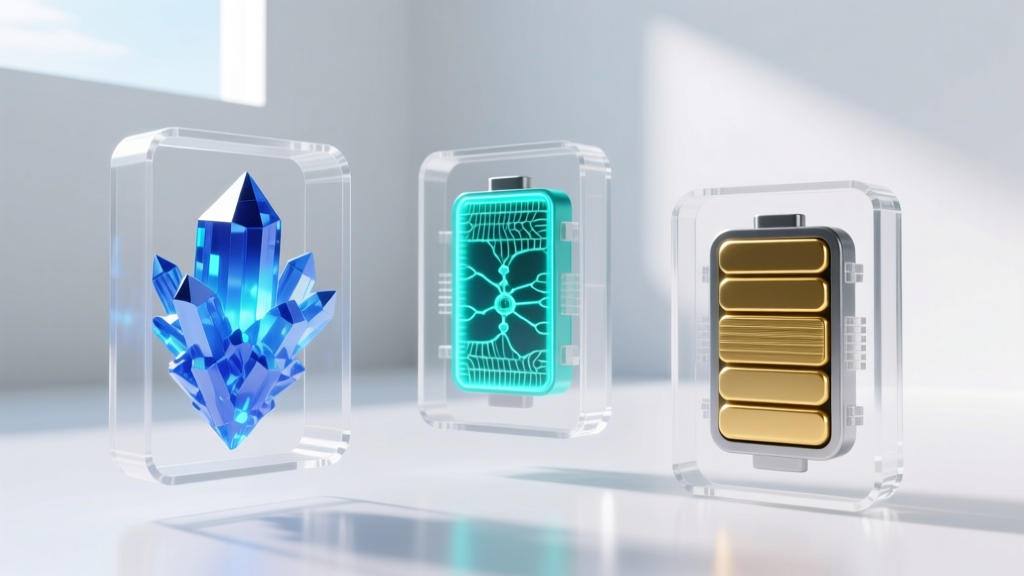
Three cathode chemistries matter to EV buyers right now. Lithium Iron Phosphate (LFP) uses iron and phosphate — no nickel, no cobalt. Nickel Manganese Cobalt (NMC) and Nickel Cobalt Aluminum (NCA) lean on nickel for higher energy density. And sodium-ion — the "battery salt" technology — replaces lithium with abundant sodium, targeting budget segments.
| Attribute | LFP | NMC / NCA | Sodium-Ion (Na-ion) |
|---|---|---|---|
| Cell-Level Energy Density | 160–180 Wh/kg | 230–300 Wh/kg | 120–160 Wh/kg |
| Typical Cycle Life (80% retention) | 3,000–5,000+ cycles | 1,000–2,500 cycles | 2,000–4,000 cycles |
| Cold Performance (−10 °C range loss) | ~15–25% loss | ~10–18% loss | ~10–15% loss |
| DC Fast-Charge Tolerance | Excellent (100% SoC OK) | Moderate (limit to 80–90%) | Excellent (fast charge friendly) |
| Raw-Material Cost Trend | Low & stable (iron, phosphate) | Volatile (nickel, cobalt) | Very low (sodium abundant) |
| Notable 2026 Vehicles | Tesla Model 3/Y RWD, Ford Mustang Mach-E Select, BYD models | Hyundai Ioniq 5, Kia EV6, Chevy Silverado EV, Lucid Air | Announced: select Chinese-market subcompacts; limited global availability |
LFP vs NMC: Which Is Better for You?
There is no universal winner — only the right fit for your driving pattern.
Choose LFP if: You charge at home nightly, want maximum cycle life, prefer charging to 100% without guilt, and don't need the absolute longest single-charge range. LFP packs are heavier per kWh, so they appear in Standard Range trims. Tesla's Model 3 RWD (272 mi EPA, 57.5 kWh usable) is a textbook example. LFP also tolerates daily 100% SoC, which simplifies ownership.
Choose NMC/NCA if: You need the longest range per charge, tow frequently, or live where pack weight matters for efficiency. The Hyundai Ioniq 5 Long Range (318 mi EPA, 77.4 kWh, NMC) delivers more miles on a comparable pack footprint. NMC demands more care: keep daily SoC between 20–80%, and use 100% only for road trips.
Sodium-ion ("battery salt") cells are entering production primarily in China via CATL and HiNa Battery. They offer competitive cycle life, excellent cold tolerance, and very low material cost — but energy density remains too low for long-range US-market vehicles in 2026. Expect sodium-ion in US-bound EVs no earlier than 2028–2029, likely in entry-level trims or as buffer layers in hybrid packs.
How Long Do EV Batteries Last? Real Degradation Data
The fear of a dead battery at 80,000 miles is not supported by fleet data. Most modern packs outlast the vehicles they power.
| Mileage | LFP Packs (avg retention) | NMC/NCA Packs (avg retention) |
|---|---|---|
| 30,000 mi / 2 years | 97–99% | 94–97% |
| 60,000 mi / 4 years | 94–97% | 90–94% |
| 100,000 mi / 7 years | 90–95% | 85–91% |
| 150,000 mi / 10 years | 85–92% | 80–87% |
| 200,000 mi+ | 80–88% | 75–83% |
Sources: Recurrent Auto fleet data, Tesla Impact Reports, Geotab aggregated telematics.
Two patterns are clear: LFP degrades more slowly and more linearly, while NMC shows slightly steeper initial drop (the "formation" loss in the first 10,000 miles) before plateauing. Neither chemistry falls off a cliff under normal use.
What Does the Battery Warranty Actually Cover?
Federal law in the US mandates a minimum 8-year / 100,000-mile warranty on EV battery packs (10 years / 150,000 miles in CARB states like California, New York, and Massachusetts). But the capacity-retention threshold — the point at which the manufacturer must intervene — varies.
| Manufacturer | Duration / Mileage | Capacity Threshold | Notes |
|---|---|---|---|
| Tesla (Model 3/Y LFP) | 8 yr / 120,000 mi | 70% | Covers defects + excessive degradation below 70% |
| Hyundai / Kia (NMC) | 10 yr / 100,000 mi | 70% | Among the longest standard coverage |
| Ford (Mach-E, F-150 Lightning) | 8 yr / 100,000 mi | 70% | Module-level replacement where possible |
| GM (Ultium platform) | 8 yr / 100,000 mi | 70% | Includes battery-management system components |
| Rivian | 8 yr / 175,000 mi | 70% | Higher mileage cap for commercial/fleet use |
Always verify current warranty terms on the manufacturer's official site; terms can shift by model year.
The critical detail: warranties cover capacity below the threshold. A pack at 72% SoH at year 7 is functioning "normally" by warranty standards, even though you've lost 28% of original range. In practice, very few packs breach the 70% line within the warranty window under typical ownership.
EV Battery Replacement Cost: The Numbers
Out-of-warranty replacement is the scenario that generates headlines — but context matters. Most original packs last 15+ years. When replacement is needed (collision damage, rare manufacturing defect, or extreme degradation past year 12–15), here's what it costs:
| Vehicle / Pack Size | Battery Cost (Parts) | Labor | Total Estimated |
|---|---|---|---|
| Tesla Model 3 RWD (57.5 kWh, LFP) | $8,000–$11,000 | $1,500–$2,500 | $9,500–$13,500 |
| Hyundai Ioniq 5 (77.4 kWh, NMC) | $12,000–$16,000 | $2,000–$3,000 | $14,000–$19,000 |
| Ford F-150 Lightning Ext. Range (131 kWh) | $20,000–$28,000 | $3,000–$4,500 | $23,000–$32,500 |
| Chevy Bolt EV (65 kWh, NMC) | $9,000–$13,000 | $1,500–$2,500 | $10,500–$15,500 |
| Lucid Air Grand Touring (112 kWh) | $18,000–$25,000 | $3,000–$4,000 | $21,000–$29,000 |
Costs reflect OEM pricing; aftermarket/refurbished packs can reduce parts cost by 30–50%. Module-level repair (replacing only degraded sections) can cut costs further, especially on Ultium and Tesla structural packs.
The key insight: pack prices have fallen roughly 8–12% annually over the past decade. A replacement in 2036 will cost significantly less than today's figures. And most owners sell or trade their EV before reaching the mileage where replacement becomes likely.
What Kills an EV Battery? Five Factors That Accelerate Degradation
- Chronic DC fast-charging above 150 kW: Occasional road-trip fast-charging is fine. Daily reliance on 250–350 kW chargers without preconditioning accelerates electrolyte breakdown. Data from IDTechEx shows vehicles that DC fast-charge more than 3× per week degrade ~2–4% faster over 100,000 miles than those primarily using Level 2.
- Sustained 100% or 0% SoC: For NMC/NCA, sitting at 100% SoC for days stresses the cathode lattice. For LFP, periodic 100% charges actually help the BMS calibrate cell balance. Know your chemistry.
- Extreme heat exposure: Battery packs parked in 110°F+ ambient temps for weeks without active thermal management see accelerated calendar aging. Garage parking or preconditioning helps.
- Deep discharge cycles: Regularly draining below 10% SoC strains the anode SEI layer. Set your charge limiter to 20% minimum for daily driving.
- High-performance driving in hot climates: Sustained high-C-rate discharge (track days, mountain towing in summer) generates internal heat that outpaces liquid cooling. This is a niche scenario but measurable in fleet data.
How to Check and Monitor Battery Health (SoH)
State of Health (SoH) is the percentage of original capacity your pack retains. Here's how to monitor it:
1. In-car BMS readouts: Tesla, Rivian, and some Hyundai/Kia models display estimated range that adjusts with degradation. Compare your current full-charge range to the original EPA sticker — a rough SoH proxy.
2. OBD-II diagnostic apps: Tools like OBDeleven, Leaf Spy (Nissan), or TeslaFi (Tesla owners) can pull SoH estimates from the battery management system via the OBD-II port or API.
3. Dealer diagnostic reports: Request a battery health report during service visits. Most OEMs can pull cell-level voltage variance and total capacity measurements.
4. Third-party services: Companies like Recurrent and Geotab offer fleet and individual SoH tracking via connected-car telematics — often free for consumers who opt in.
A healthy battery shows less than 3% cell-to-cell voltage variance. If one module is consistently 50+ mV lower than the rest, that's a candidate for module-level service before the whole pack degrades unevenly.
Emerging Technologies: Solid-State, Silicon Anodes, and What's Real
Solid-state batteries (Toyota, QuantumScape, Samsung SDI) promise 350–500 Wh/kg and faster charging by replacing the liquid electrolyte with a solid ceramic or polymer. Toyota has announced limited solid-state production for 2027–2028, but these will appear in low-volume, premium vehicles first. Widespread availability in mainstream US-market EVs is not expected before 2030.
Silicon-dominant anodes (Sila Nanotechnologies, Group14) are already shipping in limited applications, boosting energy density by 10–20% over graphite anodes. Expect incremental adoption in 2026–2028 model-year premium EVs.
Sodium-ion ("battery salt") cells from CATL are in volume production in China for subcompact EVs. US-market adoption depends on supply-chain localization and energy-density improvements. Realistically, sodium-ion will serve as a range-extender layer in dual-chemistry packs (CATL's AB battery concept) before standing alone in long-range vehicles.
None of these technologies invalidate current EV purchases. Today's LFP and NMC packs are mature, well-understood, and backed by warranty infrastructure. Future chemistries will arrive as options, not as reasons to wait.
Frequently Asked Questions
How long do EV batteries last in years and miles?
Most modern LFP packs retain 85–92% capacity at 150,000 miles / 10 years. NMC packs average 80–87% at the same milestone. With proper care, a pack can serve 200,000+ miles before dropping below 70% capacity — the point where range reduction becomes noticeable in daily driving.
How much does it cost to replace an EV battery in 2026?
Full-pack replacement ranges from roughly $10,000 (smaller packs like the Bolt) to $30,000+ (large packs like the F-150 Lightning Extended Range). Module-level repairs can reduce costs by 40–60%. However, the vast majority of EVs never need a replacement — fleet data shows less than 2% of packs require warranty service.
What does the federal battery warranty cover?
US federal law mandates 8 years / 100,000 miles minimum (10 yr / 150,000 mi in CARB states). Coverage includes manufacturing defects and capacity loss below the manufacturer's threshold (typically 70% SoH). It does not cover damage from collisions, flooding, or unauthorized modifications.
Is LFP better than NMC for daily driving?
For most daily-driving scenarios — commuting, errands, home charging — LFP is the more practical choice. It tolerates 100% SoC, degrades more slowly, costs less, and avoids cobalt/nickel supply-chain concerns. NMC wins when you need maximum range in a single charge or tow heavy loads frequently.
What is "battery salt" technology?
"Battery salt" refers to sodium-ion batteries, which use sodium (Na) instead of lithium (Li) as the charge-carrying ion. Sodium is vastly more abundant and cheaper than lithium. The trade-off is lower energy density, meaning heavier packs for the same range. Sodium-ion is in production for budget EVs in China and is expected to reach the US market in limited applications by 2028–2029.
Does DC fast-charging ruin my battery?
No — but frequency matters. Using DC fast chargers (150–350 kW) for road trips a few times per month has negligible impact. Daily fast-charging without preconditioning can add 2–4% extra degradation over 100,000 miles compared to primarily Level 2 home charging. Always enable battery preconditioning when navigating to a charger.
How do I maximize my EV battery's lifespan?
Charge primarily on Level 2 at home. For NMC, keep daily SoC between 20–80%; for LFP, periodic 100% charges are fine and even helpful. Avoid letting the pack sit at 0% or 100% for extended periods. Use DC fast-charging when needed, but don't rely on it exclusively. Park in shade or a garage in extreme heat. And keep your battery thermal management system maintained (coolant flushes per the manufacturer's schedule).