Why Would You Need to Remove an EV Battery?
For most electric vehicle owners, the high-voltage traction battery is a sealed, maintenance-free component designed to outlast the car itself. But the question "how do you remove a battery" from an EV comes up more often than you might think — and the answer depends entirely on why you're asking.
The three realistic scenarios are:
- Warranty-covered replacement: The pack has degraded below the manufacturer's capacity threshold (typically 70% State of Health) within the warranty period.
- Out-of-warranty failure: A cell module fault, physical damage, or severe degradation on an older vehicle makes replacement economically necessary.
- End-of-life recycling or repurposing: The vehicle is being scrapped, and the pack is destined for a second-life application or materials recovery.
Before we get into the removal process itself, it's worth emphasizing: EV battery removal is not a DIY job. High-voltage traction packs operate at 400V (and increasingly 800V in vehicles like the Hyundai Ioniq 5 and Porsche Taycan). A mistake can be fatal. This work requires a certified high-voltage technician, specialized lift equipment, and manufacturer-specific diagnostic tools.
EV Battery Chemistry: LFP vs NMC vs NCA
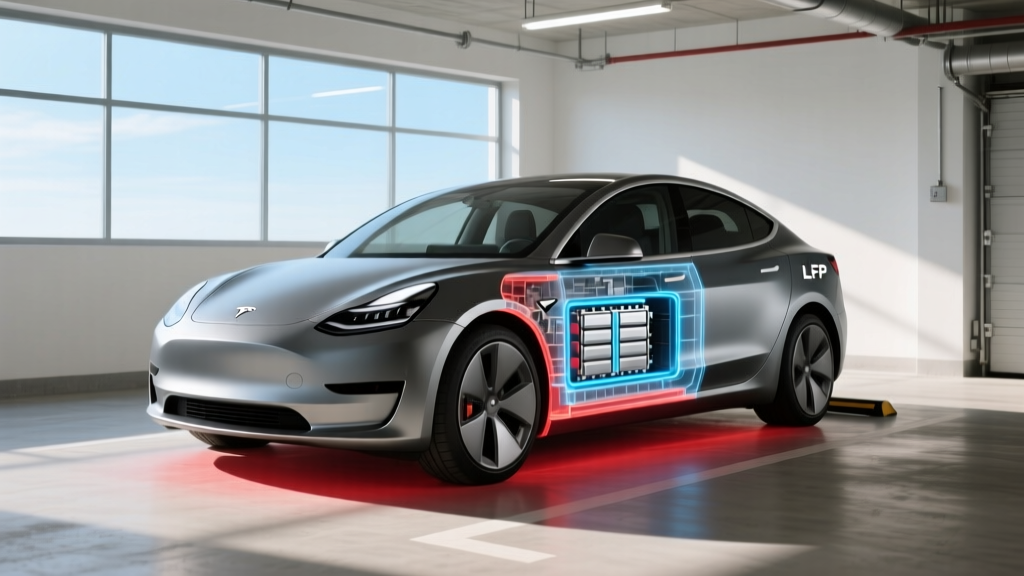
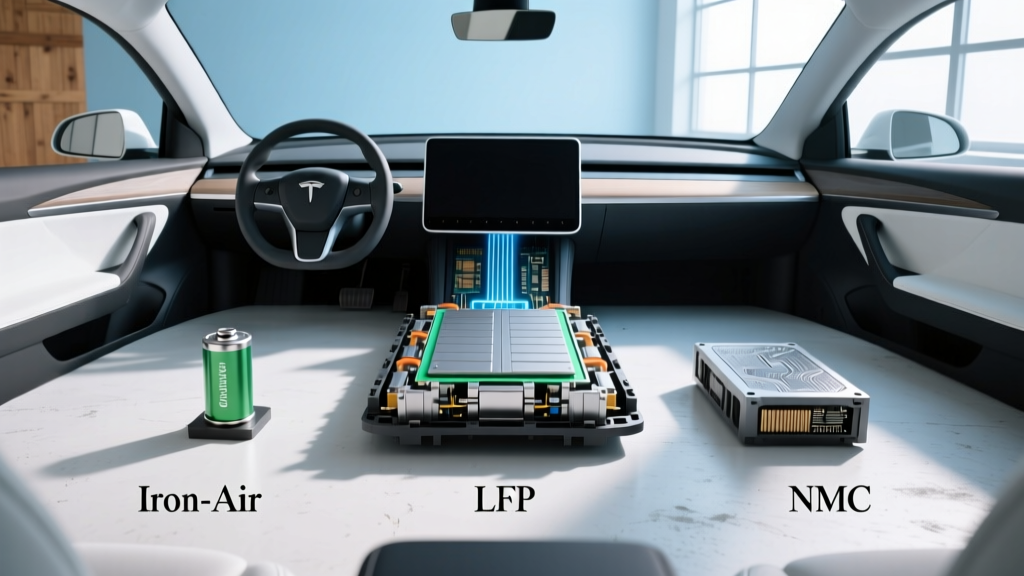
The type of chemistry inside your pack affects everything — from how long it lasts to how it handles cold weather to what it costs to replace. In 2026, two dominant chemistries power the US EV market:
| Attribute | LFP (Lithium Iron Phosphate) | NMC / NCA (Nickel-based) |
|---|---|---|
| Energy Density | Lower (~160–180 Wh/kg cell-level) | Higher (~220–300 Wh/kg cell-level) |
| Cycle Life | 3,000–5,000+ cycles to 80% SoH | 1,000–2,000 cycles to 80% SoH |
| Cold-Weather Performance | Weaker — more range loss below freezing | Better — retains more capacity in cold |
| Cost | Lower ($100–115/kWh pack-level, 2025–2026) | Higher ($120–140/kWh pack-level) |
| Recommended Charge Habit | Can charge to 100% regularly | Best kept 20–80% daily; 100% for trips only |
| Notable 2026 Vehicles Using It | Tesla Model 3/Y RWD, Ford Mustang Mach-E Select (LFP option) | Hyundai Ioniq 5, Chevy Equinox EV, BMW i4, Tesla Long Range/Performance trims |
| Thermal Stability | Excellent — very resistant to thermal runaway | Good — requires more robust thermal management |
The practical takeaway: LFP is the durability champion. If you plan to keep a car 10+ years or drive 15,000+ miles annually, LFP's superior cycle life makes it the lower-risk choice. NMC/NCA gives you more range in a lighter package and better winter performance — the trade-off is slightly faster degradation if you routinely charge to 100% or rely heavily on DC fast charging.
How Long Do EV Batteries Actually Last?
This is the question behind every "how do you remove a battery" search: do you even need to? The data says probably not during your ownership.
According to aggregated fleet data from sources like Recurrent Auto and manufacturer disclosures, most modern EV batteries lose between 5% and 15% of their original capacity over the first 100,000 miles or 8 years. Early-model EVs (2011–2015 Nissan Leaf with passive air cooling) degraded far faster, but liquid-cooled thermal management — now standard on virtually every mainstream EV — has dramatically improved longevity.
- Year 1 / 15,000 mi: ~2–4% capacity loss (initial "break-in" drop)
- Year 3 / 45,000 mi: ~6–8% total loss
- Year 5 / 75,000 mi: ~8–10% total loss
- Year 8 / 120,000 mi: ~10–14% total loss
- Year 10+ / 150,000+ mi: ~12–18% total loss (varies widely by use pattern)
Source: Recurrent Auto battery health reports, Tesla Impact Report 2024, manufacturer warranty data. Real-world degradation depends heavily on climate, charging habits, and DC fast-charging frequency.
At 85–90% State of Health after 8 years, a vehicle originally rated at 300 miles EPA would still deliver roughly 255–270 miles — more than adequate for most daily driving. Complete pack failure (sudden, total loss) is exceedingly rare and usually tied to manufacturing defects caught under warranty or physical damage from a collision.
What Does the EV Battery Warranty Cover?
Federal law mandates a minimum 8-year / 100,000-mile warranty on EV battery packs for all vehicles sold in the US. States that have adopted California's CARB standards (including New York, Massachusetts, Colorado, and others) extend that to 10 years / 150,000 miles. Here's how major manufacturers stack up in 2026:
| Manufacturer | Battery Warranty | Capacity Retention Threshold |
|---|---|---|
| Tesla | 8 yr / 120,000 mi (Model 3/Y RWD); 8 yr / 100,000 mi (Long Range/Performance) | 70% minimum SoH |
| Hyundai / Kia | 10 yr / 100,000 mi | 70% minimum SoH |
| Ford | 8 yr / 100,000 mi | 70% minimum SoH |
| General Motors (Chevy/GMC/Cadillac) | 8 yr / 100,000 mi | 70% minimum SoH (some models 60%) |
| BMW | 8 yr / 80,000 mi | 70% minimum SoH |
| Volkswagen | 8 yr / 100,000 mi | 70% minimum SoH |
What triggers a warranty claim? If a diagnostic scan confirms your pack has fallen below the stated threshold (most commonly 70% State of Health) within the warranty window, the manufacturer will repair or replace the pack at no cost. Some manufacturers replace individual modules rather than the entire pack — this is common with BMW and VW, which use modular architectures. Tesla tends to swap entire packs.
What's NOT covered: Gradual capacity loss that stays above the threshold, damage from collisions, flooding, improper modifications, or use of non-approved charging equipment. Always check your specific owner's manual for exclusions.
How Much Does It Cost to Replace an EV Battery?
If your pack fails outside the warranty window — or you're buying an older used EV with a degraded battery — here's what you're looking at. These are 2025–2026 approximate replacement costs including parts and labor at a dealership or certified EV shop:
| Vehicle / Battery Size | Approximate Replacement Cost | Notes |
|---|---|---|
| Tesla Model 3 RWD (~57 kWh LFP) | $7,000 – $10,000 | LFP packs are cheaper; third-party options emerging |
| Tesla Model Y Long Range (~75 kWh NMC) | $10,000 – $14,000 | Refurbished packs available for less |
| Hyundai Ioniq 5 (~77.4 kWh NMC) | $9,000 – $13,000 | Modular design allows partial module replacement |
| Ford F-150 Lightning Extended (~131 kWh NMC) | $18,000 – $25,000+ | Largest consumer packs cost the most |
| Chevy Bolt EV/EUV (~65 kWh NMC) | $8,000 – $12,000 | Post-recall packs are improved; third-party market growing |
| Porsche Taycan (~93.4 kWh NMC, 800V) | $20,000 – $30,000+ | Premium pricing; 800V architecture adds complexity |
The honest context: Most EV batteries never need replacement during the vehicle's useful life. Data from fueleconomy.gov and warranty claim rates suggest fewer than 2–3% of EVs require a full pack swap. For context, a $12,000 battery replacement at year 12 is comparable to the cumulative engine and transmission repairs many gas vehicles need in the same timeframe.
How Is an EV Battery Actually Removed?
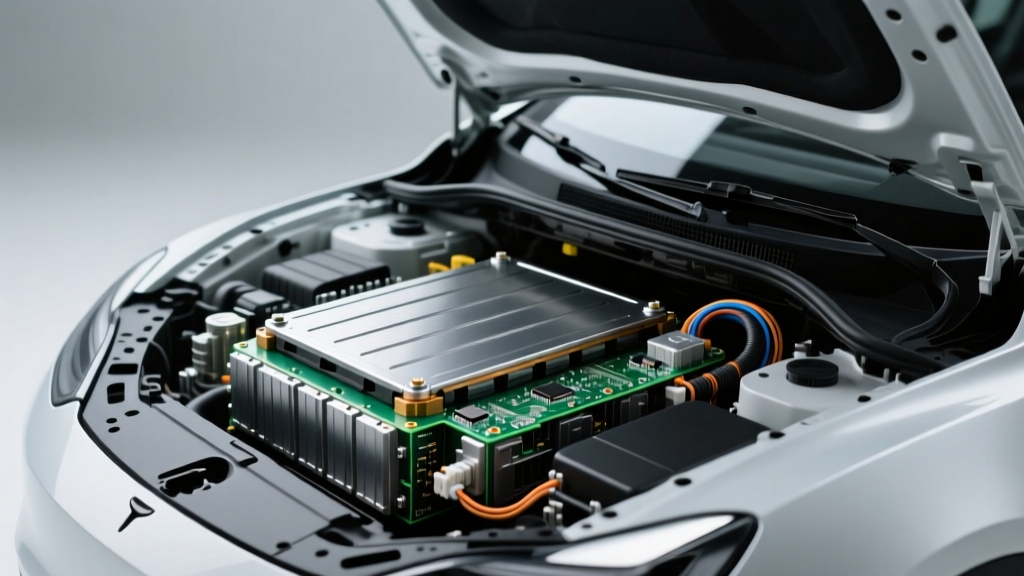
For those asking "how do you remove a battery" from a technical standpoint, here's what the process looks like at a certified service center. This is a simplified overview — actual procedures vary by manufacturer and require specific service manuals:
- High-voltage safety lockout: The technician disconnects the service disconnect plug (usually located under the rear seat or in the trunk area) and verifies zero voltage at the pack terminals with a CAT III/IV multimeter. The vehicle sits for a prescribed waiting period (often 10–30 minutes) to allow capacitors to discharge.
- Coolant drain: The battery thermal management loop is drained. Most liquid-cooled packs have 2–4 liters of glycol-based coolant circulating through cold plates beneath the cells.
- Vehicle lift and skid plate removal: The car goes on a drive-on lift with a transmission jack or dedicated battery lift table positioned underneath. The underbody shielding and any structural cross-members bolted over the pack are removed.
- Electrical and data connector separation: The high-voltage cable(s) connecting the pack to the inverter/power electronics are unbolted. Low-voltage data harnesses (BMS communication, temperature sensors) are unplugged.
- Mounting bolt removal and pack lowering: The pack is typically secured by 20–40 bolts around its perimeter. Once all fasteners are removed, the battery lift table slowly lowers the pack — which can weigh 400–1,000+ lbs (180–450+ kg) depending on capacity.
- Inspection and replacement: The replacement pack (new, refurbished, or remanufactured) is raised into position, torqued to spec, reconnected, coolant is refilled and bled, and the BMS is recalibrated via the manufacturer's diagnostic software.
Total shop time: typically 4–8 hours for a straightforward swap, though some platforms (like the VW MEB or GM Ultium) are designed for faster pack removal to streamline warranty service.
How to Maximize Your EV Battery's Lifespan
You can't stop degradation entirely — it's a chemical inevitability — but you can slow it significantly. Here's what the data supports:
- Avoid routine 100% charges on NMC/NCA packs. Daily driving? Set your charge limit to 80%. Save 100% for road trips. (LFP owners: 100% is fine — Tesla and Ford recommend periodic full charges for LFP BMS calibration.)
- Minimize DC fast charging when possible. Occasional road-trip fast charging is fine. But if you DC fast charge daily (especially at 150+ kW), expect slightly accelerated degradation. Level 2 home charging at 7–11 kW is gentler on cells.
- Don't let the pack sit at very low or very high SoC in extreme temperatures. A car sitting at 5% SoC in a Texas summer or 100% SoC in an Arizona parking lot is under stress. Aim for ~50% SoC if storing for weeks.
- Use preconditioning. Most EVs let you schedule departure times or precondition the battery via the app. This warms or cools the pack to its optimal operating temperature before driving and charging, reducing stress.
- Keep the thermal management system maintained. If your manufacturer recommends coolant flush intervals (check your manual — some are lifetime-fill, some specify 5-year intervals), follow them. Degraded coolant reduces thermal transfer efficiency.
How Do I Check My EV Battery's State of Health?
State of Health (SoH) is the percentage of original capacity your pack can still hold. A new battery is 100% SoH; a degraded one might read 88%. Here's how to check it:
- In-vehicle displays: Some EVs (notably the Nissan Leaf with its "battery health bars" and newer Hyundai/Kia models) show SoH directly on the dash or infotainment screen.
- Manufacturer apps: Tesla's app provides a battery health estimate under the "Service" menu. BMW and Mercedes offer similar diagnostics through their connected services portals.
- OBD-II diagnostic tools: Third-party tools like OBDLink SX/MX paired with apps such as Leaf Spy (Nissan), Scan My Tesla, or Car Scanner ELM OBD2 can read BMS-reported SoH, cell voltage variance, and pack temperature data.
- Dealer diagnostic scan: Any authorized service center can run a full battery health report. Request one before purchasing a used EV — it's the single most important pre-purchase check.
- Real-world range tracking: If your car used to display 280 miles at 100% charge and now shows 250 under similar conditions, that's roughly a ~10% SoH loss. Apps like Recurrent and A Better Routeplanner log this data over time for trend analysis.
What's Coming Next: Solid-State and Beyond
If you're researching battery removal because you're considering whether to buy now or wait for better tech, here's a realistic snapshot of what's on the horizon:
- Solid-state batteries: Toyota, Samsung SDI, and QuantumScape are targeting initial production in 2027–2029, with meaningful volume likely not until 2030+. Promised benefits include 2x energy density, 10-minute fast charging, and vastly improved cycle life. These are not available in any production vehicle as of 2026.
- Silicon-dominant anodes: Companies like Sila Nanotechnologies and Group14 are already supplying silicon-blend anodes to manufacturers (Mercedes has used them in the G-Class 580e). They boost energy density 10–20% over graphite anodes and are expected to become mainstream by 2027–2028.
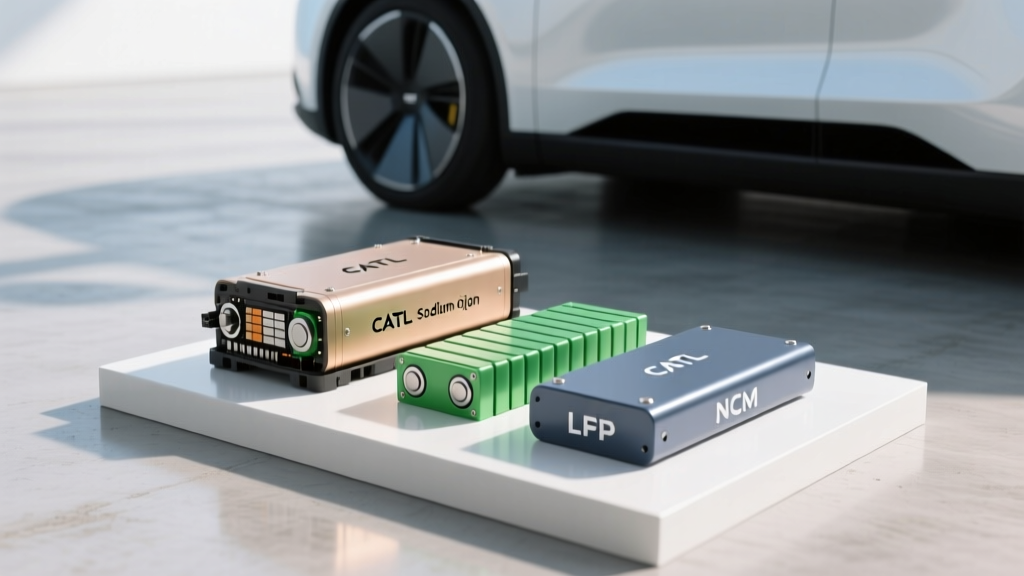
- Sodium-ion batteries: CATL and BYD are producing sodium-ion packs for lower-cost, shorter-range vehicles in China. US availability remains uncertain and likely limited to budget segments if adopted.
The practical advice: don't delay an EV purchase for solid-state. Current lithium-ion technology is mature, well-warranted, and cost-competitive. By the time solid-state reaches mainstream pricing, today's EVs will have depreciated naturally — and you'll have had years of fuel savings in the meantime.
Frequently Asked Questions
How long do EV batteries last in years and miles?
Most modern liquid-cooled EV batteries retain 85–90% of their original capacity after 8 years or 100,000 miles. Many will function well beyond 200,000 miles before dropping below the 70% threshold that would meaningfully impact daily usability. Data from Recurrent Auto shows that average degradation has slowed significantly with each successive model year.
How much does an EV battery cost to replace?
Replacement costs range from approximately $7,000 for smaller LFP packs (Tesla Model 3 RWD) to $25,000+ for the largest packs (Ford F-150 Lightning Extended Range, Porsche Taycan). The vast majority of replacements are covered under the 8-year/100,000-mile federal warranty, meaning out-of-pocket cost is $0 for most owners who experience a failure.
What does the battery warranty actually cover?
The warranty covers defects in materials and workmanship, plus capacity loss below a specified threshold (usually 70% SoH) within the warranty period (8 years/100,000 miles minimum, 10/150,000 in CARB states). It does not cover gradual degradation above the threshold, accident damage, or misuse.
How do I check and maximize my battery's health?
Check SoH via your vehicle's built-in display, the manufacturer's mobile app, an OBD-II scanner with EV-specific software, or a dealer diagnostic scan. Maximize longevity by avoiding routine 100% charges (on NMC/NCA), minimizing daily DC fast charging, preconditioning the battery in extreme temperatures, and storing at ~50% SoC for extended periods.
LFP vs NMC — which battery chemistry is better?
Neither is universally "better." LFP wins on longevity (3,000–5,000+ cycles), cost, thermal safety, and the ability to charge to 100% daily without harm. NMC wins on energy density (more range per pound), cold-weather performance, and availability in long-range and performance trims. If you prioritize keeping the car 10+ years, lean LFP. If you need maximum range and drive in cold climates, NMC is the stronger fit.
Can I remove an EV battery myself?
No. High-voltage traction batteries operate at 400V–800V and can deliver a lethal shock. Removal requires certified high-voltage training, specialized insulated tools, a battery lift table, and manufacturer diagnostic software for BMS recalibration. The 12V auxiliary battery, however, can be replaced by any owner following the vehicle manual — just as with a conventional car.