Why Battery Removal Order Matters for EV Owners
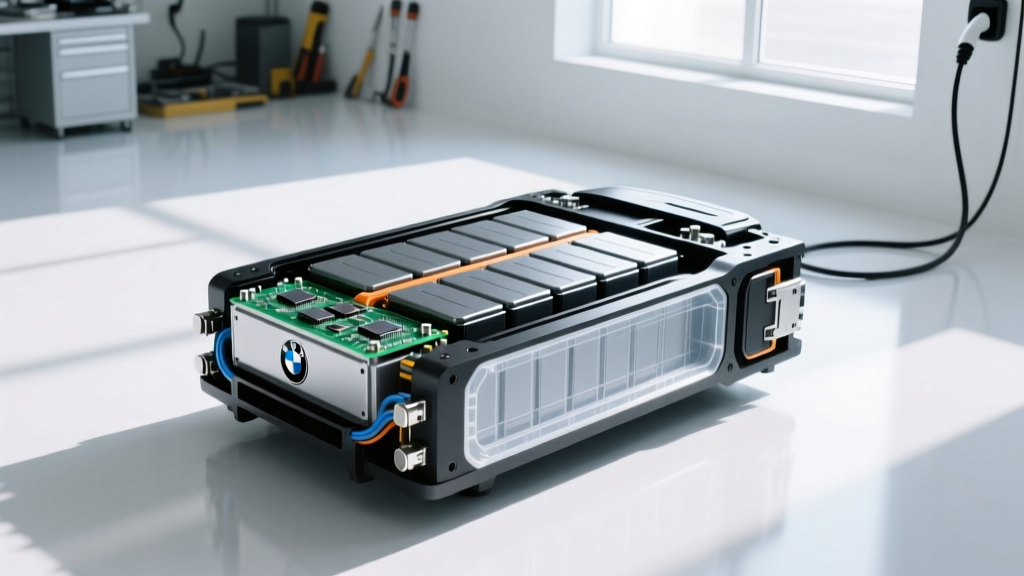
When a high-voltage traction battery reaches end-of-life, suffers physical damage, or requires module-level service, the battery removal order is the formal process by which a dealership or certified EV service center authorizes, schedules, and executes the pack's extraction from the vehicle. Unlike a simple 12V auxiliary battery swap, a traction battery removal involves high-voltage safety lockout procedures, specialized lift equipment, coolant system drainage, and manufacturer-specific diagnostic protocols. Understanding this process — and the battery technology inside the pack — helps you evaluate whether replacement, module repair, or vehicle retirement makes financial sense.
This guide covers the chemistry, degradation realities, warranty protections, replacement costs, and care practices that determine whether you'll ever need to initiate a battery removal order during your ownership.
LFP vs NMC/NCA: Which Chemistry Is in Your Pack?
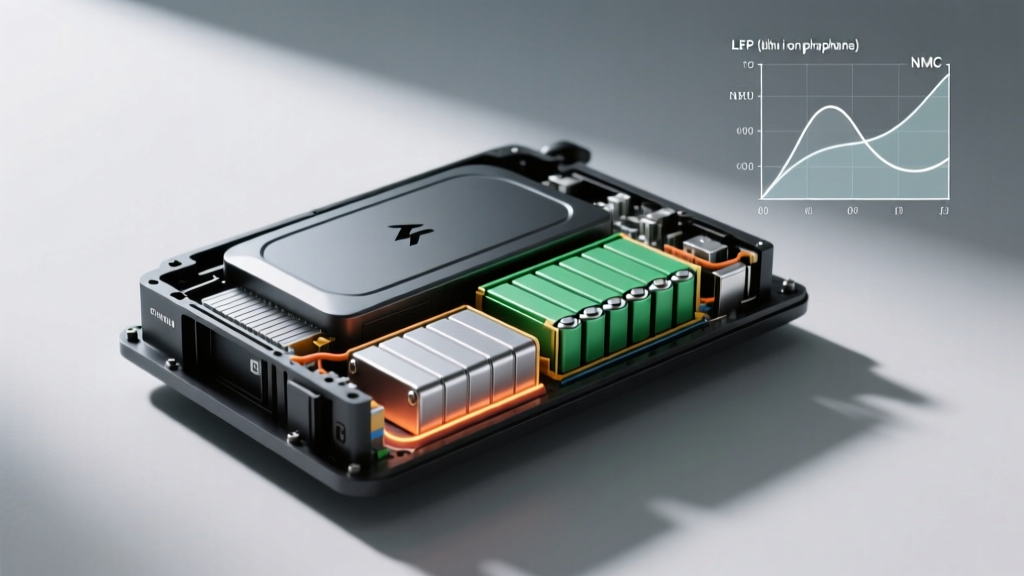
The two dominant lithium-ion chemistries in 2026 EVs are LFP (lithium iron phosphate) and NMC/NCA (nickel manganese cobalt / nickel cobalt aluminum). The chemistry affects energy density, longevity, cold-weather behavior, and ultimately the cost and complexity of a battery removal order if replacement becomes necessary.
| Attribute | LFP (LiFePO4) | NMC / NCA |
|---|---|---|
| Energy Density | Lower (~160–180 Wh/kg cell-level) | Higher (~220–300 Wh/kg cell-level) |
| Cycle Life | 3,000–5,000+ cycles to 80% SoH | 1,000–2,000 cycles to 80% SoH |
| Cold Performance | Weaker below 32°F; slower charging, more range loss | Better low-temp conductivity; less winter penalty |
| Cost per kWh | ~$80–$100 (pack-level, 2026 est.) | ~$110–$140 (pack-level, 2026 est.) |
| Recommended SoC | 100% daily OK; benefits from periodic full charge for BMS calibration | 80% daily recommended; 100% for trips only |
| Typical Applications | Tesla Model 3/Y RWD, BYD models, Ford Mustang Mach-E Select (2025+) | Long-range/performance trims, Hyundai Ioniq 5/6, Rivian, Lucid |
| Thermal Stability | Superior; higher onset temp for thermal runaway (~270°C) | Lower onset (~210°C); requires more robust BMS/cooling |
Which is better? There is no universal winner. LFP is the durability and cost champion — ideal for daily commuting, high-mileage drivers, and owners who want to charge to 100% without guilt. NMC/NCA delivers more range per pound, making it the choice for long-range and performance trims where packing maximum kWh into a limited space matters. If you live in a cold climate and need every winter mile, NMC's cold-weather advantage is meaningful. If you prioritize a battery that will outlast the car itself, LFP's cycle-life superiority is compelling.
How Long Do EV Batteries Actually Last?
The short answer: most EV traction batteries outlast the vehicles they're installed in. But the data tells a more nuanced story than marketing claims.
Real-World Degradation Data Points:
- Tesla Model 3/Y (NMC, 2018–2022): Fleet data aggregated by Tesla shows ~12% average capacity loss at 200,000 miles, with the curve flattening significantly after the initial 5–10% drop in the first 30,000 miles (Tesla 2023 Impact Report).
- Chevrolet Bolt EV/EUV (NMC, 2017–2023): Owner-reported data on forums and Recurrent Auto studies show ~6–8% degradation at 100,000 miles, with some packs retaining 92%+ SoH at 150,000 miles.
- Hyundai Ioniq 5 (NMC, 2022–2025): Early fleet data indicates ~4–6% loss at 60,000 miles; the 77.4 kWh pack's robust thermal management contributes to slower fade.
- LFP-equipped Tesla Model 3 RWD (2021–2025): Limited long-term data but early indicators show <5% loss at 80,000 miles, consistent with LFP's superior cycle life.
- Nissan Leaf (passive air-cooled, 2011–2017): The cautionary tale — earlier 24/30 kWh packs showed 20–30% degradation by 80,000–100,000 miles due to lack of active thermal management. Modern liquid-cooled packs have largely solved this.
A typical 2026 EV battery is engineered for 1,500–3,000+ full charge cycles before reaching 70–80% of original capacity. For a vehicle with 250 miles of EPA range, that translates to 375,000–750,000 miles of driving before the pack degrades to a level where a battery removal order might be considered — far beyond the mileage at which most vehicles are scrapped for other reasons.
What Does the EV Battery Warranty Cover?
Federal law mandates that EV batteries carry a minimum warranty of 8 years / 100,000 miles (10 years / 150,000 miles in California Air Resources Board states). But the capacity-retention threshold — the SoH percentage at which the manufacturer will replace or repair the pack — varies by brand.
| Manufacturer | Warranty Term | Capacity Threshold | Notes |
|---|---|---|---|
| Tesla | 8 yr / 120,000 mi (Model 3/Y); 8 yr / 150,000 mi (Model S/X) | 70% retention | Module-level repair common; full pack replacement rare |
| Hyundai / Kia | 10 yr / 100,000 mi | 70% retention | Among the longest coverage in the industry |
| Ford | 8 yr / 100,000 mi | 70% retention | Covers Mustang Mach-E, F-150 Lightning |
| GM (Chevy/Cadillac) | 8 yr / 100,000 mi | 70% retention (60% for Bolt recall replacements) | Ultium packs covered across brands |
| Rivian | 8 yr / 175,000 mi (R1T/R1S) | 70% retention | Higher mileage cap reflects truck use-case |
| BMW | 8 yr / 100,000 mi | 70% retention | i4, iX, i7 covered |
What triggers a warranty claim? If your battery's State of Health drops below the stated threshold within the warranty window, the manufacturer will repair or replace the pack — typically starting with module-level service rather than a full battery removal order. The warranty also covers defects in materials and workmanship, including cell imbalance, BMS failures, and coolant leaks that damage cells. It does not cover damage from collisions, flooding, or unauthorized modifications.
How Much Does an EV Battery Replacement Cost?
If your pack falls outside warranty coverage — whether due to age, mileage, or an exclusion — a battery removal order and replacement is a significant expense. However, prices have declined substantially as cell costs have fallen from ~$200/kWh in 2018 to roughly $100–$130/kWh at the pack level in 2026.
| Vehicle (Model Year) | Battery Size (kWh) | Chemistry | Estimated Replacement Cost |
|---|---|---|---|
| Tesla Model 3 RWD (2024–2026) | ~60 kWh | LFP | $7,000–$10,000 |
| Tesla Model Y Long Range (2024–2026) | ~82 kWh | NMC | $12,000–$16,000 |
| Hyundai Ioniq 5 (2024–2026) | 77.4 kWh | NMC | $11,000–$15,000 |
| Ford F-150 Lightning Extended (2024–2026) | 131 kWh | NMC | $18,000–$22,000+ |
| Chevrolet Equinox EV (2025–2026) | ~85 kWh | NMC (Ultium) | $12,000–$16,000 |
| Nissan Leaf (2018–2023, out of warranty) | 40/62 kWh | NMC | $6,500–$9,000 (refurbished packs available) |
These figures include the battery pack, labor for the removal order and installation, coolant refill, and BMS reprogramming. They do not include diagnostic fees ($150–$300) or ancillary repairs (e.g., damaged high-voltage cabling or cooling lines).
When is replacement typically needed? In practice, full pack replacement is rare before 200,000+ miles. More commonly, a single degraded module or a faulty cell group is identified and swapped — a procedure that costs $1,500–$4,000 rather than a full pack price. Many service centers now perform module-level diagnostics before authorizing a complete battery removal order.
Factors That Accelerate Battery Degradation
Not all miles age a battery equally. The following factors measurably shorten pack lifespan and may bring forward the day a battery removal order becomes necessary:
- Frequent DC fast charging above 150 kW: Occasional fast charging is fine, but daily reliance on 250–350 kW chargers without preconditioning increases cell stress. The elevated temperatures and high C-rates accelerate electrolyte decomposition. Aim to fast-charge no more than 2–3 times per week if possible.
- Sustained high State of Charge: Storing an NMC battery at 100% SoC for days or weeks — especially in heat — promotes cathode degradation. Set your daily charge limit to 80% and reserve 100% for road trips. LFP batteries are more tolerant of 100% storage but still benefit from occasional discharge cycles.
- Deep discharges below 10% SoC: Regularly running the battery to near-empty stresses the anode and can cause copper dissolution in the cells. Try to plug in before dropping below 15–20%.
- Extreme heat exposure: Ambient temperatures above 95°F combined with high SoC are the most damaging combination. Park in shade or a garage when possible. Active thermal management systems mitigate this, but they can't fully eliminate heat soak during prolonged parking.
- Extreme cold charging without preconditioning: Charging a frozen battery (below 20°F) without preconditioning causes lithium plating on the anode — a permanent, irreversible capacity loss. Always use your vehicle's preconditioning feature before cold-weather fast charging.
- High-mileage towing/track use: Sustained high-current discharge (towing a trailer up a grade, repeated launch-control starts) generates internal heat that cycles the cells harder than normal driving.
How to Check and Monitor Battery Health (SoH)
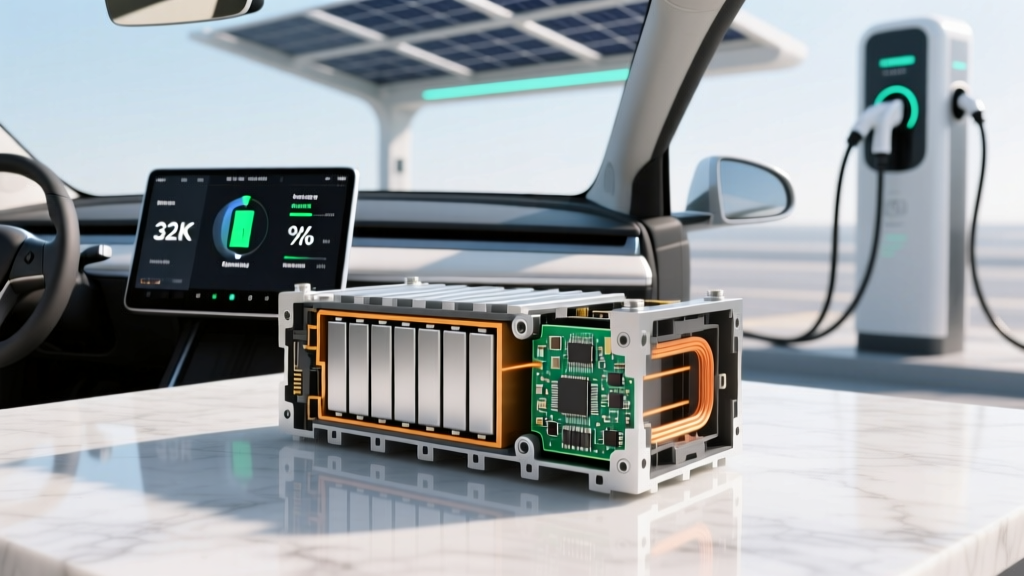
State of Health (SoH) is the percentage of your battery's current maximum capacity relative to its original factory capacity. A new pack is 100% SoH; a pack that held 82 kWh when new but now holds 73.8 kWh is at 90% SoH.
How to check SoH:
- In-vehicle displays: Some manufacturers (BMW, Mercedes, Hyundai) show a battery health indicator in the infotainment or driver cluster. Tesla does not display SoH natively but provides estimated range figures that reflect degradation.
- OBD-II diagnostic tools: Devices like the OBDLink SX paired with apps such as EV Battery Health or LeafSpy (for Nissan) can read the BMS-reported SoH directly. This is the most accurate consumer-accessible method.
- Manufacturer service centers: A dealer can run a full pack diagnostic during routine service, providing a detailed SoH report with cell-level voltage variance data.
- Third-party services: Companies like Recurrent Auto offer free battery health reports that compare your pack's degradation to a fleet of identical vehicles, using telematics data.
What's normal vs. concerning? A loss of 1–2% SoH per year (or ~0.5% per 10,000 miles) in the first few years is typical and expected. A sudden drop of 5%+ in a short period, or a single cell group showing voltage variance greater than 0.1V from the pack average, warrants a service visit — this may indicate a defective module that can be replaced without a full battery removal order.
The Battery Removal Order Process: What Happens at the Service Center
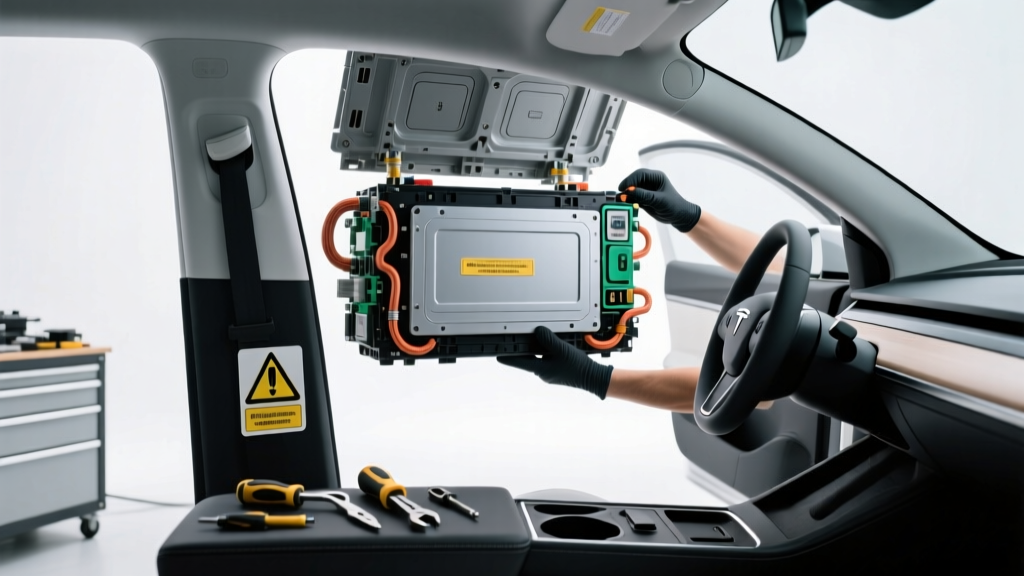
When diagnostics confirm that a pack requires replacement — whether under warranty or as a paid repair — the service center initiates a formal battery removal order. Here's what that process typically involves:
- Diagnostic confirmation: A certified EV technician runs a full pack scan, reviewing cell voltages, internal resistance, coolant system integrity, and BMS logs. This determines whether module-level repair is viable or a full pack swap is required.
- Parts ordering: The service center places the battery removal order with the manufacturer's parts distribution network. Lead times vary: common packs (Tesla Model 3, Hyundai Ioniq 5) may arrive in 5–10 business days; less common packs (Rivian, Lucid) can take 2–4 weeks. Refurbished or remanufactured packs are often available for older models at 30–50% lower cost.
- High-voltage safety lockout: Before any work begins, the technician disconnects the 12V auxiliary battery and engages the high-voltage service disconnect, then verifies zero voltage at the pack terminals with a CAT III/IV multimeter. This is a non-negotiable safety step.
- Coolant drainage and electrical disconnection: The battery thermal management loop is drained, all high-voltage cables are disconnected and capped, and the BMS communication harness is unplugged.
- Pack extraction: Using a manufacturer-specific battery lift table (a hydraulic platform that supports the full pack weight — typically 800–1,200 lbs), the pack is lowered from the vehicle's structural floor. The vehicle is raised on a lift while the pack is lowered independently.
- New pack installation and programming: The replacement pack is raised into position, torqued to spec, reconnected, and the BMS is reprogrammed to recognize the new pack's serial number, capacity, and cell calibration data. Coolant is refilled and bled, and a full charge-discharge verification cycle is performed.
Total labor time for a battery removal order and replacement is typically 6–12 hours, depending on the vehicle platform and whether the pack is a structural member (as in Tesla's structural battery pack, which requires additional body-panel disassembly).
Emerging Battery Tech: What's Next After Lithium-Ion?
Several next-generation battery technologies are in development, but none are available in production EVs as of 2026. Here's a realistic assessment:
- Solid-state batteries: Toyota, Samsung SDI, and QuantumScape are targeting 2027–2029 for limited production vehicles. Solid-state cells promise 30–50% higher energy density, faster charging (potentially 10–80% in under 10 minutes), and improved safety (no liquid electrolyte to ignite). However, manufacturing scale-up and cost reduction remain significant hurdles. Expect initial deployment in premium/low-volume models before mass-market availability post-2030.
- Silicon-dominant anodes: Companies like Sila Nanotechnologies and Group14 are replacing graphite anodes with silicon to boost energy density by 20–40%. Mercedes-Benz's upcoming G-Class EV (announced for 2025–2026) is expected to feature silicon-anode cells from Sila. This is the nearest-term improvement likely to reach consumers.
- Sodium-ion batteries: CATL and BYD are producing sodium-ion cells for low-cost, short-range EVs in China. Energy density is ~30–40% lower than LFP, but raw material costs are dramatically lower (no lithium, cobalt, or nickel). US-market availability is uncertain and likely post-2028.
These technologies are forward-looking and should not factor into a current purchase decision. Today's lithium-ion packs — both LFP and NMC — are mature, reliable, and backed by robust warranties. The battery removal order you're most likely to file is for a vehicle you'll have already sold or retired.
How long do EV batteries last in years and miles?
Most 2026 EV batteries are designed to retain 70–80% of original capacity after 150,000–200,000 miles or 12–15 years of typical use. LFP chemistry packs often exceed 300,000 miles before reaching the 70% threshold. Full battery failure requiring a removal order before 200,000 miles is statistically rare with modern liquid-cooled packs.
How much does it cost to replace an EV battery in 2026?
Replacement costs range from approximately $7,000 for a 60 kWh LFP pack (Tesla Model 3 RWD) to $22,000+ for a 131 kWh NMC pack (Ford F-150 Lightning Extended Range), including parts and labor. Module-level repairs are significantly cheaper at $1,500–$4,000. Prices have declined roughly 40% since 2020 as cell costs have fallen.
What does the federal EV battery warranty cover?
Under federal mandate, EV batteries are warranted for a minimum of 8 years / 100,000 miles (10 years / 150,000 miles in CARB states) against capacity loss below a manufacturer-defined threshold — typically 70% SoH. The warranty covers defects, premature degradation, and BMS failures but excludes collision damage, flooding, and unauthorized modifications. See your owner's manual for brand-specific terms.
How do I check my EV battery's State of Health?
Use an OBD-II adapter with an EV-specific app (e.g., LeafSpy for Nissan, EV Battery Health for most brands) to read BMS-reported SoH. Some manufacturers display health metrics in-vehicle. Your dealer can also run a full diagnostic during service. Third-party services like Recurrent Auto provide free comparative health reports via telematics.
LFP vs NMC — which battery chemistry should I choose?
Choose LFP if you prioritize longevity, daily 100% charging convenience, and lower replacement cost — and if you don't need maximum range per charge. Choose NMC/NCA if you need the longest possible EPA range, better cold-weather performance, or are buying a performance/long-range trim. Both chemistries are proven and reliable in 2026; the right choice depends on your driving patterns and climate.