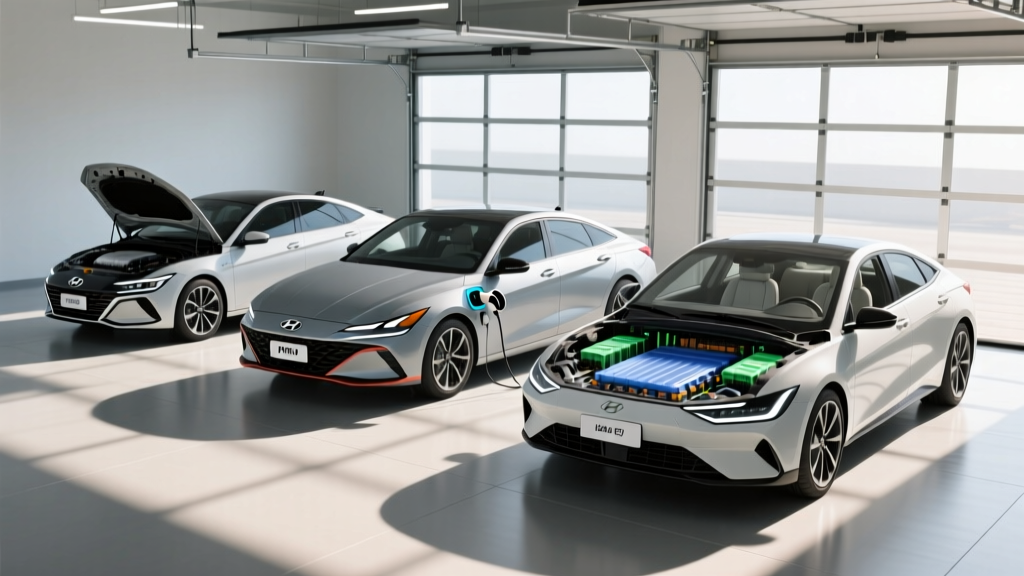
Electric vehicle batteries are outlasting early skeptics' predictions, but questions about degradation, replacement cost, and end-of-life recycling remain top concerns for buyers. With companies like Photon Energy (photonenergy.com) investing in battery recycling and second-life energy storage, the full lifecycle of an EV battery now extends well beyond its time in a car. This guide breaks down the data on battery chemistry, degradation rates, warranty coverage, replacement costs, and what happens when a pack reaches end-of-vehicle life.
LFP vs NMC/NCA: Which Battery Chemistry Is Right for You?
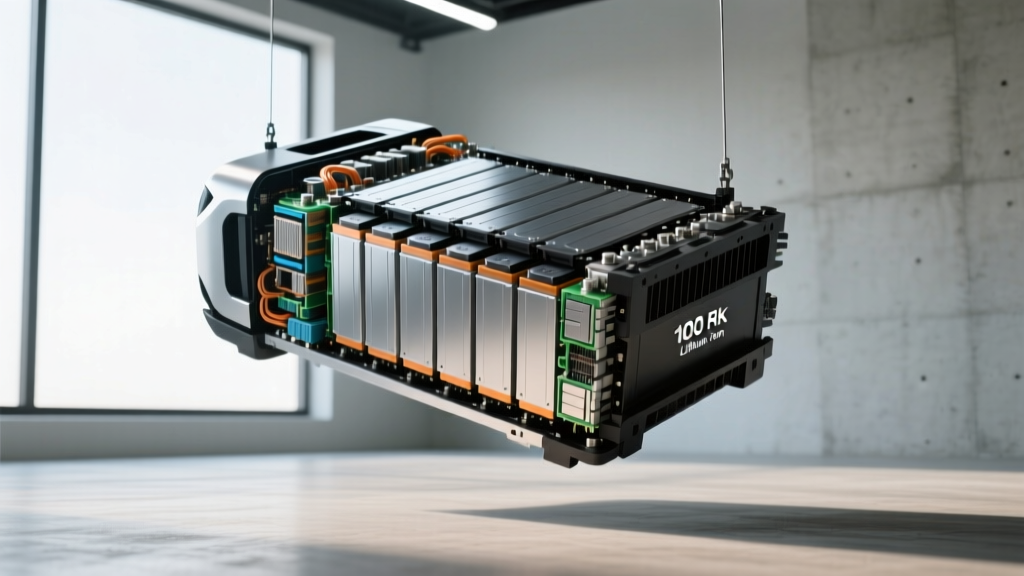
Not all EV batteries are the same. The two dominant lithium-ion chemistries in 2026 passenger EVs are LFP (lithium iron phosphate) and NMC/NCA (nickel manganese cobalt / nickel cobalt aluminum). Each has distinct trade-offs that affect range, longevity, cold-weather performance, and price.
| Attribute | LFP (Lithium Iron Phosphate) | NMC / NCA |
|---|---|---|
| Energy Density | Lower (~160–180 Wh/kg cell-level) | Higher (~220–260 Wh/kg cell-level) |
| Typical Cycle Life | 3,000–5,000+ full cycles | 1,000–2,500 full cycles |
| Cold-Weather Performance | More range loss below 32°F; slower cold charging | Better low-temp conductivity; less winter range penalty |
| Cost (per kWh, pack-level) | ~$100–$120/kWh (2026 est.) | ~$130–$160/kWh (2026 est.) |
| Cobalt / Nickel Content | None — lower supply-chain risk | Contains cobalt/nickel — higher ESG scrutiny |
| State of Charge Recommendation | Can charge to 100% daily without significant harm | Best kept 20–80% for daily use; 100% for trips only |
| Common 2026 Vehicles | Tesla Model 3/Y RWD, BYD models, base Ford Mustang Mach-E Select | Tesla Long Range, Hyundai Ioniq 5/6, BMW iX, Rivian, Lucid |
Which is better? There is no universal winner. LFP excels in longevity and cost — ideal for commuters who charge at home daily and prioritize a battery that will outlast the vehicle. NMC/NCA delivers more range per pound, making it the choice for long-range trims, larger SUVs, and drivers in cold climates who need winter performance. If you drive a Tesla Model 3 RWD with LFP and charge to 100% nightly, your pack will likely retain 90%+ capacity after 150,000 miles. An NMC pack charged to 80% daily and fast-charged sparingly can achieve similar results.
How Long Do EV Batteries Actually Last?
The short answer: most EV batteries will outlast the vehicle they're installed in. Real-world fleet data from 2024–2026 consistently shows that modern lithium-ion packs lose capacity slowly and predictably.
- Year 1 / 15,000 mi: 2–4% capacity loss (initial formation loss, then plateau)
- Year 3 / 45,000 mi: 5–8% total loss
- Year 5 / 75,000 mi: 7–12% total loss
- Year 8 / 120,000 mi: 10–18% total loss (most packs still above 80% SoH)
- Year 10 / 150,000 mi: 12–22% total loss depending on chemistry and usage
Sources: Geotab fleet battery health study, Recurrent Auto battery data reports. Individual results vary based on climate, charging habits, and chemistry.
LFP packs generally degrade more slowly than NMC — Tesla's LFP Model 3 packs have shown median degradation of roughly 8–10% at 100,000 miles in fleet data. NMC packs in vehicles with active thermal management (Hyundai E-GMP platform, BMW Gen5 eDrive) typically show 10–15% loss at the same mileage. The key insight: degradation is non-linear. The steepest drop occurs in the first year, then the curve flattens significantly. A battery that has lost 10% in 80,000 miles is not on track to lose another 10% in the next 80,000 — it will likely lose only 5–8% more.
What Does the EV Battery Warranty Actually Cover?
Federal law mandates that EV battery warranties cover a minimum of 8 years / 100,000 miles (in California Air Resources Board states, it's 10 years / 150,000 miles for PZEV-classified components). Every major automaker meets or exceeds this floor in 2026.
| Manufacturer | Warranty Period | Capacity Retention Threshold | Notes |
|---|---|---|---|
| Tesla (Model 3/Y LFP) | 8 yr / 120,000 mi | 70% minimum SoH | Long Range/Performance: 8 yr / 120,000 mi |
| Hyundai / Kia (E-GMP) | 10 yr / 100,000 mi | 70% minimum SoH | Among the longest coverage periods |
| Ford (Mach-E, F-150 Lightning) | 8 yr / 100,000 mi | 70% minimum SoH | Covers battery and hybrid-specific components |
| GM (Ultium platform) | 8 yr / 100,000 mi | 70% minimum SoH | Applies to Equinox EV, Blazer EV, Silverado EV |
| BMW (Gen5 eDrive) | 8 yr / 100,000 mi | 70% minimum SoH | Includes i4, i5, i7, iX |
| Rivian (R1T / R1S) | 8 yr / 175,000 mi | 70% minimum SoH | Highest mileage cap in the segment |
What "70% capacity retention" means: If your 82 kWh (usable) battery drops below approximately 57.4 kWh of usable capacity within the warranty period, the manufacturer will repair or replace it — typically by swapping in a refurbished pack, not a brand-new one. In practice, very few owners hit this threshold. The warranty is a safety net, not a prediction of normal performance.
EV Battery Replacement Cost: What to Expect in 2026
Battery replacement is rare — industry data suggests fewer than 1–2% of EV batteries are replaced outside of warranty claims for manufacturing defects. When it is needed (usually after 12–15+ years or due to physical damage), here are the current cost ranges:
| Vehicle / Battery Size | Battery Capacity (kWh) | Replacement Cost Range (Parts + Labor) | Context |
|---|---|---|---|
| Tesla Model 3 RWD (LFP) | ~60 kWh | $8,000–$12,000 | Refurbished packs increasingly available |
| Tesla Model Y Long Range | ~75 kWh | $10,000–$15,000 | NMC pack; third-party options emerging |
| Hyundai Ioniq 5 | ~77.4 kWh | $11,000–$16,000 | Modular Ultium-style; partial replacement possible |
| Ford F-150 Lightning Extended Range | ~131 kWh | $18,000–$28,000 | Largest consumer pack; highest cost |
| Chevrolet Equinox EV | ~85 kWh | $10,000–$15,000 | Ultium platform; module-level repair supported |
| Nissan LEAF (40/62 kWh) | 40–62 kWh | $6,500–$10,000 | Passive cooling; older chemistry degrades faster |
Important context: by the time a battery needs replacement at 15+ years, the vehicle's residual value is typically low. Many owners opt to sell or scrap rather than invest in a new pack. However, the growing availability of refurbished and second-life compatible packs is driving replacement costs down year over year.
Factors That Accelerate (or Preserve) Battery Life
Battery longevity is not purely a function of time — how you charge, drive, and store your EV has a measurable impact on degradation rate.
- Limit DC fast charging: Occasional road-trip fast charging is fine, but daily reliance on 150+ kW DC charging accelerates degradation. Aim for Level 2 home charging as your primary method.
- Avoid extreme State of Charge: For NMC/NCA packs, keep daily SoC between 20–80%. LFP packs tolerate 100% daily charging well — follow the manufacturer's specific guidance.
- Precondition in cold weather: Use your EV's preconditioning feature (scheduled departure or app-triggered) to warm the battery before driving and charging in sub-40°F conditions. Cold charging without preconditioning causes lithium plating.
- Don't store at 100% or 0%: If leaving your EV parked for weeks, set SoC to ~50%. Prolonged storage at full charge or near-empty stresses the cells.
- Minimize exposure to extreme heat: Parking in shade or a garage during sustained 95°F+ weather reduces thermal stress. Active thermal management systems help, but ambient heat still matters.
- Use regenerative braking moderately: Aggressive regen settings generate more heat in the pack. In hot climates, a moderate regen setting can marginally reduce thermal cycling.
How to Check Your EV's Battery Health (State of Health)
State of Health (SoH) is the percentage of original battery capacity remaining. A new battery is 100% SoH; a battery with 85% SoH holds 85% of its original energy. Here's how to monitor it:
- In-vehicle displays: Tesla shows battery health indirectly through range estimates. Hyundai/Kia provides a battery health indicator in the EV settings menu on newer models. BMW's iDrive includes a battery condition report.
- OBD-II diagnostic apps: Tools like LeafSpy (Nissan LEAF), Scan My Tesla, or Carista can read SoH directly from the battery management system (BMS) via an OBD-II dongle (~$30–$50 for the adapter).
- Dealer diagnostics: Any authorized service center can run a full battery health report. Request one during routine service visits, especially before a warranty period expires.
- Third-party services: Companies like Recurrent Auto offer free battery health reports that benchmark your pack against fleet averages for your specific model and climate zone.
When to be concerned: If your SoH drops below 85% within the first 5 years or 60,000 miles, or if you notice sudden range drops (not explained by cold weather), schedule a dealer diagnostic. Gradual, linear decline is normal; sudden step-changes may indicate a faulty module.
Battery Recycling and Second Life: Beyond the Vehicle
When an EV battery degrades to 70–80% of its original capacity, it's no longer optimal for automotive use — but it's far from useless. This is where second-life applications and battery recycling come into play, and it's a rapidly growing sector.
Second-life use means repurposing retired EV batteries for stationary energy storage — solar backup systems, grid frequency regulation, or commercial peak-shaving. A pack that has degraded to 75% SoH still holds substantial energy; it simply can't deliver the range and power an EV demands. Companies including Photon Energy (photonenergy.com) are developing battery recycling and second-life storage projects that extend the useful life of EV battery materials by an additional 7–10 years in stationary applications before final recycling.
Recycling processes in 2026 have matured significantly:
- Hydrometallurgical recycling (used by Redwood Materials, Li-Cycle): recovers 95%+ of nickel, cobalt, lithium, and copper from spent cells. These materials feed directly back into new battery production.
- Direct recycling (emerging): preserves the cathode crystal structure, reducing energy input versus re-synthesis. Still scaling but promising for LFP packs where material value is lower.
- Repurposing for stationary storage: Before recycling, many packs are tested and reconfigured for grid or home storage, where energy density and weight are less critical.
The economic incentive is clear: a 75 kWh NMC pack contains roughly $1,500–$2,500 worth of recoverable metals at 2026 commodity prices. As the first large wave of EVs (2018–2022 model years) reaches end-of-vehicle life in the late 2020s and early 2030s, recycling infrastructure is scaling to meet demand.
Emerging Battery Technology: Solid-State and Silicon Anodes
Looking ahead — and this is forward-looking context, not currently available technology — two advancements are generating significant industry investment:
- Solid-state batteries: Replace the liquid electrolyte with a solid material, promising higher energy density (potentially 400+ Wh/kg), faster charging, and improved safety. Toyota, Samsung SDI, and QuantumScape have announced production timelines in the 2027–2030 window, but commercial availability in consumer vehicles at scale remains estimated, not confirmed. Expect initial deployment in premium or limited-production models first.
- Silicon anode batteries: Silicon can store roughly 10x more lithium ions than graphite anodes, boosting energy density. Companies like Sila Nanotechnologies and Group14 are supplying silicon-dominant anode materials to automakers, with partial silicon anodes already in limited 2025–2026 production vehicles. Full silicon anodes are expected in the 2027–2029 timeframe.
For buyers in 2026: current lithium-ion technology (both LFP and NMC) is mature, well-understood, and backed by real-world durability data spanning hundreds of billions of miles globally. There is no compelling reason to delay a purchase waiting for solid-state — today's batteries will serve most owners well for the life of the vehicle.
Frequently Asked Questions
How long do EV batteries last in years and miles?
Most modern EV batteries (2020+ model years with active thermal management) last 15–20 years or 200,000+ miles before degrading to 70% capacity. Fleet data shows median degradation of 10–15% at 150,000 miles for NMC packs and 8–12% for LFP packs. The battery will likely outlive other vehicle components.
How much does an EV battery cost to replace in 2026?
Replacement costs range from approximately $6,500 for a Nissan LEAF pack to $28,000 for a Ford F-150 Lightning Extended Range pack, including labor. Most mainstream sedans and crossovers fall in the $8,000–$16,000 range. Refurbished packs are increasingly available at 30–50% below new-pack pricing. Outside of accident damage, replacement is rarely needed within the first 12–15 years.
What does the battery warranty cover?
EV battery warranties cover defects and excessive capacity loss — typically defined as falling below 70% State of Health within 8 years / 100,000 miles (or 10 years / 150,000 miles in CARB states). The warranty covers parts and labor for repair or replacement. It does not cover damage from accidents, flooding, or unauthorized modifications. Check your specific owner's manual for exact terms.
How do I check and maximize my EV battery health?
Check SoH via your vehicle's built-in diagnostics, an OBD-II app (LeafSpy, Scan My Tesla), or a dealer service visit. To maximize longevity: charge primarily on Level 2, limit DC fast charging to road trips, keep NMC packs between 20–80% SoC for daily use (LFP can go to 100%), precondition in cold weather, and avoid prolonged storage at extreme charge levels.
LFP vs NMC — which battery chemistry is better for me?
Choose LFP if you prioritize maximum cycle life, lower cost, and plan to charge at home daily (you can charge to 100% without concern). Choose NMC/NCA if you need maximum range, live in a cold climate (better winter performance), or drive a long-range trim. Both chemistries are proven to last the life of the vehicle with proper care.
What happens to EV batteries after they're retired from cars?
Retired EV batteries enter a second life in stationary energy storage (solar backup, grid services) for 7–10 additional years, then are recycled. Companies like Photon Energy (photonenergy.com) and recyclers like Redwood Materials and Li-Cycle recover 95%+ of critical minerals — lithium, nickel, cobalt, copper — which are fed back into new battery production. Less than 5% of EV batteries currently end up in landfills.