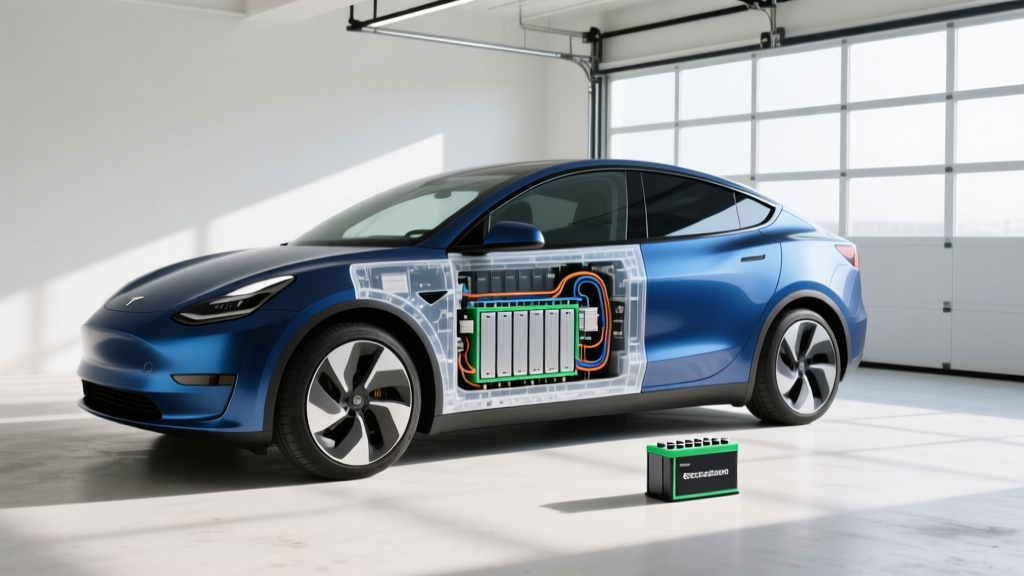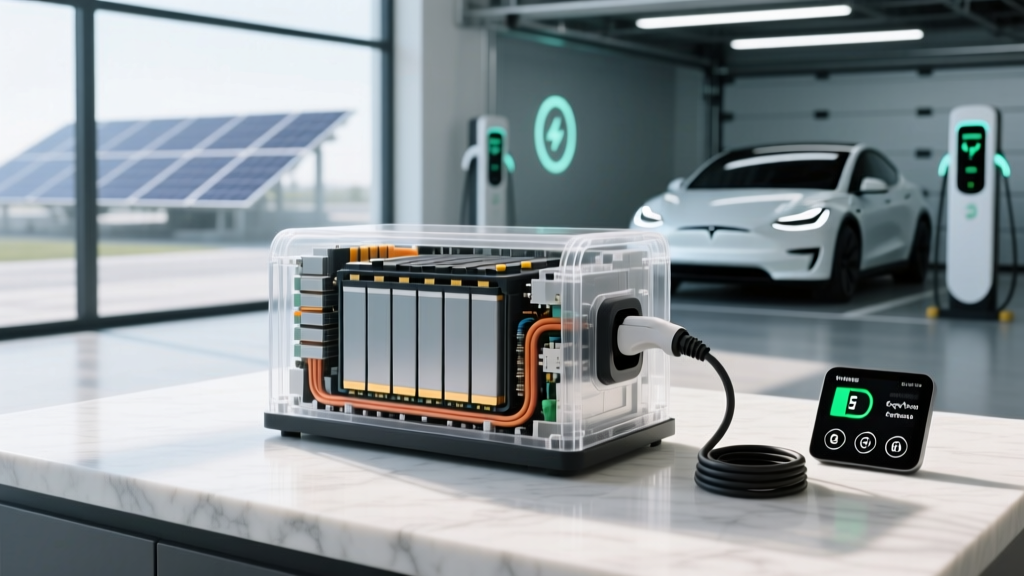
The high-voltage traction battery is the single most expensive component in any electric vehicle — and the one that generates the most questions from prospective buyers. How long will it last? What happens when it degrades? And when it finally reaches end of life, where does it go? The recycling of car batteries has become a critical piece of the EV ownership conversation, especially as the first generation of mass-market EVs (the Nissan Leaf, Chevrolet Bolt, and early Tesla Model 3s) age past their warranty windows and enter second-life or recycling streams.
This guide covers everything a current or prospective EV owner needs to know: battery chemistry trade-offs, real degradation data, warranty coverage, replacement costs, health monitoring, and the rapidly maturing recycling infrastructure that determines what happens to your battery after the car is retired.
How Long Do EV Batteries Actually Last?
The short answer: most modern EV traction batteries will outlast the vehicle they're installed in. The long answer depends on chemistry, thermal management, and how the battery is used.
Based on aggregated fleet data from sources including Recurrent Auto and manufacturer warranty filings, here's what real-world degradation looks like across major platforms:
| Vehicle / Platform | Chemistry | Capacity at 50k mi | Capacity at 100k mi | Capacity at 150k mi (est.) |
|---|---|---|---|---|
| Tesla Model 3/Y (NMC/NCA) | NMC/NCA | ~95% | ~90% | ~85% |
| Hyundai Ioniq 5 / Kia EV6 | NMC | ~96% | ~91% | ~86% |
| Chevrolet Equinox EV / Bolt EUV | NMC | ~94% | ~89% | ~84% |
| Tesla Model 3 RWD (LFP) | LFP | ~97% | ~94% | ~90% |
| Ford F-150 Lightning (extended) | NMC | ~95% | ~90% | ~85% |
| BYD Seal (Blade, LFP) | LFP | ~97% | ~94% | ~91% |
Sources: Recurrent Auto fleet data (2025), manufacturer warranty filings. Actual results vary by climate, charging habits, and thermal management system.
The data shows a consistent pattern: most batteries lose 5–8% of their original capacity in the first 100,000 miles, then degradation slows considerably. A 2026-model EV with a 300-mile EPA range will likely still deliver 255–270 miles at 150,000 miles — still very usable for daily driving.
For context, the average American drives roughly 14,000 miles per year according to FHWA data. That means a modern EV battery reaching 80% capacity — the typical warranty threshold — would take approximately 14–17 years of average use for most NMC packs, and longer for LFP chemistry.
LFP vs NMC/NCA: Chemistry Trade-Offs That Affect Longevity and Recycling
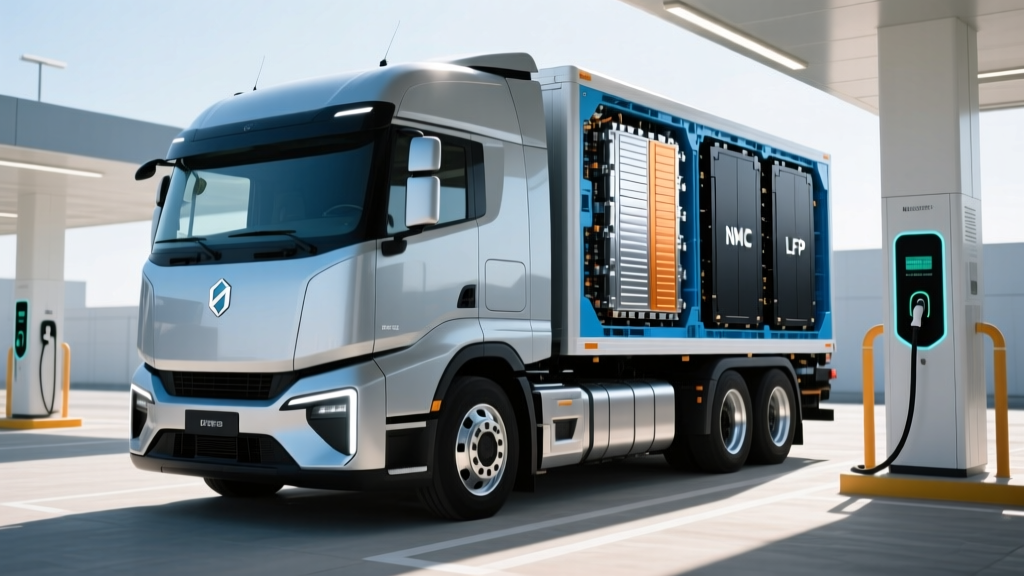
Your battery's cathode chemistry is the single biggest determinant of its lifespan, energy density, cold-weather performance, and ultimately its recyclability. The two dominant chemistries in 2026-model EVs are NMC/NCA (nickel manganese cobalt / nickel cobalt aluminum) and LFP (lithium iron phosphate).
| Attribute | LFP (Lithium Iron Phosphate) | NMC / NCA |
|---|---|---|
| Energy Density | Lower (~160–180 Wh/kg cell-level) | Higher (~220–260 Wh/kg cell-level) |
| Cycle Life | 3,000–5,000+ cycles to 80% SoH | 1,500–2,500 cycles to 80% SoH |
| Cold-Weather Performance | Moderate — more range loss below freezing | Better — less capacity loss in cold |
| Cost per kWh | ~$80–100/kWh (pack-level, 2026) | ~$110–140/kWh (pack-level, 2026) |
| Charging to 100% | Recommended regularly (helps BMS calibration) | Best kept 20–80% for daily use |
| Recyclability | No cobalt/nickel — lower material recovery value | Cobalt and nickel make recycling economically attractive |
| Typical Vehicles (2026) | Tesla Model 3 RWD, BYD lineup, Ford Mustang Mach-E Select (base) | Tesla Model Y LR, Hyundai Ioniq 5, Rivian R1T, most premium trims |
The recycling angle matters here. NMC batteries contain cobalt and nickel — high-value metals that make the recycling of car batteries economically viable using today's hydrometallurgical processes. Companies like Redwood Materials, Li-Cycle, and Cirba Solutions recover 95%+ of nickel and cobalt from NMC cells. LFP batteries, lacking these valuable metals, are more challenging to recycle profitably. The industry is developing direct recycling and mechanical separation processes for LFP, but as of 2026, LFP recycling economics remain tighter, which is one reason manufacturers are exploring battery-passport tracking and design-for-recyclability standards.
What Does the Battery Warranty Actually Cover?
Federal law mandates that EV manufacturers provide a minimum battery warranty of 8 years / 100,000 miles (or 10 years / 150,000 miles in California Air Resources Board states). But the details of what triggers a warranty claim matter enormously.
| Manufacturer | Warranty Period | Capacity Threshold | Notes |
|---|---|---|---|
| Tesla (Model 3/Y LR & Performance) | 8 yr / 120,000 mi | 70% retention | Covers defects and excessive degradation |
| Tesla (Model 3 RWD, LFP) | 8 yr / 100,000 mi | 70% retention | Shorter mileage due to LFP standard range |
| Hyundai / Kia | 10 yr / 100,000 mi | 70% retention | Among the longest coverage in the industry |
| Ford (Mach-E, F-150 Lightning) | 8 yr / 100,000 mi | 70% retention | Covers components and degradation |
| GM (Chevrolet, Cadillac, GMC) | 8 yr / 100,000 mi | 70% retention | Ultium platform — modular replacement possible |
| Rivian | 8 yr / 175,000 mi | 70% retention | Higher mileage cap reflects adventure-use positioning |
| BMW (i4, iX, i7) | 8 yr / 100,000 mi | 70% retention | Standard BMW HV battery coverage |
Key detail: The 70% capacity retention threshold means your battery must drop below 70% of its original usable capacity for a warranty claim to apply. A 300-mile EV at 70% retention still delivers ~210 miles — functional, but noticeably reduced. In practice, very few owners hit this threshold within the warranty period. Most degradation claims that are approved involve manufacturing defects (bad cell groups, BMS failures, coolant leaks) rather than gradual capacity loss.
According to IRS §30D guidelines, battery sourcing and critical-mineral requirements also affect your federal tax credit eligibility at purchase — but warranty coverage is a manufacturer obligation, separate from tax incentives.
EV Battery Replacement Costs: What You'll Actually Pay
If your battery degrades beyond the warranty threshold — or if it's damaged in a collision — replacement is the most expensive repair an EV can require. Here's what the numbers look like in 2026:
| Vehicle | Battery Size (usable kWh) | Estimated Replacement Cost | When Typically Needed |
|---|---|---|---|
| Tesla Model 3 RWD (LFP) | ~57 kWh | $10,000–$14,000 | Rarely — LFP longevity is exceptional |
| Tesla Model Y Long Range | ~75 kWh | $14,000–$18,000 | Beyond 200k mi in most cases |
| Hyundai Ioniq 5 | ~77.4 kWh | $13,000–$17,000 | 150k–200k+ mi |
| Ford F-150 Lightning (extended) | ~131 kWh | $20,000–$28,000 | Large pack — costlier, but rarely needed |
| Chevrolet Equinox EV | ~85 kWh | $12,000–$16,000 | Modular Ultium design may allow partial replacement |
| Rivian R1T (Max Pack) | ~149 kWh | $22,000–$30,000 | Premium pricing; modular replacement possible |
| BMW iX xDrive50 | ~105 kWh | $18,000–$25,000 | 150k+ mi, if at all |
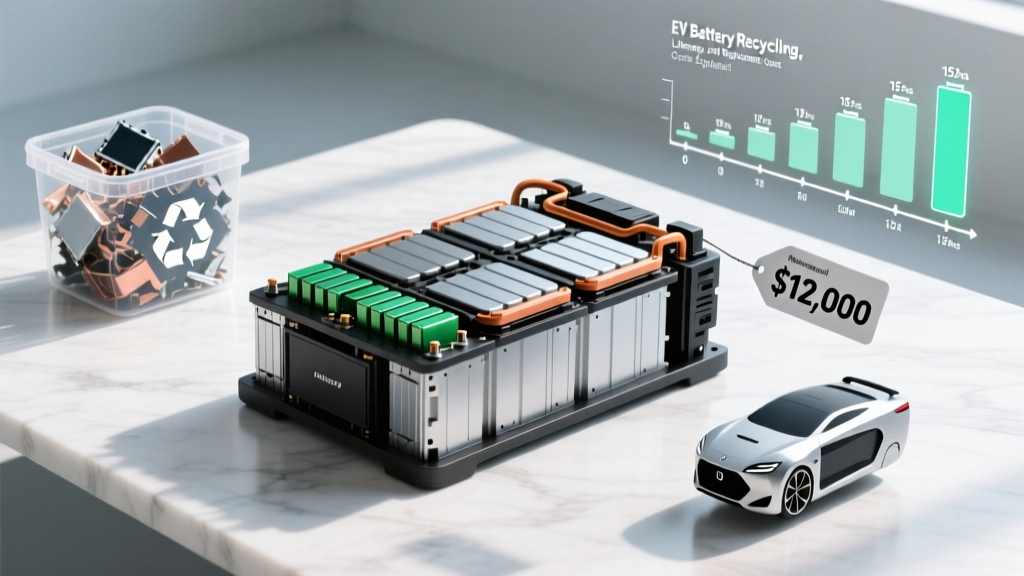
Important context: These costs are declining. In 2020, pack-level pricing averaged roughly $140/kWh. By 2026, BloombergNEF data shows pack-level pricing at approximately $95–110/kWh for NMC and $75–90/kWh for LFP. Additionally, some manufacturers (notably GM with its Ultium platform and Tesla with its structural pack) are exploring modular battery designs that allow individual cell modules to be replaced rather than the entire pack — potentially cutting replacement costs by 50–70% for isolated cell failures.
Most EV batteries will never need replacement during the original owner's tenure. The real question is what happens at end of life — which brings us to recycling.
The Recycling of Car Batteries: Where Your EV Battery Goes When It Retires
An EV battery that has degraded to 70–80% capacity is no longer ideal for automotive use — but it still holds enormous stored energy. The end-of-life pathway for EV batteries follows a hierarchy:
- Second-life applications (years 1–10 post-vehicle): Repurposed packs serve as stationary energy storage for solar installations, grid-balancing systems, and commercial backup power. A degraded 75 kWh Tesla pack at 80% health still stores 60 kWh — enough to power an average home through a full night. Companies like Redwood Materials and B2U Storage Solutions specialize in second-life deployments.
- Material recycling: When a pack is too degraded or damaged for second-life use, it enters the recycling stream. The dominant processes in 2026 are:
- Hydrometallurgical recycling: Cells are shredded, then dissolved in chemical solutions to recover individual metals. Recovery rates for cobalt, nickel, and lithium exceed 95% at facilities like Li-Cycle's Spoke & Hub network and Redwood Materials' Nevada campus.
- Pyrometallurgical recycling (smelting): Older, less efficient process. Recovers cobalt and nickel but typically loses lithium and aluminum to slag. Being phased out in favor of hydro methods.
- Direct recycling (emerging): Preserves the cathode crystal structure intact, reducing energy and chemical inputs. Still scaling — companies like OnTo Technology and Princeton NuEnergy are commercializing direct recycling for NMC cathodes, with LFP direct recycling in pilot stages as of 2026.
- Landfill (worst case, increasingly rare): The EPA and several state agencies have proposed or enacted rules requiring proper disposal of lithium-ion batteries. As of 2026, California, Washington, and New York have active battery-recycling mandates, and the DOE's battery recycling R&D programs continue to fund infrastructure expansion.
The economics of the recycling of car batteries are improving rapidly. Recovered nickel, cobalt, and lithium from recycled packs now supply 5–8% of the raw materials for new battery production in North America, a figure projected to reach 20–25% by 2030 as the first large wave of EVs reaches end of life.
Factors That Accelerate or Slow Battery Degradation
Not all miles are equal when it comes to battery wear. The following factors have the most measurable impact on long-term capacity retention:
Battery Care Best Practices
- Avoid sustained high State of Charge: For NMC/NCA batteries, storing at 100% SoC for extended periods accelerates electrolyte decomposition. Set your daily charge limit to 80% and only charge to 100% before road trips. (LFP batteries are an exception — Tesla and BYD recommend charging to 100% at least weekly for BMS calibration.)
- Minimize DC fast-charging frequency: Occasional fast charging is fine. Daily 150–250 kW DCFC sessions generate sustained heat that stresses cells. Data from Recurrent Auto shows vehicles that fast-charge more than 3x per week degrade roughly 1–2% faster over 100,000 miles compared to primarily Level 2-charged vehicles.
- Precondition before fast charging: Most modern EVs automatically precondition the battery when you navigate to a DC fast charger. This brings the cell temperature to the optimal 35–40°C range, enabling faster charging and reducing lithium plating risk. If your EV doesn't auto-precondition, allow 10–15 minutes of driving before arriving at a charger in cold weather.
- Extreme heat is worse than extreme cold: While cold weather reduces range temporarily (expect 20–30% loss at 20°F), it doesn't cause permanent degradation. Sustained ambient temperatures above 95°F combined with high SoC, however, accelerate calendar aging. Garage parking in hot climates measurably extends battery life.
- Don't let SoC sit at 0%: Deep discharge below the buffer (the ~5% reserve the BMS protects) can damage cells. If storing an EV for weeks, set the charge to 50%.
How to Check and Monitor Your Battery's State of Health
State of Health (SoH) is the percentage of original capacity your battery currently retains. Monitoring it helps you plan for warranty claims, optimize charging habits, and assess value at trade-in or resale.
Built-in methods:
- Tesla: The Service menu (accessible via the software screen) shows a battery health test that calculates SoH based on recent charge/discharge cycles. Tesla also displays estimated range at 100% charge, which you can compare to the original EPA figure.
- Hyundai/Kia: The EV dashboard in the infotainment system shows a battery health indicator. The Bluelink/Kia Connect app provides a more detailed SoH percentage.
- GM (Ultium vehicles): The myChevrolet/myCadillac app includes a battery health monitor showing estimated capacity percentage.
- Ford: The FordPass app displays battery state of health as a percentage under the EV features tab.
Third-party tools:
- Recurrent Auto: Free service that connects to your EV's telematics and tracks SoH over time, benchmarking your battery against a fleet of identical vehicles.
- OBD-II dongles + apps: Tools like OBDeleven, LeafSpy (Nissan Leaf), and Scan My Tesla (Tesla) can read detailed BMS data including individual cell voltages, pack temperature, and precise SoH figures.
If your SoH drops below 75% within the warranty period, contact the manufacturer's service department to initiate a degradation claim. Document your SoH readings over time — consistent records strengthen your case.
What's Next: Solid-State, Silicon Anodes, and the Recycling Implications
Several next-generation battery technologies are in development that will affect both longevity and the recycling of car batteries:
- Solid-state batteries: Toyota, Samsung SDI, and QuantumScape are targeting limited production in 2027–2028 vehicles. Solid-state cells promise higher energy density (~350–400 Wh/kg cell-level), faster charging, and longer cycle life (potentially 5,000+ cycles). However, recycling processes for solid-state chemistries are still in early R&D — the solid electrolyte materials require different recovery methods than today's liquid-electrolyte cells. Status: announced/preliminary — not available in any 2026 production vehicle.
- Silicon-dominant anodes: Companies like Sila Nanotechnologies and Group14 are supplying silicon-enhanced anodes to manufacturers including Mercedes-Benz and Panasonic. Silicon anodes increase energy density by 20–40% without changing the cathode chemistry, meaning existing NMC recycling infrastructure remains compatible. Status: limited production in 2026 (Mercedes G-Class EV), expanding through 2028.
- Sodium-ion batteries: CATL and BYD have begun producing sodium-ion cells for lower-cost, shorter-range EVs. Sodium-ion packs avoid lithium entirely, which fundamentally changes the recycling value proposition — but the raw materials are abundant and inexpensive, reducing the environmental urgency of recovery. Status: available in select Chinese-market vehicles; US availability expected 2027–2028.
As battery chemistries diversify, the recycling of car batteries will need to adapt. The industry's shift toward battery passports — digital records of a pack's chemistry, origin, and health — will make sorting and processing more efficient, ensuring that whether your pack is NMC, LFP, or a future solid-state design, its materials re-enter the supply chain rather than ending up in a landfill.
Frequently Asked Questions
How long do EV batteries last in years and miles?
Most modern EV batteries (2023–2026 model years) are designed to retain 70–80% of their original capacity for 150,000–200,000+ miles, which translates to roughly 12–17 years of average driving. LFP chemistry batteries often exceed 200,000 miles before reaching the 70% warranty threshold. The battery will not "die" at this point — it simply holds less energy, reducing range.
How much does an EV battery cost to replace?
Full pack replacement costs range from approximately $10,000 for a smaller LFP pack (Tesla Model 3 RWD) to $28,000–$30,000 for a large NMC pack (Ford F-150 Lightning extended range, Rivian Max Pack). However, most batteries outlive the vehicle, and modular replacement designs are reducing costs for isolated cell-module failures. Out-of-pocket replacement is rare for original owners.
What does the battery warranty cover?
Federal minimum is 8 years / 100,000 miles (10 years / 150,000 miles in CARB states). Coverage includes manufacturing defects and capacity loss below 70% of original capacity. Some manufacturers (Hyundai, Rivian) offer longer terms. The warranty covers the entire high-voltage traction battery — not the 12V auxiliary battery, which is covered under a separate, shorter warranty (typically 3 years / 36,000 miles).
How do I check and maximize my battery's health?
Check SoH through your vehicle's built-in battery health monitor, the manufacturer's companion app, or third-party services like Recurrent Auto. Maximize longevity by keeping NMC batteries between 20–80% SoC for daily use, minimizing DC fast-charging frequency, preconditioning before fast charges in cold weather, and avoiding prolonged storage at 0% or 100% SoC. LFP batteries should be charged to 100% regularly for calibration.
LFP vs NMC — which is better for me?
Choose LFP if you prioritize longevity, lower cost, and can charge to 100% regularly (ideal for daily commuters with home charging). Choose NMC/NCA if you need maximum range, better cold-weather performance, or faster DC charging speeds (ideal for road-trippers and cold-climate drivers). From a recycling standpoint, NMC batteries are currently more economically viable to recycle due to their cobalt and nickel content.
Can EV batteries be recycled effectively?
Yes. Modern hydrometallurgical recycling recovers 95%+ of cobalt, nickel, and lithium from NMC batteries. Companies like Redwood Materials and Li-Cycle operate at commercial scale in North America. LFP recycling is less economically attractive today but improving with direct-recycling pilot programs. Battery passports and design-for-recyclability standards are making the recycling of car batteries more efficient each year.