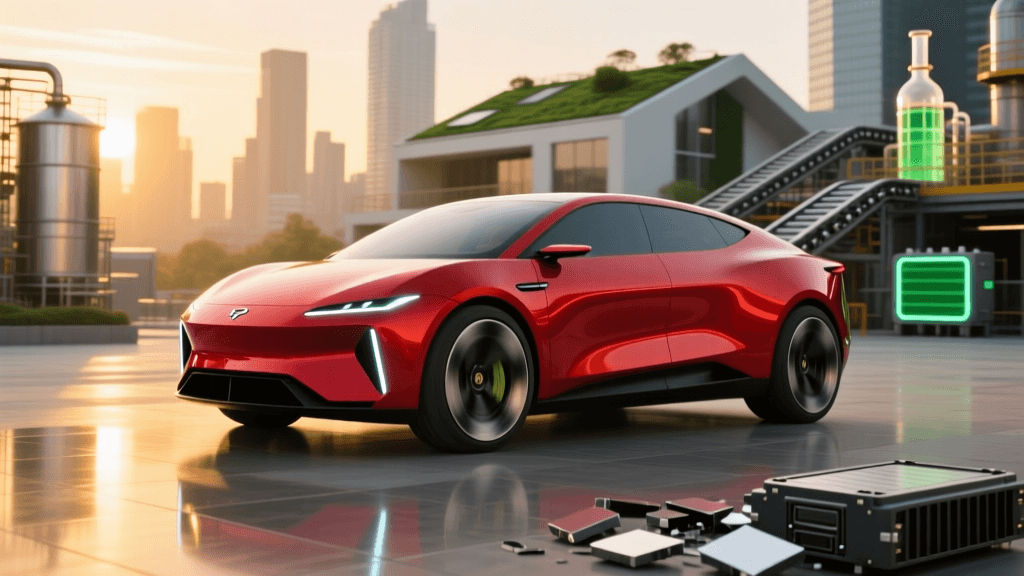
As the first generation of mainstream electric vehicles—such as the early Nissan Leaf, Chevrolet Bolt, and Tesla Model S—reaches the end of its operational lifespan, the automotive industry is confronting a monumental logistical and environmental challenge: spent lithium-ion battery waste. By 2030, it is estimated that millions of tons of EV battery packs will require end-of-life management. However, within this looming waste crisis lies a massive opportunity. 'Urban mining,' or the process of extracting valuable materials from spent batteries, is rapidly evolving from a niche environmental initiative into a cornerstone of the global EV supply chain. In this technology deep dive, we examine the exact chemical and mechanical processes driving EV battery recycling, compare the environmental impact of recycling versus virgin mining, and provide actionable guidance for EV owners and fleet managers navigating battery end-of-life.
The Technology Deep Dive: How EV Batteries Are Recycled
To understand the recycling process, one must first understand the anatomy of a lithium-ion cell. A typical NMC (Nickel Manganese Cobalt) or NCA (Nickel Cobalt Aluminum) battery pack contains highly valuable transition metals in its cathode, alongside lithium, copper current collectors, aluminum casing, and organic liquid electrolytes. When a battery degrades to 70-80% of its original capacity, it is no longer viable for automotive propulsion, but its materials remain incredibly valuable. Currently, three primary technological pathways dominate the recycling landscape.
Pyrometallurgy: The Traditional Smelting Approach
Historically, the most common method for recycling consumer electronics batteries has been pyrometallurgy, or smelting. In this process, entire battery modules or shredded cells are fed into a high-temperature furnace (often exceeding 1,500°C). The heat burns off the organic electrolytes, plastics, and carbon anodes, leaving behind a metallic alloy containing cobalt, nickel, and copper, alongside a separate slag phase. While pyrometallurgy is robust and can handle mixed, unsorted battery chemistries without extensive pre-processing, it is highly energy-intensive. Furthermore, traditional smelting fails to recover lithium and aluminum, which are oxidized and lost in the slag. Due to its high carbon footprint and poor overall material recovery rates, the industry is actively shifting away from pure pyrometallurgical approaches.
Hydrometallurgy: The Chemical Leaching Standard
Hydrometallurgy represents the current commercial state-of-the-art for EV battery recycling, championed by industry giants like Redwood Materials and Li-Cycle. The process begins with mechanical shredding of discharged battery packs in an inert or oxygen-depleted environment to prevent thermal runaway and recover the liquid electrolyte. The resulting shredded material, known as 'black mass,' contains the critical cathode and anode powders.
This black mass is then subjected to chemical leaching using aqueous solutions of acids (such as sulfuric acid) and reducing agents. Through a series of precise solvent extraction and precipitation steps, recyclers can isolate and recover battery-grade lithium, nickel, cobalt, and manganese. According to the United States Environmental Protection Agency (EPA), advanced hydrometallurgical facilities can achieve recovery rates exceeding 95% for these critical minerals, effectively creating a closed-loop supply chain where recycled materials are directly fed back into new cathode manufacturing.
Direct Recycling: The Holy Grail of Cathode Preservation
While hydrometallurgy breaks the cathode down to its elemental salts, direct recycling aims to preserve the cathode's complex crystal structure entirely. Funded heavily by the DOE ReCell Center, direct recycling involves separating the black mass from the current collectors using non-destructive methods (like ultrasonic delamination or specialized solvents).
Because the cathode material degrades primarily through the loss of lithium ions and micro-cracking over years of charge cycles, direct recycling utilizes a process called 'relithiation.' The spent cathode powder is mixed with a lithium source and annealed at moderate temperatures, healing the crystal lattice and restoring its electrochemical performance. This method drastically reduces the energy and chemical reagents required compared to hydrometallurgy, though it currently requires strict sorting of battery chemistries and is still scaling from the pilot phase to commercial gigafactory volumes.
Comparative Analysis: Recycling Technologies
| Recycling Method | Primary Mechanism | Material Recovery Rate | Energy Intensity | Commercial Maturity |
|---|---|---|---|---|
| Pyrometallurgy | High-temp smelting | Low-Medium (Loses Li, Al) | Very High | High (Legacy) |
| Hydrometallurgy | Acid leaching & precipitation | Very High (>95% Li, Ni, Co) | Medium | High (Current Standard) |
| Direct Recycling | Relithiation & annealing | High (Preserves cathode) | Low | Low-Medium (Scaling) |
Environmental Impact: Mining vs. Urban Mining
The environmental argument for EV battery recycling extends far beyond keeping toxic heavy metals out of landfills. It is fundamentally about mitigating the severe ecological toll of virgin mineral extraction.
Virgin lithium extraction, particularly from brine operations in South America's Lithium Triangle, requires the evaporation of millions of liters of groundwater per ton of lithium, exacerbating regional water scarcity. Similarly, nickel and cobalt mining in regions like Indonesia and the Democratic Republic of Congo are associated with severe habitat destruction, toxic tailings runoff, and significant greenhouse gas emissions.
By contrast, urban mining via hydrometallurgical recycling dramatically reduces this footprint. Studies analyzed by Argonne National Laboratory demonstrate that producing cathode active materials from recycled black mass can reduce the carbon footprint by up to 50% compared to virgin mining and refining. Furthermore, recycling eliminates the need for the massive water consumption and land disruption associated with traditional hard-rock and brine mining. As the global grid continues to decarbonize, the energy used in recycling facilities will become even cleaner, widening the environmental gap between recycled and virgin battery materials.
Actionable Advice for EV Owners and Fleet Managers
While the macro-level recycling infrastructure is being built by multi-billion-dollar corporations, individual EV owners and commercial fleet managers play a critical role in ensuring batteries enter the correct recycling streams. Here is how you can manage your battery's end-of-life responsibly:
- Explore Second-Life Applications First: Before recycling, an EV battery degraded to 70% capacity still holds immense value for stationary energy storage. Fleet managers should partner with companies that repurpose retired EV packs for solar grid stabilization or commercial peak-shaving. This extends the battery's useful life by another 7 to 10 years, delaying the recycling phase and maximizing the return on investment.
- Leverage OEM Take-Back Programs: Never dispose of an EV battery through standard municipal waste or unauthorized scrap yards. Major automakers (such as Tesla, Ford, and Volkswagen) have established closed-loop partnerships with certified recyclers. If you are retiring a vehicle, ensure the dealership or dismantler is certified to route the high-voltage pack to a partner like Redwood Materials or Li-Cycle.
- Monitor Battery Health (SoH) Proactively: Use OBD-II diagnostic tools or built-in telematics to track your battery's State of Health (SoH). Knowing exactly when your pack crosses the 80% degradation threshold allows you to plan for a second-life sale or warranty replacement, ensuring the pack is captured while it still has high residual value for recyclers or repurposers.
- Support Brands with Transparent Supply Chains: When purchasing a new EV, favor manufacturers that publicly disclose their battery recycling partnerships and utilize recycled content in their new cells. This consumer pressure accelerates industry-wide adoption of direct and hydrometallurgical recycling.
Conclusion
The transition to electric mobility is only as sustainable as the supply chain that supports it. As pyrometallurgy gives way to advanced hydrometallurgy and the promise of direct recycling, the EV industry is moving closer to a truly circular economy. By understanding the deep-tech processes that recover critical minerals and taking proactive steps to manage battery end-of-life, EV owners and fleet operators can ensure that the green revolution remains genuinely green from the mine to the road, and back again.