Why a Battery Powered Radar Detector Is a Window Into EV Battery Chemistry
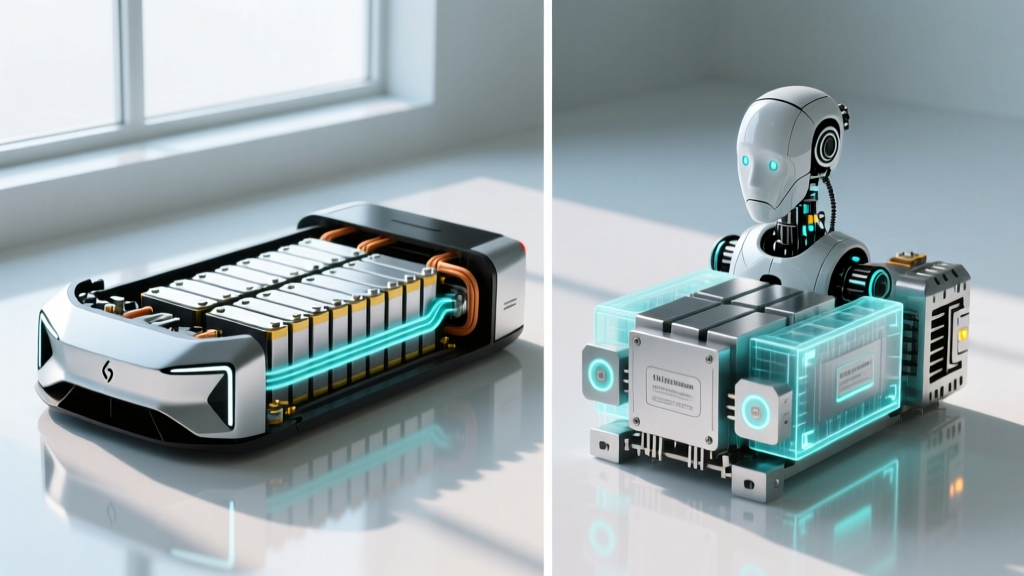
If you have ever mounted a battery powered radar detector on your windshield, you already understand one truth that applies just as forcefully to a 100-kilowatt-hour electric vehicle pack: all lithium-ion cells degrade, and how you treat them determines how long they last. A radar detector running on a small internal lithium cell might die after 300 to 500 charge cycles before its runtime shrinks noticeably. An EV traction battery uses fundamentally similar chemistry — just scaled up by a factor of roughly 1,000 — and the physics of degradation remain identical.
This guide uses that parallel to break down exactly what is inside your EV's high-voltage pack, how long it will realistically last, what the warranty actually covers, what replacement costs in 2026, and how everyday habits — from DC fast charging to parking in Arizona heat — move the degradation needle. We will also touch on why the tiny cell in your battery powered radar detector fades faster than an automotive-grade pack, and what emerging solid-state technology might mean for future buyers.
LFP vs NMC vs NCA: The Chemistry Inside Your EV
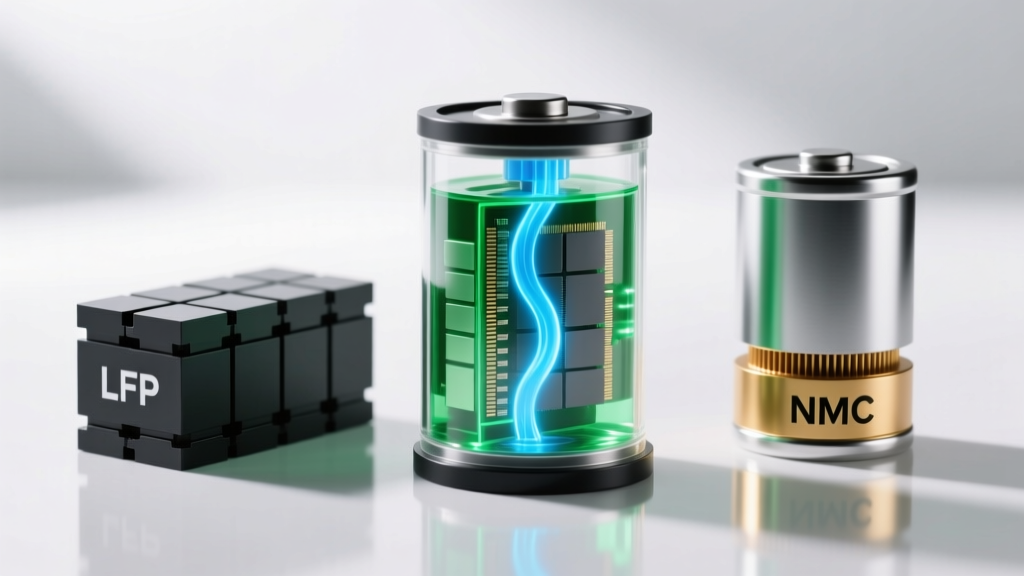
Not all EV batteries are created equal. The two dominant cathode chemistries in 2026 passenger vehicles are LFP (lithium iron phosphate) and NMC/NCA (nickel manganese cobalt / nickel cobalt aluminum). Each carries distinct trade-offs in energy density, cycle life, cold-weather behavior, and cost.
| Attribute | LFP (LiFePO₄) | NMC / NCA |
|---|---|---|
| Energy density (cell-level) | ~160–180 Wh/kg | ~220–300 Wh/kg |
| Typical cycle life (to 80% SoH) | 3,000–5,000+ cycles | 1,000–2,000 cycles |
| Cold-weather range loss (~20 °F) | Greater loss (~30–40%) | Moderate loss (~20–30%) |
| Recommended daily SoC | 100% OK (periodic calibration) | 80% preferred for daily use |
| Cobalt / ethical sourcing | Cobalt-free | Contains cobalt & nickel |
| Cost per kWh (pack-level, 2026) | ~$100–$115/kWh | ~$130–$150/kWh |
| Common 2026 US models | Tesla Model 3/Y RWD, Ford Mustang Mach-E Select (LFP option), BYD (global) | Hyundai Ioniq 5, Kia EV6, Chevrolet Equinox EV, Tesla LR/Performance |
The short version: LFP wins on longevity, cost, and ethical sourcing but sacrifices some range per kilogram and suffers more in deep cold. NMC/NCA delivers higher energy density — critical for 300+ mile EPA ratings in smaller or performance-oriented packs — but ages faster if routinely charged to 100% or subjected to frequent DC fast charging.
This is also why your battery powered radar detector — which almost certainly uses a small NMC or lithium-polymer pouch cell optimized for energy density in a compact housing — shows noticeable runtime loss within a year or two of daily use. Small cells have less thermal mass, fewer management safeguards, and endure deeper relative cycles.
How Long Do EV Batteries Actually Last?
The question every prospective EV buyer asks: will the battery outlive the car? In most cases, yes. Here is what real-world degradation data shows:
Typical EV Battery Degradation Curve (NMC, liquid-cooled)
- Year 1 / 15,000 mi: ~2–4% capacity loss (initial SEI layer formation)
- Year 3 / 45,000 mi: ~6–9% cumulative loss
- Year 5 / 75,000 mi: ~8–12% cumulative loss
- Year 8 / 120,000 mi: ~10–15% cumulative loss
- Year 10+ / 150,000+ mi: ~12–20% cumulative loss (varies widely with use)
LFP packs generally show slower mid-life degradation, often retaining 90%+ State of Health (SoH) past 100,000 miles when not subjected to extreme thermal abuse.
For context, Geotab's longitudinal study of over 10,000 EVs found an average annual degradation rate of approximately 1.8% per year across all chemistries, meaning a typical pack retains roughly 82% capacity after a decade. Tesla's 2025 Impact Report showed Model 3/Y packs retaining an average of 85% capacity at 200,000 miles. These are fleet averages — individual results depend heavily on the factors below.
Factors That Accelerate Degradation
- Frequent DC fast charging above 150 kW: High C-rates generate internal heat. Occasional road-trip fast charging is fine; daily reliance on 250–350 kW chargers without preconditioning accelerates wear.
- Sustained high State of Charge: Storing an NMC pack at 100% for days (especially in heat) stresses cathode material. LFP tolerates 100% better but still benefits from not sitting full for weeks.
- Extreme heat exposure: Battery temperatures above 95°F (35°C) for prolonged periods — think Phoenix summers — are the single largest degradation accelerant. Liquid-cooled packs mitigate this significantly.
- Deep discharge cycles: Regularly driving below 10% SoC stresses the anode. Most BMS systems reserve a buffer, but habitually running the pack near empty is not ideal.
- Cold charging without preconditioning: Plugging into a DC fast charger with a cold-soaked battery (below ~40°F / 4°C) can cause lithium plating on the anode — permanent capacity loss. Always use navigation-based preconditioning if your EV offers it.
What the Battery Warranty Actually Covers
Federal law mandates a minimum EV battery warranty of 8 years / 100,000 miles (10 years / 150,000 miles in CARB states like California, New York, and Massachusetts). Most manufacturers exceed the minimum. Here is a snapshot of 2026 warranty terms:
| Manufacturer / Model | Warranty Term | Capacity Retention Threshold |
|---|---|---|
| Tesla Model 3/Y (LFP RWD) | 8 yr / 100,000 mi | 70% SoH |
| Tesla Model 3/Y (NMC LR/Perf) | 8 yr / 120,000 mi | 70% SoH |
| Hyundai Ioniq 5 / Kia EV6 | 10 yr / 100,000 mi | 70% SoH |
| Chevrolet Equinox EV / Blazer EV | 8 yr / 100,000 mi | 60% SoH (some trims 70%) |
| Ford Mustang Mach-E | 8 yr / 100,000 mi | 70% SoH |
| Rivian R1T / R1S | 8 yr / 175,000 mi | 70% SoH |
| BMW i4 / iX | 8 yr / 100,000 mi | 70% SoH |
Key fine print: Warranty replacement is triggered only if the pack drops below the stated threshold during the coverage period. A pack at 72% SoH at year 7 — noticeably degraded but above the 70% line — will not qualify for a free replacement. The warranty covers defects and excessive degradation, not damage from accidents, flooding, or unauthorized modifications.
For comparison, the tiny lithium cell in a battery powered radar detector carries no comparable warranty. If it fades after 18 months, you buy a new unit. The automotive-grade BMS (battery management system) in your EV — with active liquid cooling, cell-level voltage monitoring, and thermal preconditioning — is precisely why EV packs last dramatically longer than consumer electronics cells.
EV Battery Replacement Cost: What to Expect in 2026
Out-of-warranty battery replacement remains a legitimate concern, though it is rarely needed within the typical ownership window. Here are current replacement cost ranges based on manufacturer service data and third-party repair shops:
| Model | Pack Size (kWh) | Chemistry | Replacement Cost Range |
|---|---|---|---|
| Tesla Model 3 RWD | ~60 kWh | LFP | $8,000–$12,000 |
| Tesla Model Y LR | ~75 kWh | NMC | $12,000–$16,000 |
| Hyundai Ioniq 5 | ~77.4 kWh | NMC | $14,000–$18,000 |
| Chevrolet Bolt EV (discontinued, parts avail.) | ~65 kWh | NMC | $10,000–$14,000 |
| Ford F-150 Lightning (Extended Range) | ~131 kWh | NMC | $20,000–$30,000 |
| Rivian R1T (Large Pack) | ~128 kWh | NMC | $20,000–$28,000 |
| BMW iX xDrive50 | ~111.5 kWh | NMC | $22,000–$30,000 |
When is replacement actually needed? Most EV batteries do not fail catastrophically. They gradually lose capacity. A pack at 70% SoH still functions — it simply offers 30% less range. Many owners drive comfortably on degraded packs well past 150,000 miles. Full replacement is typically only pursued when a pack drops below 60% SoH (making daily commutes impractical) or suffers a cell/module failure that the BMS cannot isolate.
Module-level repair is increasingly available. Instead of replacing the entire pack, specialized shops can swap individual modules for $2,000–$5,000, restoring much of the lost capacity. This option is expanding as the EV fleet ages and third-party repair networks mature.
How to Check and Maximize Your Battery's Health
Monitoring State of Health (SoH)
Most 2026 EVs provide SoH data through one of these methods:
- In-vehicle menu: Tesla, Hyundai/Kia, and BMW offer battery health readouts in the service or energy menus.
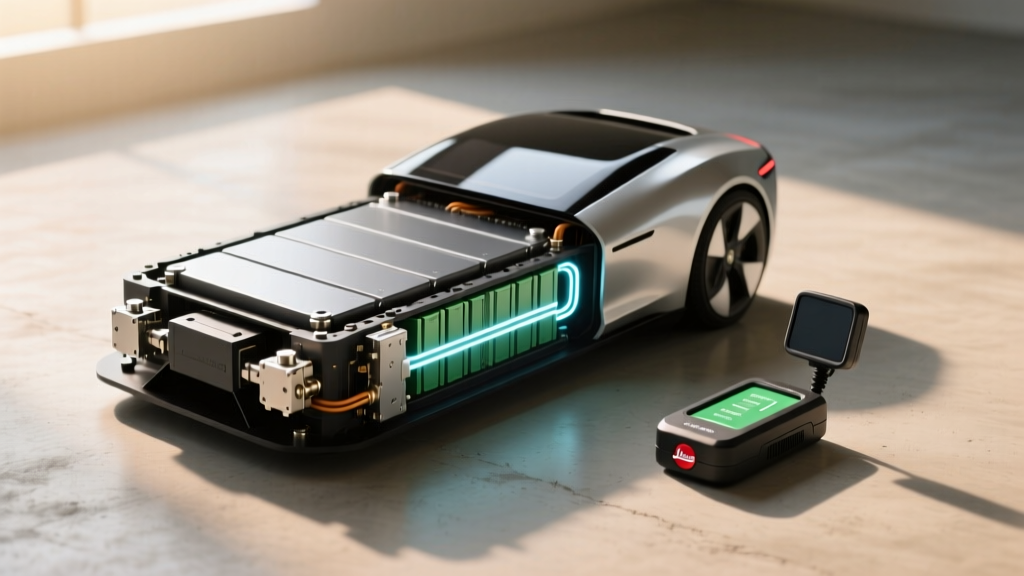
- OBD-II dongle + app: Tools like OBDLink SX paired with apps such as LeafSpy (Nissan) or Scan My Tesla pull real-time cell voltage, pack impedance, and calculated SoH directly from the BMS.
- Dealer diagnostic: A service center can run a full capacity test — typically a controlled discharge cycle — to provide a certified SoH reading. Useful for pre-purchase inspections on used EVs.
- Manual calculation: Charge to 100% (on LFP) or your normal limit, note the displayed range, and compare to the original EPA rating adjusted for your typical conditions. A consistent 15% shortfall suggests ~85% SoH.
Battery Care Best Practices
- NMC daily charge limit: Set to 80% for daily driving; reserve 100% for road trips. Tesla, Ford, and Hyundai all recommend this in their owner's manuals.
- LFP daily charge: Charge to 100% at least once per week for BMS cell-balancing calibration. LFP voltage curves are flat, so the BMS needs full-charge reference points.
- Minimize DC fast charging when Level 2 is available: Home Level 2 charging at 7–11.5 kW is the gentlest way to replenish. Use DC fast charging for road trips, not daily commutes.
- Precondition before fast charging: Navigate to the charger using the vehicle's built-in routing (Tesla, Rivian, Hyundai) to trigger automatic battery preconditioning. This warms the pack to optimal charging temperature (~86–95°F / 30–35°C), improving charge speed and reducing lithium-plating risk.
- Avoid prolonged storage at extreme SoC: If leaving the EV for 2+ weeks, set the charge limit to ~50% and plug in to a Level 1 or Level 2 source so the BMS can maintain thermal management.
- Park in shade or a garage during summer: Reducing peak pack temperature by even 10°F meaningfully slows calendar degradation.
Emerging Battery Technology: Solid-State and Silicon Anodes
Two technologies dominate forward-looking battery headlines. Here is where they actually stand in 2026:
Solid-State Batteries
Solid-state cells replace the liquid electrolyte with a solid ceramic, polymer, or sulfide separator — promising higher energy density (~400+ Wh/kg at cell level), faster charging, and reduced fire risk. However, no mass-market EV sold in the US in 2026 uses a full solid-state pack. Toyota has announced a limited production run for a 2027–2028 model, and Samsung SDI is targeting 2027 for initial automotive samples. Realistic widespread availability remains 2029–2031 at the earliest, with initial deployment in premium vehicles at significant cost premiums.
Silicon Anode Technology
Silicon-dominant anodes can store roughly 10× more lithium than graphite, boosting energy density. Companies like Sila Nanotechnologies and Group14 are supplying silicon-composite anode materials to battery manufacturers. The Mercedes-Benz G-Class EV has incorporated silicon anode cells from Sila, achieving a pack energy density improvement of 20–40% over conventional graphite anodes. This technology is available now in limited applications and is expected to proliferate through mainstream models by 2028–2030.
Neither technology will require you to change how you charge or maintain your current EV. They represent future purchasing considerations, not ownership changes for today's drivers.
Why Your Battery Powered Radar Detector Dies So Much Faster
The lithium cell inside a typical battery powered radar detector is usually a small 1,500–3,000 mAh lithium-polymer pouch — roughly 5–10 watt-hours of total energy. Compare that to a Tesla Model 3 LFP pack at ~60,000 watt-hours. The scale difference is enormous, but the degradation physics are identical:
- No active thermal management: Radar detectors sit on windshields, often baking in direct sun at 140°F+. Lithium cells degrade rapidly above 113°F (45°C). Your EV's liquid cooling system keeps cells in a 60–95°F range — a massive longevity advantage.
- No sophisticated BMS: Consumer devices use simple charge controllers. An EV BMS monitors every cell group's voltage, temperature, and impedance hundreds of times per second, balancing cells and limiting charge/discharge rates to protect longevity.
- Deeper relative cycles: A radar detector battery typically runs from 100% to near 0% every day. That is a full depth-of-discharge cycle. An EV owner who charges from 30% to 80% daily uses only a 50% depth-of-discharge, which dramatically extends cycle life.
This comparison illustrates why automotive-grade battery engineering — thermal management, BMS intelligence, and controlled charge profiles — matters far more than raw chemistry.
Frequently Asked Questions
How long do EV batteries last in years and miles?
Most liquid-cooled EV batteries retain 80–85% of original capacity after 10 years or 150,000 miles under normal use. Fleet data from Geotab shows an average degradation rate of ~1.8% per year. Many packs reach 200,000+ miles before dropping below 70% SoH. The battery will typically outlast the vehicle's body, suspension, and electronics.
How much does an EV battery cost to replace?
Out-of-warranty replacement costs range from roughly $8,000 for a small LFP pack (Tesla Model 3 RWD) to $20,000–$30,000 for large packs (F-150 Lightning, Rivian R1T). Module-level repair can reduce this to $2,000–$5,000. However, most owners never need a replacement — the pack degrades gradually rather than failing outright.
What does the EV battery warranty cover?
Federal law requires a minimum 8-year / 100,000-mile warranty (10/150,000 in CARB states). Coverage applies if the pack drops below the manufacturer's stated capacity threshold — typically 70% SoH — during the warranty period. It covers defects and excessive degradation but not accident damage, flooding, or unauthorized modifications. Check your specific owner's manual for exact terms.
How do I check my EV battery's State of Health?
Use the vehicle's built-in battery health menu (available on Tesla, Hyundai/Kia, BMW), an OBD-II scanner with an EV-specific app, or a dealer diagnostic test. You can also estimate SoH by comparing your displayed range at full charge to the original EPA rating — a 15% shortfall suggests approximately 85% SoH.
LFP vs NMC — which battery chemistry is better?
It depends on your priorities. LFP offers longer cycle life (3,000–5,000 cycles vs. 1,000–2,000), lower cost (~$100–115/kWh vs. $130–150/kWh), cobalt-free sourcing, and tolerance for daily 100% charging. NMC delivers higher energy density (more range in a lighter, smaller pack) and better cold-weather performance. Choose LFP if you prioritize longevity and cost; choose NMC if you need maximum range or live in a cold climate.
Does frequent DC fast charging damage my EV battery?
Occasional DC fast charging on road trips has minimal impact. However, daily reliance on high-power (150–350 kW) charging without battery preconditioning accelerates degradation by generating sustained high temperatures and elevated C-rates. For daily use, Level 2 home charging at 7–11.5 kW is significantly gentler on the pack.
Will a battery powered radar detector drain my EV's 12V system?
No — a standalone battery powered radar detector runs on its own internal cell and draws nothing from your EV. However, hardwired radar detectors or dashcams connected to the 12V auxiliary system can cause parasitic drain if left on while the vehicle is parked for extended periods. This affects the 12V accessory battery, not the high-voltage traction battery.
Sources: fueleconomy.gov (EPA range and efficiency data), IRS §30D clean vehicle credit rules, manufacturer warranty documentation (Tesla, Hyundai, Ford, BMW, Rivian 2026 model year specifications).