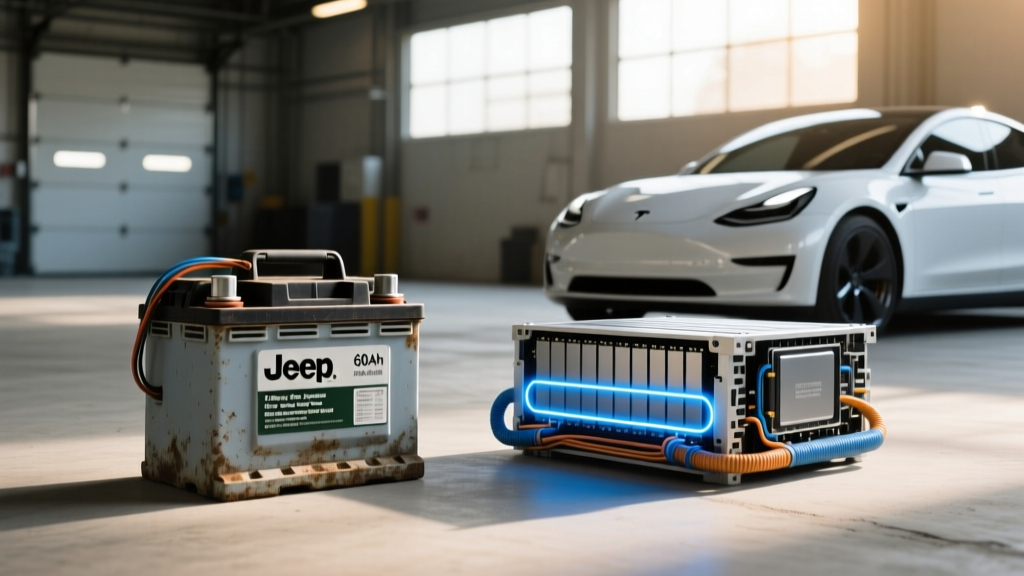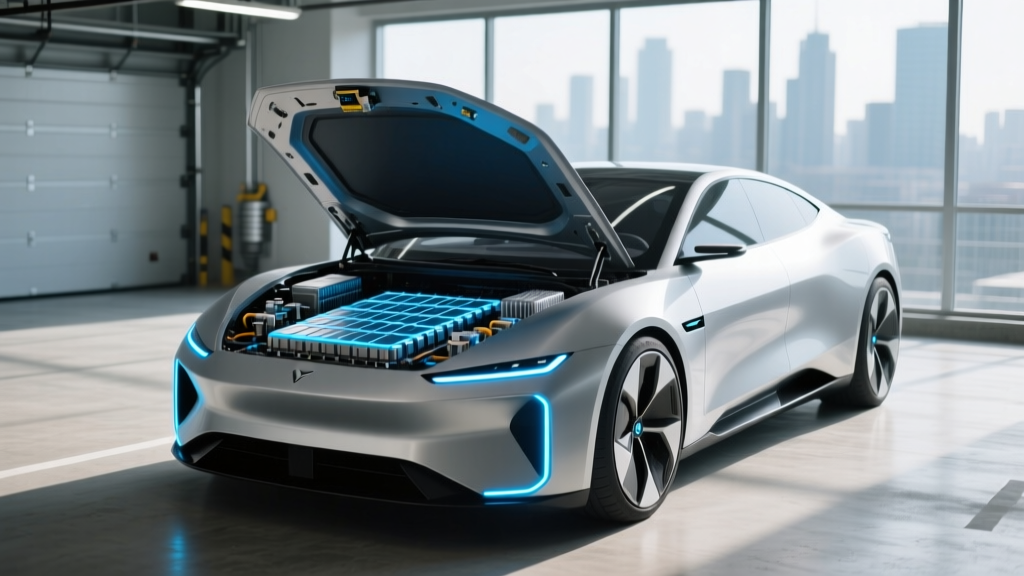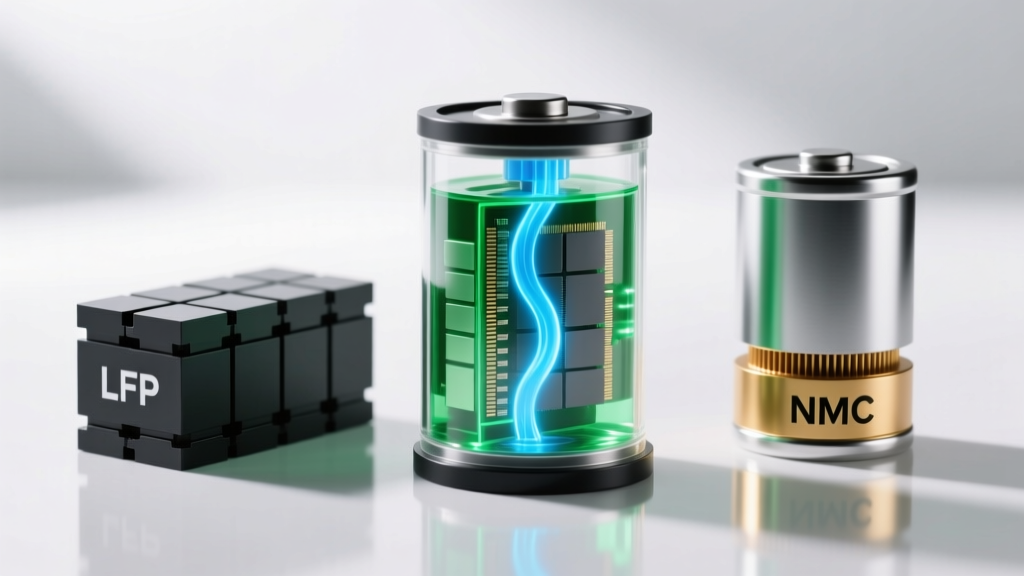
If you have been following energy-storage headlines, you have probably seen the term vanadium flow battery surface alongside discussions about grid storage, renewable-energy buffering, and — increasingly — whether the technology could ever make its way into electric vehicles. The short answer: not anytime soon for passenger cars. But understanding why requires a deep look at how today's dominant EV chemistries (LFP and NMC/NCA) actually work, how they degrade, what replacement really costs, and where emerging technologies like flow batteries, solid-state cells, and silicon anodes fit into the timeline.
This guide is built for EV buyers and owners who want hard numbers — not marketing. We will cover degradation data, warranty thresholds, real replacement invoices, and the daily habits that determine whether your pack lasts 150,000 miles or 300,000 miles.
What Is a Vanadium Flow Battery — and Why It Is Not in Your EV (Yet)
A vanadium redox flow battery (VRFB) stores energy in liquid electrolyte solutions containing vanadium ions, pumped through an electrochemical cell stack. Unlike a lithium-ion cell where energy and power are coupled inside a single sealed unit, a flow battery decouples them: energy capacity is determined by the size of the electrolyte tanks, while power output depends on the cell stack size.
This architecture gives flow batteries extraordinary cycle life — often exceeding 15,000 to 20,000 cycles with minimal degradation, compared to roughly 1,500–3,000 full cycles for lithium-ion packs. The vanadium electrolyte itself does not degrade the way solid electrode materials do, which is why flow batteries are attractive for stationary grid storage where weight and volume are secondary concerns.
The problem for automotive use is energy density. A vanadium flow battery system delivers roughly 15–25 Wh/kg at the system level. For comparison, a current-generation NMC lithium-ion pack delivers approximately 160–250 Wh/kg at the cell level and roughly 100–160 Wh/kg at the pack level. To store the 75 kWh needed for a ~300-mile EV range, a vanadium flow system would weigh several thousand kilograms and occupy far more volume than any passenger vehicle can accommodate. Companies like ESS Inc. and Invinity Energy Systems focus on multi-hour grid and commercial storage — not mobility.
That said, the flow-battery principle of decoupling energy and power, combined with near-infinite cycle life, makes vanadium chemistry an important benchmark when evaluating how long EV batteries need to last and what trade-offs we accept in lithium-ion designs.
LFP vs. NMC/NCA: The Chemistry Trade-Off Matrix
Every EV sold in the US today uses one of two primary lithium-ion cathode chemistries: LFP (lithium iron phosphate) or NMC/NCA (nickel manganese cobalt / nickel cobalt aluminum). The choice between them is not about one being universally "better" — it is about which trade-offs align with your driving patterns.
| Attribute | LFP (LiFePO₄) | NMC / NCA |
|---|---|---|
| Cell-level energy density | ~140–180 Wh/kg | ~200–300 Wh/kg |
| Pack-level energy density | ~100–140 Wh/kg | ~130–180 Wh/kg |
| Typical cycle life (to 80% SoH) | 3,000–6,000+ cycles | 1,000–2,500 cycles |
| Cold-weather performance | Moderate — slower charging below 32°F, reduced regen | Better low-temp charge acceptance |
| Thermal stability / safety | Excellent — higher thermal runaway threshold (~518°F) | Good — requires more active BMS management |
| Cobalt content | None | Yes (NMC) or minimal (NCA) |
| Cost per kWh (pack level, 2025–2026) | ~$80–$110/kWh | ~$110–$150/kWh |
| Common in | Tesla Model 3/Y RWD, Ford Mustang Mach-E Select, BYD models, Rivian Standard | Tesla Long Range/Performance, Hyundai Ioniq 5/6, Kia EV6/EV9, GM Ultium, Porsche Taycan |
Choose LFP if: You want maximum longevity, plan to keep the vehicle 10+ years, charge primarily at home (can tolerate daily 100% SoC), and do not need the absolute longest single-charge range. LFP also tolerates sitting at high state of charge far better than NMC, which simplifies daily habits.
Choose NMC/NCA if: You need maximum range per charge, frequently road-trip in cold weather, want the fastest DC charging speeds, or are buying a larger vehicle (truck, three-row SUV) where the higher energy density directly translates to usable range without excessive pack weight.
How Long Do EV Batteries Actually Last? Degradation Data
The question is not whether your EV battery will degrade — it will. The question is how much, and over what timeframe. Based on aggregated fleet data and manufacturer disclosures, here is what real-world degradation looks like for modern lithium-ion EV packs:
Typical Capacity Retention Over Time (NMC and LFP Packs, Moderate Climate, Mixed Driving)
- Year 1 / 15,000 miles: ~95–97% State of Health (SoH) — initial "formation" loss
- Year 3 / 45,000 miles: ~90–94% SoH — linear degradation phase
- Year 5 / 75,000 miles: ~87–92% SoH
- Year 8 / 120,000 miles: ~82–90% SoH (LFP typically higher end)
- Year 10 / 150,000 miles: ~78–88% SoH
- Year 15 / 200,000+ miles: ~70–82% SoH — many packs still functional
Sources: Geotab fleet battery health study, Recurrent Auto battery data reports, Tesla Impact Reports.
Two important nuances: First, degradation is not linear. Most packs experience a steeper drop in the first year or two (roughly 2–5%), then settle into a slow, nearly linear decline of about 1–2% per year. Second, LFP packs consistently show slower degradation than NMC in long-term fleet studies, often retaining 90%+ capacity at 100,000 miles under normal use.
For context on what this means practically: an EV with an EPA-rated 310-mile range and 10% degradation after five years still delivers roughly 279 miles of original EPA range — and real-world highway range was already closer to 250–270 miles when new, so the effective daily impact is modest for most drivers.
What the Battery Warranty Actually Covers — and What It Does Not
Federal law mandates that EV battery warranties cover at least 8 years / 100,000 miles (10 years / 150,000 miles in California Air Resources Board states). But the details matter enormously:
| Manufacturer | Warranty Term | Capacity Threshold | Notes |
|---|---|---|---|
| Tesla (Model 3/Y LFP) | 8 yr / 120,000 mi | 70% retention | Long Range/Performance: 8yr/120k mi at 70% |
| Hyundai / Kia (E-GMP) | 10 yr / 100,000 mi | 70% retention | Among the longest terms in the industry |
| GM (Ultium platform) | 8 yr / 100,000 mi | 70% retention (60% on some commercial) | Varies by model — check specific vehicle |
| Ford (Mach-E, F-150 Lightning) | 8 yr / 100,000 mi | 70% retention | LFP packs on Select trim covered same terms |
| Rivian | 8 yr / 120,000 mi (175k commercial) | 70% retention | Module-level replacement when possible |
| BMW / Mercedes | 8 yr / 100,000 mi | 70% retention | Some offer battery certificate programs |
Critical distinction: These warranties cover defects and excessive degradation — meaning your pack drops below the stated threshold under normal use. They do not cover damage from accidents, flooding, improper modifications, or (in most cases) using the vehicle as a stationary power source without manufacturer approval. Read your specific warranty booklet.
The 70% threshold is also worth examining. If your 82 kWh pack degrades to 57.4 kWh (70%), you still have a functional vehicle — just with noticeably reduced range. Most owners who experience warranty-level degradation describe it as inconvenient, not catastrophic.
EV Battery Replacement Cost: Real Numbers and Context
This is where fear-mongering runs rampant, so let us ground the discussion in actual data. Yes, a full traction-battery replacement is expensive. But the vast majority of EV batteries outlive the useful economic life of the vehicle they are installed in.
| Vehicle / Pack Size | Battery Capacity | Estimated Replacement Cost (Parts + Labor) | Notes |
|---|---|---|---|
| Tesla Model 3 RWD (LFP) | ~60 kWh | $12,000–$16,000 | LFP packs generally cheaper per kWh |
| Tesla Model Y Long Range | ~75 kWh | $14,000–$20,000 | Structural pack design adds labor complexity |
| Hyundai Ioniq 5 / Kia EV6 | ~77.4 kWh | $14,000–$18,000 | E-GMP platform — module replacement possible |
| Ford F-150 Lightning Extended | ~131 kWh | $22,000–$30,000+ | Largest consumer pack — highest absolute cost |
| Chevrolet Equinox EV | ~85 kWh | $14,000–$18,000 | Ultium modular design may allow partial replacement |
| Porsche Taycan | ~93.4 kWh (Performance Plus) | $20,000–$28,000 | Premium labor rates + complex cooling system |
Key context points:
- Most modern EV batteries are modular — individual modules or cell groups can sometimes be replaced rather than the entire pack, reducing cost by 40–60%.
- Pack prices at the cell level have fallen from over $1,000/kWh in 2010 to roughly $100–$130/kWh in 2025–2026, per BloombergNEF data.
- A growing second-life and refurbished battery market is emerging, offering replacement packs at 30–50% below new OEM pricing for out-of-warranty vehicles.
- For comparison, a conventional vehicle's engine or transmission replacement at 150,000 miles often costs $4,000–$8,000 — and that vehicle has already been consuming $1,500–$2,500/year in fuel that the EV owner saved.
What Actually Kills an EV Battery — and How to Maximize Lifespan
Battery degradation is driven by electrochemical stress. The following factors accelerate it, ranked roughly by impact:
Battery Longevity Checklist — Habits That Add Years
- Avoid chronic 100% SoC storage: For NMC packs, daily charging to 80% is ideal. LFP packs are more tolerant and many manufacturers (including Tesla) recommend periodic 100% charges for LFP to maintain BMS calibration.
- Minimize DC fast charging when possible: Frequent 150–350 kW DC sessions generate significant heat. Occasional road-trip fast charging is fine; daily reliance on DCFC accelerates degradation by an estimated 1–3% over the pack's life compared to Level 2 home charging.
- Use preconditioning: If your vehicle supports it, precondition the battery before fast charging (most EVs do this automatically when you navigate to a charger). A cold battery charged at high power suffers lithium plating, which causes permanent capacity loss.
- Avoid extreme SoC in extreme temperatures: Do not leave an NMC vehicle at 100% SoC in a 100°F+ driveway for days. Similarly, avoid leaving the vehicle at very low SoC (below 10%) in sub-zero weather for extended periods.
- Drive moderately in the first few minutes after a cold start: Heavy regen into a cold battery stresses cells. Most EVs limit regen automatically when cold — let the system do its job.
- Keep software updated: OEM battery management system (BMS) updates frequently improve thermal management algorithms and charge curve optimization.
How to Check Your Battery's State of Health (SoH)
State of Health is expressed as a percentage: a brand-new pack is 100% SoH, and a pack that can now hold only 80% of its original capacity is at 80% SoH. Here is how to monitor it:
- In-vehicle displays: Tesla shows battery health percentage in the Service menu (software 2024.38+). Hyundai/Kia provides a battery health indicator in the EV settings menu. GM's Ultium vehicles display estimated range vs. original, from which SoH can be inferred.
- OBD-II diagnostic apps: Tools like OBDLink SX + LeafSpy (Nissan), OBDeleven (VW/Audi), or manufacturer-specific diagnostic modes can read raw BMS data including individual cell voltages, internal resistance, and calculated SoH.
- Third-party services: Companies like Recurrent offer battery health reports based on telematics data, useful for used-EV buyers who want independent verification before purchase.
- The manual method: Charge to 100% (on an LFP pack or occasionally on NMC), note the displayed range, and compare to the EPA-rated range when new. Account for temperature — a 25°F day can temporarily reduce displayed range by 15–30% without indicating permanent degradation.
Emerging Battery Technologies: Solid-State, Silicon Anodes, and Beyond
While vanadium flow batteries remain impractical for passenger vehicles, several next-generation lithium-ion technologies are approaching commercialization:
Solid-state batteries replace the liquid electrolyte with a solid ceramic, polymer, or sulfide conductor. Benefits include higher energy density (potentially 400–500 Wh/kg at the cell level), improved safety (no flammable liquid electrolyte), and faster charging. Toyota has announced a solid-state EV expected by 2027–2028 with a claimed 750 km (~465 miles) of range and 10-minute fast charging. Samsung SDI, QuantumScape, and Solid Power are also in advanced testing. However, manufacturing scale-up and cost reduction remain significant hurdles — expect solid-state to debut in premium, low-volume applications before reaching mainstream pricing.
Silicon-dominant anodes replace graphite anodes with silicon, which can store roughly 10x more lithium ions per gram. Companies like Sila Nanotechnologies and Group14 are already shipping silicon-composite anode materials to battery manufacturers. The result: 20–40% energy density improvement within existing cell formats. Expect to see silicon-enhanced cells in production EVs by 2026–2028, initially in performance-oriented models.
Sodium-ion batteries use abundant sodium instead of lithium, offering lower cost and excellent cold-weather performance at the expense of lower energy density (~120–160 Wh/kg). CATL has begun volume production, and BYD is evaluating sodium-ion for smaller, city-focused EVs. In the US market, sodium-ion is likely to appear first in grid storage and light commercial vehicles before passenger cars.
All of these technologies are forward-looking and not yet available in US-market consumer EVs as of 2026. They represent the pipeline, not the showroom.
Frequently Asked Questions
How long do EV batteries last in years and miles?
Modern lithium-ion EV batteries are designed to last the life of the vehicle. Real-world fleet data shows most packs retain 78–88% of original capacity at 150,000 miles (roughly 10 years of average US driving). LFP packs often exceed 90% retention at 100,000 miles. Complete pack failure before 200,000 miles is rare in liquid-cooled modern systems.
How much does an EV battery cost to replace?
Full replacement costs range from approximately $12,000 for a smaller LFP pack (e.g., Tesla Model 3 RWD) to $30,000+ for a large pack like the F-150 Lightning Extended Range. However, modular designs increasingly allow partial module replacement at 40–60% lower cost, and most batteries never need replacement during the vehicle's useful life.
What does the EV battery warranty actually cover?
Federal minimum is 8 years/100,000 miles (10yr/150k in CARB states) against defects and degradation below ~70% capacity. This covers manufacturing defects, premature cell failure, and excessive capacity loss under normal use. It does not cover accident damage, unauthorized modifications, or environmental damage like flooding.
How do I check and maximize my EV battery health?
Monitor SoH through your vehicle's built-in battery health display, OBD-II diagnostic tools, or third-party services like Recurrent. Maximize lifespan by charging NMC packs to 80% daily (100% for LFP), minimizing DC fast charging, preconditioning before fast charges, avoiding prolonged storage at extreme SoC levels, and keeping BMS software updated.
LFP vs NMC — which battery chemistry is better for me?
LFP offers longer cycle life (3,000–6,000+ cycles), better thermal safety, lower cost, and tolerance for daily 100% charging — ideal for commuters who charge at home and plan long ownership. NMC/NCA provides higher energy density (longer range per charge), better cold-weather charging, and faster DC charge rates — ideal for road-trippers, cold-climate drivers, and buyers of larger vehicles where weight matters.
Could vanadium flow batteries ever be used in EVs?
Not in passenger vehicles. Vanadium flow batteries achieve extraordinary cycle life (15,000–20,000+ cycles) but have system-level energy density of only 15–25 Wh/kg — roughly 10x lower than lithium-ion. A flow battery storing 75 kWh would weigh several tons. The technology is valuable for grid-scale stationary storage, where weight is irrelevant and longevity is paramount.
The EV battery in your driveway is a remarkably durable, well-managed component — far more robust than early-2010s predictions suggested. Whether you choose LFP for its marathon longevity or NMC for its range density, the data is clear: with basic care, your pack will likely outlast your ownership of the vehicle. And while vanadium flow batteries, solid-state cells, and silicon anodes push the boundaries of what is possible, today's lithium-ion technology has already proven it can go the distance.