What Powers Your EV: Understanding Battery Chemistry
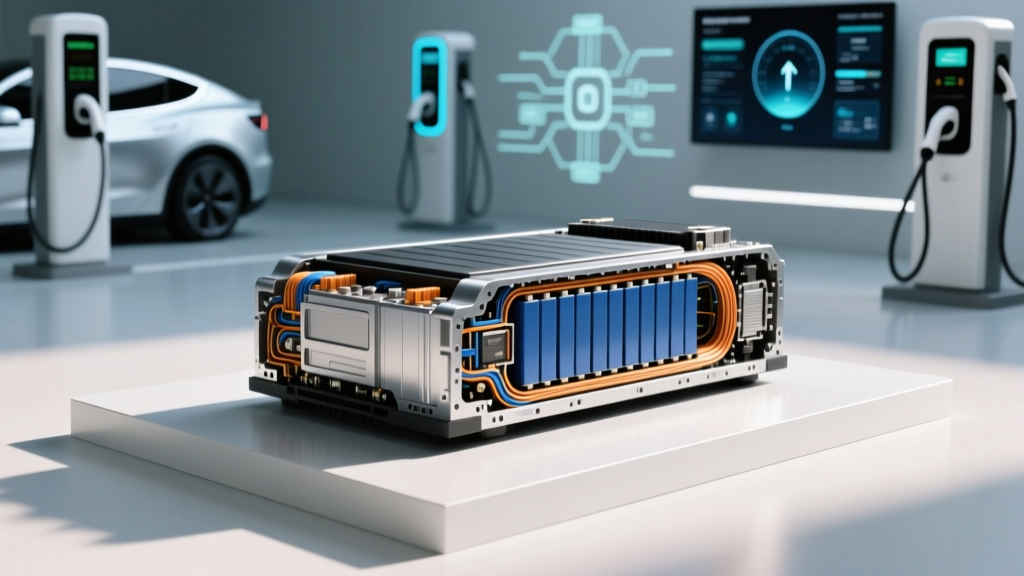
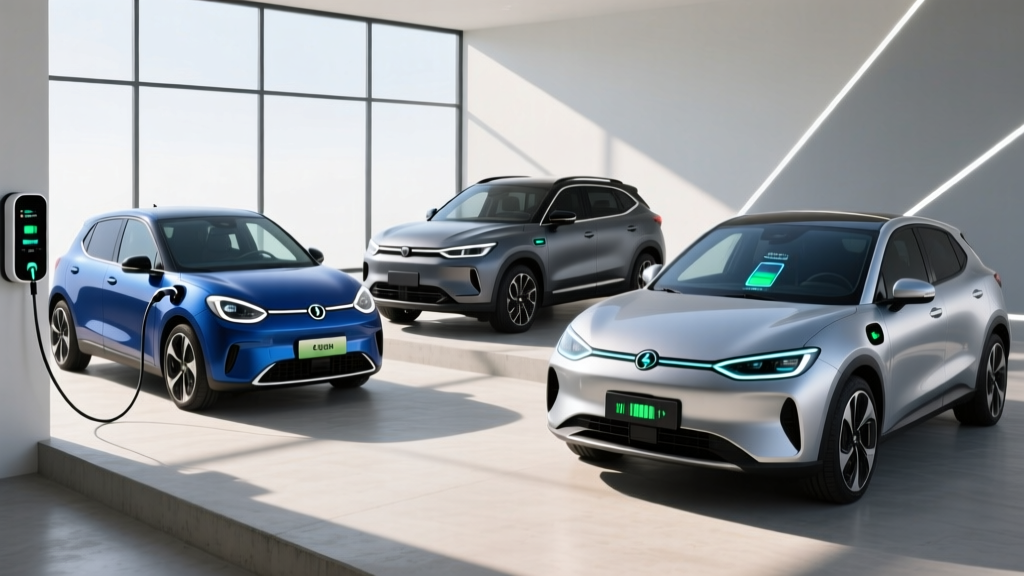
The high-voltage traction battery is the single most expensive component in any electric vehicle — and the one buyers worry about most. Whether you're evaluating a Tesla Model 3, a Ford Mustang Mach-E, or a BYD Atto 3, the battery pack determines your range, your charging speed, your long-term ownership cost, and ultimately how much of the car's value survives past the warranty period.
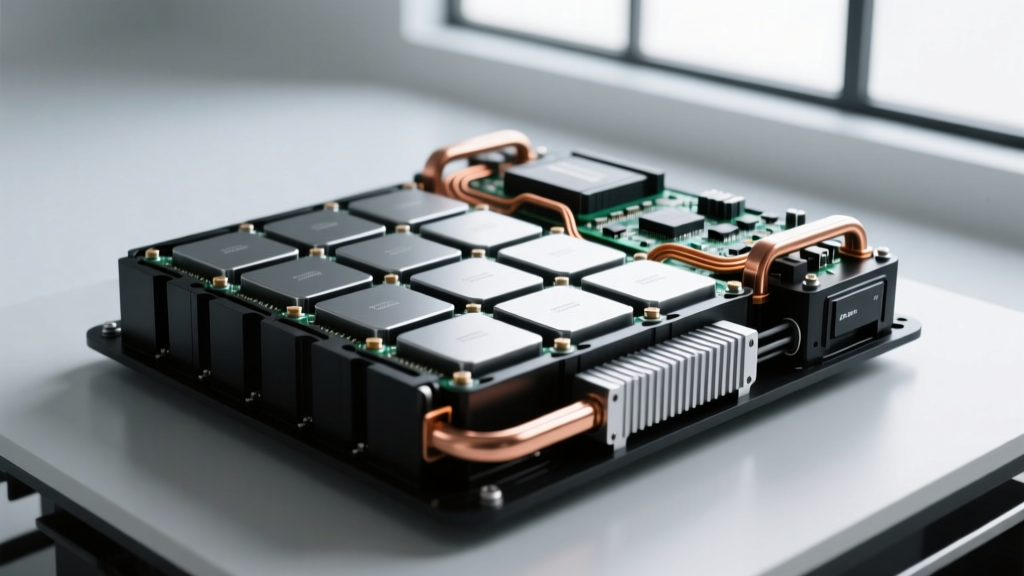
Most EVs on the road in 2026 use one of two lithium-ion chemistries: NMC (nickel manganese cobalt) or NCA (nickel cobalt aluminum) for energy-dense packs, or LFP (lithium iron phosphate) for cost-effective, long-cycle-life packs. The chemistry inside your battery power car fundamentally shapes the ownership experience.
| Attribute | LFP (Lithium Iron Phosphate) | NMC / NCA (Nickel-based) |
|---|---|---|
| Energy Density | Lower (~160–180 Wh/kg cell-level) | Higher (~220–300 Wh/kg cell-level) |
| Cycle Life | 3,000–5,000+ cycles to 80% capacity | 1,000–2,000 cycles to 80% capacity |
| Cold-Weather Performance | Weaker; greater range loss below freezing | Better low-temp discharge characteristics |
| Cost per kWh | ~$60–80/kWh (cell-level, 2026 est.) | ~$90–120/kWh (cell-level, 2026 est.) |
| Thermal Stability | Excellent; higher thermal runaway threshold | Good; requires more active thermal management |
| Optimal Daily Charging | Can charge to 100% regularly without significant harm | Best kept between 20–80% for longevity |
| Common Applications | Tesla Model 3/Y RWD, BYD models, Rivian standard range | Tesla Long Range, Hyundai Ioniq 5/6, Ford Mach-E Extended Range |
The trade-off is straightforward: NMC/NCA gives you more range in a smaller, lighter pack — ideal for long-range and performance trims. LFP gives you dramatically longer cycle life and lower cost, but at the expense of energy density and cold-weather efficiency. Neither is universally "better." If your commute is under 60 miles and you charge at home nightly, LFP's longevity advantage matters more than NMC's range advantage.
How Long Do EV Batteries Actually Last?
The short answer: far longer than most buyers assume. Data aggregated from fleet operators, manufacturer warranty claims, and independent testing shows that modern liquid-cooled EV batteries typically lose between 5% and 12% of original capacity over the first 100,000 miles, with degradation slowing significantly after the initial break-in period.
| Mileage | Average Capacity Retained | Notes |
|---|---|---|
| 0–25,000 mi | 95–98% | Initial calibration drop; steepest early curve |
| 50,000 mi | 91–95% | Curve flattens significantly |
| 100,000 mi | 87–93% | Most packs well above warranty threshold |
| 150,000 mi | 83–90% | Dependent on charging habits and climate |
| 200,000 mi | 78–87% | Approaching warranty threshold for some packs |
According to fueleconomy.gov, modern EV battery packs are designed to last the lifetime of the vehicle. Tesla's 2023 Impact Report noted that their Model 3/Y batteries retained an average of 85% capacity at 200,000 miles. Recurrent Auto's fleet data across 15,000+ vehicles shows median degradation of roughly 8% at 100,000 miles for liquid-cooled packs.
Real-world caveat: These figures assume moderate climates and mixed charging habits. Vehicles in extreme heat (Arizona, Texas) with frequent DC fast charging may see 2–4% additional loss at equivalent mileage. Conversely, garage-kept vehicles in mild climates with mostly Level 2 home charging often exceed these averages.
Battery Warranty Coverage: What You're Actually Protected Against
Federal law mandates a minimum 8-year/100,000-mile warranty on EV battery packs, but manufacturers interpret this differently. The critical detail is the capacity retention threshold — the point at which the manufacturer will repair or replace your pack.
| Manufacturer | Warranty Period | Capacity Threshold | Notes |
|---|---|---|---|
| Tesla (Model 3/Y) | 8 yr / 100,000 mi (RWD) or 120,000 mi (LR/AWD) | 70% | Covers defects and capacity below threshold |
| Hyundai / Kia | 8 yr / 100,000 mi (10 yr/100k in some states) | 70% | Among the longest coverage periods |
| Ford (Mach-E, F-150 Lightning) | 8 yr / 100,000 mi | 70% | Covers battery and electric drive components |
| GM (Ultium platform) | 8 yr / 100,000 mi | 70% | Modular design allows section replacement |
| Rivian | 8 yr / 120,000 mi (R1T/R1S) | 70% | Higher mileage threshold than most |
| BMW (i4, iX) | 8 yr / 100,000 mi | 70% | Includes battery conditioning system |
What's covered: Manufacturing defects, cell failures, thermal management system failures, and capacity loss below the stated threshold under normal use.
What's typically NOT covered: Damage from accidents, improper charging equipment, modifications, or cosmetic issues. Some warranties also exclude capacity loss from exclusively using DC fast charging, though this is rare and difficult to enforce.
The 70% threshold is the industry standard, meaning a vehicle with an original EPA range of 310 miles would need to drop below ~217 miles of range before a warranty claim applies. Based on the degradation data above, very few modern liquid-cooled packs reach that point within the warranty window.
EV Battery Replacement Costs: The Real Numbers
This is the question that generates the most anxiety — and the most misinformation. Let's look at actual replacement costs, not hypothetical worst-case scenarios.
| Vehicle | Battery Size | Chemistry | Replacement Cost Range |
|---|---|---|---|
| Tesla Model 3 RWD | ~60 kWh | LFP | $8,000–$12,000 |
| Tesla Model Y Long Range | ~75 kWh | NMC | $12,000–$16,000 |
| Hyundai Ioniq 5 (Long Range) | 77.4 kWh | NMC | $11,000–$15,000 |
| Ford Mustang Mach-E (ER) | 91 kWh usable | NMC | $14,000–$18,000 |
| Ford F-150 Lightning (ER) | ~131 kWh | NMC | $18,000–$25,000+ |
| Chevrolet Bolt EV/EUV | ~65 kWh | NMC | $9,000–$13,000 |
| BMW iX xDrive50 | ~105 kWh usable | NMC | $16,000–$22,000 |
These figures include the battery pack and labor but can vary significantly by region, dealer, and whether the replacement is a new pack, a refurbished pack, or a module-level repair. GM's Ultium platform and some newer architectures allow module-level replacement — swapping individual defective modules rather than the entire pack — which can reduce costs to $2,000–$5,000 for a partial repair.
When is replacement actually needed? Based on current data, full battery replacement due to degradation alone is extremely rare before 200,000 miles. Most replacements occur due to manufacturing defects (covered by warranty), physical damage from collisions or road debris, or thermal management system failures. The fear of a $20,000 out-of-pocket bill at 80,000 miles is not supported by the data — and it's precisely why the 8-year/100,000-mile warranty exists.
Factors That Accelerate — or Preserve — Battery Life
Not all miles are equal when it comes to battery degradation. Your charging habits and operating environment have a measurable impact on how quickly your pack loses capacity.
Charging Habits That Reduce Degradation
- Limit DC fast charging to road trips. Frequent use of 150+ kW DC chargers generates sustained heat that accelerates cell wear. For daily use, Level 2 (7–11 kW) home charging is ideal.
- Follow the 20–80% rule for NMC/NCA packs. Keeping your state of charge in the middle of the range reduces stress on nickel-based cells. Most EVs let you set a charge limit in the app.
- LFP packs are the exception. Tesla and BYD recommend charging LFP packs to 100% at least once a week for accurate BMS calibration. LFP tolerates high SoC far better than NMC.
- Avoid leaving the vehicle at 100% SoC for extended periods. If you charge to full for a road trip, try to depart within a few hours rather than letting it sit at 100% overnight.
Environmental Factors
- Extreme heat is more damaging than extreme cold. Sustained battery temperatures above 104°F (40°C) accelerate electrolyte decomposition. Vehicles in Phoenix or Las Vegas degrade faster than those in Portland or Minneapolis, all else equal.
- Cold weather reduces range but doesn't permanently damage the battery. A 20°F day may temporarily reduce range by 20–30%, but this capacity returns when temperatures normalize. Preconditioning your battery while plugged in mitigates this.
- Garage parking matters. Keeping your EV out of direct summer sun and extreme winter cold reduces thermal cycling stress on the pack.
Driving Patterns
- Frequent high-speed driving and hard acceleration generate higher discharge currents, producing more heat. Occasional spirited driving is fine; daily track use is not ideal for longevity.
- Regenerative braking actually helps battery health by reducing the depth and frequency of charge cycles compared to friction-brake-heavy driving.
Monitoring Your Battery's State of Health (SoH)
State of Health (SoH) is expressed as a percentage — 100% being a brand-new pack, and lower values indicating capacity loss. Most modern EVs provide some level of SoH visibility, though the depth of information varies by manufacturer.
In-vehicle displays: Tesla shows estimated range at 100% charge, which indirectly reflects SoH. Hyundai/Kia provides a battery health indicator in the diagnostic menu. GM's Ultium vehicles display battery condition through the infotainment system.
OBD-II tools and apps: Third-party solutions like Scan My Tesla, ABRP (A Better Route Planner) with OBD-II integration, and manufacturer-specific diagnostic tools can read the battery management system (BMS) directly to report SoH with greater precision. These tools access data like individual cell voltages, pack temperature, and cumulative energy throughput.
Dealer diagnostics: Any authorized service center can run a full battery health report. If you're buying a used EV, requesting this report before purchase is essential. A pack showing 92% SoH at 40,000 miles is tracking well; one showing 85% at the same mileage warrants investigation.
What to watch for: A sudden drop in estimated range (more than 5% in a short period), uneven cell voltages (visible through OBD tools), or a dashboard warning light related to the high-voltage system all warrant immediate service attention.
Emerging Battery Technologies: What's Coming and When
The battery landscape is evolving rapidly, but it's critical to distinguish between lab demonstrations and production-ready technology. Here's where the most promising advancements stand as of 2026:
Solid-State Batteries
Solid-state cells replace the liquid electrolyte with a solid material, promising higher energy density (potentially 400+ Wh/kg at the cell level), faster charging, and improved safety. Toyota has announced limited production of solid-state-equipped vehicles for 2027–2028, and Samsung SDI targets mass production by 2027. However, these timelines have shifted multiple times, and initial production will likely be limited to premium, low-volume models. Expect mainstream solid-state EVs no earlier than 2029–2030.
Silicon Anode Technology
Replacing graphite anodes with silicon-dominant materials can boost energy density by 20–40%. Companies like Sila Nanotechnologies and Group14 Technologies have entered limited production partnerships. The Mercedes-Benz G-Class electric (announced) is expected to feature silicon anode cells. This technology is closer to scale than solid-state but still faces cycle-life challenges in high-capacity formats.
Sodium-Ion Batteries
CATL and BYD have begun producing sodium-ion cells for lower-cost, shorter-range EVs — primarily in the Chinese market. Sodium-ion offers lower energy density than LFP but dramatically lower raw material costs and better cold-weather performance. US-market adoption remains uncertain and is unlikely before 2028 for passenger vehicles.
Bottom line for today's buyers: Current-generation NMC and LFP batteries are mature, well-understood technologies with extensive real-world track records. Waiting for solid-state means waiting years — and the batteries available now are more than adequate for 150,000+ miles of reliable service.
Frequently Asked Questions
How long do EV batteries last in years and miles?
Modern liquid-cooled EV batteries are designed to last 15–20 years or 150,000–200,000+ miles before degrading to 70–80% of original capacity. Fleet data from Tesla, Hyundai, and independent sources like Recurrent Auto consistently shows that most packs outlive the vehicle's other major components. Full replacement due to degradation alone before 200,000 miles is uncommon.
How much does an EV battery cost to replace?
Full pack replacement costs range from roughly $8,000 for a smaller LFP pack (Tesla Model 3 RWD, ~60 kWh) to $25,000+ for large packs like the Ford F-150 Lightning Extended Range (~131 kWh). However, most replacements within the first 8 years or 100,000 miles are covered under warranty. Module-level repairs on platforms like GM's Ultium can cost as little as $2,000–$5,000.
What does the EV battery warranty actually cover?
Federally mandated minimum coverage is 8 years/100,000 miles. The warranty covers manufacturing defects, cell failures, and capacity loss below a stated threshold (typically 70% of original capacity). It does not cover damage from accidents, modifications, or improper charging equipment. Some manufacturers, like Hyundai and Rivian, offer extended coverage up to 10 years or 120,000 miles on certain models.
How do I check and maximize my EV battery health?
Check SoH through your vehicle's diagnostic menu, an OBD-II scanner with EV-compatible software, or a dealer diagnostic report. To maximize longevity: use Level 2 home charging for daily needs, limit DC fast charging to road trips, keep NMC/NCA packs between 20–80% SoC when possible (LFP packs can and should be charged to 100% weekly), avoid leaving the vehicle at 100% SoC for days, and park in a garage when extreme temperatures are expected.
LFP vs NMC — which battery chemistry is better for me?
Choose LFP if you prioritize long-term durability, lower cost, and can charge to 100% regularly — ideal for daily commuters and fleet use. Choose NMC/NCA if you need maximum range per charge, better cold-weather performance, or are buying a long-range/performance trim. Neither is objectively superior; the right choice depends on your driving pattern, climate, and how long you plan to keep the vehicle.
Does fast charging damage my EV battery?
Occasional DC fast charging (road trips, a few times per month) has minimal impact on modern battery health thanks to sophisticated thermal management systems. However, exclusive reliance on 150+ kW DC fast charging — especially in hot climates — can accelerate degradation by 2–5% over 100,000 miles compared to predominantly Level 2 charging. The charge curve also slows significantly above 80% SoC, so charging from 80–100% on a DC fast charger is both slow and thermally stressful.
Sources: U.S. Department of Energy / fueleconomy.gov; manufacturer warranty documentation (Tesla, Hyundai, Ford, GM); Recurrent Auto battery degradation studies.