What Exactly Is a Battery Charge Cycle?
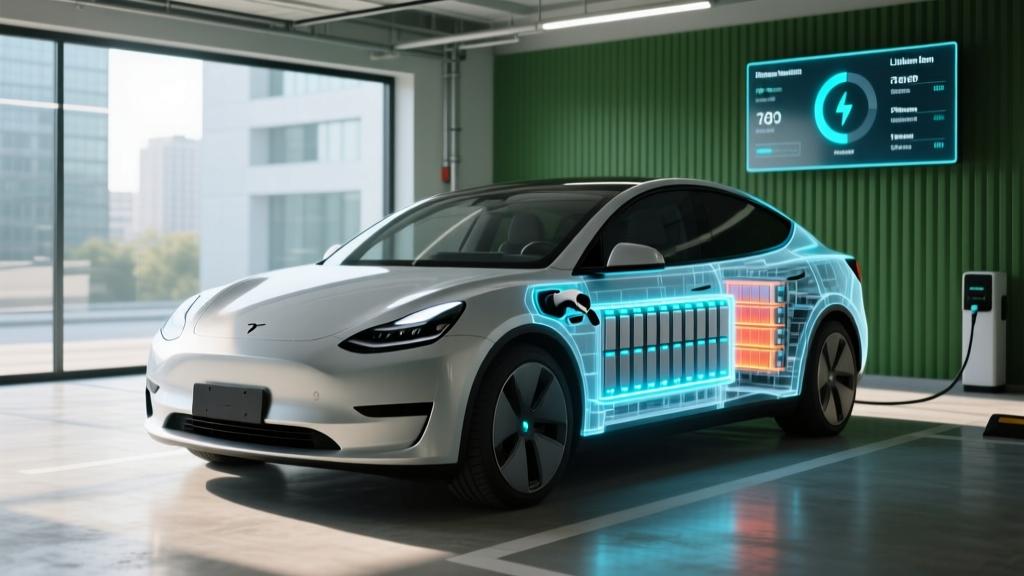
When EV shoppers ask "what's a battery charge cycle," they're usually trying to figure out one thing: how long will this expensive pack actually last before it needs replacing? A charge cycle is defined as using 100% of a battery's capacity — but not necessarily in one go. If you drive from 80% down to 30% (using 50% of capacity) and then recharge, that counts as half a cycle. Two such trips equal one full cycle.
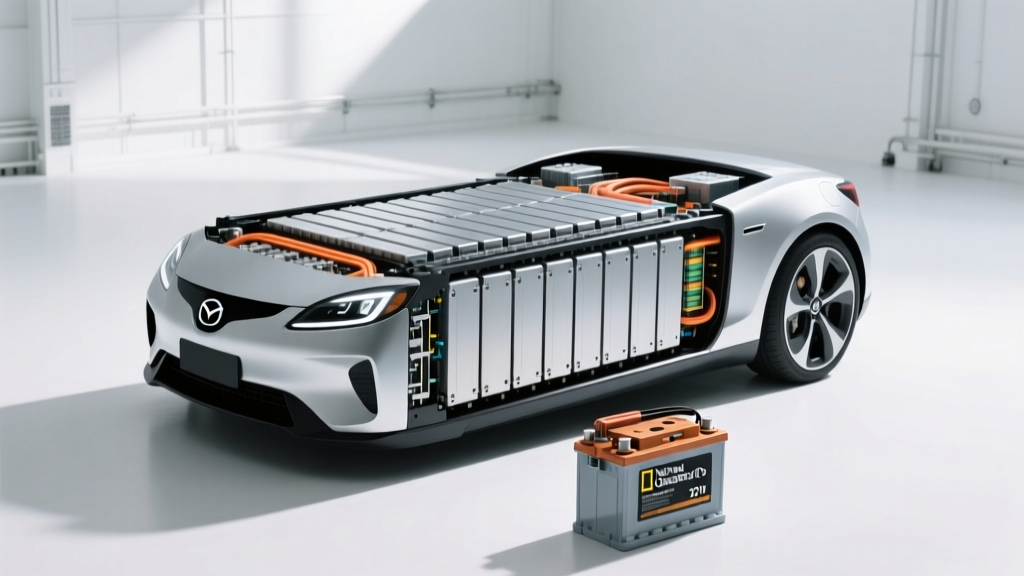
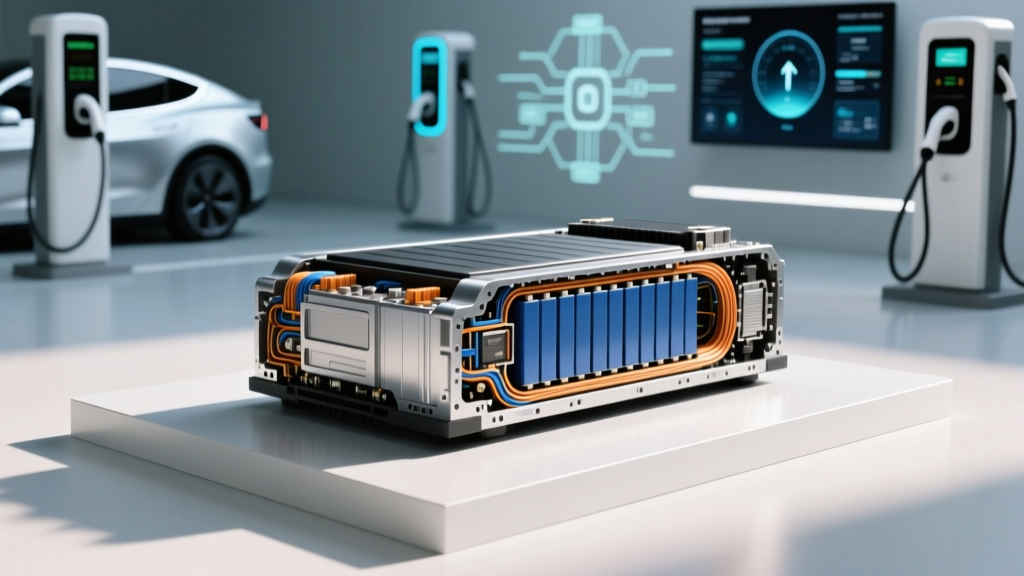
Modern EV traction batteries — the high-voltage lithium-ion packs that propel the car, not the small 12V auxiliary battery that runs accessories — are engineered for thousands of these cycles. The real question is how chemistry, thermal management, and your daily habits interact to determine actual lifespan and range retention over a decade or more of ownership.
LFP vs NMC vs NCA: The Chemistry Trade-Offs That Matter
The two dominant lithium-ion chemistries in 2026 EVs are LFP (lithium iron phosphate) and NMC/NCA (nickel manganese cobalt / nickel cobalt aluminum). Each has distinct strengths, and neither is universally "better" — the right choice depends on your driving pattern, climate, and budget.
| Attribute | LFP (LiFePO₄) | NMC / NCA |
|---|---|---|
| Energy Density | Lower (~160 Wh/kg cell-level) | Higher (~250–300 Wh/kg cell-level) |
| Typical Cycle Life | 3,000–5,000+ cycles to 80% SoH | 1,000–2,000 cycles to 80% SoH |
| Cold-Weather Performance | Weaker — more range loss below 32°F | Better low-temp conductivity |
| Cost (per kWh) | Lower — no cobalt or nickel | Higher — commodity-sensitive metals |
| Charging to 100% Daily | Recommended by most OEMs | Generally advised against; 80% daily target |
| Common In 2026 Models | Tesla Model 3/Y RWD, Ford Mustang Mach-E Select, BYD, Rivian Standard | Hyundai Ioniq 5/6, Chevy Equinox EV, BMW iX, Lucid Air, Tesla Long Range |
| Thermal Stability | Excellent — less prone to thermal runaway | Good with active management, but more sensitive |
The practical takeaway: If you can charge at home daily and don't need maximum range per charge, LFP's longevity and tolerance for 100% top-ups make it an excellent match. If you need 320+ miles of EPA range, tow frequently, or live in a cold climate where every mile counts, NMC's higher energy density is the pragmatic pick — just avoid routinely charging above 80% unless preconditioning for a road trip.
How Long Do EV Batteries Actually Last?
The short answer: far longer than most buyers expect. Data from fleet operators, manufacturer reports, and independent tracking consistently show that liquid-cooled EV batteries from major OEMs retain the vast majority of their capacity well past 100,000 miles.
Real-World Degradation Data Points
- Tesla 2025 Impact Report: Model 3/Y packs retain approximately 85% of original capacity at 150,000 miles, with the degradation curve flattening significantly after the initial 20,000–30,000 mile break-in period.
- Geotab fleet study (2024 update, 10,000+ EVs): Average annual degradation across all makes was 1.8% per year — meaning a typical pack retains roughly 82% capacity after 10 years.
- Recurrent Auto data (2025): Chevrolet Bolt EV owners (NMC, no active liquid cooling on early models) showed wider variance, with some packs at 88% SoH at 80,000 miles and others at 79% — highlighting the importance of thermal management.
- Taxi/fleet Tesla Model 3 data: Multiple high-mileage examples exceed 200,000 miles on the original pack with 75–80% capacity retention, particularly LFP variants.
Most EV batteries will outlast the vehicle's body, interior, and suspension components. Catastrophic failure (sudden, total loss) is extraordinarily rare. What owners actually experience is gradual capacity fade — you simply notice the car goes 15–25 fewer miles on a full charge after five or six years.
What Does the Battery Warranty Actually Cover?
Federal law in the United States mandates that EV battery warranties cover a minimum of 8 years or 100,000 miles (whichever comes first). In California Air Resources Board (CARB) states — which include California, New York, Massachusetts, Oregon, Washington, and several others — the mandate extends to 10 years or 150,000 miles. Most manufacturers meet or exceed these minimums.
| Manufacturer | Battery Warranty | Capacity Retention Threshold |
|---|---|---|
| Tesla (Model 3/Y) | 8 yr / 120,000 mi (Long Range), 8 yr / 100,000 mi (RWD) | 70% |
| Hyundai / Kia | 10 yr / 100,000 mi | 70% |
| GM (Chevy, Cadillac, GMC) | 8 yr / 100,000 mi | 70% (some models 60% stated) |
| Ford | 8 yr / 100,000 mi | 70% |
| Rivian | 8 yr / 175,000 mi | 70% |
| BMW | 8 yr / 100,000 mi | 70% |
| Lucid | 8 yr / 100,000 mi | 70% |
Key nuance: These warranties cover capacity dropping below the stated threshold (typically 70%), not normal gradual degradation above that line. If your 82 kWh pack holds 60 kWh at year six (73%), the warranty does not trigger — even though you've lost 22 kWh of usable range. The warranty is a backstop against premature or defective failure, not a guarantee of like-new performance. Always read the specific warranty booklet for your model year, as terms can shift.
How Much Does an EV Battery Replacement Cost?
This is the number that keeps prospective buyers awake at night — and it deserves honest, contextualized figures rather than alarmist headlines.
| Vehicle / Pack Size | Approximate Replacement Cost (Parts + Labor, 2026) | Notes |
|---|---|---|
| Tesla Model 3 RWD (60 kWh LFP) | $12,000 – $16,000 | Refurbished packs increasingly available at lower cost |
| Hyundai Ioniq 5 (77.4 kWh NMC) | $18,000 – $24,000 | Module-level repair may reduce cost |
| Ford F-150 Lightning Extended Range (131 kWh) | $25,000 – $35,000 | Largest consumer packs command premium |
| Chevy Equinox EV (85 kWh NMC) | $16,000 – $22,000 | GM Ultium platform supports module replacement |
| BMW iX xDrive50 (111.5 kWh) | $22,000 – $30,000 | Dealer-only procedure currently |
| Rivian R1T Dual-Motor (106 kWh) | $20,000 – $28,000 | Rivian offers module-level service |
Context that matters: According to data tracked by fueleconomy.gov and industry analysts, the vast majority of EV owners never replace their traction battery. The car is typically sold, traded, or retired for other mechanical reasons long before the pack drops below 70% capacity. For a vehicle kept 10–12 years and 150,000+ miles, a replacement could become economically relevant — but battery pack prices have fallen roughly 90% since 2010 and continue declining, meaning a replacement in 2035 will likely cost substantially less than today's figures.
What Affects Battery Life? The Factors You Can Control
Not all miles and not all charges are created equal. Here are the variables with the most impact on long-term State of Health (SoH):
Battery Care Checklist for Maximum Longevity
- Avoid sustained high State of Charge (SoC): For NMC/NCA packs, set your daily charge limit to 80%. Reserve 100% for road trips. LFP packs are the exception — most OEMs recommend charging to 100% at least weekly to allow the battery management system (BMS) to calibrate cell balancing.
- Minimize DC fast charging when possible: Occasional Supercharger or Electrify America stops won't harm your pack, but daily 150+ kW fast charging accelerates degradation. Research from the Idaho National Laboratory showed that packs charged exclusively via DC fast charging degraded roughly 10% more over 50,000 miles compared to Level 2-only charging.
- Use preconditioning: Most modern EVs let you schedule departure times or activate battery preconditioning via the app. This warms (or cools) the pack to its optimal operating temperature before charging or driving, reducing stress on cells — especially critical in sub-30°F weather.
- Avoid extreme SoC storage: If you're leaving your EV parked for weeks (airport parking, vacation), aim for roughly 50% SoC. Storing at 100% or near 0% for extended periods accelerates calendar degradation.
- Park in shade or garages when possible: Sustained exposure to 100°F+ ambient heat — particularly in desert climates without active thermal management running — stresses cells. Liquid-cooled packs handle this far better than passively cooled ones.
- Don't obsess, but do monitor: Checking SoH quarterly is plenty. Obsessing over daily fluctuations in estimated range will not help — ambient temperature and recent driving style affect the range estimator far more than actual degradation does on a day-to-day basis.
How to Check Your EV's Battery Health (State of Health)
State of Health (SoH) is a percentage representing your pack's current maximum capacity relative to its original factory capacity. A new EV has 100% SoH; a pack with 88% SoH can store 88% of its original kWh.
Here's how to check it across popular platforms in 2026:
- Tesla: The in-car service menu (hold the model badge on the About screen) shows a "Battery Health" test. Third-party apps like Tessie or Stats pull SoH data via the Tesla API. Tesla's 2025 software updates added a simplified SoH percentage in the charging menu.
- Hyundai / Kia: The EV Settings menu displays a battery health indicator. Hyundai's Bluelink connected services app also reports SoH. Dealers can run a full diagnostic via the KDS tool.
- GM (Ultium vehicles): The myChevrolet/myCadillac app includes a battery health section. OnStar diagnostics can also provide SoH on request.
- Ford: The FordPass app provides a battery state of health estimate. Ford dealers can perform a more detailed SoH test using their diagnostic equipment.
- OBD-II tools: Devices like the OBDLink MX+ paired with apps such as ABRP (A Better Route Planner) or LeafSpy (Nissan) can read SoH directly from the BMS on most EVs.
- Recurrent / third-party reports: Services like Recurrent Auto provide free battery health reports by connecting to your vehicle's telematics — useful for tracking trends over time and benchmarking against similar vehicles.
For used EV buyers, requesting a dealer SoH diagnostic before purchase is strongly recommended. It's the single most important data point for assessing remaining battery life and negotiating price.
What's Next: Solid-State, Silicon Anode, and Future Chemistries
The battery lab pipeline is genuinely exciting, but timelines matter more than headlines. Here's a realistic look at what's coming and when:
- Solid-state batteries: Toyota, Samsung SDI, and QuantumScape are all targeting limited production in the 2027–2029 window. Solid-state replaces the liquid electrolyte with a solid material, promising higher energy density (potentially 400+ Wh/kg), faster charging, and improved safety. However, manufacturing scale-up remains the unsolved challenge. Expect solid-state to debut in low-volume, premium vehicles first — not mainstream models — and widespread availability is unlikely before 2030–2032.
- Silicon-dominant anodes: Companies like Sila Nanotechnologies and Group14 are replacing graphite anodes with silicon composites, boosting energy density 20–40%. These are already appearing in limited applications (Mercedes-Benz G-Class EV uses silicon-anode cells from Sila). Expect broader adoption in 2026–2028 model-year vehicles.
- Sodium-ion batteries: CATL and BYD are producing sodium-ion cells for lower-cost, shorter-range applications. These trade energy density for extremely low cost and excellent cold-weather performance. Likely headed to budget city EVs and commercial fleet vehicles, not long-range sedans and SUVs.
- LFP improvements: CATL's second-generation LFP (sometimes called "Shenxing" LFP) achieves 4C charging rates — meaning a 10–80% charge in roughly 10 minutes — closing the fast-charging gap with NMC while retaining LFP's cost and longevity advantages.
None of these technologies are available in consumer vehicles you can buy today. If you need an EV now, current lithium-ion packs — particularly LFP for daily driving and NMC for range — are mature, well-understood, and backed by robust warranties. Waiting for solid-state means waiting years, and today's batteries are already good enough for the vast majority of driving patterns.
Frequently Asked Questions
How long do EV batteries last in years and miles?
Based on fleet data and manufacturer reports, most liquid-cooled EV batteries retain 80–85% of their original capacity at 150,000 miles and 10+ years. Many packs reach 200,000+ miles before dropping to the 70% warranty threshold. The car's other components often need attention before the battery does.
How much does it cost to replace an EV battery?
In 2026, a full pack replacement ranges from roughly $12,000 for a smaller LFP pack (Tesla Model 3 RWD) to $25,000–$35,000 for the largest packs (Ford F-150 Lightning Extended Range). However, most owners never need a replacement — the car is typically retired or sold first. Module-level repairs, which replace only degraded sections, are increasingly available and cost significantly less.
What does the federal battery warranty cover?
US federal law mandates 8 years / 100,000 miles of battery coverage (10 years / 150,000 miles in CARB states). The warranty triggers if capacity drops below a stated threshold — typically 70% of original capacity. It covers defects and premature degradation, not normal gradual wear above the threshold. Check your specific model-year warranty booklet for exact terms.
How do I maximize my EV battery's health?
For NMC/NCA packs: charge to 80% daily, use preconditioning, minimize DC fast charging, avoid storing at 100% or near 0%. For LFP packs: charge to 100% at least weekly as the OEM recommends. For all chemistries: park in shade when possible in extreme heat, use scheduled charging to avoid sitting at high SoC, and keep up with software updates that improve BMS algorithms.
LFP vs NMC — which battery chemistry is better for me?
Choose LFP if you charge at home daily, want maximum cycle life, don't need 300+ miles of range, and live in a moderate climate. Choose NMC/NCA if you need long range, tow frequently, live in a cold climate, or take regular road trips where energy density matters. Neither is universally superior — the right match depends on your driving pattern.
Does fast charging really damage the battery?
Occasional DC fast charging (road trips, a few times a month) has minimal impact on modern, liquid-cooled packs. Daily exclusive fast charging does accelerate degradation — Idaho National Laboratory testing showed roughly 10% additional capacity loss over 50,000 miles compared to Level 2 charging. Use Level 2 at home as your primary method and reserve DCFC for trips.
Can I check battery health before buying a used EV?
Yes. Request a dealer diagnostic SoH report, use an OBD-II reader with an EV-compatible app, or connect a service like Recurrent Auto to the vehicle's telematics. SoH is the single most important data point for a used EV purchase — it directly determines remaining range and is a strong negotiating lever.