The high-voltage battery pack is the single most expensive component in any electric vehicle — and the one buyers worry about most. Unlike a gas car's fuel tank, the battery pack to charge and propel your EV is a complex electrochemical system that slowly degrades over time. But how much degradation actually matters? When does a replacement make financial sense? And which chemistry — LFP or NMC — is the smarter buy for your driving habits?
This guide cuts through the fear-mongering and marketing hype with real degradation data, exact warranty terms, replacement cost ranges, and practical care strategies drawn from manufacturer specifications, fleet data, and long-term ownership records.
LFP vs NMC/NCA: Which Battery Chemistry Powers Your EV?
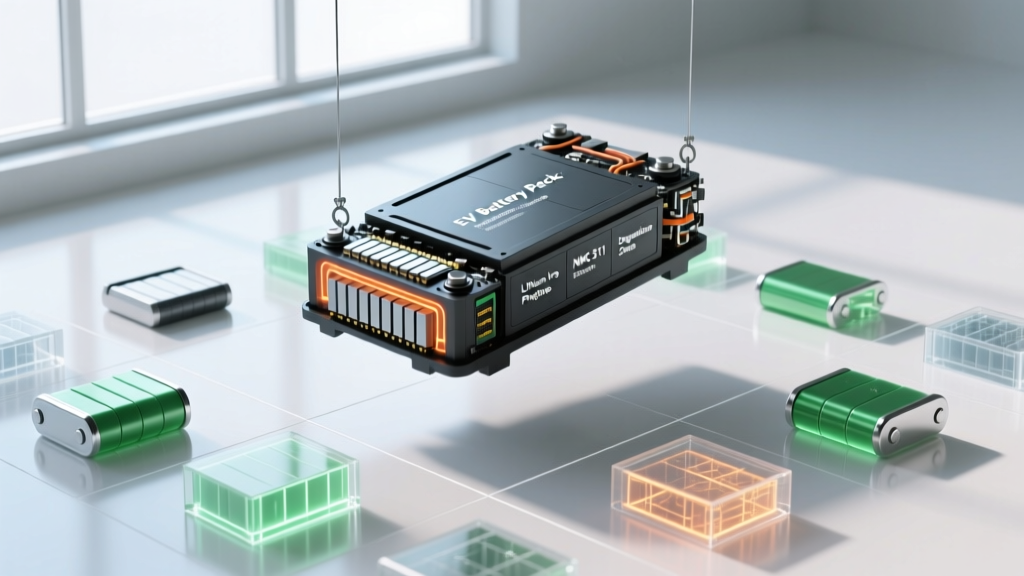
Not all EV battery packs are built the same. The two dominant lithium-ion chemistries in 2026 passenger vehicles are LFP (lithium iron phosphate) and NMC/NCA (nickel manganese cobalt / nickel cobalt aluminum). The chemistry inside your pack determines energy density, cycle life, cold-weather performance, cost, and even how you should charge it daily.
| Attribute | LFP (LiFePO4) | NMC / NCA |
|---|---|---|
| Energy Density | Lower (~160–180 Wh/kg cell-level) | Higher (~220–300 Wh/kg cell-level) |
| Typical Cycle Life | 2,000–5,000+ cycles to 80% SoH | 1,000–2,000 cycles to 80% SoH |
| Cold Performance (below 32°F) | Noticeable range loss; slower charge acceptance | Better low-temp discharge; preconditioning helps |
| Cost per kWh (pack-level) | ~$90–$110 | ~$120–$150 |
| Daily Charging to 100% | Recommended (BMS calibration needs full charge) | Generally advised 80% daily; 100% for trips |
| Thermal Stability / Safety | Excellent — higher thermal runaway threshold | Good — requires robust thermal management |
| Common In 2026 Models | Tesla Model 3/Y RWD, Ford Mustang Mach-E Select (base), BYD, Rivian Standard | Tesla Long Range, Hyundai Ioniq 5/6, BMW iX, Lucid Air, Porsche Taycan |
The practical takeaway: If you commute short distances, charge at home nightly, and live in a mild climate, LFP offers superior longevity and lower cost. If you need maximum range per charge, frequently road-trip in cold weather, or tow heavy loads, NMC/NCA's higher energy density makes it the better fit — provided you follow the 80% daily charge guideline to minimize calendar degradation.
How Long Do EV Batteries Actually Last? Real Degradation Data
The most common question from prospective EV buyers: "Will I need a new battery in five years?" The data overwhelmingly says no. Most modern EV battery packs are engineered to outlast the useful life of the vehicle itself.
Typical Degradation Curve (Fleet & Owner Data):
- Year 1 / ~15,000 miles: 2–5% capacity loss (initial formation loss)
- Year 3 / ~45,000 miles: 5–8% total loss
- Year 5 / ~75,000 miles: 8–12% total loss
- Year 8 / ~120,000 miles: 10–15% total loss (most packs still above 85% SoH)
- Year 10+ / ~150,000+ miles: 12–20% total loss (varies widely by chemistry, climate, and charging habits)
These figures align with long-term fleet data. Tesla's 2024 Impact Report showed their fleet averaging approximately 12% degradation at 150,000 miles. Hyundai and Kia report similar figures for their NMC packs in the Ioniq 5 and EV6, with most owners retaining 88–92% State of Health (SoH) at the 100,000-mile mark under normal use.
LFP packs, particularly in Tesla Model 3 RWD and Model Y RWD vehicles, have shown even slower degradation in fleet data — many retaining 93–95% SoH at 60,000 miles, attributable to LFP's inherently longer cycle life and the practice of regular 100% charging keeping the BMS well-calibrated.
Key insight: Degradation is not linear. The steepest drop occurs in the first 12–18 months (formation and SEI layer stabilization), after which the curve flattens significantly. A pack that shows 5% loss at 20,000 miles is not on track to lose 37.5% at 150,000 miles — it will likely lose only another 7–10% over the next 130,000 miles.
What Does the EV Battery Warranty Actually Cover?
Federal regulation mandates a minimum 8-year/100,000-mile warranty on EV battery packs for emissions-related components, but most manufacturers exceed this baseline for the traction battery itself. Here's what you need to know about capacity-retention thresholds — the fine print that determines whether your degraded pack qualifies for a warranty replacement.
| Manufacturer | Warranty Period | Capacity Retention Threshold | Notes |
|---|---|---|---|
| Tesla (Model 3/Y RWD — LFP) | 8 years / 100,000 miles | 70% | Long Range/Performance: 8 yr / 120,000 mi |
| Hyundai / Kia | 10 years / 100,000 miles | 70% (some trims 65%) | Among the longest coverage in the industry |
| Ford (Mach-E, F-150 Lightning) | 8 years / 100,000 miles | 70% | Covers battery components and capacity loss |
| GM (Chevrolet, Cadillac EVs) | 8 years / 100,000 miles | 70% (Ultium platform) | Some commercial/fleet terms differ |
| BMW | 8 years / 100,000 miles | 70% | Extended warranty available for purchase |
| Rivian | 8 years / 175,000 miles (Max pack) | 70% | Standard/Standard+ packs: 8 yr / 120,000 mi |
| Toyota (bZ4X) | 10 years / 100,000 miles | 70% | Toyota also offers 10-year battery health guarantee in some markets |
Critical warranty detail: The 70% threshold means a pack must lose more than 30% of its original capacity before the manufacturer is obligated to repair or replace it under warranty. In practice, very few packs degrade to this level within the warranty period. If your 82 kWh pack drops to 57 kWh (roughly 70% SoH), you'd qualify — but as the degradation data above shows, reaching that point typically requires well beyond 150,000 miles or 10+ years.
Warranties cover defects and abnormal degradation, not damage from accidents, flooding, or improper aftermarket modifications. Always check your specific owner's manual for exclusions. Source: fueleconomy.gov EV technology overview.
How Much Does It Cost to Replace an EV Battery Pack?
If your battery degrades beyond the warranty threshold — or if you're buying a used EV out of warranty and the pack needs service — replacement costs vary enormously by vehicle, battery size, and chemistry.
| Vehicle | Battery Size (kWh) | Chemistry | Estimated Replacement Cost |
|---|---|---|---|
| Tesla Model 3 RWD | ~60 kWh | LFP | $7,000–$10,000 |
| Tesla Model Y Long Range | ~75 kWh | NMC | $12,000–$16,000 |
| Hyundai Ioniq 5 | 77.4 kWh | NMC | $11,000–$15,000 |
| Ford F-150 Lightning (Extended) | ~131 kWh | NMC | $18,000–$25,000 |
| Chevrolet Equinox EV | ~85 kWh | NMC (Ultium) | $12,000–$16,000 |
| BMW iX xDrive50 | ~105 kWh usable | NMC | $18,000–$22,000 |
| Nissan Leaf (40 kWh) | 40 kWh | NMC (older gen) | $6,500–$9,000 |
| Rivian R1T (Max Pack) | ~149 kWh | NMC | $20,000–$28,000 |
Context that matters: These costs include the battery module(s), labor, and BMS reprogramming at a dealership or authorized service center. Third-party EV repair shops and refurbished packs can reduce costs by 30–50%. Additionally, most owners will never need a full pack replacement. Module-level repairs — replacing individual degraded cell groups rather than the entire pack — are increasingly common and typically cost $2,000–$6,000.
Pack-level costs continue to decline. According to BloombergNEF, average lithium-ion pack prices fell below $130/kWh at the cell level in 2025, and LFP packs are now approaching $100/kWh at scale. As the first-generation EV fleet ages, the refurbished and aftermarket battery ecosystem is expanding rapidly.
Factors That Accelerate Battery Degradation
Not all miles are equal when it comes to battery wear. The following factors have the most measurable impact on your pack's long-term State of Health:
- DC Fast Charging Frequency: Occasional fast charging (1–2x/week) shows minimal impact in current data. However, daily DC fast charging at 150+ kW — especially without preconditioning — accelerates degradation by an estimated 1–3% additional loss over 100,000 miles compared to Level 2 home charging. The heat generated during high-C-rate charging stresses cell internals.
- Extreme Temperatures: Sustained operation or storage above 95°F (35°C) accelerates calendar degradation. Similarly, charging a cold-soaked battery (below 20°F / -7°C) without preconditioning can cause lithium plating on the anode, a form of permanent damage. Most 2026 EVs include active thermal management to mitigate this, but it's not foolproof.
- State of Charge Habits (NMC/NCA): Storing an NMC pack at 100% SoC for extended periods (days to weeks) accelerates calendar aging. The ideal storage range is 40–60%. Daily driving to 80% and charging back up is far less stressful than sitting at 100% in a hot garage.
- State of Charge Habits (LFP): LFP packs are the exception — manufacturers recommend charging to 100% at least weekly to keep the BMS cell-balancing algorithms accurate. The chemistry tolerates full-state storage better than NMC.
- Deep Discharge Cycles: Regularly draining below 10% SoC stresses both chemistries. The buffer zones (the ~5% at the top and bottom that the BMS hides from the driver) provide some protection, but habitually running the pack near empty is not ideal.
- High-Performance Driving: Sustained high-power discharge (track use, aggressive towing in hot weather) generates heat that degrades cells faster. This is why performance-oriented EVs often have more aggressive cooling systems.
How to Check and Monitor Your Battery's State of Health
State of Health (SoH) is the percentage of your battery's original usable capacity that remains available. A new pack with 82 kWh usable that has degraded to 74 kWh usable sits at roughly 90% SoH.
Methods to check SoH in 2026:
- In-Vehicle Displays: Tesla offers a battery health estimate in the service menu (accessible via the touchscreen). Hyundai/Kia's infotainment systems include an EV battery condition screen on 2024+ models. BMW's iDrive displays a battery health percentage in the EV settings.
- OBD-II Dongles + Apps: Third-party tools like OBD2 scanners paired with apps such as EV Health, Car Scanner, or Scan My Tesla can read the BMS-reported SoH directly. This is often the most accurate method for non-Tesla vehicles.
- Dealer Diagnostics: Any authorized service center can pull a full battery health report, including individual module voltage deltas, internal resistance measurements, and overall SoH. Request this when buying a used EV.
- Manual Calculation: Charge to 100% (or a known SoC), drive to a lower known SoC, note the kWh consumed from the trip computer, and calculate: (kWh used) ÷ (SoC% change) × 100 = estimated total usable capacity. Compare to the original spec.
Pro tip: Track SoH quarterly, not daily. The BMS estimates fluctuate based on temperature, recent driving patterns, and calibration state. A quarterly trend line is far more meaningful than any single reading.
Emerging Battery Technology: Solid-State and Silicon Anodes
Several next-generation battery technologies are in active development, but none are yet available in mass-production consumer EVs as of 2026:
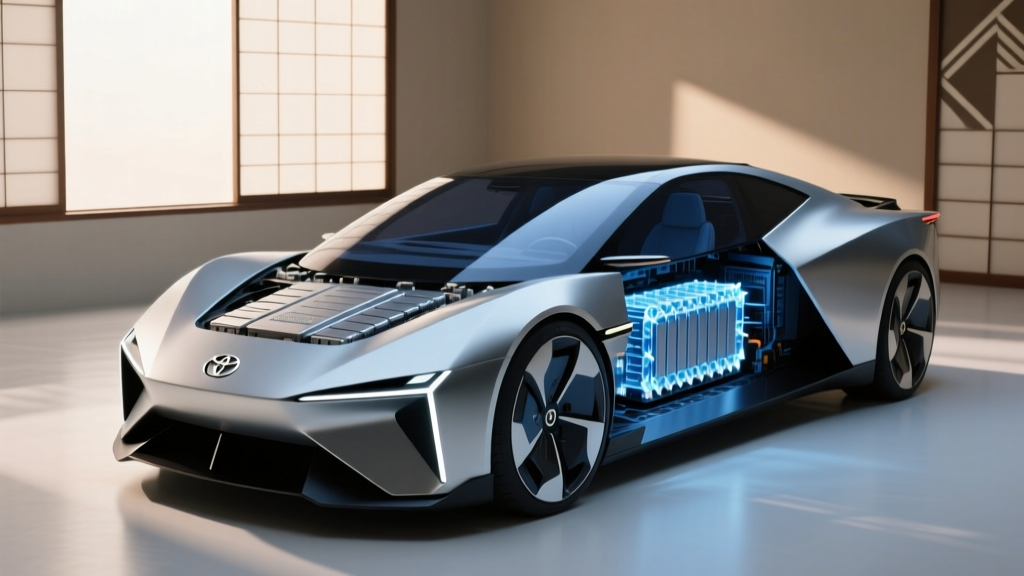
Solid-State Batteries: These replace the liquid electrolyte with a solid conductor, promising higher energy density (potentially 400+ Wh/kg at the cell level), faster charging, and improved safety. Toyota has announced a solid-state battery targeting 2027–2028 production in limited models, with claims of 750 km (~466 miles) of range and 10-minute fast charging. Nissan and Samsung SDI have similar timelines. However, manufacturing scalability remains a significant hurdle, and initial deployment will likely be in limited-run or premium vehicles at high cost.
Silicon Anode Batteries: Companies like Sila Nanotechnologies and Group14 are integrating silicon-dominant anodes that increase energy density by 20–40% over current graphite anodes. Mercedes-Benz's EQG (G-Class EV) is expected to use silicon anode cells from Sila, and Porsche has signaled interest for next-gen Taycan variants. These are closer to mass production than solid-state, with initial vehicles expected in 2026–2027 model years.
Sodium-Ion Batteries: CATL and BYD have begun deploying sodium-ion cells in lower-cost Chinese-market EVs. These trade energy density for dramatically lower material costs and better cold-weather performance. U.S. availability is unlikely before 2028–2029, and initial applications will target budget segments and stationary storage.
All of these technologies are forward-looking and should not factor into a current purchase decision. Today's LFP and NMC packs, properly cared for, offer proven longevity that these next-gen chemistries have yet to demonstrate at scale. For current availability and specifications, check fueleconomy.gov for EPA-rated data on all 2026 models.
EV Battery Health FAQ
How long do EV batteries last in years and miles?
Most modern EV battery packs (2020 and newer) are designed to retain 70–85% of their original capacity at 150,000–200,000 miles or 10–15 years. LFP packs in particular have demonstrated 90%+ SoH at 100,000 miles in fleet data. The battery pack will typically outlast other major vehicle components and is rarely the reason an EV is retired.
How much does an EV battery cost to replace?
Full pack replacement ranges from approximately $7,000 for a smaller LFP pack (Tesla Model 3 RWD) to $25,000+ for a large NMC pack (Ford F-150 Lightning Extended Range, Rivian Max Pack). Module-level repairs, which address localized degradation, typically cost $2,000–$6,000. Costs continue to decline as pack-level prices drop and the refurbished market grows.
What does the EV battery warranty cover?
Manufacturer warranties cover defects in materials/workmanship and abnormal capacity loss — typically defined as falling below 70% of original capacity within 8 years/100,000 miles (some manufacturers offer 10 years). The warranty does not cover damage from accidents, flooding, unauthorized modifications, or normal wear below the threshold. Check your specific owner's manual and the IRS clean vehicle credit page for how battery sourcing also ties into federal tax credit eligibility.
How do I maximize my EV battery's lifespan?
For NMC/NCA: charge to 80% daily, avoid prolonged storage above 90% SoC, use DC fast charging sparingly, and precondition the battery in cold weather before charging. For LFP: charge to 100% at least weekly for BMS calibration, and follow the same temperature and fast-charging moderation guidelines. For both: avoid deep discharges below 10%, park in shade or a garage when possible in hot climates, and keep up with software updates that optimize thermal management.
LFP vs NMC — which battery chemistry is better for me?
Choose LFP if you prioritize longevity, lower cost, and primarily drive in moderate climates with access to home Level 2 charging. Choose NMC/NCA if you need maximum range per charge, regularly drive in cold weather, or frequently take long road trips where energy density matters. Neither chemistry is universally "better" — the right choice depends on your specific driving profile and climate.
Does fast charging damage my EV battery?
Occasional DC fast charging (a few times per week) has a negligible impact on modern battery packs with active thermal management. However, exclusive reliance on DC fast charging — particularly at 150+ kW without preconditioning — can add 1–3% additional degradation over 100,000 miles. The biggest risk is charging a cold-soaked pack at high power, which can cause lithium plating. Always use your vehicle's preconditioning feature before fast charging in cold weather.
Can I replace individual battery modules instead of the whole pack?
Yes. Most modern EV battery packs are composed of multiple modules (typically 4–16 depending on the vehicle). If diagnostics reveal that one or two modules have degraded disproportionately, a qualified EV technician can replace just those modules for a fraction of the full-pack cost — typically $2,000–$6,000 including labor. This modular repair approach is becoming standard practice at specialized EV service centers.
The EV battery pack is a remarkably durable component when understood and maintained properly. With degradation rates averaging 1–2% per year under normal conditions, comprehensive warranties covering 8–10 years, and replacement costs declining annually, the battery longevity concern — while valid — is far less severe than early EV skepticism suggested. Choose the right chemistry for your needs, follow sensible charging habits, and your pack will very likely serve you well for the life of the vehicle.