If you've searched for a 2017 Subaru Forester battery, you likely found 12-volt lead-acid replacements priced around $150–$250. That small battery starts a gas engine and powers accessories. An electric vehicle's high-voltage traction battery is a fundamentally different system: a 50–100+ kWh lithium-ion pack that powers the motor, determines range, and represents the single most expensive component in the vehicle. Understanding the difference matters whether you're cross-shopping an EV against a used Forester or evaluating long-term EV ownership costs.
This guide breaks down EV traction battery chemistry, degradation data, warranty coverage, replacement economics, and daily care practices — with exact numbers and real-world context for 2026 buyers.
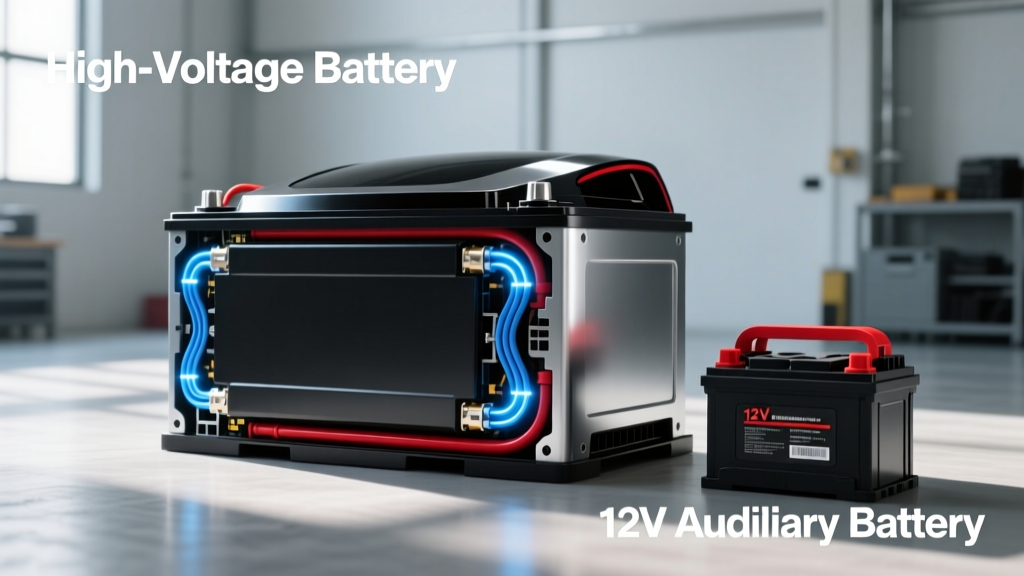
12V Auxiliary vs. High-Voltage Traction: Clearing Up the Confusion
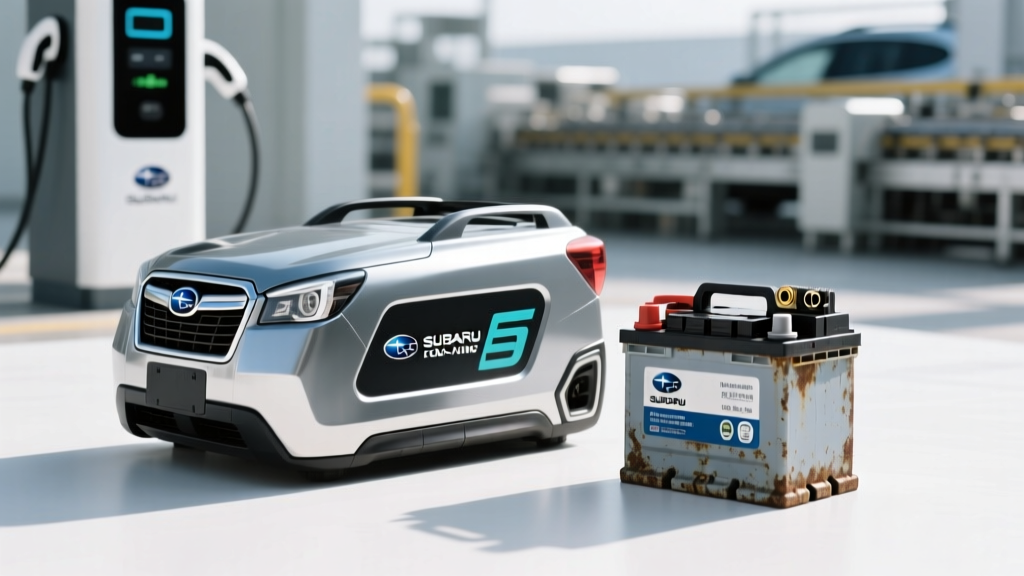
The battery in a 2017 Subaru Forester is a Group 35 or Group 25 lead-acid unit delivering roughly 0.5–0.7 kWh of energy. Its job: crank a 2.5L boxer engine and run lights, infotainment, and ECU systems. Replacement interval is typically 3–5 years, and the part costs under $200.
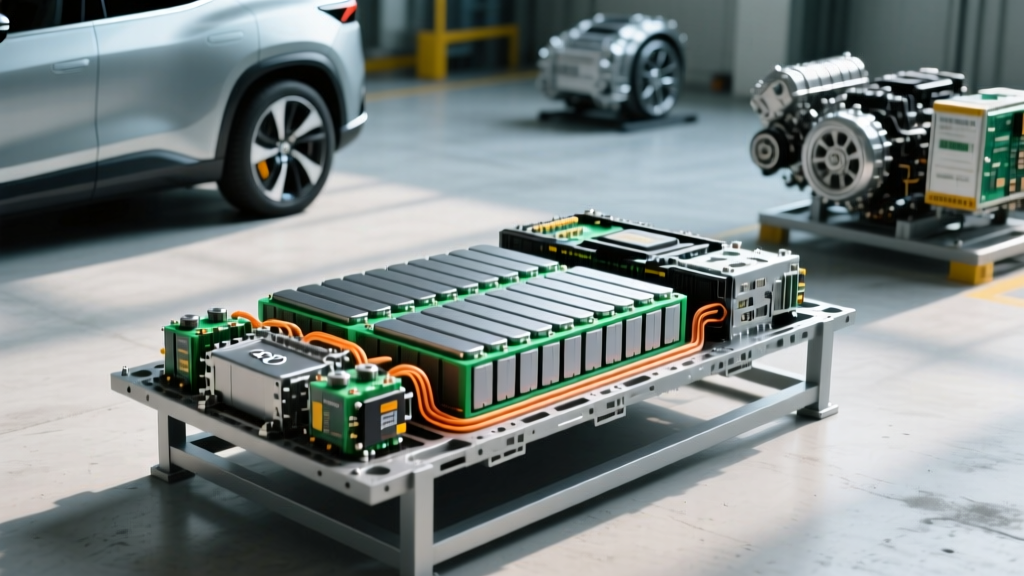
EV traction batteries operate at 400V (or 800V in Hyundai/Kia E-GMP and Porsche architectures) and store between 50 and 120+ kWh of usable energy. They don't "start" anything — they are the powertrain. These packs use lithium-ion cells in either NMC (nickel manganese cobalt), NCA (nickel cobalt aluminum), or LFP (lithium iron phosphate) chemistry. Most EVs also carry a separate 12V auxiliary battery (or a DC-DC converter) to run low-voltage electronics, but the traction pack is what determines range, performance, and long-term ownership cost.
LFP vs. NMC vs. NCA: Chemistry Trade-Offs Explained
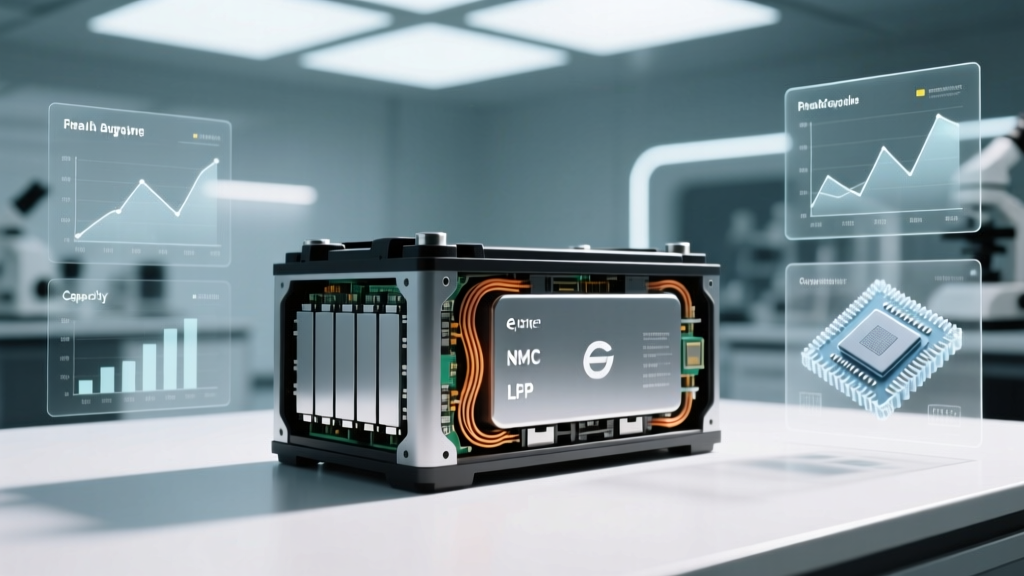
Not all lithium-ion batteries are equal. The cathode chemistry determines energy density, lifespan, cold-weather behavior, and cost. Here's how the three dominant chemistries compare in 2026 production vehicles:
| Attribute | LFP (Lithium Iron Phosphate) | NMC (Nickel Manganese Cobalt) | NCA (Nickel Cobalt Aluminum) |
|---|---|---|---|
| Energy Density | Lower (~160 Wh/kg cell-level) | Higher (~220–260 Wh/kg) | Highest (~250–280 Wh/kg) |
| Cycle Life | 3,000–5,000+ cycles to 80% SoH | 1,000–2,000 cycles to 80% SoH | 1,000–1,500 cycles to 80% SoH |
| Cold Performance | Moderate; more range loss below freezing | Better low-temp discharge capability | Good; similar to NMC |
| Cost per kWh | Lowest (~$80–100/kWh pack-level in 2026) | Mid (~$110–130/kWh) | Mid-High (~$120–140/kWh) |
| Thermal Stability | Excellent; higher runaway threshold | Good with active thermal management | Good; requires robust BMS |
| Typical Vehicles (2026) | Tesla Model 3/Y RWD, Ford Mustang Mach-E Select, BYD models | Hyundai Ioniq 5/6, VW ID.4, BMW i4, Rivian | Tesla Model S/X, Lucid Air |
| Charging to 100% OK? | Yes — recommended periodically for BMS calibration | No — daily limit 80% recommended | No — daily limit 80% recommended |
The practical takeaway: LFP trades range-per-kWh for dramatically longer cycle life and lower cost. If you plan to keep a vehicle 10+ years and charge mostly at home, LFP is increasingly the pragmatic choice. NMC/NCA delivers more range in a smaller, lighter package — critical for larger vehicles like trucks and SUVs where weight and packaging matter.
How Long Do EV Batteries Actually Last? Degradation Data
The fear that EV batteries need replacement at 100,000 miles is not supported by fleet data. Most modern packs are engineered to outlast the vehicle's economic life.
Observed Degradation Curves (Industry Aggregates):
- Year 1 / 15,000 mi: ~2–4% capacity loss (initial "break-in" drop)
- Year 3 / 45,000 mi: ~5–8% total loss
- Year 5 / 75,000 mi: ~8–12% total loss
- Year 8 / 120,000 mi: ~10–15% total loss (most packs still above warranty threshold)
- Year 10 / 150,000 mi: ~12–18% total loss for NMC; ~8–12% for LFP
Source: Geotab fleet telemetry data, aggregated across 10,000+ EVs; Recurrent Auto real-world owner data.
Degradation follows a non-linear curve: steepest in the first year or two, then flattening into a slow, linear decline. A 2026 Hyundai Ioniq 5 with a 77.4 kWh NMC pack rated at 303 miles EPA might deliver ~270 miles of usable range by year 5 — still entirely practical for daily driving and road trips.
LFP packs degrade more slowly and tolerate higher average states of charge without accelerated wear. Tesla's LFP-equipped Model 3 RWD units have shown under 10% degradation at 100,000+ miles in fleet reporting.
What Does the Battery Warranty Actually Cover?
Federal law mandates a minimum 8-year / 100,000-mile warranty on EV battery packs for emissions-related compliance (California Air Resources Board rules adopted by multiple states). Most manufacturers meet or exceed this baseline. Here's how major warranties compare:
| Manufacturer | Warranty Term | Capacity Retention Threshold | Notes |
|---|---|---|---|
| Tesla (Model 3/Y LFP) | 8 yr / 100,000 mi | 70% minimum | RWD models; Long Range/Performance NMC: 8yr/120,000mi |
| Hyundai / Kia | 8 yr / 100,000 mi | 70% minimum | Covers Ioniq 5, Ioniq 6, EV6, EV9 |
| Ford | 8 yr / 100,000 mi | 70% minimum | Mustang Mach-E, F-150 Lightning |
| Volkswagen | 8 yr / 100,000 mi | 70% minimum | ID.4, ID. Buzz |
| BMW | 8 yr / 100,000 mi | 70% minimum | i4, iX, i7 |
| Rivian | 8 yr / 175,000 mi | 70% minimum | R1T, R1S — higher mileage threshold |
| GM (Ultium) | 8 yr / 100,000 mi | 70% minimum (60% for commercial) | Equinox EV, Blazer EV, Silverado EV |
What triggers a warranty claim: If diagnostic testing confirms the pack has fallen below the stated retention threshold (typically 70% of original capacity) within the warranty period, the manufacturer will repair, replace modules, or replace the full pack at no cost. Normal degradation above the threshold is not covered. Physical damage, flooding, and unauthorized modifications void coverage.
EV Battery Replacement Cost: What the Numbers Look Like
Out-of-warranty battery replacement is the scenario that generates the most anxiety. Here's the reality in 2026:
| Vehicle / Pack Size | Battery Capacity | Chemistry | Estimated Replacement Cost (2026) | Typical Replacement Trigger |
|---|---|---|---|---|
| Tesla Model 3 RWD | ~60 kWh | LFP | $10,000–$14,000 | Rarely needed; LFP longevity |
| Hyundai Ioniq 5 | 77.4 kWh | NMC | $14,000–$18,000 | Post-warranty, 150K+ mi, rare |
| Ford F-150 Lightning Ext. Range | 131 kWh | NMC | $22,000–$30,000 | Very rare; largest consumer pack |
| Chevrolet Bolt EV (older gen) | 65 kWh | NMC | $9,000–$14,000 | Some early packs replaced under recall |
| BMW iX xDrive50 | 111.5 kWh | NMC | $20,000–$28,000 | Premium segment; rarely needed |
Context that matters: Pack-level battery pricing has fallen from over $1,000/kWh in 2010 to roughly $100–130/kWh in 2026, according to BloombergNEF battery price surveys. Module-level repair (replacing individual degraded cell groups rather than the full pack) is increasingly available through specialized EV shops for $3,000–$8,000, depending on the number of modules affected.
The vast majority of EV owners will never need a traction battery replacement. The car will be retired, sold, or traded before the pack falls below practical usability. Compare this to the 2017 Subaru Forester's engine or CVT transmission — both of which carry $3,000–$6,000 replacement risk at higher mileages with no comparable warranty.
Factors That Accelerate (or Preserve) Battery Life
Lithium-ion degradation is driven by electrochemical stress. The following factors have measurable impact on long-term State of Health:
Habits That Accelerate Degradation
- Frequent DC fast charging above 150 kW — sustained high-C-rate charging generates heat; occasional use is fine, but daily 350 kW sessions add wear
- Routinely charging to 100% (NMC/NCA) — high SoC at elevated temperatures accelerates electrolyte decomposition; LFP is exempt from this concern
- Letting SoC sit below 10% for days — deep discharge stresses the anode; store at 40–60% for long parking
- Extreme heat exposure — sustained ambient temps above 95°F with high SoC compound degradation; garage parking helps in hot climates
- Aggressive track/launch use — sustained high-discharge rates generate thermal stress beyond normal driving
Habits That Preserve Battery Health
- Daily charge limit of 80% (NMC/NCA) or 100% (LFP)
- Level 2 home charging as primary method — slower charge rates generate less heat
- Preconditioning before DC fast charging — warms the pack to optimal charging temperature, reducing stress
- Moderate SoC for storage — 40–60% if the vehicle will sit unused for 2+ weeks
- Using the vehicle's scheduled charging feature — charge finishes just before departure, minimizing time at high SoC
How to Check and Monitor Battery State of Health
State of Health (SoH) is the percentage of original capacity your pack can still hold. A new 77.4 kWh pack at 92% SoH holds ~71.2 kWh usable. Here's how to check it:
- In-vehicle diagnostics: Tesla, Hyundai, BMW, and others include a battery health screen in the service menu showing SoH percentage or remaining capacity in kWh.
- OBD-II dongles + apps: Tools like OBDeleven, Leaf Spy (Nissan), or Car Scanner ELM can read SoH data from the BMS (Battery Management System) via the OBD-II port.
- Third-party certification: Services like Recurrent and Recurrent's battery report provide verified SoH data useful for used-EV purchases.
- Dealer diagnostic scan: Request a battery health report during service visits — most manufacturers can print a detailed cell-balance and capacity report.
For used-EV buyers, verifying SoH before purchase is as essential as a compression test on a used gas car. A 2022 model showing 90%+ SoH has decades of practical life remaining.
What's Next: Solid-State, Silicon Anodes, and Realistic Timelines
Next-generation battery technologies are in active development but not yet in consumer vehicles as of 2026:
- Solid-state batteries: Replace liquid electrolyte with a solid conductor, promising 30–50% higher energy density and faster charging. Toyota has announced limited production for 2027–2028, initially in low-volume models. Widespread, affordable solid-state packs remain a 2029–2032 prospect.
- Silicon-dominant anodes: Companies like Sila Nanotechnologies and Group14 are replacing graphite anodes with silicon composites, boosting energy density 15–25%. Early production applications are appearing in premium vehicles (Mercedes EQG has announced silicon-anode option availability).
- Sodium-ion batteries: Lower-cost alternative to lithium for entry-level and urban EVs. CATL has begun production; expect first US-market vehicles with sodium-ion packs around 2027–2028. Lower energy density limits use to smaller, shorter-range models.
These technologies are forward-looking. Current NMC and LFP packs are mature, well-understood, and backed by extensive warranty coverage. Buyers should not delay a 2026 EV purchase waiting for solid-state — the packs available now will reliably serve a vehicle's full lifespan.
Frequently Asked Questions
How long do EV batteries last in years and miles?
Most modern EV traction batteries are engineered to retain 70–85% of original capacity at 150,000 miles and 10–12 years of service. LFP chemistries often exceed this. The vehicle will typically reach end-of-economic-life before the battery becomes unusable. Fleet data from Geotab and Recurrent shows median annual degradation of 1.5–2.5% after the first year.
How much does an EV battery cost to replace?
Full-pack replacement ranges from approximately $10,000 for smaller LFP packs (Tesla Model 3 RWD) to $28,000–$30,000 for large NMC packs (F-150 Lightning Extended Range, BMW iX). Module-level repair is often available for $3,000–$8,000. Prices continue declining as pack-level costs drop. Most owners will never pay for a replacement — the pack outlasts the vehicle's ownership cycle.
What does the EV battery warranty cover?
Federal minimum is 8 years / 100,000 miles with a 70% capacity retention threshold (some manufacturers use 60% for commercial vehicles). If the pack falls below this threshold within the warranty period, the manufacturer repairs or replaces it at no cost. The warranty does not cover normal degradation above the threshold, physical damage, or unauthorized modifications.
How do I check my EV's battery health?
Check the in-vehicle battery health screen (available on Tesla, Hyundai, BMW, and others), use an OBD-II scanner with EV-compatible software (Car Scanner, Leaf Spy, OBDeleven), request a dealer diagnostic report, or use a third-party service like Recurrent for a verified SoH report. For used-EV purchases, always verify SoH before buying.
LFP vs. NMC — which battery chemistry is better?
Neither is universally better. LFP offers longer cycle life (3,000–5,000+ cycles), lower cost, better thermal safety, and tolerance for 100% daily charging — but has lower energy density and slightly worse cold-weather range. NMC delivers more range per kWh in a lighter package, better cold performance, but shorter cycle life and a recommended 80% daily charge limit. Choose LFP for maximum longevity and home-charging convenience; choose NMC for maximum range in larger vehicles.
Does a 2017 Subaru Forester battery have anything in common with an EV battery?
Only the name. The Forester uses a 12V lead-acid battery (~0.6 kWh) for engine starting and accessories. An EV traction battery is a 50–130+ kWh lithium-ion pack that powers the drivetrain. They differ in chemistry, voltage, capacity, cost, lifespan, and function. EVs also carry a separate 12V battery (or DC-DC converter) for accessories, which is the actual analog to the Forester's battery.