What "Battery Off" Actually Means for EV Owners
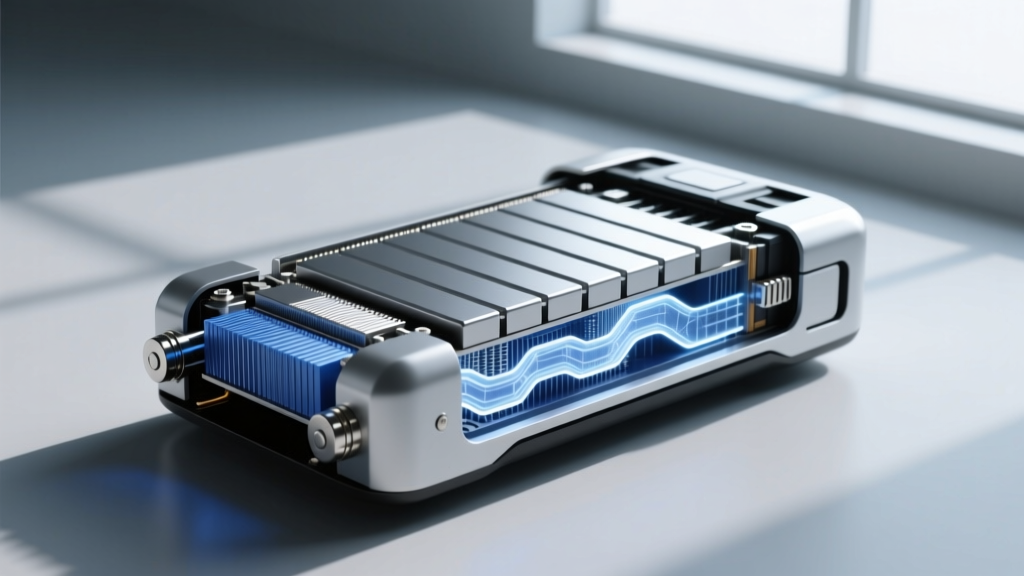
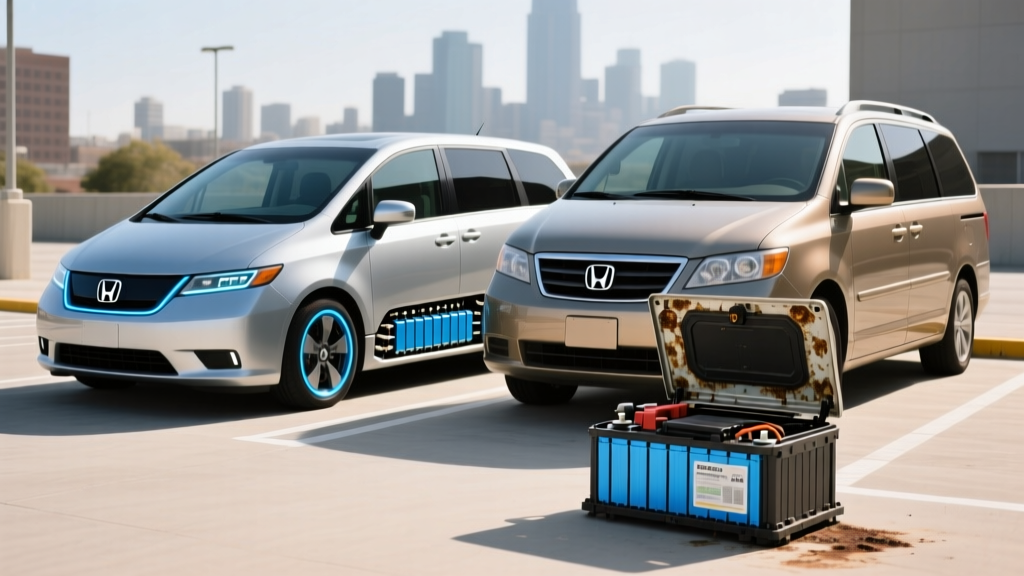
Search forums and owner groups long enough and you'll see the phrase battery off surface in two distinct contexts: a high-voltage traction battery that has been powered down for service or storage, and a battery that is off its warranty coverage after years of use. Both scenarios raise the same core anxiety—how much life is left, what will it cost if something goes wrong, and how do you know the pack is healthy in the first place?
This guide answers those questions with real degradation data, chemistry trade-offs, replacement-cost ranges, and the monitoring tools available to today's EV owners. Whether you drive a 2026 Tesla Model 3 with an LFP pack, a Hyundai Ioniq 5 with NMC, or a Ford F-150 Lightning, the physics and economics below apply.
LFP vs NMC vs NCA: Chemistry Trade-Offs That Affect Longevity
The two dominant lithium-ion chemistries in passenger EVs are LFP (lithium iron phosphate) and NMC/NCA (nickel manganese cobalt / nickel cobalt aluminum). The choice between them has a direct impact on how long your battery lasts, how it handles cold, and what it costs to replace.
| Attribute | LFP (e.g., Tesla Model 3 RWD, Ford Mustang Mach-E Select) | NMC / NCA (e.g., Hyundai Ioniq 5, BMW iX, Rivian R1T) |
|---|---|---|
| Energy density (Wh/kg) | ~160–180 | ~220–260 |
| Typical cycle life | 3,000–5,000+ cycles to 80% SoH | 1,500–2,500 cycles to 80% SoH |
| Cold-weather performance | More range loss below 32°F (~25–35% reduction) | Better low-temp conductivity (~15–25% reduction) |
| Charging to 100% regularly | Recommended by most OEMs | Typically advised to stay 20–80% for daily use |
| Cost per kWh (pack level) | ~$100–$120 | ~$130–$160 |
| Cobalt/nickel content | None | Significant (supply-chain and ESG factor) |
| Thermal runaway risk | Lower | Higher (but mitigated by modern BMS and cooling) |
Bottom line: LFP wins on cycle life and cost, making it ideal for standard-range trims and owners who charge to 100% nightly. NMC/NCA wins on energy density and cold-weather range, which is why long-range and performance trims still rely on it. Neither chemistry is universally "better"—the right choice depends on your climate, driving pattern, and trim preference.
How Long Do EV Batteries Last? Real Degradation Data
The most common question from prospective buyers: will I need a new battery before the car is paid off? The data says almost certainly not for a first-owner who follows basic care guidelines.
Based on aggregated fleet data from sources like Geotab's EV Battery Degradation study and manufacturer-reported figures, here is what typical capacity retention looks like over time:
| Timeframe | Average Capacity Retained | Notes |
|---|---|---|
| Year 1 / 15,000 mi | 96–98% | Initial "break-in" loss; steepest drop occurs in first 12 months |
| Year 3 / 45,000 mi | 92–95% | Linear degradation phase begins |
| Year 5 / 75,000 mi | 88–93% | Most packs still well above warranty threshold |
| Year 8 / 120,000 mi | 83–90% | Federal warranty minimum benchmark (70% retention) |
| Year 10 / 150,000 mi | 80–88% | LFP packs often outperform NMC at this stage |
| Year 15 / 200,000+ mi | 75–85% | End-of-life for vehicle, not necessarily the pack |
Modern battery management systems (BMS) actively manage cell balancing, thermal conditioning, and charge buffers (typically 2–5 kWh hidden at the top and bottom of the pack) to slow degradation. The "knee point"—a sudden acceleration in capacity loss—rarely appears before 150,000+ miles in liquid-cooled packs.
What the Battery Warranty Actually Covers
Federal law (under CARB and EPA guidelines adopted by most states) mandates a minimum of 8 years / 100,000 miles for EV battery warranties, with a capacity retention threshold of 70%. Many automakers exceed this baseline.
| Manufacturer (2026 MY) | Battery Warranty | Capacity Threshold | Notable Details |
|---|---|---|---|
| Tesla (Model 3/Y RWD, LFP) | 8 yr / 100,000 mi | 70% | Covers defects and excessive degradation below threshold |
| Tesla (Model 3/Y LR/Perf, NMC) | 8 yr / 120,000 mi | 70% | Longer mileage on larger packs |
| Hyundai / Kia (E-GMP platform) | 10 yr / 100,000 mi | 70% | Among the longest coverage periods in the segment |
| Ford (Mach-E, Lightning) | 8 yr / 100,000 mi | 70% | Includes battery cooling system components |
| Rivian (R1T / R1S) | 8 yr / 175,000 mi | 70% | Highest mileage cap in the light-truck segment |
| GM (Ultium-based: Equinox EV, Blazer EV, Silverado EV) | 8 yr / 100,000 mi | 70% | Covers module-level replacement, not always full pack |
Key distinction: Warranties cover degradation that drops capacity below the stated threshold. A pack at 72% SoH at year 7 with 90,000 miles is functioning as designed, even if range feels reduced. Warranties also do not cover damage from accidents, flooding, or unauthorized modifications.
EV Battery Replacement Cost: What to Budget and When
If your pack falls outside warranty coverage and degradation—or a defect—demands replacement, the cost varies dramatically by vehicle and pack size. The good news: full-pack replacements are rare. Most out-of-warranty service involves module-level repair, where a technician swaps individual bad modules rather than the entire pack.
| Vehicle | Battery Size (kWh usable) | Full Pack Replacement (parts + labor) | Module-Level Repair |
|---|---|---|---|
| Tesla Model 3 RWD (LFP, ~60 kWh) | 57–60 | $8,000–$12,000 | $1,500–$3,500 per module |
| Tesla Model Y LR (NMC, ~75 kWh) | 72–78 | $12,000–$16,000 | $2,000–$4,500 per module |
| Hyundai Ioniq 5 (77.4 kWh) | 74–77 | $10,000–$15,000 | $1,800–$4,000 per module |
| Ford F-150 Lightning Extended Range (~131 kWh) | 125–131 | $18,000–$25,000 | $2,500–$6,000 per module |
| Rivian R1T Large Pack (~128 kWh) | 122–128 | $16,000–$22,000 | $2,500–$5,500 per module |
| Chevrolet Equinox EV (~85 kWh) | 80–85 | $10,000–$14,000 | $1,800–$4,000 per module |
When is replacement typically needed? Based on current degradation curves, most EV batteries will not require full replacement within the first 15 years or 200,000 miles of normal use. Module-level repairs may arise from manufacturing defects or isolated cell failures, but these are increasingly uncommon in packs produced after 2022 as quality control has improved. The more realistic scenario for a "battery off" event is the pack reaching 70–75% SoH around year 12–15, at which point the vehicle's resale value is low and the cost-benefit analysis of replacement vs. trade-in favors a new vehicle for most owners.
Factors That Accelerate (or Preserve) Battery Health
Battery degradation is not purely a function of time—it is driven by how you charge, store, and drive. Here are the highest-impact variables:
- DC fast-charging frequency: Occasional road-trip fast charging (1–2 times per month) has minimal impact. Daily DC fast charging at 150+ kW can add 1–3% extra annual degradation compared to Level 2 home charging, primarily due to sustained high cell temperatures. Preconditioning your battery before fast charging (a feature on most 2020+ EVs) significantly reduces this effect.
- State of Charge (SoC) habits: For NMC/NCA packs, storing the vehicle at 100% SoC for extended periods accelerates calendar aging. The 20–80% daily window remains the gold standard. LFP packs tolerate—and often benefit from—regular 100% charges to help the BMS recalibrate cell balancing.
- Extreme temperatures: Prolonged exposure to ambient heat above 95°F with a high SoC is the single worst combination for lithium-ion longevity. Parking in shade or a garage in hot climates measurably extends pack life. Extreme cold does not degrade the battery but temporarily reduces available capacity; a heat pump and preconditioning mitigate range loss.
- Depth of discharge: Shallow cycles (e.g., charging from 40% to 70%) are gentler than full 0–100% swings. If your commute uses only 20% of the pack, you are in an ideal usage pattern for longevity.
- Regenerative braking intensity: Max-regen settings generate high current flow back into the pack, particularly at high SoC. Most modern BMS systems taper regen above 90% SoC to protect the cells, so this is largely managed for you.
How to Check Your Battery's State of Health (SoH)
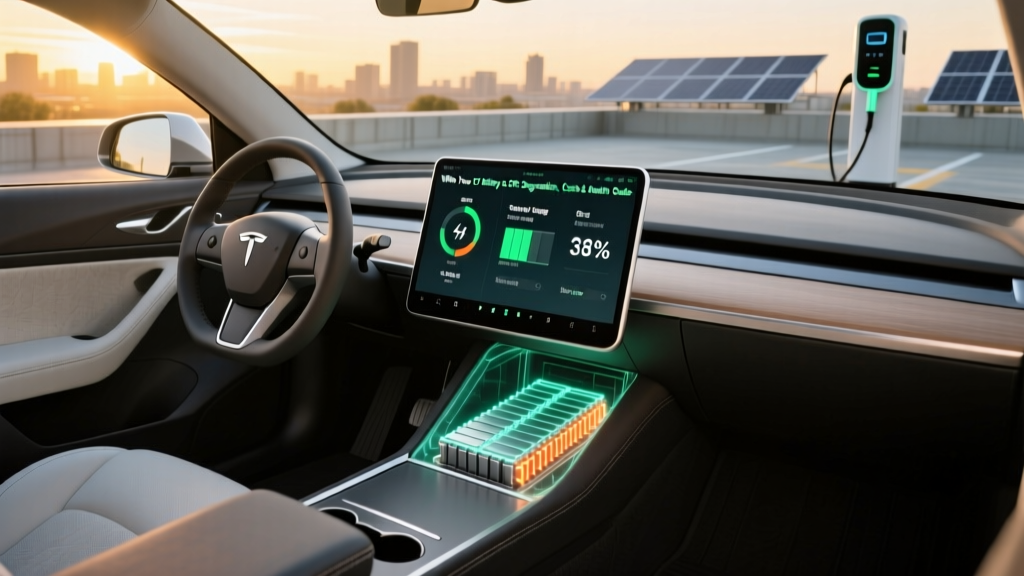
State of Health (SoH) is expressed as a percentage of the pack's original usable capacity. A brand-new battery is at 100% SoH; a pack at 85% SoH holds 85% of its original energy. Here are the ways owners can monitor it:
In-Vehicle Displays
Some manufacturers expose SoH directly. Tesla's service mode (accessible via the software menu on 2021+ vehicles) shows a degradation percentage. Hyundai/Kia's infotainment engineering mode includes battery health data. GM's Ultium-based vehicles display estimated range that adjusts for degradation over time, though not a raw SoH number.
OBD-II Diagnostic Tools
Devices like the OBDLink SX or Carista adapter, paired with apps such as EV Battery Health or manufacturer-specific diagnostic software, can read the BMS-reported SoH value. This is the most reliable method for vehicles that don't surface it natively.
Charging-Session Analysis
By comparing the kWh delivered during a known 10–90% charge session against the pack's original usable capacity, you can calculate an approximate SoH. Example: if your 77 kWh Ioniq 5 pack accepts 58 kWh from 10% to 90% (an 80% swing), that's 58 ÷ 0.80 = 72.5 kWh usable capacity, or roughly 94% SoH. This method has ±2% margin of error due to charging losses and BMS estimation variance.
Third-Party Battery Health Reports
Services like Recurrent and some dealer networks provide battery health certificates, particularly useful for used-EV buyers who want independent verification before purchase.
Emerging Battery Technology: Solid-State and Silicon Anodes
The next generation of EV battery technology promises higher energy density, faster charging, and longer cycle life. Here is where things stand as of 2026:
Solid-State Batteries
Solid-state cells replace the liquid electrolyte with a solid material (ceramic, sulfide, or polymer), enabling lithium-metal anodes that can double energy density. Toyota has announced limited production of solid-state-equipped vehicles for 2027–2028, targeting 750 km (~465 mi) of range and 10-minute 10–80% charging. Samsung SDI and Nissan have similar timelines. However, these remain announced and preliminary—no mass-market solid-state EV is currently available for purchase in the US. Manufacturing yield and cost barriers remain significant, and initial deployment will likely be limited to premium, low-volume models.
Silicon Anode Technology
Companies like Sila Nanotechnologies and Group14 are replacing graphite anodes with silicon-dominant materials, boosting energy density by 20–40% at the cell level. The Mercedes-Benz G-Class electric (announced for late 2026/2027) is expected to be among the first production vehicles using silicon-anode cells. This technology is closer to mainstream adoption than full solid-state and does not require entirely new manufacturing infrastructure.
Sodium-Ion Batteries
CATL and other Chinese suppliers have begun shipping sodium-ion packs in affordable EVs sold in China. Sodium-ion offers lower energy density but dramatically lower cost and no lithium, cobalt, or nickel. US-market availability is not expected before 2028–2029 and would likely target budget segments or stationary storage first.
Realistic takeaway: If you are buying an EV in 2026, current LFP and NMC chemistries are mature, well-understood, and backed by substantial warranty coverage. Waiting for solid-state means waiting at least 2–3 more years for limited availability at premium pricing.
Frequently Asked Questions
How long do EV batteries last in years and miles?
Most modern liquid-cooled EV batteries retain 80–90% of their original capacity at 100,000–150,000 miles (8–12 years). LFP packs often exceed this, with some fleet data showing 85%+ retention at 200,000 miles. The vehicle is typically retired or traded before the battery reaches end-of-life.
How much does it cost to replace an EV battery out of warranty?
Full pack replacement ranges from approximately $8,000 for a ~60 kWh LFP pack (e.g., Tesla Model 3 RWD) to $25,000 for a ~131 kWh pack (e.g., Ford F-150 Lightning Extended Range). However, most out-of-warranty repairs involve module-level service at $1,500–$6,000, not a full pack swap. Per fueleconomy.gov, the vast majority of EVs never require a full battery replacement during their usable life.
What does the federal EV battery warranty cover?
Federal guidelines require a minimum of 8 years / 100,000 miles with at least 70% capacity retention. This covers defects and excessive degradation below the threshold. It does not cover accident damage, flood damage, or capacity loss that remains above the stated percentage. Always check your specific manufacturer's warranty terms, as some (like Hyundai at 10 years and Rivian at 175,000 miles) exceed the federal floor.
How do I maximize my EV battery's health and lifespan?
For NMC/NCA packs: charge daily to 80%, avoid leaving the car at 100% SoC overnight, precondition before DC fast charging, and park in shade during hot weather. For LFP packs: charge to 100% at least once per week for BMS calibration, and follow the same thermal management practices. Minimize daily DC fast charging when Level 2 home charging is available.
LFP vs NMC—which battery chemistry is better for me?
Choose LFP if: you want maximum cycle life, prefer charging to 100% nightly, drive a standard-range trim, and live in a moderate-to-warm climate. Choose NMC/NCA if: you need maximum range per charge, regularly drive in sub-freezing temperatures, or are buying a long-range or performance trim. Neither is objectively superior—they serve different use cases.
Does fast charging really damage my battery?
Modern BMS and thermal management systems have made DC fast charging far less harmful than early-generation EVs. The impact is measurable but modest: daily 150+ kW fast charging may add 1–3% annual degradation versus Level 2 charging. For road trips, fast charging is perfectly fine. The concern is primarily for owners without home charging who rely on DC fast chargers as their daily charging method.
Can I check my battery health before buying a used EV?
Yes. Request a battery health report from the seller, use an OBD-II adapter with EV diagnostic software, or perform a measured charge test (kWh delivered during a known SoC swing). Third-party services like Recurrent also offer independent battery health assessments. Never buy a used EV without verifying SoH—it is the single most important factor in remaining vehicle value.