Who Actually Makes Your EV's Battery?
When you buy an electric vehicle, the brand on the badge — Tesla, Ford, Hyundai, BMW — doesn't make the battery pack. That critical component comes from a handful of specialized cell manufacturers whose chemistry choices determine your range, charging speed, longevity, and eventual replacement cost. Understanding which car electric battery manufacturers supply your vehicle, and what chemistry they use, is one of the most consequential pieces of EV ownership knowledge you can acquire.
The global EV battery supply chain in 2026 is dominated by a tier of mega-manufacturers: CATL (China, ~37% global market share), BYD (China, vertically integrated), LG Energy Solution (South Korea), Panasonic (Japan, primary Tesla supplier), SK On (South Korea), and Samsung SDI (South Korea). North American production is ramping through joint ventures — Ultium Cells (GM/LG), BlueOval SK (Ford/SK On), and Panasonic's Kansas gigafactory for Tesla — but cell chemistry fundamentals remain consistent regardless of assembly geography.
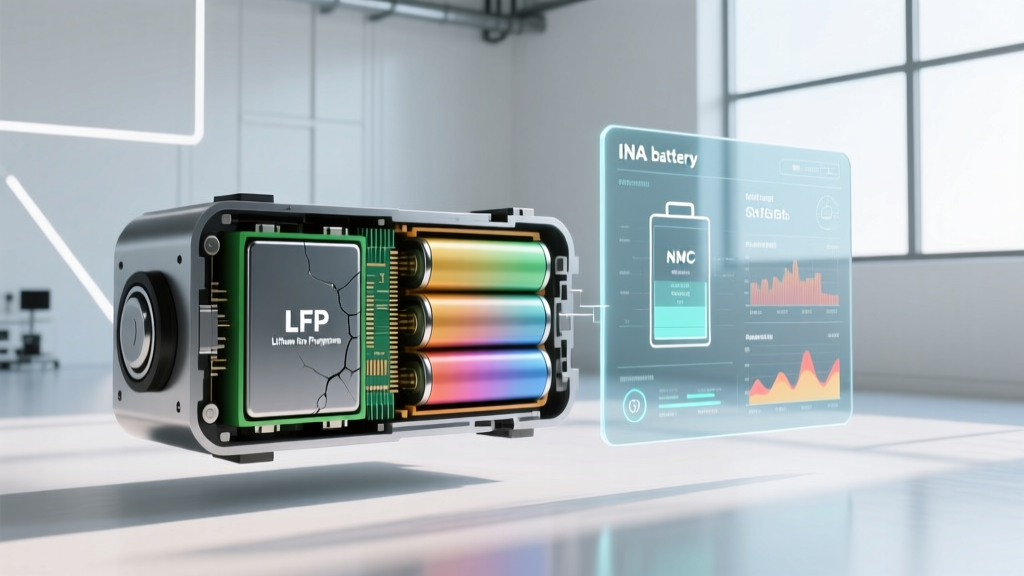
What matters to you as a buyer or owner isn't just the brand name on the cell. It's the chemistry inside it: lithium iron phosphate (LFP) or nickel-manganese-cobalt/nickel-cobalt-aluminum (NMC/NCA). That choice cascades into every aspect of your ownership experience.
LFP vs NMC/NCA: The Chemistry That Defines Your EV
Every EV battery sold in the US in 2026 uses one of two dominant lithium-ion chemistries. The differences aren't academic — they affect how far you drive, how fast you charge, how the battery ages, and what you pay.
| Attribute | LFP (Lithium Iron Phosphate) | NMC / NCA (Nickel-based) |
|---|---|---|
| Energy density | Lower (~160-180 Wh/kg cell-level) | Higher (~220-260 Wh/kg cell-level) |
| Typical vehicles | Tesla Model 3/Y RWD, Ford Mustang Mach-E Select (2025+), Rivian Standard | Tesla Long Range, Hyundai Ioniq 5/6, Kia EV6/EV9, GM Ultium vehicles, BMW iX |
| Range per kWh | Slightly less range for same pack weight | More range for same pack weight |
| Cycle life | 3,000-5,000+ cycles to 80% capacity | 1,000-2,000 cycles to 80% capacity |
| Cold-weather performance | More range loss in freezing temps (~30-40% loss below 20°F) | Better cold performance (~20-30% loss below 20°F) |
| Charging to 100% | Recommended periodically for BMS calibration | Generally advised to stay at 80-90% daily |
| Cost | ~15-25% cheaper per kWh | Higher due to nickel/cobalt commodity pricing |
| Thermal stability | Excellent — less prone to thermal runaway | Good, but requires more active thermal management |
| Key manufacturers | CATL, BYD (Blade Battery) | LG Energy Solution, Panasonic, SK On, Samsung SDI |
The practical takeaway: If you mostly drive in moderate climates, charge at home, and want a lower purchase price with maximum cycle life, LFP is arguably the better daily-driver chemistry. If you need maximum range in a single charge, live in a cold climate, or frequently DC fast-charge on road trips, NMC/NCA packs still hold an edge — though the gap narrows every model year as LFP energy density improves.
How Long Do EV Batteries Actually Last?
The fear that EV batteries need replacing every few years like a phone battery is not supported by fleet data. Modern liquid-cooled packs are engineered for the life of the vehicle, and real-world degradation curves have flattened considerably since the early Nissan Leaf era.
Observed degradation benchmarks (fleet and owner data):
- Year 1 / 15,000 miles: ~2-5% capacity loss (initial formation loss, steepest part of the curve)
- Year 3 / 45,000 miles: ~5-8% total loss
- Year 5 / 75,000 miles: ~8-12% total loss
- Year 8 / 120,000 miles: ~10-15% total loss (typical warranty threshold boundary)
- Year 10+ / 150,000+ miles: ~12-20% total loss (varies heavily by chemistry and usage)
Tesla's 2025 Impact Report noted that Model 3/Y batteries retain approximately 85% capacity at 150,000 miles. Data from fleet operator Recurrent, which tracks over 15,000 EVs in real-world conditions, shows median degradation of 5-8% at 100,000 miles across multiple brands, with LFP packs trending toward the lower end of that range.
Geotab's long-term fleet study of over 6,000 EVs found an average annual degradation rate of 1.8% per year across all chemistries, which projects to roughly 82% capacity retention at 10 years — well above the 70% threshold most warranties guarantee.
What Does the Battery Warranty Actually Cover?
Federal law mandates a minimum battery warranty of 8 years / 100,000 miles for EVs sold in the US (10 years / 150,000 miles in California and states adopting CARB standards). Most manufacturers meet or exceed this floor, but the details matter.
| Manufacturer | Warranty Period | Capacity Retention Threshold | Notes |
|---|---|---|---|
| Tesla (Model 3/Y LFP) | 8 yr / 100,000 mi | 70% | Standard Range; covers defects + excessive degradation |
| Tesla (Model 3/Y LR/Performance) | 8 yr / 120,000 mi | 70% | NMC/NCA Long Range packs |
| Hyundai / Kia | 10 yr / 100,000 mi | 70% | Among the longest coverage periods |
| GM (Ultium-based) | 8 yr / 100,000 mi | 70% | Covers module-level replacement |
| Ford (Mach-E, F-150 Lightning) | 8 yr / 100,000 mi | 70% | Transferable to second owner |
| Rivian | 8 yr / 175,000 mi | 70% | Higher mileage cap reflects truck use case |
| BMW | 8 yr / 100,000 mi | 70% | Includes iX, i4, i7 series |
Critical fine print: The warranty covers defects and excessive degradation below the stated threshold — not normal wear. If your 8-year-old battery holds 72% capacity, the manufacturer owes you nothing, even though you've lost 28% of original range. The warranty also typically voids if the pack is damaged by collision, flood, or unauthorized modification. Always read the specific warranty booklet for your model year — terms have shifted between model years as manufacturers recalibrate based on field data.
EV Battery Replacement Cost: The Real Numbers
This is the question that generates the most anxiety — and the most misinformation. Yes, a full traction battery replacement is expensive. But context matters enormously.
| Vehicle (2025-2026 MY) | Battery Size | Chemistry | Estimated Replacement Cost (parts + labor) |
|---|---|---|---|
| Tesla Model 3 RWD | ~60 kWh | LFP (CATL) | $8,000 – $12,000 |
| Tesla Model Y Long Range | ~82 kWh | NMC (Panasonic) | $12,000 – $16,000 |
| Hyundai Ioniq 5 | 77.4 kWh | NMC (SK On) | $11,000 – $15,000 |
| Ford F-150 Lightning Extended | 131 kWh | NMC (SK On) | $18,000 – $25,000 |
| Chevrolet Equinox EV | ~85 kWh | NMC (Ultium/LG) | $12,000 – $16,000 |
| Rivian R1T (Max Pack) | 149 kWh | NMC (Samsung SDI) | $20,000 – $28,000 |
When is replacement actually needed? Based on current degradation data, the vast majority of EV batteries will outlast the vehicle's economic life. The average age of a scrapped passenger vehicle in the US is approximately 15 years. At 1.8% annual degradation, a 15-year-old pack would retain roughly 73% capacity — still functional, just with reduced range. Full replacements are most common after collision damage, manufacturing defects caught within warranty, or extreme abuse (repeated 100% SoC + DC fast charging in desert heat). Out-of-warranty replacements remain rare but are a legitimate financial consideration for second- and third-owner buyers.
One encouraging trend: module-level repair. Many packs (GM Ultium, BMW, some Hyundai/Kia) allow replacing individual degraded modules rather than the entire pack, cutting costs to $2,000-$6,000 depending on the number of modules affected. This is an area where independent EV repair shops are gaining capability.
What Kills an EV Battery Early (and What Doesn't)
Not all miles are equal when it comes to battery wear. The car electric battery manufacturers engineer cells for specific duty cycles, but owner behavior significantly influences where you land on the degradation curve.
Factors that accelerate degradation:
- Frequent DC fast charging above 150 kW — sustained high-C-rate charging generates heat; occasional road-trip use is fine, but daily 350 kW sessions add up
- Prolonged storage at 100% SoC — especially in heat; NMC cells are particularly sensitive to high-voltage stress
- Prolonged storage at very low SoC (<10%) — risks copper dissolution in the anode current collector
- Extreme ambient heat without preconditioning — sustained pack temps above 104°F (40°C) accelerate electrolyte decomposition
- Consistent 0% to 100% cycling — deep discharge cycles stress cells more than partial cycles
Factors with minimal impact (common myths):
- Level 2 home charging — 7-11 kW generates negligible heat; this is the ideal daily charging method
- Regenerative braking — regen current is well within safe C-rates; it does not meaningfully degrade the pack
- Cold-weather driving — cold temporarily reduces range but does not cause permanent damage (the BMS limits charge/discharge rate when cold to protect cells)
- Occasional 100% charges on LFP — actually recommended for BMS cell-balancing calibration
The 20-80% rule, refined: For NMC/NCA packs, keeping daily SoC between 20-80% remains the gold standard for longevity. For LFP packs, manufacturers like Tesla and BYD recommend charging to 100% at least once per week because LFP's flatter voltage curve makes it harder for the battery management system (BMS) to estimate remaining capacity without periodic full-charge recalibration. This is a chemistry-specific nuance many owners miss.
How to Check Your Battery's State of Health
State of Health (SoH) is the percentage of original capacity your pack currently holds. A new battery is 100% SoH; a degraded one might be 92%. Monitoring SoH helps you track degradation trends and anticipate warranty claims.
OEM methods:
- Tesla: The in-car service menu (hold model name on the software screen for ~3 seconds → Service → Battery Health Test) runs a diagnostic and displays SoH percentage. Tesla's app also surfaces this after a test cycle.
- Hyundai/Kia: The dealer diagnostic tool (KDS/GDS) reports SoH; some models surface a battery health indicator in the infotainment EV menu.
- GM Ultium vehicles: myChevrolet/myCadillac app includes a battery health indicator showing estimated remaining capacity.
- Ford: FordPass app provides a battery state-of-health readout for Mach-E and F-150 Lightning.
- BMW: iDrive system includes a battery health report accessible through the vehicle settings menu.
Third-party / OBD-II methods: Tools like OBDLink SX/MX+ paired with apps such as EVbatlife, LeafSpy (Nissan-specific), or Scan My Tesla can pull cell-level voltage data, pack SoH estimates, and individual module balance readings. For pre-purchase inspections on used EVs, an OBD-II SoH check is increasingly considered as essential as a compression test was for gas cars.
What's Next: Solid-State and Beyond (2027-2030+)
Next-generation battery technologies are in active development but are not available in any production vehicle sold in the US as of 2026. Here's where things stand:
- Solid-state batteries: Toyota has announced a 2027-2028 production timeline for a limited run of solid-state-equipped vehicles, claiming 750+ km (466 mi) range and 10-minute 10-80% charging. Samsung SDI targets 2027 mass production. QuantumScape continues pre-commercial validation with Volkswagen. The promise: higher energy density (~400 Wh/kg), faster charging, improved safety. The reality: manufacturing yield, cost, and scalability remain unsolved at volume. Expect solid-state in low-volume, premium vehicles first, with mainstream availability no earlier than 2029-2030.
- Silicon-dominant anodes: Companies like Sila Nanotechnologies and Group14 are replacing graphite anodes with silicon composites to boost energy density 15-25%. These are beginning to appear in limited applications and could reach production EVs by 2027-2028 as incremental chemistry improvements rather than full platform changes.
- Sodium-ion batteries: CATL has begun producing sodium-ion cells for lower-cost, shorter-range applications (primarily Chinese-market city cars). Energy density is significantly lower than LFP, making sodium-ion unlikely for US-market long-range vehicles, but potentially viable for budget urban EVs or stationary storage.
These technologies are worth tracking, but they should not delay a purchase decision. Current LFP and NMC chemistries from established car electric battery manufacturers are mature, well-warrantied, and proven to 200,000+ miles in fleet service.
Frequently Asked Questions
How long do EV batteries last in years and miles?
Based on fleet data from Recurrent and Geotab, modern liquid-cooled EV batteries retain 85-92% of original capacity at 100,000 miles and typically last the full economic life of the vehicle (15-20 years). Full replacement before 150,000 miles is uncommon outside of defect or damage scenarios.
How much does it cost to replace an EV battery?
Out-of-warranty replacement costs range from approximately $8,000 for a 60 kWh LFP pack (Tesla Model 3 RWD) to $25,000+ for a 131-149 kWh NMC pack (F-150 Lightning Extended, Rivian Max Pack). Module-level repairs, where available, can reduce costs to $2,000-$6,000. Most owners never face this expense because the battery outlasts the vehicle or is covered by warranty.
What does the EV battery warranty cover?
Federal minimum is 8 years / 100,000 miles. The warranty covers manufacturing defects and capacity loss below a stated threshold — typically 70% of original capacity. It does not cover normal degradation above that threshold, collision damage, flood damage, or unauthorized modifications. Hyundai/Kia and Rivian offer longer terms (10 yr / 100,000 mi and 8 yr / 175,000 mi respectively).
How do I check and maximize my battery's health?
Check SoH through your vehicle's built-in diagnostics (Tesla service menu, FordPass, myChevrolet app) or an OBD-II scanner with EV-compatible software. Maximize longevity by: using Level 2 home charging as your primary method, keeping NMC packs between 20-80% SoC for daily use, charging LFP to 100% weekly for BMS calibration, minimizing consecutive DC fast-charge sessions, and avoiding prolonged storage at extreme SoC levels or in high heat.
LFP vs NMC — which battery chemistry is better?
Neither is universally better; the right choice depends on your use case. LFP offers longer cycle life (3,000-5,000 cycles), lower cost, better thermal safety, and the convenience of regular 100% charging — making it ideal for daily commuting and moderate climates. NMC/NCA delivers higher energy density (more range per pound), better cold-weather performance, and faster peak charging speeds — making it preferable for long-range road trips, cold climates, and larger vehicles where pack weight matters. Both chemistries from major car electric battery manufacturers are proven to deliver reliable service well beyond 100,000 miles.
Does fast charging damage my EV battery?
Occasional DC fast charging (road trips, a few times per month) has minimal impact on modern packs with active liquid cooling. The concern arises with daily high-power DC fast charging (150-350 kW), which subjects cells to sustained thermal stress. Studies show a measurable but modest increase in degradation rate — approximately 0.3-0.5% additional annual loss — for vehicles that exclusively DC fast-charge versus those using Level 2. The BMS manages charge-rate tapering above 80% SoC specifically to mitigate this.
Are EV batteries recyclable?
Yes. Companies like Redwood Materials (founded by Tesla co-founder JB Straubel) and Li-Cycle recover 95%+ of critical minerals — lithium, nickel, cobalt, copper — from end-of-life packs. Recycled materials are already feeding back into new battery production, reducing both cost and mining dependency. A decommissioned EV pack also has significant second-life value in stationary energy storage before recycling.