What Actually Wears Out an EV Battery?
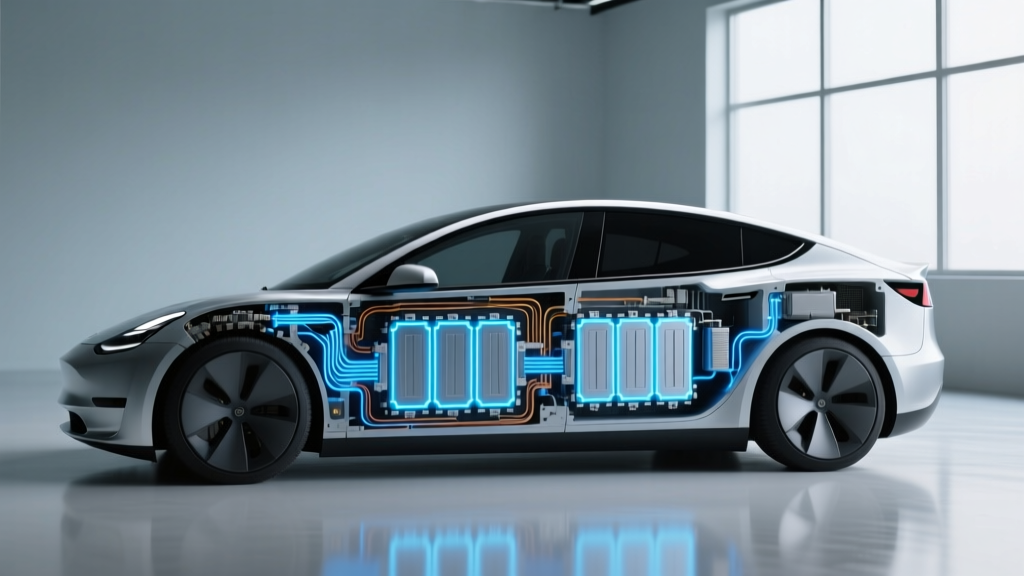
The high-voltage traction battery is the most expensive component in any electric vehicle. Unlike a gas engine that burns fuel and wears mechanically, an EV battery degrades through electrochemical processes — every charge cycle, every fast-charge session, and every extreme-temperature exposure leaves a cumulative mark on the cells inside.
The good news: modern EV batteries are engineered to outlast most owners' time with the vehicle. Data from millions of miles of real-world operation shows that the vast majority of EV batteries retain 85–95% of their original capacity after 100,000 miles. Catastrophic failure is rare. But understanding how your driving habits and charging routines impact battery longevity — and knowing the difference between chemistries — is the single most valuable knowledge an EV owner can have.
This guide breaks down the chemistry, the degradation data, the warranty fine print, and the practical habits that determine whether your battery is still strong at 200,000 miles or needs a costly replacement.
LFP vs NMC/NCA: The Chemistry That Defines Your Battery's Life
Not all EV batteries are built the same. The cathode chemistry — the material that stores and releases lithium ions — determines your battery's energy density, cycle life, cold-weather behavior, and cost. In 2026, two dominant chemistries power the EV market: LFP (lithium iron phosphate) and NMC/NCA (nickel manganese cobalt / nickel cobalt aluminum).
| Attribute | LFP (Lithium Iron Phosphate) | NMC / NCA (Nickel-Based) |
|---|---|---|
| Energy Density | Lower (~160–180 Wh/kg cell-level) | Higher (~220–300 Wh/kg cell-level) |
| Cycle Life | 3,000–5,000+ cycles to 80% SoH | 1,000–2,500 cycles to 80% SoH |
| Cold Performance | Moderate — more range loss below 32°F | Better low-temp performance with thermal management |
| Cost (per kWh) | ~$90–$110/kWh (pack-level, 2026 est.) | ~$120–$150/kWh (pack-level, 2026 est.) |
| Charging to 100% | Recommended regularly for calibration | Better kept at 80–90% daily; 100% for trips only |
| Common In (2026) | Tesla Model 3/Y RWD, Ford Mustang Mach-E Select, base Rivian R1S, BYD models | Tesla Long Range, Hyundai Ioniq 5/6, BMW iX, most luxury EVs |
| Cobalt Content | None | Some (declining with newer formulations) |
| Thermal Stability | Excellent — higher runaway threshold | Good — requires robust BMS and cooling |
Which is better? Neither is universally superior. LFP wins on longevity and cost — it tolerates daily 100% charges and delivers far more cycles before meaningful degradation. NMC wins on range-per-pound, making it the choice for long-range and performance trims where packing maximum kWh into a limited space matters. If you plan to keep your EV for 10+ years and 150,000+ miles, LFP's cycle-life advantage is significant. If you need 320+ miles of EPA range today, NMC is still the chemistry that delivers it.
How Long Do EV Batteries Actually Last?
The short answer: most EV batteries will outlast the car they're installed in. The typical modern battery is designed for 1,500–3,000+ full charge cycles before dropping to 70–80% of original capacity. For a vehicle with 250 miles of range, that translates to 375,000–750,000 miles of theoretical cycle life — far beyond what most vehicles see.
But calendar aging also plays a role. Even a garage-kept EV that's rarely driven will see gradual capacity loss from the chemical aging of the electrolyte and electrode materials.
Real-World Degradation Data Points
Based on fleet data, owner surveys, and manufacturer disclosures through 2025–2026:
- Tesla Model 3/Y (NMC Long Range): ~2–3% loss in year one, then ~0.5–1% per year. Average fleet data shows ~88% capacity retention at 150,000 miles (source: Tesla Impact Report).
- Tesla Model 3/Y (LFP RWD): Slower degradation curve. Owners report 93–96% SoH at 60,000 miles. LFP's higher cycle count means less wear per charge cycle.
- Hyundai Ioniq 5 (NMC, 77.4 kWh): ~3–4% loss over the first 50,000 miles based on owner-reported data, then stabilizing. Hyundai's battery management system is conservative, limiting usable capacity to protect longevity.
- Chevrolet Bolt EV/EUV (NMC, 65 kWh): Earlier-generation Bolt batteries (pre-2022 recall replacement) showed ~5–8% loss at 80,000 miles. Post-recall replacement packs show improved retention.
- Nissan Leaf (LMO/NMC, passively cooled): The cautionary tale. Early Leafs (2011–2017) without active thermal management showed 15–25% capacity loss at 80,000 miles in hot climates. Modern Leafs with improved chemistry fare better but still lack active liquid cooling.
The pattern is clear: active thermal management (liquid cooling/heating) is the single biggest hardware factor in long-term battery health.
Factors That Impact Your Battery's Lifespan
Think of your driving and charging habits as the "impact driver" of battery wear — every choice compounds over time. Here are the factors ranked by their real-world significance:
1. State of Charge (SoC) Habits
Lithium-ion cells experience the most stress at the extremes — below 10% and above 90% SoC. For NMC batteries, daily charging to 80% and avoiding drops below 20% can meaningfully slow degradation. LFP batteries are an exception: manufacturers like Tesla recommend periodic 100% charges to keep the battery management system (BMS) calibrated, because LFP's flatter voltage curve makes SoC estimation harder.
2. DC Fast-Charging Frequency
High-power DC fast charging (150–350 kW) generates significant heat inside the cells. Occasional road-trip fast charging is fine — modern thermal management systems precondition the battery and manage temperatures actively. But daily reliance on DCFC, especially at peak rates above 150 kW, accelerates degradation. Studies from NREL and Idaho National Laboratory found that exclusive DCFC use can add 1–3% additional capacity loss over 50,000 miles compared to Level 2 charging. The practical takeaway: use Level 2 (home or workplace) for daily charging; reserve DCFC for road trips.
3. Extreme Temperatures
Heat is the enemy of lithium-ion longevity. Sustained exposure to ambient temperatures above 95°F — especially at high SoC — accelerates electrolyte decomposition. Cold doesn't degrade the battery permanently, but charging at high power in sub-freezing temperatures without preconditioning can cause lithium plating on the anode, which is permanent damage. Always precondition your battery before a fast-charge session in cold weather (most EVs do this automatically when you navigate to a charger).
4. Depth of Discharge
Shallow cycles (e.g., charging from 40% to 70%) are gentler than deep cycles (10% to 90%). You don't need to obsess over this, but if your commute uses only 15% of your battery, there's no benefit to charging to 90% every night.
5. Calendar Aging
Even parked, batteries degrade. A vehicle stored at 100% SoC in a hot garage will age faster than one stored at 50% SoC in a climate-controlled space. If you're leaving your EV for weeks, aim for ~50% SoC and a cool environment.
Battery Care Checklist: Maximize Your SoH
- ✅ Set daily charge limit to 80% (NMC) or follow manufacturer guidance for LFP
- ✅ Use Level 2 home charging as your primary charging method
- ✅ Precondition the battery before DC fast charging (navigate to charger via the car's system)
- ✅ Avoid leaving the car at 100% SoC for extended periods — charge to 100% only when you'll drive soon
- ✅ In hot climates, park in shade or a garage; avoid sustained high-SoC + high-heat exposure
- ✅ In cold weather, plug in when possible and precondition before driving/charging
- ✅ Avoid routinely draining below 10% SoC
- ✅ If storing for 2+ weeks, leave at ~50% SoC in a cool location
What Does the EV Battery Warranty Actually Cover?
Federal law mandates that EV batteries carry a minimum warranty of 8 years / 100,000 miles (10 years / 150,000 miles in California and states that follow CARB standards). But the details matter — specifically, the capacity-retention threshold that triggers a warranty claim.
| Manufacturer | Warranty Period | Capacity Threshold | Notes |
|---|---|---|---|
| Tesla (Model 3/Y RWD — LFP) | 8 yr / 100,000 mi | 70% retention | Standard for LFP trims |
| Tesla (Model 3/Y Long Range — NMC) | 8 yr / 120,000 mi | 70% retention | Longer mileage on LR/AWD |
| Hyundai / Kia | 10 yr / 100,000 mi | 70% retention | Among the longest coverage |
| Ford (Mustang Mach-E) | 8 yr / 100,000 mi | 70% retention | Applies to both LFP and NMC packs |
| BMW (iX, i4) | 8 yr / 100,000 mi | 70% retention | Extends to 8 yr / 100k mi in all states |
| GM (Ultium-based) | 8 yr / 100,000 mi | 70% retention (60% on some commercial) | Varies by model; check specific terms |
| Rivian | 8 yr / 175,000 mi | 70% retention | Highest mileage threshold in the market |
| Volkswagen (ID.4) | 8 yr / 100,000 mi | 70% retention | Standard across ID family |
What "70% retention" means in practice: If your 75 kWh battery (EPA range 300 miles) drops to 52.5 kWh usable capacity (range ~210 miles) within the warranty period, the manufacturer must repair or replace it — typically by swapping in a refurbished pack that meets the threshold, not necessarily a brand-new one. In reality, warranty claims are uncommon. Most modern EVs with active thermal management retain 85–92% of capacity at the 8-year mark under normal use.
What's NOT covered: Damage from accidents, flooding, unauthorized modifications, or using non-approved charging equipment. Gradual degradation below the threshold after the warranty period is the owner's responsibility.
How Much Does an EV Battery Replacement Cost?
This is the question that generates the most anxiety — and the most misinformation. Let's put it in context: most EV batteries never need replacement during the vehicle's useful life. But if you plan to keep your EV for 15+ years, or buy a used EV with an already-degraded pack, here's what the numbers look like in 2026.
| Vehicle / Battery Size | Battery Capacity | Full Replacement Cost (Parts + Labor) | When Typically Needed |
|---|---|---|---|
| Tesla Model 3 RWD (LFP) | ~60 kWh | $10,000–$13,000 | Rarely before 200k+ miles |
| Tesla Model Y Long Range (NMC) | ~75 kWh | $13,000–$16,000 | Rarely before 180k+ miles |
| Hyundai Ioniq 5 (NMC) | 77.4 kWh | $14,000–$18,000 | Uncommon; no widespread reports |
| Ford Mustang Mach-E ER (NMC) | ~91 kWh (usable ~88) | $16,000–$22,000 | Very rare; most under warranty |
| Chevrolet Silverado EV (Ultium) | ~200 kWh (4 WT) | $25,000–$35,000 | Too new for data; theoretical |
| Nissan Leaf (40 kWh, older gen) | 40 kWh | $6,500–$9,000 (aftermarket/refurb) | More common on 2013–2017 models |
| BMW iX xDrive50 | ~105 kWh usable | $20,000–$28,000 | Rare; no significant out-of-warranty data yet |
Important context: Battery pack prices have fallen from ~$400/kWh in 2015 to roughly $110–$140/kWh at the pack level in 2026. Module-level repair (replacing only degraded modules within a pack rather than the entire assembly) is increasingly available from independent EV shops for $3,000–$8,000 depending on the vehicle. This is often the more realistic cost if a single module fails outside warranty.
For perspective, a conventional vehicle's engine or transmission replacement typically costs $4,000–$8,000 and is far more common than an EV battery replacement. The difference is that EV battery failures are statistically rare, while ICE powertrain failures are a routine cost of ownership past 120,000 miles.
How to Check and Monitor Your Battery's State of Health
State of Health (SoH) is the metric that tells you how much capacity your battery retains compared to when it was new. A brand-new battery is 100% SoH; a battery that can only hold 90% of its original energy is at 90% SoH.
Manufacturer Tools
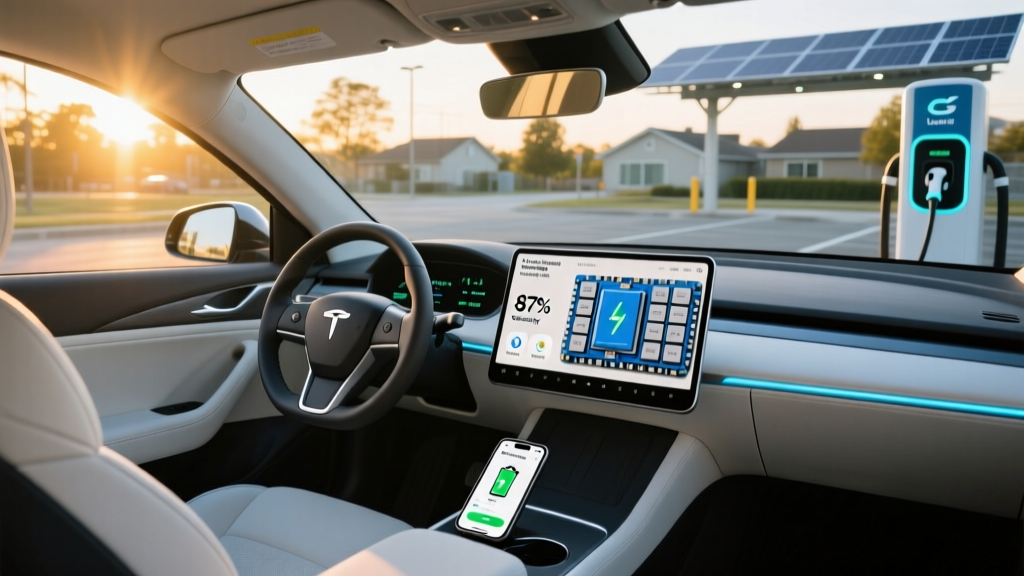
Most modern EVs display battery health information in the vehicle's settings menu or companion app. Tesla shows estimated range at 100% charge, which you can compare to the original EPA figure. Hyundai/Kia provides a battery health indicator in the infotainment system. BMW's iDrive includes a battery capacity readout.
Third-Party and OBD-II Tools
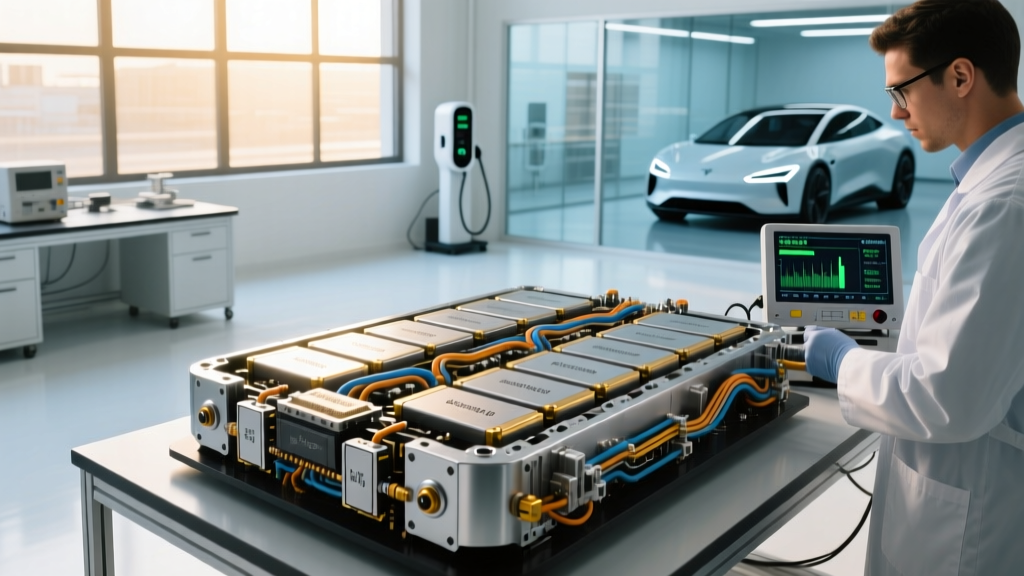
For more granular data, OBD-II dongles paired with apps like EVbatmon, Leaf Spy (Nissan Leaf), or Scan My Tesla can read real-time cell voltage, pack temperature, and calculated SoH directly from the BMS. These tools reveal cell imbalance — a condition where individual cells or modules degrade unevenly, which can reduce total usable capacity even if the average SoH looks acceptable.
Charging-Data Method
A simple DIY approach: charge from a known low SoC (e.g., 10%) to a known high SoC (e.g., 90%) using a metered Level 2 charger that reports kWh delivered. If your 75 kWh battery receives only 58 kWh for an 80% swing (which should be ~60 kWh), your SoH is approximately 58/60 = ~97%. Repeat this test annually to track your degradation curve.
What to Watch For
- A sudden drop in estimated range (more than 3–5% in a short period) warrants investigation
- Frequent cell-imbalance warnings or large voltage spreads between cells
- Charging speeds that are noticeably slower than when the vehicle was new (the BMS may be limiting charge rate to protect degraded cells)
- Range estimates that fluctuate wildly rather than declining gradually
What's Next: Solid-State, Silicon Anodes, and Beyond
The battery technology landscape is evolving rapidly, but it's critical to separate laboratory announcements from production reality.
Solid-state batteries replace the liquid electrolyte with a solid material, promising higher energy density, faster charging, and improved safety. Toyota has announced plans for a limited solid-state EV production run around 2027–2028, and Samsung SDI is targeting 2027 for initial production. However, manufacturing scale-up remains the primary bottleneck. Realistically, solid-state batteries will appear in limited, premium applications first and won't reach mainstream price points until the early 2030s at the earliest.
Silicon-dominant anodes are closer to market. Companies like Sila Nanotechnologies and Group14 are supplying silicon-composite anode materials that boost energy density by 10–20% compared to traditional graphite anodes. These are already appearing in some 2025–2026 model-year cells and represent an incremental but meaningful improvement rather than a revolution.
Sodium-ion batteries are emerging as a low-cost alternative for entry-level EVs and energy storage. CATL has begun shipping sodium-ion packs for Chinese-market vehicles, but energy density is significantly lower than LFP, limiting their use to shorter-range, budget-focused applications. Don't expect sodium-ion in US-market long-range EVs anytime soon.
For buyers today: the batteries available in 2026 model-year EVs are mature, well-understood, and backed by extensive real-world data. Waiting for solid-state is not a practical strategy unless your purchase timeline extends to 2030+.
Frequently Asked Questions
How long do EV batteries last in years and miles?
Most modern EV batteries with active thermal management last 15–20 years and 200,000+ miles before reaching the 70% capacity-retention threshold. LFP batteries typically exceed 3,000 charge cycles (equivalent to 500,000+ miles for a 250-mile-range EV). Calendar aging means even low-mileage vehicles will see gradual loss, but the data overwhelmingly shows that batteries are not the liability many feared a decade ago.
How much does an EV battery cost to replace in 2026?
Full pack replacement ranges from roughly $6,500 for older, smaller packs (Nissan Leaf 40 kWh) to $25,000–$35,000 for very large packs (Chevrolet Silverado EV 200 kWh). Most mainstream EVs (60–80 kWh packs) fall in the $10,000–$18,000 range including labor. Module-level repair is often available for $3,000–$8,000. In practice, the vast majority of EV batteries never require replacement during typical ownership.
What does the battery warranty cover?
By federal mandate, EV batteries carry a minimum 8-year/100,000-mile warranty (10/150k in CARB states). The warranty covers capacity loss below a defined threshold — typically 70% of original capacity. If your battery falls below that threshold within the warranty period, the manufacturer must repair or replace it at no cost. The warranty does not cover accident damage, misuse, or unauthorized modifications.
How do I check my EV battery's health?
Check the vehicle's built-in battery health display (most EVs have one), use an OBD-II app like EVbatmon or Scan My Tesla for detailed cell-level data, or perform a measured Level 2 charge from a known low SoC to a known high SoC and compare kWh delivered to expected values. Track this annually to establish your personal degradation curve.
LFP vs NMC — which battery chemistry is better for me?
Choose LFP if: you plan to keep the car 10+ years, you charge primarily at home, you want maximum cycle life, and you're okay with slightly less range. Choose NMC if: you need maximum EPA range (300+ miles), you prioritize performance, or you frequently drive in very cold climates where NMC's thermal characteristics offer an edge. Both chemistries are proven and reliable — the right choice depends on your ownership timeline and range needs.
Does fast charging damage my EV battery?
Occasional DC fast charging does not cause meaningful harm. The risk comes from exclusive reliance on high-power DCFC (150+ kW), which generates sustained heat and can accelerate degradation by 1–3% over 50,000 miles compared to Level 2 charging. Modern thermal management systems mitigate much of this, but Level 2 home charging should remain your daily routine. Always precondition the battery before fast charging — your EV does this automatically when you navigate to a charger.
Should I be worried about battery replacement cost when buying an EV?
For a new EV under warranty: no. The battery is covered for 8–10 years and 100,000–150,000 miles. For a used EV: check the SoH before purchase, verify remaining warranty, and factor in the possibility of a $10,000–$18,000 replacement 15+ years down the road — though statistically, most batteries will still be functional at that point. Compare this to the near-certainty of $3,000–$6,000 in engine/transmission repairs on a gas car past 120,000 miles.