Every EV owner eventually asks the same question: how long will this battery actually last? Unlike the battery powered creeper you roll around the garage — a simple tool with a small lithium cell that fades after a few hundred charge cycles — your EV's high-voltage traction battery is a precision-engineered system designed for a decade or more of daily use. But longevity varies enormously depending on chemistry, climate, charging habits, and how the vehicle's thermal management does its job.
This guide pulls together real-world degradation data, chemistry trade-offs, warranty terms, and replacement economics so you can buy and own an EV with eyes wide open.
LFP vs NMC vs NCA: Chemistry Determines Everything
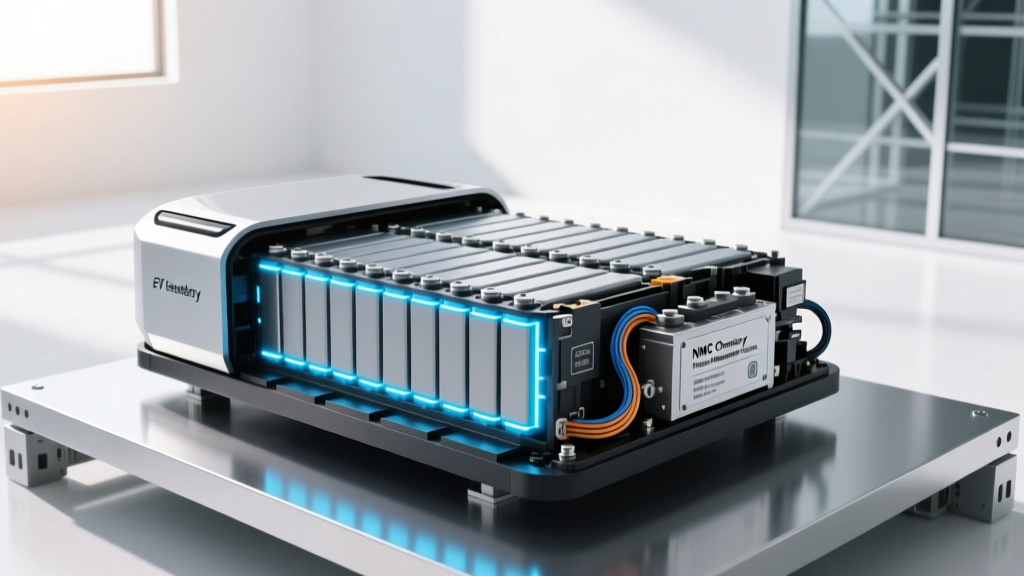
The two dominant lithium-ion chemistries in 2026 EVs are LFP (lithium iron phosphate) and NMC/NCA (nickel manganese cobalt / nickel cobalt aluminum). The choice affects range, weight, cold-weather behavior, cycle life, and cost.
| Attribute | LFP (e.g., Tesla Model 3 RWD, BYD Seal) | NMC/NCA (e.g., Hyundai Ioniq 5, Ford F-150 Lightning ER) |
|---|---|---|
| Energy density (cell-level) | ~160–180 Wh/kg | ~230–280 Wh/kg |
| Typical pack size | 50–65 kWh usable | 70–130 kWh usable |
| Cycle life (to 80% SoH) | 3,000–5,000+ cycles | 1,000–2,500 cycles |
| Cold-weather range loss (20°F) | ~30–40% reduction | ~20–30% reduction |
| Recommended daily SoC | 100% (charge fully, regularly) | 80% daily; 100% for trips |
| Cost per kWh (pack-level, 2026 est.) | ~$90–$110 | ~$120–$150 |
| Cobalt/nickel content | None | Significant — subject to §30D critical-mineral sourcing rules |
The trade-off in plain terms: NMC/NCA packs store more energy per kilogram, giving you longer EPA range in a lighter package — critical for trucks and long-range sedans. LFP packs are heavier and hold less total energy, but they tolerate full charges, survive far more cycles, and cost less. If your daily commute is under 60 miles and you want a battery that will likely outlast the car itself, LFP is the pragmatic choice.
How Long Do EV Batteries Actually Last?
Based on fleet data from Tesla, Recurrent Auto, and Geotab, most modern liquid-cooled EV batteries retain 85–92% of original capacity after 100,000 miles. The degradation curve is not linear: you typically see a 3–5% drop in the first year or two (the "break-in" loss), then a slow, nearly flat decline for years afterward.
Typical Degradation Curve (Liquid-Cooled NMC, Moderate Climate):
- Year 1 / ~15,000 mi: 95–97% State of Health (SoH)
- Year 3 / ~45,000 mi: 91–94% SoH
- Year 5 / ~75,000 mi: 88–92% SoH
- Year 8 / ~120,000 mi: 84–90% SoH
- Year 10 / ~150,000 mi: 80–87% SoH
Sources: Recurrent Auto battery reports, Geotab fleet data. Individual results vary by chemistry, climate, and charging behavior.
For LFP packs, the curve is flatter. Tesla's standard-range Model 3 (LFP) owners routinely report 95%+ SoH at 50,000 miles, and the chemistry's higher cycle-life ceiling means these packs can theoretically exceed 300,000 miles before hitting the 70% capacity threshold.
The practical answer to "how long do EV batteries last?" is: most will outlive the vehicle they're installed in. Catastrophic failure is rare; gradual capacity loss is the norm, and it's slow enough that most owners never feel it day-to-day.
What Does the Battery Warranty Actually Cover?
Federal law mandates a minimum 8-year / 100,000-mile warranty on EV battery packs (10 years / 150,000 miles in California and states that follow CARB rules). Most manufacturers exceed the floor.
| Vehicle | Warranty Term | Capacity Threshold | Chemistry |
|---|---|---|---|
| Tesla Model 3 RWD | 8 yr / 100,000 mi | ≥70% retention | LFP |
| Tesla Model Y Long Range | 8 yr / 120,000 mi | ≥70% retention | NMC |
| Hyundai Ioniq 5 | 10 yr / 100,000 mi | ≥70% retention | NMC |
| Ford F-150 Lightning (ER) | 8 yr / 100,000 mi | ≥70% retention | NMC |
| Chevrolet Equinox EV | 8 yr / 100,000 mi | ≥60% retention (Ultiferon) | NMC (Ultium) |
| BMW i4 eDrive40 | 8 yr / 100,000 mi | ≥70% retention | NMC |
What triggers a warranty claim: If your pack's usable capacity drops below the stated threshold within the term, the manufacturer will repair or replace enough modules to bring it back above that line — not necessarily a full pack swap. In practice, very few owners hit the threshold. Data from fueleconomy.gov and owner surveys show the vast majority of packs stay above 80% SoH well past the warranty period.
EV Battery Replacement Cost: Numbers and Context
This is the fear that keeps some buyers on the sideline. Let's address it with actual figures.
| Vehicle / Pack Size | Approx. Pack Cost | Labor | Total Range |
|---|---|---|---|
| Tesla Model 3 RWD (60 kWh, LFP) | $6,500–$8,500 | $1,000–$1,500 | $7,500–$10,000 |
| Hyundai Ioniq 5 (77 kWh, NMC) | $10,000–$14,000 | $1,500–$2,500 | $11,500–$16,500 |
| Ford F-150 Lightning ER (131 kWh, NMC) | $18,000–$25,000 | $2,000–$3,500 | $20,000–$28,500 |
| Chevrolet Bolt EV (65 kWh, NMC) | $8,000–$11,000 | $1,000–$1,800 | $9,000–$12,800 |
Context that matters: Pack prices have fallen roughly 15–20% since 2023, and module-level repair (replacing only degraded sections) is increasingly common, cutting costs by 40–60%. More importantly, full replacements are rare. According to Consumer Reports and Recurrent, fewer than 2% of EVs require a battery replacement outside of warranty. For comparison, a gas-car engine or transmission replacement can run $4,000–$8,000 and is far more common at higher mileages.
Five Factors That Accelerate (or Slow) Battery Degradation
Battery Care Checklist — Maximize Your Pack's Life
- Avoid chronic DC fast charging. Occasional road-trip fast charges are fine, but daily use of 150+ kW chargers generates sustained heat that accelerates wear. If you can charge at home on Level 2 (7–11 kW), do it.
- Manage State of Charge (SoC). For NMC/NCA packs, set your daily charge limit to 80%. For LFP packs, charge to 100% regularly — LFP cells need full charges for accurate BMS calibration.
- Minimize extreme-temperature exposure. Park in shade or a garage when possible. Precondition the battery before fast charging in cold weather (most EVs do this automatically when you navigate to a charger).
- Don't let the car sit at 0% or 100% for weeks. If storing the vehicle, leave it around 50% SoC and plugged in if possible so the thermal management system can maintain the pack.
- Use regenerative braking moderately. Aggressive one-pedal driving in cold weather can stress the pack before it's warmed up. Many EVs automatically limit regen when cold — let them.
The single biggest factor is heat. Liquid-cooled packs (standard on virtually all 2026 EVs) handle this far better than the passive air-cooled packs in early Nissan Leafs, which degraded noticeably faster. If you live in Phoenix or the Central Valley, expect 2–4% more degradation over five years compared to a temperate coastal climate.
How to Check Your Battery's State of Health
Most 2026 EVs surface battery health data directly in the infotainment system or companion app:
- Tesla: Service menu → Battery Health (shows SoH percentage and estimated full-charge range vs. new).
- Hyundai/Kia: EV-specific settings → Battery → State of Health.
- Ford: FordPass app → Vehicle Health → Battery.
- GM (Ultium): myChevrolet/myCadillac app → Energy → Battery Health.
For a more granular read, third-party OBD-II tools like the OBDLink SX paired with apps such as LeafSpy (Nissan) or Scan My Tesla can pull cell-level voltage data and precise SoH figures. Independent shops with EV diagnostic tools can also run a capacity test — useful when buying a used EV.
What to watch for: If your estimated full-charge range drops more than 5% in a single month (outside of seasonal temperature swings), or if individual cell voltages diverge by more than 50 mV, schedule a diagnostic. Both can signal a module imbalance that the BMS may need to address.
What's Next: Solid-State, Silicon Anode, and Realistic Timelines
You'll read breathless headlines about solid-state batteries every quarter. Here's where the technology actually stands in 2026:
- Toyota has announced a solid-state battery for limited production in a 2027–2028 model, claiming 750 km (~465 mi) range and 10-minute fast charging. This is preliminary and not yet available for purchase.
- Samsung SDI is shipping solid-state prototype cells to automakers for testing, with volume production targeted for 2029.
- Silicon-dominant anodes (from companies like Sila Nanotechnologies and Group14) are already in limited use — the Mercedes G 580 with EQ Technology uses a silicon-anode pack for higher energy density. Expect broader adoption by 2027–2028.
- Semi-solid-state cells (NIO's 150 kWh pack in China) bridge the gap, offering ~30% more energy density than current NMC, but remain limited to specific markets and models.
For buyers shopping today: current lithium-ion technology is mature, well-understood, and backed by real longevity data. Waiting for solid-state means waiting 3–5+ years for broad availability and likely paying a premium when it arrives.
Frequently Asked Questions
How long do EV batteries last in years and miles?
Most liquid-cooled EV batteries from major manufacturers retain 80–90% of original capacity after 150,000 miles or 10 years. LFP chemistries often exceed this. Catastrophic failure is rare — gradual capacity loss is the norm, and most packs outlive the vehicles they're in.
How much does it cost to replace an EV battery?
Full pack replacement ranges from roughly $7,500 for a Tesla Model 3 LFP to $28,500 for a Ford F-150 Lightning extended-range pack, including labor. However, fewer than 2% of EVs need a full replacement outside of warranty. Module-level repairs cost significantly less. For current warranty and credit rules, check IRS §30D guidance.
What does the EV battery warranty cover?
Federal minimum is 8 years / 100,000 miles (10/150k in CARB states). The warranty guarantees the pack will retain a specified percentage of original capacity — typically 70%. If it drops below that threshold within the term, the manufacturer repairs or replaces modules to restore capacity above the line.
LFP vs NMC — which battery chemistry is better?
Neither is universally better. LFP wins on cycle life, cost, and daily convenience (you can charge to 100% without worry). NMC wins on energy density, cold-weather performance, and total range per charge. If you need 300+ miles of EPA range or live in a cold climate, NMC is the stronger pick. If you commute short distances, want maximum longevity, and prefer a lower purchase price, LFP is ideal.
How do I check and maximize my EV battery health?
Use your vehicle's built-in battery health screen or companion app to monitor State of Health (SoH). For NMC packs, set daily charge limits to 80%; for LFP, charge to 100% regularly. Minimize daily DC fast charging, precondition in cold weather, and avoid storing the car at 0% or 100% SoC for extended periods.
Does fast charging damage my EV battery?
Occasional DC fast charging (road trips, a few times a month) has minimal impact on modern liquid-cooled packs. Daily fast charging at 150+ kW does accelerate degradation by generating sustained heat. The charging curve also tapers significantly above 80% SoC — charging from 80–100% on DC can take as long as 10–80%, so it's both slower and harder on the pack.
The bottom line: EV battery technology in 2026 is proven, durable, and backed by warranties that cover the ownership period for most drivers. The chemistry you choose matters more than the brand badge — and the habits you build around charging matter more than either. Treat the pack well, and it will very likely still be going strong when you hand the keys to the next owner.