From Lead-Acid to Lithium: Why the 2010 Chevy Cobalt Battery Still Comes Up in EV Searches
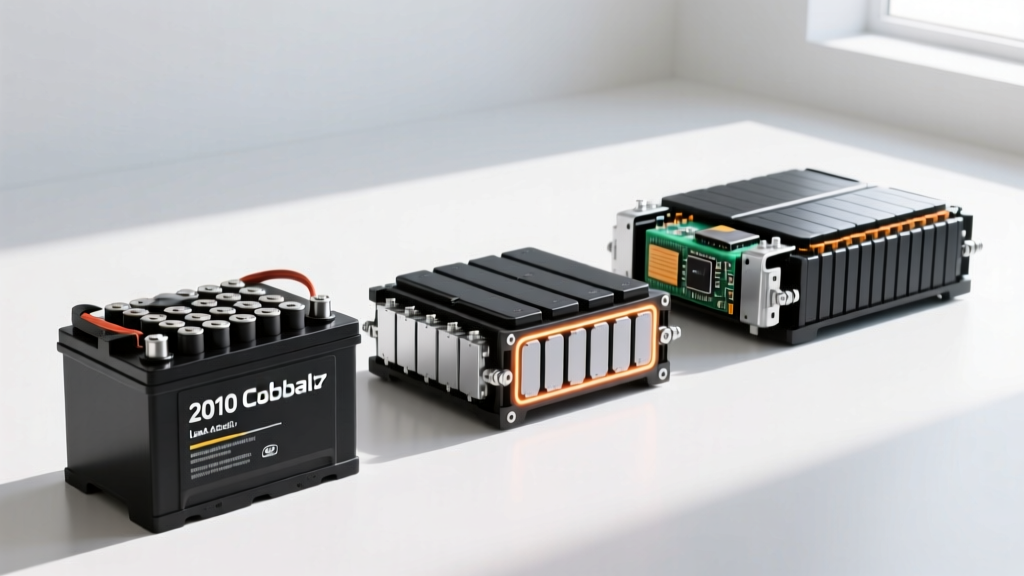
Search for a 2010 Chevy Cobalt battery and you'll find replacement 12V lead-acid units priced around $130–$200 at any auto parts store. That car shipped with a conventional Group 47 or Group 48 flooded or AGM starter battery — a component designed to crank an internal-combustion engine, not propel a vehicle. The fact that this keyword still pulls ~170 searches a month in 2026 reveals something useful: a lot of drivers are still mapping the mental model of a disposable $160 car battery onto the high-voltage lithium-ion traction packs that actually power electric vehicles.
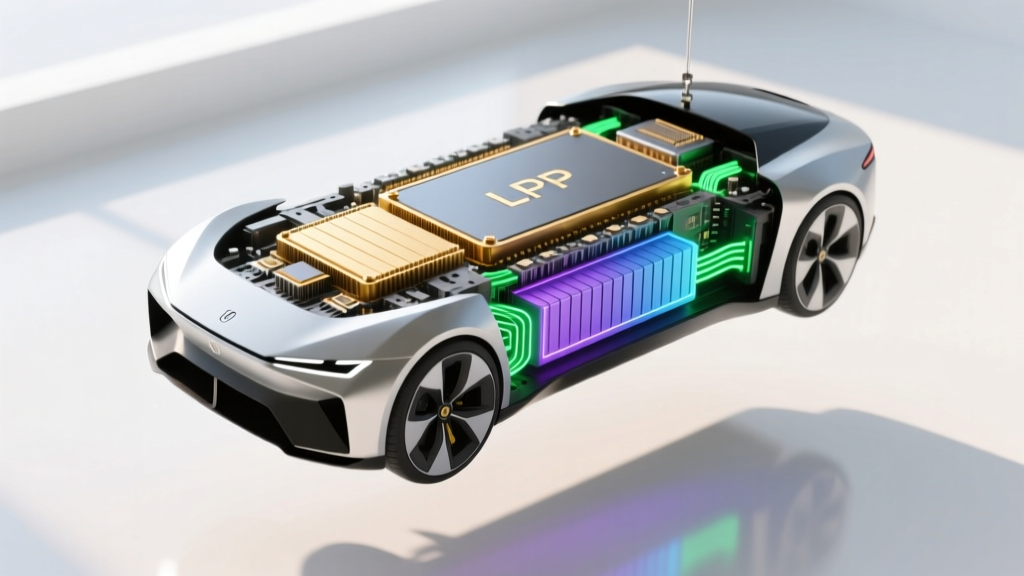
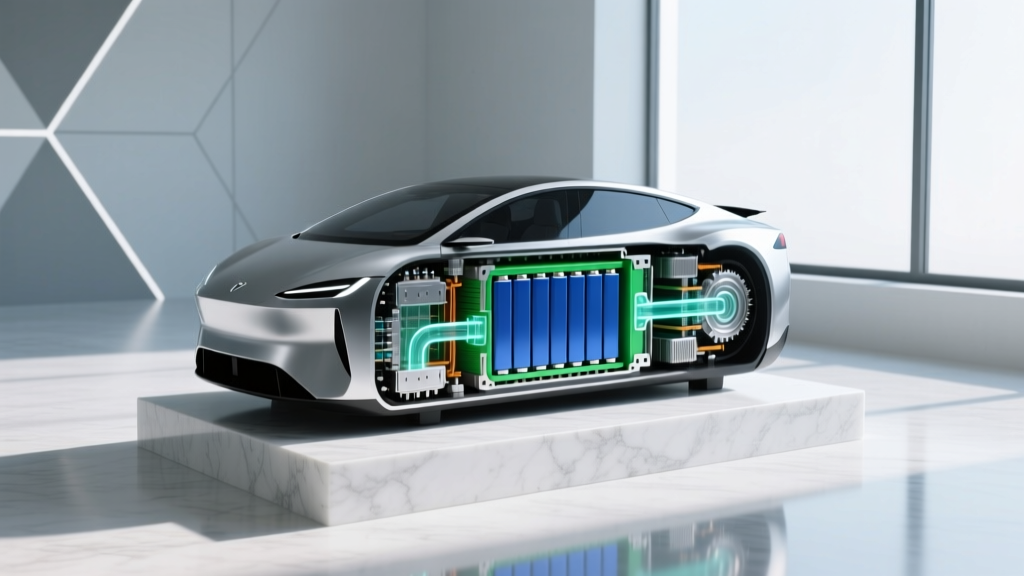
The two technologies share almost nothing beyond the word "battery." A 2010 Cobalt's 12V battery stores roughly 0.6–0.8 kWh of energy and weighs about 35 lbs. A 2026 Hyundai Ioniq 5's 77.4 kWh NMC pack stores nearly 100× that energy, weighs over 1,000 lbs, and costs between $12,000 and $18,000 to replace out of warranty. Understanding this gap — and the chemistry, degradation physics, and warranty structures behind modern EV packs — is the single most important piece of homework an EV buyer can do.
This guide covers the data: chemistry trade-offs, real-world degradation curves, warranty fine print, replacement economics, and the habits that push a pack toward 200,000+ miles with minimal capacity loss.
LFP vs NMC vs NCA: The Chemistry Decision That Defines Your Pack
Every EV sold in the US in 2026 uses one of three lithium-ion cathode chemistries. The choice determines energy density, cycle life, cold-weather behavior, and ultimately the price of the car.
| Attribute | LFP (Lithium Iron Phosphate) | NMC (Nickel Manganese Cobalt) | NCA (Nickel Cobalt Aluminum) |
|---|---|---|---|
| Energy Density (cell-level) | ~160–180 Wh/kg | ~220–260 Wh/kg | ~250–280 Wh/kg |
| Typical Cycle Life | 3,000–5,000+ cycles | 1,000–2,000 cycles | 1,000–1,500 cycles |
| Cold-Weather Performance | Moderate; ~15–25% range loss at 20°F | Better; ~10–20% range loss at 20°F | Similar to NMC |
| Max Recommended SoC | 100% daily is fine | 80% daily; 100% only for trips | 80% daily; 100% only for trips |
| Cobalt Content | None | Low–moderate | Low |
| Cost per kWh (pack-level, 2026) | ~$90–$110 | ~$120–$150 | ~$125–$155 |
| Common 2026 Applications | Tesla Model 3/Y RWD, Ford Mustang Mach-E Select (LFP option), BYD (imported markets) | Hyundai Ioniq 5/6, Kia EV6/EV9, VW ID.4, most long-range AWD trims | Tesla Model S/X, some Lucid Air configs |
The practical takeaway: LFP wins on longevity and daily convenience (charge to 100% without guilt) but costs you ~20–30 miles of EPA range in an equivalent-size vehicle due to lower energy density. NMC/NCA packs deliver more range per kilogram but demand more careful state-of-charge management to maximize lifespan. If you plan to keep a car 10+ years and 150,000+ miles, LFP's cycle-life advantage becomes significant.
How Long Do EV Batteries Actually Last? Degradation Data by the Numbers
The short answer: far longer than most first-time EV buyers assume. The long answer depends on chemistry, thermal management, and how the car is used.
Here's what real-world fleet data and manufacturer disclosures show as of 2026:
- Tesla Model 3/Y (NMC, 2018–2022 fleet data): ~5–7% capacity loss at 100,000 miles; ~10–12% at 200,000 miles. Tesla's 2024 Impact Report documented median degradation of approximately 12% across vehicles reaching 200,000 miles.
- Hyundai/Kia E-GMP platform (Ioniq 5, EV6, 77.4 kWh NMC): Early 2022–2024 models show ~4–6% loss at 60,000 miles based on owner-reported State of Health (SoH) readings via OBD-II tools.
- Chevrolet Bolt EV/EUV (65 kWh NMC, 2017–2023): GM reported average degradation of ~6–8% at 80,000 miles across warranty claims, though early 2017–2018 packs with LG Chem cells saw higher variance and the 2021–2022 recall for fire risk replaced many units.
- LFP packs (Tesla Model 3 RWD, 2021–2025): Limited long-term fleet data, but laboratory cycle testing and early fleet readings suggest <5% loss at 100,000 miles with regular 100% charging.
For context, a 2010 Chevy Cobalt's 12V lead-acid battery typically lasts 3–5 years before replacement. A modern EV traction pack, properly managed, routinely outlasts 10 years and 150,000–200,000 miles while retaining 80–90% of original capacity.
What Degradation Actually Looks Like
Battery degradation is not linear. Most packs experience a steeper drop in the first 10,000–20,000 miles (roughly 2–4%), then settle into a slow, nearly linear decline of ~0.5–1% per year or ~1% per 15,000–20,000 miles. The curve flattens further after year 5. This is why a pack that has lost 8% at 80,000 miles may only lose another 4–5% by 160,000 miles.
EV Battery Warranty Terms: What's Actually Covered
Federal law (EPA emissions warranty requirements) effectively mandates that EV battery packs carry at least 8 years / 100,000 miles of coverage. California Air Resources Board (CARB) states push this to 10 years / 150,000 miles. Most manufacturers exceed these minimums. Here's how the major warranties compare for 2026 models:
| Manufacturer / Platform | Warranty Term | Capacity Retention Threshold | Notes |
|---|---|---|---|
| Tesla (Model 3/Y LFP) | 8 yr / 120,000 mi | 70% | Long Range/Performance NMC: 8yr/120k mi |
| Tesla (Model S/X) | 8 yr / 150,000 mi | 70% | NCA pack |
| Hyundai / Kia (E-GMP) | 10 yr / 100,000 mi | 70% | Among the longest calendar coverage |
| GM (Ultium platform: Equinox EV, Blazer EV, Silverado EV) | 8 yr / 100,000 mi | 70% (estimated) | Some commercial/fleet: 8yr/100k mi |
| Ford (Mustang Mach-E, F-150 Lightning) | 8 yr / 100,000 mi | 70% | LFP and NMC trims covered equally |
| Volkswagen (ID.4, ID.7) | 8 yr / 100,000 mi | 70% | NMC chemistry |
| Rivian (R1T, R1S) | 8 yr / 175,000 mi | 70% | Higher mileage cap reflects truck use |
Critical fine print: The warranty threshold is typically 70% of original capacity. If your 77.4 kWh Ioniq 5 pack drops to 54 kWh (70%) at year 7, Hyundai replaces or refurbishes it under warranty. If it drops to 56 kWh (72.3%), you're on your own. Most packs never reach this threshold under normal use — the 70% floor is a worst-case safety net, not an expected outcome. Refer to fueleconomy.gov's EV technology overview for federal warranty baseline details.
EV Battery Replacement Costs: The Real Numbers
This is where the 2010 Cobalt comparison collapses entirely. You're not swapping a $160 Interstate at AutoZone. High-voltage traction pack replacement is a five-figure event — but it's also far rarer than internet forums suggest.
| Vehicle / Pack Size | Battery Chemistry | Replacement Cost (Parts + Labor) | When Typically Needed |
|---|---|---|---|
| Nissan Leaf (40 kWh) | NMC | $8,000–$12,000 | 150,000+ mi; early 2011–2015 packs degraded faster due to passive air cooling |
| Chevrolet Bolt EV (65 kWh) | NMC (LG Chem) | $14,000–$16,000 | Many replaced under 2021–2022 recall; post-recall packs performing well |
| Tesla Model 3 Standard Range (60 kWh LFP) | LFP (CATL) | $10,000–$14,000 | Rarely needed; LFP cycle life exceeds typical vehicle lifespan |
| Tesla Model 3/Y Long Range (82 kWh NMC) | NMC (Panasonic) | $14,000–$18,000 | 200,000+ mi based on fleet data |
| Hyundai Ioniq 5 (77.4 kWh) | NMC (SK On) | $12,000–$17,000 | Too new for widespread out-of-warranty replacements |
| Ford F-150 Lightning Extended Range (131 kWh) | NMC | $18,000–$22,000+ | Largest consumer pack on market; cost reflects kWh |
| Porsche Taycan (93.4 kWh) | NMC (LG Chem) | $20,000–$28,000 | Labor-intensive removal; premium-brand pricing |
Key context: Most EV batteries are never replaced. Data from Recurrent Auto's fleet analysis (covering 15,000+ EVs) shows fewer than 2% of EV battery packs have required full replacement outside of recalls. The packs that do fail early tend to do so within the warranty period, at no cost to the owner. Out-of-warranty replacements are mostly a concern for 10+ year-old vehicles — and even then, module-level repair (replacing individual bad cells or modules rather than the full pack) is becoming more common and costs $2,000–$6,000.
Factors That Accelerate (or Slow) Battery Degradation
Battery lifespan isn't just a function of time. It's a function of how the pack is treated. Here are the variables that matter most, ranked by impact:
Battery Care Checklist: Maximize Pack Life
- Avoid sustained high SoC (NMC/NCA only): Daily charging to 80% instead of 100% can double cycle life. LFP owners can ignore this — charge to 100% regularly, which actually helps the BMS calibrate.
- Minimize DC fast charging frequency: Occasional road-trip fast charging is fine. Daily 150+ kW DC sessions generate sustained heat and accelerate electrolyte decomposition. If you can charge at home on Level 2 (7–11 kW), do it.
- Precondition before fast charging: Every modern EV with active thermal management (Tesla, Hyundai E-GMP, GM Ultium, Ford) warms the pack before a DC session. If your car has a "navigate to charger" preconditioning feature, use it — a cold pack charging at 150 kW degrades faster than a preconditioned one.
- Avoid extreme SoC storage: Don't leave an NMC car at 100% or below 10% for weeks. If storing for a month, set SoC to 50–60%.
- Heat is the enemy: Ambient temperatures above 95°F combined with high SoC and fast charging create worst-case degradation conditions. Cars with active liquid cooling (most 2020+ EVs) handle this far better than passively cooled packs (early Nissan Leaf, early Fiat 500e).
- Cold doesn't degrade — it temporarily reduces: A 20°F morning may cut range by 20–30%, but this is reversible. The battery isn't damaged; the electrolyte is simply less conductive until the pack warms.
How to Check Your EV's Battery Health (State of Health)
State of Health (SoH) is the percentage of original capacity your pack currently holds. A new pack is 100% SoH; a pack that held 77.4 kWh when new and now holds 71.2 kWh is at ~92% SoH. Here's how to check it:
- In-car display (limited): Some EVs (Tesla via the service menu, Hyundai/Kia via the infotainment engineering page, BMW iX/i4) show an SoH percentage or a range-vs-new comparison. Tesla's 2024.44+ software update added a battery health percentage directly in the vehicle settings.
- OBD-II dongle + app: Tools like OBDLink SX or Vgate iCar paired with apps such as EV Health, LeafSpy (Nissan), or Scan My Tesla can read the BMS-reported SoH, cell voltage variance, and pack temperature. Cost: $30–$80 for hardware.
- Dealer diagnostic: Any authorized service center can pull a full battery health report. Ask for it during routine service — most will provide it free.
- Third-party certification: Services like Recurrent offer battery health reports that are increasingly accepted by used-EV marketplaces. A certified SoH reading adds resale value.
What to watch for: Cell voltage variance. A healthy pack has cells within 10–20 mV of each other at rest. If one module shows 50+ mV deviation, it's a sign of imbalance that the BMS may not fully correct — and it's worth a dealer visit.
Emerging Battery Tech: Solid-State and Silicon Anodes (Forward-Looking)
The next generation of EV batteries is in development, but none of these technologies are available in a production vehicle you can buy today. Here's a realistic timeline based on current manufacturer disclosures:
- Silicon-dominant anodes: Companies like Sila Nanotechnologies and Group14 are shipping silicon-blend anodes in limited production (Mercedes G-Class EV uses a Sila-blend anode in its 2025+ pack). Silicon anodes increase energy density by ~20–40% over graphite but face expansion/cracking issues at high cycle counts. Expect broader adoption in 2027–2029 models.
- Solid-state batteries: Toyota has announced a solid-state pack targeting 2027–2028 production with ~450 miles of range and 10-minute fast charging. Samsung SDI and QuantumScape are also in pilot production. However, manufacturing yield, cost, and scale remain unsolved challenges. Realistically, solid-state packs will appear in limited, premium vehicles first (2028–2030) and won't reach mass-market pricing until the early 2030s.
- Sodium-ion batteries: CATL and BYD are producing sodium-ion cells for lower-cost, shorter-range EVs in China. Energy density (~120–140 Wh/kg) limits these to city cars and fleet vehicles. US-market availability is uncertain and likely post-2028.
None of these should delay a 2026 EV purchase. Today's NMC and LFP packs already deliver 150,000–200,000+ mile lifespans with manageable degradation. Waiting for solid-state is waiting for a technology that won't be affordable or widely available for years.
Frequently Asked Questions
How long do EV batteries last in years and miles?
Most modern EV battery packs (2020 and newer, with active thermal management) last 150,000–200,000+ miles while retaining 80–90% of original capacity. In calendar years, that's typically 12–15+ years for an average driver (13,500 miles/year). LFP packs may exceed 250,000 miles before reaching 80% SoH.
How much does an EV battery cost to replace?
Full pack replacement ranges from ~$8,000 for a smaller pack (40–60 kWh, older models) to $22,000+ for large packs (131 kWh F-150 Lightning). Most replacements are covered under warranty. Module-level repairs cost $2,000–$6,000. Fewer than 2% of packs require replacement outside recalls.
What does the EV battery warranty cover?
Federal minimum is 8 years / 100,000 miles. Most manufacturers guarantee the pack will retain at least 70% of original capacity during the warranty term. If it drops below 70%, the manufacturer replaces or refurbishes the pack at no cost. Some brands (Hyundai/Kia) extend to 10 years. CARB states require 10 yr / 150,000 mi coverage.
How do I check and maximize my EV battery health?
Check SoH via the in-car display (if available), an OBD-II dongle with an EV app, or a dealer diagnostic. Maximize health by charging NMC/NCA to 80% daily, minimizing daily DC fast charging, preconditioning before fast charges, avoiding prolonged storage at 100% or below 10%, and relying on Level 2 home charging when possible. LFP owners should charge to 100% regularly for BMS calibration.
LFP vs NMC — which is better and why?
Neither is universally better. LFP wins on cycle life (3,000–5,000+ cycles vs 1,000–2,000), cost (~$90–110/kWh vs $120–150/kWh), and daily convenience (100% charging is safe). NMC wins on energy density (~220–260 Wh/kg vs 160–180 Wh/kg), meaning more range in the same physical pack, and slightly better cold-weather performance. If range-per-charge is your top priority, choose NMC. If you plan to keep the car 10+ years and want the lowest degradation risk, LFP has the edge.
Is an EV battery anything like the 12V battery in my old gas car?
No. A 2010 Chevy Cobalt battery is a 12V lead-acid starter battery (~0.6 kWh, ~35 lbs, ~$160 to replace). An EV traction battery is a 60–131 kWh lithium-ion pack (1,000+ lbs, $10,000–$22,000 to replace). EVs also have a separate 12V auxiliary battery for accessories, but it's the high-voltage pack that powers the motor and defines the car's range. The two serve completely different functions.