If you've ever searched for a battery for 2006 Chrysler 300, you already know the drill: a 12-volt lead-acid unit, roughly $150–$250 at an auto parts store, swap it in your driveway in fifteen minutes. That experience shapes a lot of drivers' expectations when they start shopping for an electric vehicle — and those expectations are almost entirely wrong.
A modern EV traction battery is a high-voltage, thermally managed, chemically complex energy storage system that costs more than the entire 2006 Chrysler 300 did on the used market. But here's the good news: it's also engineered to outlast the car around it. This guide breaks down exactly what's inside today's EV battery packs, how long they last, what it costs if something goes wrong, and how to maximize your investment.
The 12V Battery vs. the Traction Battery: Two Completely Different Worlds
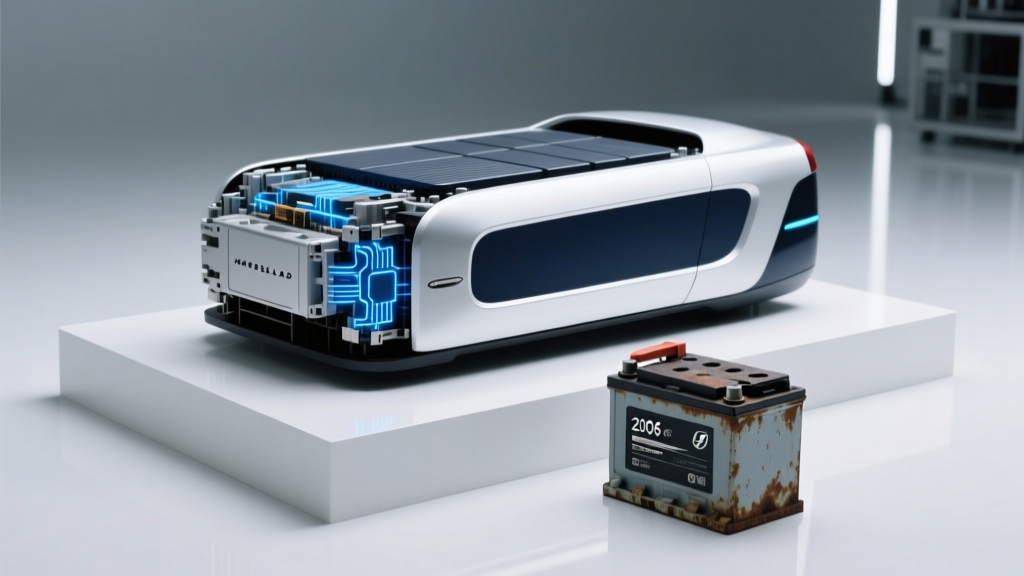
Let's clear up the single biggest source of confusion right away. The battery for a 2006 Chrysler 300 — or any conventional gas car — is a 12-volt lead-acid battery. Its job is to crank the starter motor and run accessories when the engine is off. It stores roughly 0.5–0.7 kWh of energy, weighs about 35–50 lbs, and costs under $200.
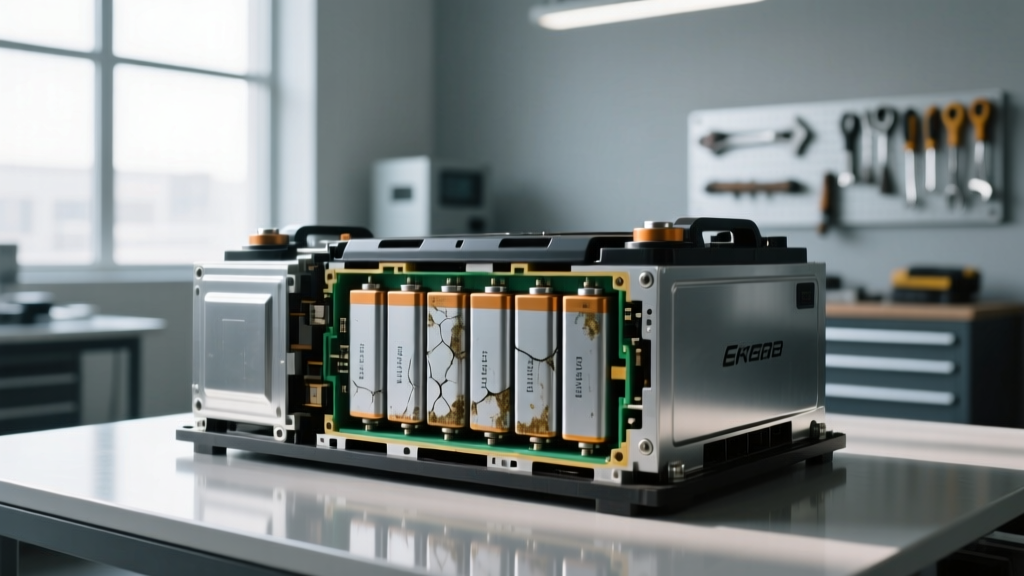
An EV's traction battery (also called the high-voltage or HV battery) is the pack that actually propels the vehicle. It operates at 400V or 800V, stores 50–130+ kWh of energy, weighs 800–1,500 lbs, and is integrated into the vehicle's chassis. When we talk about "EV battery life" or "EV battery replacement cost" in this guide, we're talking about the traction battery — not the small 12V auxiliary battery that EVs also carry for accessory power.
(Yes, EVs still have a 12V battery, and yes, it can still die just like the one in your old Chrysler. But that's a $200 fix, not a $15,000 one.)
Battery Chemistry Explained: LFP vs. NMC vs. NCA
Not all EV batteries are built the same. The two dominant lithium-ion chemistries in 2026 are NMC/NCA (nickel-manganese-cobalt / nickel-cobalt-aluminum) and LFP (lithium iron phosphate). The chemistry you get depends on the vehicle and trim you choose, and each has distinct trade-offs.
| Attribute | LFP (Lithium Iron Phosphate) | NMC / NCA (Nickel-based) |
|---|---|---|
| Energy Density | Lower (~160–180 Wh/kg cell-level) | Higher (~220–280 Wh/kg cell-level) |
| Typical Range per Pack Size | Less range for same weight/volume | More range for same weight/volume |
| Cycle Life | 3,000–5,000+ cycles to 80% SoH | 1,000–2,000 cycles to 80% SoH |
| Cold-Weather Performance | Weaker — more range loss below 32°F | Better cold-weather discharge capability |
| Cost | Lower — no cobalt or nickel | Higher — commodity-priced metals |
| Charging to 100% Daily | Recommended (better for LFP longevity) | Not recommended (80% daily is ideal) |
| Safety / Thermal Stability | Superior — less prone to thermal runaway | Good, but requires more active management |
| Common In (2026 Models) | Tesla Model 3 RWD, Model Y RWD, BYD, some Ford/Rivian base trims | Tesla Long Range, Hyundai Ioniq 5/6, Kia EV6/EV9, BMW iX, Rivian dual-motor |
Which is better? It depends on your use case. If you want maximum range in a single charge and don't mind charging to 80% daily, NMC/NCA delivers more miles per kilogram. If you plan to keep the car 10+ years, charge at home nightly, and want a battery that can handle daily 100% fills, LFP is the longevity champion. Tesla's shift to LFP in standard-range models was a major endorsement of this trade-off.
How Long Do EV Batteries Actually Last?
The short answer: almost certainly longer than you think, and probably longer than you'll own the car.
According to data compiled by the National Renewable Energy Laboratory (NREL) and real-world fleet studies from Tesla and other manufacturers, modern liquid-cooled EV batteries typically lose between 5% and 15% of their original capacity over the first 150,000–200,000 miles. The degradation curve is steepest in the first 20,000–30,000 miles (roughly 2–5% loss), then flattens significantly.
Typical EV Battery Degradation Curve (NMC, liquid-cooled):
- Year 1 / 15,000 mi: ~2–5% capacity loss (initial formation)
- Year 3 / 45,000 mi: ~5–8% total loss
- Year 5 / 75,000 mi: ~7–10% total loss
- Year 8 / 120,000 mi: ~10–14% total loss
- Year 10 / 150,000 mi: ~12–17% total loss
Source: NREL battery degradation studies, Tesla Impact Reports, Geotab fleet data. Individual results vary based on climate, charging habits, and chemistry.
To put this in real-world terms: a 2026 Hyundai Ioniq 5 with an EPA range of 303 miles and an NMC pack might realistically deliver 260–275 miles of range after five years and 75,000 miles of mixed driving. That's still plenty usable for daily driving and road trips — it's not a cliff, it's a gentle slope.
LFP packs show even slower degradation in many cases. Tesla's 2025 Impact Report noted that Model 3 vehicles with LFP packs retained approximately 92% of original capacity at 100,000 miles in fleet averages.
What Does the EV Battery Warranty Cover?
Federal law (via EPA emissions warranty requirements) and manufacturer policies ensure that every new EV sold in the U.S. comes with a substantial battery warranty. Here's what the major brands offer as of 2026:
| Manufacturer | Warranty Period | Mileage Limit | Capacity Retention Threshold |
|---|---|---|---|
| Tesla (Model 3/Y LFP) | 8 years | 100,000 miles | 70% |
| Tesla (Model 3/Y Long Range) | 8 years | 120,000 miles | 70% |
| Hyundai / Kia | 10 years | 100,000 miles | 70% |
| Ford (Mustang Mach-E, F-150 Lightning) | 8 years | 100,000 miles | 70% |
| BMW (iX, i4) | 8 years | 100,000 miles | 70% |
| Rivian | 8 years | 120,000 miles | 70% |
| GM (Ultium-based) | 8 years | 100,000 miles | 60–70% (varies by model) |
What the warranty actually means: If your battery's usable capacity drops below the stated threshold (typically 70% of original) within the warranty period, the manufacturer will repair or replace the pack at no cost. In practice, very few owners ever hit this threshold. The warranty is a floor, not a prediction of when the battery will "die."
Important caveat: warranties cover defects and abnormal degradation, not damage from accidents, flooding, or unauthorized modifications. Check your specific owner's manual for exclusions.
EV Battery Replacement Cost: The Numbers
This is the question that generates the most anxiety — and the most misleading headlines. Yes, an out-of-warranty EV battery replacement is expensive. But context matters enormously.
| Vehicle / Pack Size | Battery Capacity | Estimated Replacement Cost | Notes |
|---|---|---|---|
| Tesla Model 3 RWD (LFP) | ~60 kWh | $8,000–$12,000 | Module-level repair may reduce cost |
| Tesla Model Y Long Range | ~82 kWh | $12,000–$16,000 | NMC pack, full replacement |
| Hyundai Ioniq 5 | ~77.4 kWh | $10,000–$15,000 | Hyundai's 10-yr warranty reduces risk |
| Ford F-150 Lightning Extended | ~131 kWh | $18,000–$25,000 | Largest consumer packs cost most |
| Chevrolet Equinox EV | ~85 kWh | $10,000–$14,000 | Ultium modular architecture |
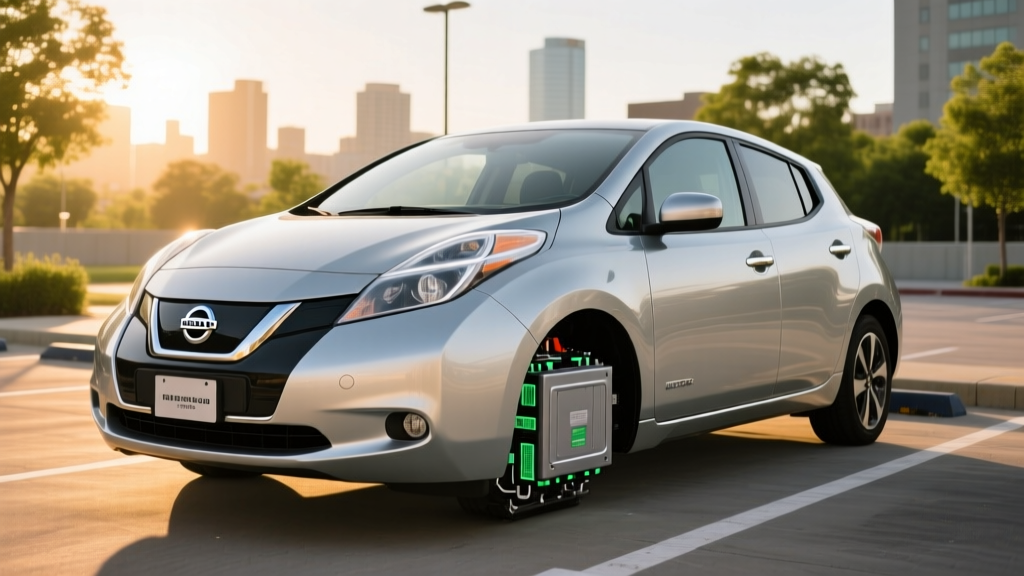
| Nissan LEAF (40 kWh) | 40 kWh | $6,500–$9,000 | Older passive-cooling design |
When is replacement actually needed? Almost never during normal ownership. The vast majority of EV batteries are never replaced. Data from Geotab's fleet study of over 10,000 EVs showed that fewer than 2% of vehicles required battery replacement due to failure, and most of those were covered under warranty. The more common scenario is that the car is totaled, sold, or retired before the battery reaches end-of-life.
Also worth noting: many shops can now perform module-level repairs — replacing individual defective cell modules rather than the entire pack — for $2,000–$5,000. This is becoming increasingly common as the EV service ecosystem matures.
Factors That Affect EV Battery Life (and How to Maximize It)
Battery degradation isn't random. It's driven by measurable physical and chemical processes. Here are the factors you can control:
Battery Care Best Practices
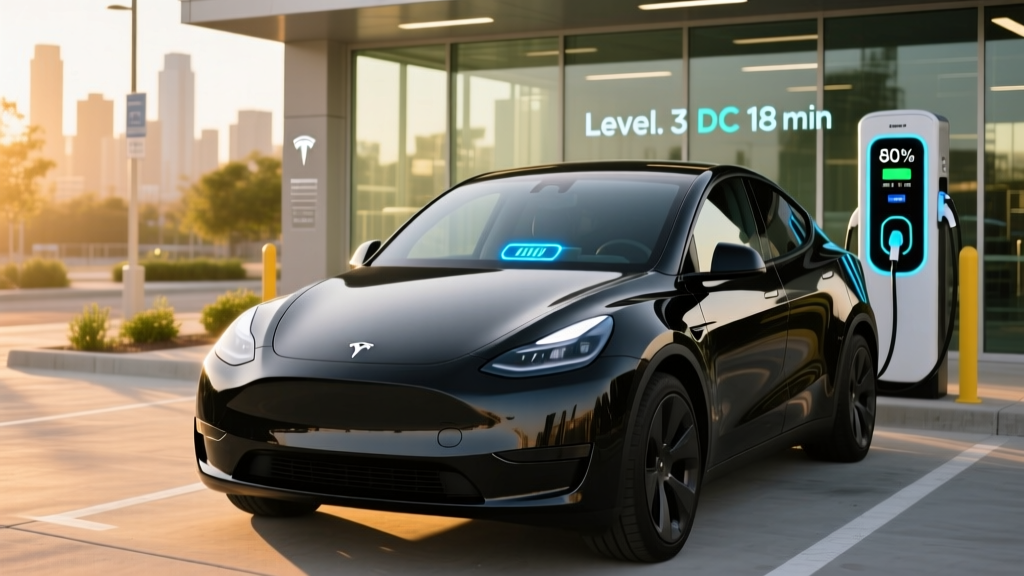
- Avoid chronic DC fast charging. Occasional road-trip fast charging is fine, but daily use of 150+ kW DC chargers accelerates degradation. A study in the Journal of Power Sources found that exclusive DCFC use could increase capacity loss by 2–4% over 100,000 miles vs. Level 2 charging.
- Keep State of Charge between 20% and 80% for NMC/NCA. Storing the battery at 100% for extended periods stresses the cathode. LFP is the exception — Tesla recommends periodic 100% charges for LFP calibration.
- Precondition the battery before fast charging. Most modern EVs do this automatically when you navigate to a charger. Cold batteries charge slower and experience more lithium plating.
- Park in shade or a garage in extreme heat. Sustained battery temperatures above 95°F (35°C) accelerate calendar degradation. Liquid cooling helps, but it's not magic.
- Don't let the car sit at 0% or 100% for weeks. If storing the vehicle, set the charge limit to ~50% and plug in to a Level 1 or Level 2 charger to maintain it.
- Use regenerative braking moderately in extreme cold. High regen into a cold battery causes stress; many EVs automatically limit regen when the pack is cold.
How to Check Your EV Battery's State of Health (SoH)
State of Health (SoH) is the percentage of original capacity your battery can still hold. A new battery is 100% SoH; at 70% SoH, it holds 70% of its original kWh. Here's how to monitor it:
- In-vehicle displays: Tesla's app and some Hyundai/Kia models show battery health estimates. BMW's iDrive includes a battery health screen.
- OBD-II dongles + apps: Tools like OBDeleven, LeafSpy (for Nissan LEAF), or Scan My Tesla can read detailed pack data including individual cell voltages and estimated SoH.
- Dealer diagnostics: Any authorized service center can run a full battery health report, often for free during routine service.
- Charge-to-full math: Charge from a known low SoC (e.g., 10%) to your charge limit, note the kWh added via your charger's app, and compare to the pack's rated capacity. This gives a rough SoH estimate.
- Third-party services: Companies like Recurrent Auto offer battery health reports based on telematics data, which can be valuable when buying a used EV.
If you're buying a used EV, requesting a battery health report should be as routine as checking a Carfax. A 2023 Model 3 with 40,000 miles showing 95% SoH is a much better bet than one at 88%.
What's Next: Solid-State and Silicon-Anode Batteries
The next generation of battery technology is real — but it's not in your driveway yet. Here's a realistic timeline based on current manufacturer announcements and production roadmaps:
- Silicon-anode cells (2025–2027): Companies like Sila Nanotechnologies and Group14 are supplying silicon-dominant anode materials that boost energy density by 15–25% over graphite anodes. These are beginning to appear in limited production vehicles (e.g., Mercedes-Benz G-Class EV prototypes) and should reach broader availability by 2027–2028.
- Semi-solid-state (2026–2028): Toyota, Nissan, and Samsung SDI have announced semi-solid-state cells targeting 2027–2028 production. These use a gel or polymer electrolyte instead of liquid, improving safety and potentially energy density, but manufacturing scale remains the bottleneck.
- Full solid-state (2029–2032+): The "holy grail" — solid electrolyte, lithium-metal anode, potentially 500+ mile range, 10-minute charging. Toyota targets limited production around 2029–2030. Realistic mass-market availability is likely 2032 or later. Do not delay an EV purchase waiting for solid-state.
According to the U.S. Department of Energy, average lithium-ion cell energy density has increased roughly 5–7% per year over the past decade. Incremental gains will continue to improve range and reduce cost even without a solid-state breakthrough.
Frequently Asked Questions
How long do EV batteries last in years and miles?
Most modern liquid-cooled EV batteries are designed to retain 70–85% of their original capacity after 150,000–200,000 miles or 10–15 years. Many will outlast the vehicle's body, interior, and suspension components. Complete failure is rare; gradual capacity loss is the norm.
How much does an EV battery cost to replace?
Out-of-warranty replacement costs range from roughly $6,500 for a small pack (Nissan LEAF 40 kWh) to $25,000 for a large pack (Ford F-150 Lightning 131 kWh). Most owners never pay this — the battery either remains under warranty, receives a module-level repair ($2,000–$5,000), or the vehicle is retired before replacement is needed.
What does the EV battery warranty cover?
Federal and manufacturer warranties cover defects and abnormal degradation — typically defined as falling below 70% of original capacity within 8 years / 100,000 miles (some brands offer 10 years). Warranties do not cover accident damage, flooding, or unauthorized modifications.
How do I check my EV's battery health?
Use your vehicle's built-in battery health screen (if available), an OBD-II diagnostic app like LeafSpy or Scan My Tesla, a dealer diagnostic report, or a third-party service like Recurrent Auto. When buying used, always request a battery health report before purchase.
LFP vs. NMC — which chemistry is better for me?
Choose LFP if you charge at home daily, plan to keep the car 8+ years, live in a mild climate, and don't need maximum single-charge range. Choose NMC/NCA if you need the longest possible range per charge, frequently drive in cold weather, or take regular road trips where energy density matters. Both chemistries are proven and reliable in 2026.
Is it true that replacing an EV battery costs more than the car is worth?
This was occasionally true for early EVs like the 2011–2015 Nissan LEAF with its passively cooled, rapidly degrading pack. For any modern (2020+) liquid-cooled EV, the battery's usable lifespan typically exceeds the ownership period, and module-level repairs have made out-of-warranty fixes more affordable. The "$20,000 battery replacement" headline is a worst-case scenario, not a typical one.
Does fast charging damage my EV battery?
Occasional DC fast charging (1–2 times per week on road trips) has minimal impact on battery life. Daily DCFC use, especially at 250+ kW, does accelerate degradation by roughly 2–4% over 100,000 miles compared to Level 2 home charging. For daily use, a home Level 2 charger (7–11 kW) is the gold standard for battery longevity.
The Bottom Line
If you're coming from a world where a battery for a 2006 Chrysler 300 is a $180 impulse buy at AutoZone, the idea of a $10,000+ EV battery pack sounds terrifying. But the comparison is apples to aerospace. Modern EV batteries are engineered, warranted, and monitored to last well beyond 150,000 miles with minimal capacity loss. The data consistently shows that battery replacement is a rare event, not an inevitable one.
Buy the chemistry that fits your lifestyle, charge smart, monitor your SoH, and let the warranty do its job. The battery is the least of your worries.